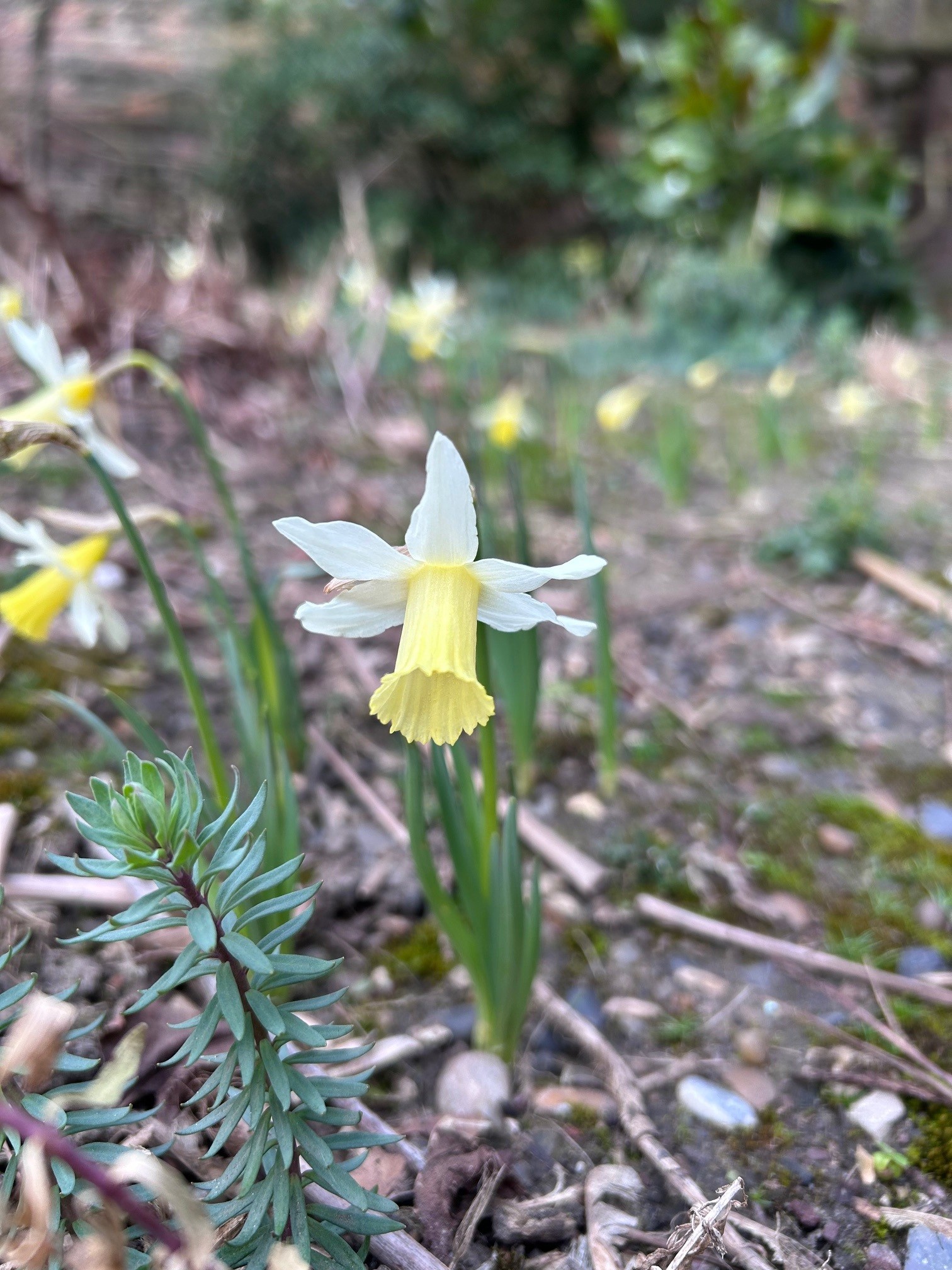
On a perishingly cold day – encouraged by a wintry sun – the intrepid Garden Volunteers ventured out on their mission to spot which brave flowers are showing off in the gardens this new year, 2026.
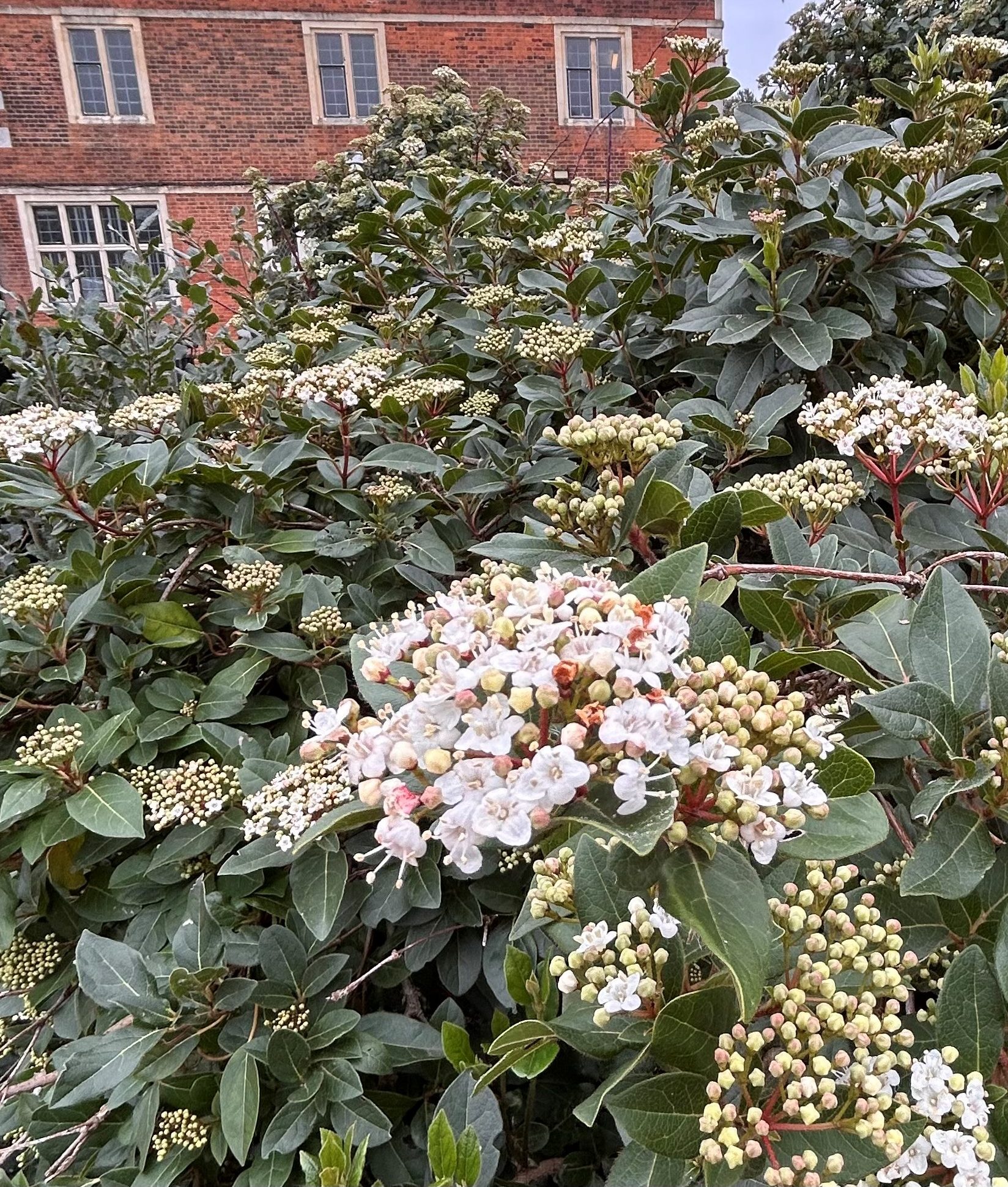
Viburnum tinus
This is the third year we have undertaken a flower count, so we should know roughly what to expect. UK weather data shows that 2025 was the sunniest on record, and probably the warmest too. Here in the depths of winter, it’s easy to forget the unprecedented spring sunshine and incredibly hot summer that we’ve had. This is bound to have disrupted plant lifecycles and confused some into flowering at the wrong time.
As we come up to Christmas and the end of 2025, this is a great time to look back at how the ‘Old Pond Garden’ (OPG) project has fared this year.
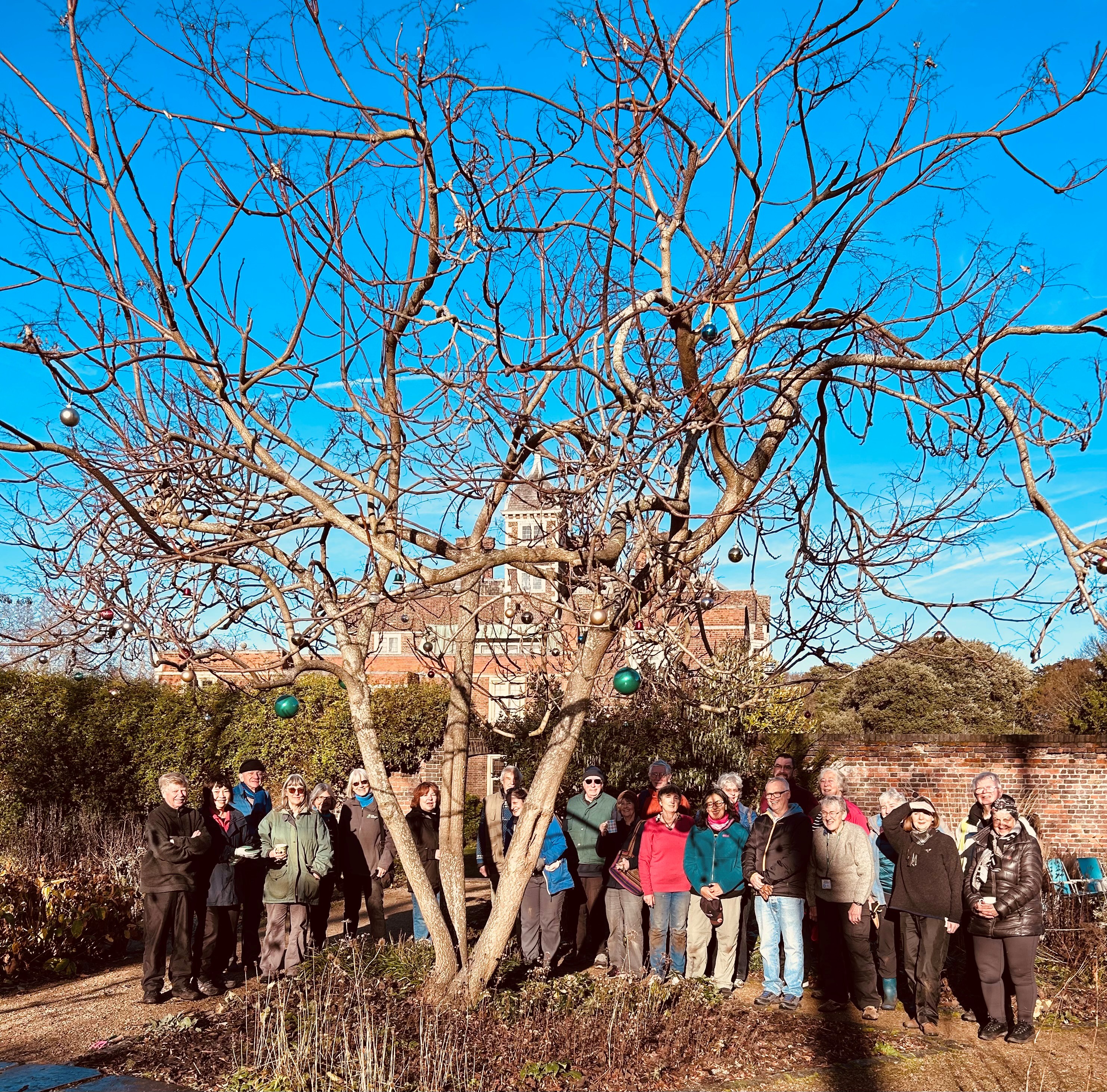
Tree of Heaven, Ailanthus altissima, dressed up for Christmas (plus 27 garden volunteers!)
Of course, it’s not just the ‘Old Pond Garden’ project any longer, as volunteer work now covers the whole estate, but we are still fond of the OPG tag. Since April, the Garden Volunteer scheme has been run by Royal Greenwich Heritage Trust (RGHT), however considering 80% of volunteers are also CABAHS members, it’s fair to say we are still very interested and still very involved.
Sharon has taken on the crucial role of Volunteer Lead for RGHT and works with Head Gardener Jason to make sure everything runs smoothly. She posts lovely updates on the garden team’s WhatsApp after every session, keeping us all on track, and sends a report off to RGHT every month.
Here are some highlights picked from Sharon’s reports of the past few months, I make no apology that this is a rather long post – we have done a lot!
Although at its peak in July, this has been out since May and is one of the longest-flowering plants in the Old Pond Garden. At the moment we really love it for it’s drought tolerance – no need to water this one! It has dainty, tubular flowers which insects with long tongues like bumblebees can enjoy, and it provides both pollen and nectar for visiting insects. Prefers a sunny spot but will do well in part shade too, so you can spot it in several of the beds. It is a semi-evergreen, only losing it’s leaves in the very depths of winter.
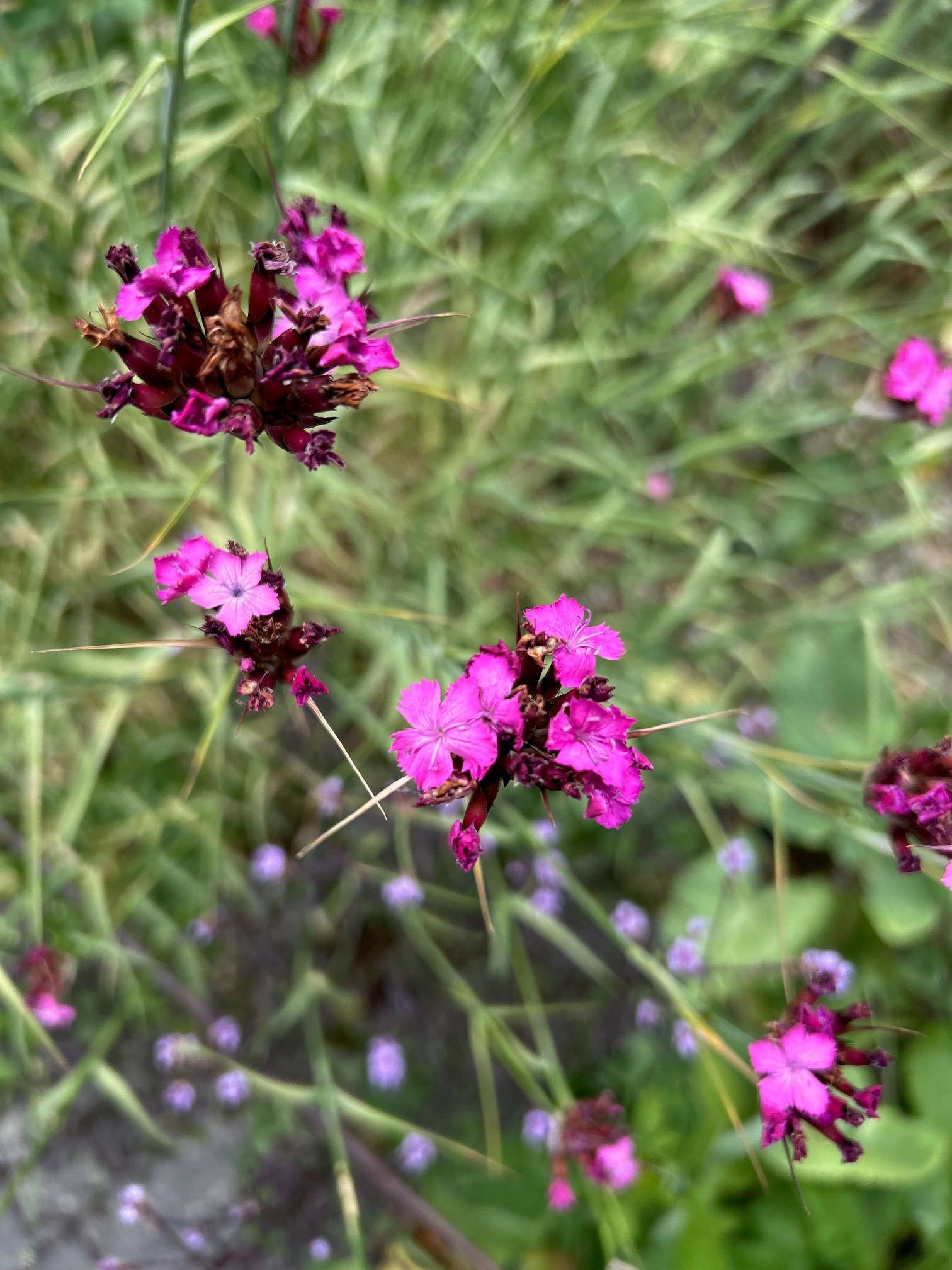
Dianthus carthusianorum – Carthusian Pink
Another lovely drought-tolerant plant that we don’t have to water! It must be in full sun to flower well, so it just loves the gravel garden in the central bed of the Old Pond Garden. It’s a perennial, forming bigger clumps each year and giving that great “pop” of colour. A gentle self-seeder and long season in flower.
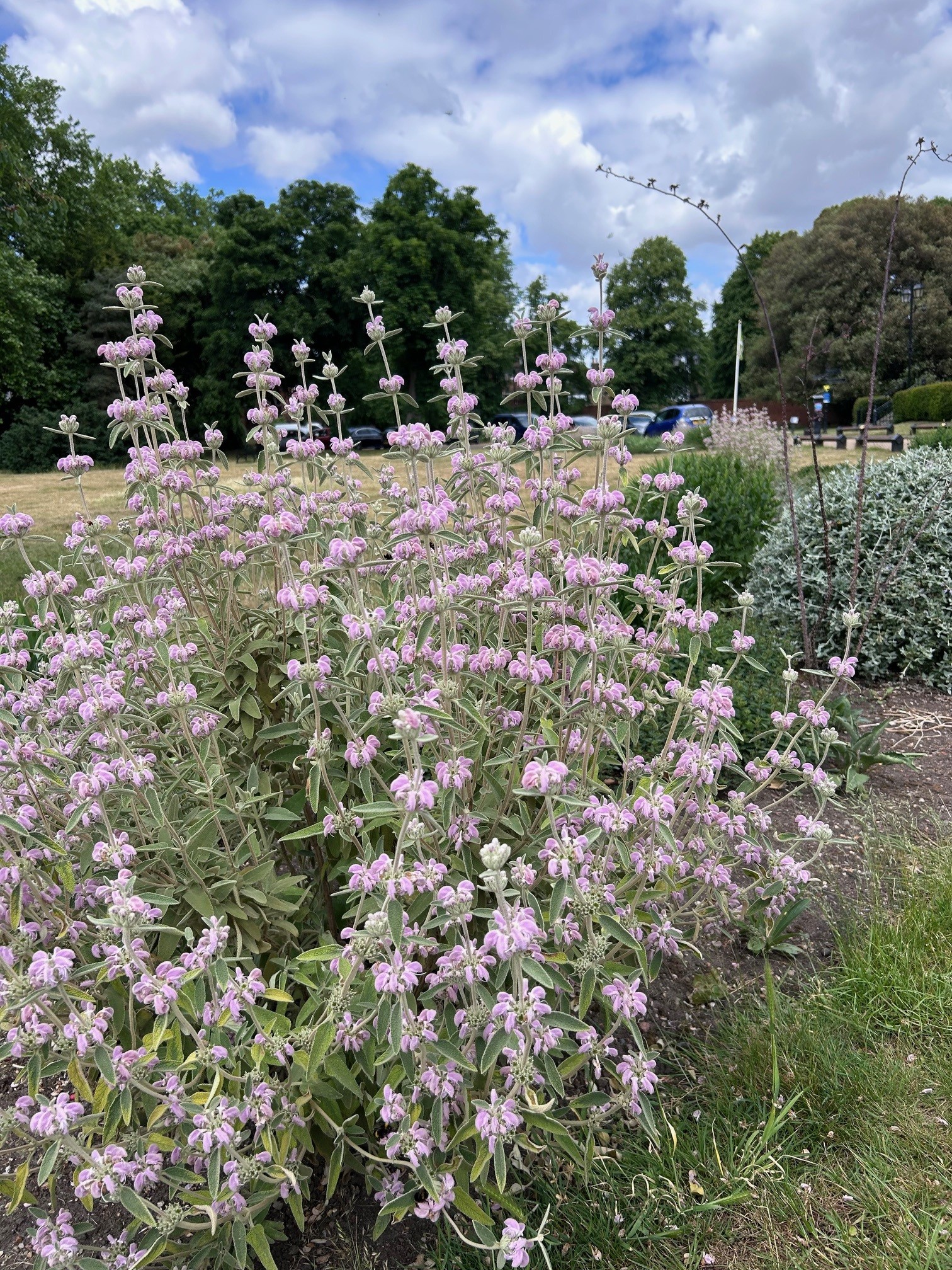
This is an evergreen shrub in the mint & sage family, native to Spain, which has lovely woolly grey-green leaves (touch them!). The hooded pale lilac flowers are beloved of pollinators, especially bumble bees. The ones in the front beds at Charlton House are humming with buff tailed bumble bees.
Phlomis russeliana – Turkish sage
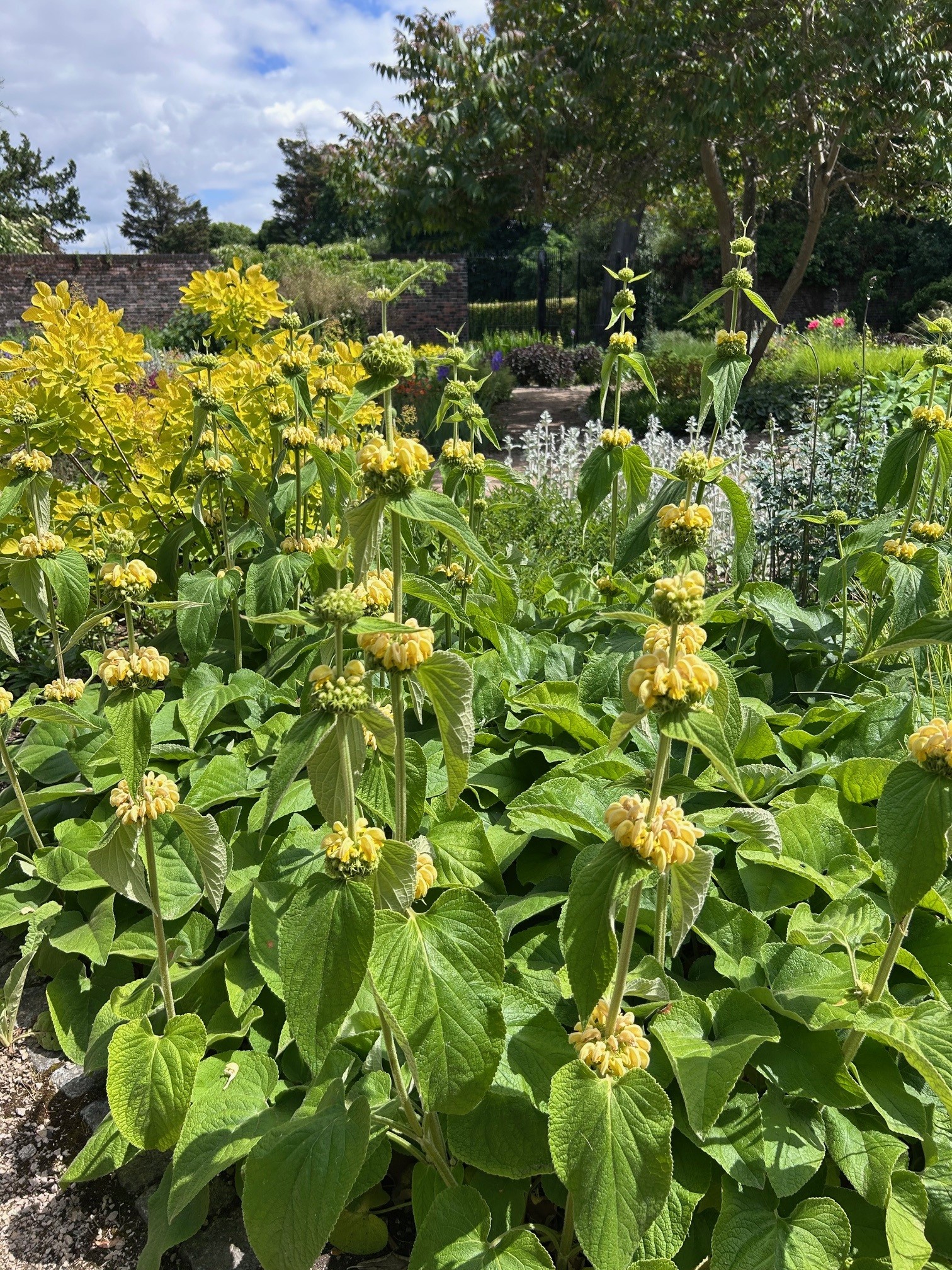
Another one in the mint & sage family, but this is not a shrub, it is a herbaceous perennial (so it drops it’s leaves in Autumn but comes back the next year). The name ‘Phlomis’ comes from the Greek word meaning ‘flame’. Heart shaped leaves of some species were used as lamp wicks in ancient times. The stiff upright stems carry yellow flowers, which look good as seed heads and provide shelter for insects in winter. It gently self-seeds – we have been potting them up so look out for them in a future plant sale!
A member of the hedgerow cranesbill family, seen commonly in roadside verges – but what a star! It was named after Mr Bill Wallis, a passionate plantsman, who chanced upon the original seedling sporting electric violet flowers instead of the common pink hue. It is a low sprawling perennial which shows its vivid purple flowers from late Spring until late Autumn. Lovely ground cover for sun or shade. Resistant to drought and avoided by snails – what’s not to like!
Tiarella ‘Spring Symphony’ – Foam Flower
Enjoy a symphony of colour with this extraordinary Tiarella! A charming, shade loving relative of the Heuchera. In spring, slender stems rise above the leaves and hold a mass of pink and white starry flowers, giving a frothy effect – hence the common name the Foam Flower.
This variety has an Award of Garden Merit from the RHS and it copes in the difficult dry shade conditions under the Lime trees in the Old Pond Garden.
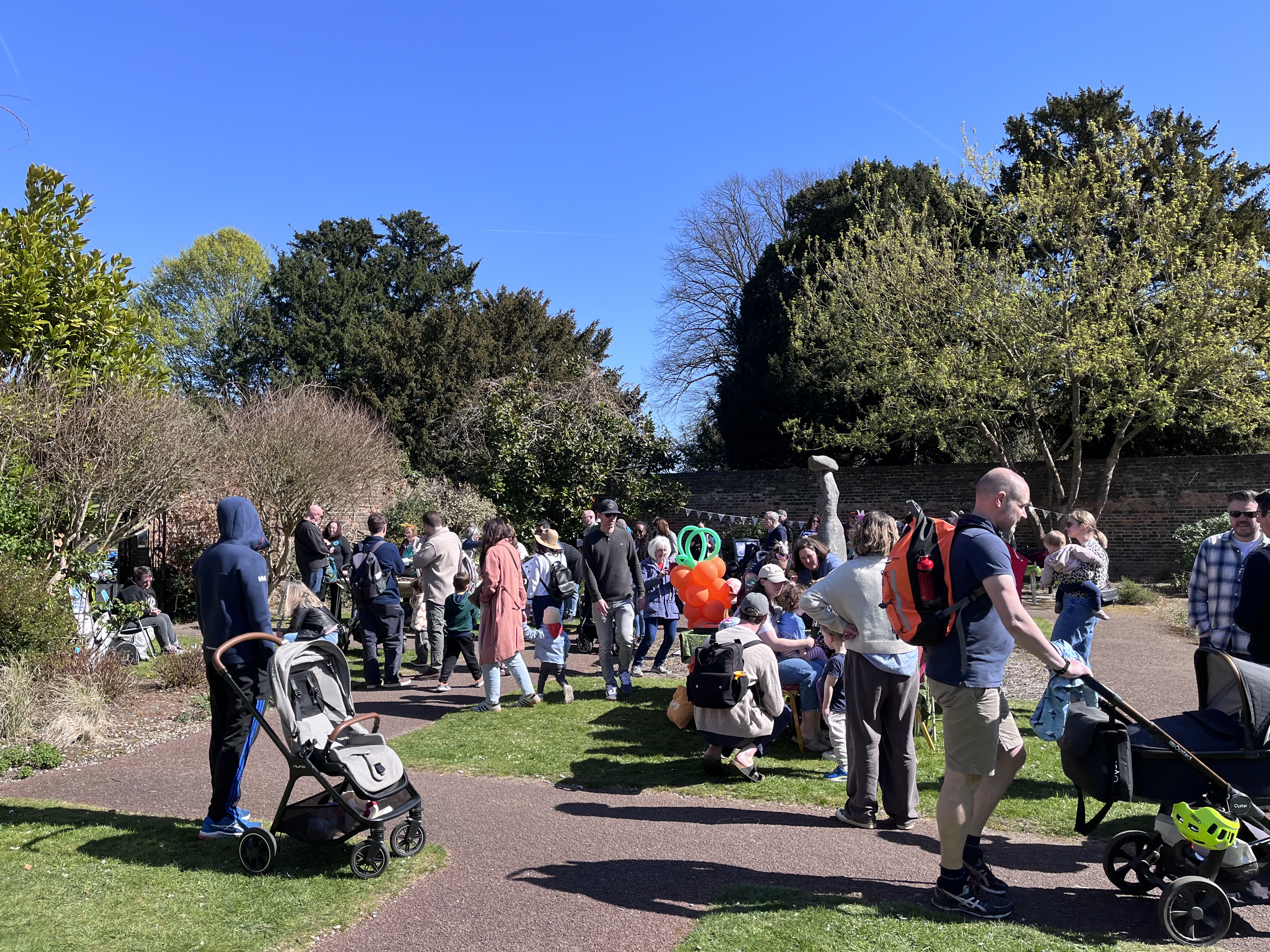
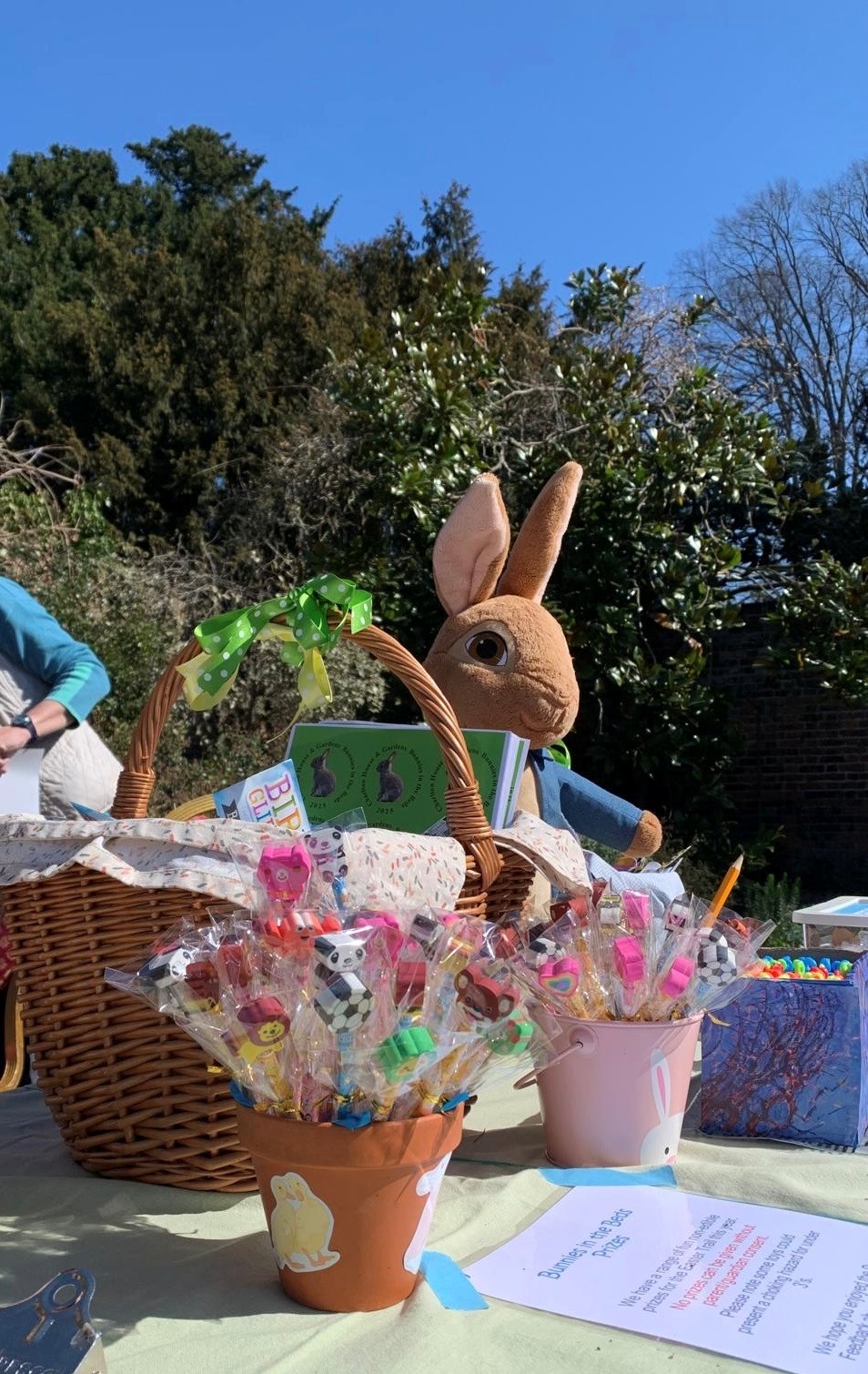
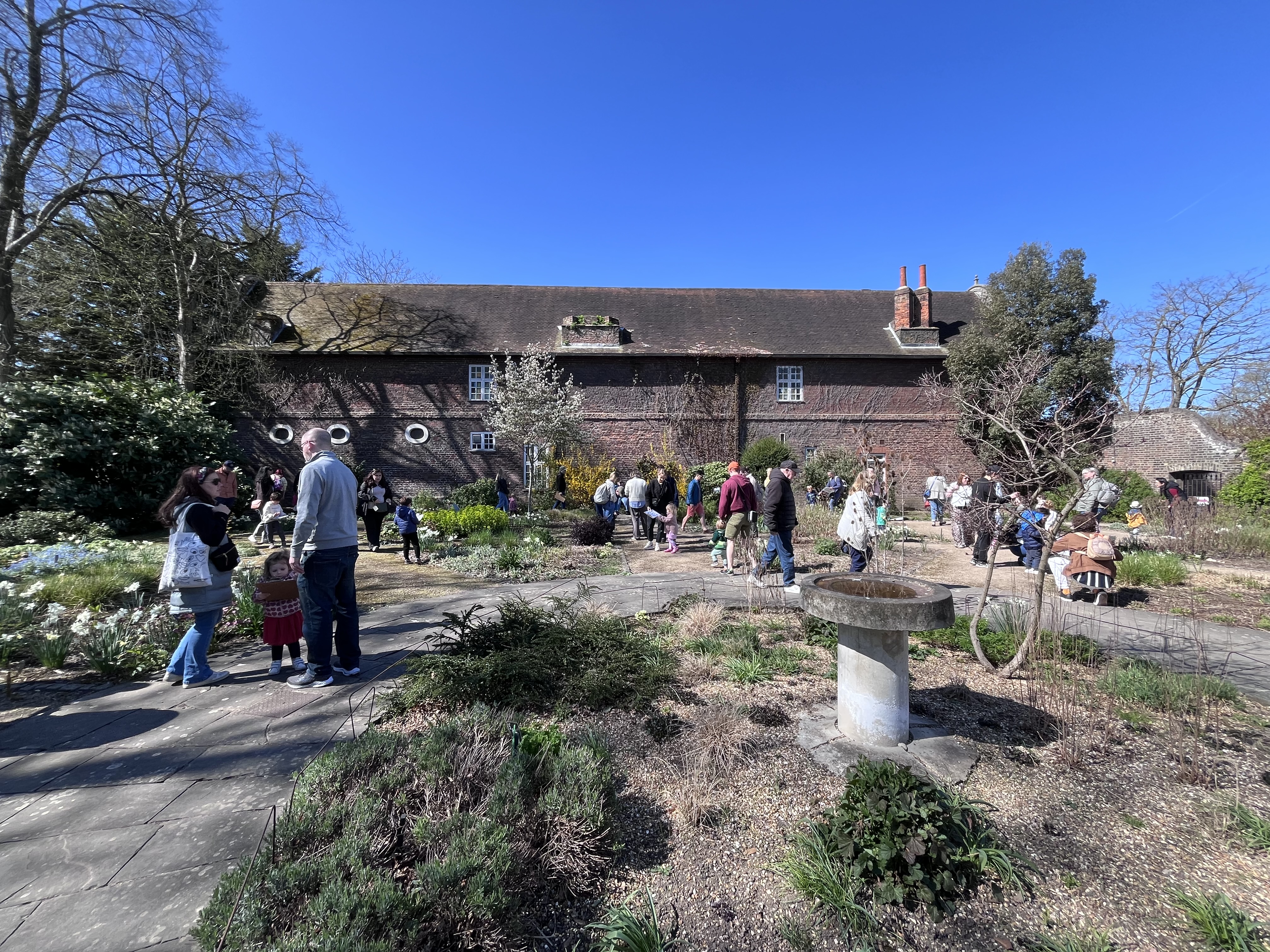
Thank you to everyone who came to the annual Easter Trail “Bunnies in the Beds” at Charlton House walled gardens on Sunday April 6th. What a fabulous day we all had! We are so grateful to all the helpers, garden volunteers, CABAHS members and RGHT staff who made the event happen.
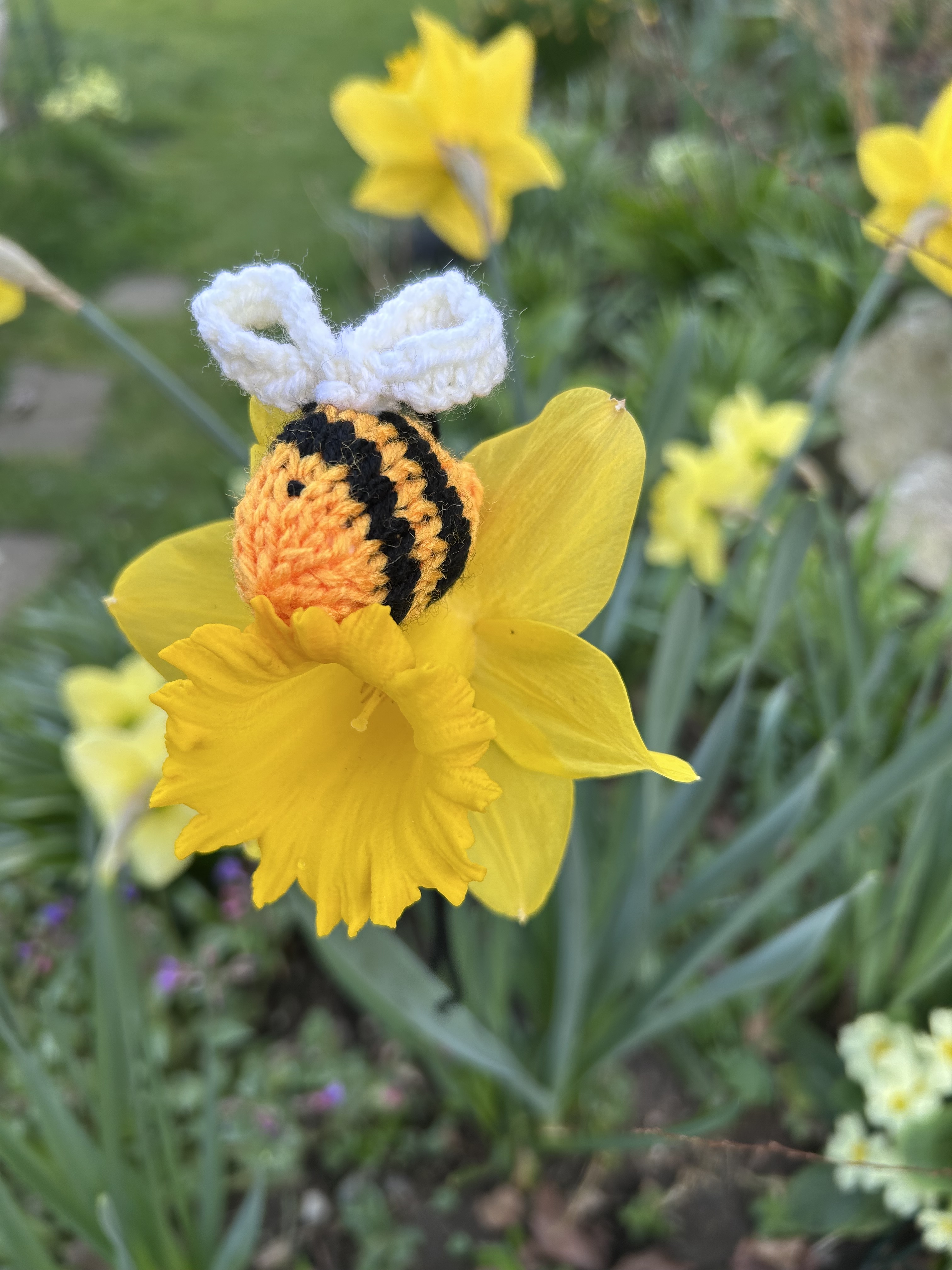
The Bunnies were hiding in their favourite plants this year, so the children learned a bit of Botany whilst spotting them! We admit to importing a few pots of flowers specially for the event ( I can’t see Jason wanting Marigolds or Periwinkle in the Old Pond Garden on a permanent basis..). After finding and naming the flowers, children had to find the Bees in the Bushes in order to pollinate the flowers – thanks to Carolyn for all those cute knitted bees!
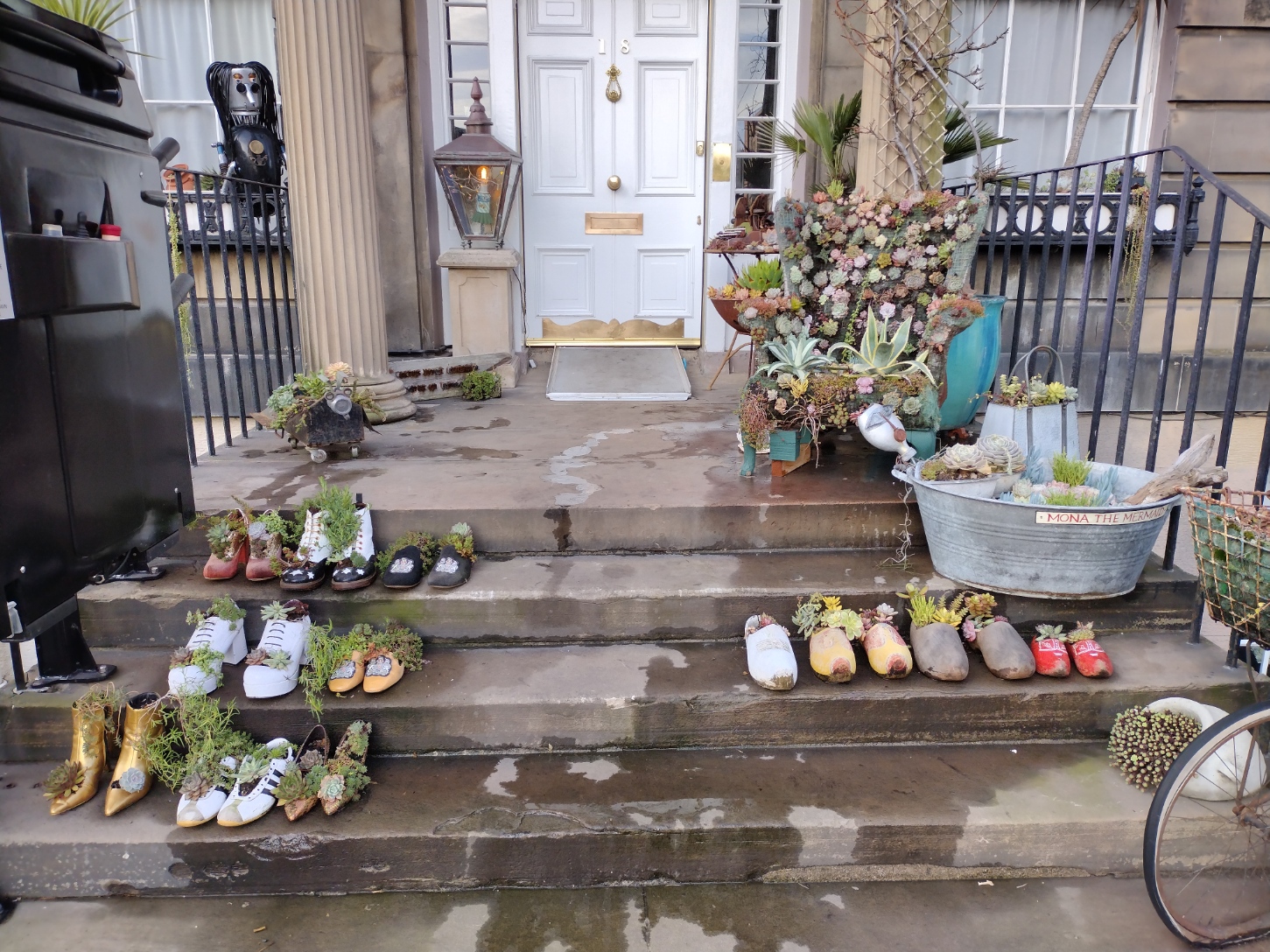
I spent a weekend this February in Edinburgh, and came across this interesting doorstep display on my travels around the city. Some new ideas for displaying your succulents …!
I also visited the Royal Botanic Garden. The morning I visited was bright, cold and calm, in stark contrast to the previous weekend when the garden had been ravaged by storm Eowyn. The sad remains of the garden’s tallest tree – a 166 year-old conifer – were clear to see.
The sun was shining and the sky a bright blue but the frost remained in the shadier parts of the beds and the Rhododendrons had bowed their leaves to protect themselves from the cold. But they were also covered in buds, waiting to burst forth in a few weeks time.
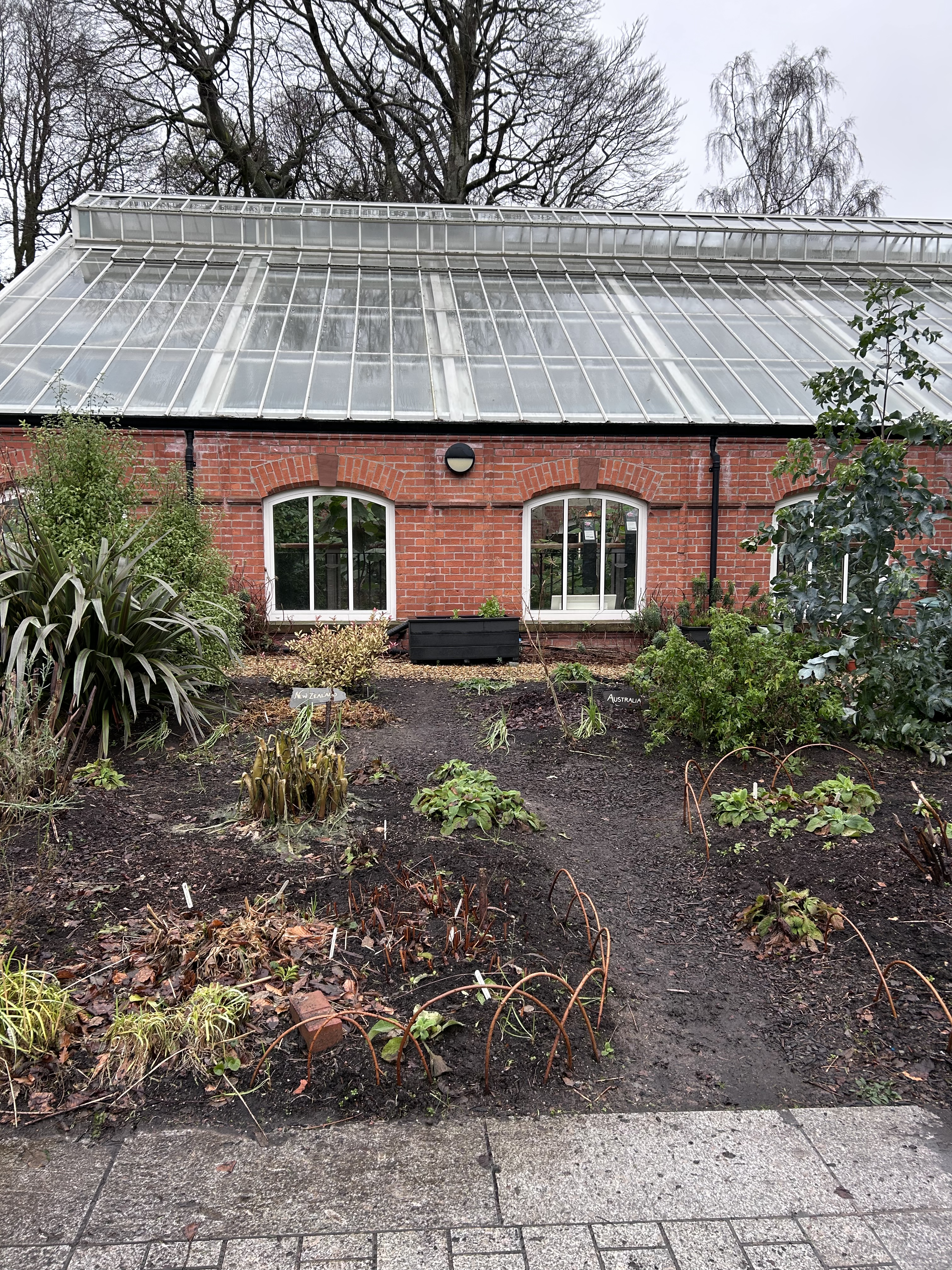
I have been spending some time recently in Northern Ireland, and was enchanted to find the Belfast Botanic Gardens are right on my doorstep here.. just waiting to be explored.
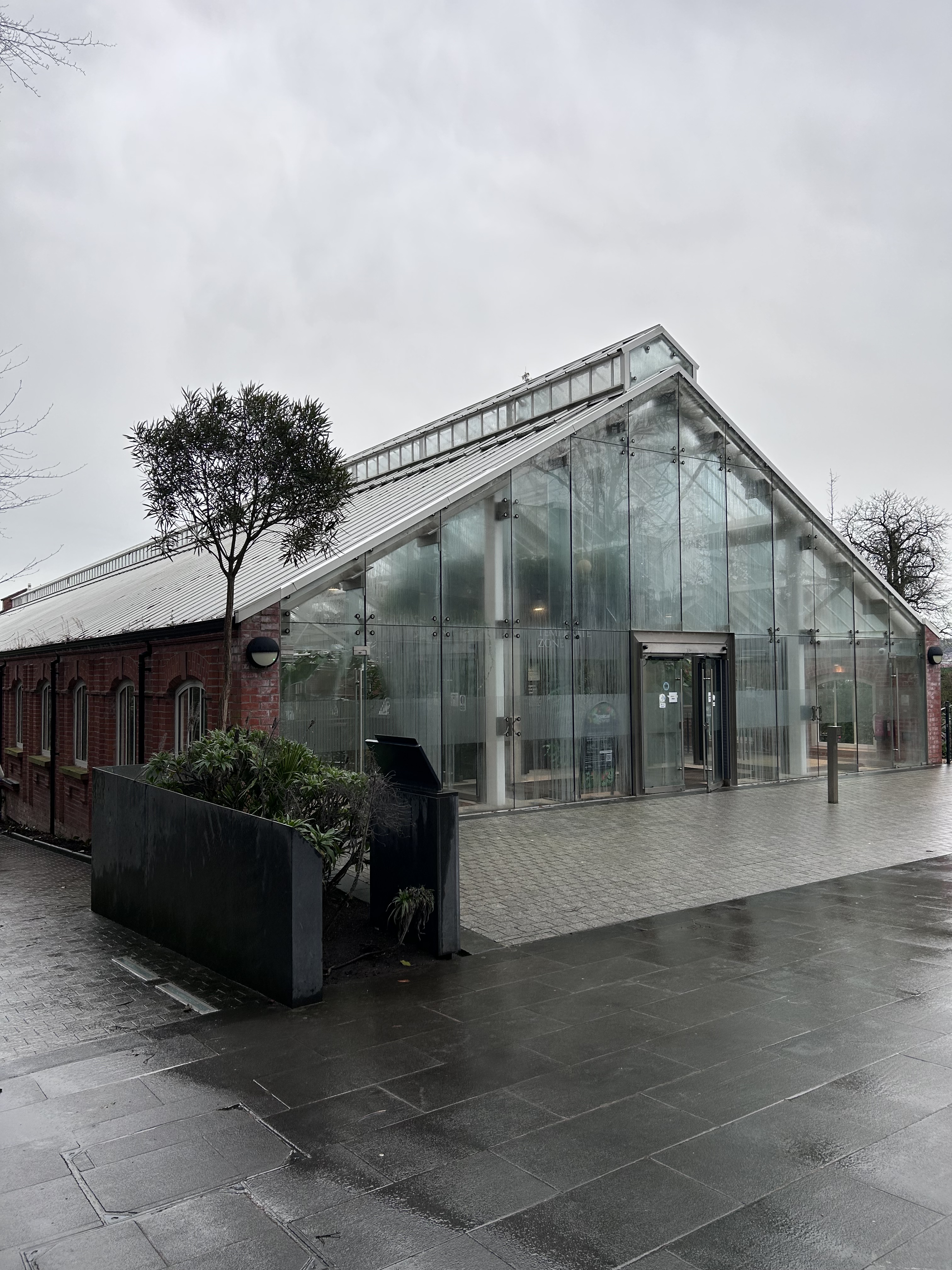
The gardens started in 1828, when the “Belfast Botanic and Horticultural Society” was formed and a 14 acre site purchased. The Palm House was built in 1839 by ironmaster Richard Turner of Dublin, who went on to build the Palm House at Kew a few years later! If this one was a practice run, it is still really impressive.
It is not large, but cleverly designed to incorporate a Cool Wing, a central Dome which is sub-tropical, and a Tropical wing, so it can house a wide range of plants. Sadly it was closed for repairs on the day of my visit, courtesy of the recent winter storms.
There is another glasshouse on the site, the Tropical Ravine House, which is just amazing. It was built by “the Head Gardener and his staff” (Jason & the Garden volunteers – there’s an idea!) and was finished in 1889. Uniquely constructed into a hillside, so the visitor walks around a balcony and looks down into a moist glen filled with tropical planting.
It was renovated in 2019 with help from the Friends of Belfast Botanic Gardens, who clearly play a large part in supporting and maintaining these gardens. They have also created a fascinating new Global Medicine Garden just to the side of the glasshouse. https://fobbg.co.uk/
The park is sparkling! Our visit to the first night of Sparkle was very impressive, the light installations have been fitted really thoughtfully around the layout of Charlton House grounds.
The trail starts by the Mulberry, and the avenue of trees have been lit up beautifully as you walk through a snow storm and then past installations based on Christmases in Ukraine, St Lucia and Lagos. We loved the Ukrainian stars decorated by local schoolchildren.
At the end of the avenue you turn back towards the House – and can’t miss the glowing giant spheres (sorry, I didn’t note down the artistic reasoning for those, but they are certainly eye-catching!) and beautiful blue and white snowflakes played onto the back of the House.
The Barbican isn’t a place one would normally expect to be among crowds of garden enthusiasts. But no-one was concerned about the venue, its brutalist architecture and its slightly bizarre layout. We were all eager to find our seats and hear the stories national treasure Monty Don had in store for us. And what seats! Our seats (thanks to a donation from a generous CABAHS member) were front and central, in touching distance of the stage (and indeed of Monty Don himself).