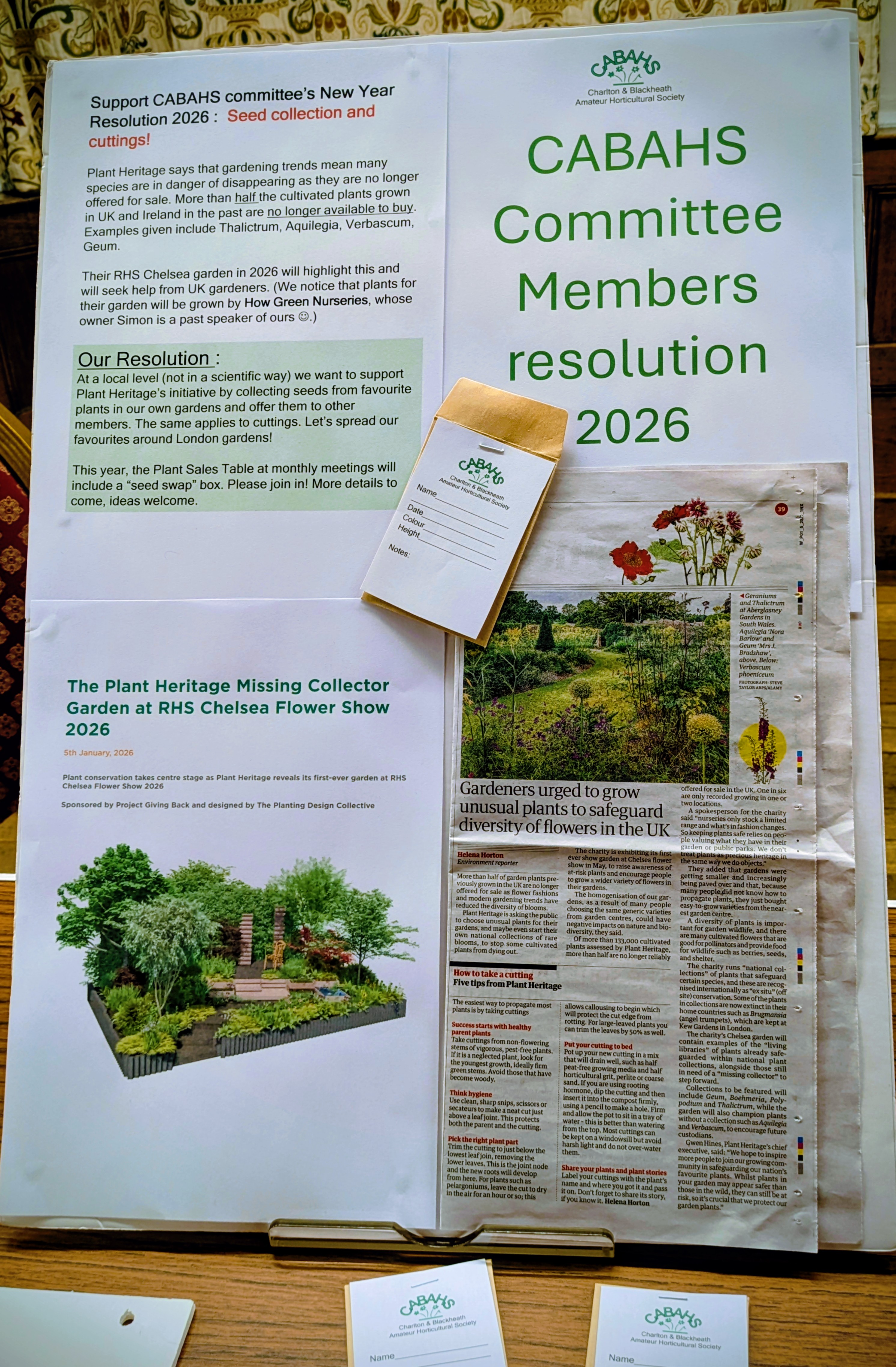
In addition to gathering members’ personal gardening resolutions for 2026, our January meeting also launched the Committee’s proposal for a CABAHS-wide resolution for the year, inspired by Plant Heritage’s search for ‘missing collectors’.
The best way to save plants is to cultivate and propagate them, then share them with others.
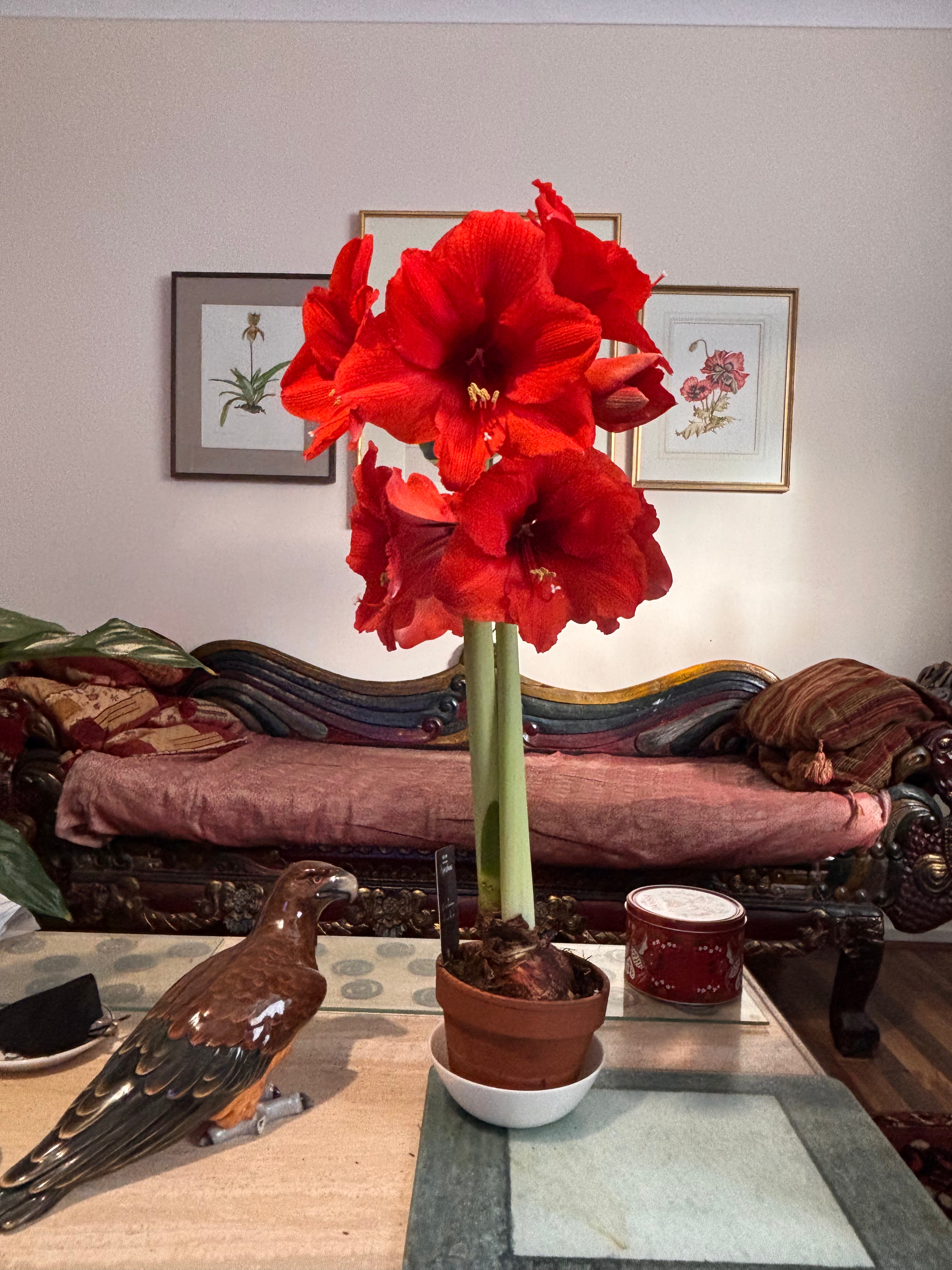
“Amaryllis (Hippeastrum) are considered naff by some – their flowers being so spectacularly over the top and being so widely available in supermarkets. But I think their spectacular-ness is attractive and grow them every year. I hope this photograph of the Amaryllis that I have grown this year will encourage those who do not already grow them to do so. Perhaps we could have an annual Amaryllis competition at CABAHS!”
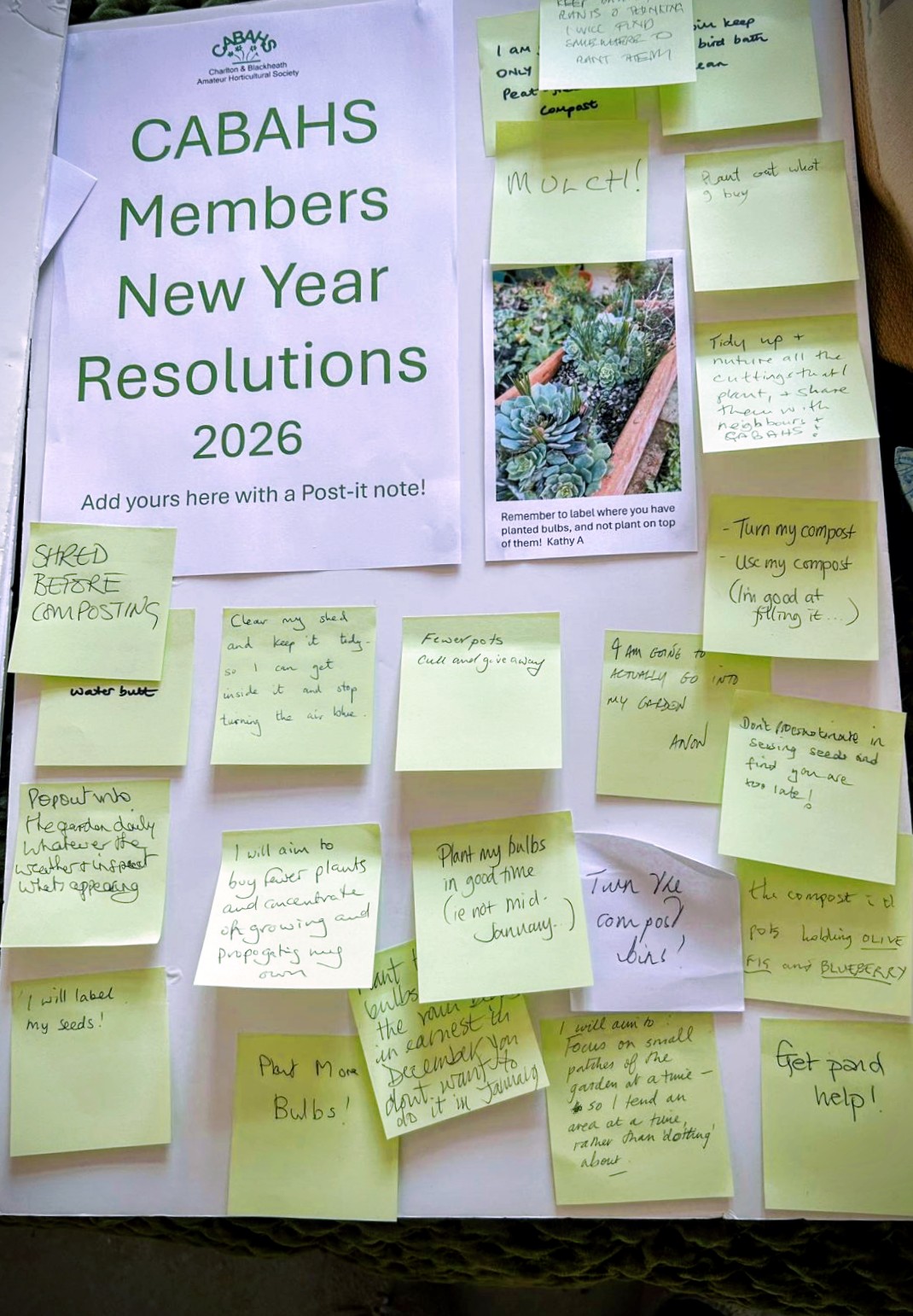
At our January meeting, members were asked to share – anonymously – their garden-related resolutions for the coming year. In addition, the CABAHS Committee put forward a suggestion for a CABAHS-wide resolution for 2026 (more on this in a separate post).
A fine, wise, and hopefully achievable range of planned actions were submitted, with members resolving to complete practical tasks that are easily put off or forgotten, right through to adjusting their attitudes / approaches to their gardens.
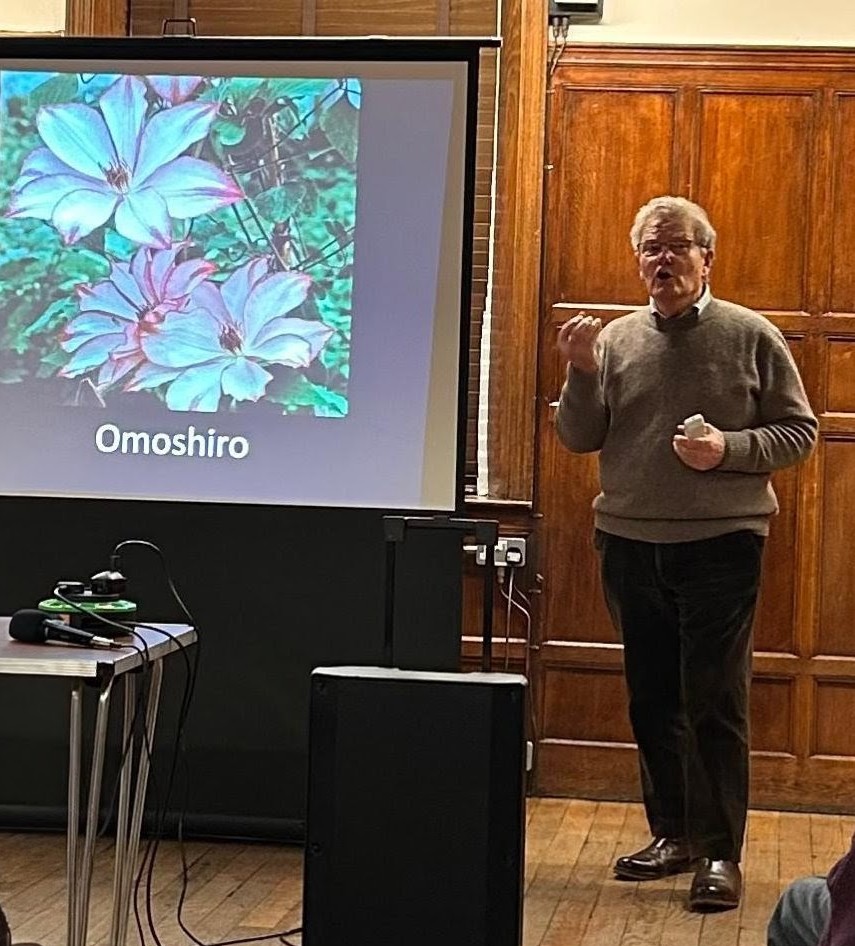
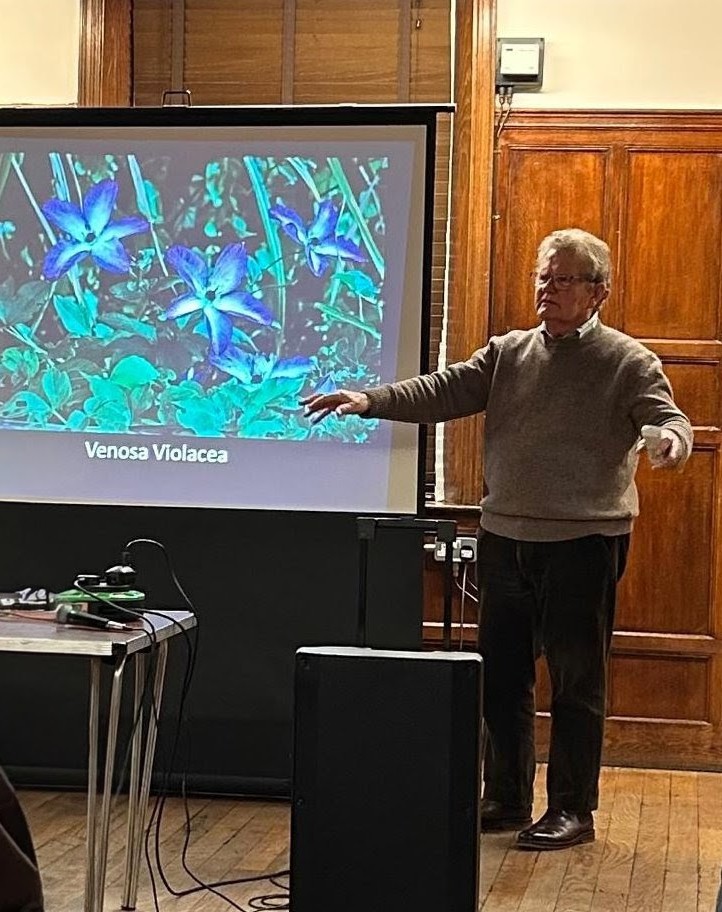
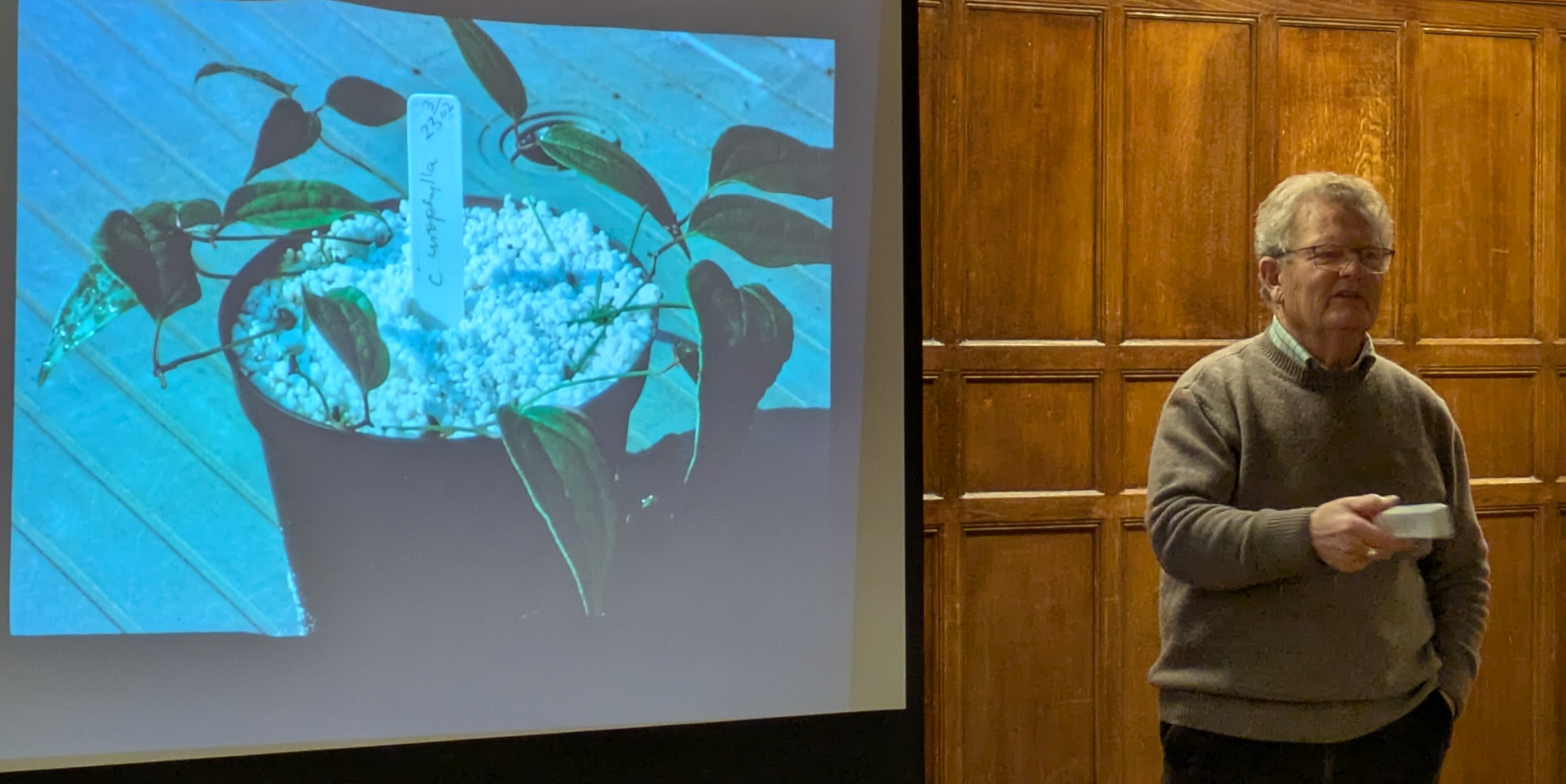
On Monday we welcomed Everett Leeds who gave us an amusing and highly informative talk about the prolific world of Clematis. He has been involved with Clematis for many years through growing, speaking and writing about them. He has been the Chairman of the British Clematis Society four times and is co-author of The Illustrated Encyclopaedia of Clematis . Everett’s enthusiasm for the genus was highlighted when he shared a photo of his former home with the front fence, hedges and trees completely swamped by a 120 foot long and 40 foot high ‘monstrous’ C. Montana. After cutting this completely away, he planted another!
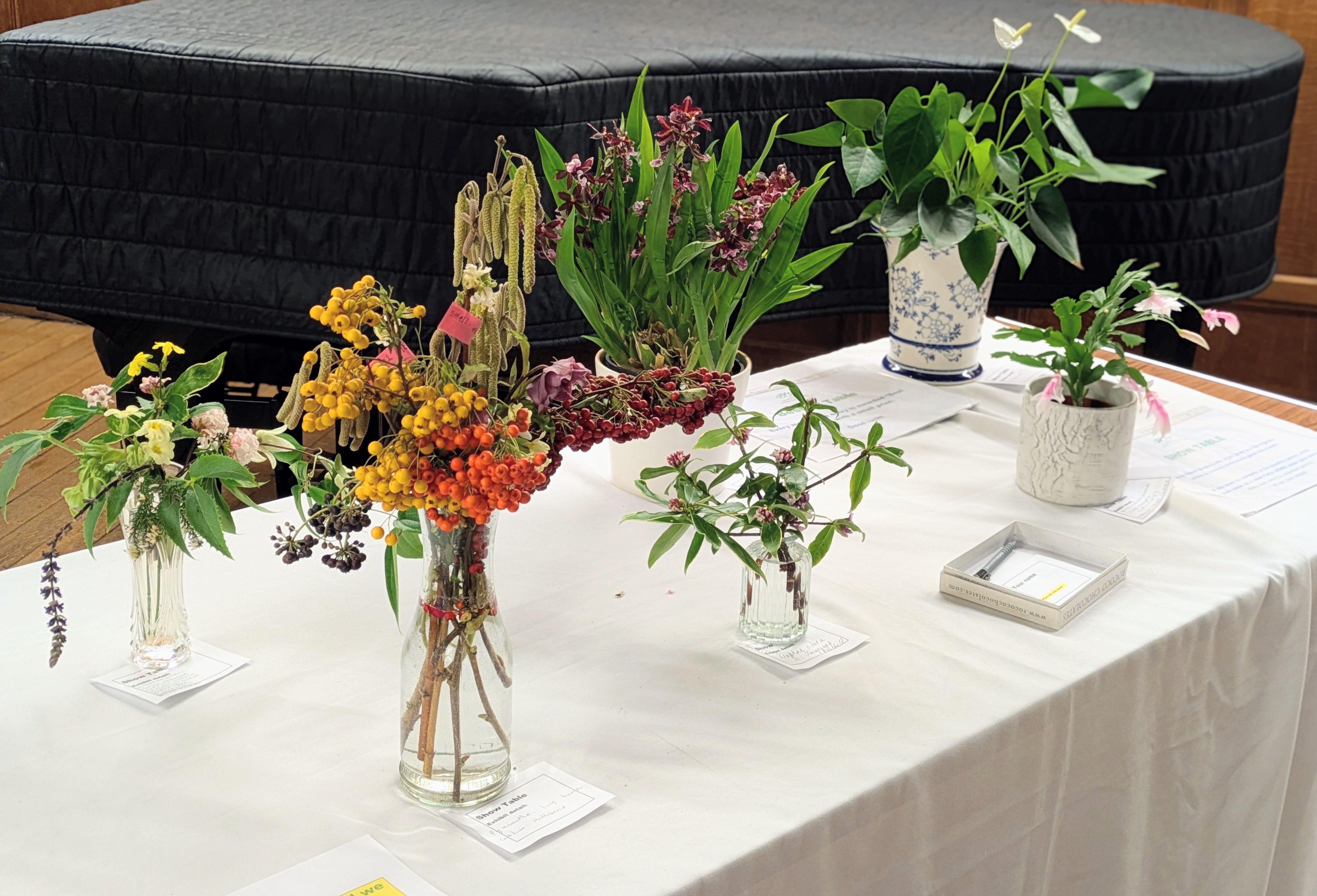
As usual, members enjoyed refreshments, took part in the raffle, shared their garden-related resolutions for 2026 and, of course, there was the regular Show Table. Six members took part with a wide variety of entries. We hope that as Spring gets going more members will be keen to show off and share their plants that are looking good each month.
2. Any form of mulch is good on the soil now, in the form of your own homemade or bought compost, or even leaf mould if you have it. If you can’t face lightly forking it in, the worms will do it for you.
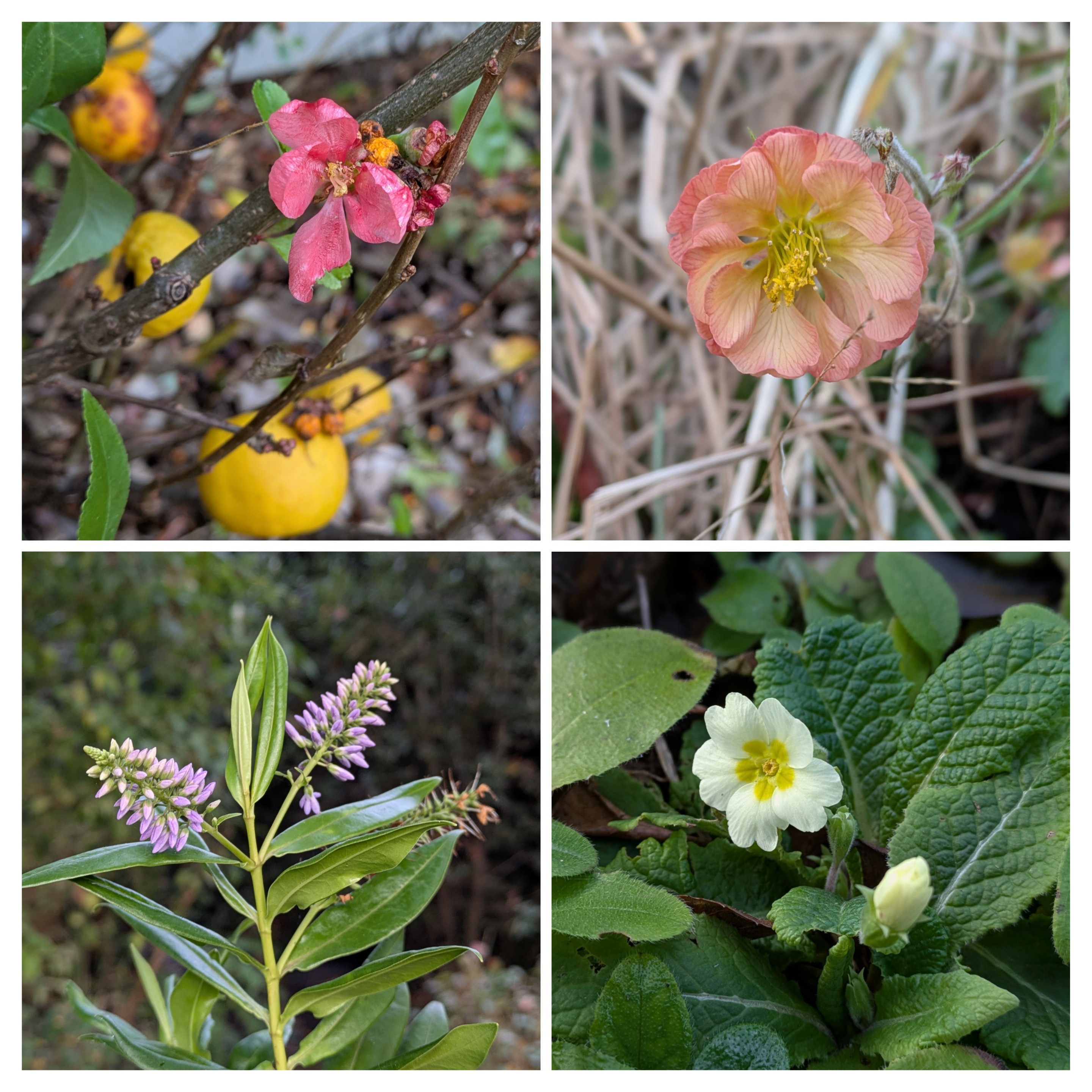
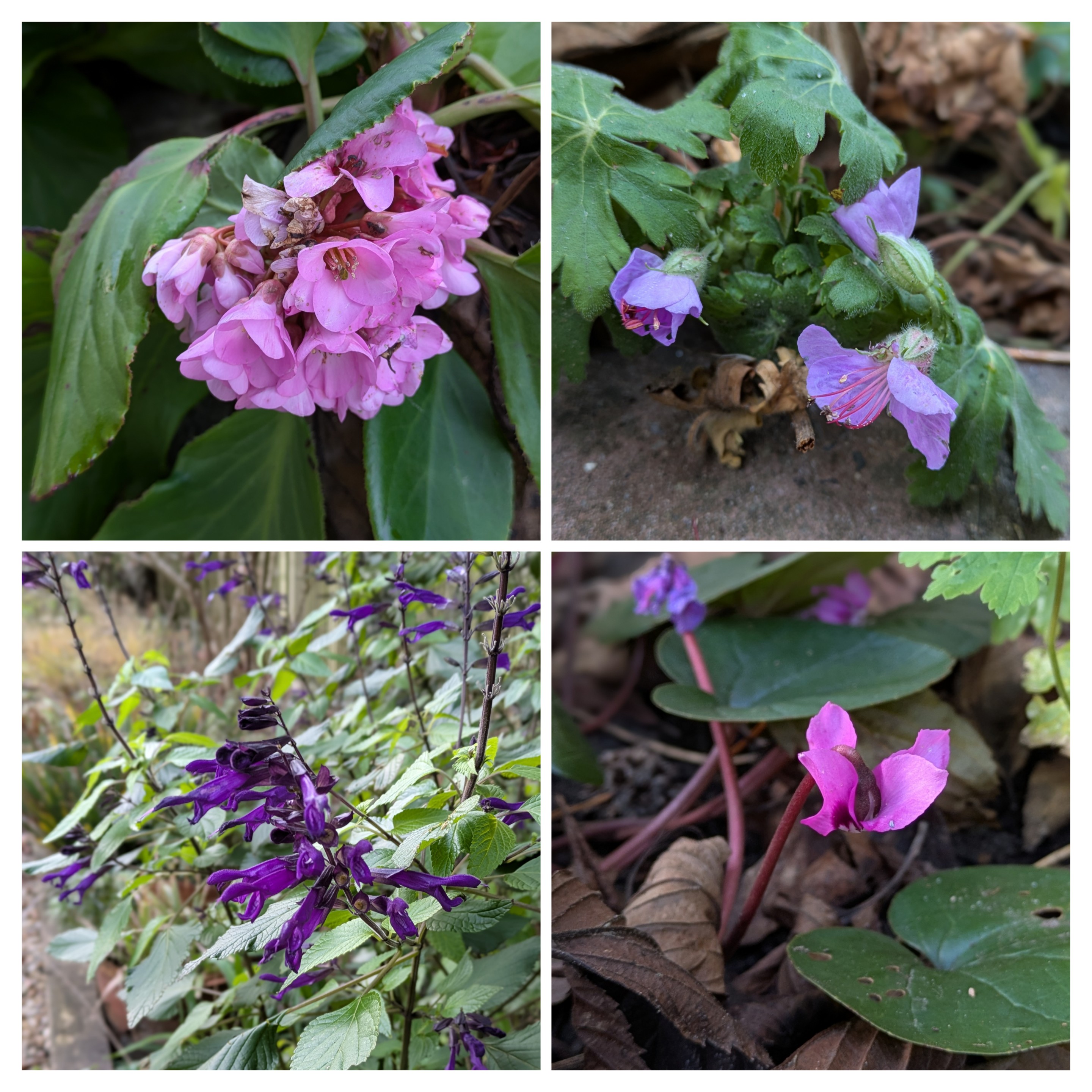
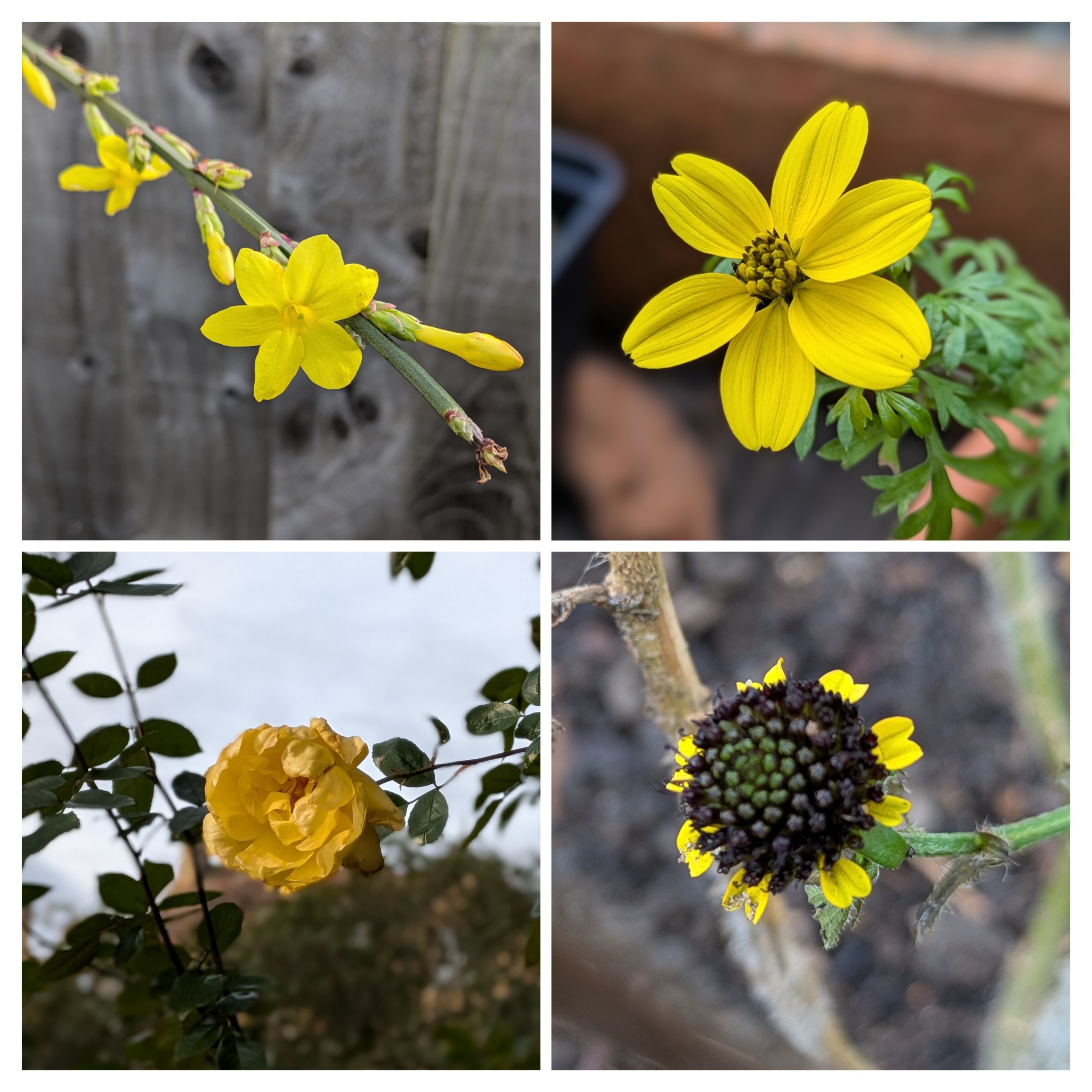
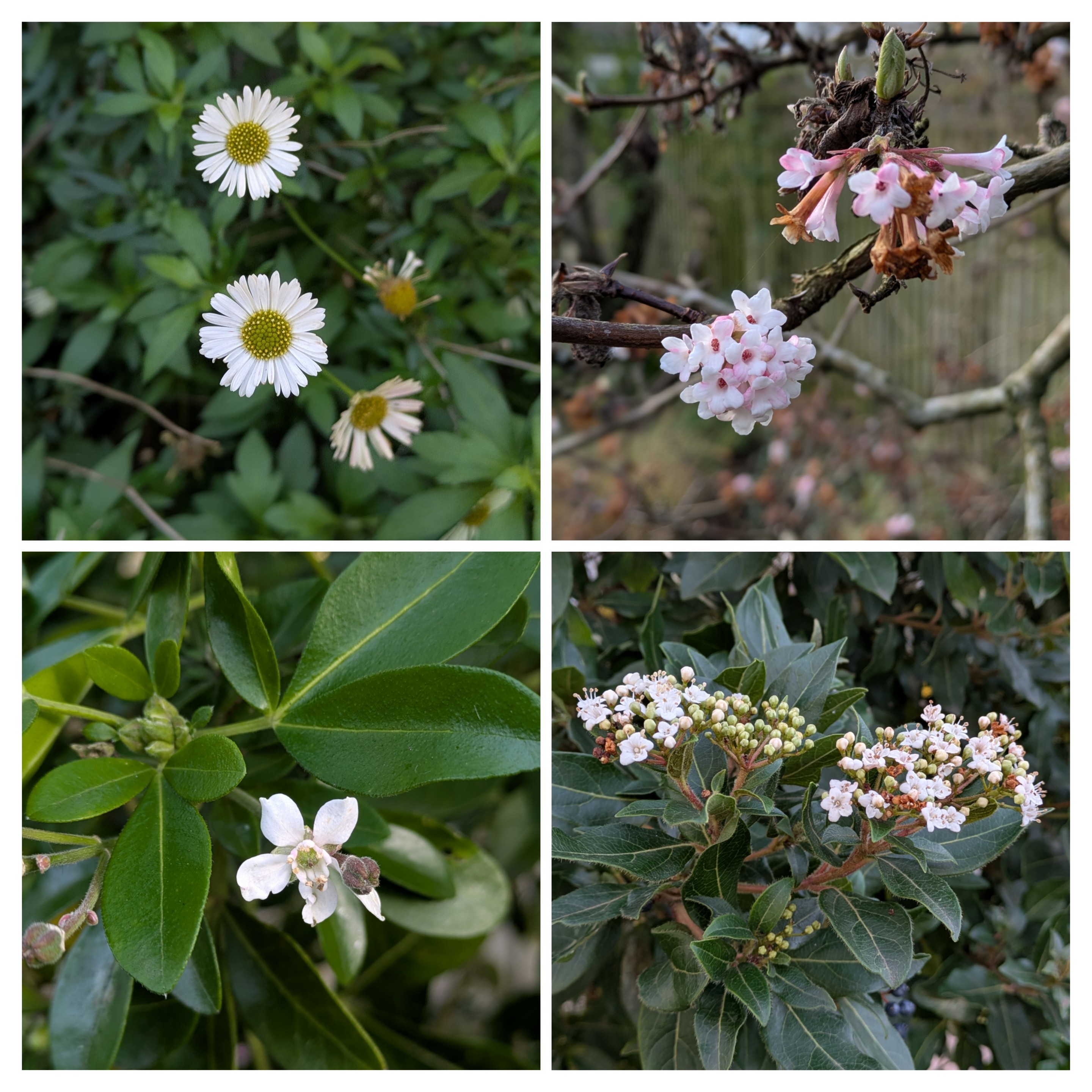
Japanese quince, water avens, elephants’ ears, Geranium, winter jasmine, Mexican fleabane, Viburnum bodnantense, Hebe, primrose, Salvia ‘Amistad’, Cyclamen coum, rose, brown-eyed Susan, Mexican orange blossom and laurustinus in Ali H’s garden
The winter-flowering shrubs were of course out in force (Camellia, Jasminum nudiflorum – winter jasmine, Skimmia japonica, Viburnum – both V. bodnantense and V. tinus, Clematis ‘Freckles’ and Daphne odora), as were the hellebores (though mine have remained resolutely in bud with not a single one opening yet!). Mandy A’s Loropetalum (Chinese witchhazel) was in flower, as were several people’s Hebes. My Chaenomeles japonica (Japanese quince) was covered in fruits, but still producing the odd confused flower too, along with a nearby Geranium macrorrhizum and Geum rivale.
What a mild 2025 December we are having! So mild, the weather is confusing some plants, such as lavender, Calendula and yellow-flowered Phlomis, out in flower at present.
One of the joys of winter is admiring all the window boxes, the wide variety of beautiful Christmas door-wreaths and observing what’s flowering in front gardens whilst out strolling.
December is a month when the garden often takes a back seat, and when Pat deserves a break from helping you all with your garden jobs, so the CABAHS Committee have come up with a list of 10 Things that they are doing this month in, from, or for their gardens.
Everyone enjoyed seeing the autumn colour in CABAHS members gardens, so we thought we’d like to see some more – this time on the theme of ‘ingredients for a winter wreath’. People submitted photographs of evergreen shrubs and perennials, winter flowers, berries and seedheads, and here they all are, compiled into virtual wreaths – complete with festive bows! If you contributed a photo, can you spot your plant or plants?
Winter flowers and berries wreath, made up from Kathy’s ‘Spider’s Web’ Fatsia and yew berries, Jenny and Pat T’s Pyracanthas, Pat K’s ivy, a seedhead from the Old Pond Garden, Carolyn’s Fatsia, Pat T’s hellebore (won in a recent CABAHS raffle!) and Mandy, Brownie and Fran’s Mahonias.Continue reading Members’ gardens: virtual wreaths






 Charlton and Blackheath Amateur Horticultural Society