Hidden in the heart of the Medina in Marrakech is Le Jardin Secret. Many will be familiar with the documentary showing Tom Stuart-Smith working with teams of local builders and craftspeople to renovate this ancient site, making it what it is today.
The origins of the garden date back to the second half of the sixteenth century, created by the Saadian dynasty. However, the garden and its buildings underwent decline and development as successive rulers governed the region, finally falling into disrepair in the 1930s. The site was eventually bought by an Italian couple, who employed Tom Stuart-Smith to design and create a new garden.
Le Jardin Secret has been restored following the likely nineteenth century layout. Closely linked to the riad structures, this type of garden was intended to be an oasis of peace. The four-part layout of the Islamic garden was designed to facilitate the irrigation of the grounds and you can still see the vestiges of the original water system, made up of pipes, reservoirs and canals cleverly linked together, bringing water down from the Atlas Mountains. The international team of designers and engineers have created a complex which features two beautifully recreated, highly distinctive gardens – an exotic one and an Islamic one.
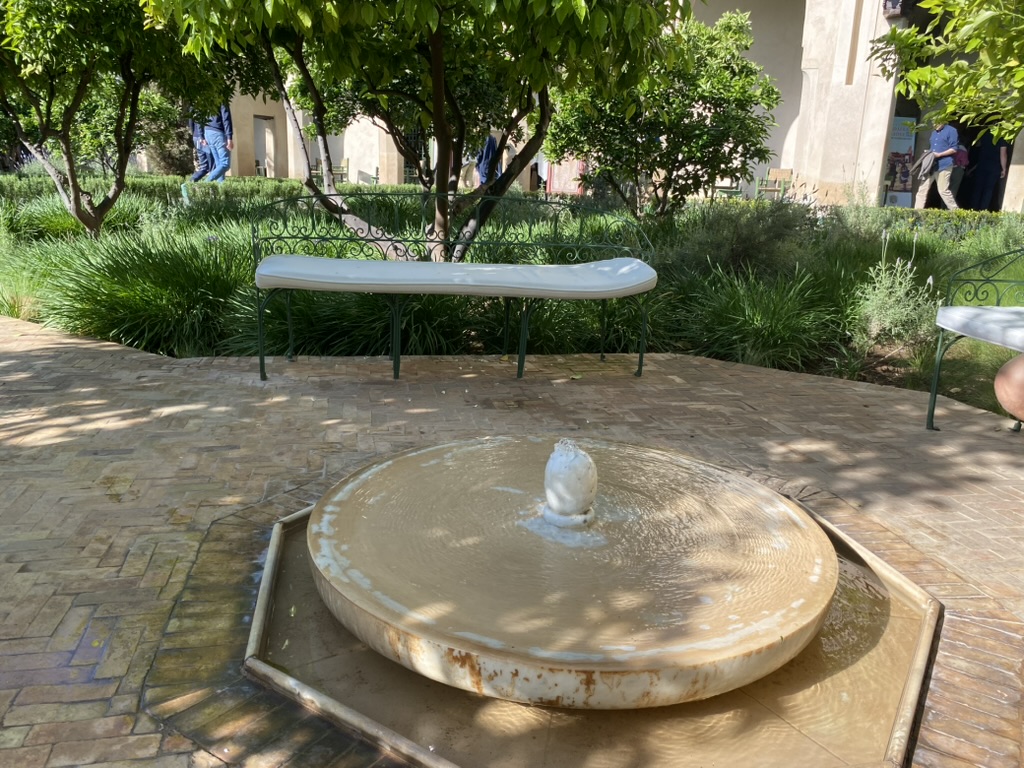
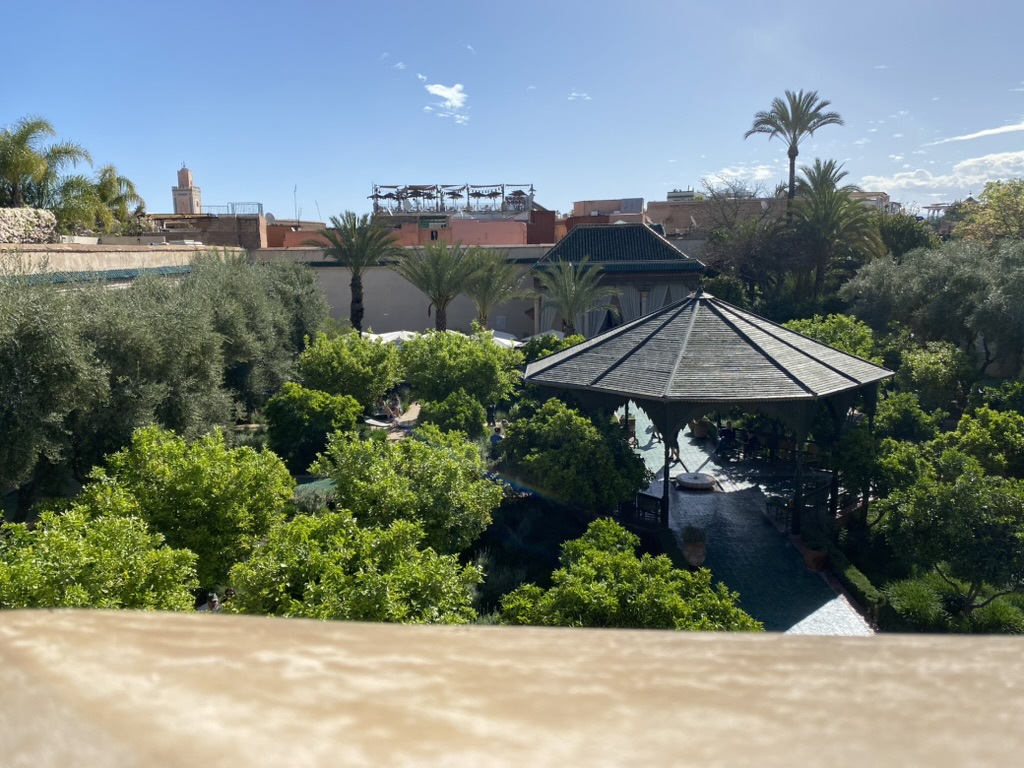
You enter the complex into a tiled courtyard with running water and fountains, immediately leaving behind the hustle and bustle of the city. Arriving as the garden opens in the morning is well worth it, in order to appreciate the peace and tranquillity the garden offers.
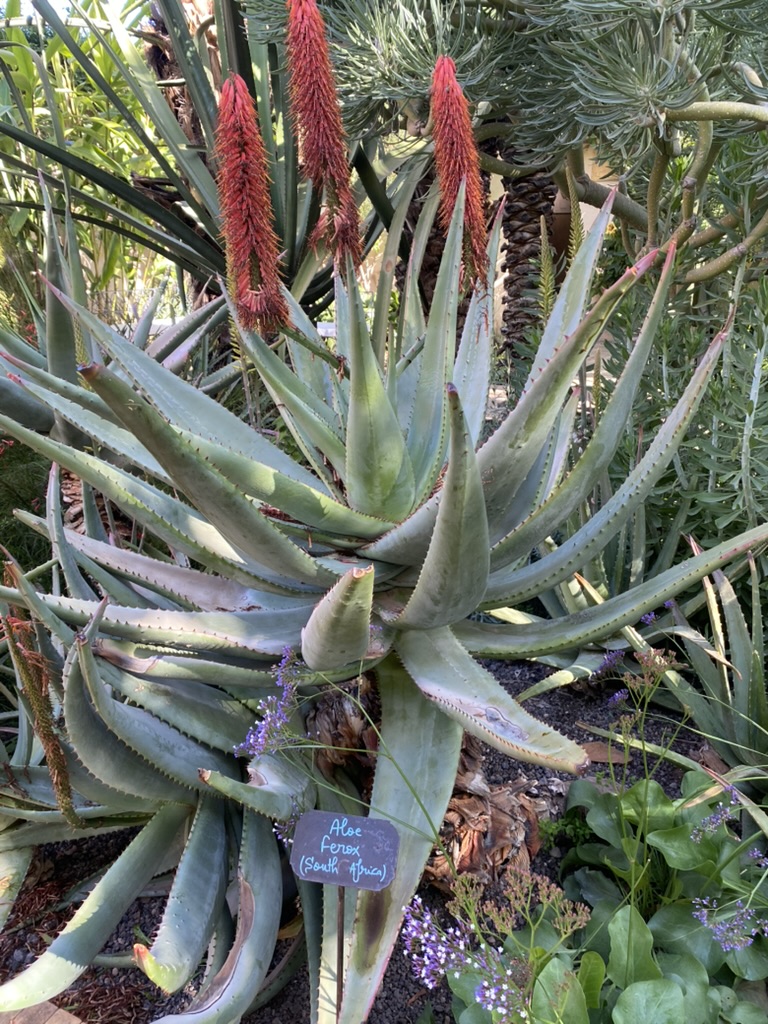
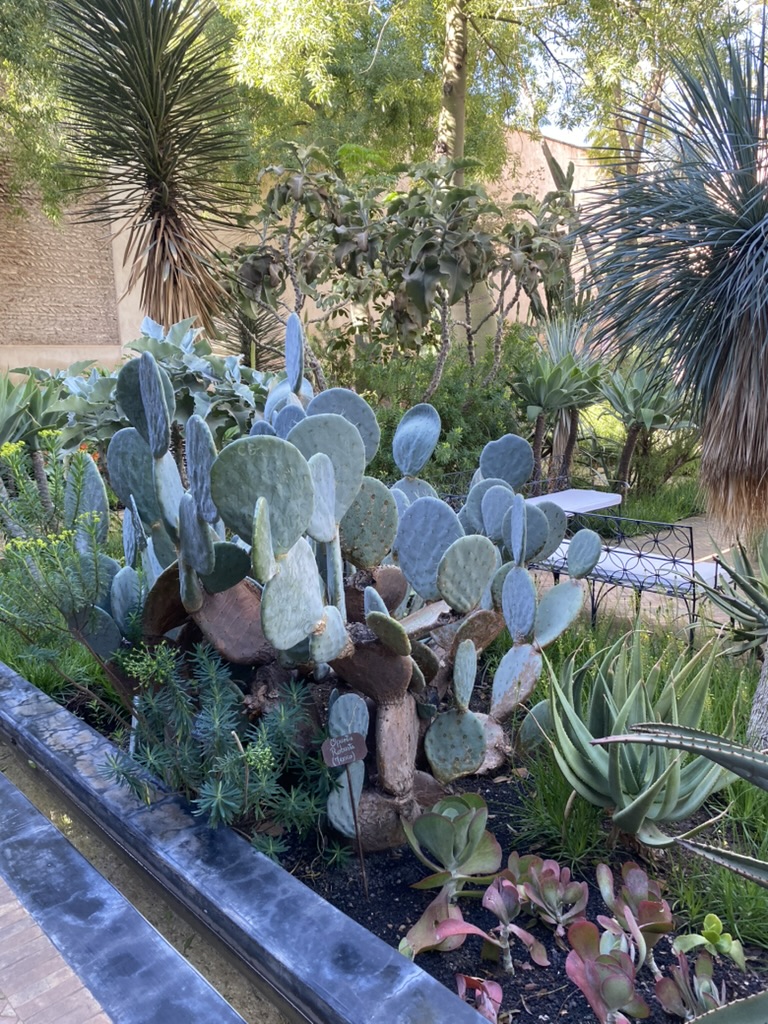
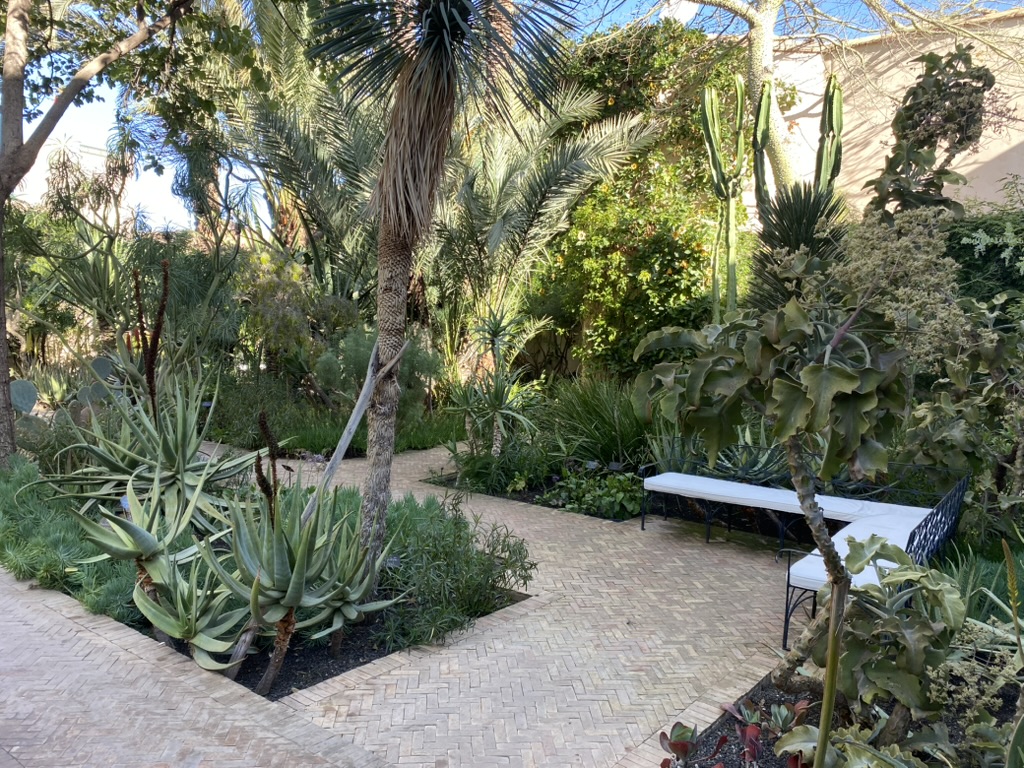
The first part of the garden is filled with more exotic plants, such as palms, cacti and agaves and aloes of different varieties, with some huge Aloes and Opuntia cacti. Here, Stuart-Smith has chosen drought tolerant plants to minimise the amount of watering needed, although many of these are not native to Morocco. Water is evident everywhere. A small ‘pond’ had three turtles when we visited.
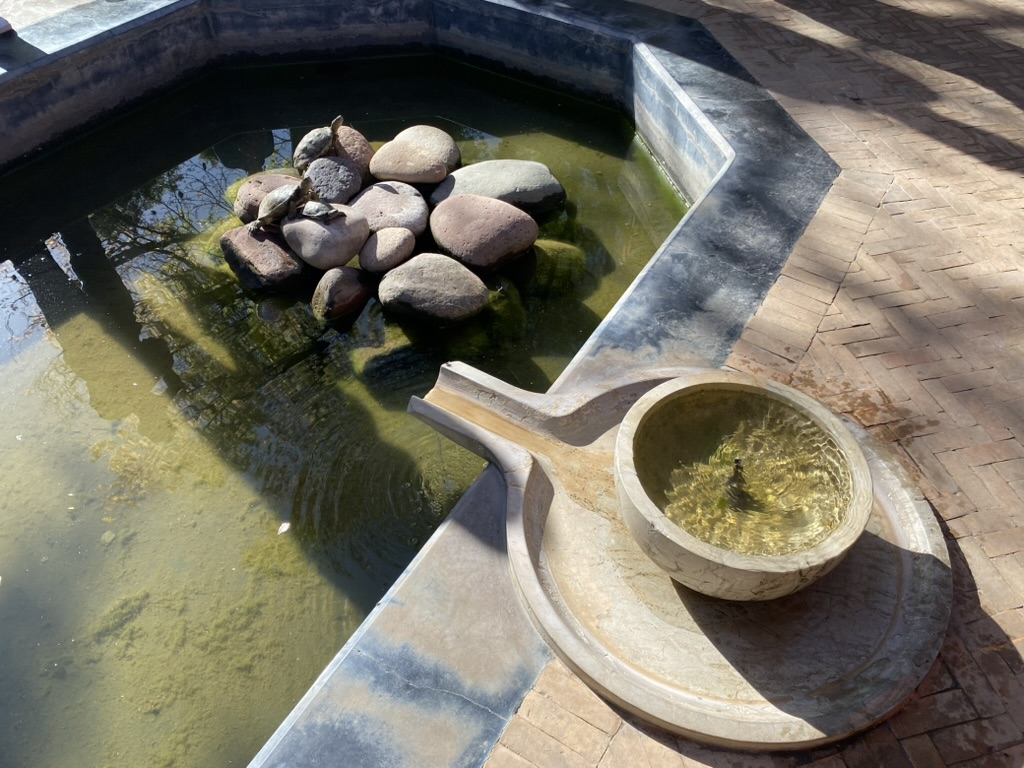
The walkways are beautifully laid with bricks in a herringbone pattern, sometimes in local colours and at other times in blue. The quantity of seating is another feature of the garden. There are spaces everywhere where the visitor can sit for a few moments calm and reflection.
Where possible, nineteenth century construction techniques have been used in the making of the tiles and brickwork and the plaster on the walls. All of this has softened the effect of the hard-scaping.
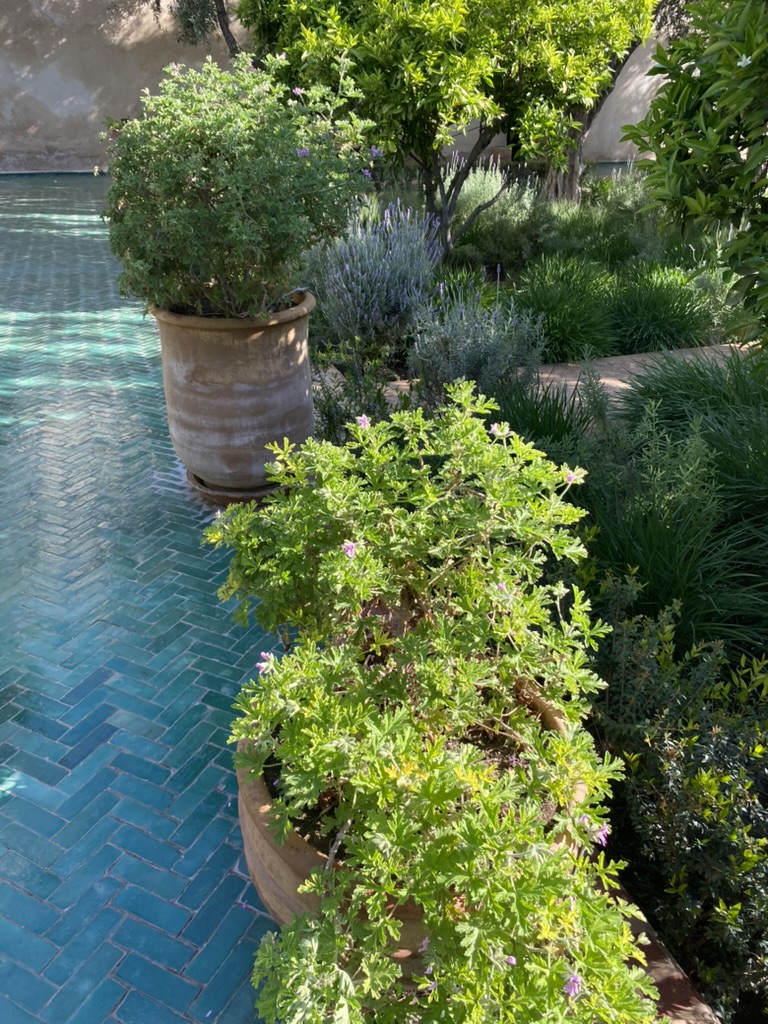
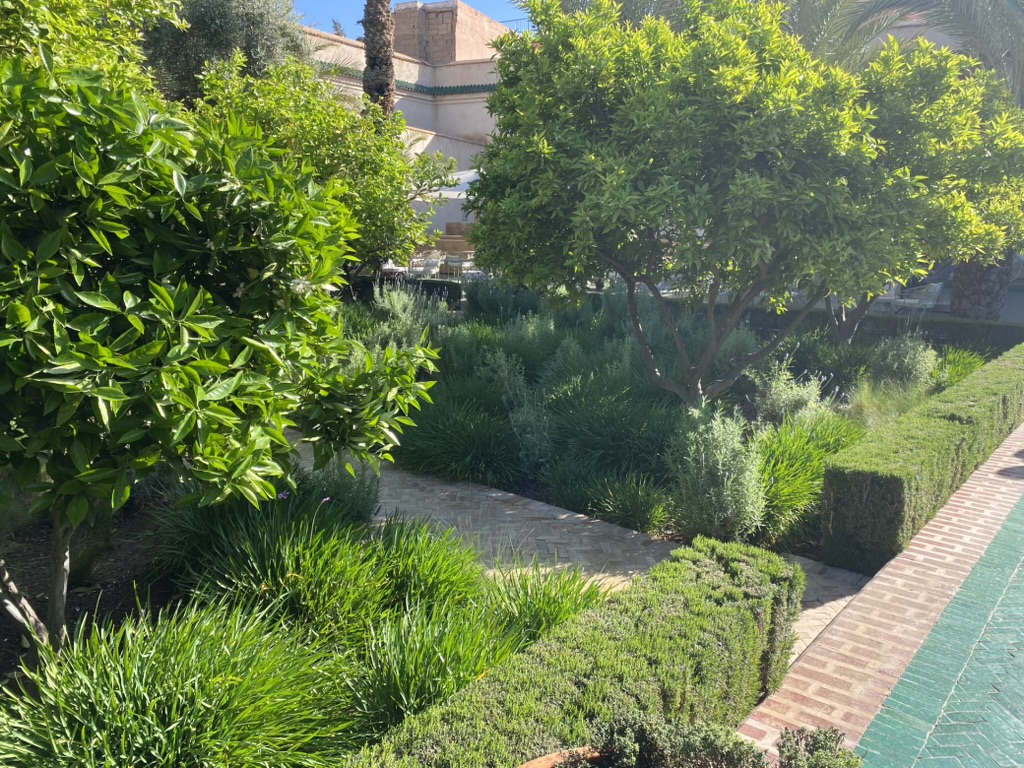
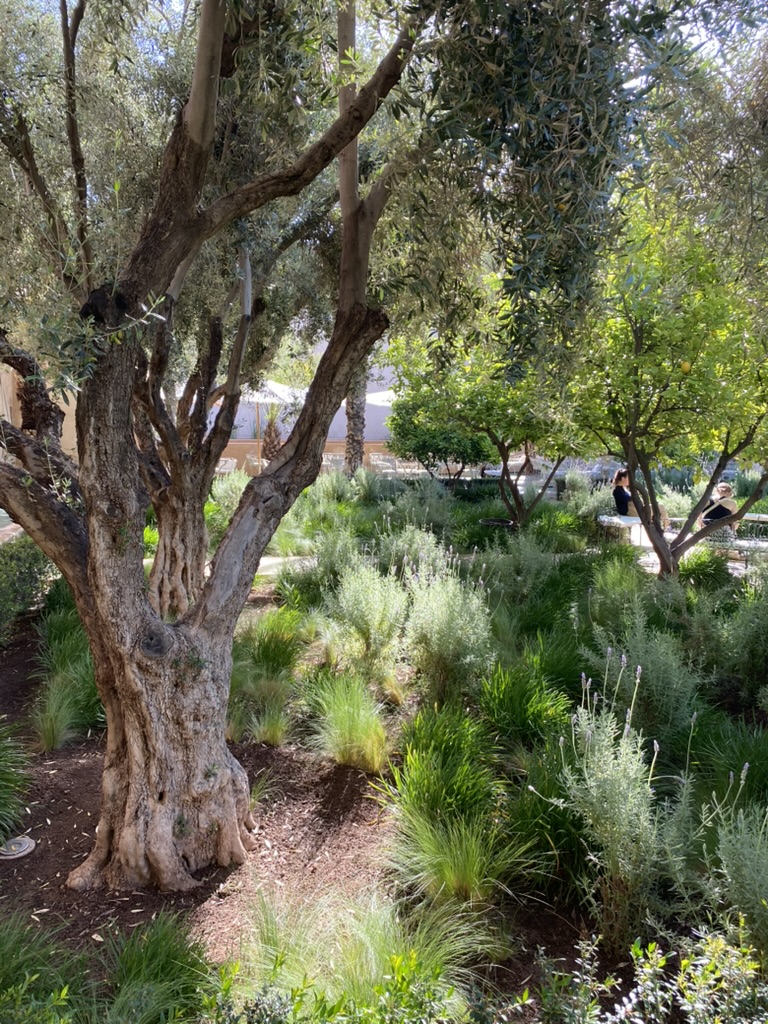
The four quarters of the second and larger garden feature argan, olive, fig and citrus trees, underplanted with lavender, Tulbaghia and Stipa tenuissima. Each quarter is again subdivided into four and edged with a mixture of rosemary and lavender, with pots of Pelargoniums, mint and Aeoniums dotted about.
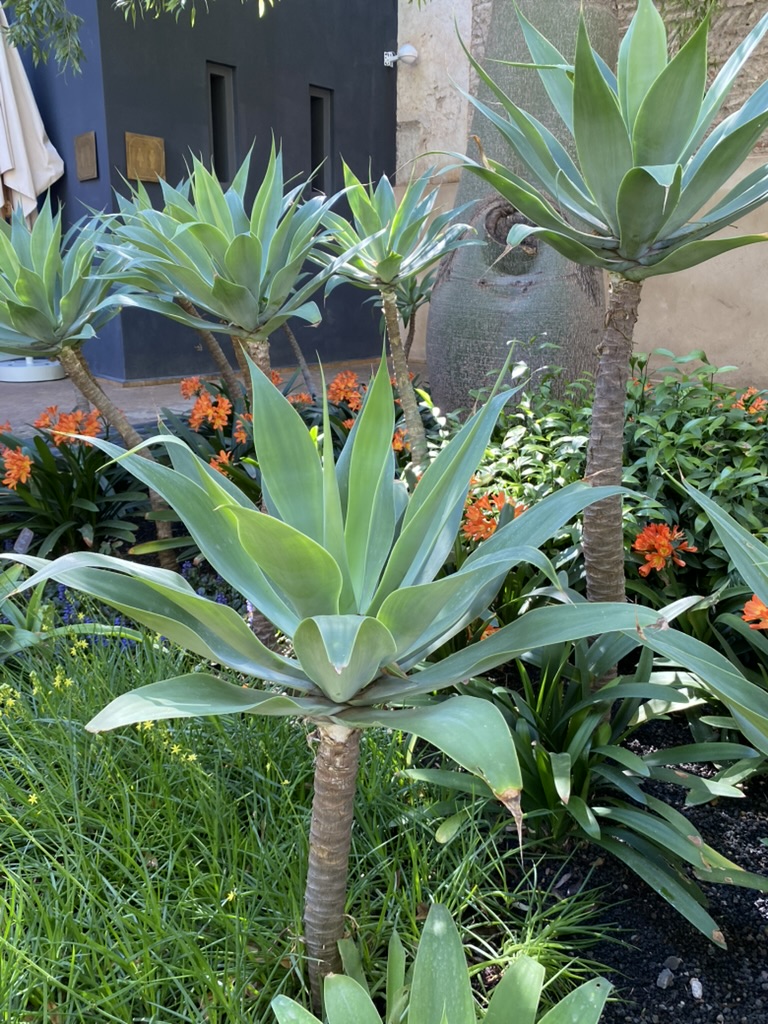
Although grasses would not have originally been used, Pennisetum and Stipa tenuissima effectively soften the planting and make it more of a garden, rather than a desert scene. In March, Clivia provide bright colour, but this is a garden based on shape and texture and manages to maintain a lush, soft feel which is often hard to achieve using drought tolerant plants.
It is astonishing to think that this was all built in three years and even harder to believe that it was renovated using donkeys for transport, surrounded as it is by the narrow alleyways of the Medina! Now 10 years old, this is a beautiful garden which must be on every gardener’s list if visiting Morocco.
Vija V, March 2026
Discover more from Charlton and Blackheath Amateur Horticultural Society
Subscribe to get the latest posts sent to your email.
 Charlton and Blackheath Amateur Horticultural Society