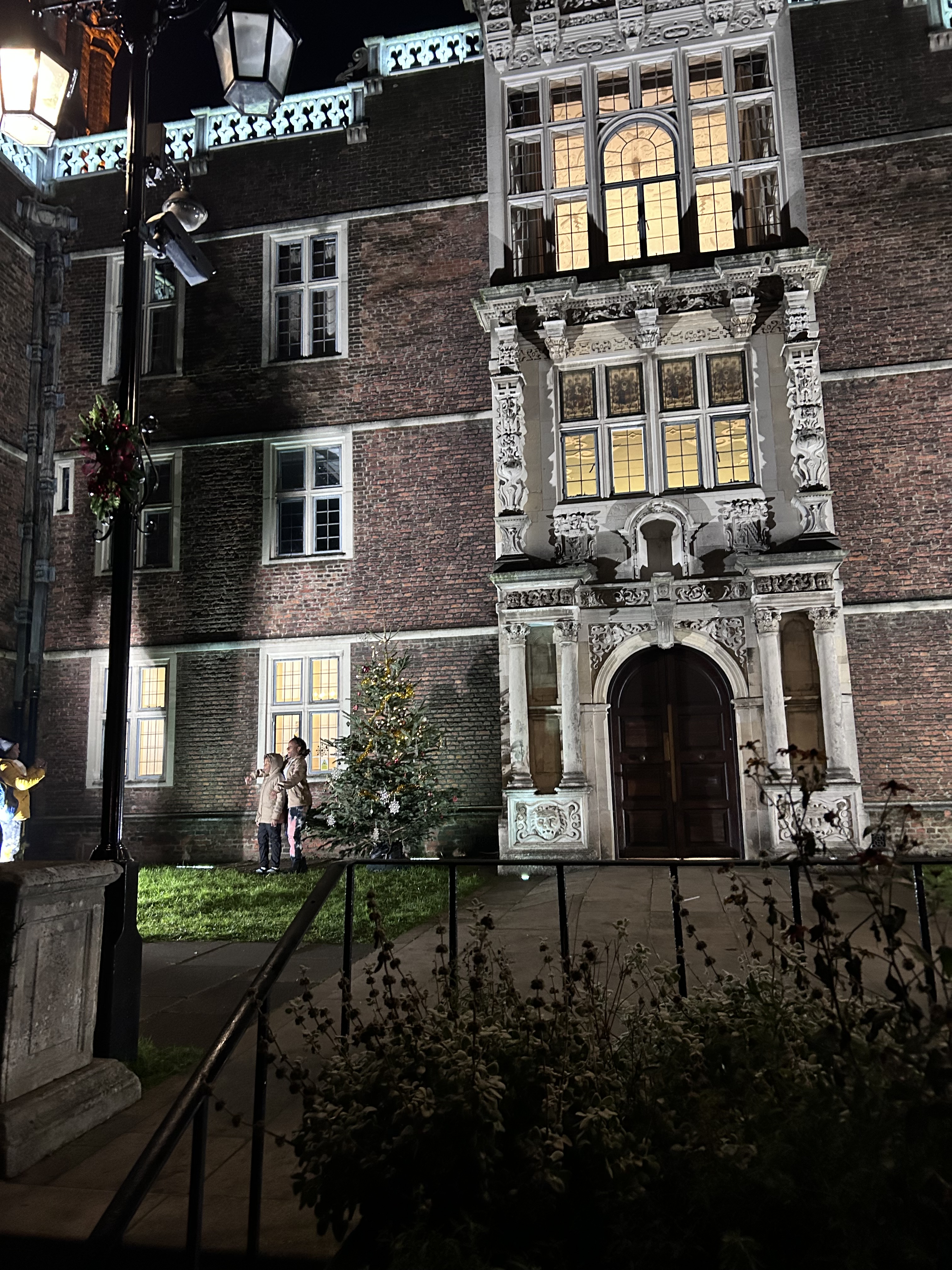
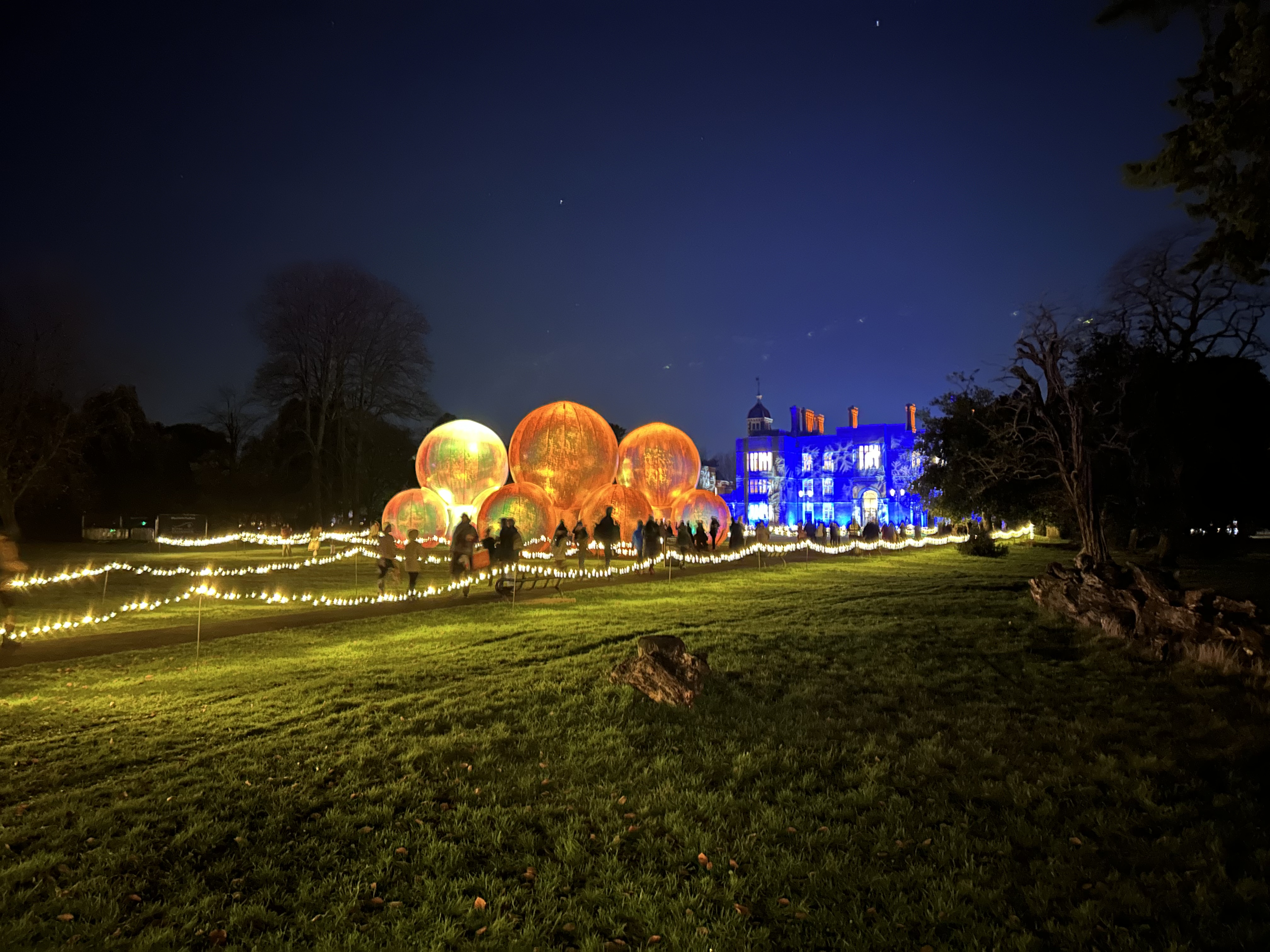
The park is sparkling! Our visit to the first night of Sparkle was very impressive, the light installations have been fitted really thoughtfully around the layout of Charlton House grounds.
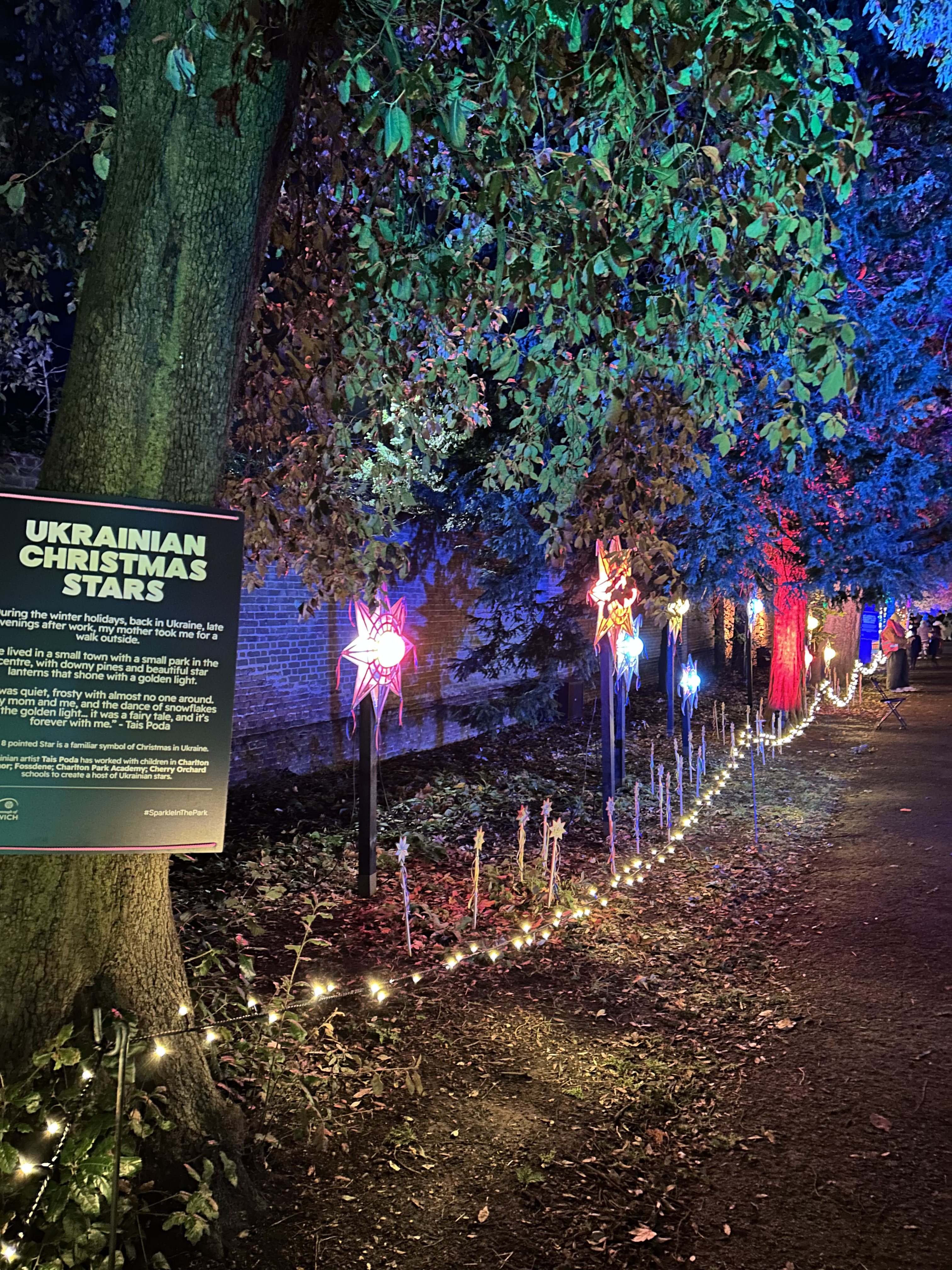
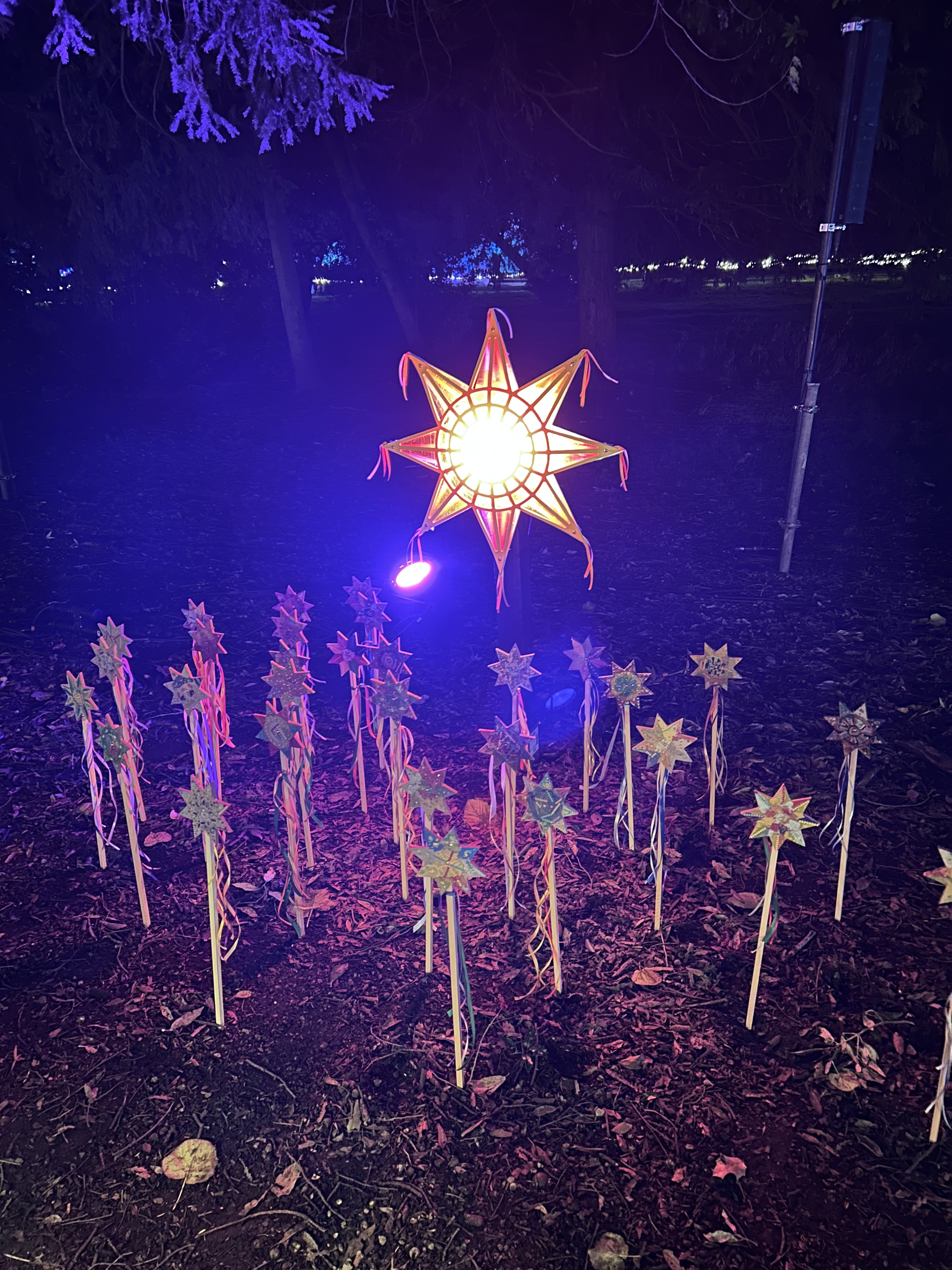
The trail starts by the Mulberry, and the avenue of trees have been lit up beautifully as you walk through a snow storm and then past installations based on Christmases in Ukraine, St Lucia and Lagos. We loved the Ukrainian stars decorated by local schoolchildren.
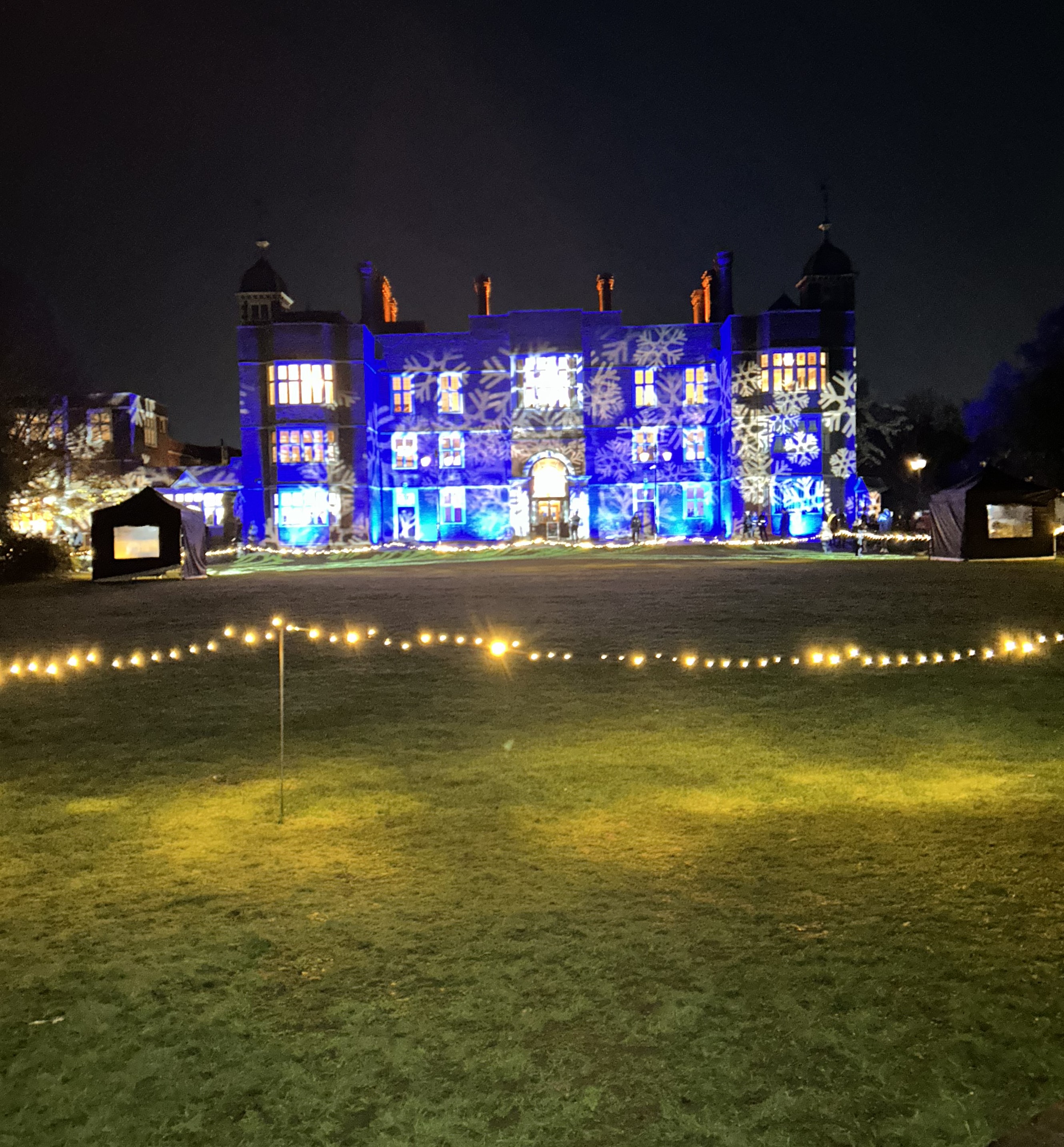
At the end of the avenue you turn back towards the House – and can’t miss the glowing giant spheres (sorry, I didn’t note down the artistic reasoning for those, but they are certainly eye-catching!) and beautiful blue and white snowflakes played onto the back of the House.
On Monday 18 November, we had our last meeting of 2024. Despite poor weather, it was well attended. Perhaps it was the mince pies, stollen and similar delights or maybe it was the “special” raffle prizes, including a hamper as the star prize. The Show Table was up to the usual standard and for sale there were the last of the tulip bulbs, a small plant sale and our lovely Christmassy cards.
RefreshmentsShow Table
Andrew Babicz gave a fascinating talk based on his extensive experience of great gardens in Britain, having worked in a variety of outstanding gardens himself – Inverewe Garden, Hampton Court, RHS Wisley and several London boroughs. He was Chief Recreation Officer for the London Borough of Redbridge and has also been involved in judging for the South and South East in Bloom Competition. His talk reflected on his knowledge and personal experience of a range of types of gardens in England and Scotland.
Originally from Hawick in the Scottish Borders, his interest in gardening was stimulated by his father who was a post-war immigrant from Poland who became head gardener at a care home. Andrew began his horticultural career as an apprentice at the Inverewe Garden in the North West Scottish Highlands, later being awarded a degree in Horticulture from Edinburgh University.
The Barbican isn’t a place one would normally expect to be among crowds of garden enthusiasts. But no-one was concerned about the venue, its brutalist architecture and its slightly bizarre layout. We were all eager to find our seats and hear the stories national treasure Monty Don had in store for us. And what seats! Our seats (thanks to a donation from a generous CABAHS member) were front and central, in touching distance of the stage (and indeed of Monty Don himself).
Although I have written about both these plants in the past, I have chosen them again as ‘Plants of the Month’ because the flower colouring of each is in harmony with one another and both brighten up a garden during the long winter months.
Salvia ‘Black and Blue’ with Westringia in the background (plus orange flower of Pineapple Sage)
Westringia fruticosa (Coastal/Australian Rosemary): This is second plant I have grown of this variety over the years: the first, given to me as a rooted cutting, had a good branch structure and lasted several years in a pot, positioned on a south-facing table; the second was purchased this June from a specialist nursery at the Horniman Plant Fair and, once again, it has an attractive rounded shape, which means they are suitable for growing in pots whilst they are small.
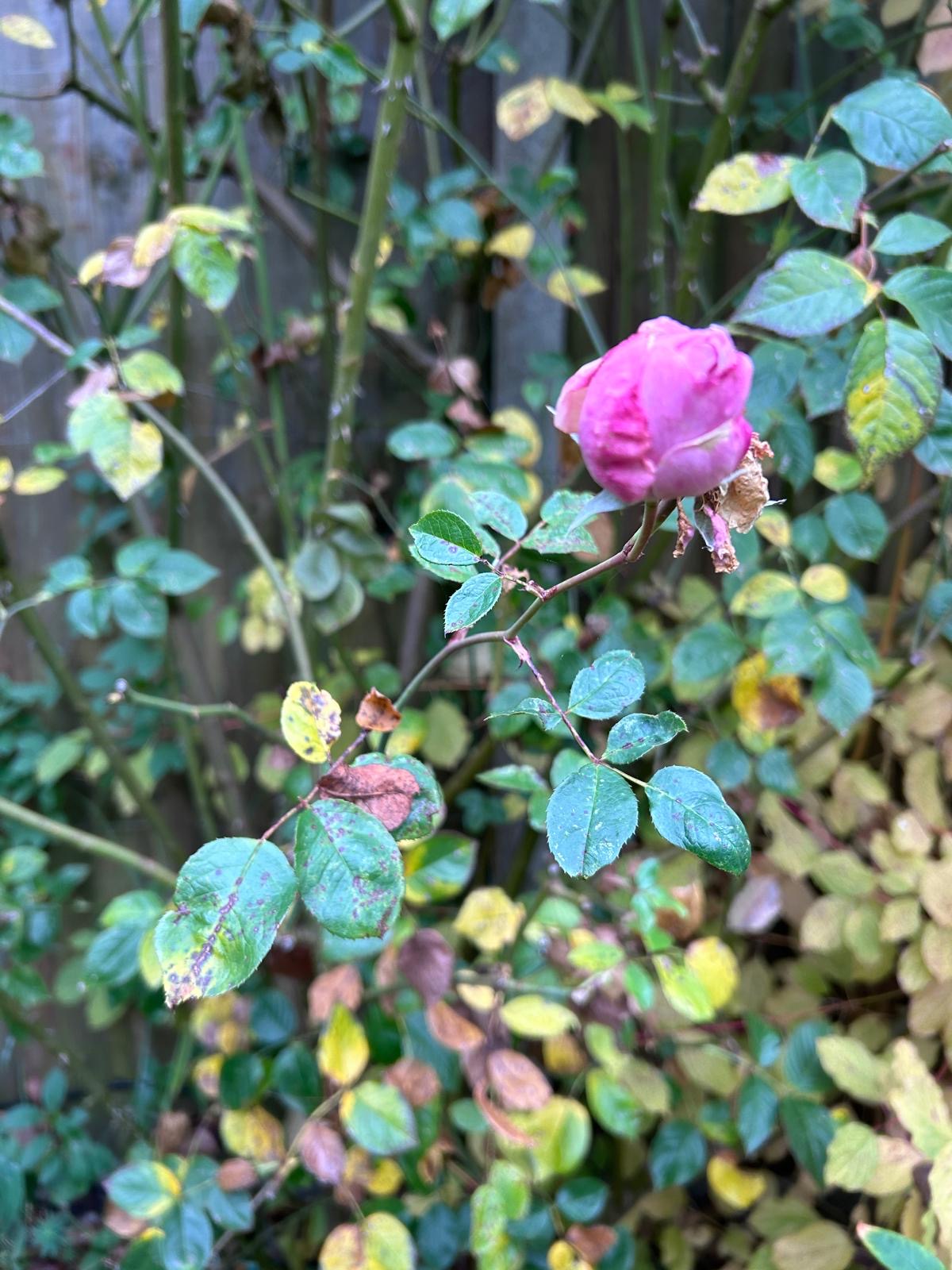
1. Check for blackspot on roses and make sure to remove the leaves by checking the bush itself and below it. But don’t add to the compost heap.
Blackspot on roses
2. If you have to, this is the best time to move trees and shrubs, but have your planting hole ready, and dig up with all the root ball and replant quickly, watering well until settled.
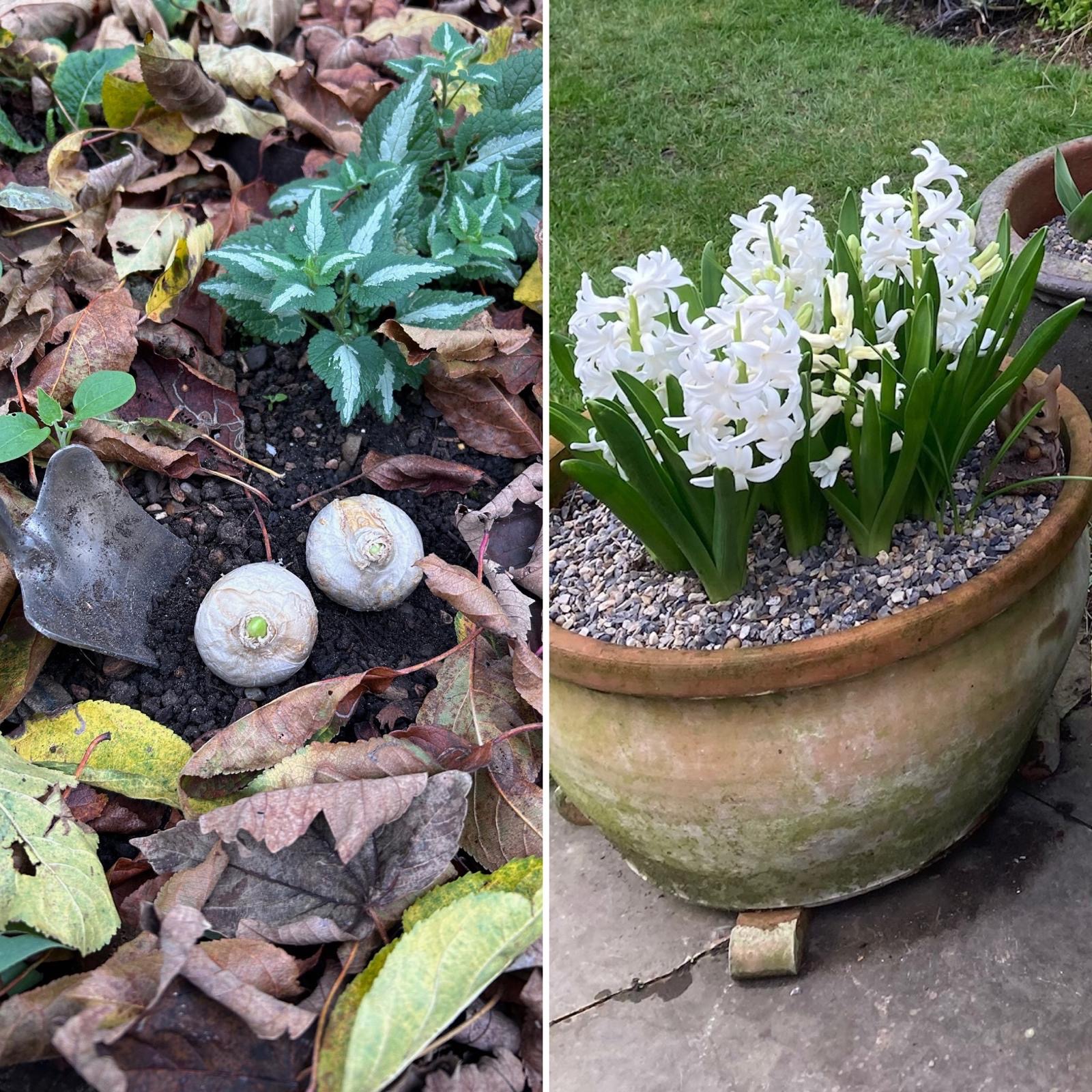
3. Plant your tulips and hyacinths now. either in the ground or in pots – but protect from squirrels.
Plant tulips and hyacinths
4. If you sowed sweet peas last month. harden them off now and it’s still not too late to get some going for an early crop.
You may have spotted that the Charlton House Mulberry has just featured at Number 8 in the list of 20 Greatest Trees of Britain (the Telegraph) – what a well deserved honour!
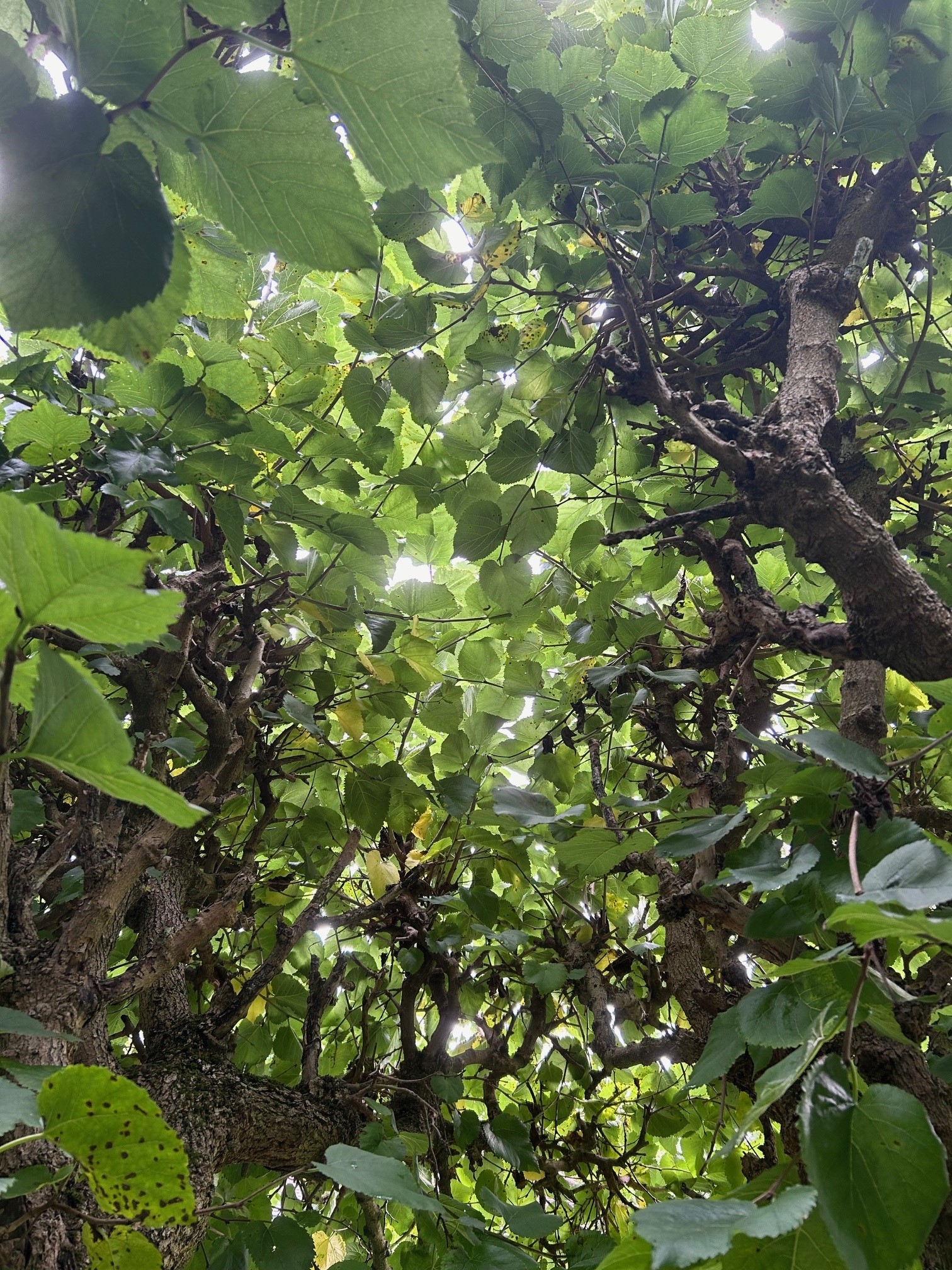
I confess to being a bit of a Mulberry tree fan, having planted one in our garden in Westcombe Park just over 35 years ago. Our tree was a favourite retreat for my kids when they were growing up since, like all Mulberries, it has a very climbable branch structure and wonderful leaf canopy. Even Jerry our Jack Russell can climb up it when he has the momentum to chase squirrels!
Morus nigra trunkGreen canopyJerry
Last year I bought my grandson a lovely children’s book about an old tree standing through the ages (What did the Tree See, by Charlotte Guillain) and reading it led me to ponder what our venerable Mulberry Tree at Charlton House might have been witness to over its 400 plus years?
The story would start in 1607, around the time the House was being built, when King James required landowners to purchase and plant 10,000 Mulberry trees between them, to start his ill-fated silk industry. When Sir Adam Newton bought the “Manor of Charlton”, it included six orchards, 260 acres of land, 100 acres of meadow, 200 acres of pasture and 200 acres of wood – so he certainly had space to please the King by planting a whole field of Mulberries. A pity that the wrong kind of trees were planted for silkworms and the climate was too cold for them to thrive. At Charlton House we know that “a few trees” remained by 1845 but our beautiful and venerable one is all that remains today.









 Charlton and Blackheath Amateur Horticultural Society