OPG Diary – Dec to March 23

Here is an update on what Jason and the Gardenauts have been getting up to in the gardens since my last post. Apologies it’s rather long, we’ve been doing lots!

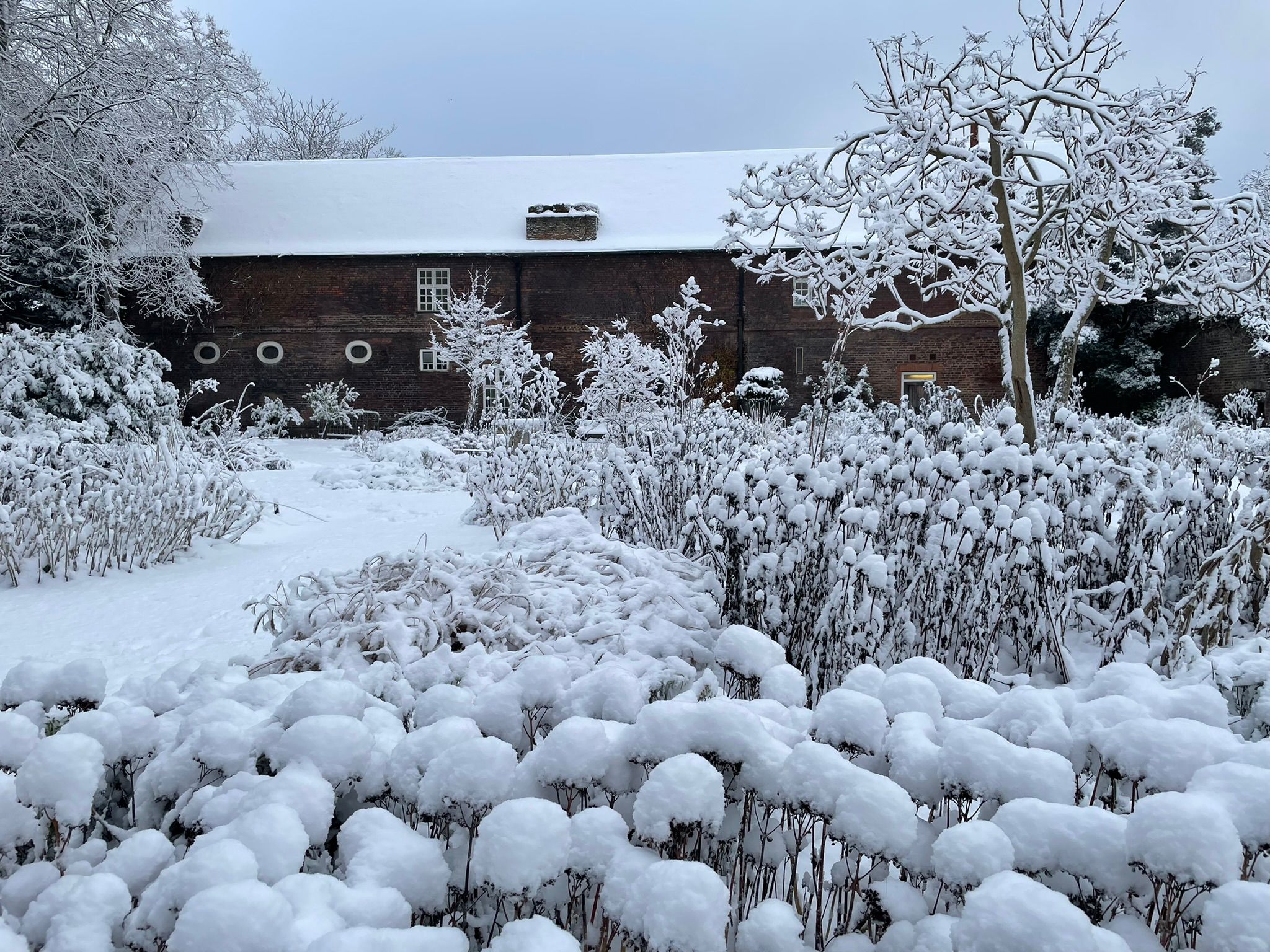
December turned the gardens into a winter wonderland, and caused us to miss a few days volunteering, but gave some great photo opportunities. The prolonged cold period hit a few of the more tender shrubs quite hard and we lost some big favourites like the Teucrium. 
January was about cutting back, the ivy in particular. The old walls cannot take the weight of the ivy so we are taking it off in stages and being careful of wildlife. Our efforts revealed the top of the doorway for the first time in some years!

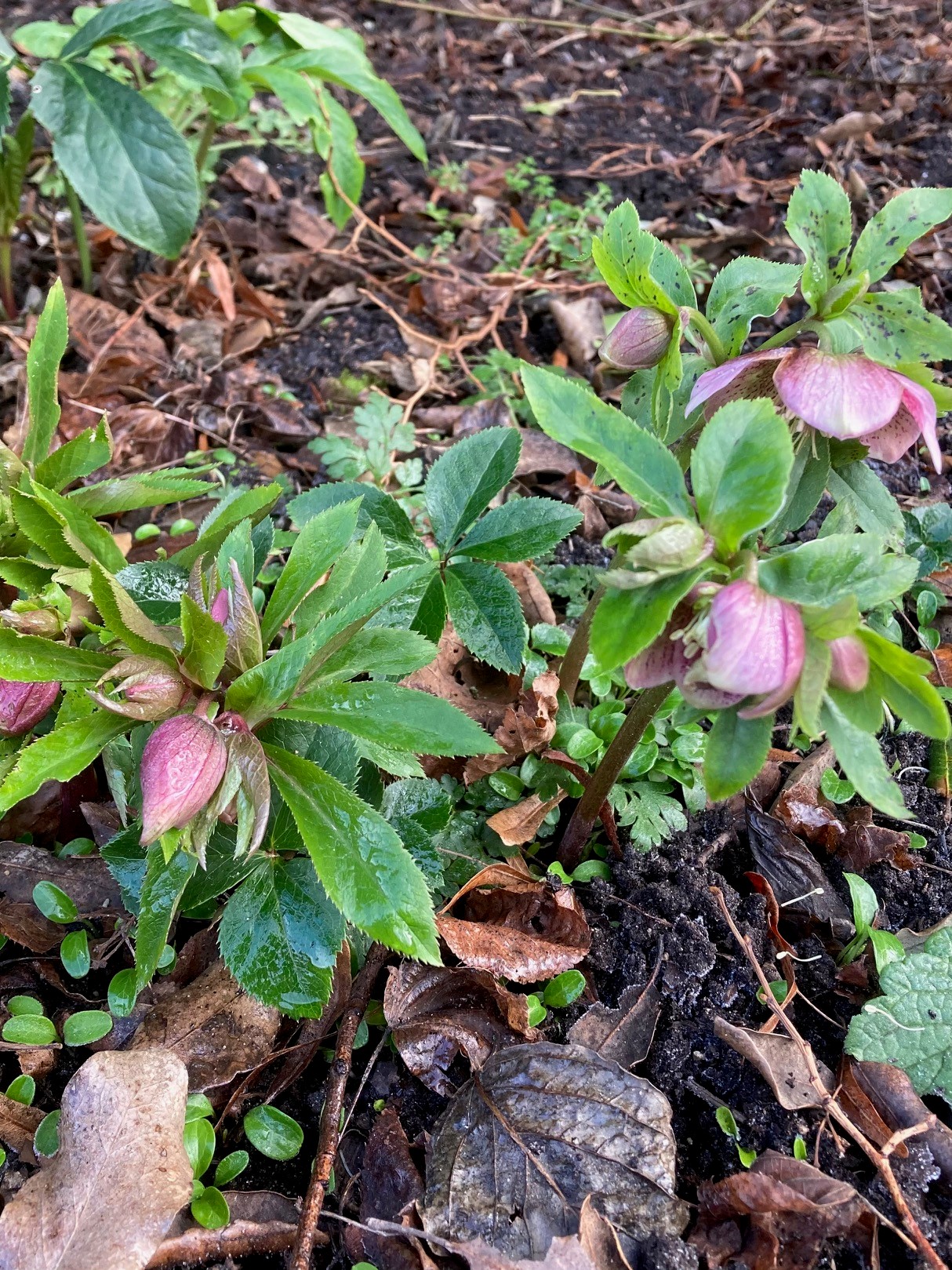
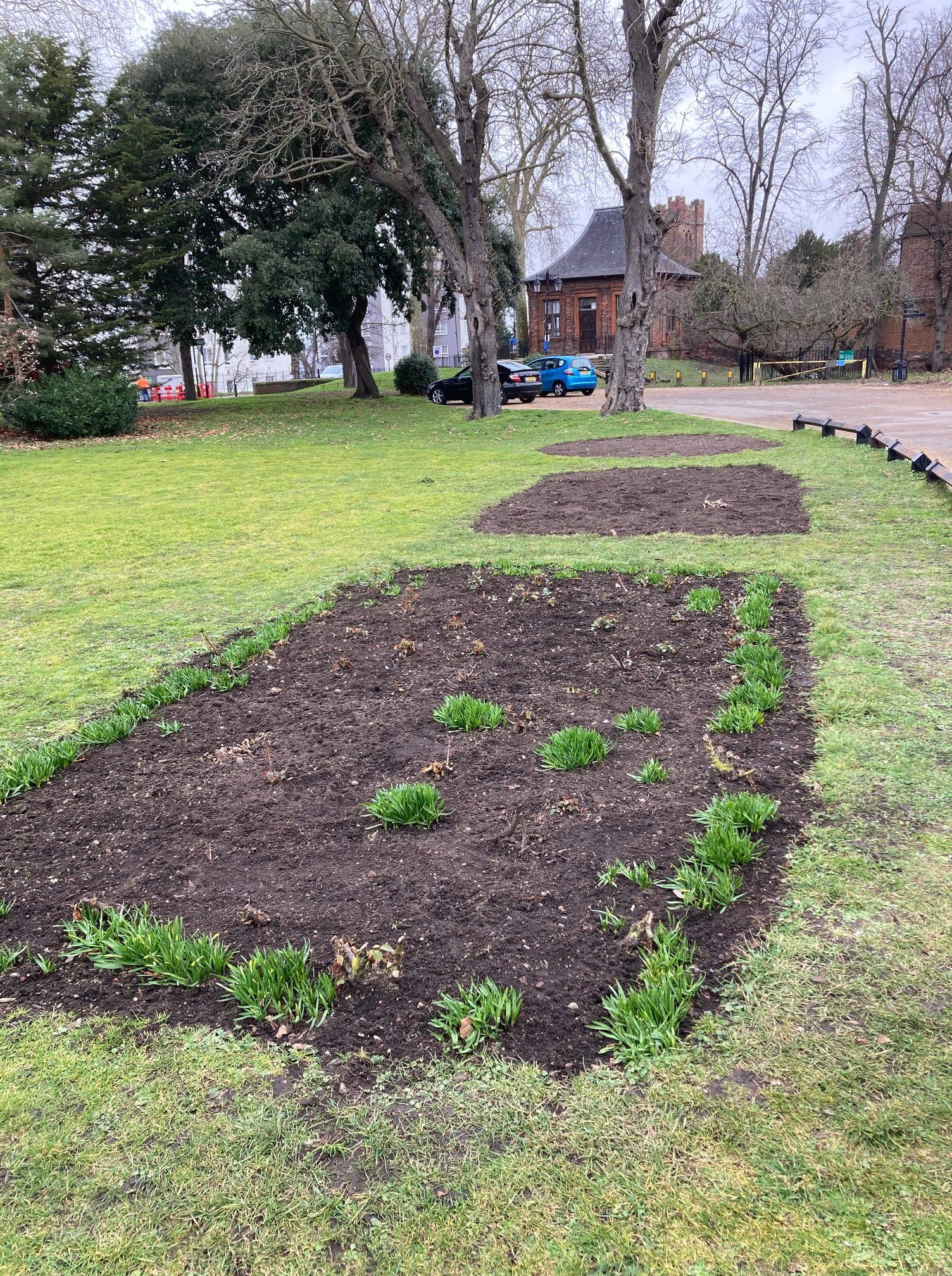
We have removed the palms from the front lawn beds and the beds will be re-designed this summer. The Palms were planted as part of an annual bedding scheme years ago and never envisaged to get as tall as they have. The Tete-a Tete daffodils have all been lifted and will go in the woodland glade next year. The Summerhouse has had a good weed and tidy-up, as has the Mulberry. Snowdrops and Hellebores popped up in the OPG woodland side.

In February, we discovered our regular feline visitor is called Casper and he lives in Canberra Road but clearly considers the gardens his playground.

Continue reading OPG Diary – Dec to March 23

Visit to Beth Chatto’s garden

For those who haven’t visited, Beth Chatto’s Garden is a horticultural paradise located in Essex, England. In March, visitors can expect to see a range of unique features and highlights that make Beth Chatto’s Garden a must-see destination for anyone with an interest in gardening or nature.

One of the most striking things about Beth Chatto’s Garden in March is the abundance of early spring blooms. As winter fades and the weather begins to warm up, the garden comes alive with an array of colourful flowers and blossoms. The famous Gravel Garden is a great place to start exploring the garden. This innovative garden was created in the 1990s, and features plants that are adapted to dry conditions, making it an ideal spot for early bloomers like crocuses, daffodils, and tulips. Visitors can expect to see bright pops of colour as they stroll along the winding paths that wind through the garden.

Beth Chatto's garden

In addition to the early spring blooms, March is also a great time to explore the woodland areas of Beth Chatto’s Garden. The woodland gardens are home to a wide range of plant species, including ferns, shrubs, and trees. Another highlight of Beth Chatto’s Garden in March is the chance to see the garden’s many rare and unusual plant species. Beth Chatto was a pioneer of ecological gardening and her garden is a testament to her commitment to sustainable practices. Visitors can expect to see a range of native and non-native plants that are perfectly suited to the local climate and soil conditions.

Vija

Barbican Conservatory

The Barbican Conservatory is a tropical and sub-tropical botanical glass-roofed garden located on the third floor of the Barbican.   It’s an ideal place to visit during the winter months (and all-year round) but on 16th March we hit the jackpot and were thrilled to see Clivia plants in full flower – perfect timing, as it is this month’s Plant of the Month!

This is the second largest conservatory in London (Kew Gardens’ Temperate House being the largest). Opened in 1984, the walkways and terraces have been designed to encourage visitors to wander the pathways and along the walkways in order to explore and experience an urban jungle and to observe the characteristic form of every plant.

Amongst the tropical planting, various exotic palms stand out and the handsome foliage of Monstera deliciosa (swiss cheese house-plant as we know it) is there to be admired. The  majestically tall weeping fig tree emphasises the height of the conservatory and frames everything around it. Wide, arching stems of the handsome tree fern  and the striking tree, Araucaria heterophylla (which we rested under), plus unusual climbers and shrubs including yuccas and cordylines, are amongst the 1500 plant species on show for the public to appreciate. 

Continue reading Barbican Conservatory

There is wild and then there is wild

I have never visited the Botanical Garden at Ventnor on the Isle of Wight, but the gardens have recently become the subject of some controversy with factions divided over the way in which the gardens are currently being managed (or not).   The significance of the garden lies in its situation in a micro-climate which makes it ‘the hottest garden in England’ and the previous head gardener gained a reputation for bringing in plants from far flung regions. From its foundation in 1970 until it was sold to an American businessman, John Curtis in 2012, the garden was publicly owned, and run by the Isle of Wight council, but as the council struggled with significant financial losses the garden was sold.

Over the course of the next few years a number of visitors noted what they described as a decline in the gardens – weeds were appearing and there seemed to be a general feeling that it was no longer being managed properly. John Curtis defended the garden arguing that the methods being used supported gardening in a time of climate change. Unlike a typical botanic garden, plants are no longer labelled which the current head gardener, Chris Kidd describes as creating an ‘immersive experience’ and the idea is to garden with nature.

With opinions sharply divided on both sides, ultimately, much seems to depend on what one describes as a ‘natural garden’ and the nature of a ‘botanic garden’. What is wild gardening, or gardening with nature? How natural is a natural garden? Ventnor’s dilemma seems to embody much of current horticultural conversation.

Pat K

Visit to RHS Wisley

On Saturday 11th February Jean and I spent a very pleasant day at RHS Wisley. This was the last day of the Iris and Cyclamen Show held in the Hilltop event hall. 

The displays were beautiful. So uplifting to see so many spring colours after a long, cold winter. We were amazed at the variety in size and pattern of cyclamen leaves, all in perfect condition of course.


The Iris Fields of Hall Road, Wenhaston IP19 9HF were selling small pots of irises to which we both succumbed!

Continue reading Visit to RHS Wisley