So far February 2026 has been very wet, with heavy and prolonged downpours, which has restricted everyone’s garden visits, including mine. So I’ve had help this month from Ali H (many thanks) in seeking out winter-flowering specimens that are looking at their finest at the moment and hopefully will be of interest to you.
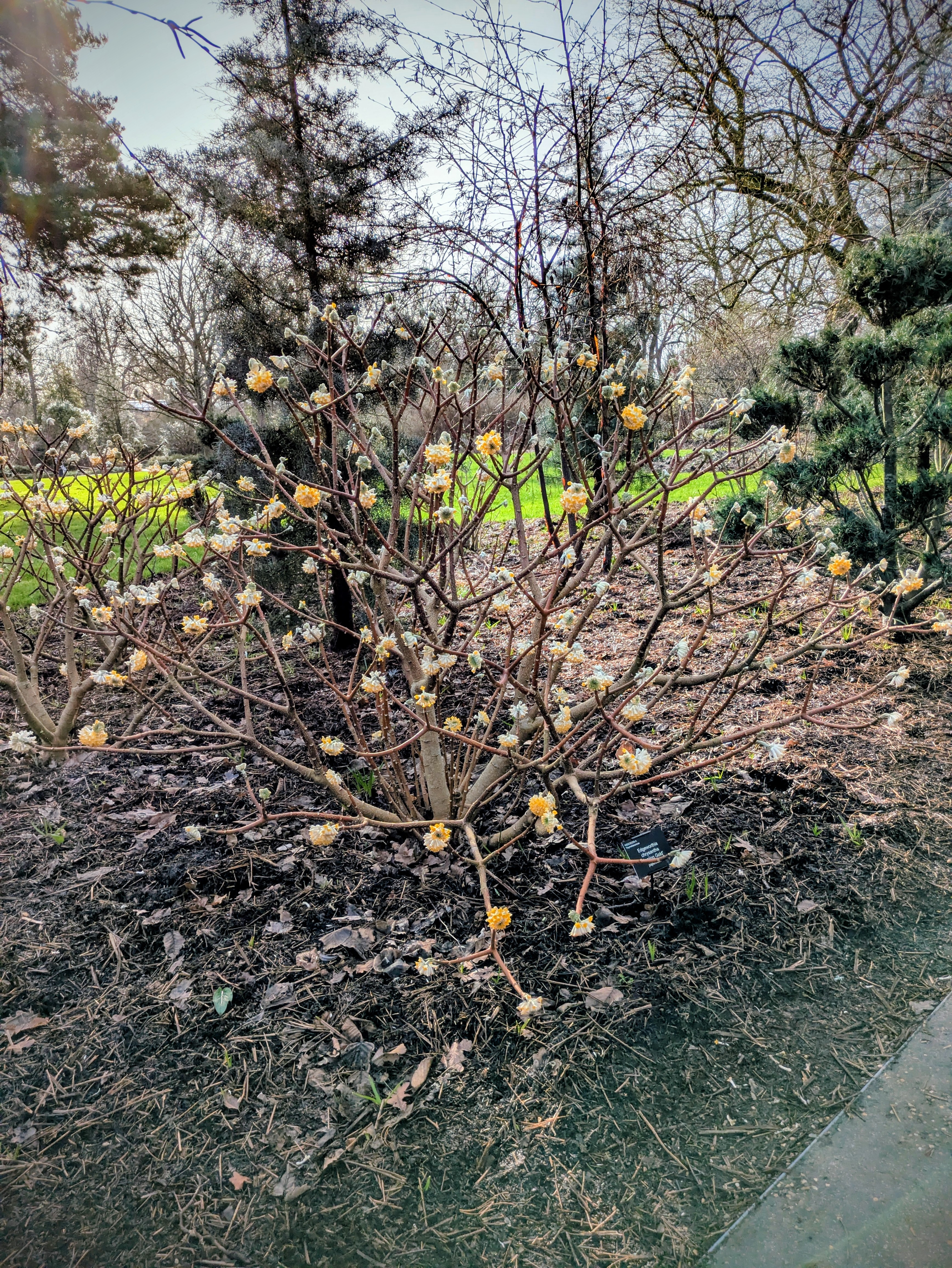
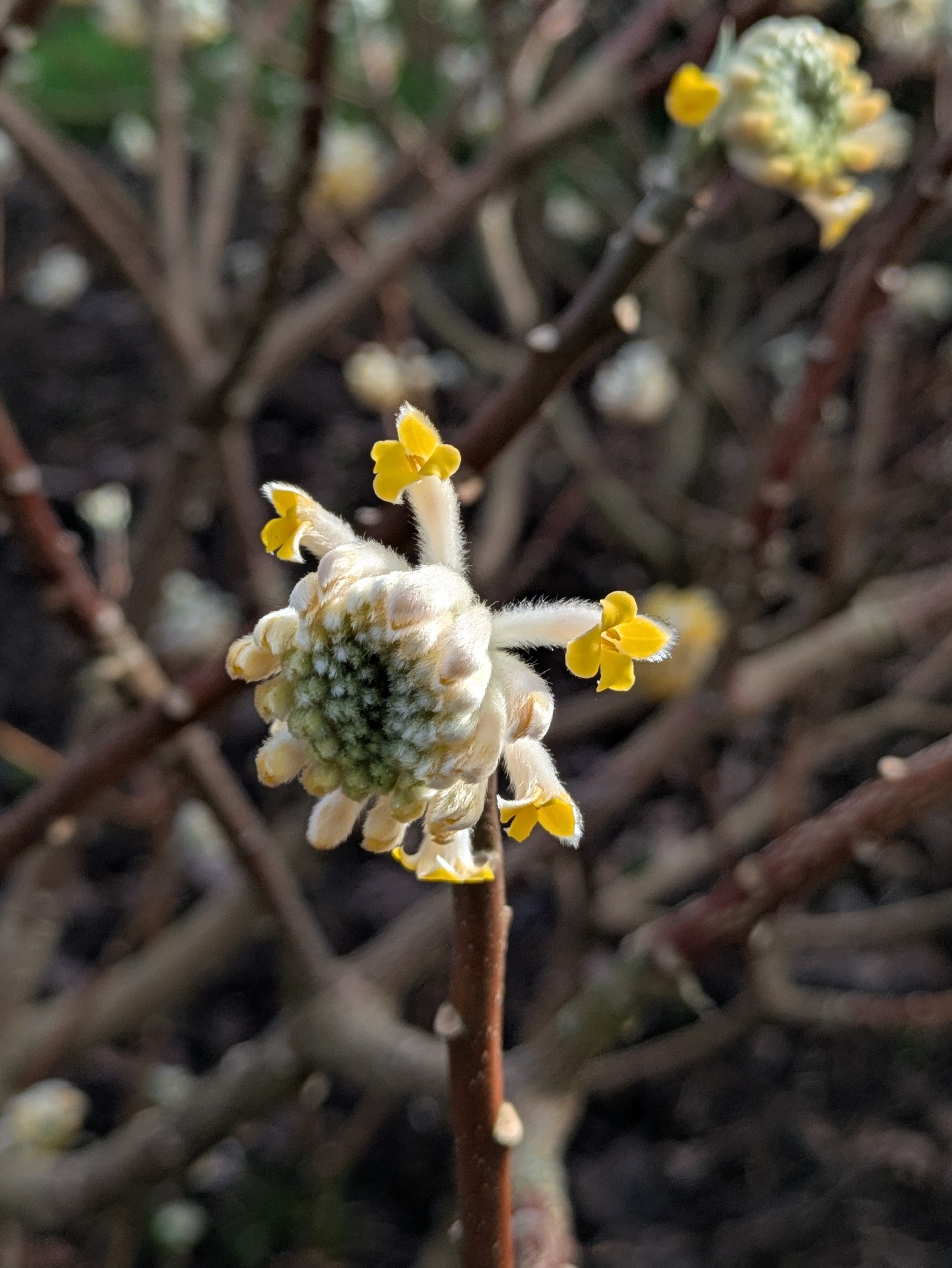
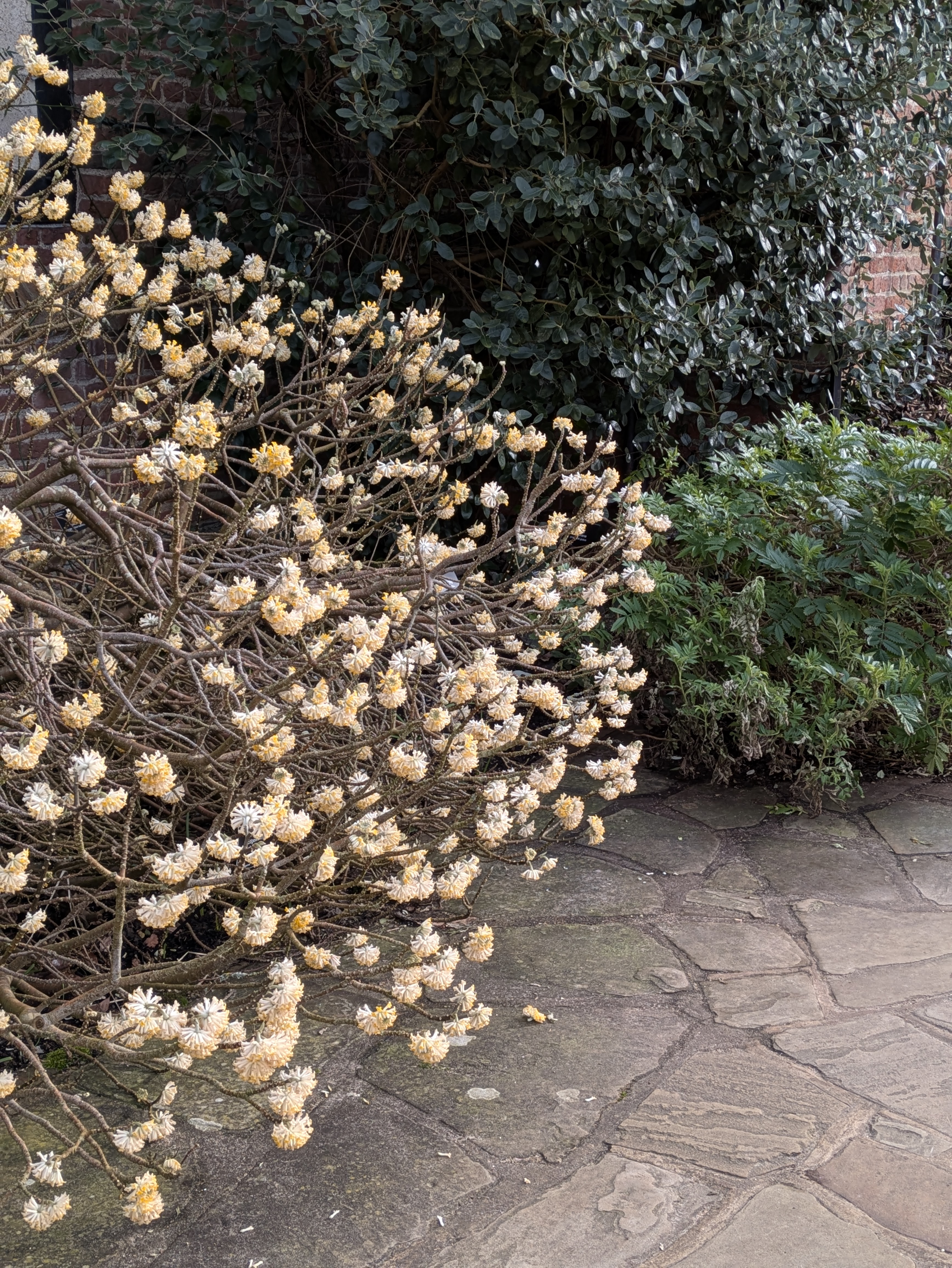
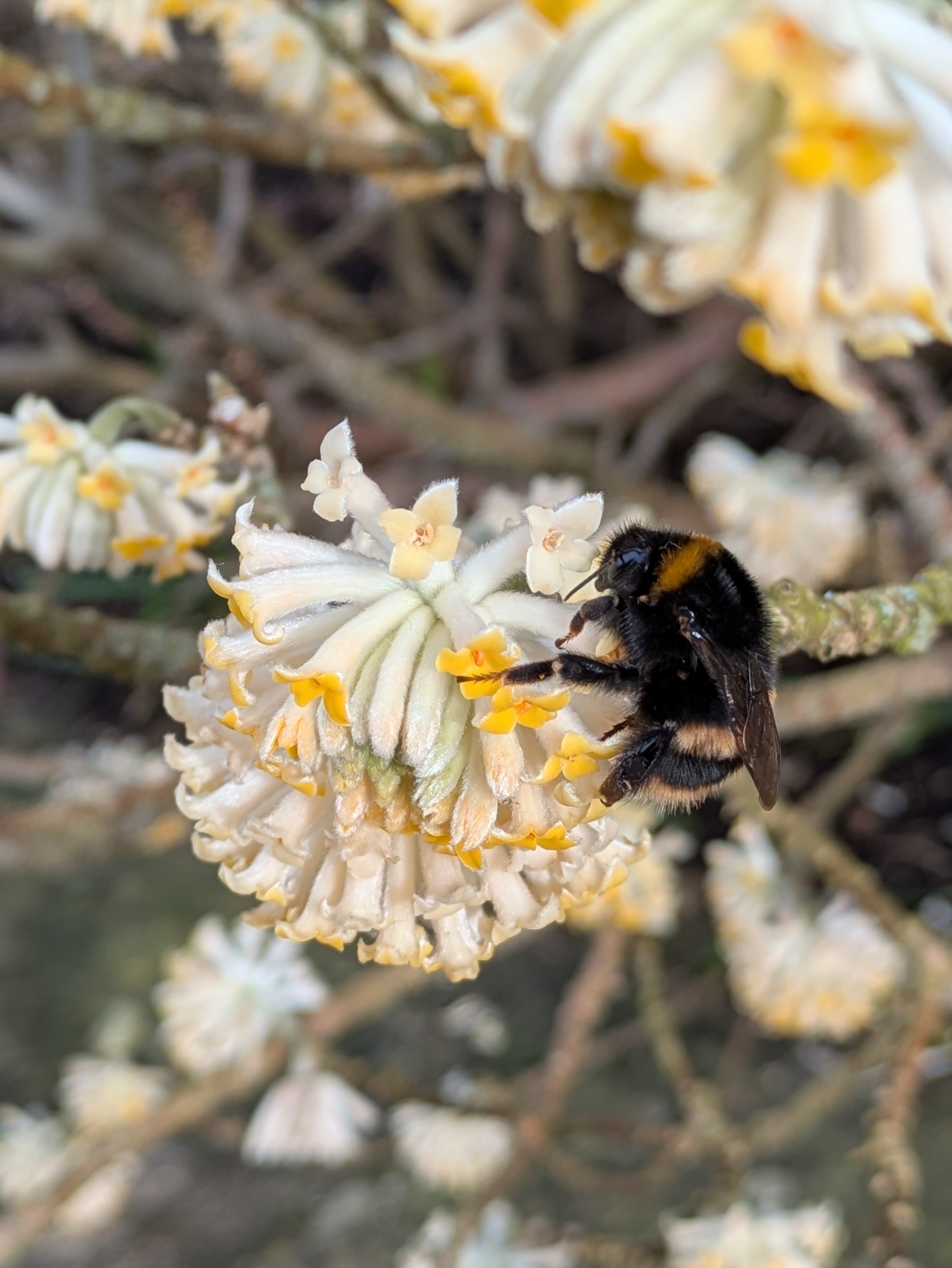
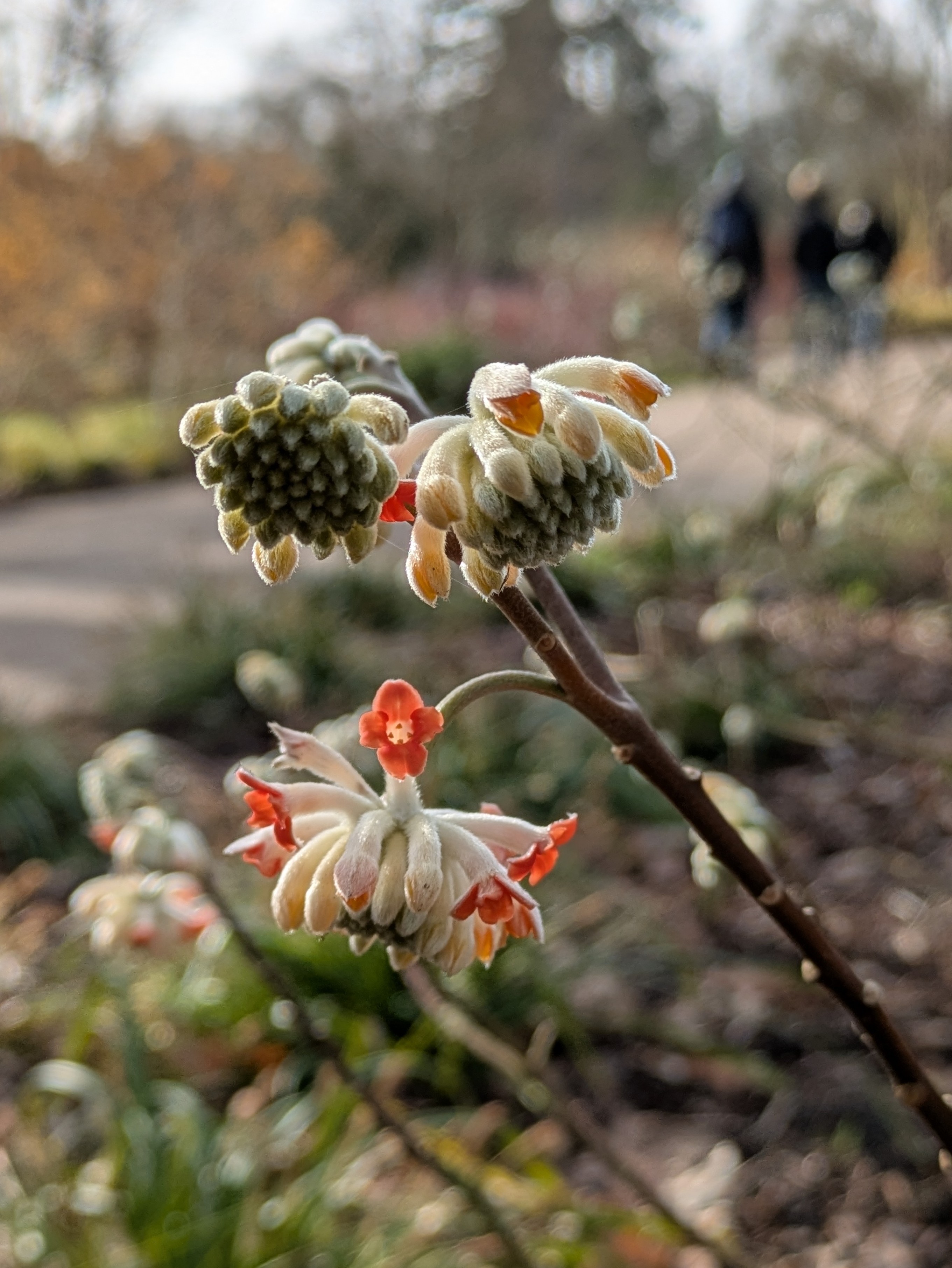
Originating from China and the Himalayan regions, Edgeworthia chrysantha is related to the Daphne family and I am not surprised as the flower clusters are extremely fragrant. They appear on the tips of bare stems in late winter, then in spring covered in foliage, consisting of attractive slender leaves, making a nice rounded shape to fit within planting schemes.
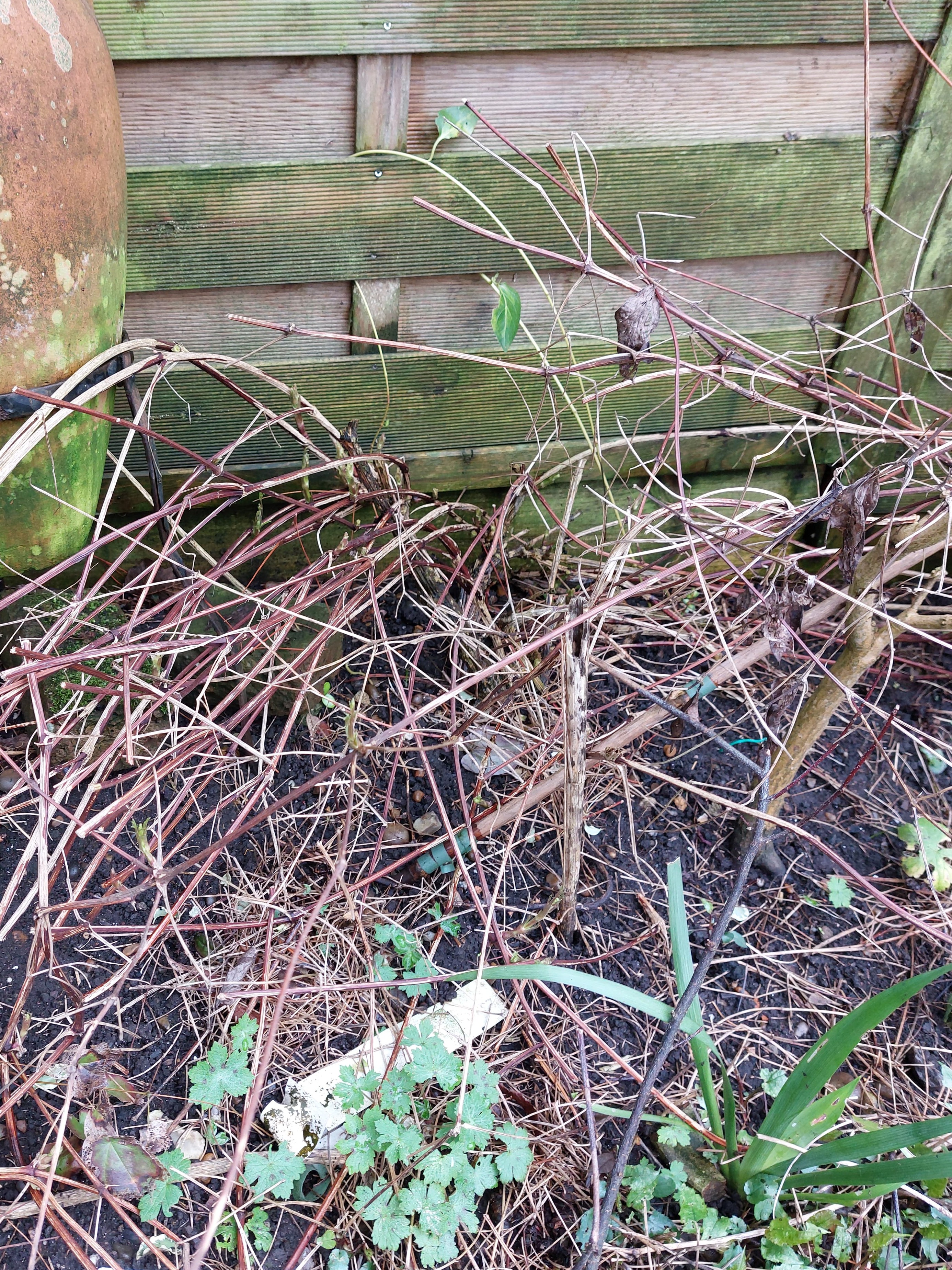
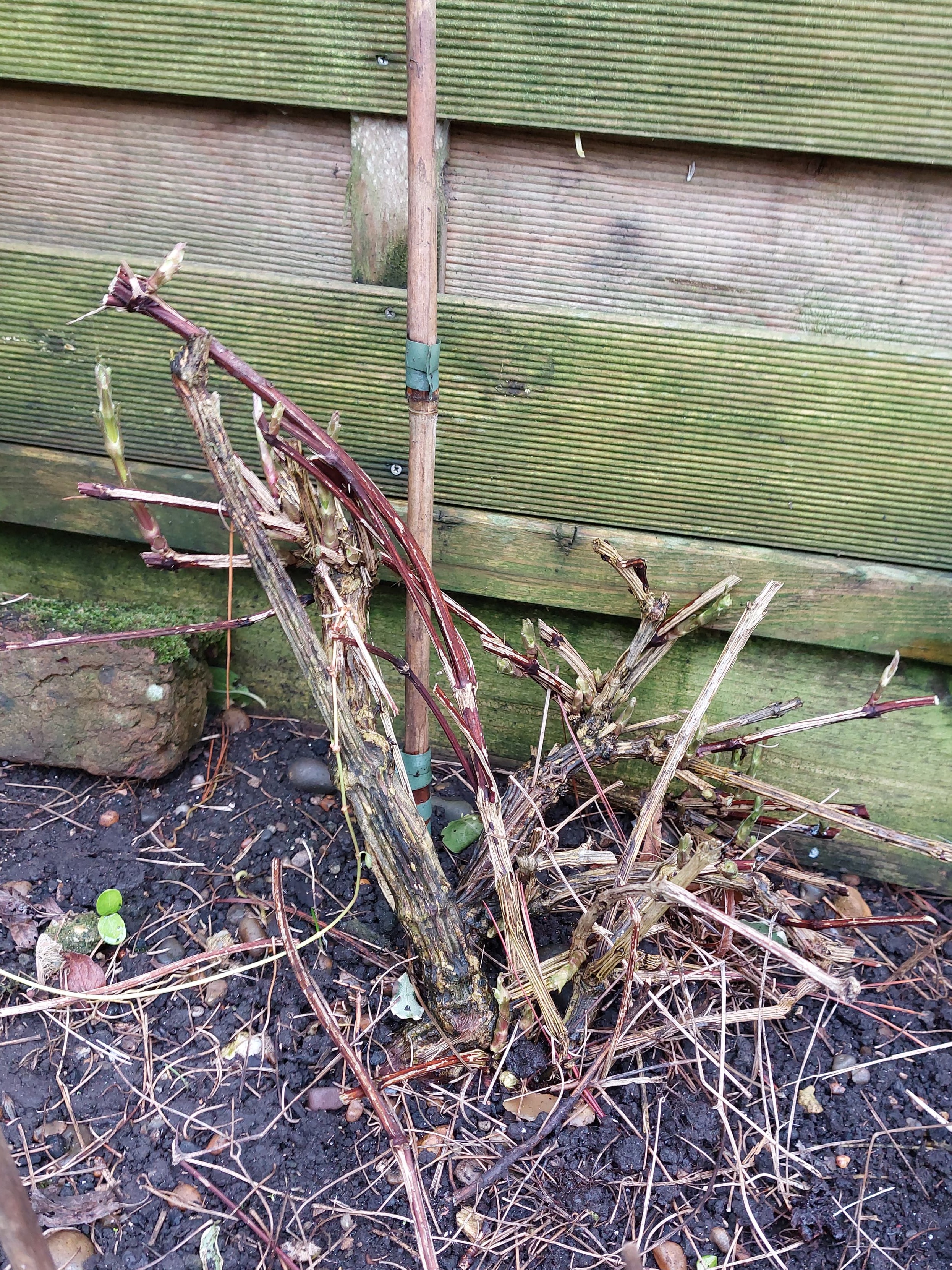
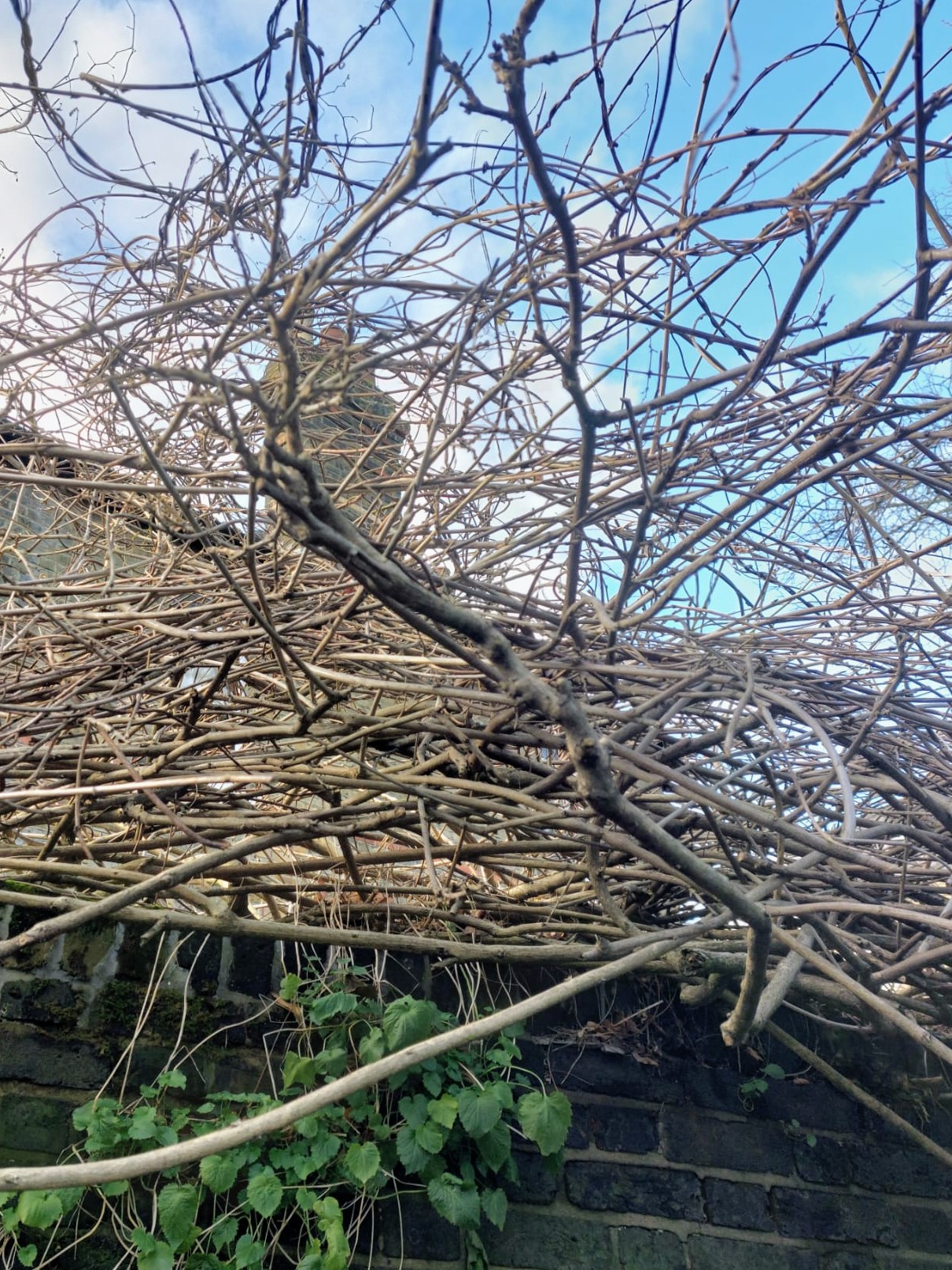
1. It’s time to prune your Group 3 Clematis (the Viticella and Jackmanii type) to tackle tangled growth at the base so they can grow away strongly. Take all growth back hard to about 6 to 12 inches above the ground, cutting above a leaf joint. Then give them a feed and a mulch. It seems drastic but they respond well and will grow quickly. If it’s a fairly new plant check around the base for slugs which can quickly eat any weak new growth.
Clematis viticella ‘Betty Corning’ before and after a hard prune
2. Cut back all spent foliage on grasses making sure not to snip emerging shoots. And look out for any seedlings to pot up for our plant sales table if you don’t want them!
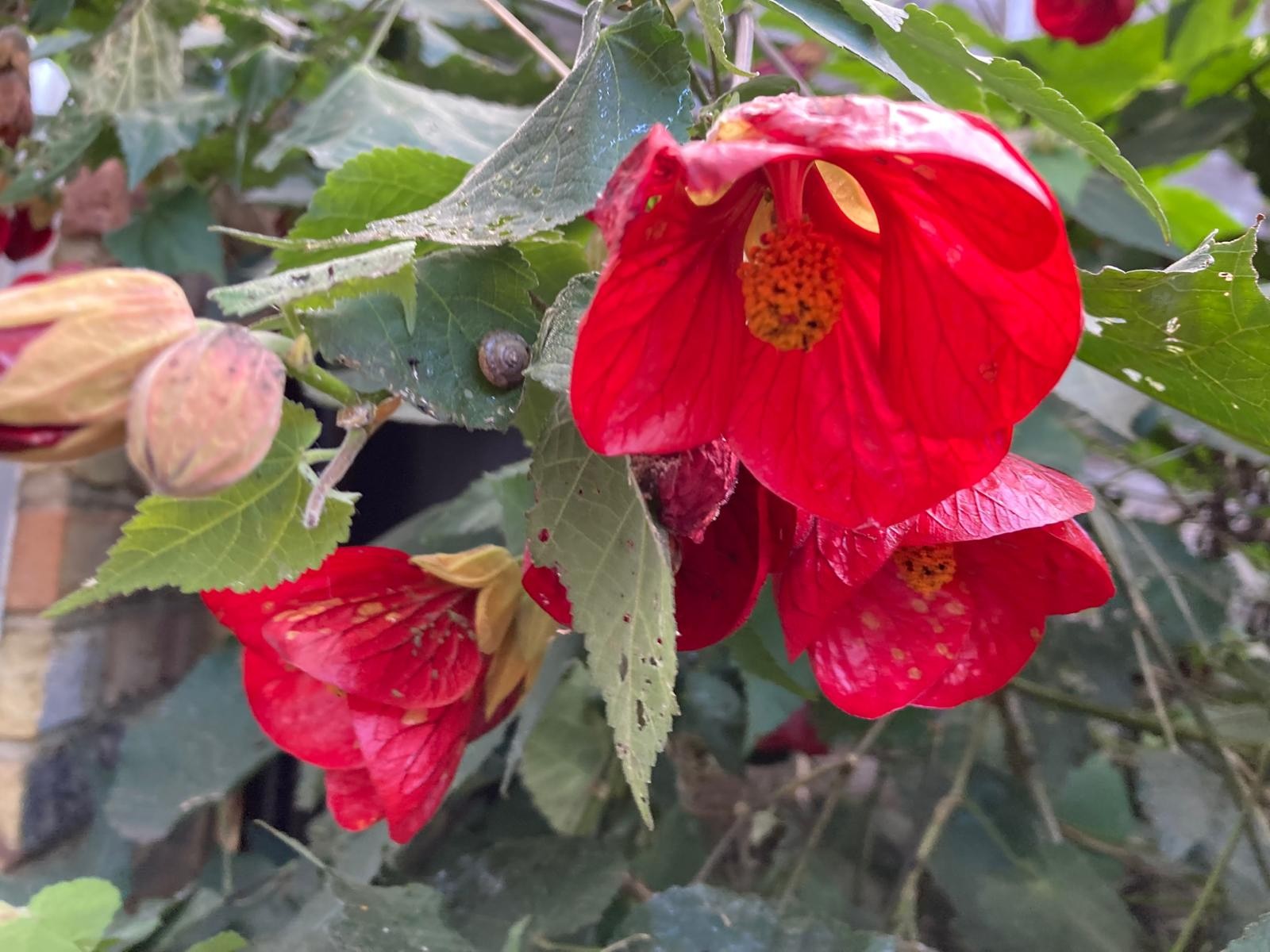
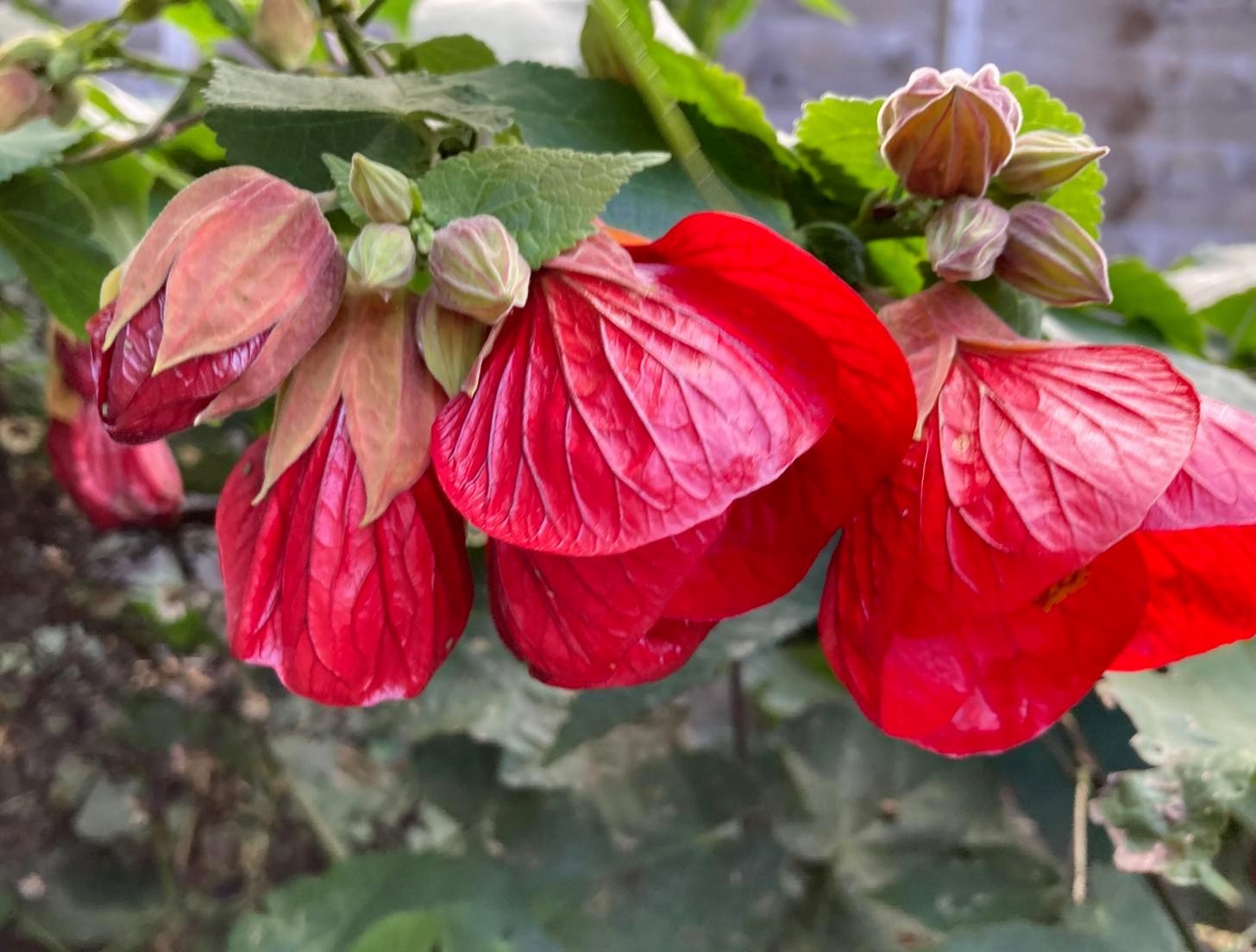
On Christmas Eve 2025, after enjoying a treat of delicious coffee and mince pies, we were shown Karen S’s very stunning red-veined Abutilon, growing extremely happily in the shade, on the north-facing side of the garden. Covered in glowing, pendulous, lantern-like flowers amongst its dark-green foliage , the shrub lit up the garden during those dark, December days.
This very healthy shrub with maple-like leaves, had been cut back hard some time ago and had grown very quickly. It was a cutting from Margaret T’s garden two or three years ago. Its growth was very impressive indeed. But before that, the cuttings originally came from North London some years ago, from a plant-lover’s garden. One Abutilon in this garden was seen growing happily as a tall shrub/small tree beneath a mature tree, thus receiving a fair amount of shade and protection, which I think is necessary, as Abutilon species originated from tropical and subtropical regions of South America.
Abutilons have a long-flowering period in London, in bloom from early-to-mid summer and again in early winter. Karen’s shrub is still flowering now in January, but the prolonged cold snap earlier this month has, naturally, affected it – not as upright as it was but still continuing to bloom, although the flower colour is no longer quite as vivid. Let’s hope it warms up and recovers quickly. I know how it feels!
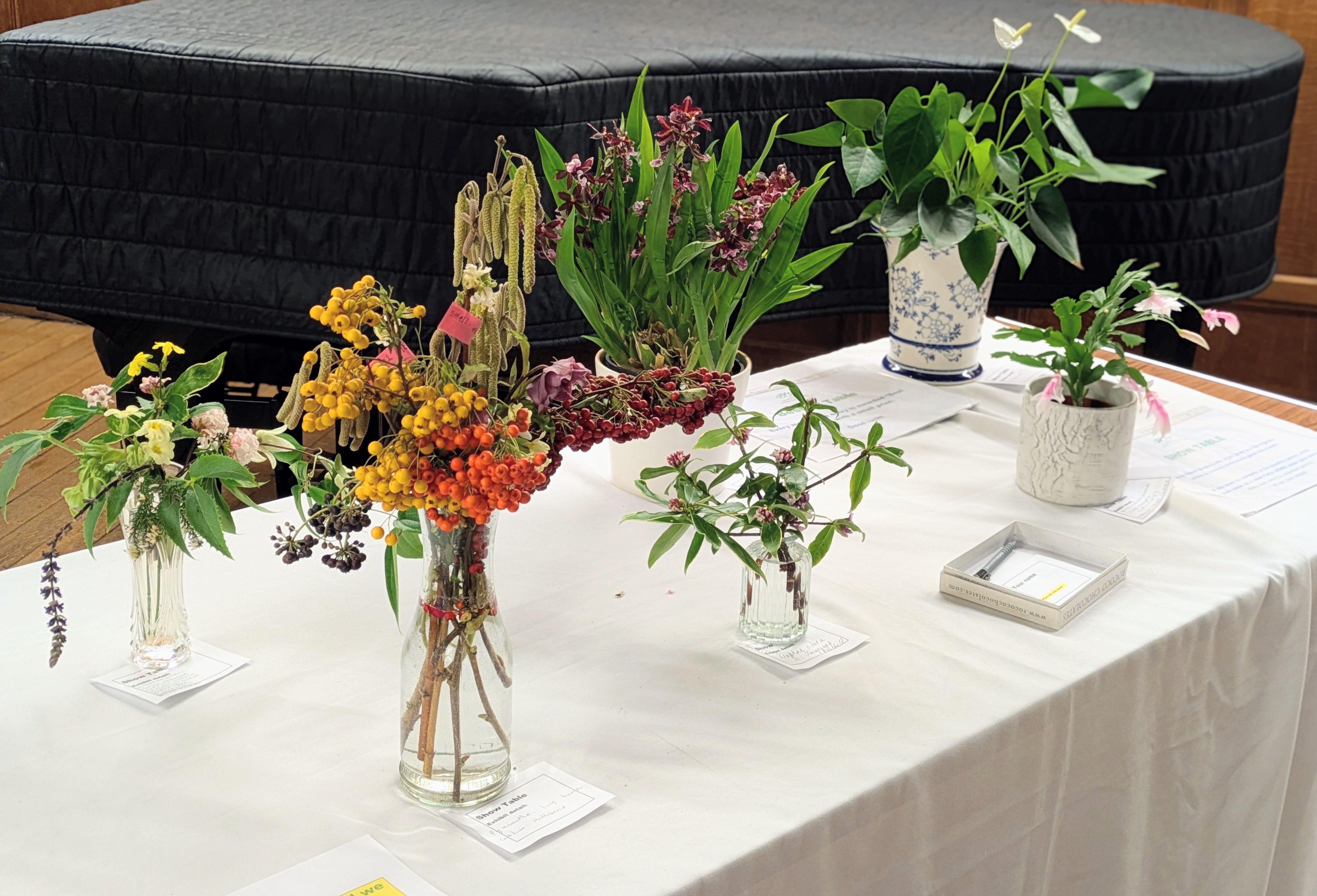
As usual, members enjoyed refreshments, took part in the raffle, shared their garden-related resolutions for 2026 and, of course, there was the regular Show Table. Six members took part with a wide variety of entries. We hope that as Spring gets going more members will be keen to show off and share their plants that are looking good each month.
2. Any form of mulch is good on the soil now, in the form of your own homemade or bought compost, or even leaf mould if you have it. If you can’t face lightly forking it in, the worms will do it for you.
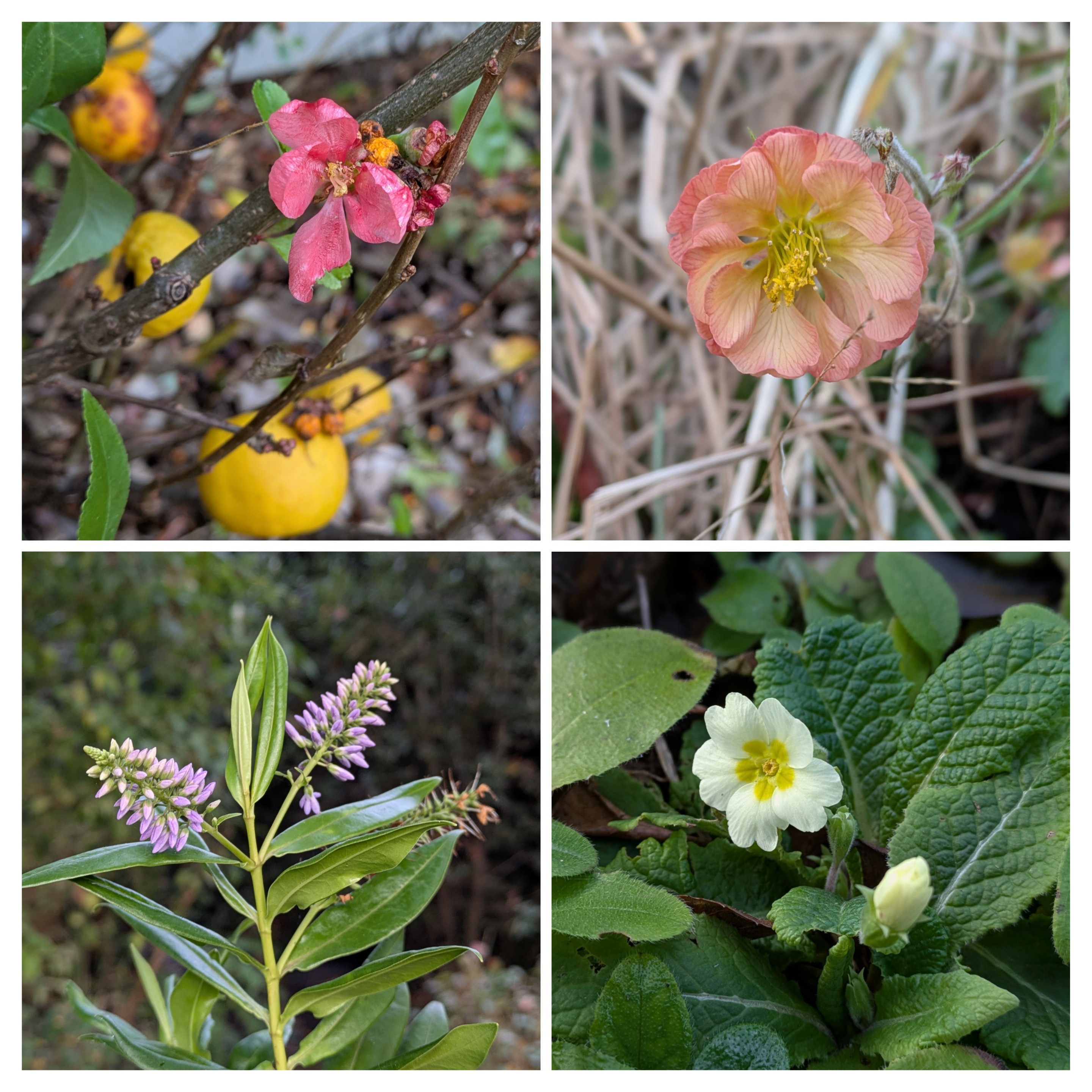
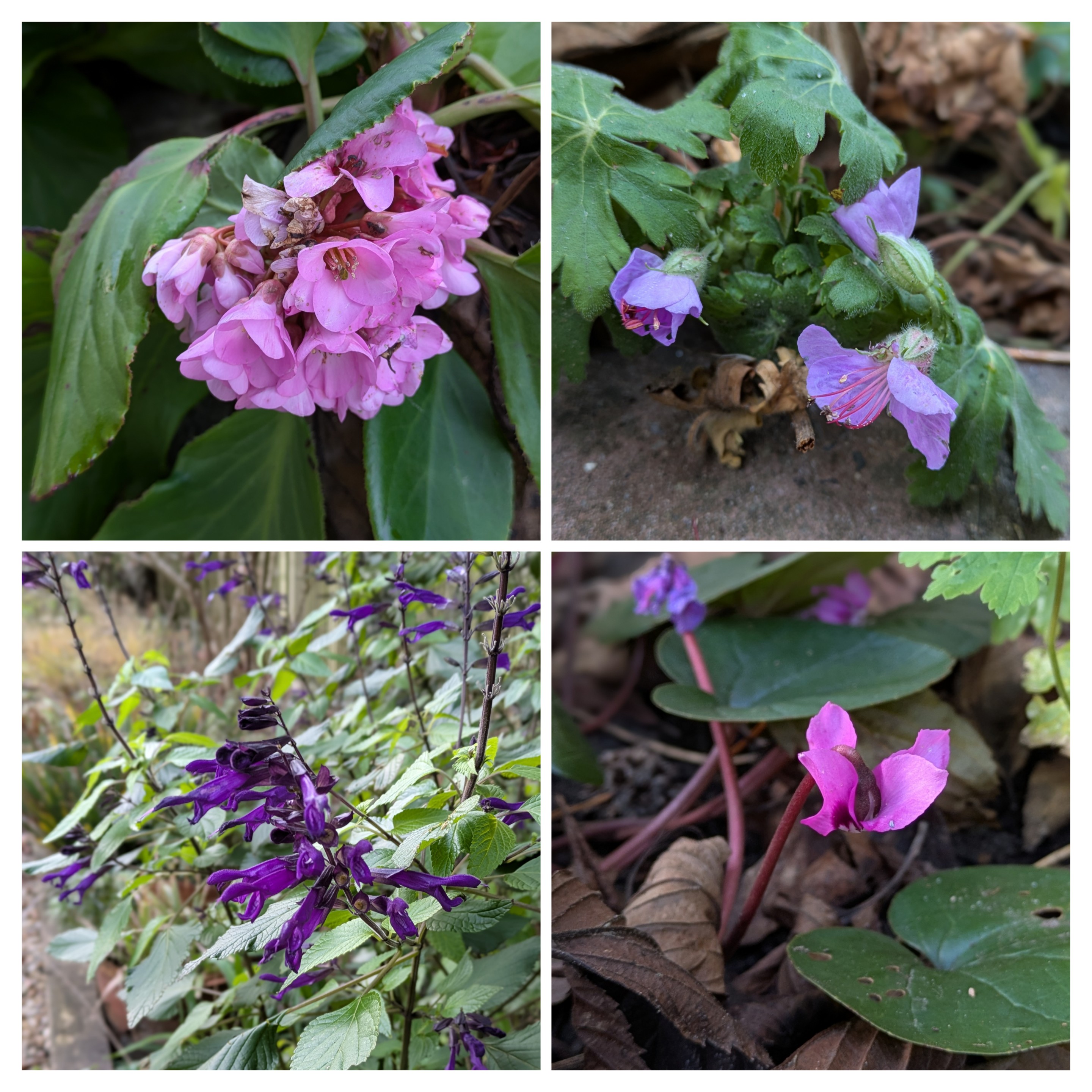
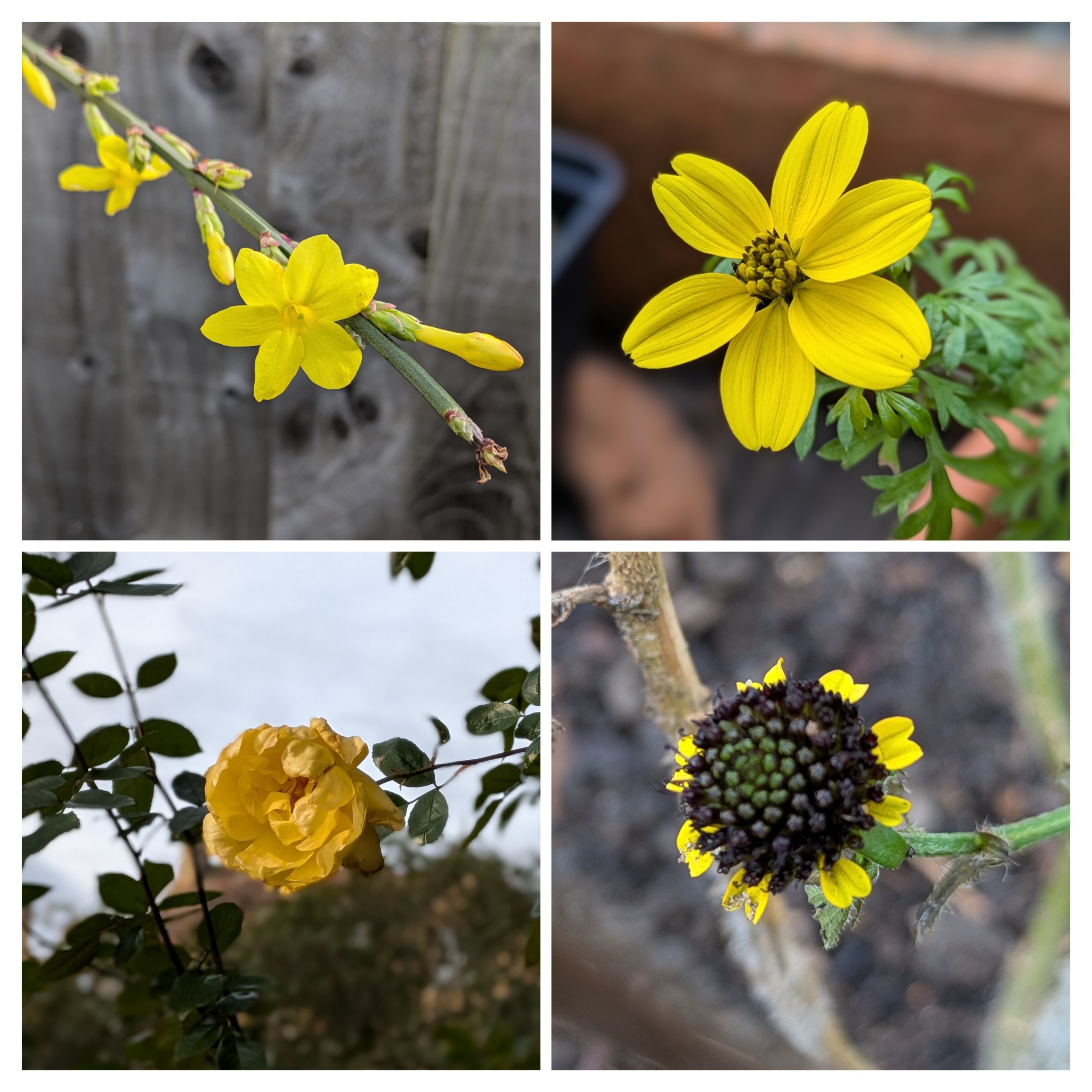
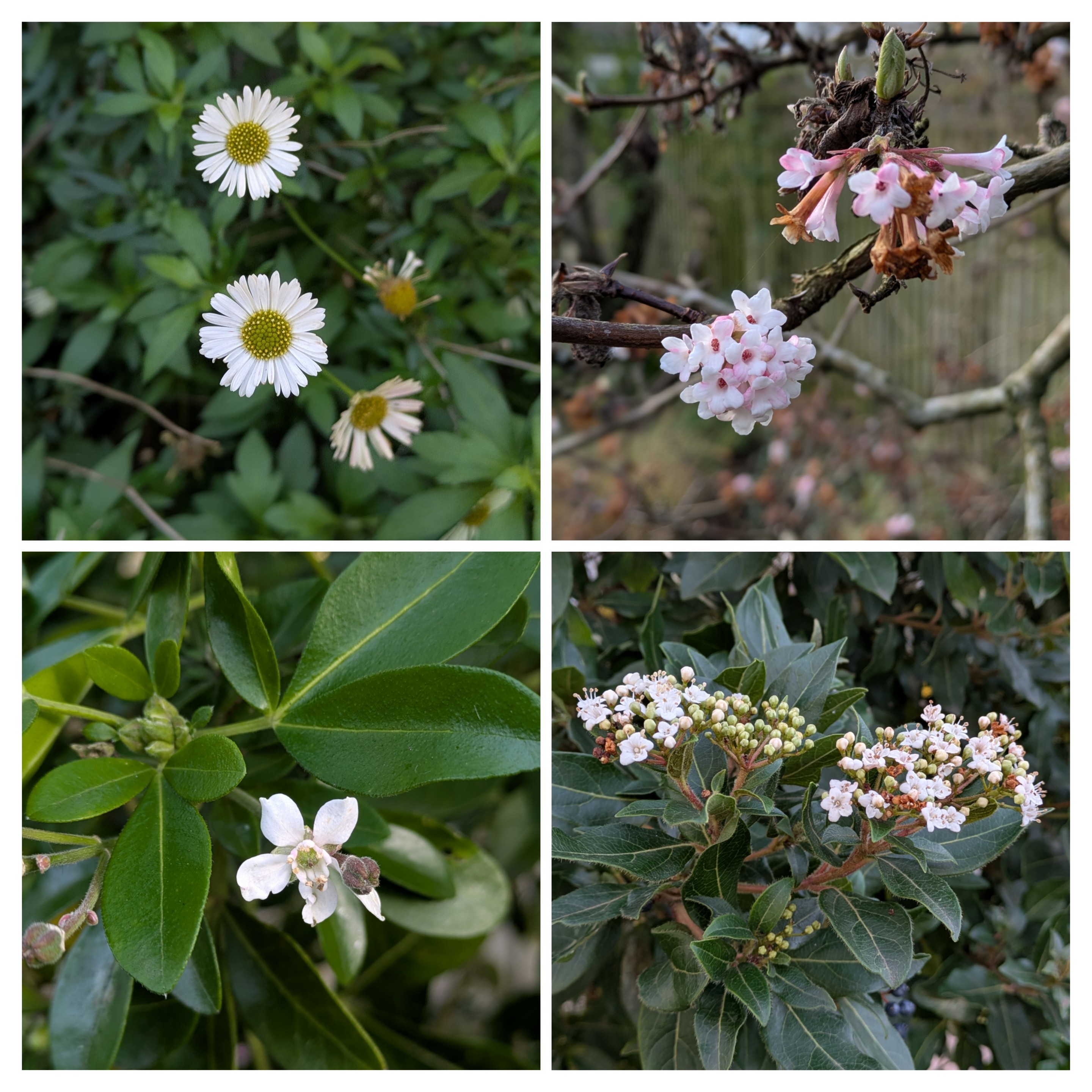
Japanese quince, water avens, elephants’ ears, Geranium, winter jasmine, Mexican fleabane, Viburnum bodnantense, Hebe, primrose, Salvia ‘Amistad’, Cyclamen coum, rose, brown-eyed Susan, Mexican orange blossom and laurustinus in Ali H’s garden
The winter-flowering shrubs were of course out in force (Camellia, Jasminum nudiflorum – winter jasmine, Skimmia japonica, Viburnum – both V. bodnantense and V. tinus, Clematis ‘Freckles’ and Daphne odora), as were the hellebores (though mine have remained resolutely in bud with not a single one opening yet!). Mandy A’s Loropetalum (Chinese witchhazel) was in flower, as were several people’s Hebes. My Chaenomeles japonica (Japanese quince) was covered in fruits, but still producing the odd confused flower too, along with a nearby Geranium macrorrhizum and Geum rivale.
On a perishingly cold day – encouraged by a wintry sun – the intrepid Garden Volunteers ventured out on their mission to spot which brave flowers are showing off in the gardens this new year, 2026.
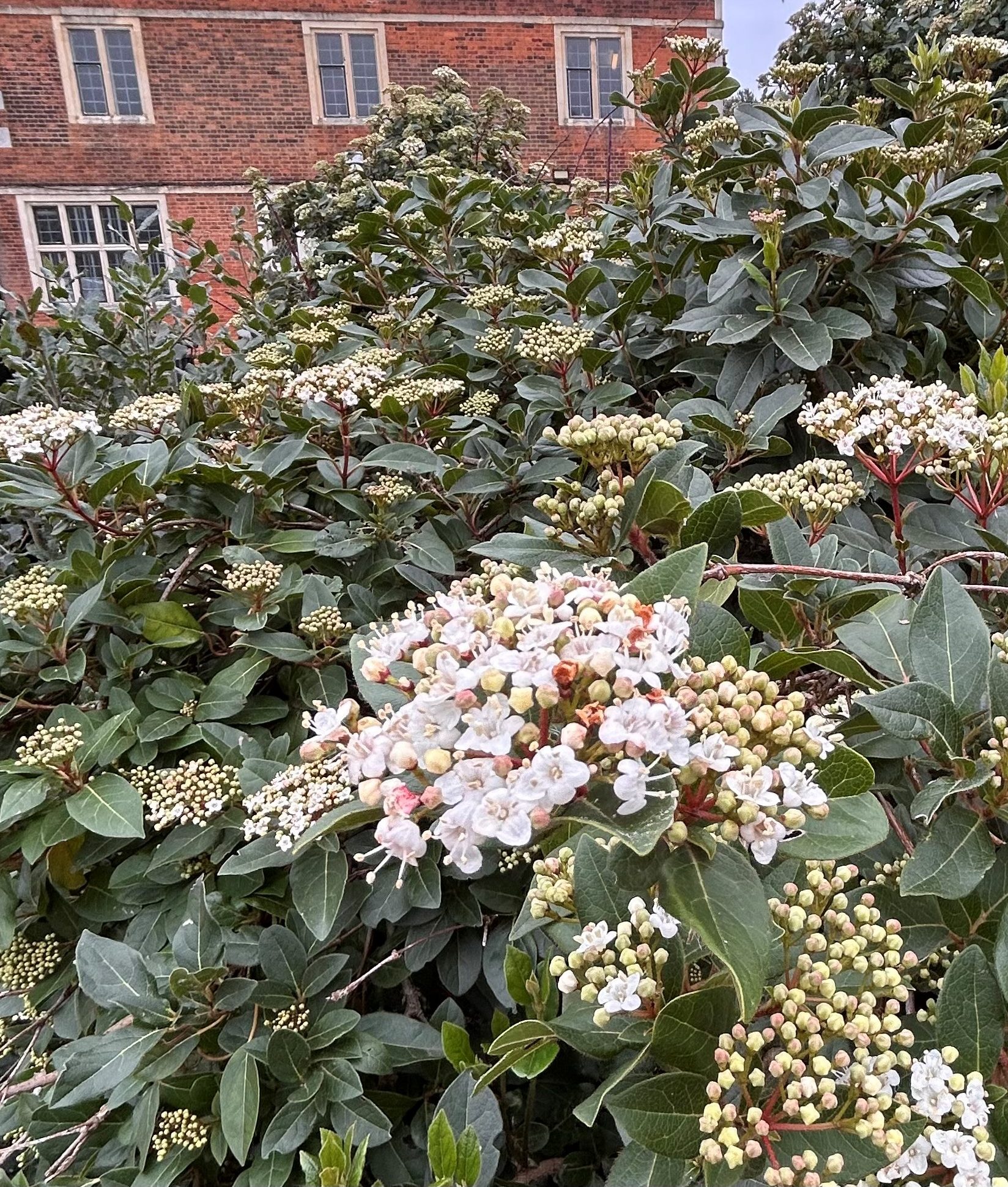
Viburnum tinus
This is the third year we have undertaken a flower count, so we should know roughly what to expect. UK weather data shows that 2025 was the sunniest on record, and probably the warmest too. Here in the depths of winter, it’s easy to forget the unprecedented spring sunshine and incredibly hot summer that we’ve had. This is bound to have disrupted plant lifecycles and confused some into flowering at the wrong time.
What a mild 2025 December we are having! So mild, the weather is confusing some plants, such as lavender, Calendula and yellow-flowered Phlomis, out in flower at present.
One of the joys of winter is admiring all the window boxes, the wide variety of beautiful Christmas door-wreaths and observing what’s flowering in front gardens whilst out strolling.
December is a month when the garden often takes a back seat, and when Pat deserves a break from helping you all with your garden jobs, so the CABAHS Committee have come up with a list of 10 Things that they are doing this month in, from, or for their gardens.
Everyone enjoyed seeing the autumn colour in CABAHS members gardens, so we thought we’d like to see some more – this time on the theme of ‘ingredients for a winter wreath’. People submitted photographs of evergreen shrubs and perennials, winter flowers, berries and seedheads, and here they all are, compiled into virtual wreaths – complete with festive bows! If you contributed a photo, can you spot your plant or plants?
Winter flowers and berries wreath, made up from Kathy’s ‘Spider’s Web’ Fatsia and yew berries, Jenny and Pat T’s Pyracanthas, Pat K’s ivy, a seedhead from the Old Pond Garden, Carolyn’s Fatsia, Pat T’s hellebore (won in a recent CABAHS raffle!) and Mandy, Brownie and Fran’s Mahonias.Continue reading Members’ gardens: virtual wreaths



 Charlton and Blackheath Amateur Horticultural Society