Autumn Colour in Members’ Gardens

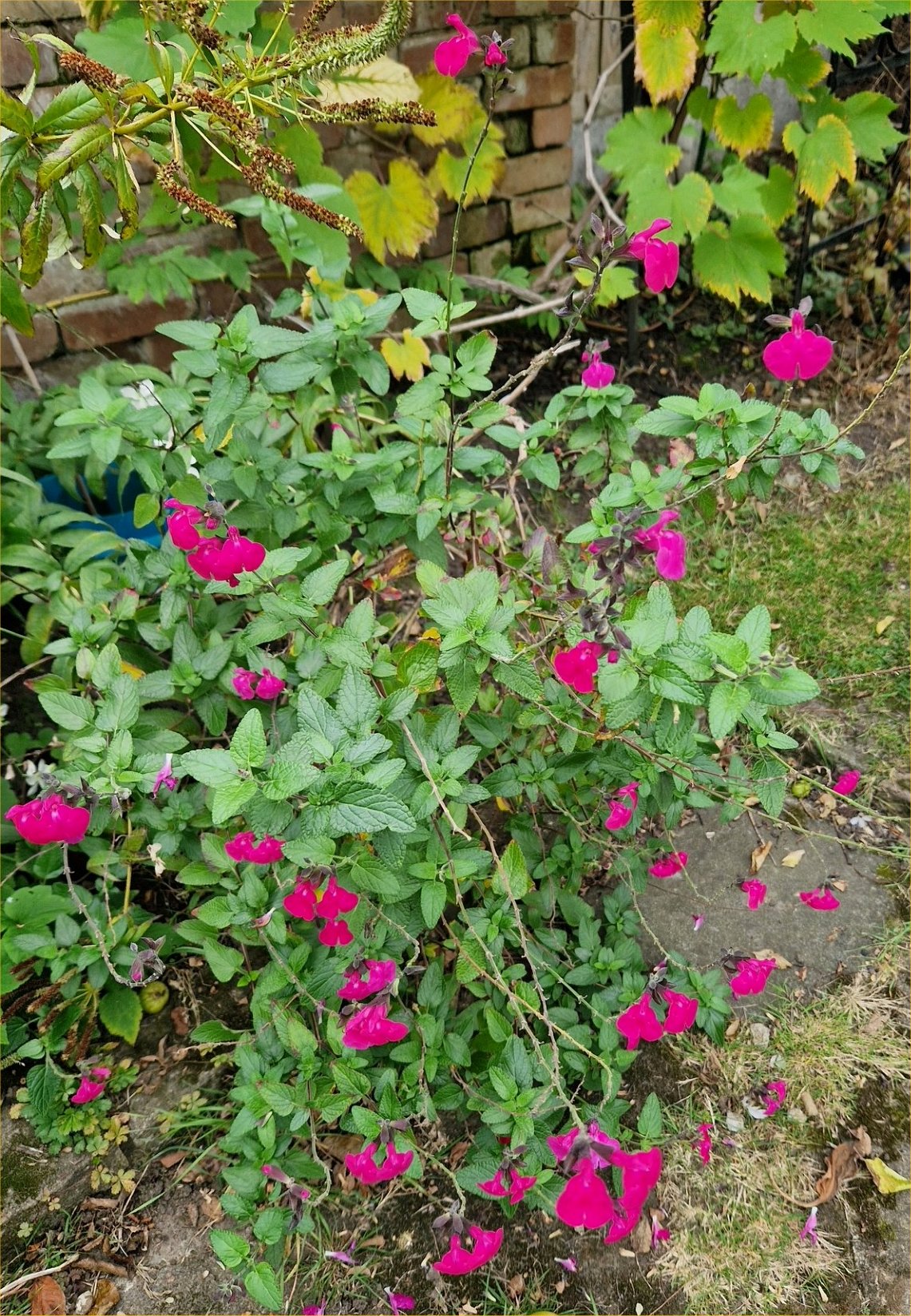
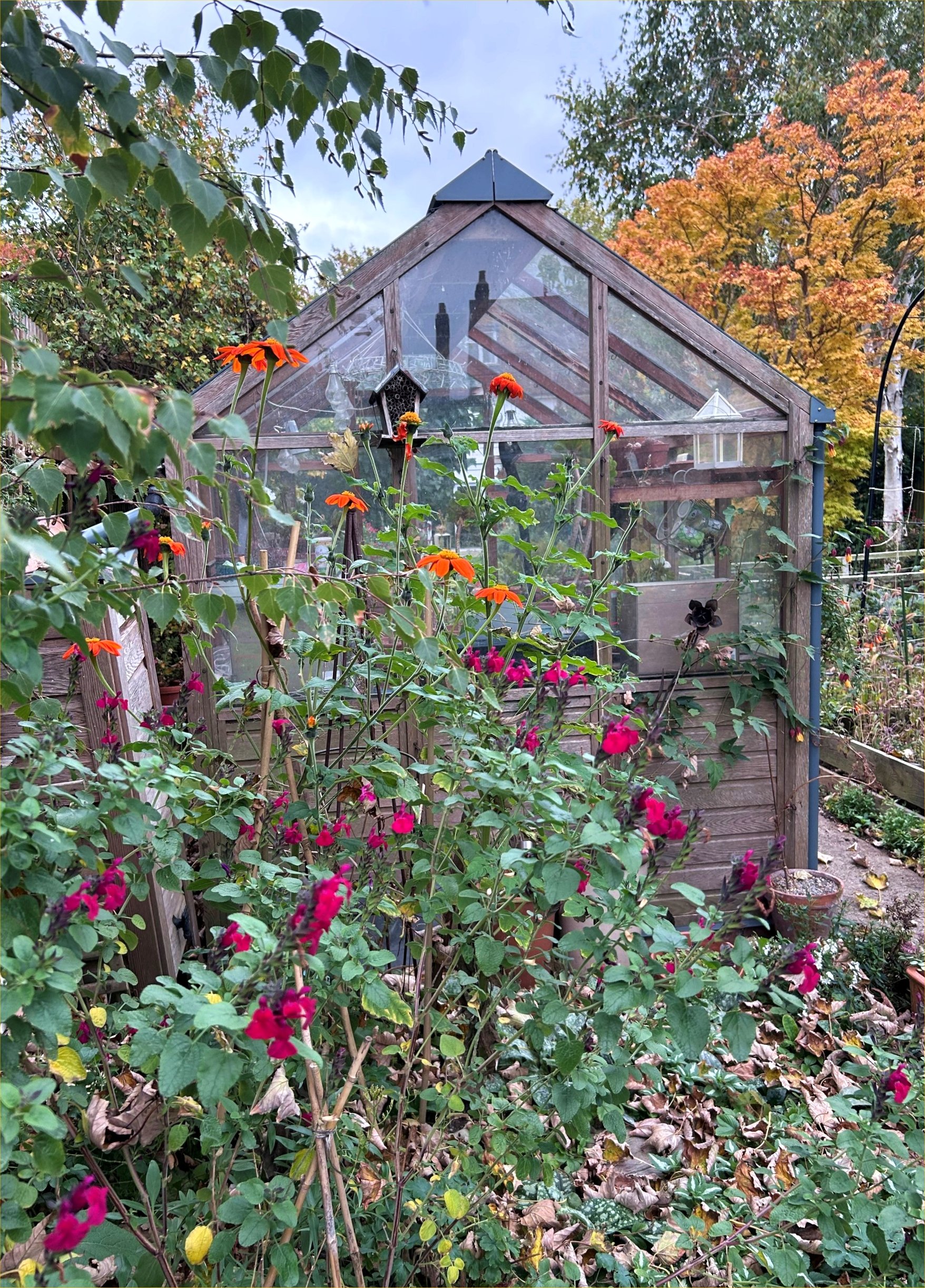
This year’s ‘autumn colour’ seems to have developed quite suddenly and intensely, but may be short-lived. So we asked CABAHS members to share photographs of the colour they could find in their gardens this week. The weather has been dull and grey most of the time, yet these late flowers and glowing leaves shine out of the gloom. You can click on the images for more information and to see at full size.
Take a tour…

We tend to focus on brightly coloured leaves when we think of autumn colour, but several groups of flowers add plenty of zing to the October garden. Salvia really is ‘Plant of the Month‘!

Salvia doesn’t get all the glory though – there’s competition from another richly-coloured group, the Dahlias.

Continue reading Autumn Colour in Members’ Gardens

Have you been to Beckenham Place Park lately?

Signpost in Beckenham Place Park, April 2024

Not too far away (and on the 54 bus route from Charlton and Blackheath!) lies a ‘new’ old park: Beckenham Place Park. The name can be confusing – it lies on the border between the London Boroughs of Bromley and Lewisham, but is run by Lewisham Council. It is larger than you might think, at 96 hectares (well over 200 acres), and stretches from Beckenham Hill railway station in the north to Ravensbourne railway station in the south, west into Beckenham ‘proper’ and east toward Bromley.

Beloved of dogwalkers, wild swimmers, park runners, bluebell spotters and vintage shoppers, since Heritage Lottery Funding was awarded in 2016 there have been many changes and a huge increase in community use. Old features of the 18th century estate have been brought back, playgrounds added and the 1762 mansion (which was formerly a golf club house with a small visitor centre) is now home to artists’ studios, a café, a vintage shop and hosts multiple events.

But to the gardens…

Continue reading Have you been to Beckenham Place Park lately?

Belfast Botanic Gardens

I have been spending some time recently in Northern Ireland, and was enchanted to find the Belfast Botanic Gardens are right on my doorstep here.. just waiting to be explored.

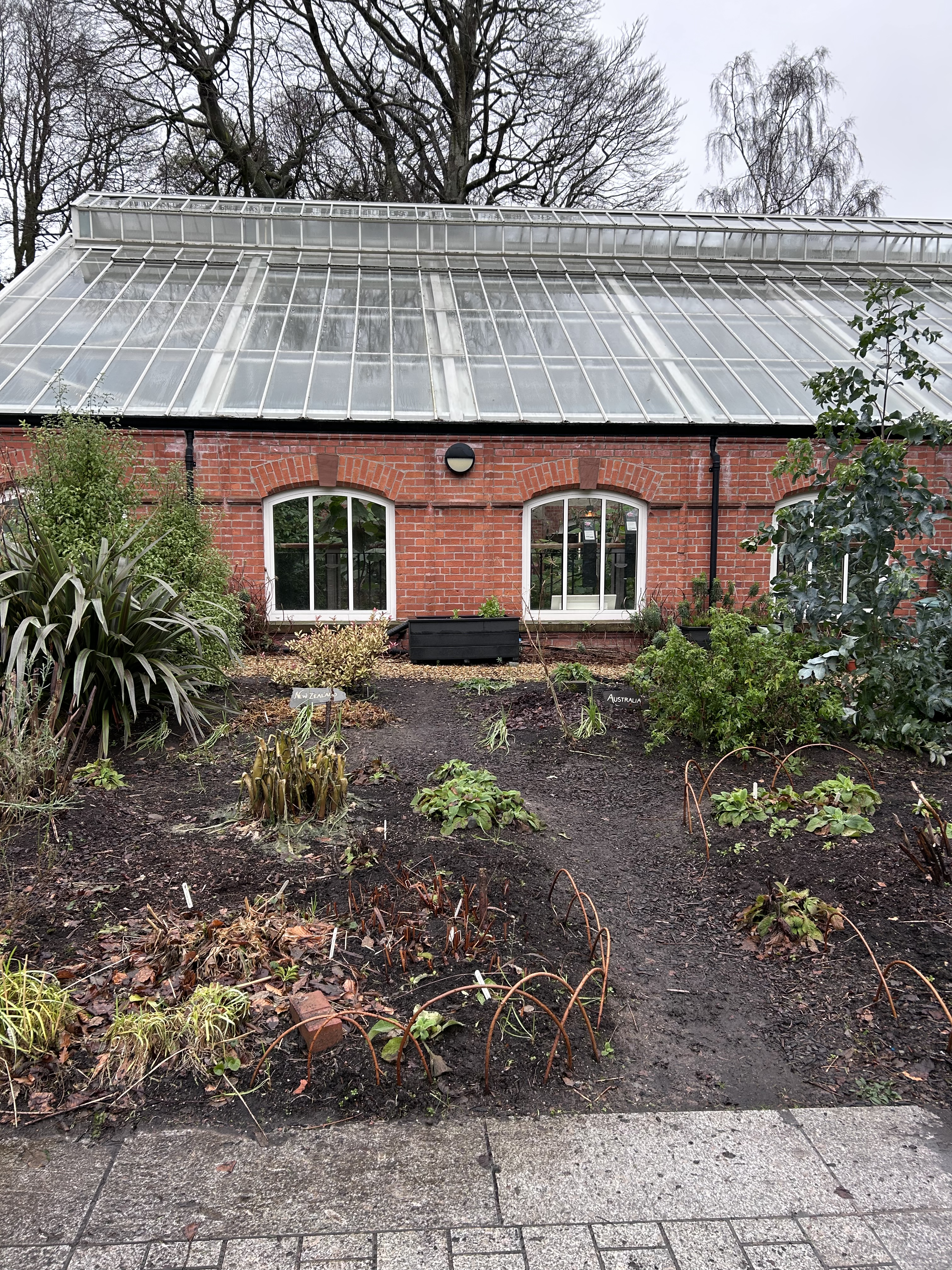
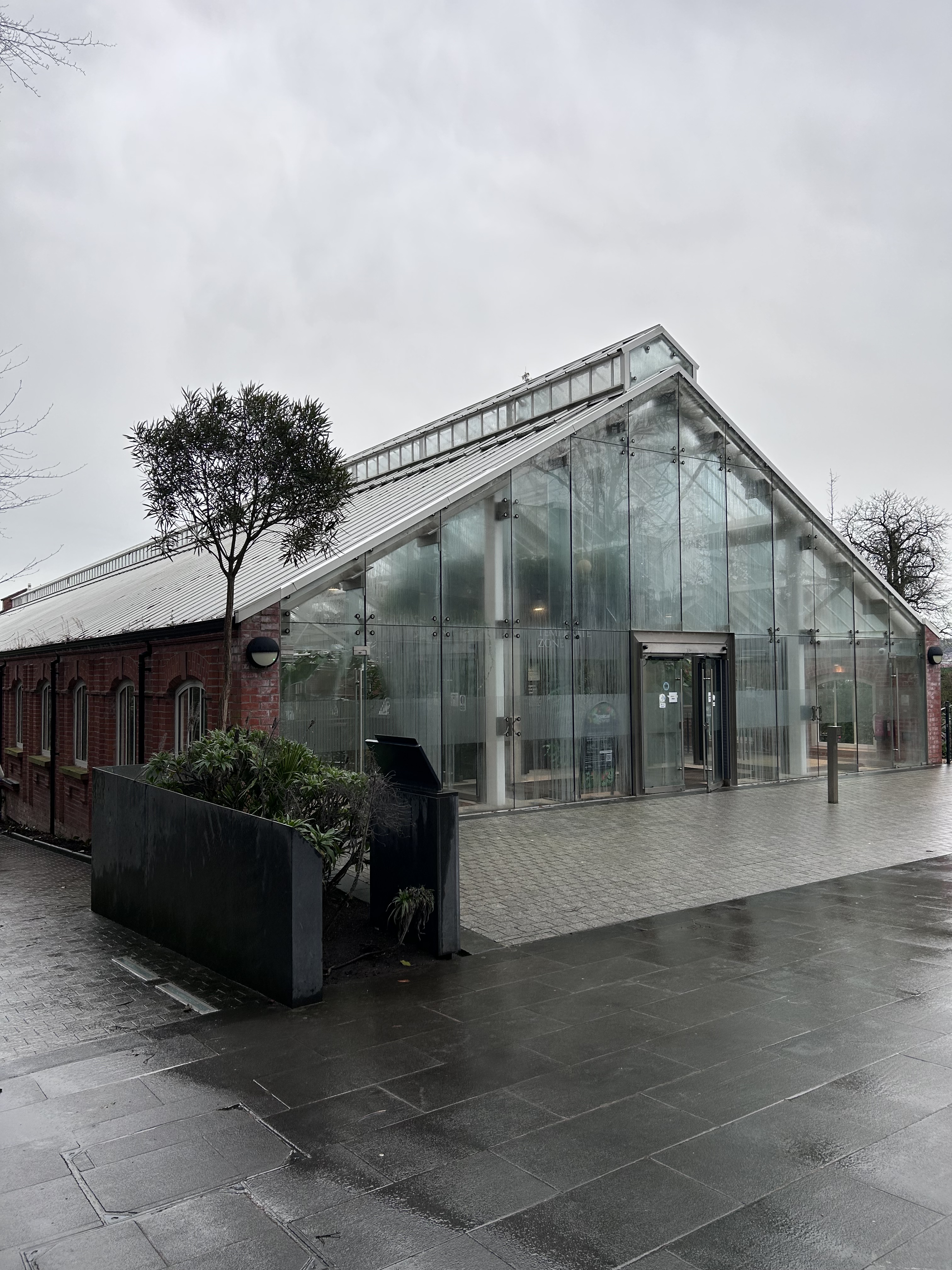
The gardens started in 1828, when the “Belfast Botanic and Horticultural Society” was formed and a 14 acre site purchased. The Palm House was built in 1839 by ironmaster Richard Turner of Dublin, who went on to build the Palm House at Kew a few years later! If this one was a practice run, it is still really impressive.

It is not large, but cleverly designed to incorporate a Cool Wing, a central Dome which is sub-tropical, and a Tropical wing, so it can house a wide range of plants. Sadly it was closed for repairs on the day of my visit, courtesy of the recent winter storms.

There is another glasshouse on the site, the Tropical Ravine House, which is just amazing. It was built by “the Head Gardener and his staff” (Jason & the Garden volunteers – there’s an idea!) and was finished in 1889. Uniquely constructed into a hillside, so the visitor walks around a balcony and looks down into a moist glen filled with tropical planting.

It was renovated in 2019 with help from the Friends of Belfast Botanic Gardens, who clearly play a large part in supporting and maintaining these gardens. They have also created a fascinating new Global Medicine Garden just to the side of the glasshouse. https://fobbg.co.uk/

Continue reading Belfast Botanic Gardens

Pat’s Jobs for January 2025

1. Prune Wisteria this month and next by taking all side shoots back to 2 or 3 buds. Very old plants may need severe pruning to show off the flowers.

Very tangled wisteria waiting to be pruned
Very tangled Wisteria in need of pruning!

2. Start pruning roses in earnest although some are still unbelievably flowering. Remove any foliage with blackspot and don’t compost. Old roses respond well to hard pruning so don’t be afraid, removing all dead and dying wood and cutting stems back to above a bud.

3. I had to remove dead Clematis shoots from a Daphne Jacqueline Postill and in doing so pulled off some of the flowers so take care and do it soon if you can. But leave the main prune until next month.

Continue reading Pat’s Jobs for January 2025

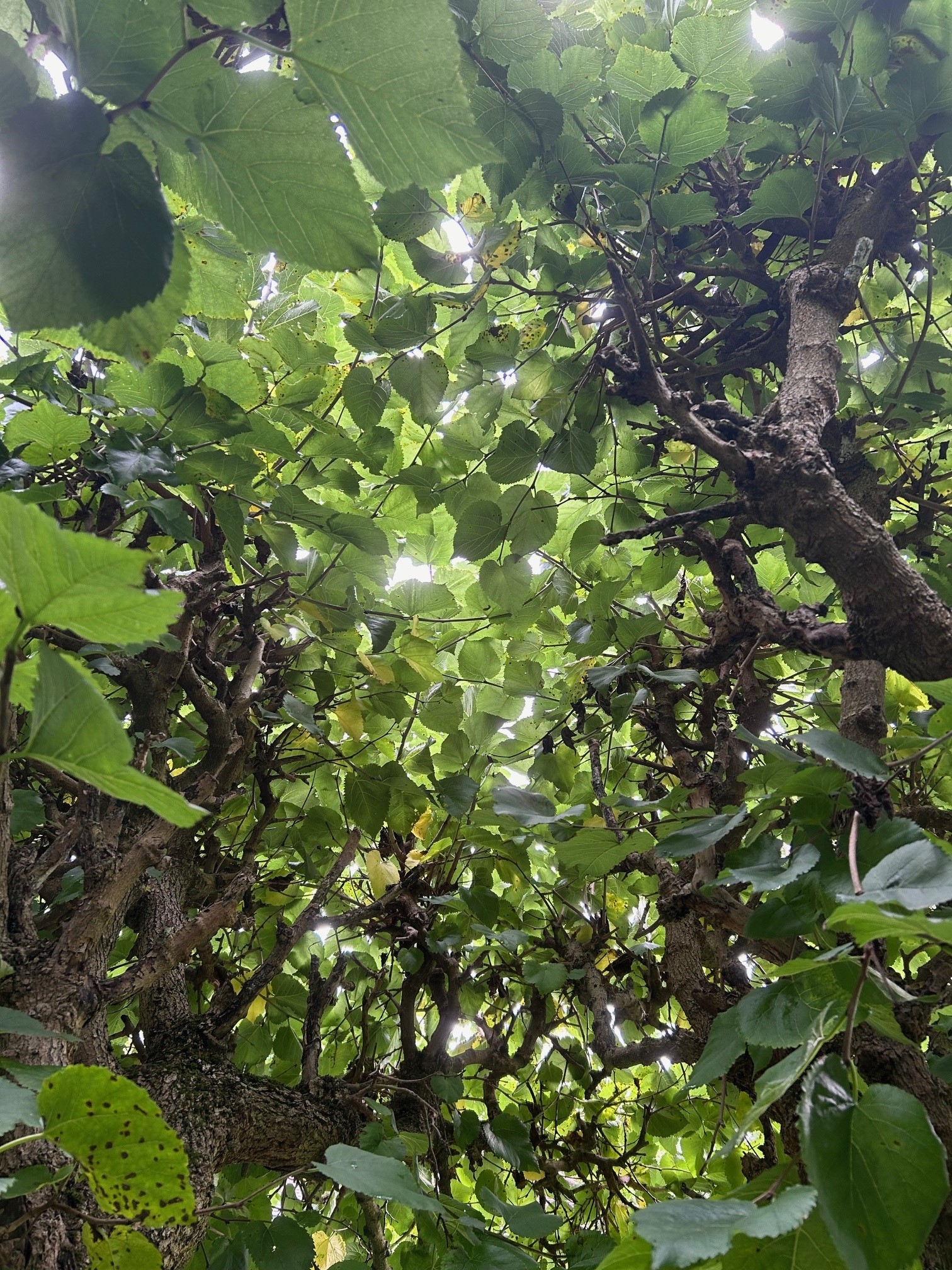
What did the Mulberry tree see?

You may have spotted that the Charlton House Mulberry has just featured at Number 8 in the list of 20 Greatest Trees of Britain (the Telegraph) – what a well deserved honour!

I confess to being a bit of a Mulberry tree fan, having planted one in our garden in Westcombe Park just over 35 years ago. Our tree was a favourite retreat for my kids when they were growing up since, like all Mulberries, it has a very climbable branch structure and wonderful leaf canopy. Even Jerry our Jack Russell can climb up it when he has the momentum to chase squirrels!

Last year I bought my grandson a lovely children’s book about an old tree standing through the ages (What did the Tree See, by Charlotte Guillain) and reading it led me to ponder what our venerable Mulberry Tree at Charlton House might have been witness to over its 400 plus years?

The story would start in 1607, around the time the House was being built, when King James required landowners to purchase and plant 10,000 Mulberry trees between them, to start his ill-fated silk industry. When Sir Adam Newton bought the “Manor of Charlton”, it included six orchards, 260 acres of land, 100 acres of meadow, 200 acres of pasture and 200 acres of wood – so he certainly had space to please the King by planting a whole field of Mulberries. A pity that the wrong kind of trees were planted for silkworms and the climate was too cold for them to thrive. At Charlton House we know that “a few trees” remained by 1845 but our beautiful and venerable one is all that remains today.

Mulberry in summer at Charlton House
Continue reading What did the Mulberry tree see?

October 2024 Talk: Tim Ingram on Copton Ash Garden

We welcomed back Tim Ingram who has a passion for alpines, and is a member of the Alpine Garden Society. He gave us a talk on the evolution of Copton Ash, his garden in Faversham, Kent where he also has a specialist nursery. He also brought with him a selection of alpine and perennial plants for sale. He illustrated his talk with a series of photographs showing the development of his garden over the years and seasons.

Tim’s garden is a large and mature family-run garden, about one and a half acres in size, which has been in existence for nearly fifty years. He comes from a family of avid gardeners and so was brought up with a keen interest in plants and gardening. His father worked at Brogdale (home of the National Fruit Collection): his mother too a keen gardener: his grandfather was into market gardening. Tim first worked in academic science in London, specialising in plant hormones. He and his wife returned full time to Copton Ash in the late 1980s when they soon started a nursery.

Continue reading October 2024 Talk: Tim Ingram on Copton Ash Garden

July 2024 Meeting and Talk: The Savill and Valley Gardens, Windsor Great Park

John Anderson has a very distinguished horticultural career. Trained at Kew, he has been head gardener at a range of famous gardens, and his contribution to horticulture was recognised in the award of the RHS Veitch Memorial Medal. In 2016, he became Keeper of Windsor Great Park Gardens, part of the Royal Estate, and managed by the Crown Estate.

It was a particularly interesting and informative talk. The gardens are unusual, situated as they are in a Royal Estate of 8000 acres, and Windsor Castle being a world tourist attraction. Yet the gardens and their management are less well known to the public. John Anderson showed  a range of photographs of the gardens, described their history and development over the decades, and the challenges they now present.

The speaker and audience at the July 2024 meeting

The challenges include managing people whether they are tourists, cyclists or picnickers; dealing with vandalism and littering; and protecting its historic landscapes. Also the problems of climate change: evidenced in its Long Walk tree avenue, at over two miles the longest in Britain, where elm and horse chestnut were succumbing to disease, to be replaced by more resistant species such as ginkgo (Maidenhair) trees.

Continue reading July 2024 Meeting and Talk: The Savill and Valley Gardens, Windsor Great Park

June 2024 Meeting and Talk: Hever Castle and Gardens

A successful meeting was held in June with a packed audience and we were lucky to be given an engaging and informative talk by Neil Miller, Head Gardener at Hever Castle. In 2002 Neil started as a junior gardener at Hever following 10 years as an Insurance Broker and within 4 years was Head Gardener. Quite an achievement!

Audience for talk June 2024

Famously Hever Castle was the childhood home of Anne Boleyn, and Henry VIII frequently visited her there. At that time the surrounding land was marsh and bog land. Though there were many changes of ownership in the following centuries, it was not until 1903, when William Waldorf Astor bought the estate, that serious restoration and renovation took place and the design for the gardens was drawn up. Alongside the castle, a Tudor style Village was also built so that invited guests had rooms to stay.

Continue reading June 2024 Meeting and Talk: Hever Castle and Gardens

The View from my Window

The small patio is shielded from the sun, in a south facing garden, by an Acer palmatum ‘Katsura’.  The tree caught my eye while on a trip to Kent.  Must have one of those I thought.  The sapling was bought and is now well mature.  Some of the limbs show signs of viral attack, but it soldiers on. 

Early to leaf, in February, the leaves are green and red.  It produces sap, which attracts the aphids. With the aphids, the small birds make regular visits to eat the goodies. The birds include Blue, Great and Coal Tits, Robin and Goldfinches.  The Dunnocks also pay a visit, foraging in the growth below, together with a variety of bees including the distinctive yellow faced variety. Soon after, it will produce a vast amount of blossom, and after that very small sycamore-like seeds.  In time and onto autumn, the leaves go from yellow to orange and then fall, covering all the surrounding ground.

Continue reading The View from my Window

Anna’s Visit to the Tibetan Peace Garden, Geraldine Mary Harmsworth Park, Lambeth

After the busyness of a visit during half-term to the Imperial War Museum, it was relaxing to visit the adjacent Tibetan Peace Garden on an amazingly warm and sunny, winter’s day in February. 

This is a lovely, partially enclosed garden which was opened by the Dalal Lama in 1999 and it was named ‘Samten Kyil’, meaning the Garden of Contemplation and this is exactly what the designers have achieved.  

The garden is made up of two parts: an outer garden of trees and lawn sweeping around and enclosing the inner circular garden, the whole bordered by a circular pathway in which to enjoy the views.  White-barked Himalayan Birches, making a striking contrast against the green and blue of the grass and the sky, are interspersed with Weeping Cherries and Prunus serrula (Tibetan Cherry) with polished, red-purple bark.  

Continue reading Anna’s Visit to the Tibetan Peace Garden, Geraldine Mary Harmsworth Park, Lambeth