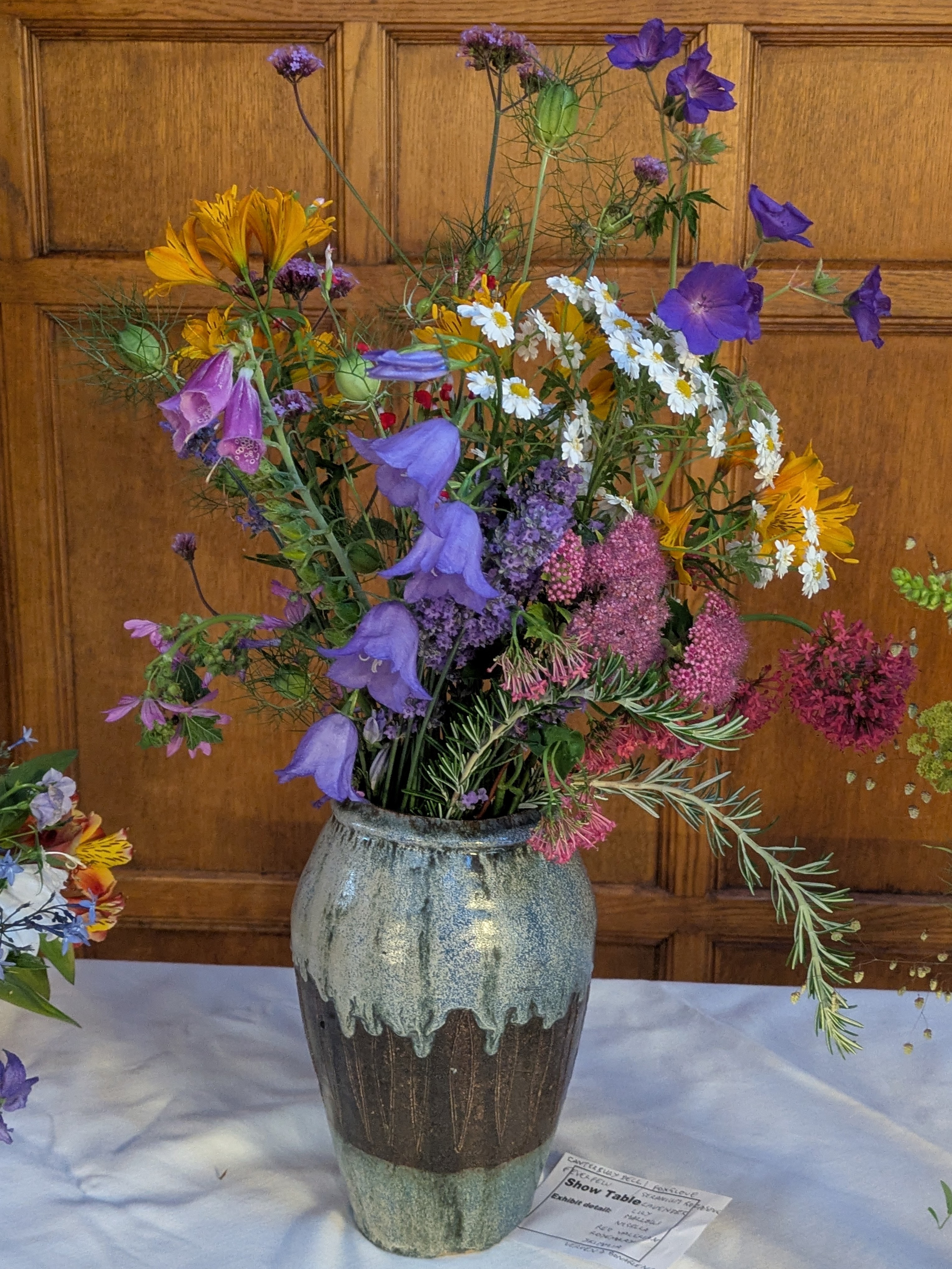
There were some exquisite entries for the Show Table this month (click on the images to see in detail), but it was the simple, single species vase of sweet peas that won the prize.
Congratulations to Pat for ‘Best on the Table’ – they are perfect!
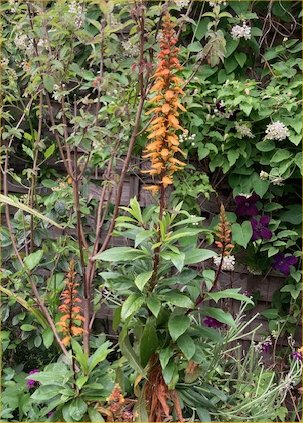
Being the month of June, I am pleased to say that there is plenty of colour in the garden, including Rosa ‘Bobby James’ out in flower, but, the star plant for me is definitely the Canary Island foxglove, Digitalis canariensis.
This is an eye-catching shrub (albeit short-lived) with burnt-orange-apricot foxglove flowers, (flowering since May), supported by strong, upright stems and dark green, serrated-edged foliage.
1. Plant out Dahlias in a sunny spot in fertile soil adding some compost to the planting hole. I have to surround mine with Strulch on my allotment to protect them from the hundreds of slugs and snails lurking all around.
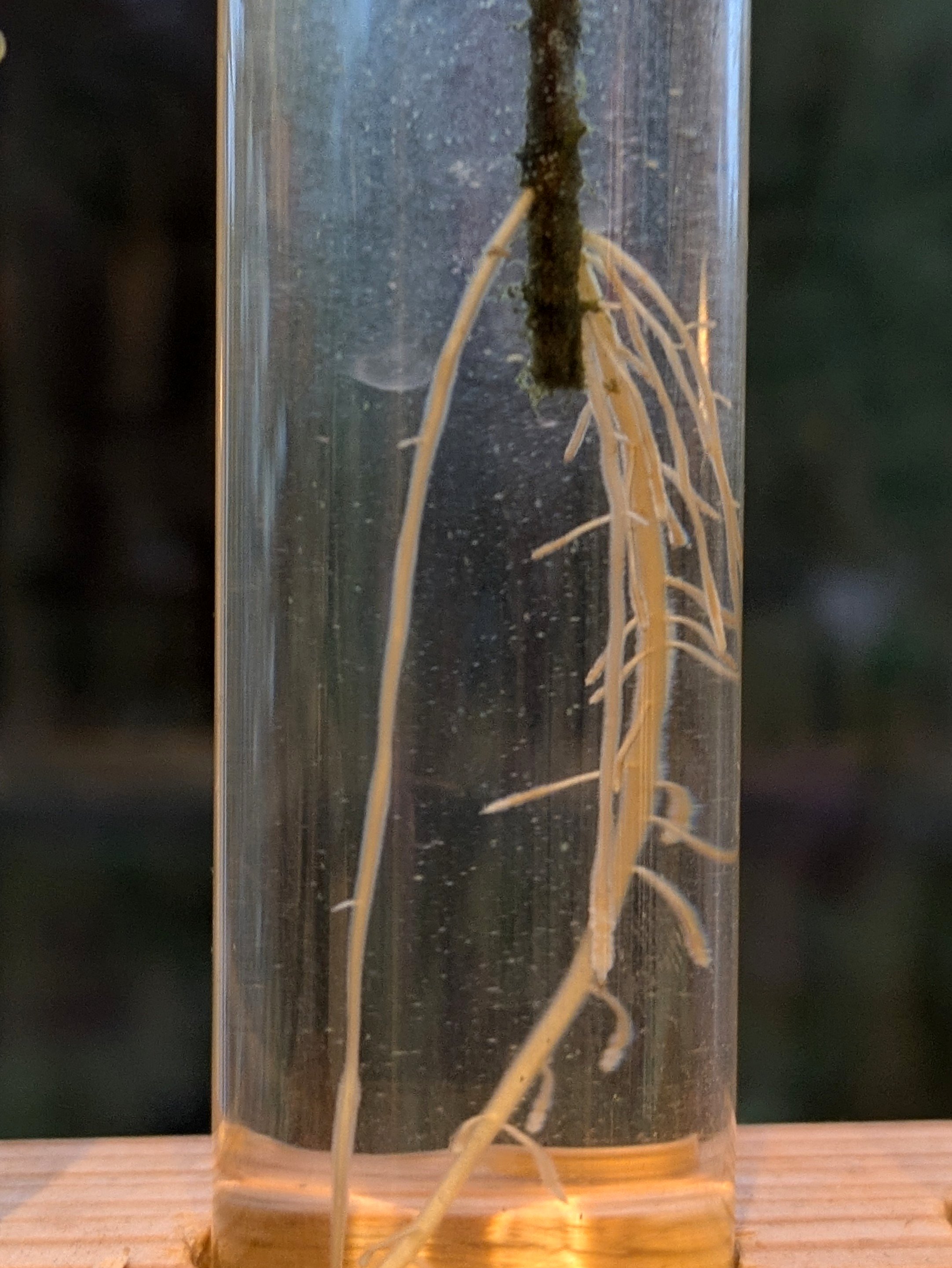
2. Take softwood cuttings now of Anthemis, Salvia, Verbena, Penstemon and Fuchsia. Cut below a leaf node and dibble around the edge of a pot. Salvias will also grow fine roots in water to give them a head start.
3. Look out for hellebore seedlings around the base of your favourite plant. The resulting plants may not resemble the parent but they could be even better.
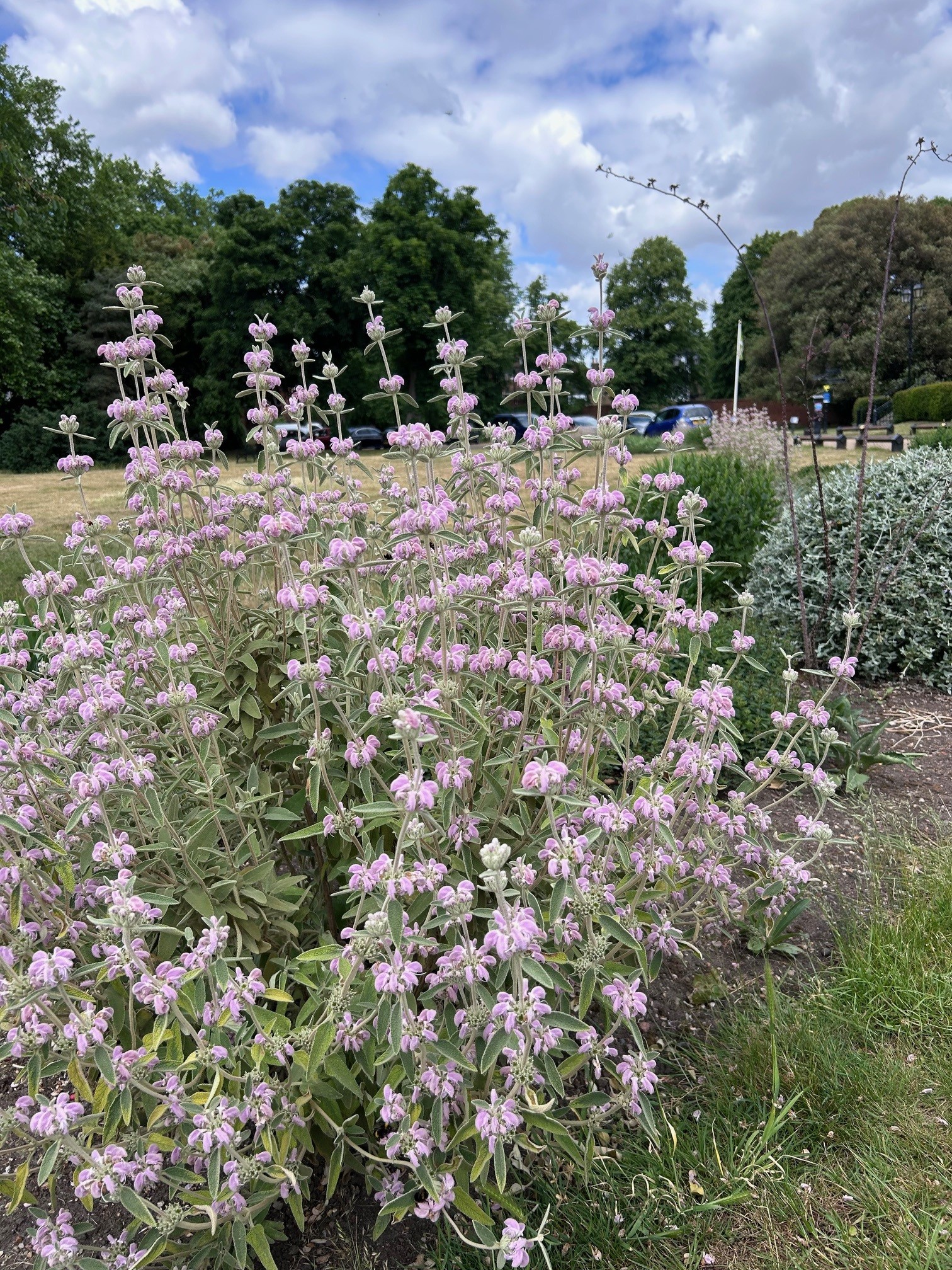
This is an evergreen shrub in the mint & sage family, native to Spain, which has lovely woolly grey-green leaves (touch them!). The hooded pale lilac flowers are beloved of pollinators, especially bumble bees. The ones in the front beds at Charlton House are humming with buff tailed bumble bees.
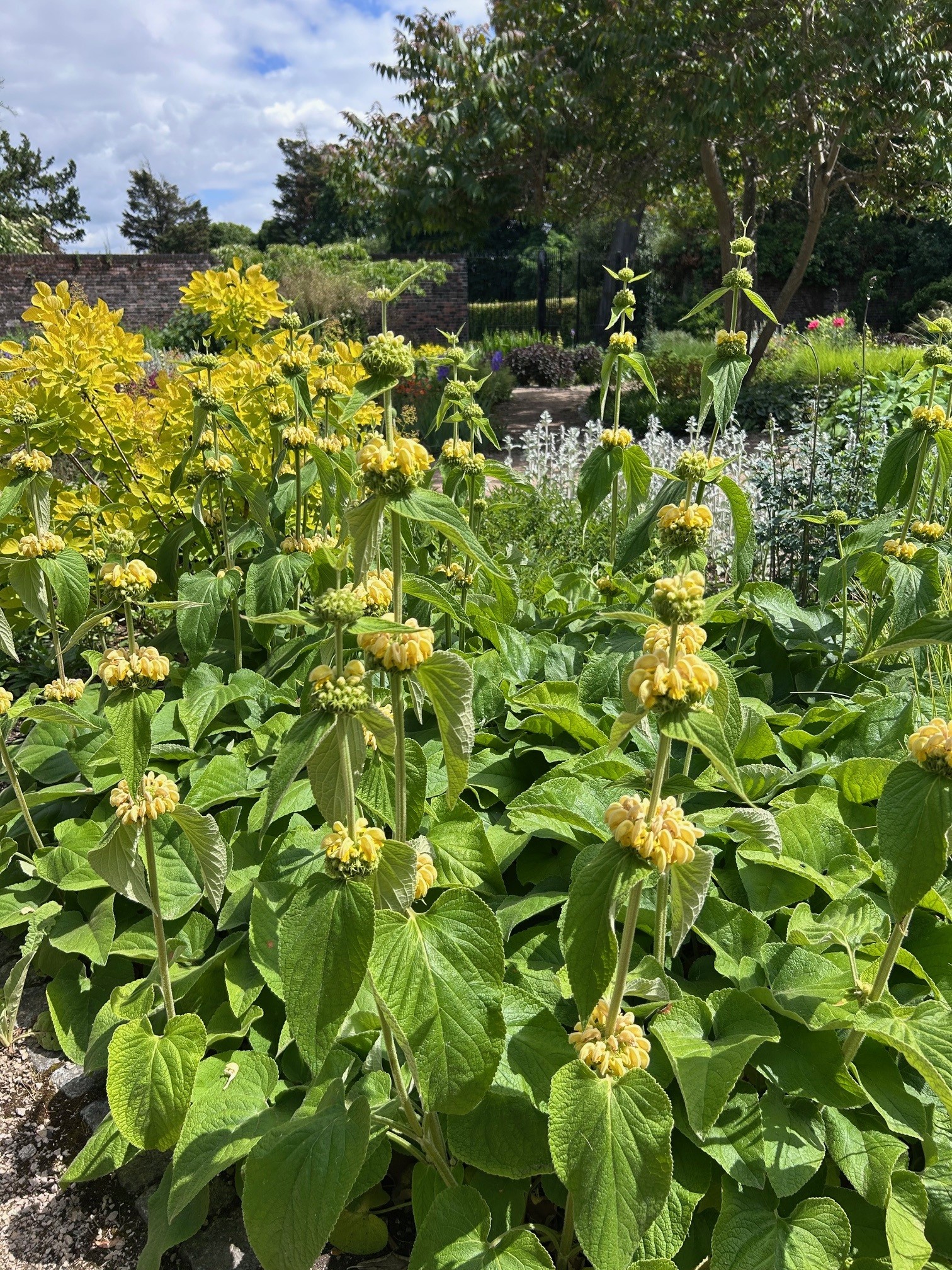
Phlomis russeliana – Turkish sage
Another one in the mint & sage family, but this is not a shrub, it is a herbaceous perennial (so it drops it’s leaves in Autumn but comes back the next year). The name ‘Phlomis’ comes from the Greek word meaning ‘flame’. Heart shaped leaves of some species were used as lamp wicks in ancient times. The stiff upright stems carry yellow flowers, which look good as seed heads and provide shelter for insects in winter. It gently self-seeds – we have been potting them up so look out for them in a future plant sale!
An entertaining and informative evening was had at this year’s Gardeners Question Time. As usual, it enabled members to get advice on their gardening problems, and to air their gardening frustrations. Chaired by Sir Nicolas Bevan, the CABAHS President, the panel also comprised Tom Brown, the Greenwich Park’s Head Gardener, and Pat Kane, a long standing CABAHS member.
Most of the questions were sent in by members beforehand. They covered a broad range of gardening areas and problems: growing hollyhocks; aphid control; tree size; cistus, salvia and sisyrinchium pruning; how to grow dahlias; what killed my rose; problems with apple trees and rambling roses; how to encourage children to get involved in gardening; recommending a fertiliser for yew hedges; the cause of curly cucumbers; dealing with self seeding; and problems with bamboo.
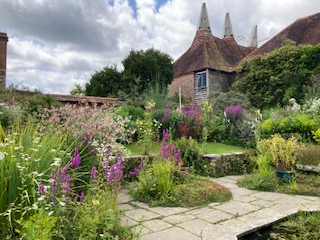
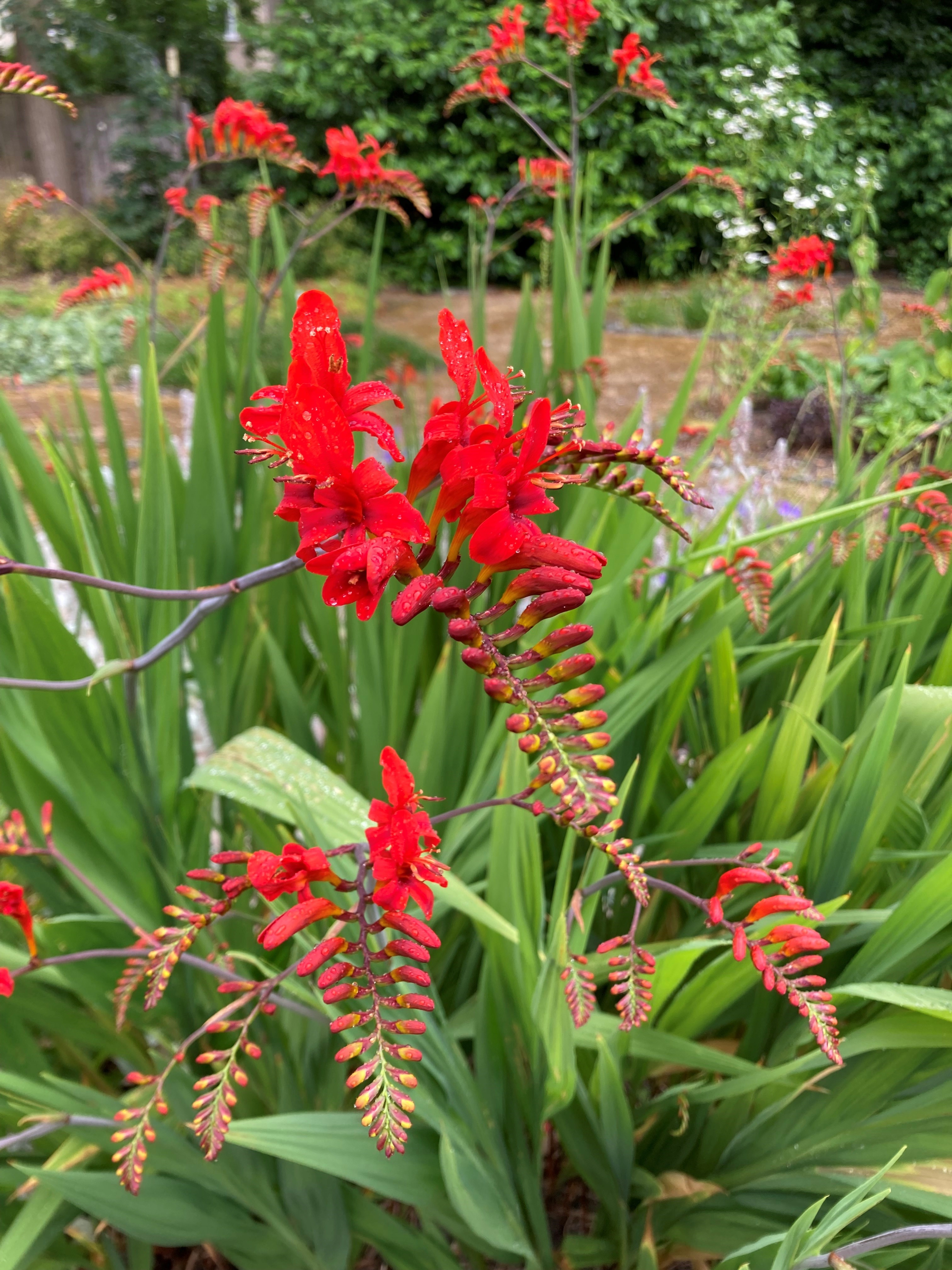
Christopher Lloyd loved colour, and as I stand on the upper pathway of the Sunk Garden, here at Great Dixter, I notice the pops of colour from the spires of pink-purple Lythrum and terracotta-orange Crocosmia all around me.
Designed by Nathaniel Lloyd, Christopher Lloyd’s father, after WW1, this south-facing and sheltered sunken garden is enclosed by two barns, a magnificent yew hedge and a wall on the southern boundary, thus creating its own micro-climate and the plants love it!
One of the nicest aspects about walking around the streets in our neighbourhoods is being able to view the diverse range of flowering trees, shrubs, perennials and bulbs that enhance front gardens and, in early August, it’s the showiness of Agapanthus that makes one stop in one’s tracks in admiration.
And so, it was an added pleasure to be able to admire the magnificent evergreen Agapanthus praecox “Madeira Blue” and “Madeira White” in my neighbour’s rear garden. Linda tells me she purchased the bulbs in Madeira approximately ten years ago, where these perennials have become naturalised throughout the island.
The plants are extremely tall and vigorous and absolutely stunning, with additional flowering stems this year, having outgrown (and broken) previous terracotta pots. The bulbs have been in the existing plastic pots (sitting on feet) for the past three years, having been divided up – no easy task – and planted into several more containers. They have not been fed for a while and are not given protection in the winter (it’s a sheltered garden) with the flower heads left on until spring.
1. It is especially important to keep Camellias and Rhododendrons damp at the roots this month as this is the time that the buds form for next Spring. Water well and mulch if you can.
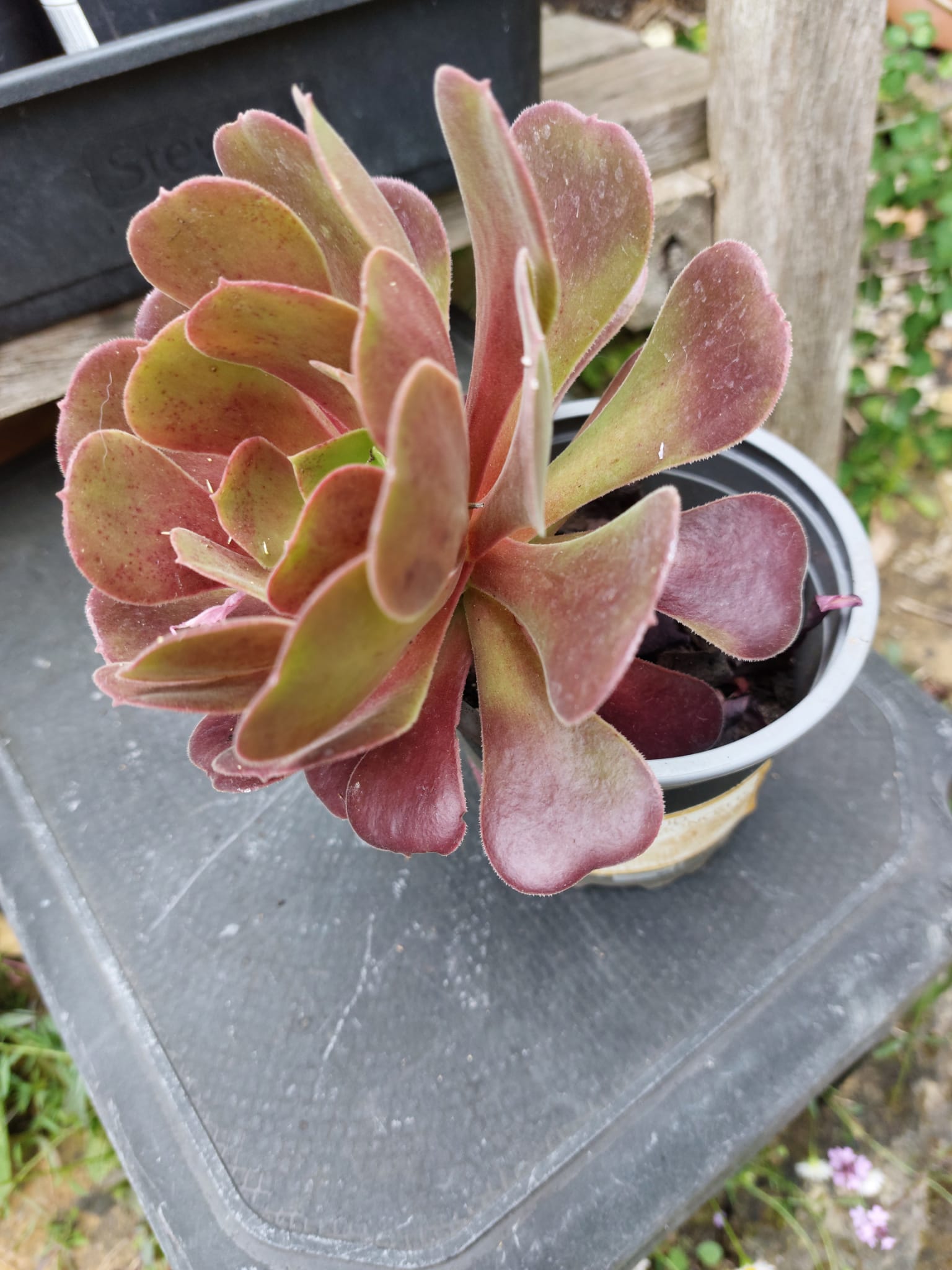
2. Take Aeonium cuttings now by severing leggy leaf stems a couple of inches below a cluster. Leave the stem end to callous over, then push into gritty compost and keep in a shady spot until roots start to form.
If you went down to the park yesterday, we hope you had a big surprise, for all the ‘bears’ were gathering there together because.. of the Teddy Bear Hunt!
Where?Over there..Over here..
Thank you to all who came and donated or supported this fun event, and to all the (over 100) children who found the ten hidden Teddies and worked out the name of the Charlton House Teddy to get their treat. (It had to be Newton Bear of course, named after Sir Adam Newton, who built Charlton House). But what a huge range of ‘teddy’ soft toys came along for their photo-opportunity! (please post your pictures to #charltonhouseteddy).
Getting Teddy ready for his shoot
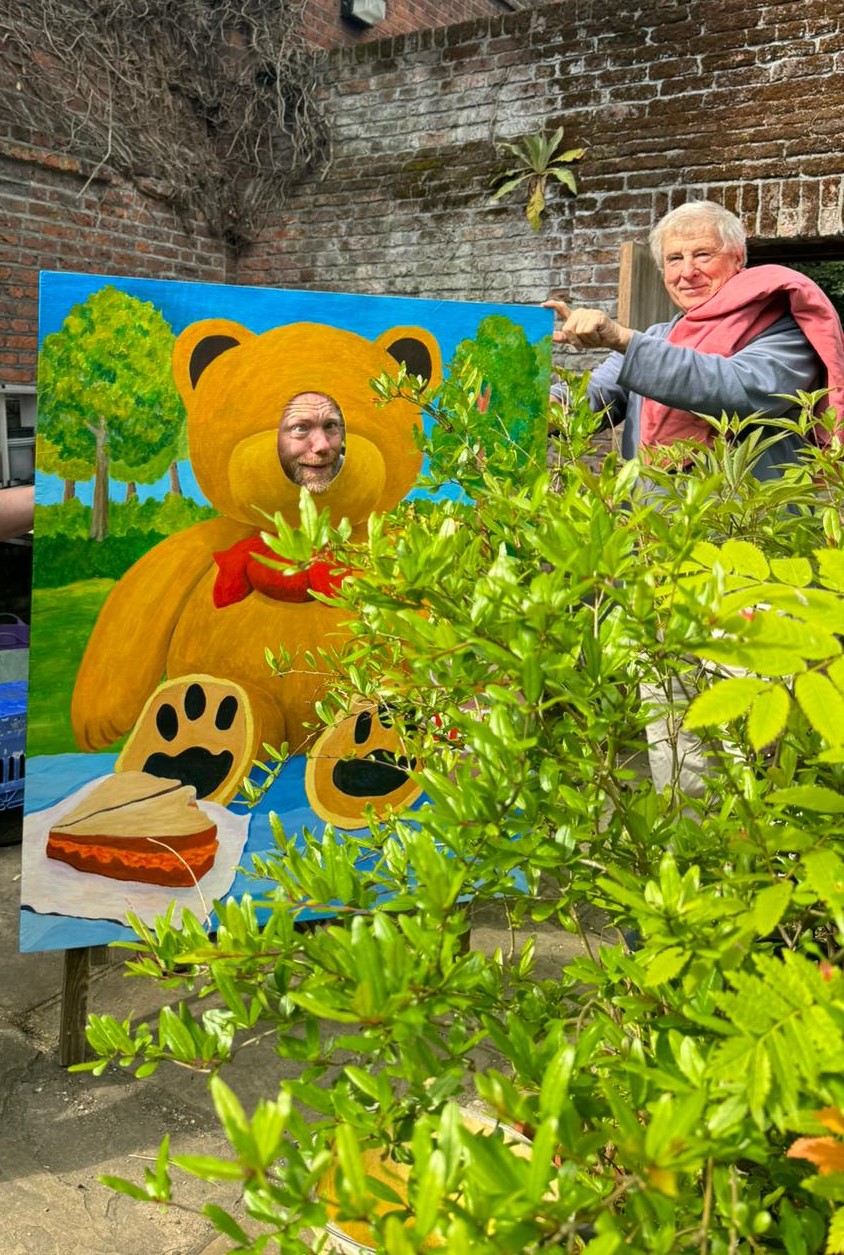
And of course huge thanks to our volunteer/resident Artist who made the “Ted Head”, a brilliant attraction for both young and old!
The promised lovely weather was marred by a short rain-burst in the middle of the day to freshen everything up and make the picnic-ers dive for the Old Library, but it was only for 5 minutes and everyone came out again. We are so well used to it this year! The day was not only for the children, the gardens were looking particularly fine, with 35 different flowers in bloom.
A successful day and a lovely community event with collaboration between the Royal Greenwich Heritage Trust, the Garden Volunteers, Charlton Library, Charlton Toy Library and Frilly’s cafe. Thank you!
If you go down to the Old Pond Garden this Saturday, you’re sure of a big surprise. For every teddy that ever there was, will gather there together because, today’s the biggest floral count ever!
If you have ever wondered which month is the most floriferous in the Old Pond Garden, I’m guessing it’s July. We are expecting lots of visitors this Saturday July 20th, 11-3, for the Teddy Bears Picnic, and they are in for a treat (as well as a picnic) as we have counted over 30 plants out in full flower. Can you spot them all? We will have an info board out so you can match names and flowers, while the kids are charging about finding the hidden Teddies. Works for all ages.
The Teddy Bear trail will be in the Old Pond Garden and there will be lots of photo-ops for you and your teddy with the lovely garden backdrop. See you there, better come in disguise!


















 Charlton and Blackheath Amateur Horticultural Society