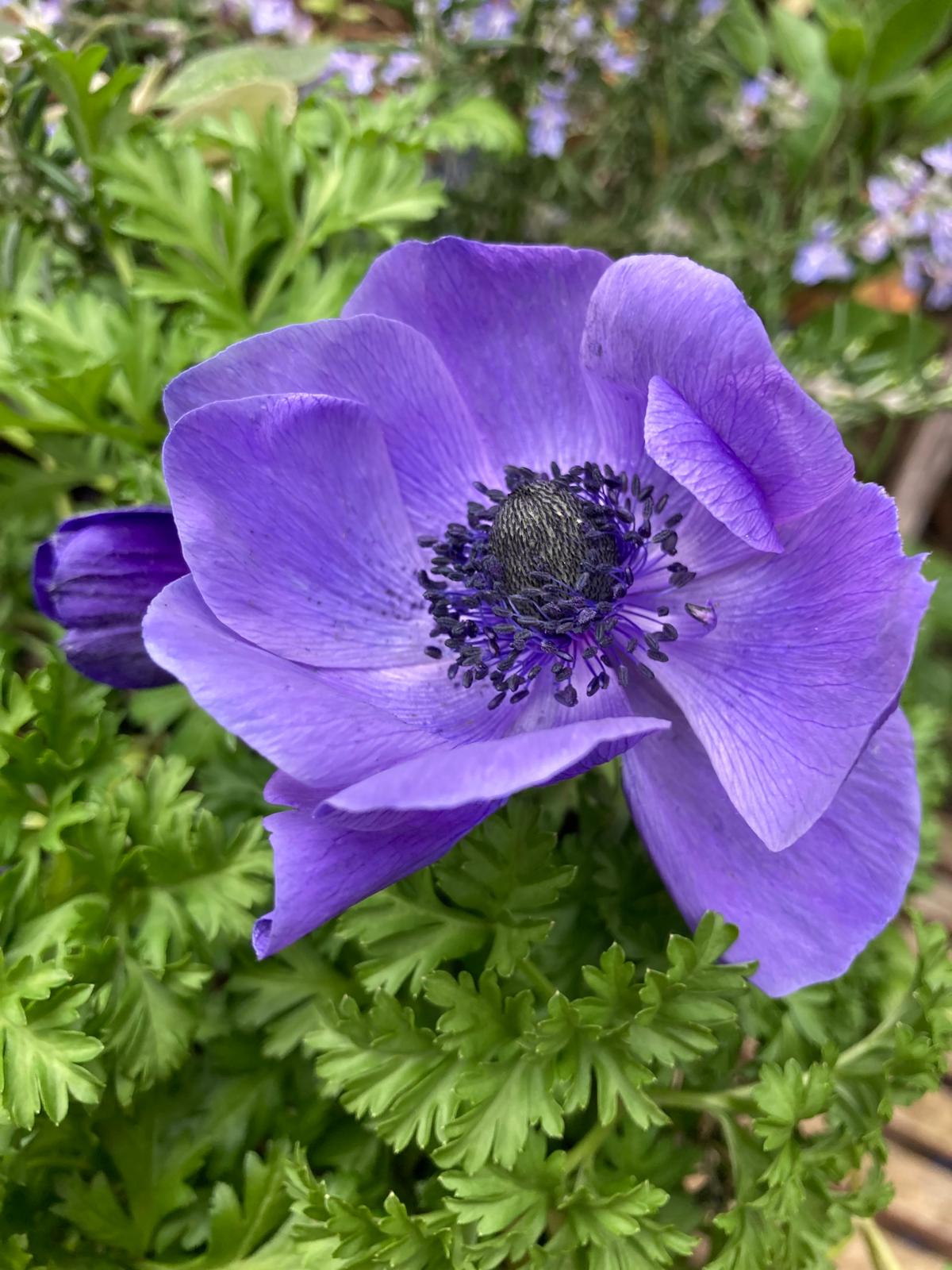
My garden has suddenly come alive with spring colour, mainly yellow, mauve and blue flowers, but I’ve had to work at it: the result being some gorgeously blue-flowering plants purchased (as a contrast to the in-situ yellows) for growing in containers. They have worked their magic, basking in the sunshine and enticing me into the garden with their beauty and my admiration!
This year, I decided, firstly, to recreate my spring ‘blue garden’ in a galvanised planter, first digging out unwanted material. I chose blue flowering plants with different shapes and sizes of flowers for harmony and these are the varieties I planted (including a purple Viola and Agapanthus to give depth to the arrangement):
Veronica umbrosa ‘Georgia Blue’ (alpine speedwell)
A enchanting little ground cover perennial, preferring full sun, if possible, and flowering during the spring months.


 Charlton and Blackheath Amateur Horticultural Society