Jean and I were very sorry to miss the (highly successful) plant fair on 19 May but we did have a lovely visit to the fabulous garden at RHS Harlow Carr instead.
RHS Harlow Carr is a short drive or bus ride away from Harrogate, a very elegant spa town in North Yorkshire. The garden opened in 1950 with the intention of trialling and showcasing plants that would thrive in a northern climate as opposed to the possibly easier growing conditions of RHS Wisley.
Fiona Davidson is the head of Libraries and Exhibitions at the RHS as well as being an author. Her talk at our March meeting was based on her recent book ‘An Almost Impossible Thing – the radical lives of Britain’s pioneering women gardeners’(previously reviewed by Stella). She described the lives of female gardeners in the late nineteenth and early twentieth century, a reflection of the restricted lives led by women in general during this time. Yet despite this, some pioneers became gardeners and had successful careers in gardening.
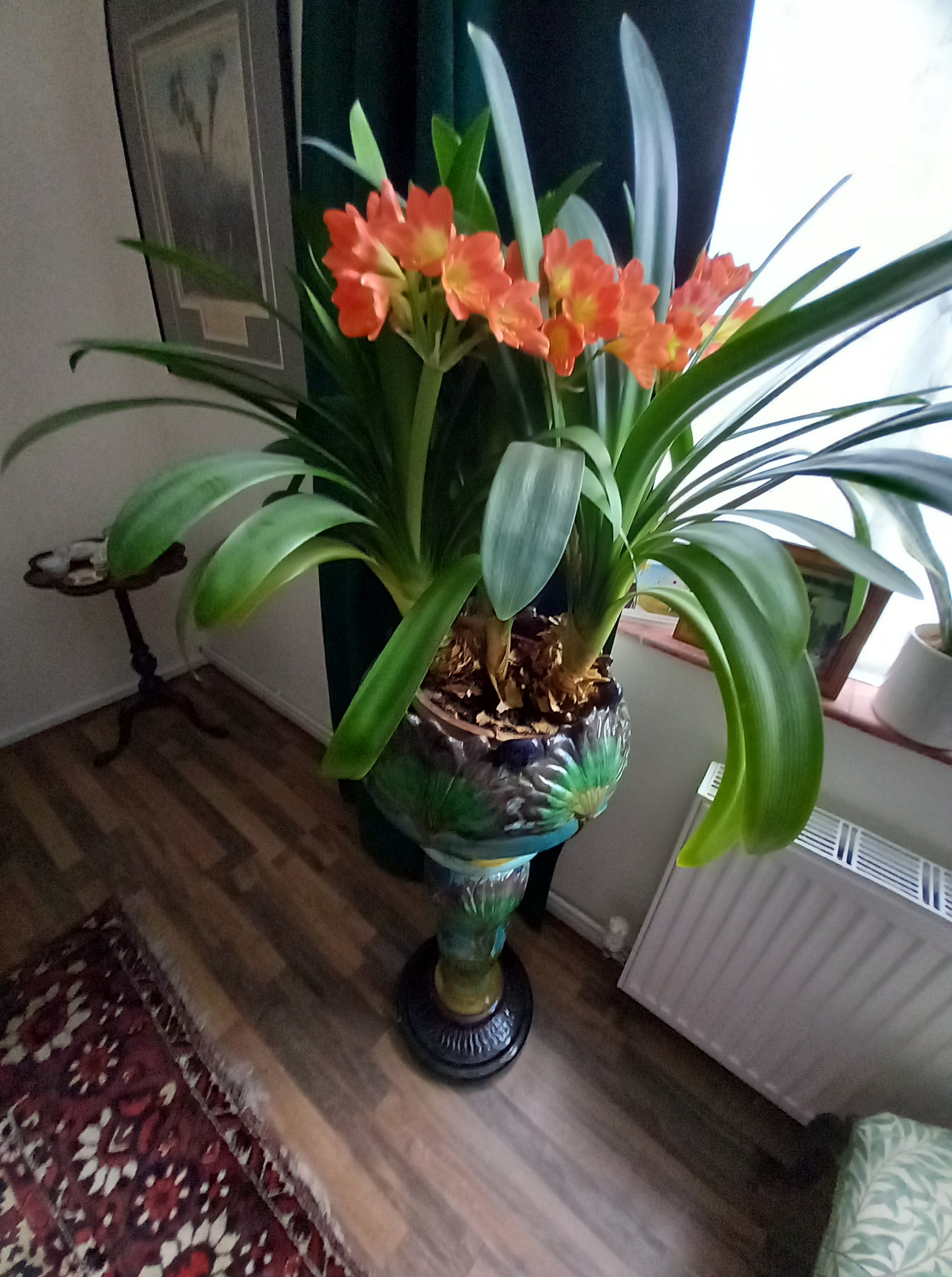
Angela B wrote: “Clivia (or Natal lily, originally from South Africa) is one of my favourite plants. It comes in a variety of colours. I have been growing Clivia miniata, the orange-flower variety, for years. Its glossy leaves and bright orange trumpets are striking and decorative. It has flowered well this year and I thought members might like to see it, and I encourage those who have not grown one to do so.
It’s easy to grow. See the RHS website for detailed care instructions. It’s a woodland plant and likes indirect sunlight and regular watering from Spring to Autumn, but minimal watering over the winter.”
We asked a few other members about this unusual and lovely plant. Chris B is also a fan of them, she says hers has beautiful flowers in May and June and she puts it outside for a holiday in the Summer (although not in full sun). She brings it back inside for winter and reduces the watering.
John Anderson has a very distinguished horticultural career. Trained at Kew, he has been head gardener at a range of famous gardens, and his contribution to horticulture was recognised in the award of the RHS Veitch Memorial Medal. In 2016, he became Keeper of Windsor Great Park Gardens, part of the Royal Estate, and managed by the Crown Estate.
It was a particularly interesting and informative talk. The gardens are unusual, situated as they are in a Royal Estate of 8000 acres, and Windsor Castle being a world tourist attraction. Yet the gardens and their management are less well known to the public. John Anderson showed a range of photographs of the gardens, described their history and development over the decades, and the challenges they now present.
The challenges include managing people whether they are tourists, cyclists or picnickers; dealing with vandalism and littering; and protecting its historic landscapes. Also the problems of climate change: evidenced in its Long Walk tree avenue, at over two miles the longest in Britain, where elm and horse chestnut were succumbing to disease, to be replaced by more resistant species such as ginkgo (Maidenhair) trees.
Professional gardening has long been a man’s world. The title of Fiona Davison’s book comes from a letter written by the retiring Director of Kew Gardens, Joseph Dalton Hooker in 1906. His unambiguous advice to Miss Symonds who fancied a job tending plants was to forget it. Yet women did enter the world of horticulture in the early decades of the twentieth century and Davison follows six of them as they make inroads into this male bastion.
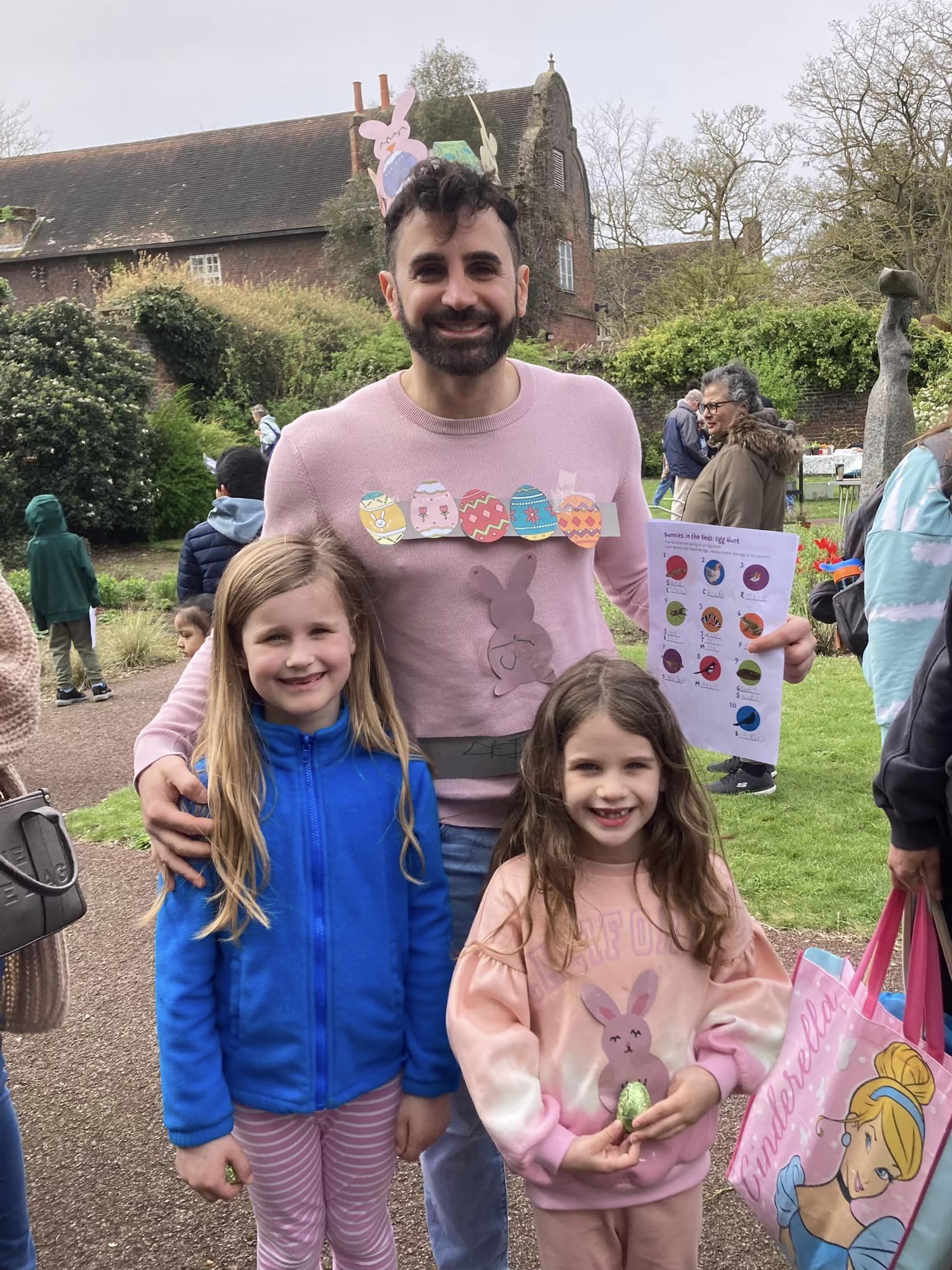
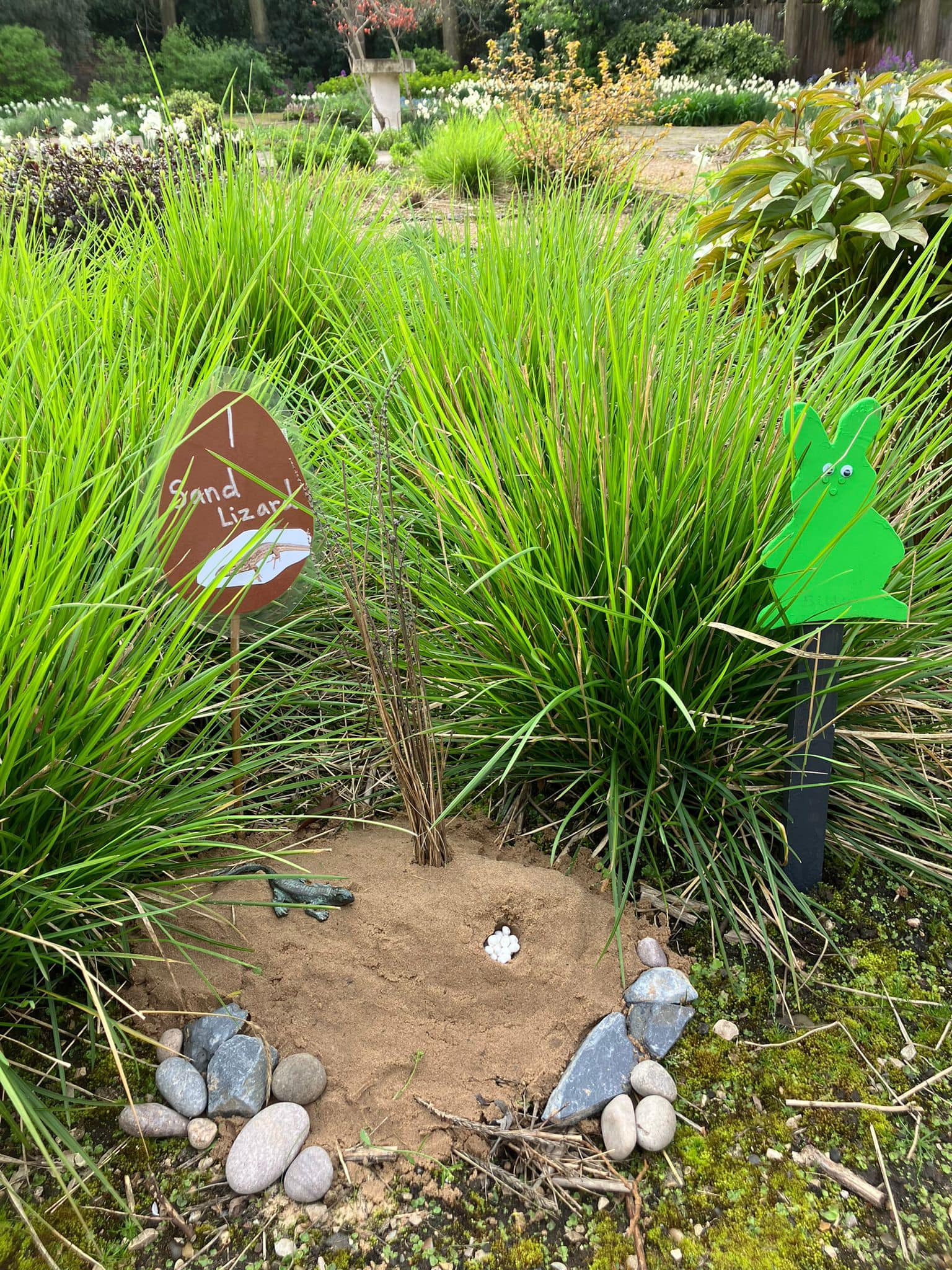
Our “Bunnies in the Beds” Easter Trail took place on Saturday (April 6th) for the fourth year running, it is becoming a fabulous fixture of the Garden Volunteers year. We start thinking up mad ideas in January during tea breaks, then gradually whittle them down to create an exciting but practical trail.
This year, the Bunnies went on an egg hunt with a difference! Having found all the eggs they then had to match them to their parent animal, in order to collect a prize. And by the end of the day, 175 children had achieved their goal. There were birds eggs to find of course, but also frogs, snakes, sand lizard, moths and even a dinosaurs egg!
Also on offer: Potting Up Table with free seeds, courtesy of RHS Britain in Bloom which is celebrating its 60th anniversary this year. We were not expecting this to be so popular and almost ran out of seeds! So many small gardeners-in-the-making came to this event, it was lovely. If you are growing your seeds on, you can keep track how others are doing on social media on @RHS GrassRoots and #RHSBloom60.
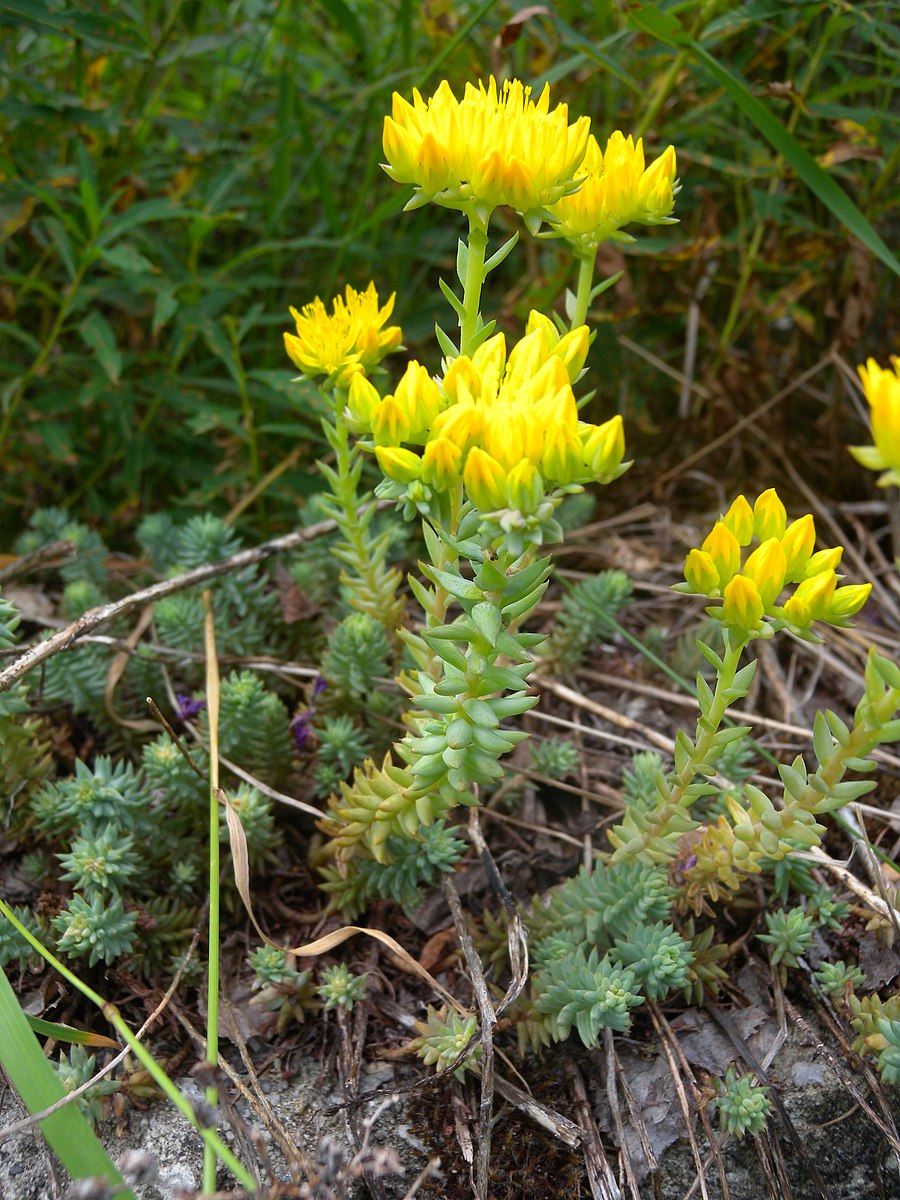
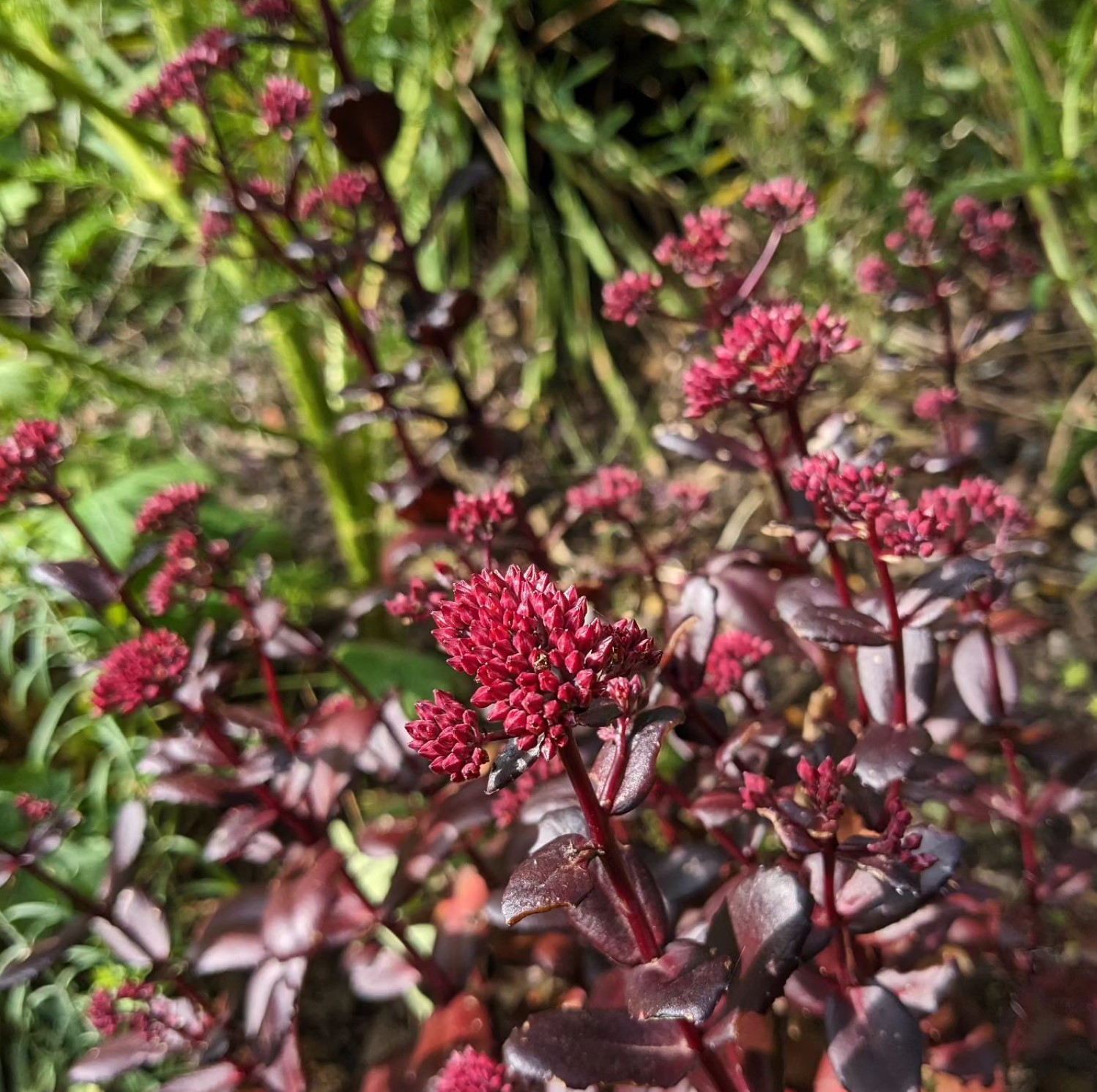
I’m sure you know by now that herb garden favourite rosemary had its botanical name changed following DNA testing. It was reclassified to the Salvia family and its proper name is now Salvia rosmarinus (while the common name of course remains ‘rosemary’). Another common garden plant, Perovskia (aka Russian sage), has been renamed Salvia yangii. And then there are the sedums, some (but not all) of which must have needed a few more syllables to sound properly botanical!
Gardeners often wonder why this happens, and feel like botanical names are simply there to confuse us. Many gardeners choose to stick to the ‘old’ names, and occasionally (but not usually!) this is rewarded as science progresses, as is pointed out in this useful article from Gardens Illustrated.
A couple of months ago, we noticed the damage that was being done to the fig tree in the Old Pond Garden and realised that most other fig trees in the area were in a similar state. What was happening?
We were discussing it at a volunteer session one day and Pat T indicated that she had spotted the same kind of damage on her fig tree and had contacted the RHS for advice. The RHS confirmed our suspicion that the cause is a micro-moth called Choreutis nemorana. It is being referred to as the fig-tree skeletonizer moth or fig leaf roller – for rather obvious reasons! This species is widespread in the Mediterranean and North Africa where there will be more fig trees but more natural predators too.
It was recorded in Belgium in 2009 and the first record for Britain was in 2014 in London. Since then it has spread to East Anglia, Kent and the Isle of Wight.
To understand what is happening to the fig tree, we must follow the life-cycle of the moth. The adult moth lays whitish eggs in batches on top of the leaf. The larvae or caterpillars then hatch, begin eating the leaf but just the tender bits, not the ribs (hence one of its names). They also spin silk to create a protective web or cocoon, under which they continue to eat the leaf until they pupate. There are two generations with adults flying in July and again in the autumn. The second generation over-winters in sheltered places. The caterpillar grows to about 15mm long and the moth has a wingspan of between 16 and 20mm. For more information and photos of the different stages check here.
How many of us have been on holiday, fallen in love with the flora of the region and maybe even recognised a plant as one that we know can be grown in UK, either indoors or out? The temptation is huge to bring back a few seeds, to buy some rhizomes at a market (yes, those Madeiran Agapanthus were hard to resist) or – if we’re visiting friends, to accept a cutting or two. But we now know that as well as being illegal, in doing so we risk introducing plant diseases and devastating an aspect of the horticultural world we love.
The RHS give some clear advice on bringing plants back to the UK from your holidays (ie: DON’T!), but also what to do if you decide that you are willing to take on the administrative load and expense to get hold of a particular plant.
Olive trees affected by Xylella in Gallipoli, Italy. (Image from Wikimedia Commons)
Easter bunnies arrived early this year at Charlton House & Gardens. On the Sunday before Easter, ten vegetable loving bunnies hid themselves along with their favourite vegetables in the flower beds of the Gardens and were ready to be found by young visitors to this joint CABAHS & RGHT event. The morning’s chilly weather did not seem to deter the children who all enthusiastically scoured the Old Pond Garden and the Peace Garden.
Once they had found all ten and identified each bunny’s favourite vegetable they were encouraged to sow some radish seeds as part of the Royal Horticultural Society’s Big Seed Sow https://www.rhs.org.uk/get-involved/big-seed-sow . They could also learn about ‘the Secret Life of the Pea’ and choose some seeds to take home with them. Some even made their own origami seed packets. Fingers crossed we have set some of our visitors on the joyous path to becoming a life-long gardener!
Thankfully the weather was kind: dry with even a spell or two of sunshine during the afternoon. The real live bunnies brought along by Juli were an extra special attraction! By 3 o’clock, around 180 trails had been completed with donations earning a sizeable sum for Charlton House & Gardens. Our Plant Sale also proved an attractive draw and took over £200.








 Charlton and Blackheath Amateur Horticultural Society