1. If herbs like thyme have finished flowering, trim them back to keep them compact and use the trimmings to do some cuttings.
2. Stake Dahlias before they get too tall and straggly or the stems may snap. Keep well watered in this dry weather.
3. To conserve water and before we get a hosepipe ban, just water around the roots of plants and mulch them if you can. Some are really suffering at the moment. So why not start sowing seeds of Eryngium giganteum ‘Miss Wilmott’s Ghost’ for a drought proof plant for next year? Loved by pollinators too.
1. Border irises are really doing their thing now and the show can be brief but make sure to keep the soil around their roots free of weeds so their rhizomes can bake a bit in the sun.
2. Time to Chelsea chop your tall perennials to stop them flopping later or to extend flowering. Good candidates are Phlox, Penstemon, Helianthus, Sedum/Hylotelephium – and I include vigorous Clematis too. You can either do the whole plant at once or just some stems to extend flowering, although it may result in smaller flowers.
3. Deadhead displays of pot plants like Violas to keep them flowering and stop them going to seed. Remember to give them a feed to keep the display going.
Jason Sylvan, Head Gardener at Charlton House, has designed the Old Pond Garden to be as attractive to wildlife as possible. Because we talk about monitoring moths, he asked if we could check how many moths are visiting the garden. We should have tried this in the warmer months when there are more plants in full flower but we had missed that for this year so we gave it a shot on a warmer dry night in September to test out a strategy.
As we wrote in an earlier post, we have been monitoring moths for the Garden Moth Scheme since 2013 in Newcastle-upon-Tyne and since 2019 in Blackheath. The moth trap is a box with a light (our type gives off no heat), and below the light are two panels of see-through Perspex, one each side and shallowly angled down, with a slot/gap between them. The moths ‘funnel’ into the box, and it’s difficult (but not impossible) to get out. Inside are egg-trays, which provide resting places.
Why do moths fly towards the light? Until recently, the correct answer has been that nobody knows, but researchers in Sweden found the answer: for aeons, light at night was above and dark was below, so moths orientated themselves to fly with their backs to the light above. In artificial light – fires, candles, street lamps – they still try to fly with their backs to the light, circling round and round, and sometimes become disorientated.
The trap is placed before sunset, and collected at sunrise the next day. So an early start.
1. It is especially important to keep Camellias and Rhododendrons damp at the roots this month as this is the time that the buds form for next Spring. Water well and mulch if you can.
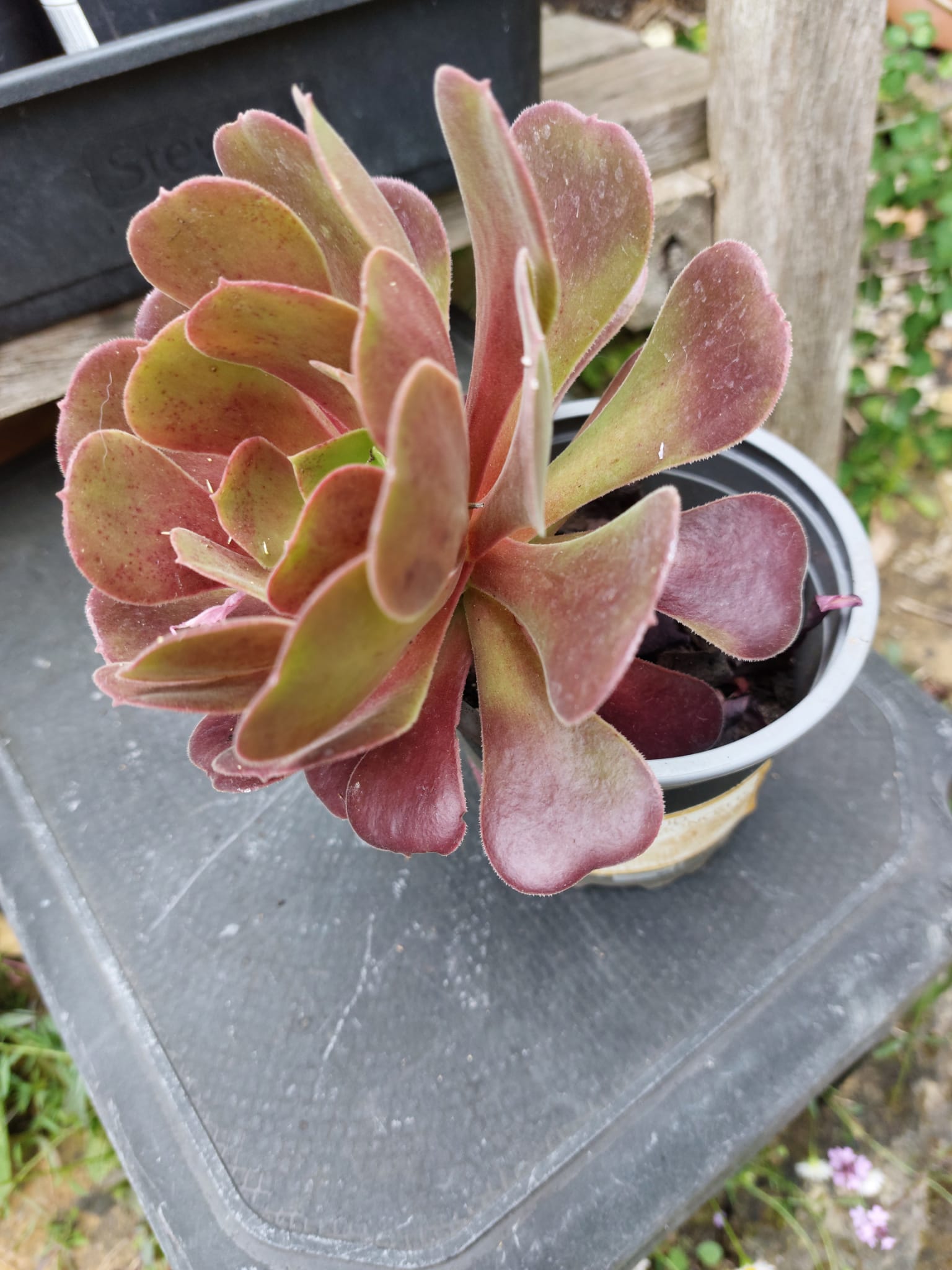
2. Take Aeonium cuttings now by severing leggy leaf stems a couple of inches below a cluster. Leave the stem end to callous over, then push into gritty compost and keep in a shady spot until roots start to form.
Dave Goulson, Professor of Biological Sciences at the University of Sussex specialising in the ecology and conservation of insects, and author of several books*, gave a talk about the dramatic insect decline worldwide. He outlined some of actions required on a National and International scale to reverse this apocalypse and what we as gardeners can do.
When he was a boy, he started collecting caterpillars (in his lunchbox) and his interest in insects became a life long passion when one of them pupated into a Cinnabar Moth. He explained that insects evolved over 480 million years ago and there are now around one million known species worldwide. They were the first creatures to fly and sing and many have complex inventive ways to camouflage themselves or mimic others. Examples of some ‘weird and wonderful’ insects were shared with us such as the Shield Bug from Thailand whose back very much looks like the face of Elvis.
The horrifying statistics on insect decline were shown, particularly over the last 30 to 40 years. Studies show that the decline is around 75%. He has researched the Shrill Carder Bee which was common across Southern England pre-1960 but by the year 2000 the populations of this bee had greatly decreased and there were only about six populations left. Since 2000, the population which inhabited the Salisbury Levels has become extinct.
Timothy Walker is a botanist with an extensive career in horticulture. He is a former Director of Oxford Botanical Gardens and still lectures at Somerville and Pembroke Colleges as well as being a Fellow of the Linnean Society and winner of four Chelsea gold medals. He came to our attention as the presenter of the BBC 4 television series Botany – a Blooming History. He gave an entertaining and informative talk which was very well received by the audience.
Like all living organisms, plants aim to ensure offspring for the next generation. Timothy described the sexual life of plants as the movement of pollen along the stem from the male anther of a flower to the female stigma to allow fertilisation. He put his discussion within the context of Darwinian theory of the Origin of the Species and Natural Selection and said pollination is less subservient than normally assumed.
He described a variety of stratagems for pollination and ways plants have developed to ensure it happens. Nature abhors inbreeding and, because of genetic problems associated with self pollination, tries to avoid it.
Kathy’s post about Gardening for the Bees was interesting – particularly because I love honey! But it made me want to encourage a similar interest in Moths. There are at least 2,500 species of moths in Britain and very few will eat your clothes!
Joe and I have been monitoring moths for the Garden Moth Scheme since 2013 when we were invited to enter a raffle for a moth trap. We think we were tricked! One of our fellow Volunteer Rangers at Jesmond Dene in Newcastle is a GMS Regional Coordinator and he was looking for new recruits! We didn’t win the raffle but he lent us a trap and a book and, as they say, the rest is history. We transferred to the South East Branch when we moved south and now we even continue through the Winter Moth Scheme…
The moth trap is a simple box with a light above it. The light attracts the moths and they end up in the box below with lots of egg trays to rest in. They are not harmed. In the morning, we open the box and identify and count the different species, taking photos of unusual ones. How different are our moth records here and in the North? For the last full year we were in Newcastle (2018), we recorded 290 moths of 61 species. Last year here, we recorded 844 moths of 143 species. Moths that hadn’t reached the North at that time were the Jersey Tiger and Box Tree Moths and we get more migrants here – some moths fly over the Channel!
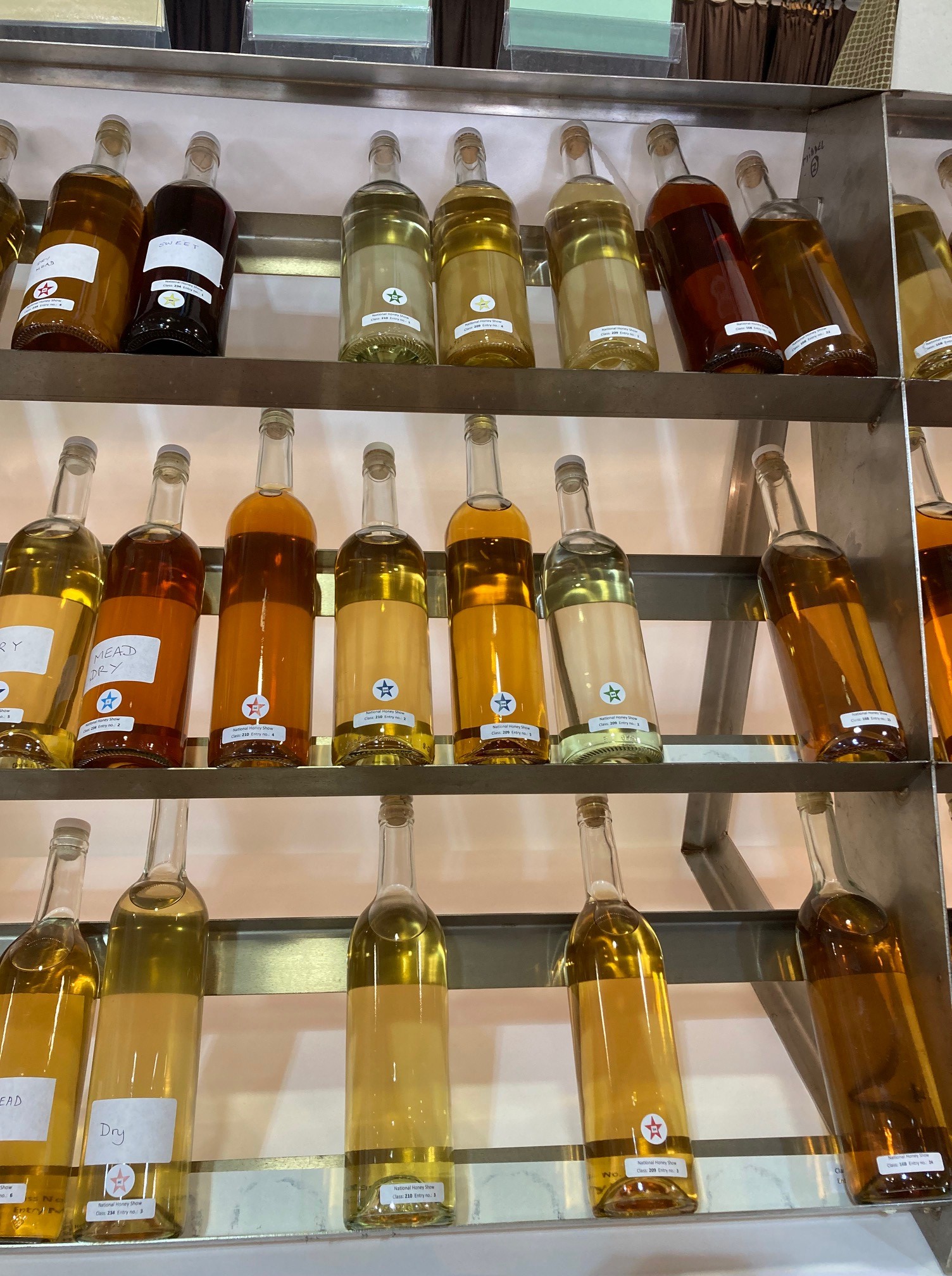
My husband ( a beekeeper) recently treated me to a visit to the National Honey Show, which is sort of like going to RHS Chelsea if you are a beekeeper. Apart from an enormous number of jars of honey, there were talks available, and we attended one from Dr Nick Tew on “The role of gardens in supporting Insect Pollinators”. It was a really good talk, with scientific research explained in easy terms.
A few slides stood out for me – for instance, the time period for flowering plants in a garden, compared with a hedgerow or pasture. Most gardeners love to have something in flower all through the year, so although the volume of nectar/pollen in a garden might not be as high as in a meadow or hedgerow in full swing, it is available for a much longer time span. So in fact such a garden is more useful to insects.
There are some downsides to a garden – Nick calls it “horticultural bling”, a lovely phrase which unfortunately can be applied to a few parts of my garden (but luckily not many!)
A version of the talk is on Youtube, the link is below, it’s a good watch.
The Show was held at Sandown Park racecourse, and it was huge. It reminded me of a Horticultural Show in that it not only had classes for honey, but also eg craft and baking classes. The sunflowers shown here are made of wax!
I bought some sparkling mead from one of the stalls, took down a recipe for “Gin & Tonic Honey cake” and bought a couple of seed packets to convert my lawn into a meadow at some point in my dreams. The final stall we visited worried me a little, as it is giving my husband ideas!
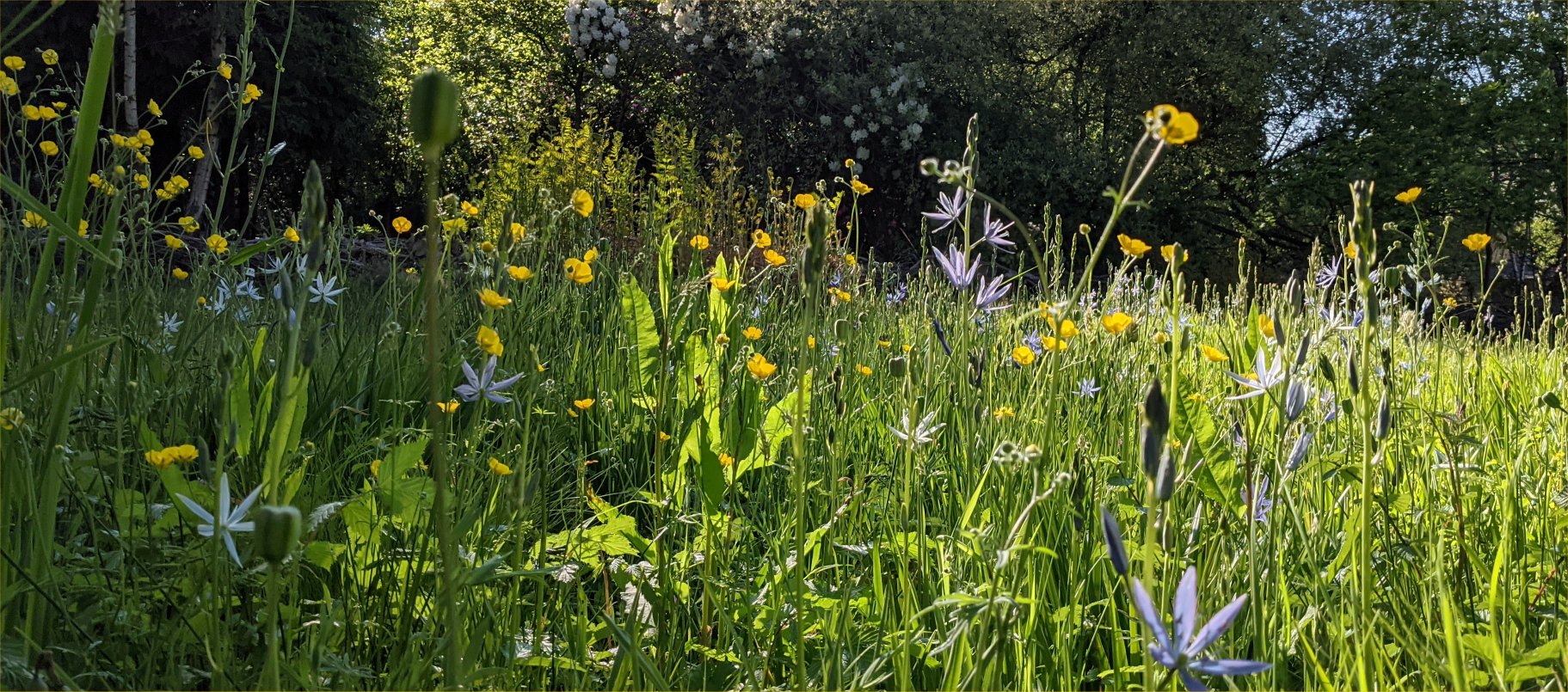
Plantlife are running their No Mow May campaign again this year. Don’t mow, then between 23 and 30 May, count the flowers in a random 1m square of lawn. Send in the results to Plantlife and they will calculate a National Nectar index to show how our lawns are helping pollinators.









 Charlton and Blackheath Amateur Horticultural Society