Penstemon ‘Garnet’ – Beardtongue


Although at its peak in July, this has been out since May and is one of the longest-flowering plants in the Old Pond Garden. At the moment we really love it for it’s drought tolerance – no need to water this one! It has dainty, tubular flowers which insects with long tongues like bumblebees can enjoy, and it provides both pollen and nectar for visiting insects. Prefers a sunny spot but will do well in part shade too, so you can spot it in several of the beds. It is a semi-evergreen, only losing it’s leaves in the very depths of winter.
Dianthus carthusianorum – Carthusian Pink
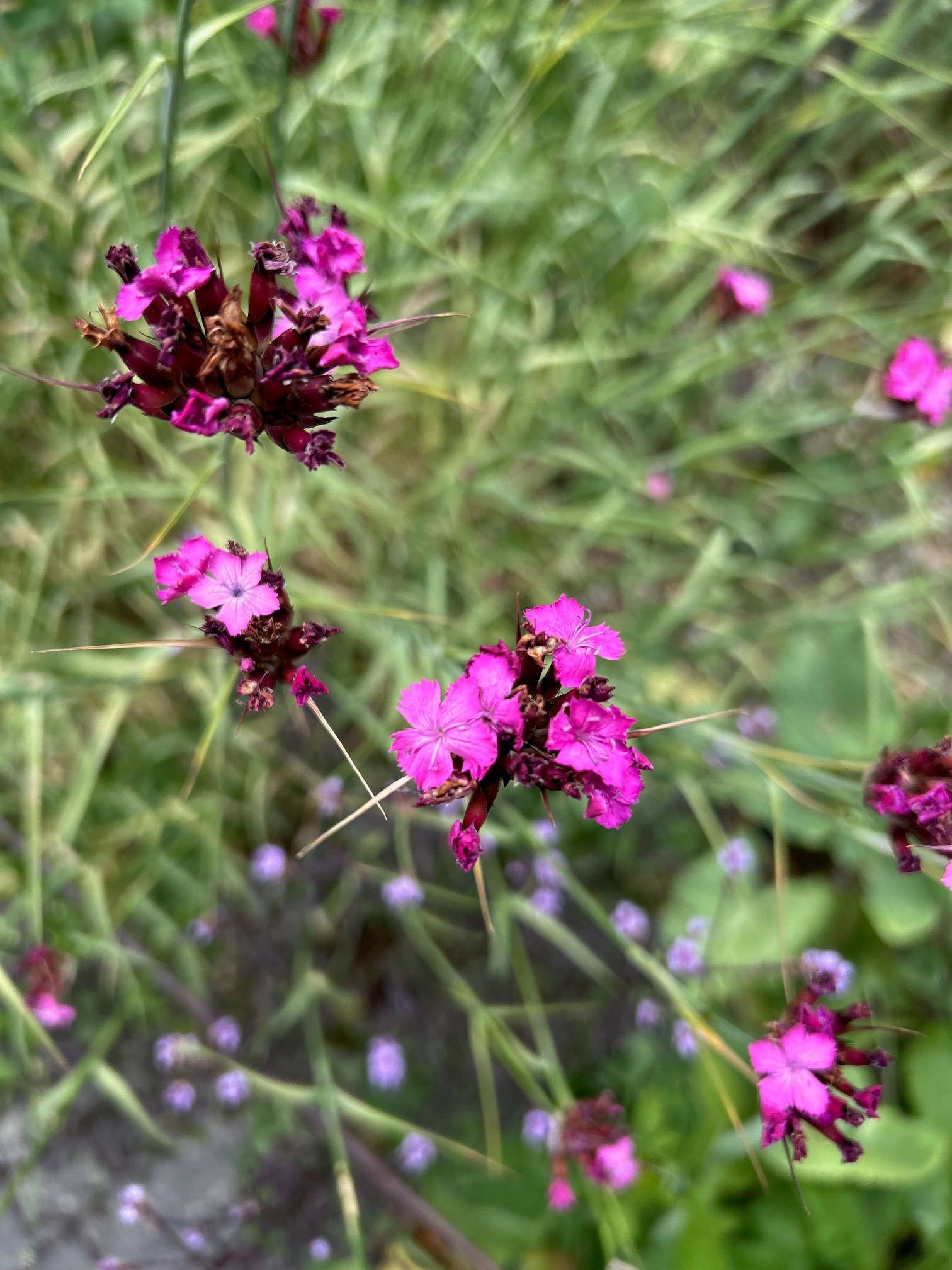

Another lovely drought-tolerant plant that we don’t have to water! It must be in full sun to flower well, so it just loves the gravel garden in the central bed of the Old Pond Garden. It’s a perennial, forming bigger clumps each year and giving that great “pop” of colour. A gentle self-seeder and long season in flower.
Continue reading What to look out for in the Old Pond Garden July 2025


 Charlton and Blackheath Amateur Horticultural Society