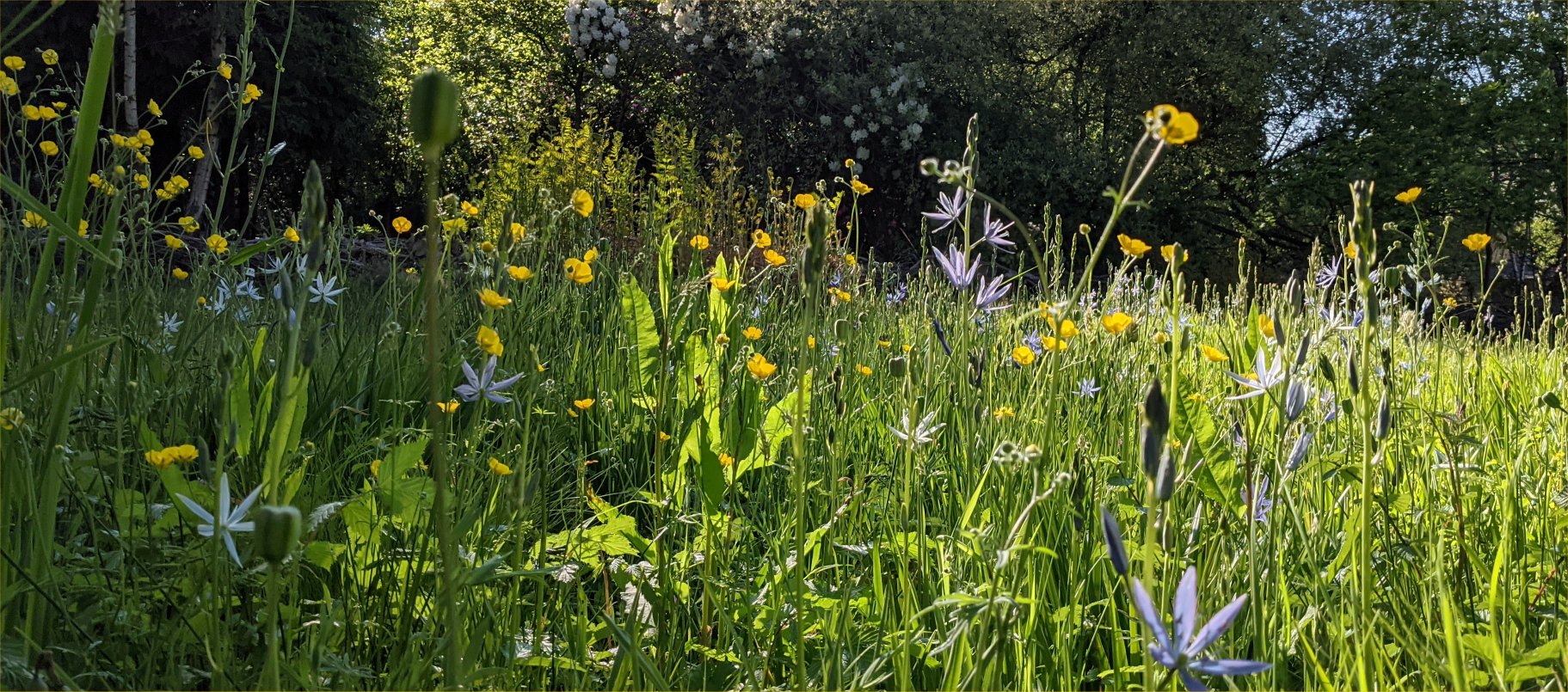
Jason Sylvan, Head Gardener at Charlton House, has designed the Old Pond Garden to be as attractive to wildlife as possible. Because we talk about monitoring moths, he asked if we could check how many moths are visiting the garden. We should have tried this in the warmer months when there are more plants in full flower but we had missed that for this year so we gave it a shot on a warmer dry night in September to test out a strategy.
As we wrote in an earlier post, we have been monitoring moths for the Garden Moth Scheme since 2013 in Newcastle-upon-Tyne and since 2019 in Blackheath. The moth trap is a box with a light (our type gives off no heat), and below the light are two panels of see-through Perspex, one each side and shallowly angled down, with a slot/gap between them. The moths ‘funnel’ into the box, and it’s difficult (but not impossible) to get out. Inside are egg-trays, which provide resting places.


Why do moths fly towards the light? Until recently, the correct answer has been that nobody knows, but researchers in Sweden found the answer: for aeons, light at night was above and dark was below, so moths orientated themselves to fly with their backs to the light above. In artificial light – fires, candles, street lamps – they still try to fly with their backs to the light, circling round and round, and sometimes become disorientated.
The trap is placed before sunset, and collected at sunrise the next day. So an early start.
Continue reading Moth Night at the Old Pond Garden 18/19th September 2024




 Charlton and Blackheath Amateur Horticultural Society