The Exchange, Walnut Tree Road, Erith

One autumn Saturday morning in 2024 my companion and I visited the Sarah Price-designed garden at The Exchange in Erith, South-East London and we were in for a treat.

As Erith Library for over 100 years, and Grade II-listed, this Carnegie-financed building of 1906 finally closed its doors in 2009, thus becoming an unused space with unkept grounds. Two visionary locals, respectively with conservation and community arts experience, approached Bexley Council in 2016. Their initiative resulted in a community arts hub which opened in 2022 – a refurbished building with a new garden to match. 

Mediterranean front garden

The garden surrounds the building on all sides, with various plantings complementing each of the four different areas. The forefront of the building has become a Mediterranean garden with a tapestry of lime-greens, blue-greens and greys. In amongst the herbaceous and shrubs I noticed Myrtle, Euphorbias, Irises, California poppies and particular favourites, sub-shrub Dorycnium hirsutum and several Hesperaloe parviflora (red yucca), a very choice succulent that I have at home (and managed to keep alive!). On our visit we noticed that flowering was just finishing, with its tall stem of red-orange pendulum flowers just going over.

Continue reading The Exchange, Walnut Tree Road, Erith
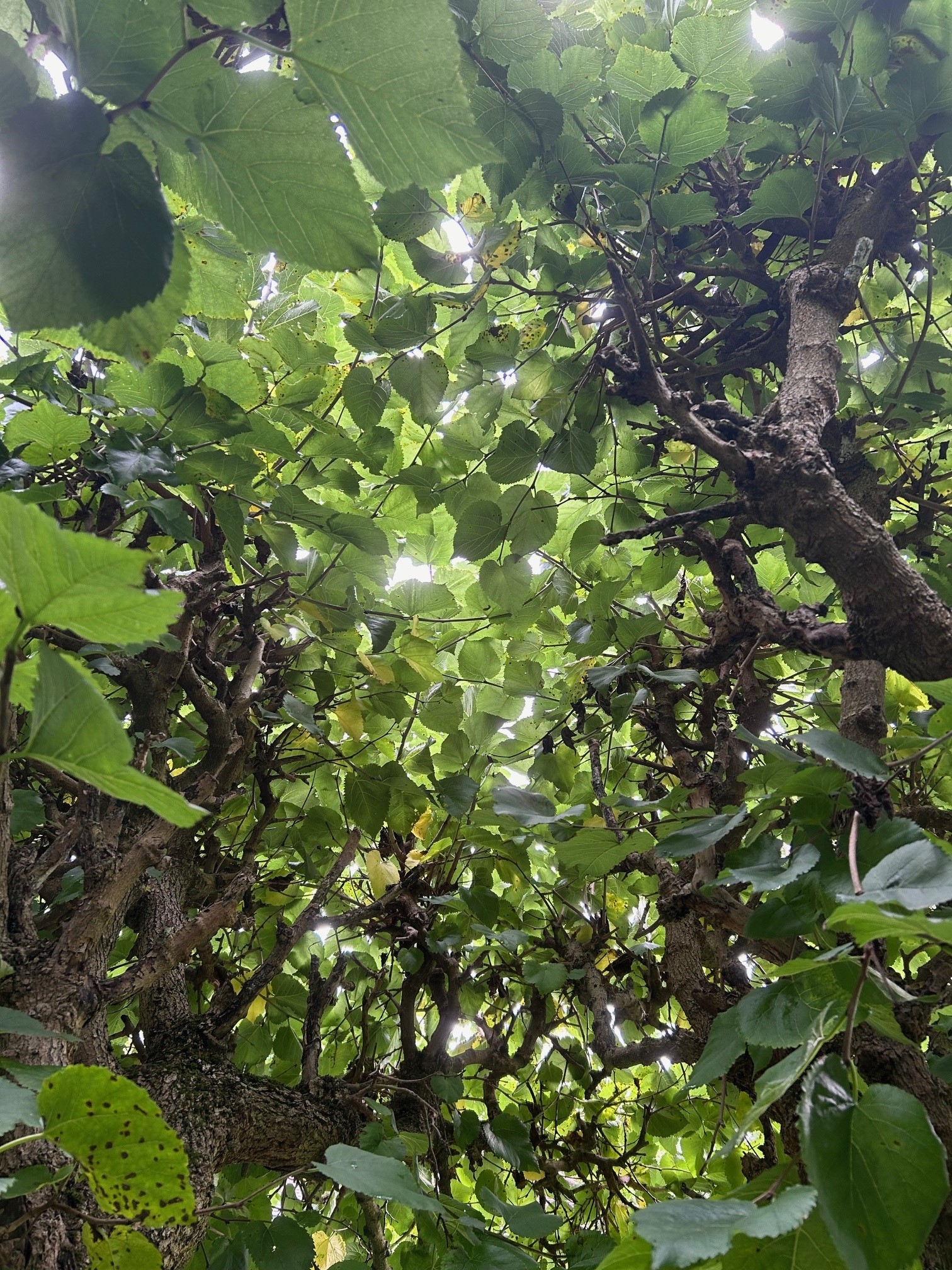
What did the Mulberry tree see?

You may have spotted that the Charlton House Mulberry has just featured at Number 8 in the list of 20 Greatest Trees of Britain (the Telegraph) – what a well deserved honour!

I confess to being a bit of a Mulberry tree fan, having planted one in our garden in Westcombe Park just over 35 years ago. Our tree was a favourite retreat for my kids when they were growing up since, like all Mulberries, it has a very climbable branch structure and wonderful leaf canopy. Even Jerry our Jack Russell can climb up it when he has the momentum to chase squirrels!

Last year I bought my grandson a lovely children’s book about an old tree standing through the ages (What did the Tree See, by Charlotte Guillain) and reading it led me to ponder what our venerable Mulberry Tree at Charlton House might have been witness to over its 400 plus years?

The story would start in 1607, around the time the House was being built, when King James required landowners to purchase and plant 10,000 Mulberry trees between them, to start his ill-fated silk industry. When Sir Adam Newton bought the “Manor of Charlton”, it included six orchards, 260 acres of land, 100 acres of meadow, 200 acres of pasture and 200 acres of wood – so he certainly had space to please the King by planting a whole field of Mulberries. A pity that the wrong kind of trees were planted for silkworms and the climate was too cold for them to thrive. At Charlton House we know that “a few trees” remained by 1845 but our beautiful and venerable one is all that remains today.

Mulberry in summer at Charlton House
Continue reading What did the Mulberry tree see?