Fiona Davidson is the head of Libraries and Exhibitions at the RHS as well as being an author. Her talk at our March meeting was based on her recent book ‘An Almost Impossible Thing – the radical lives of Britain’s pioneering women gardeners’ (previously reviewed by Stella). She described the lives of female gardeners in the late nineteenth and early twentieth century, a reflection of the restricted lives led by women in general during this time. Yet despite this, some pioneers became gardeners and had successful careers in gardening.
Continue reading March 2025 Talk: Fiona Davison on Pioneering Women GardenersTag: March
March 2025 Meeting and Show Table
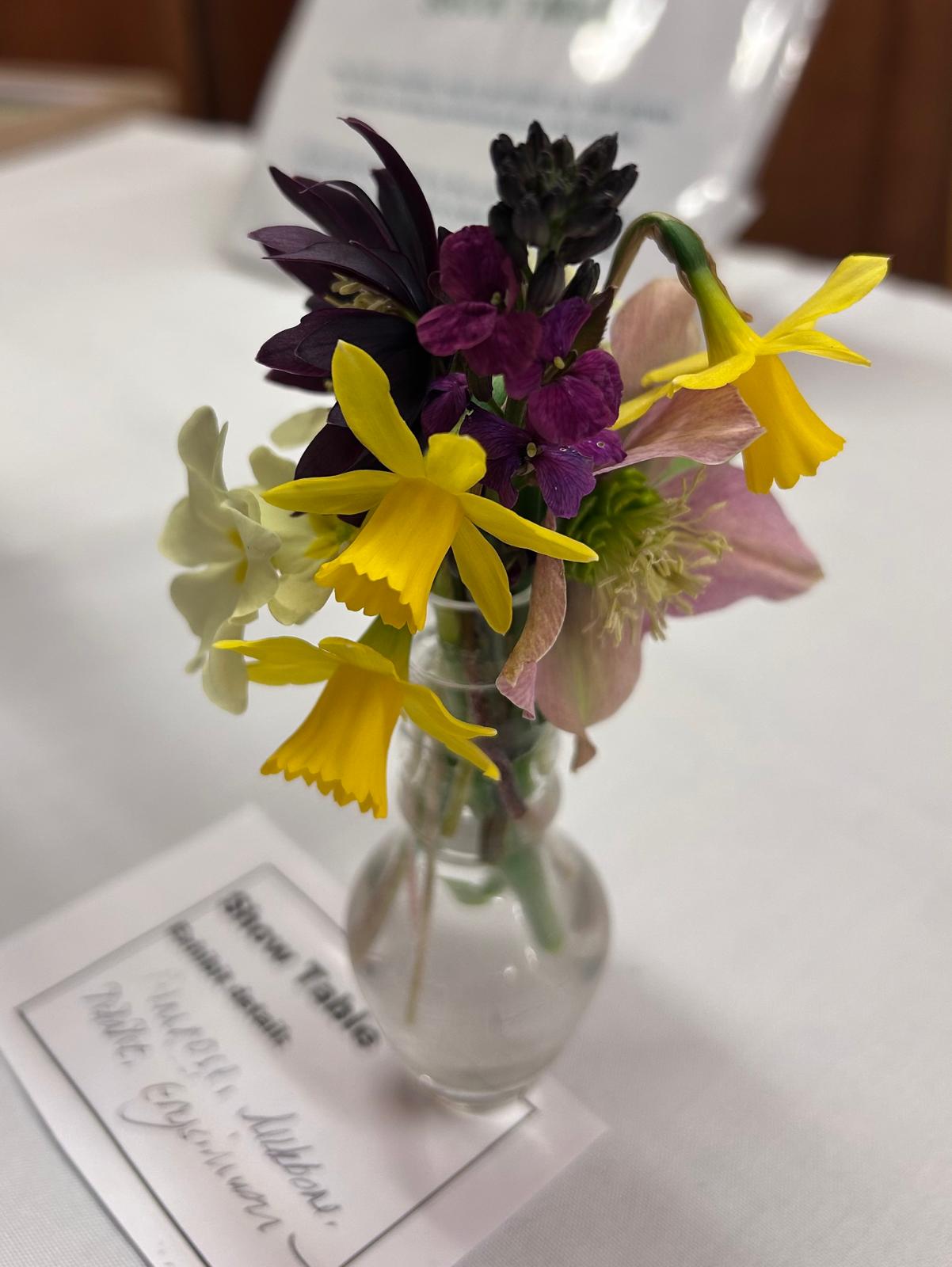
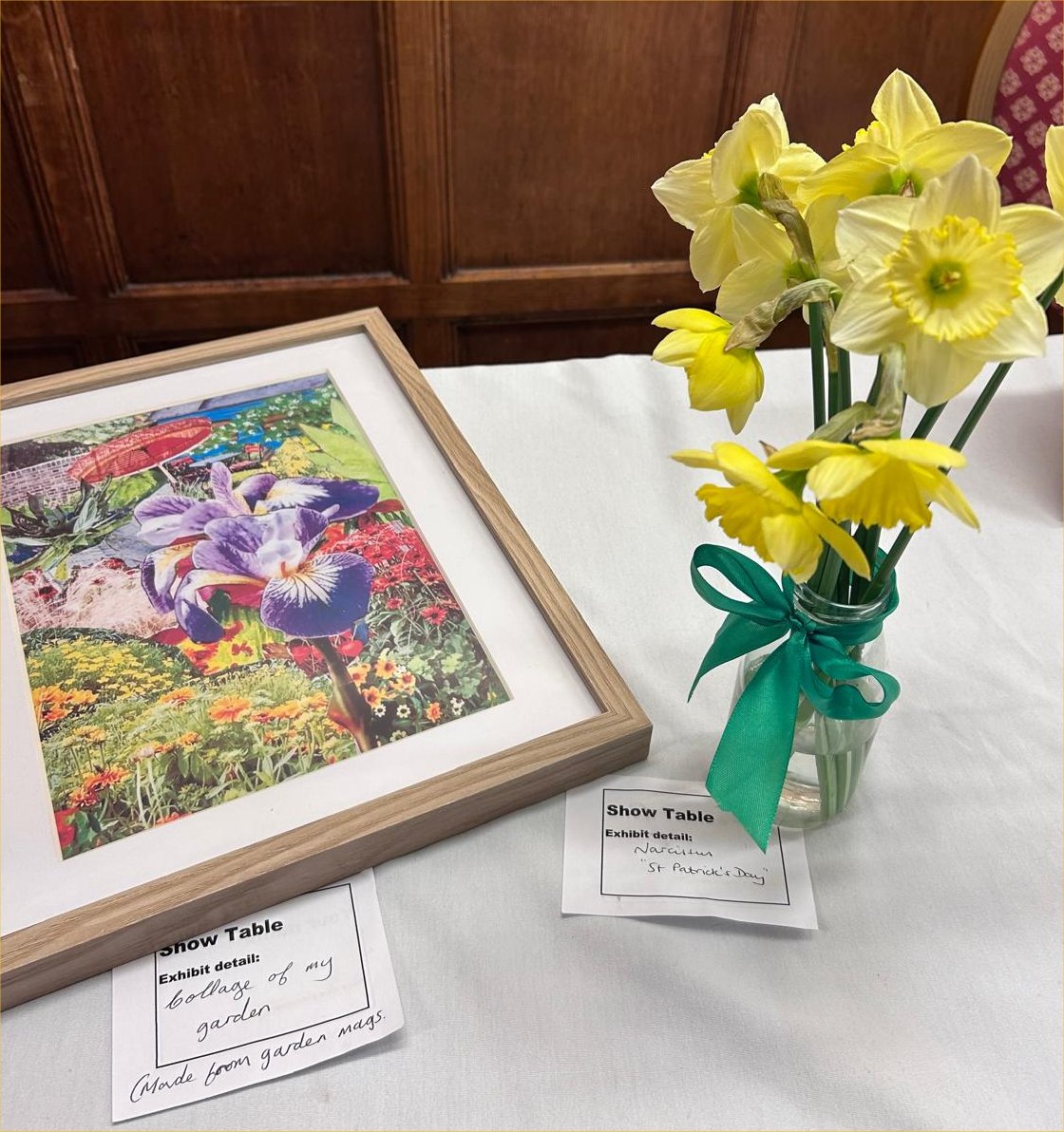
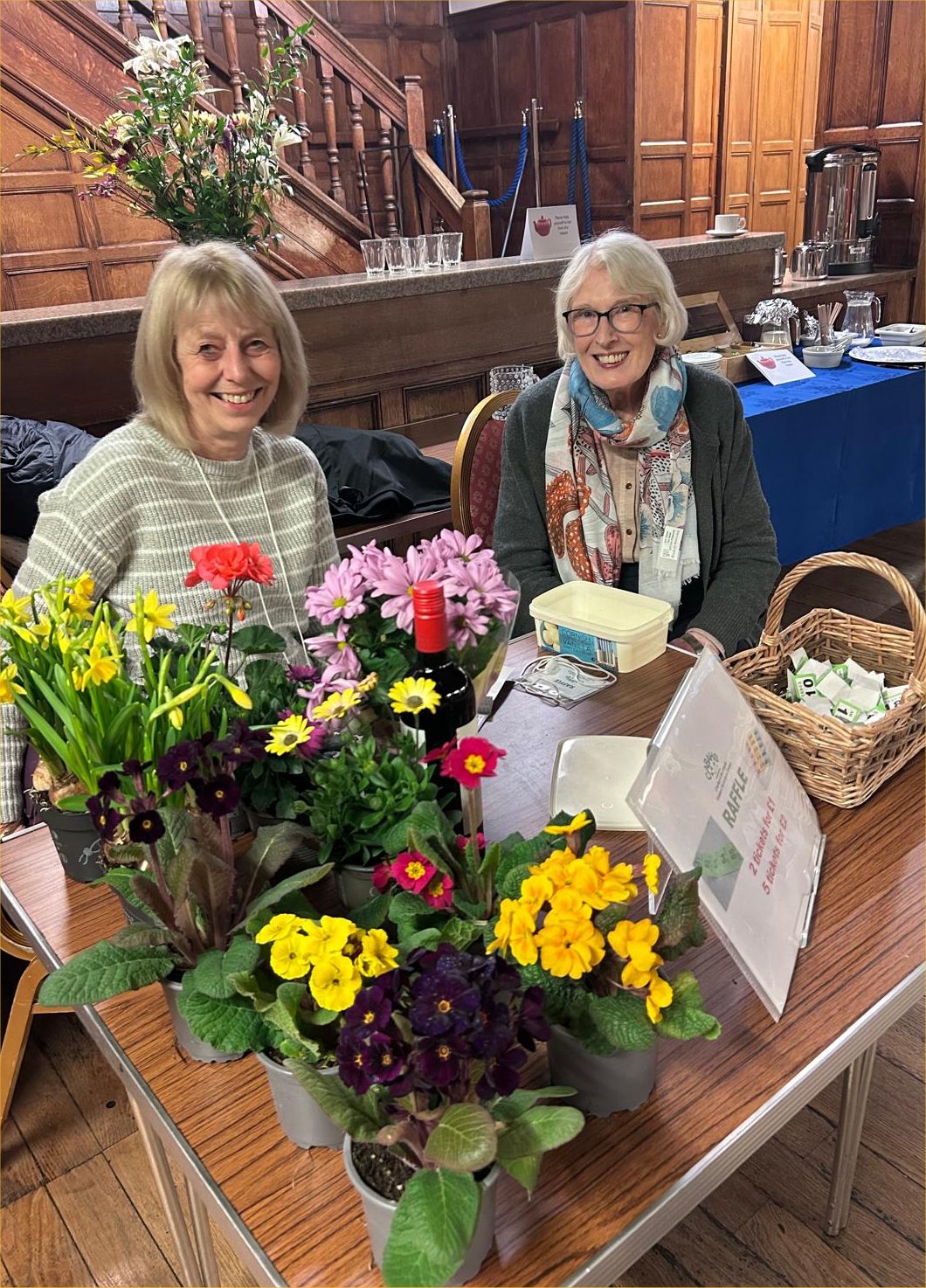
A packed library for the March meeting, and the first Show Table of the year – congratulations to Kathy for winning this month’s Best on the Table prize with her Narcissus ‘St Patrick’s Day’.


There was also a Plant Sales table and the usual raffle with lots of lovely plant prizes. The main event was a talk by Fiona Davison, author of ‘An Almost Impossible Thing: The radical lives of Britain’s pioneering women gardeners‘.


Ali H
Plant of the Month: Camellia (March 2025)
During March, when the changeable weather still surprises us, it is wonderful to see the Camellias in flower, as they provide the much-needed WOW factor during the colder days – their profusion of flowers, colours, shapes and patterns add an immediate vibrancy and character to any garden or parkland.
In my neighbour Linda B’s garden, there are three Camellias but one stands out. The flowers are smaller and single, white (blush-pink as they age), scented and beautiful. The leaves are also different: matt-green and elongated and the overall appearance of the shrub is more elegant. It has grown, albeit slowly, and is now approximately 2’ in height. A plant app identifies it as possibly Camellia sasanqua.
Continue reading Plant of the Month: Camellia (March 2025)What to look out for in the Old Pond Garden: March 2025
We hope you enjoy a spring walk around the walled gardens at Charlton House! Look out for:
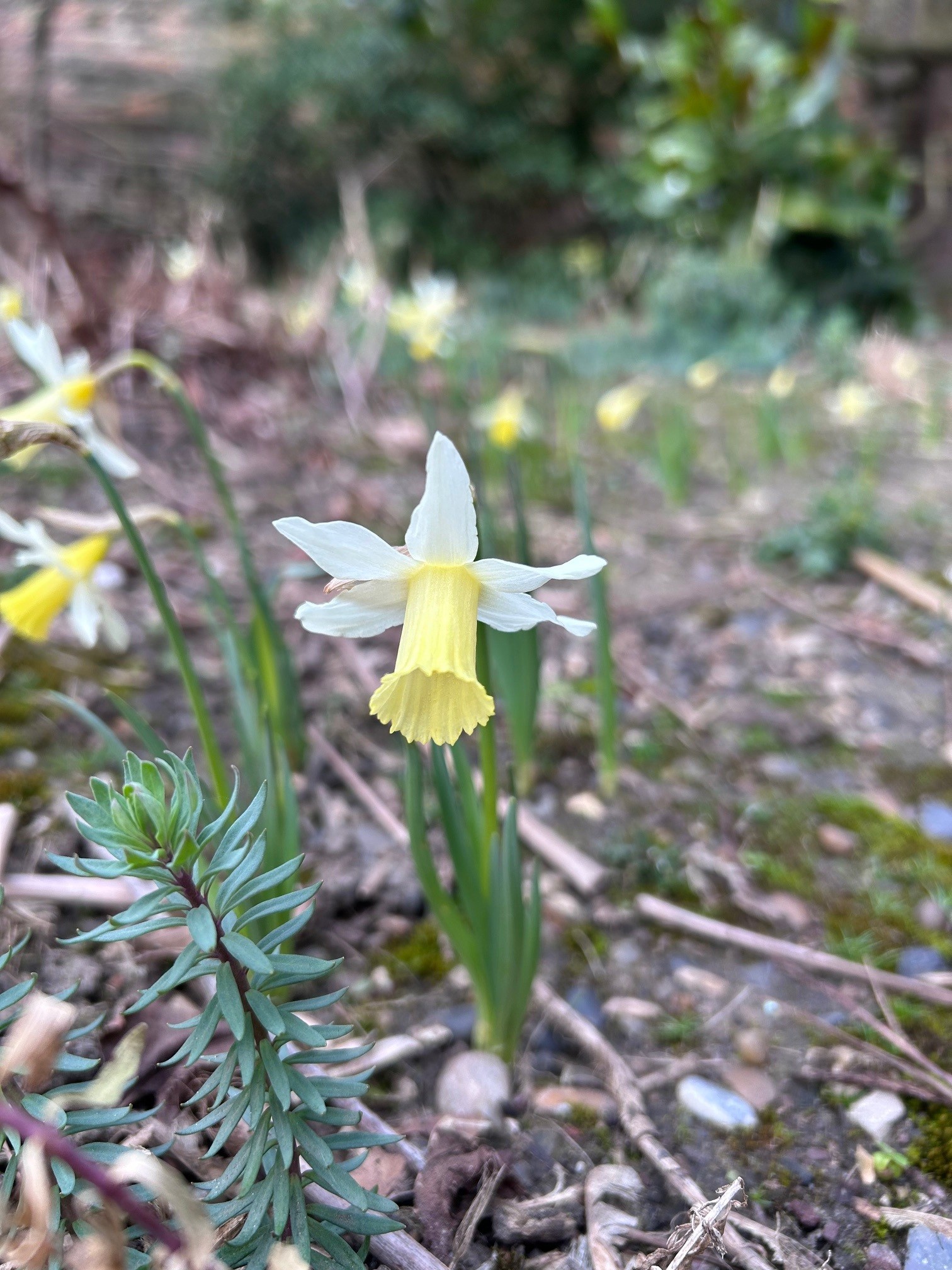
Daffodil (Narcissus ‘Elke’)
A fragrant, small and early-flowering daffodil, you can spot Narcissis ‘Elke’ in the Peace Garden. It has pale petals and a creamy yellow trumpet. The name ‘Elka’ is apparently from a combination of the names of two ‘lady daffodil growers’: Elizabeth and Kate.
Wood spurge (Euphorbia amygdaloides var. robbiae)
Wood spurge is in the Euphorbia family, so take care! If the stems are broken, they gush with a thick milky latex substance that can cause blisters on skin. They are handsome perennial plants, shade loving, with zingy lime-green flowers in late Spring and rosettes of glossy dark green leaves. Another name for this plant is ‘Mrs Robb’s Bonnet’ – we would like to see the hat that inspired that name!
Continue reading What to look out for in the Old Pond Garden: March 2025Pat’s Jobs for March 2025
- Time to pot up those Dahlia tubers in 3 litre pots, making sure the tubers have an ‘eye’ which will shoot. Cover in compost, allowing the stem to rest at the surface, then label and water and keep somewhere reasonably light and frost free (greenhouse or windowsill) until they start growing.
2. Now is the time I start sowing sweetpeas: five seeds to a 3 inch pot and keep on a light windowsill or greenhouse until they germinate. You can try sowing directly into the soil which I think works well for some.
Continue reading Pat’s Jobs for March 2025The View from my Window
The small patio is shielded from the sun, in a south facing garden, by an Acer palmatum ‘Katsura’. The tree caught my eye while on a trip to Kent. Must have one of those I thought. The sapling was bought and is now well mature. Some of the limbs show signs of viral attack, but it soldiers on.
Early to leaf, in February, the leaves are green and red. It produces sap, which attracts the aphids. With the aphids, the small birds make regular visits to eat the goodies. The birds include Blue, Great and Coal Tits, Robin and Goldfinches. The Dunnocks also pay a visit, foraging in the growth below, together with a variety of bees including the distinctive yellow faced variety. Soon after, it will produce a vast amount of blossom, and after that very small sycamore-like seeds. In time and onto autumn, the leaves go from yellow to orange and then fall, covering all the surrounding ground.
Continue reading The View from my WindowMarch 2024: Down at the CABAHS Shed
We attempted something a bit different at this meeting! Our Chair Stella introduced the evening by asking the audience to imagine we were all sitting relaxing in the CABAHS garden shed surrounded by our gardening friends. She then introduced the “panel” and to start the conversation rolling, asked how they first became interested in gardening.
The four panellists, Ruth, Kathy, Lynda & Pat each had different but similar personal stories, and it was usually a parent or grandparent who first sparked their interest.
The next question was about the tastiest vegetable or fruit we had ever grown.
For Pat this was Sungold tomatoes. Lynda is known among members for growing Goji berry but she chose sweetcorn as the tastiest ever. Ruth thought figs from her allotment were amazing, especially as she had inherited them from the previous holder. For Kathy it was “Mr Green’s” (the previous owner of her garden) summer raspberries, which have been in the same bed for over 35 years.
Now on to the best Show flowers (topical as we have the Spring Show coming up next month). Stella put in her vote for Penstemon ‘Garnet’, certainly a very good do-er in the Walled Gardens at Charlton House.
Continue reading March 2024: Down at the CABAHS ShedWhat to look out for in the Old Pond Garden: March and April 2024
We hope you enjoy a spring walk around the walled gardens at Charlton House! Look out for:
Forsythia
Forsythia is in the olive family, renowned for its vibrant yellow flowers which appear in spring, long before the leaves unfurl. The one by the Charlton House stables is quite old and we are not sure of the exact variety. We pruned it back hard a year ago and it seems to have loved it!
Cherry laurel (Prunus laurocerasus)
A ‘background’ evergreen plant most of the year, but quite striking when the white candle flowers appear in Spring. Although we call it a laurel, it actually isn’t – it’s in the cherry family! We know that an early resident of Charlton House, Elizabeth Puckering, introduced cherry laurels to the gardens. She was friendly with the diarist John Evelyn, who lived in Deptford at the time, and exchanged cuttings with him in around 1654.
Daffodil (Narcissus ‘Thalia’)
A fragrant and vigorous trumpet daffodil which is now in it’s third year in the walled gardens, so has formed some nice big clumps. It starts off creamy yellow and fades to white, and is sometimes referred to as an orchid daffodil. For fans of BBC Gardener’s World on TV, you might recognise it from Monty Don’s writing garden!
Siberian bugloss (Brunnera macrophylla ‘Jack Frost‘)
Brunnera has lovely heart-shaped, silvery-veined leaves that look as if frost has touched them. The leaves light up shady areas of the garden. It has long lasting, bright blue flowers that look very much like forget-me-nots, and which provide lots of nectar and pollen for visiting bees.
Wood spurge (Euphorbia amygdaloides var. robbiae)
Wood spurge is in the Euphorbia family, so take care! If the stems are broken, they gush with a thick milky latex substance that can cause blisters on skin. They are handsome perennial plants, shade loving, with zingy lime-green flowers in late Spring and rosettes of glossy dark green leaves. Another name for this plant is ‘Mrs Robb’s Bonnet’ – we would like to see the hat that inspired that name!
Still going strong, winter into spring!
Lenten rose (Helleborus orientalis)
The Lenten Rose is a perennial flowering plant and is part of the Buttercup family, so not a rose at all! Its common name comes from the fact it usually flowers between Ash Wednesday and Easter – the period known as Lent. Hellebores (Lenten roses) can be white,
Primrose (Primula vulgaris)
We grow the English or ‘common’ primrose in the walled gardens, which is the natural pale yellow one that gives its name to the colour Primrose. It is often one of the earliest plants to flower in Spring (the Latin word ‘prima’ means first). Early butterflies like the Brimstone benefit from its nectar. Plants will hybridise (cross) very easily with the garden bedding Primulas that come in lots of different bright colours, so seedlings can come up a surprising colour!

Pat’s Jobs for March
1. I sowed my sweet peas early in the month five seeds to a 3 inch pot and then placed them on a light window sill or greenhouse if you have one. They don’t need bottom heat and I don’t soak or nick the seeds but of course you can if you wish. Keep turning the pots so they don’t all lean towards the light.


2. Remove browning blooms from camellias to keep the display going especially the white ones which never seem to drop their spent blooms. I just wish I had room for more as they’re such a cheerful sight.

Plant of the Month: Bergenia emeiensis (March 2024)
I have a choice plant in my garden which, amazingly, I have managed to keep alive all these years and it’s all thanks to Margaret T, who kindly gave me an off-shoot such a long time ago.
To make sure it was protected, I planted this bergenia in a pot on the shady side of the steps, so that the plant would stand out and not get damaged. It flowers every winter and has been flowering all through February this year and the elegant white, nodding flowers are still hanging on, fading to a shade of blush-pink. The rhizomes have outgrown the pot now so I will be thrilled if I can return the favour and offer Margaret T an off-shoot of this beautiful plant. Plants are difficult to obtain but I understand seed might be available on the market.


The botanists and growers regard this species as the most elegant of all the Bergenias and I can see why, as this compact plant with its rosette of neat, oval, apple-green, shiny leaves enhances the dainty flowers, which are held aloft on elegant, often blush-pink stems.
Seed was first collected from the limestone cliffs in Sichuan in the Himalayan mountains in 1935 and again in 1982 by Roy Lancaster who introduced the species to the UK. Cambridge Botanic Garden website mentions that Bergenia emeiensis can be seen growing in their Alpine House and that they are also trialling the species in their woodland area. The plant used to be regarded as tender but I regard it as a hardy perennial in my small courtyard garden which, like many London gardens, has its own micro-climate. Even so, I do, unfortunately, sometimes lose plants during colder winters but this species has not yet been damaged and so it’s a great treat to be able to admire this handsome specimen from my kitchen window.
Anna L