January 2025 Talk: Succession Planting for a Long Season

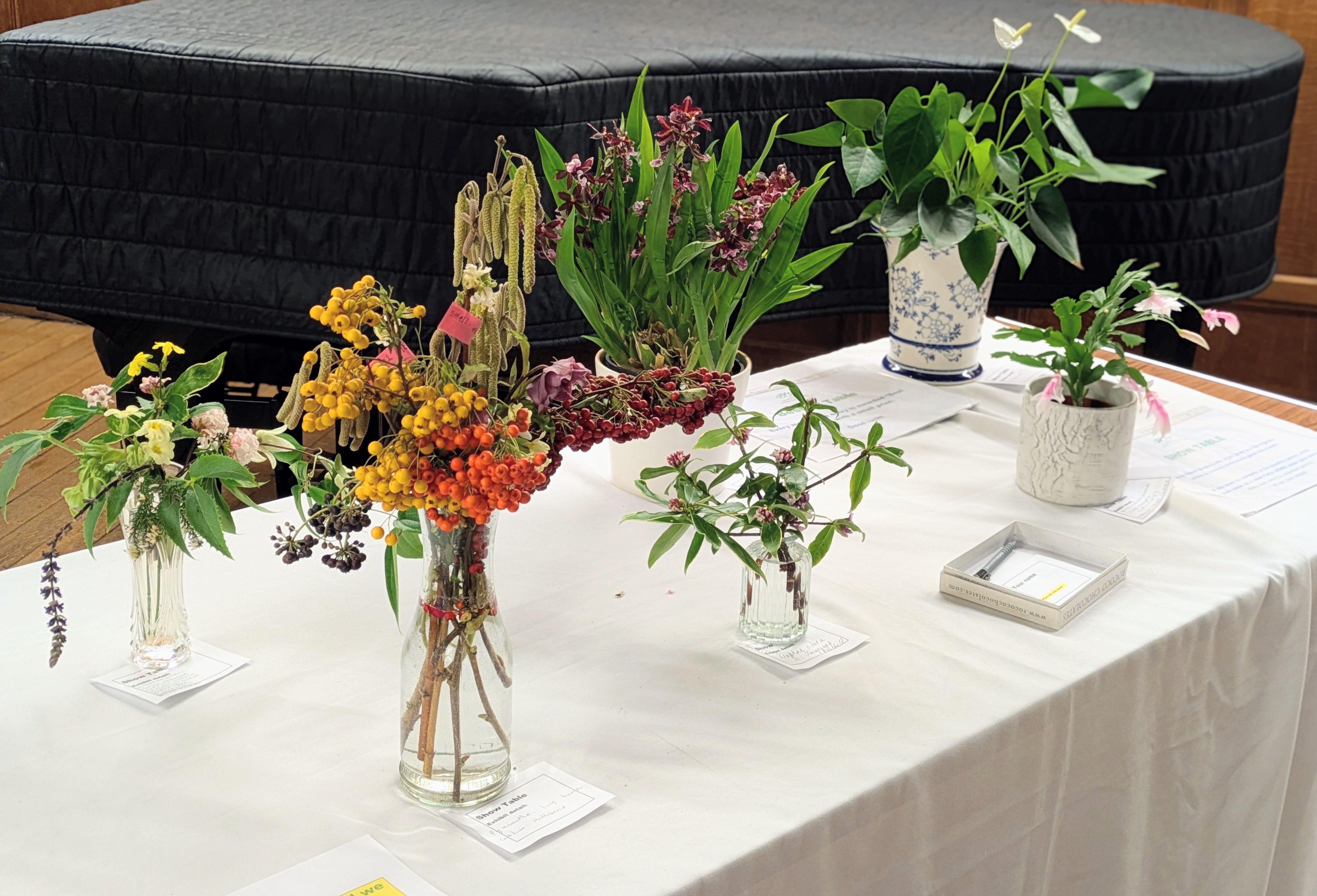
Our first meeting of 2025 was very well attended. The speaker and the topic obviously attracted a good audience. The Show Table received a good selection of displays, with Jean’s a worthy winner of Best on the Table.

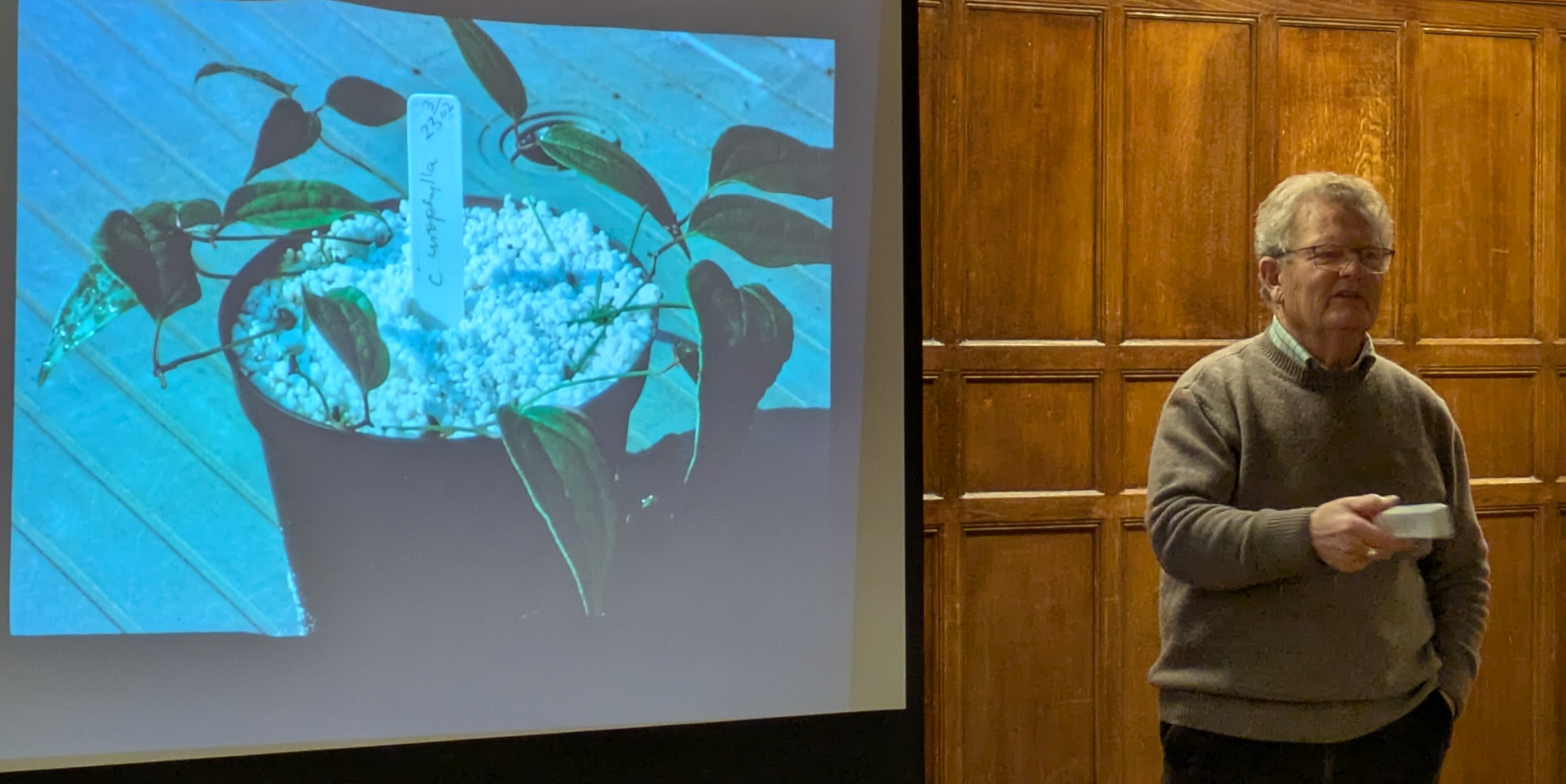
Our speaker, Fergus Garrett, the highly influential plantsman and horticulturalist, has been Head Gardener at the internationally acclaimed Great Dixter Garden in Northiam, East Sussex since 1993 and is the CEO of the Great Dixter Charitable Trust. He gave an excellent, wide-ranging talk on how to keep our gardens looking vibrant and spectacular all the year round. He explained how to plant for a long flowering season with plants co-existing in one place, but performing at different times. He used photographs of the spectacular gardens at Great Dixter to illustrate his points. He said Great Dixter had the advantage of scale and greenhouses but it is possible to scale down what they do at Great Dixter and use their scheme in our own gardens with minimal labour.

January 2025 Talk audience

He particularly used the magnificent long border at Great Dixter as an example of how to plan a long flowering season. How to use structural under-planting, interlaying and interplanting with bulbs, self-sowers, perennials, clumps of bedding plants and climbers.

Continue reading January 2025 Talk: Succession Planting for a Long Season

Plant of the Month: Daphne (January 2025)

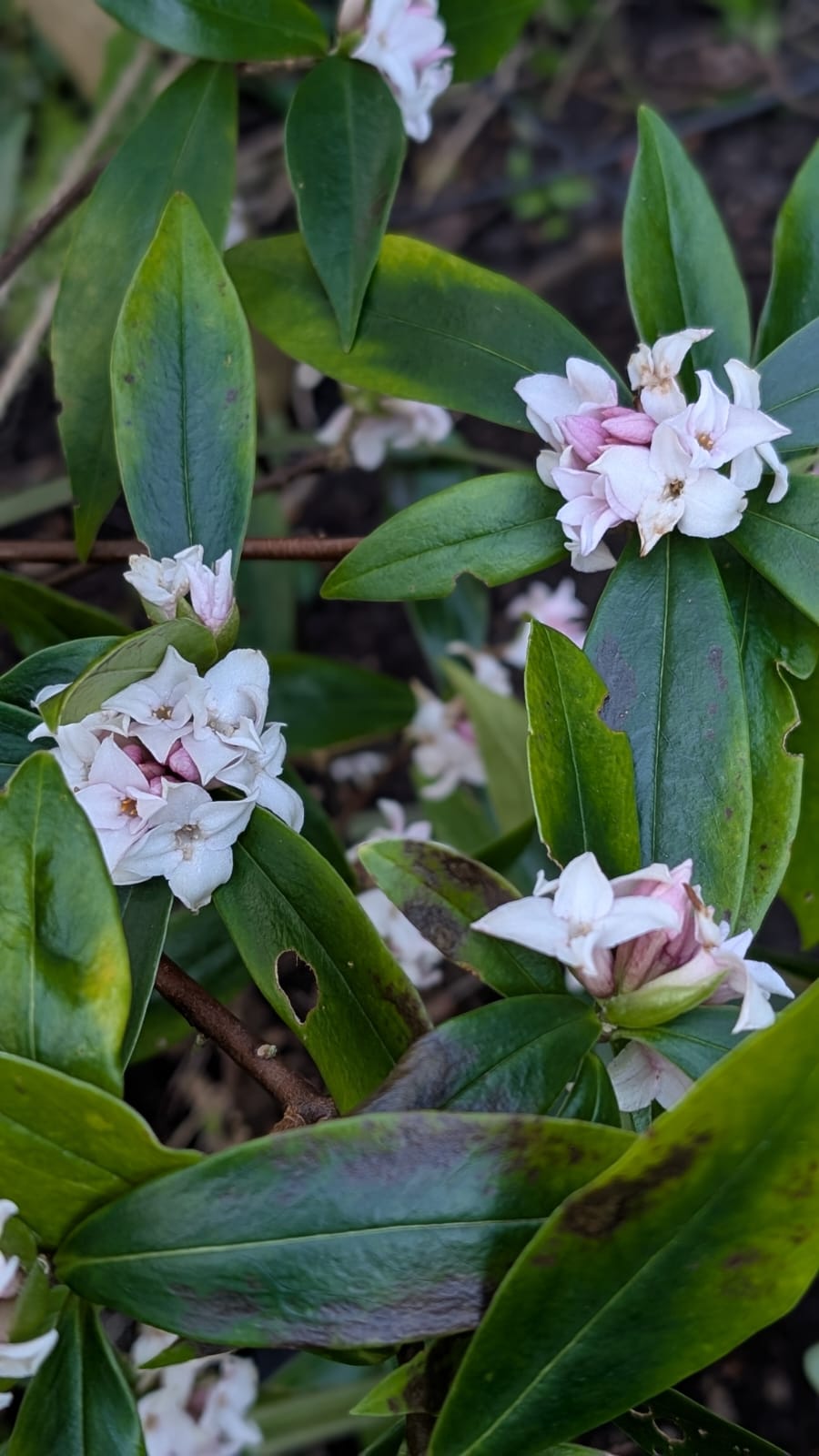
In the bleak midwinter, in amongst the primroses and snowdrops, the New Year brings excitement as the Daphne shrubs come into flower.  For one member, several are looking looking extremely handsome and are, at present, the highlights in her garden.

Daphne odora ‘Perfume Princess’: This evergreen to semi-evergreen variety was bred in New Zealand and is considered the most perfumed of all the Daphnes. Between January and March, this shrub, which is regarded as hardy (although it suffered from the recent heavy frosts) will send out pale-pink blooms amongst its upright, handsome foliage, reaching a height of 1-1.5m over the years. Our CABAHS member says it has “wonderful scent and made a showy plant in just a few years.”  I note that there is also a variety Daphne ‘Perfume Princess’ White on the market that would be a bonus to any garden.

Continue reading Plant of the Month: Daphne (January 2025)

Pat’s Jobs for January 2025

1. Prune Wisteria this month and next by taking all side shoots back to 2 or 3 buds. Very old plants may need severe pruning to show off the flowers.

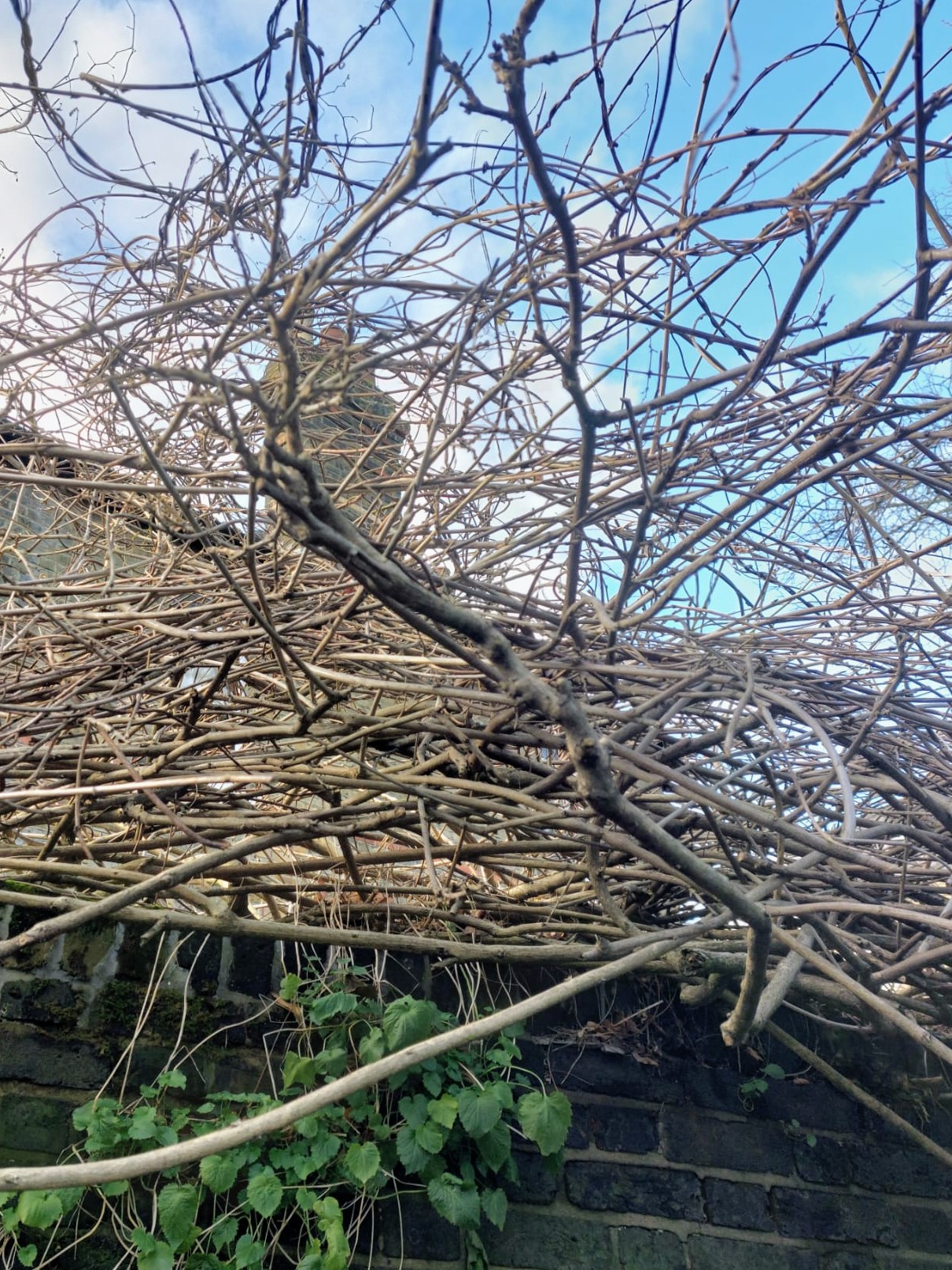
Very tangled wisteria waiting to be pruned
Very tangled Wisteria in need of pruning!

2. Start pruning roses in earnest although some are still unbelievably flowering. Remove any foliage with blackspot and don’t compost. Old roses respond well to hard pruning so don’t be afraid, removing all dead and dying wood and cutting stems back to above a bud.

3. I had to remove dead Clematis shoots from a Daphne Jacqueline Postill and in doing so pulled off some of the flowers so take care and do it soon if you can. But leave the main prune until next month.

Continue reading Pat’s Jobs for January 2025

New Year Flower Count 2025 at Charlton House

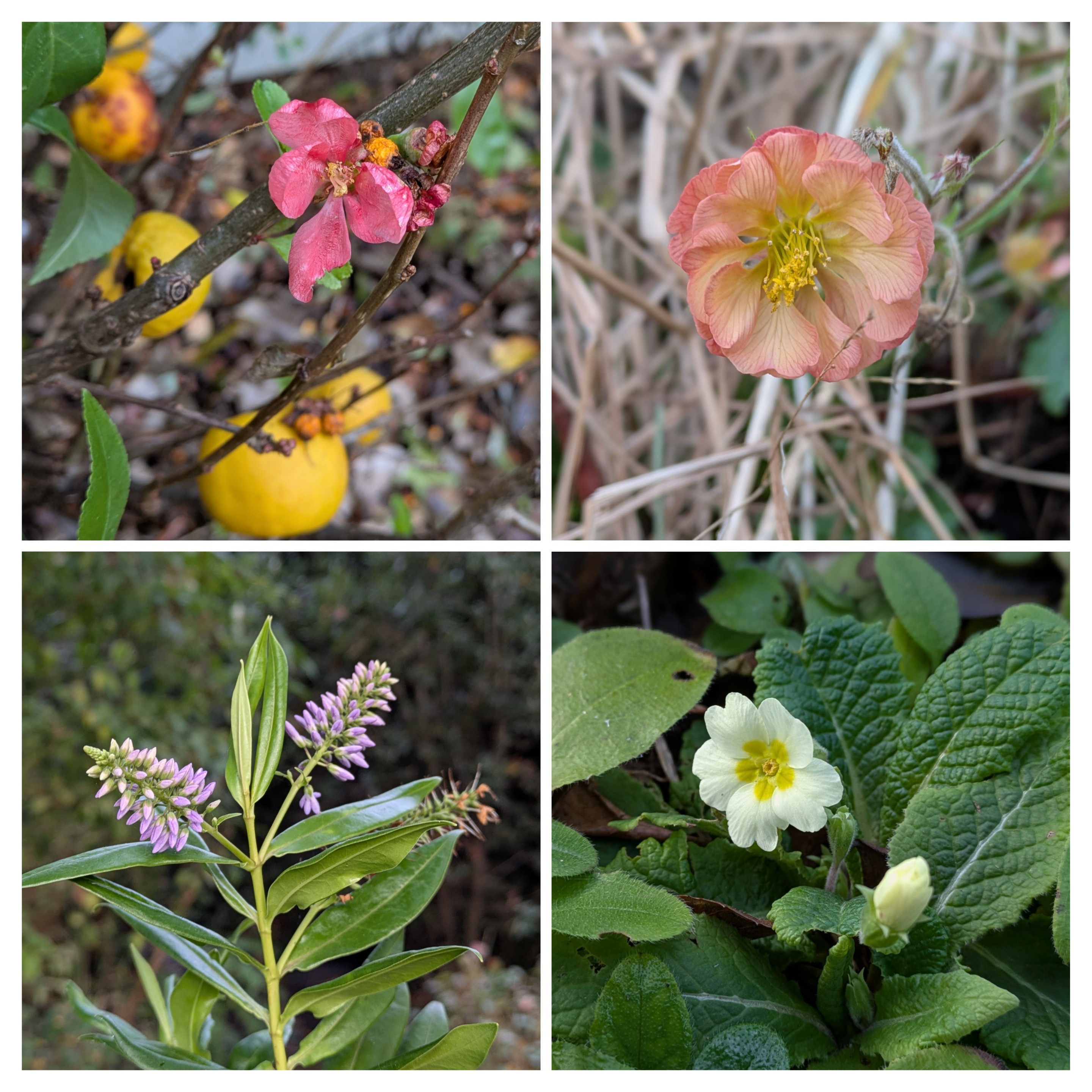
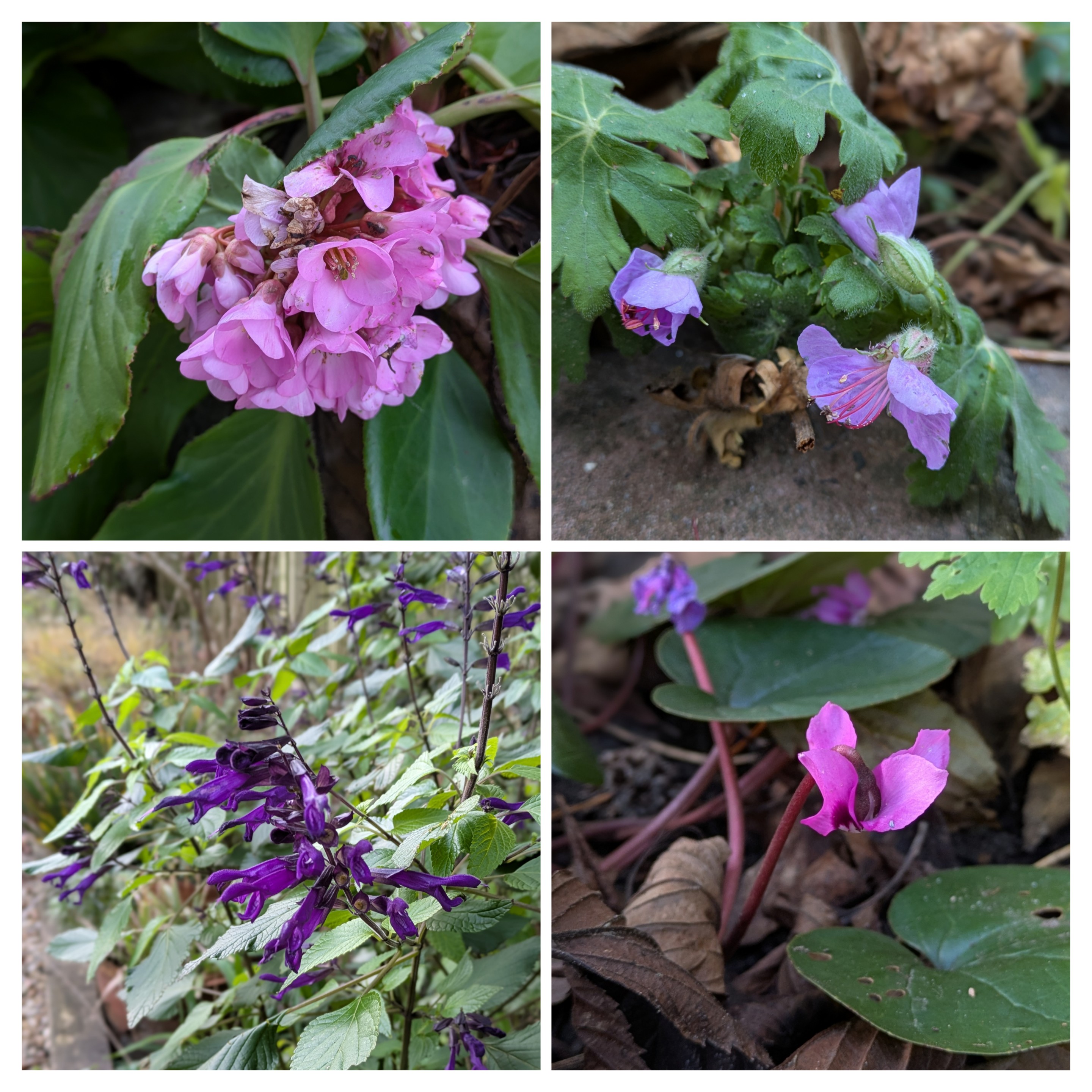
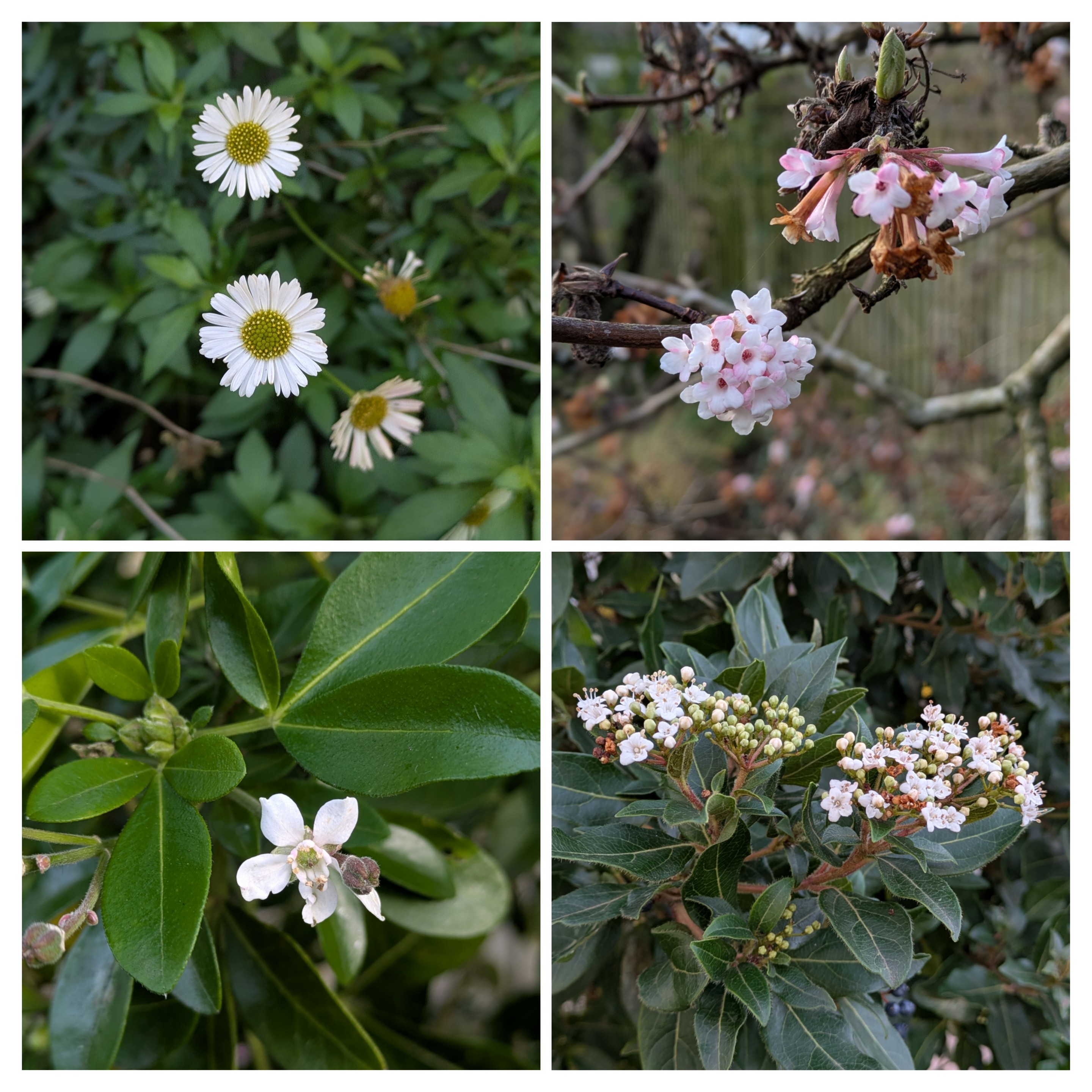
Another cold start to a new year allowed the volunteers to take a step back from gardening and undertake a second survey of plants in flower at Charlton House. This had been done at the beginning of January 2024 and it was interesting to compare during a gentle walk round on 9th January 2025. At first glance there seemed to be little flowering. Making a thorough search with fifteen of us, along with Jason, we found many that were on last year’s list as well as some unexpected interlopers.

Continue reading New Year Flower Count 2025 at Charlton House

Pat’s 10 jobs for January…

To be honest it has been so wet and now so cold that the ground is frozen but if conditions return to normal maybe you can try some of the following…..we live in hope!

1. Today according to the RHS is National Houseplant Appreciation Day so try giving those houseplants some attention and if they’re not looking good, treat yourself to a new one checking you have the right conditions for it.

2. Remove old hellebore leaves right back to the base to show off their flowers and to stop any leaf spot or other diseases from spreading.

3. All my violas in my front window box have died and a good gardening friend reminded me it could be vine weevil larvae chewing the roots which I haven’t had for ages so turn out the window box and check for those grubs and replace with fresh compost.

4. Start pruning roses cutting back with a slanting cut to above a bud and use the resulting prunings for cuttings 6 to 12 inches long and insert into either a pot or the ground so that 2/3 of the cutting are below the soil. They take a good while to root but its worth the free plants if they root.

5. Winter prune wisteria by cutting back shoots to 3 or 4 buds from the main stem.

6. Cut back really tatty herbaceous plants but leave anything with hollow stems or stems and foliage that may harbour overwintering insects. I started cutting back a bay tree until I saw the ladybirds amongst the stems.

7. Seed potatoes can be chitted from now on by placing them so they don’t touch in boxes, egg cartons are ideal, and placing in a light frost free place. Don’t forget to label the variety.

8. Prune established soft fruit bushes such as gooseberries, red and white currants removing any dead wood and cutting back main shoots by a quarter. If grown as a bush aim for a goblet shape with an open centre to aid air circulation.

9. Look at your seed catalogues and order anything you especially want before they run out.

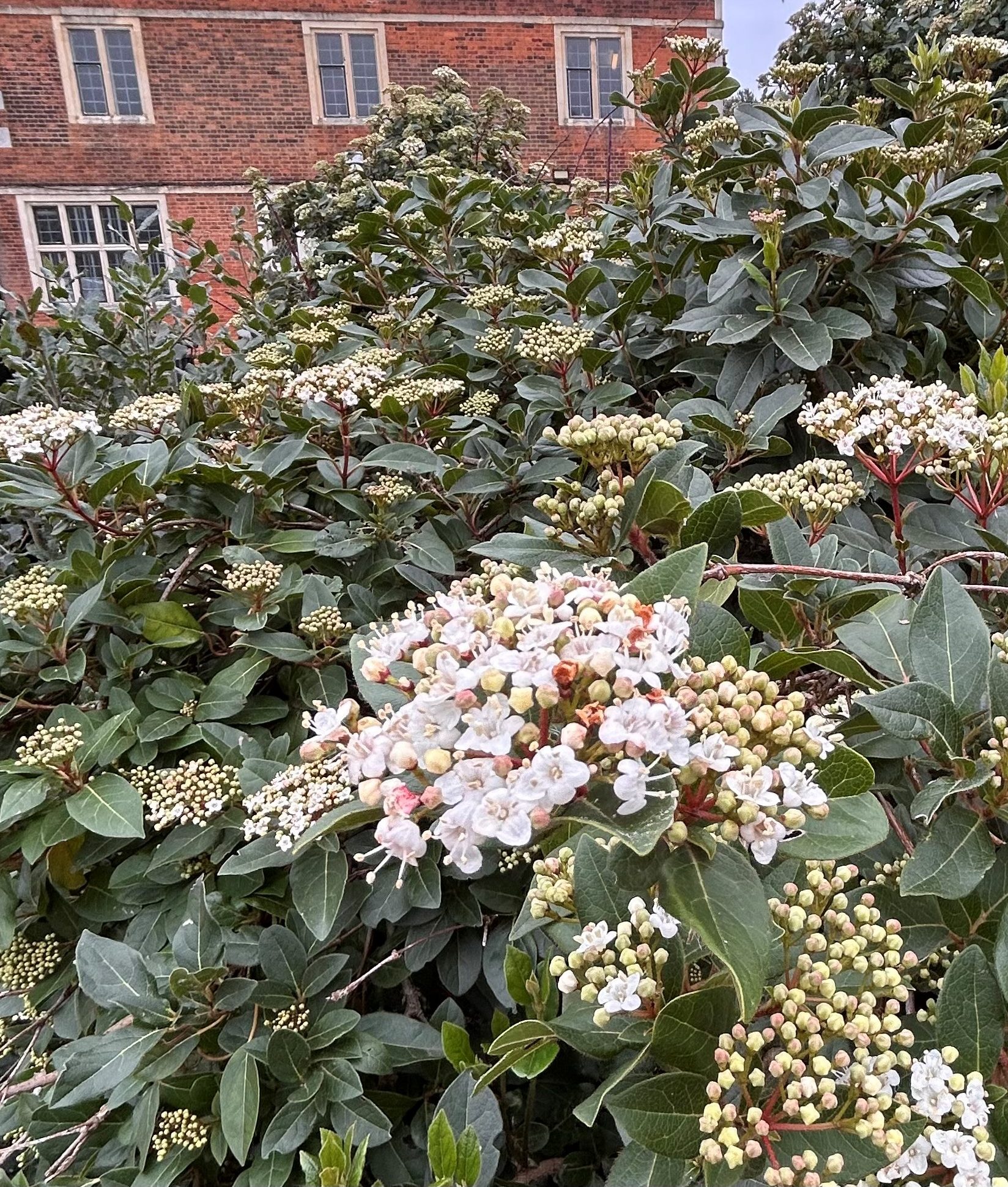
10. Make sure to have some scented flowering shrubs either in the garden or in pots for pollinators to include winter honeysuckle, sarcococca, daphne and viburnham and aim to plant some by your door so you can catch the scent.

Happy gardening all!

Pat K

Ed: The RHS has a shop at Bluewater, perfect for browsing for some houseplant updates, all UK grown. (Note they don’t take National Garden Vouchers though)

RHS Houseplant Shop at Bluewater

Plant of the Month: Iris unguicularis (January 2024)

As much as I love this perennial and have planted many clumps over the years, I find it struggles in my clay soil. My now, one-and-only plant,  obviously needs more sun and perhaps lighter soil, as it has flowered perhaps only once this winter and that was on 23rd November, when I took the photograph below. But Margaret T’s winter irises have been really putting on a display, with her two clumps producing 2-3 flowers at a time, on and off since December.  And these will carry on flowering well into March. I’ve seen them flowering profusely when nestled against sunny, front elevations, in poor soil. But in Margaret T’s garden, the soil is rich from regular additions of compost and manure and you can see by her photograph that she has healthy, plump plants. 

Continue reading Plant of the Month: Iris unguicularis (January 2024)

New Year Flower Count at Charlton House

Our first volunteer session of 2024 fell on a wet and windy day (a Severe Weather Warning day in fact), so we decided to abandon gardening tasks and go for a bracing walk around the estate to spot for  plants in flower and work off a few mince pies.

Although a lot of our findings were to be expected (Primroses, Hellebores, Mahonia) others definitely felt wrong – Penstemon Garnet, you should NOT be out! It will be interesting to do the same exercise next year and compare. In the meantime, below are some cheering pictures of our walk:

I think you could say that the Mahonia in the Glade was a “Star Plant” for this time of year.

Penstemon ‘Garnet’, top left, then Achillea ‘Cerise Queen’, Sarcococca confusa (you should smell this!) and Viburnum bodnantense ‘Dawn’.

Continue reading New Year Flower Count at Charlton House

A Treat at Great Dixter

Great Dixter Snowdrops and Giant Fennel

Friends of Great Dixter were invited to a post- Christmas event at the end of January to join Fergus Garrett, students and staff. Warm spiced home-made apple juice and biscuits were available for refreshment and the archives were open for those who had not already seen them. We were welcomed into the Great Hall where a huge fire crackled and students created a ladder from chestnut poles gathered from the surrounding area. Outside, Fergus demonstrated how, using a traditional A-frame and tools, chestnut poles could almost perfectly be split ready for use. Of course, the highlight was being able to look around the gardens at a time when they are not usually open to the public. For those who have watched Fergus’ lectures on successional planting, the practice was evident in the canes laid out on the soil. Fergus’ favourite giant fennels were already unfurling and the gardens were positively covered with Galanthus atkinsii, both of which are clearly visible in the photograph above. An added bonus was that the day was sunny and moderately mild. What a treat.

Pat K

Our unique Garden

Just before Christmas I posed a question for everyone, asking what you think make Charlton House Gardens unique. I had a good number of replies, and I’m pleased to report that most of you DO think they are unique! But I have had a real challenge trying to consolidate them into a single idea.

Here are just a few extracts from your replies:

  • “The gardens are rooted in their sense of time and place, where you can imagine them as Jacobean gardens but where you can also see modern day planting. There is a passion and desire to keep these gardens relevant for future generations.”
  • “The House is an architectural gem, whose early inhabitants played a significant role in the revolutions of the seventeenth century; today, the gardens are an oasis of beauty and peace in the midst of the urban sprawl of London.”
  • “The gardens are small but contain as diverse and exciting planting as you might expect from a much larger space.”
  • “The gardens are public but very community focused, beloved of local gardeners creating fabulous displays and running special events.”
  • “Not unique, but certainly rare, in that they still have the atmosphere of the Jacobean age. Planting with a “nod” to the Jacobean era.”
  • “An unexpected historic oasis in a desert of modern housing”
  • “They play to a sense of history and yet have a contemporary design adapted to change of climate.”
  • “Unique because they are community-run but following professional design principles.”

So, at then end of all that, let’s go with:

Charlton House Gardens: an historic oasis of beauty and peace in the midst of the urban sprawl of London, where local volunteer gardeners work together to ensure the gardens stay beloved and relevant for future generations.

If you can say it better, please let me know!

Kathy