Old Pond Garden Diary Update (April-December 2025)

As we come up to Christmas and the end of 2025, this is a great time to look back at how the ‘Old Pond Garden’ (OPG) project has fared this year.
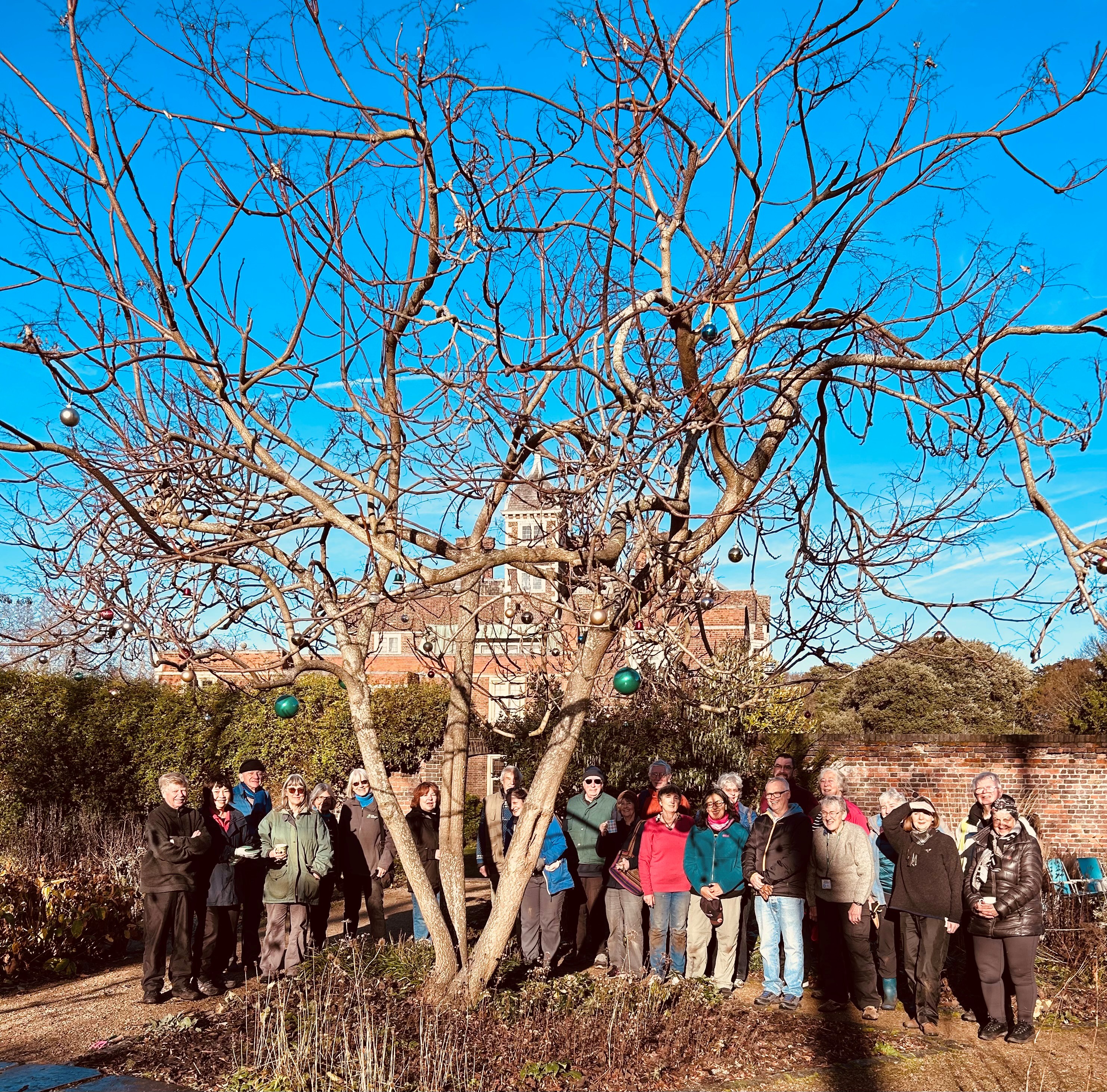
Christmas 2025, dressing the tree of heaven with baubles, plus garden volunteers
Tree of Heaven, Ailanthus altissima, dressed up for Christmas
(plus 27 garden volunteers!)

Of course, it’s not just the ‘Old Pond Garden’ project any longer, as volunteer work now covers the whole estate, but we are still fond of the OPG tag. Since April, the Garden Volunteer scheme has been run by Royal Greenwich Heritage Trust (RGHT), however considering 80% of volunteers are also CABAHS members, it’s fair to say we are still very interested and still very involved.

Sharon has taken on the crucial role of Volunteer Lead for RGHT and works with Head Gardener Jason to make sure everything runs smoothly. She posts lovely updates on the garden team’s WhatsApp after every session, keeping us all on track, and sends a report off to RGHT every month.

Here are some highlights picked from Sharon’s reports of the past few months, I make no apology that this is a rather long post – we have done a lot!

Continue reading Old Pond Garden Diary Update (April-December 2025)
OPG Diary – Dec to March 23

Here is an update on what Jason and the Gardenauts have been getting up to in the gardens since my last post. Apologies it’s rather long, we’ve been doing lots!

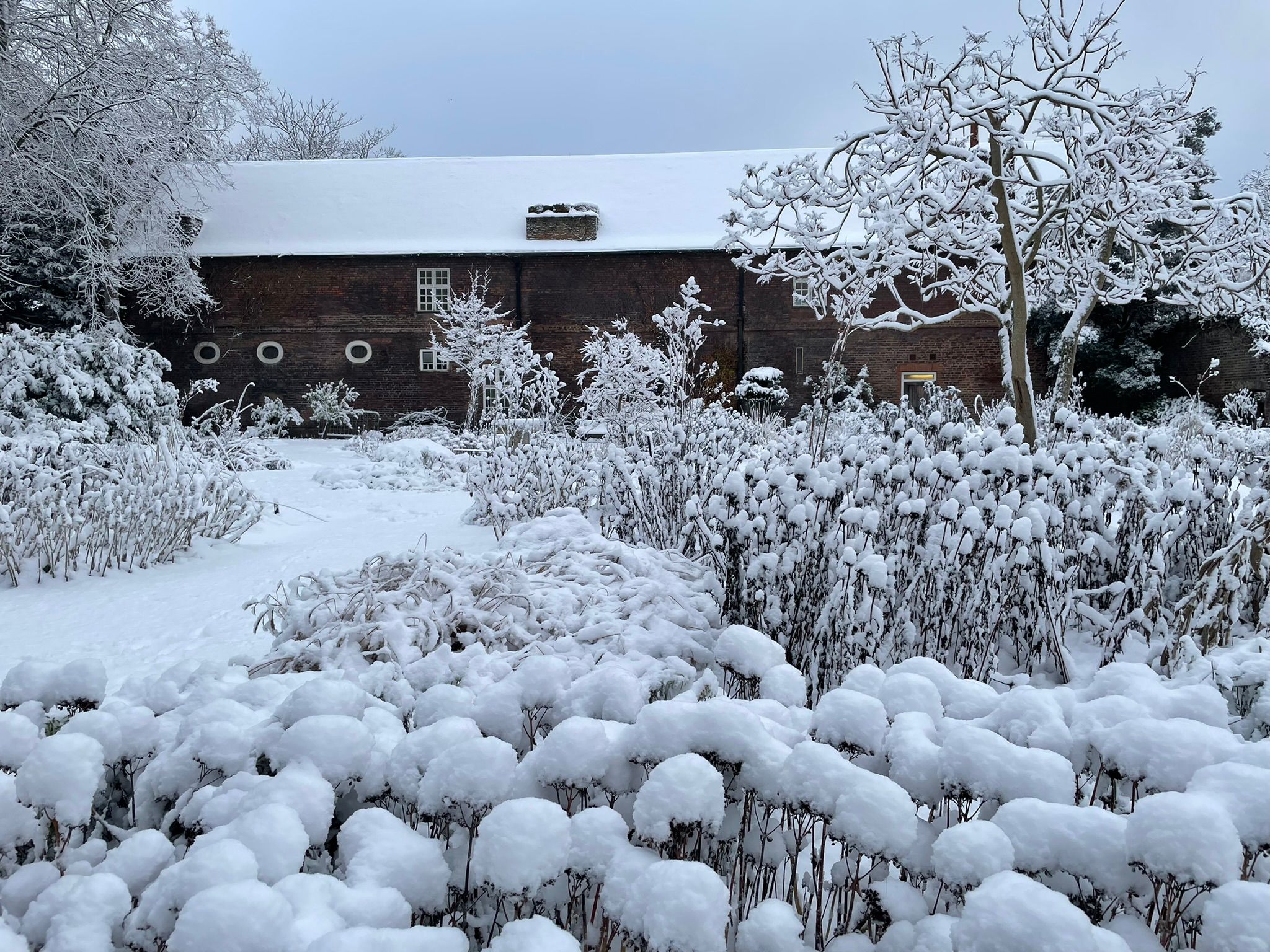
December turned the gardens into a winter wonderland, and caused us to miss a few days volunteering, but gave some great photo opportunities. The prolonged cold period hit a few of the more tender shrubs quite hard and we lost some big favourites like the Teucrium. 

January was about cutting back, the ivy in particular. The old walls cannot take the weight of the ivy so we are taking it off in stages and being careful of wildlife. Our efforts revealed the top of the doorway for the first time in some years!

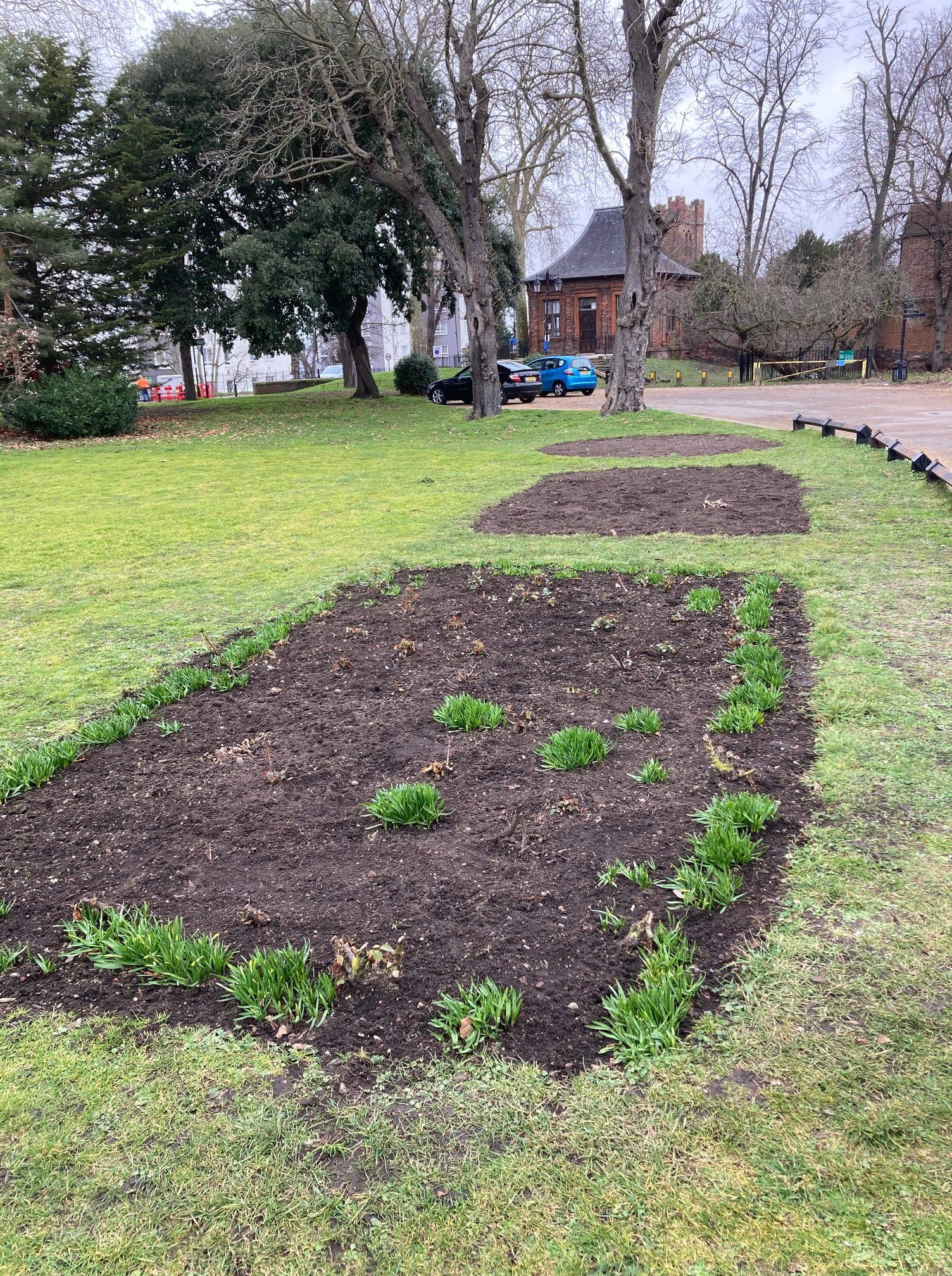
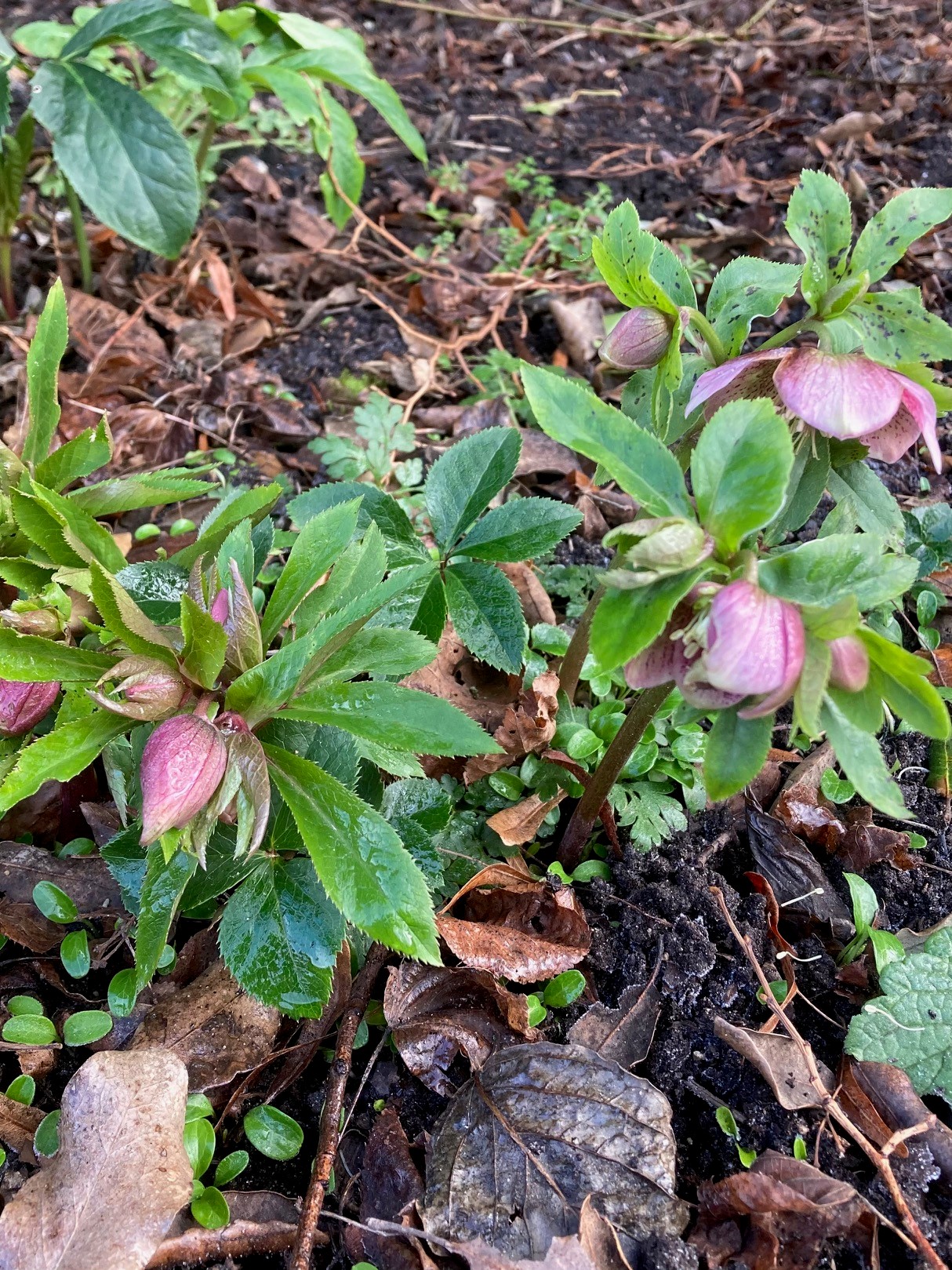
We have removed the palms from the front lawn beds and the beds will be re-designed this summer. The Palms were planted as part of an annual bedding scheme years ago and never envisaged to get as tall as they have. The Tete-a Tete daffodils have all been lifted and will go in the woodland glade next year. The Summerhouse has had a good weed and tidy-up, as has the Mulberry. Snowdrops and Hellebores popped up in the OPG woodland side.

In February, we discovered our regular feline visitor is called Casper and he lives in Canberra Road but clearly considers the gardens his playground.

Continue reading OPG Diary – Dec to March 23

OPG diary – November 2021

Winter is coming, it’s all still very beautiful!

Central bed, Old Pond Garden (Charlton House), November 2022

This image has an empty alt attribute; its file name is 1dda9e7d-e3a1-407c-8cb1-1fd4cd86cd0a.jpg

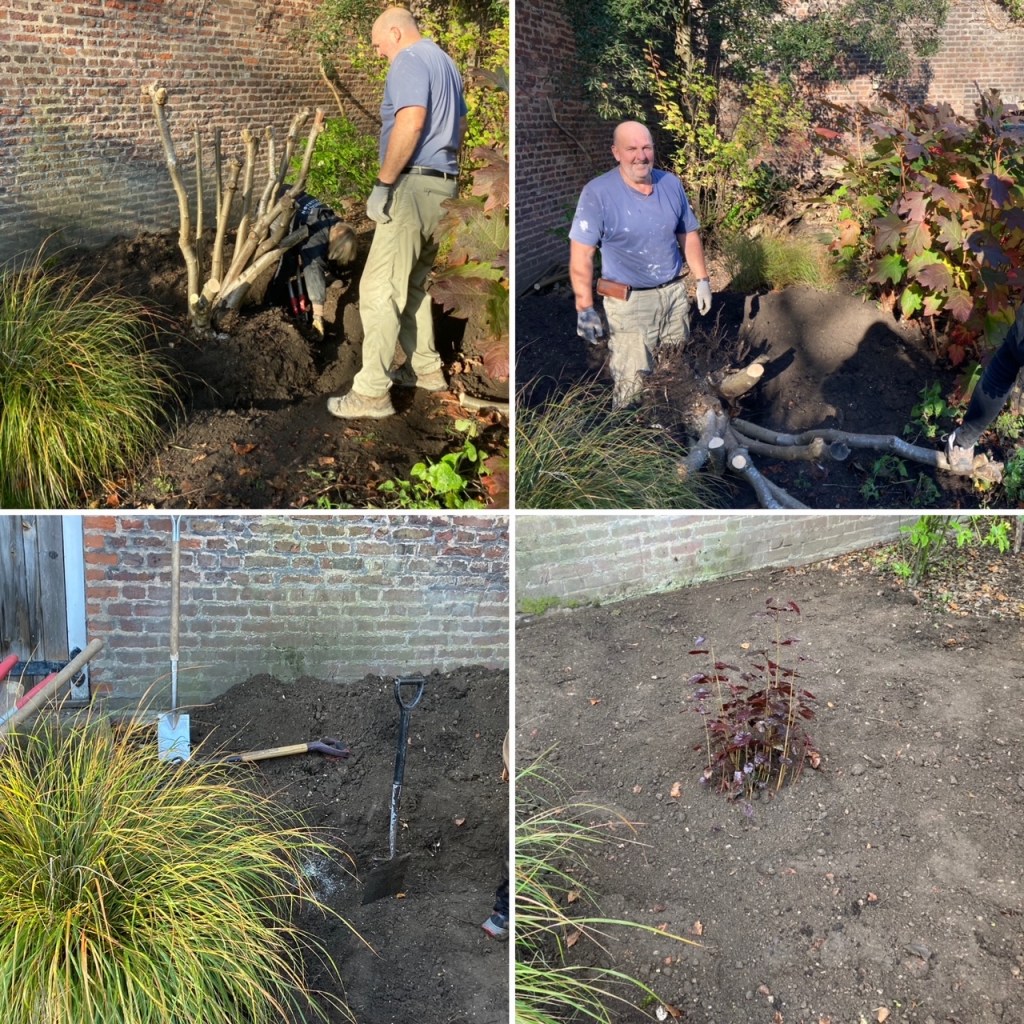
Removing the green hazel, making an enormous hole and then replanting with a bronze one! It will all be worth it.  

Removing the ivy on the walls is going to be more of a long term project. Look at that wonderful brick work though.

CABAHS volunteers removing ivy from a wall in the Charlton House gardens, November 2021

Local wildlife in Paula’s garden

CABAHS Committee member Paula has been grateful for the distraction of wildlife-watching during the lockdown, and has been reading up about it. Paula’s garden style is “not manicured” but she does like to keep things under control – things such as ivy. She says that ivy can cover a multitude of sins and like it or not, it certainly helps out the local wildlife. Plus it is evergreen and makes a lovely backdrop about now, when everything else has lost its colour. She was intrigued to learn that there is an Ivy Bee, one to watch out for this year. The Wildlife Trust says that ivy bees are recent arrivals to the UK, being first recorded in 2001 and slowly spreading North. They look like honey bees and feed mainly on ivy nectar. There doesn’t seem to be anything bad known about them so at the moment they are welcome!

Paula has also been bird watching and says another “new” arrival to our gardens is the Collared Dove, a less bulky version of the native Wood Pigeon.

They are normally seen in pairs (a good Valentine omen maybe!) and come to bird feeding stations sometimes. They are not native but arrived from the Middle East in the 1950’s – a bit like the Green Parakeets that are now all over the South East, although not such a pest. They are mainly seed and berry eaters and if they raise a brood successfully they often return to the same nest site.

If you would like to find out more, try these links:

https://www.wildlondon.org.uk/wildlife-explorer/invertebrates/bees-and-wasps/ivy-bee

https://www.rspb.org.uk/birds-and-wildlife/wildlife-guides/bird-a-z/collared-dove/

Paula