It was a pleasure to welcome back Dr David Marsh, garden historian, academic and former trustee of The Gardens Trust. The intriguing title of his talk was ‘The Great Geranium Robbery’, about an Old Bailey trial in 1795 following the theft of numerous expensive plants…
The scene:
Daniel Grimwood’s Nursery (formerly The Kensington Nursery) in West Kensington.
The 2025 Autumn ‘Flower, Fruit and Vegetable Show’ was held on Monday 18 August in the Old Library at Charlton House.
As it is usually held in September, there were some adjustments to the range of classes. It was a well attended and lively show, and our fears that perhaps there would be fewer entries – due to the date change or the fact that we have had such a long period of drought – were unfounded. In fact, across the 18 classes there were 150 entries and we had to extend the show tables!
As this year is a special one, in which we celebrate the 75th anniversary of CABAHS, there were a couple of ’75th anniversary’ themed classes, and we were delighted to welcome as judge Jillian Smith, long-time CABAHS member and Chair of the Society, and now joint Vice President with Ron Roffey. Jillian has a long experience in judging shows over many years and has a beautiful garden in Winn Road, which was opened to the public on a number of occasions to raise money for charity.
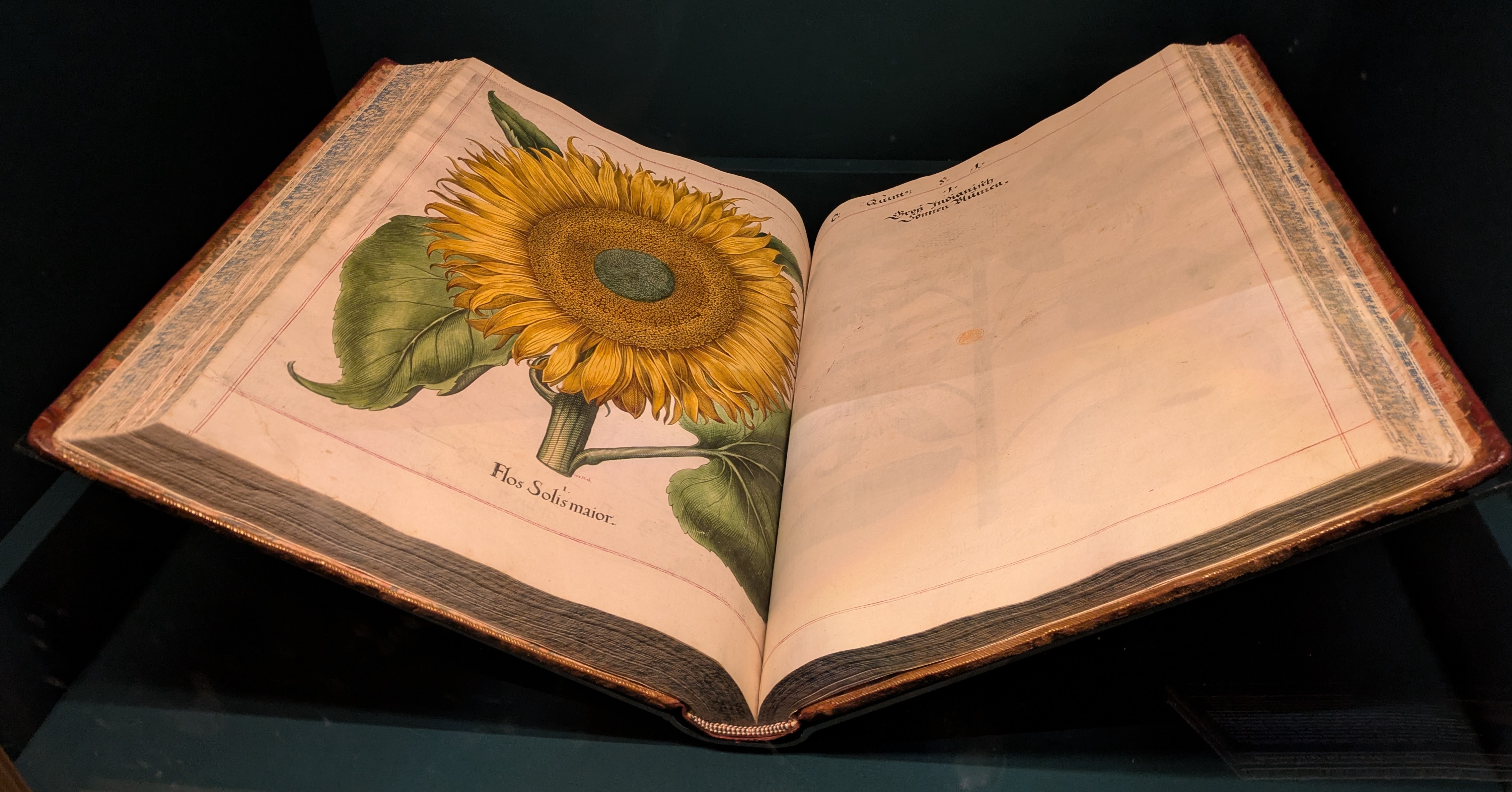
I visited the ‘Unearthed: The Power of Gardening‘ exhibition (on until Sunday 10 August 2025) at the British Library recently, the third gardening-related exhibition at a non-garden-related institution that I’ve seen in the past few years (I’m sure there have been others!). The first two were ‘Rooted Beings’ at the Wellcome Collection in 2022 and ‘Soil’ at Somerset House earlier this year.
Beautiful gardening illustrations from the 11th and 17th centuries
This exhibition, as the title suggests, was more about the actual act of gardening than the other two, and as such had quite a lot in common with the permanent display at the Garden Museum. The British Library’s advantage was its access to phenomenal (and in some cases phenomenally old) examples of historical books, and its focus on gardening and gardeners, rather than the gardens.
Congratulations to all our entrants, spectators and winners at our 46th annual Spring Show! Despite lots of comments like ” I have nothing left, the snails have had everything” it’s clear CABAHS members rise to a challenge as we had 80 entries in total. Monday evening was a great opportunity to show off our collective gardening skills, as well as have another little trip down memory lane about Shows of the past.
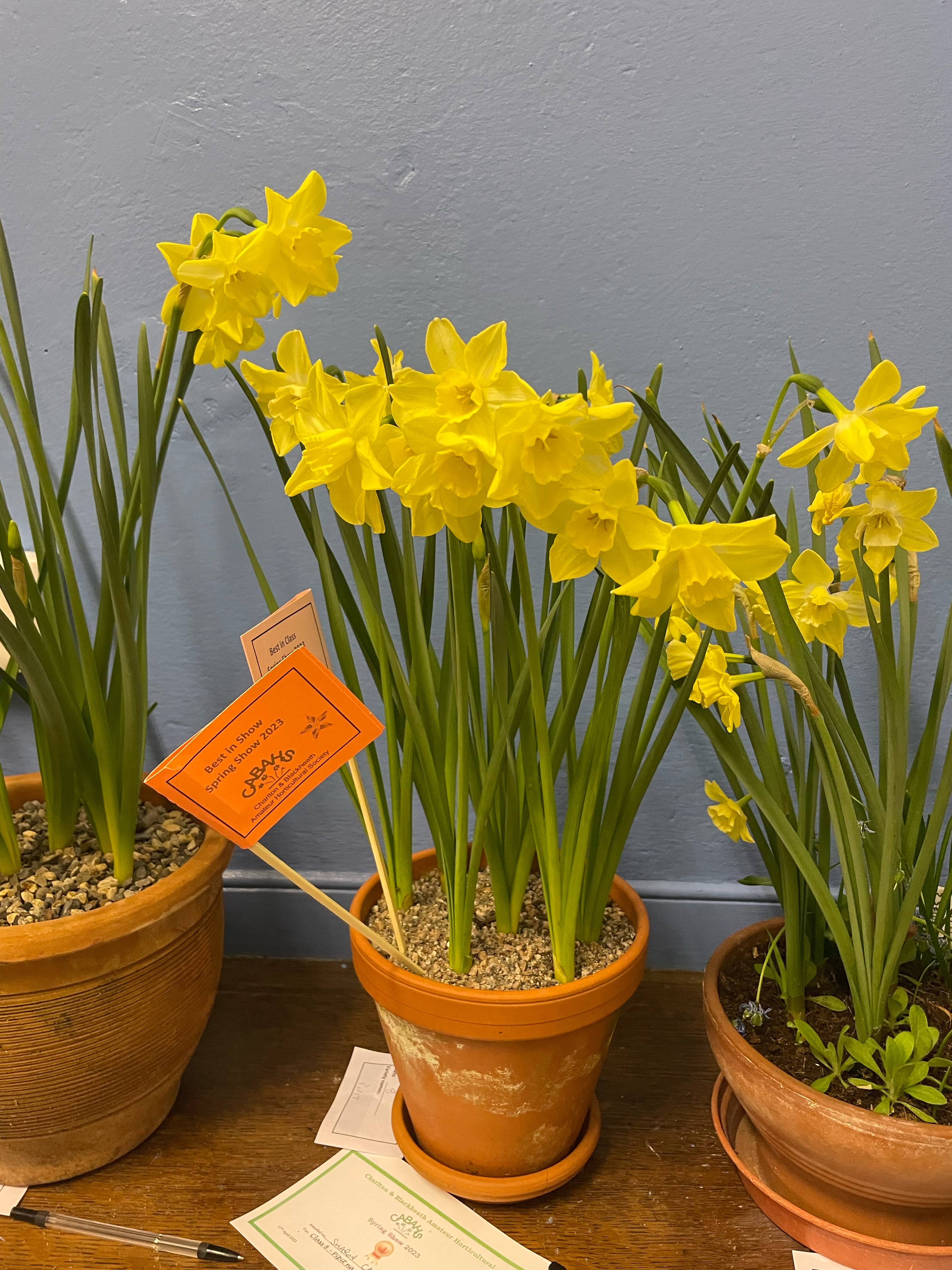
The Pipit competition – a definite challenge this year!
Kathy covered the origin of the Spring Shows at last year’s meeting, with the first one held in 1978, and as a result of that research we resurrected two new classes – a Primulas & Auriculas class and a Baking class. They were well received, with 5 and 8 entries respectively.
Mention has to be made of Mandy’s wonderful shortbread shapes – the wheelbarrow filled with chocolate earth was apparently Brownie’s contribution!
Well, as we now know from a trawl through the CABAHS archive, our first Spring Show took place in April 1978, when the entries were recorded as “good considering the wintry conditions”. 45 years later, in 2023, our display has once again risen above the challenging weather and looked frankly fabulous!
Best in Show Flowering ShrubsVase of Spring Flowers
Thank you to everyone who carried their exhibits into St Thomas’ Church hall, we had more entries than in the past few years, 73 in total, and everyone seemed to have a great evening. Our judge Mrs Norma Leslie said she had a hard time choosing the winners, listed below. Best in Show was awarded to Sharon’s “Perfect Pot of Pipits”, well deserved, and it was good to see so many entries in this class. The Wild Card class generated a lot of conversations around the range of entries, so that will be a fixture from now on. The short talk about past shows sparked some good ideas for future classes, such as one for Primroses and Auriculas and perhaps we can revive a “Domestic” class to add a baking angle to the evening (followed by some munching probably).
Inspired by Melanie’s wonderful talk to members about the various Rothschild gardens, Sharon & I accompanied her on a trip to see the restoration project at Gunnersbury Park. We had our volunteer project at Charlton House & Gardens firmly in mind throughout the day, and were pleased to find parallels – albeit on a much grander scale there! Gunnersbury was bought by Ealing & Acton council in 1925 (Charlton was bought by Greenwich Council in the 1920s) and used as a public park in much the same way that Charlton Park has been.
In 2018 the “Large Mansion” was restored using Heritage Lottery and other funding and opened as a Museum housing the borough archive. Major parts of the park were included in the funding, the Orangery, lake and orchards for example. The Friends of Gunnersbury Park were instrumental in the restoration effort, and volunteers clearly play a large part in the day-to-day running.
The talk was given by Melanie Aspey, a CABAHS member who has been the Rothschild archivist for 28 years. Providing photographs and documentation from the Rothschild archives, she said the Rothschilds are best known for banking, their art collections, philanthropy and wine, but many of them have also had a keen interest in horticulture reaching back to Mayer Amschel Rothschild (1744-1812), the founder of the dynasty, who lived in the Frankfurt Jewish Ghetto.
After the defeat of Napoleon, thanks to their support for the allies, the Rothschild family was able to lobby for the retention of the right for the Jewish Community to buy real estate outside the ghetto. Mayer Amschel’s son, Amschel, considered that building a house would be too ostentatious, but a garden would better serve their needs. Instead he established a garden which he subsequently opened to visitors and for charitable purposes. He spent vast sums on plants, some of which (and Melanie showed one of the plant sale receipts from the archives) he imported from England. Later taken over by the Nazis and bombed by the allies, the garden fell into disrepair but parts have recently been renovated.
On Thursday I joined a tour of Avery Hill Park with the Mottingham Horticultural Society, who had extended an invitation to CABAHS members. It was a beautiful, crisp, sunny afternoon and the park looked gorgeous. Our guide John, from the Friends of Avery Hill Park, told us about the history and prehistory of the park before leading us around the extensive area.
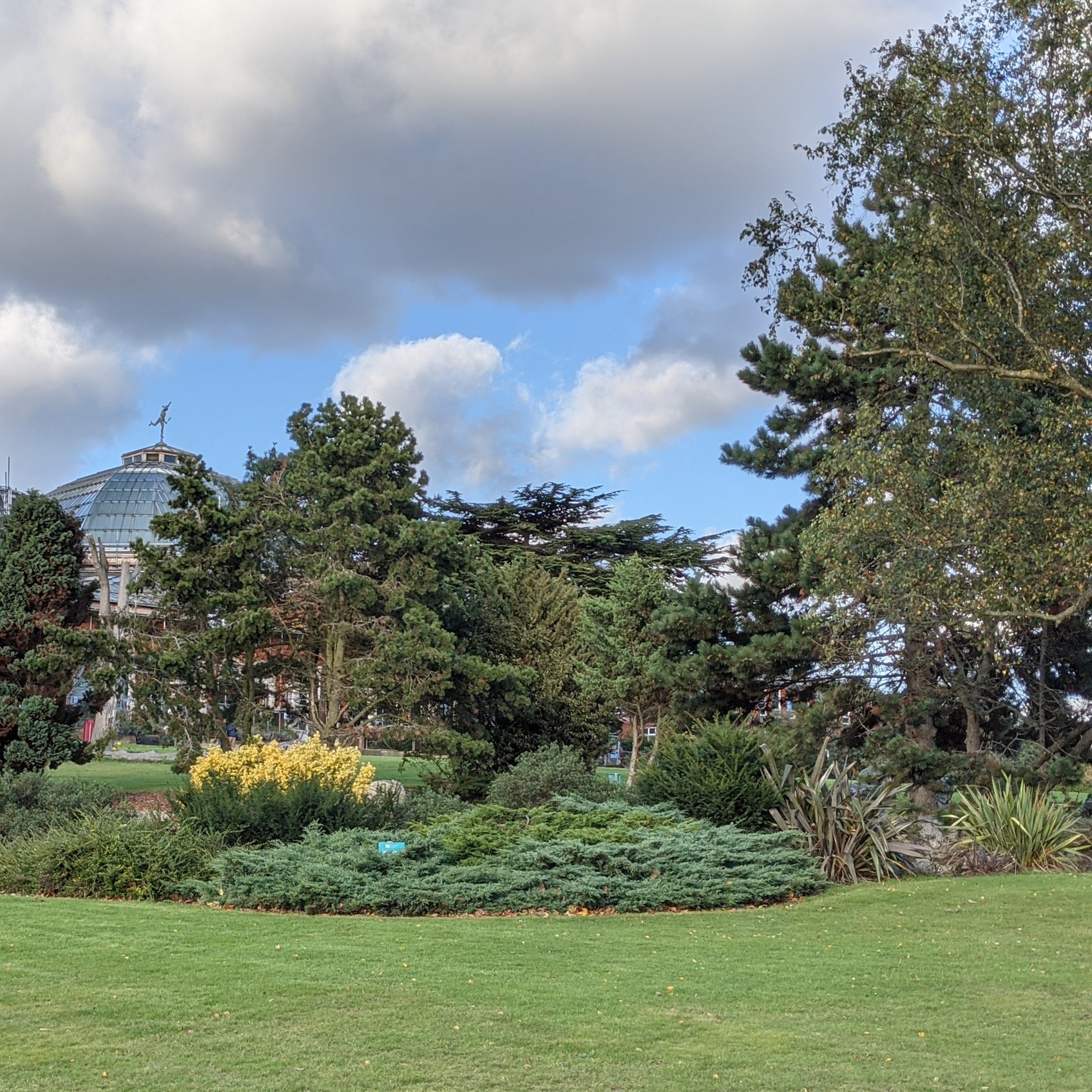
Autumn tree colour in Avery Hill ParkThe Avery Hill Winter Garden, viewed from the park
Some members may be familiar with the Winter Garden, a glasshouse currently undergoing renovation work (therefore closed) and about to pass from the hands of the University of Greenwich back to the local council. I look forward to seeing it after renovation is complete!
Recently cut meadow area and former hedgerow (with dozens of cross country runners!)
There are two main areas of the park, historically and now. The more manicured, grassed parkland associated with Avery Hill Mansion (which is currently being converted into a school), and former farmland, with field boundaries and drainage ditches. The Friends are working to make the latter areas more wildlife-friendly by negotiating a meadow-style mowing regime (ie: cutting only twice a year, removing the mowings once seed has dropped, and sowing wildflower seeds) with some mown paths. Even after just a year, it’s possible to see that the range of plant species is extensive. The increase in butterfly numbers and activity in summer 2021 was notable. It is hoped that a general increase in biodiversity will also encourage an increase in bat numbers, which have declined in recent years.
Looking toward Great Stony Acre – field boundary trees and drainage ditch
The former field boundaries are still visible, and what would have been hedgerow has grown into rows of trees and scrub, which is excellent for wildlife. A new mixed hedgerow has been planted where one had disappeared, and the drainage ditches have been cleared by volunteers. Another historical feature which lives on through the Friends is the old field names, such as Henley’s Meadow, Little Stony Acre, Grey’s Field and Great Stony Acre. The latter is being planted with native tree species – oak, hornbeam, birch, hawthorn and field maple. Around 1500 trees have been planted over a five year period, and there are plans for a natural drainage pond in the centre as the area is at the bottom of a slope, is mostly heavy clay and becomes very boggy in winter.
Young trees in Great Stony Acre
It was a very enjoyable afternoon and I appreciated the chance to visit the Park with a knowledgeable guide.
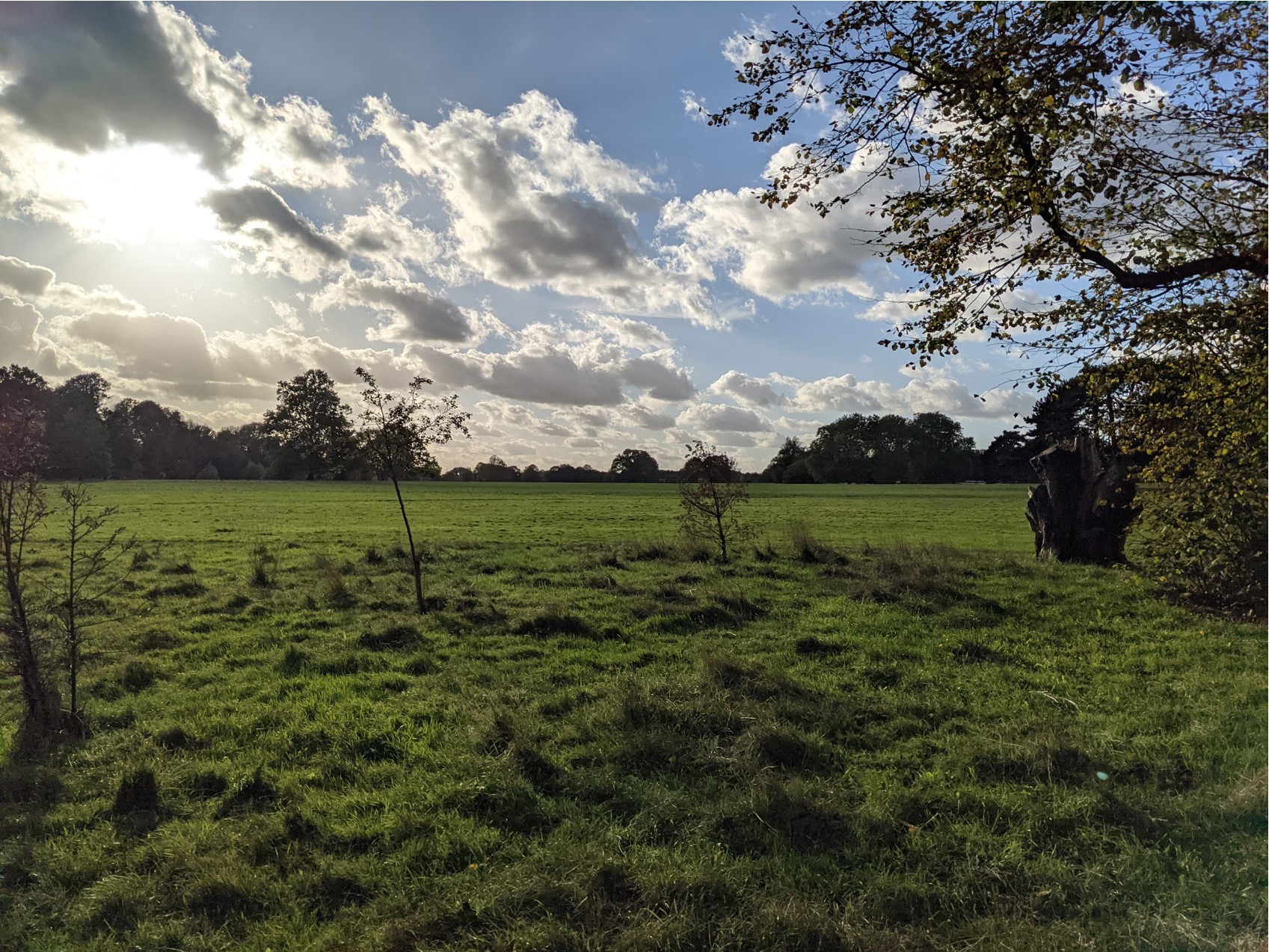
Looking across Avery Hill Park, late afternoon October 2021
Members who came to this event on 5 June 2021 were treated to an interesting talk from Tim Barnes about the history of the Church, and the plans for the future, including a Commonwealth Garden designed by Chelsea gold medal winner Juliet Sargeant. We also saw the crypt and the beautiful mosaics. The award-winning gates feature three flowers of remembrance, the poppy, the forget-me-not (Germany) and the cornflower (France).
Catherine Horwood’s mention of Cedric Morris in her talk is a reminder of the close relationship between artists and their gardens. In 2016 The Royal Academy held a wonderful exhibition ‘Painting the Modern Garden, Monet to Matisse’, which devoted one room to Monet’s triptych of waterlilies. Many of us have had the pleasure of visiting his garden at Giverny, which is the subject of some of his most famous works of art.
Alfred Parsons (1847 – 1920) was an English artist who not only created his own garden, but designed for others. He provided the illustrations for many famous garden writers including Ellen Willmott (The Genus Rosa) and William Robinson (The Wild Garden). His friendship with Robinson led to him lending advice on the planting at Gravetye Manor.
Parsons had a wide mix of friends in both America and England, including John Singer Sargent and the novelist Henry James. Parsons’ paintings apparently mirrored the aspirations of Americans for an English garden and in 1899, when Henry James bought Lamb House in Rye, he invited Parsons to design the garden for him. It was here that he wrote some of his most acclaimed novels. Lamb House was much later bought by E.F. Benson and the view of the garden from the windows provided the inspiration for the Mapp and Lucia novels. In 2014, the BBC adapted these for a television series and used the garden at Lamb House for filming.
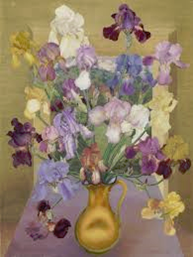
And so, to Cedric Morris. As well as painting portraits, still lifes and landscapes, Morris painted flowers extensively. In Higham Suffolk, he and his partner founded the East Anglia School of Art, but here Morris also indulged his passion for plants and, in particular, irises. He produced at least 90 named varieties and also exhibited at the Chelsea Flower Show. His gravestone reads ‘Cedric Morris Artist and Plantsman’.
I am often struck by how much a beautifully designed herbaceous border, the Long Border at Great Dixter for example, resembles a work of art.












 Charlton and Blackheath Amateur Horticultural Society
