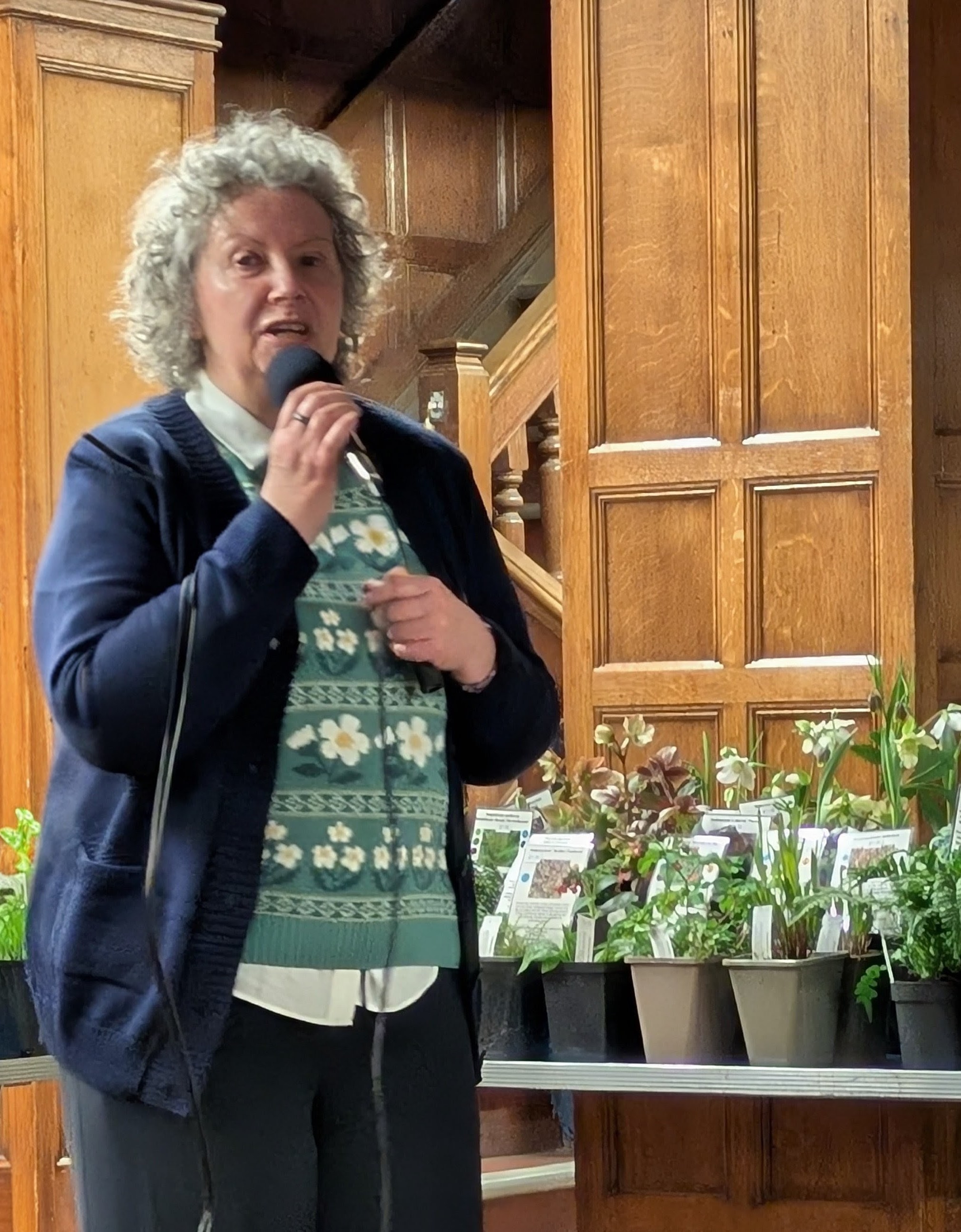
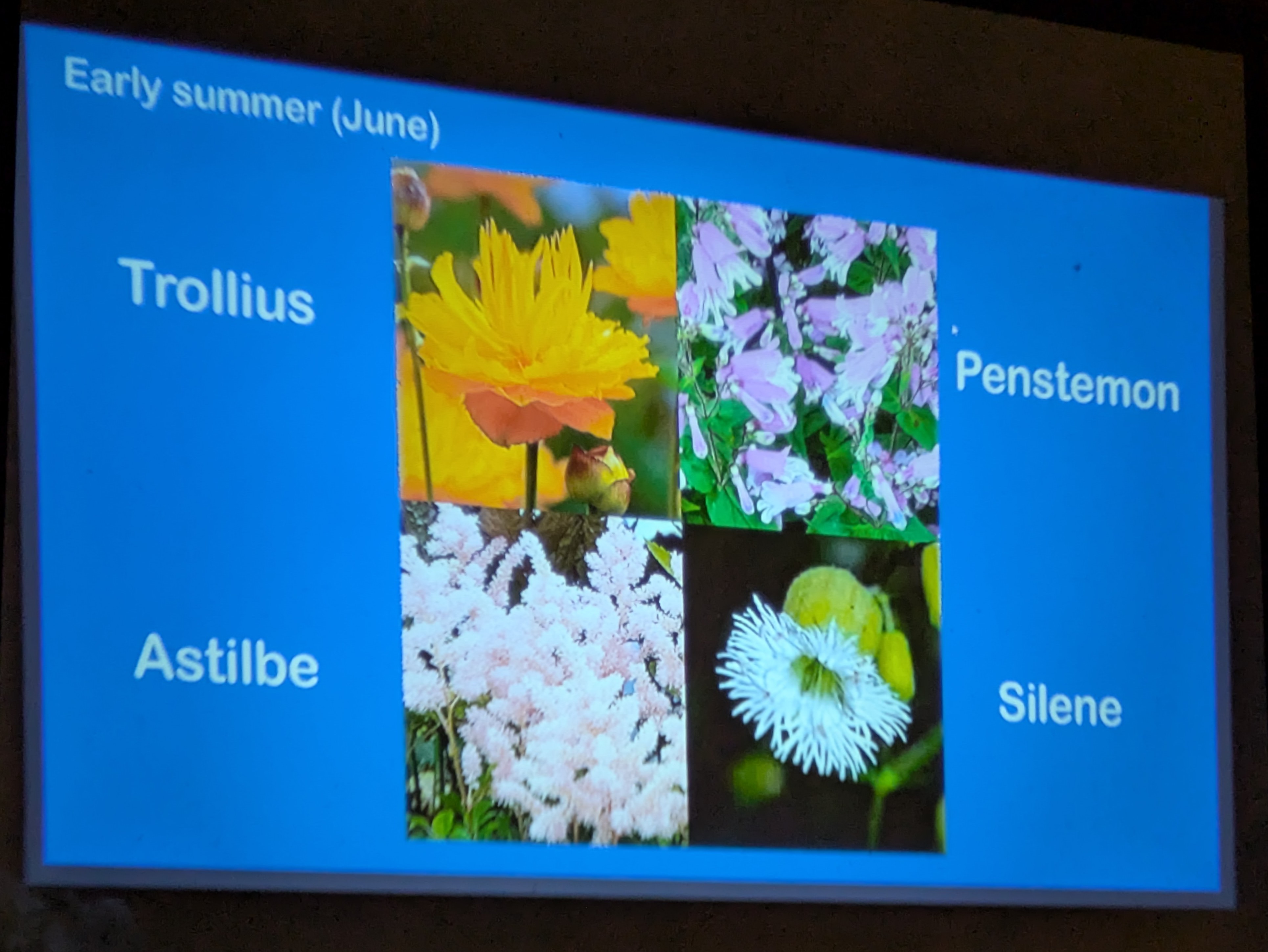
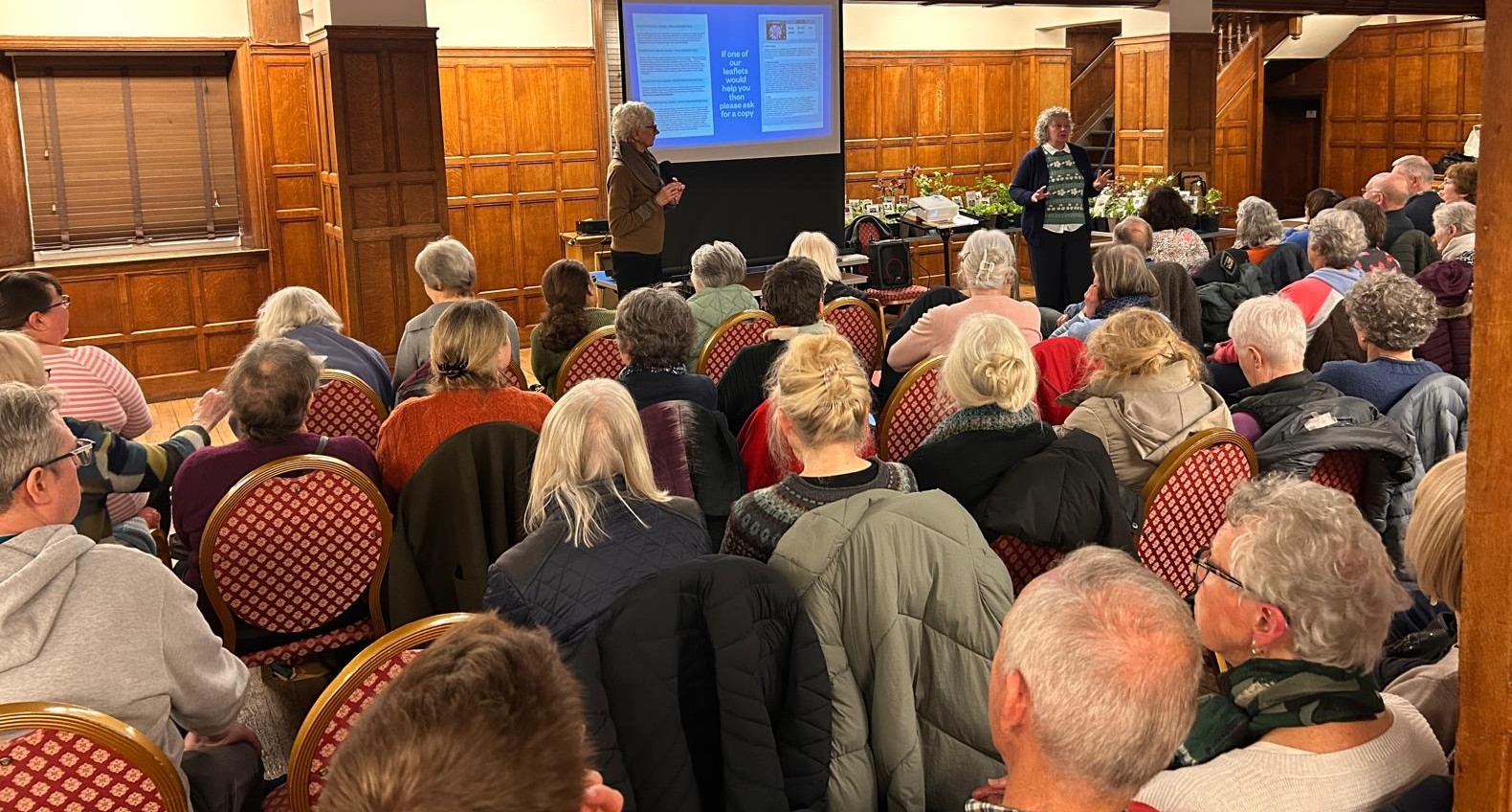
At our meeting on Monday 16 March we welcomed Lynne Moore of Moore and Moore Plants to talk to members about shade loving plants. A specialist in plants for shade for over 30 years, Lynne was clearly passionate about her subject and described herself as a ‘plantaholic’. She noted that from their very first time exhibiting at the Chelsea Flower show, one of the most common complaints she heard from visitors was that ‘nothing grows in the shade’ and this may be why our meeting attracted a large number of attendees. Lynne set out to prove that this is a very mistaken view…
The official launch of the volunteer scheme to revive the Old Pond Garden took place on Sunday 23 February 2020. That’s six years ago, which apparently makes it our “Iron” anniversary ( new spades or forks anyone?). It seems unbelievable that volunteers then were more worried about the wind and rain from the tail end of Storm Dennis than the growing rumours of a future pandemic..
How far have we come? Well I have so many photos and emails from the last six years that I don’t know where to start! The first email I sent to the 33 folks who signed up that February included this immortal sentence:
“I’d like to stress that the volunteer work we envisage is not heavy stuff, and the emphasis is on enjoying the company of others who want to restore this garden to beauty.”
A group of enthusiastic members visited the Old English Garden in Battersea Park last weekend, led by Ruth, who worked there for Thrive, during the period during which it was transformed from a rather overgrown historic site to an award winning and inspirational garden reimagined by a well-known designer.
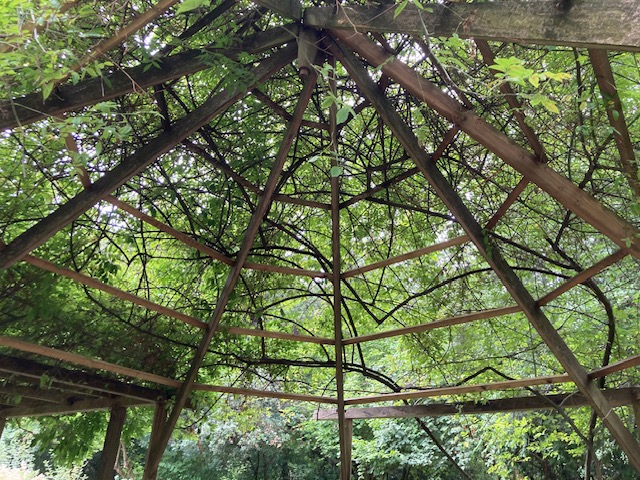
The original garden was designed by JJ Sexby in the early 1900s and renovated a couple of times in the 1960s and 1980s, during which the lily pond was drained and filled with bedding schemes, the hard landscaping changed to crazy paving and then to the current brick pavers, and the splendid Wisteria pergola deteriorated.
The Barbican isn’t a place one would normally expect to be among crowds of garden enthusiasts. But no-one was concerned about the venue, its brutalist architecture and its slightly bizarre layout. We were all eager to find our seats and hear the stories national treasure Monty Don had in store for us. And what seats! Our seats (thanks to a donation from a generous CABAHS member) were front and central, in touching distance of the stage (and indeed of Monty Don himself).
Only our second foray into the world of London in Bloom (part of RHS Britain in Bloom) and we have achieved a coveted Gold award!
Last year, we only entered the Walled Gardens category, but this year – since we now cover most areas of the whole estate – two categories were entered: the competitive “Our Community” and also the RHS “It’s Your Neighbourhood”. Although these look for gardening excellence, they also cover community involvement.
Thursday volunteers and Jason with our awards
The judges visited on a very hot day in mid June and had already been to several local gardens including Charlton Station and Orchard when they arrived at the gates of Charlton House. On reflection, it was a great idea to show them around the estate in reverse order – we did the Meadow and Wilderness, followed by the Glade and Long Garden, then finishing with the jewel that is the Walled Gardens. Following that route they saw the progression of work and Jason was able to explain his ideas for each different area.
They loved the Glade, with its mounds made of green waste and excess soil, demonstrating how nothing goes to waste and the creativity of making a flat area more interesting. Remember this?
Making the first moundStamping the topsoil downWeeding and making more mounds
The best words in the report were reserved for the Old Pond Garden – the judges report says “Jason, working with the volunteers, has restored the walled garden quite possibly to something that is better than the original walled garden.” Wow! They go on to say ”Jason truly understands the secrets of good design and plant combinations, and makes an excellent Head Gardener. We see the harmony of working with volunteers, who have been able to put many of Jason’s thoughts, with his expert guidance, into reality.” What an accolade!
Vija and Anna started these great posts about the view from their windows, and I thought I would add my bit. Really, in these cold, grey days of winter, it’s a bit odd that I should find the view from my window at all exciting. We have big patio windows which are unforgiving at this time of year and expose everything in the garden: the ragged border edges, uneven lawn, leaning obelisk (Storm Henk!) etc. But I can sit in my comfy chair looking out and now the leaves are all gone I can see all the way to the end fence..
…and I can Plan.
When I say I can see the end fence, this is because we took out a row of 20 ft high Leylandii trees last October. (Did we buy the house with them, I hear you ask? No, I actually planted them, one of those teeny gardening mistakes surely anyone can make..?) The idea behind getting rid of them is that it will let lots of light in, when next we have any. The stumps have been left, as I couldn’t face a stump grinder trolling through the house, so I need to Plan some sort of feature around them. (Maybe a birdbath on top of one..!)
A bonus is that for years and years I had been piling leaves and cuttings out of the way under the trees – so I am now left with some truly gorgeous compost! A little silver lining.
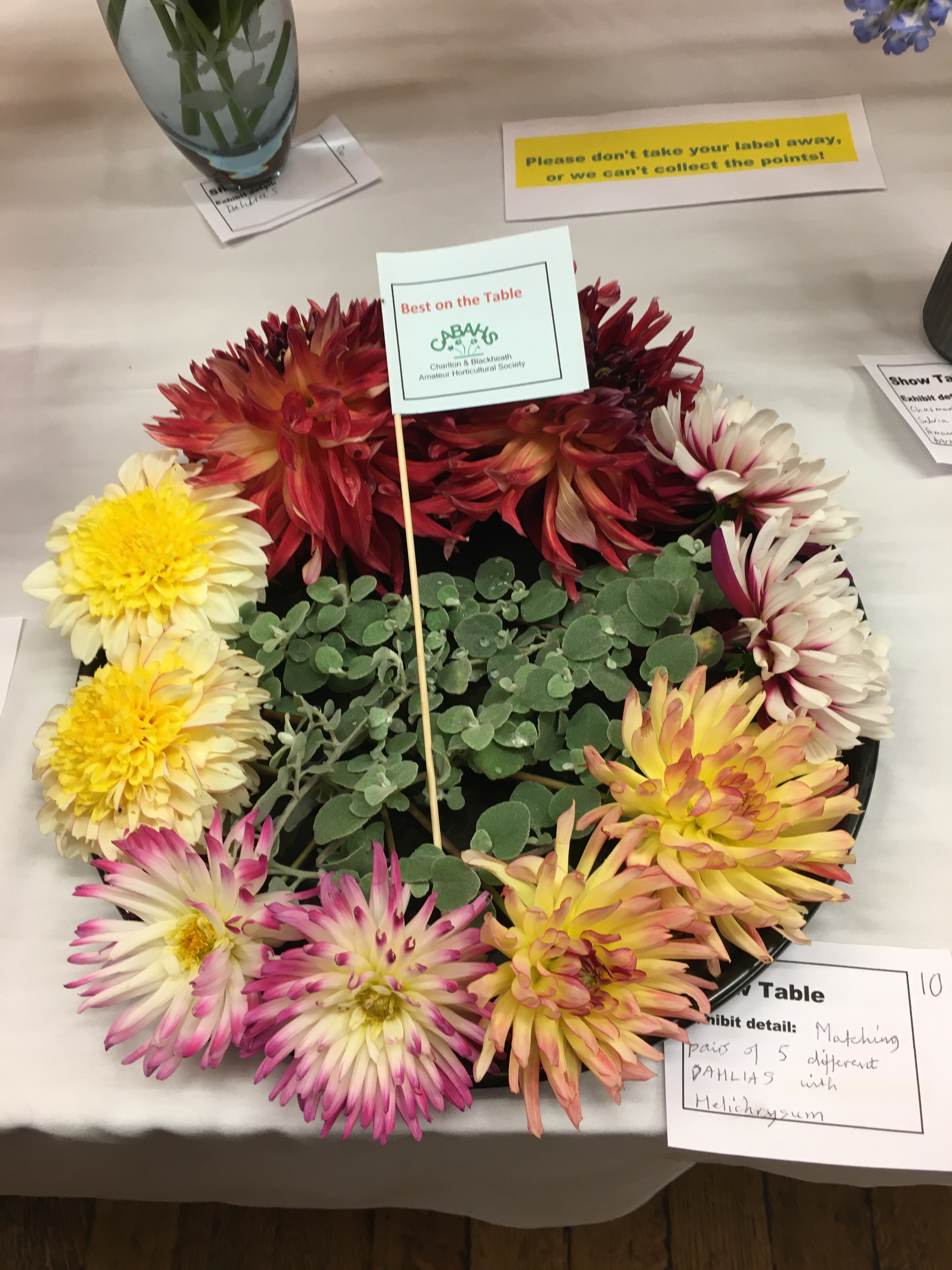
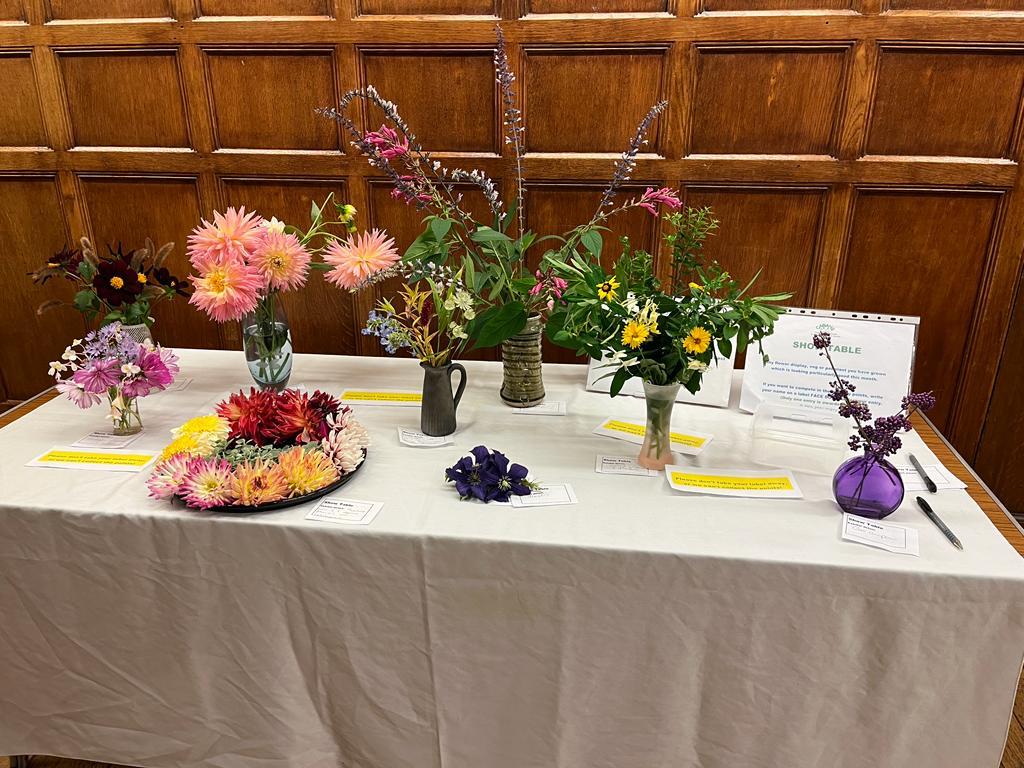
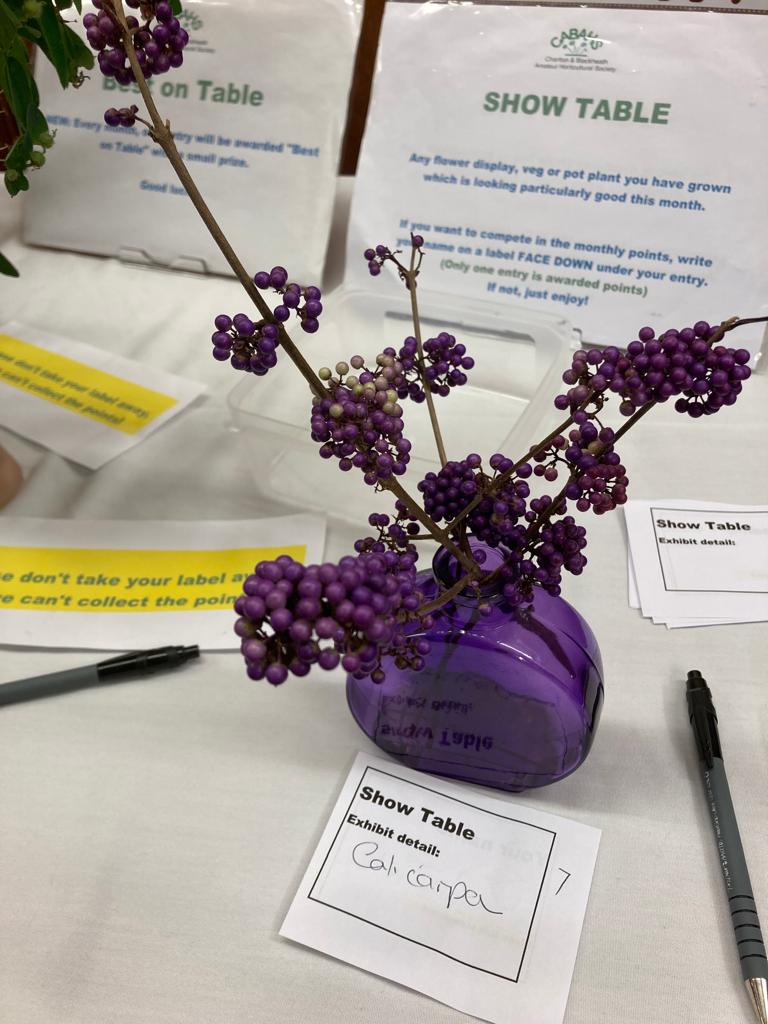
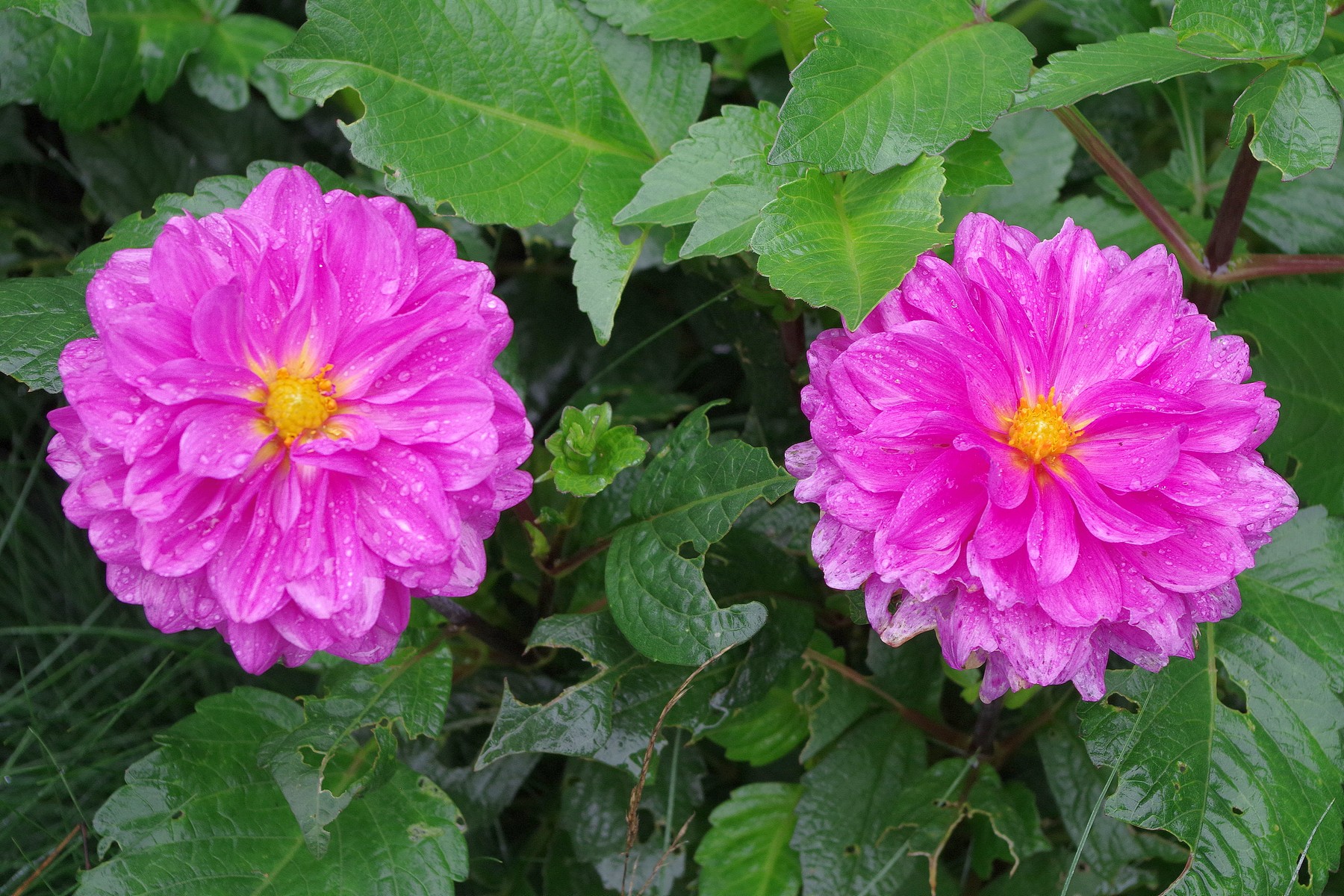
Fifty three people attended our October meeting in the Old Library, enjoying refreshments, the raffle, the plant sale and the Show Table, as well as an interesting talk. The Best on the Show Table was Annie H’s display of Dahlia flowers and Helichrysum.
The talk on the Middle-Sized Garden was a first for CABAHS as it was given by a blogger, Alexandra Campbell who describes herself as a blogger, YouTuber, journalist and author.
For most of her career Alexandra worked as a journalist at journals such as Harpers, Queen and She. But when the introduction of IT led to the drying up of hard print journalism work she embarked on a second career teaching herself blogging and videoing. She now blogs at the Middle-Sized Garden blog which gives advice and tips on gardening. It is one of the top ten gardening blogs in the UK with over a million viewers and covers garden design, middle-sized gardens and expert interviews and tips. She also has five million viewers on her YouTube site.
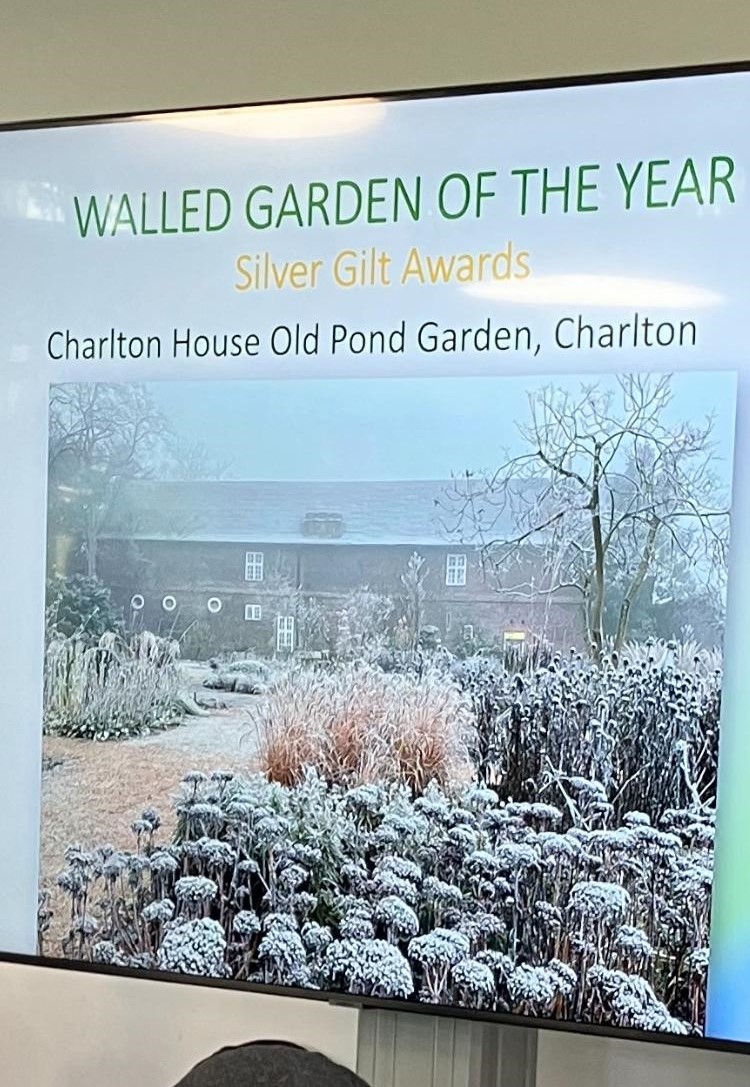
“The transformation by volunteers is incredible” began the report on the Old Pond Garden by the London in Bloom Judges. They awarded the garden 164 points out of 200, that’s 82% and a first in my world but Silver Gilt in this particular horticultural competition! Just 6 more points and it would have been Gold – so we are in touching distance of that magic category.
The judges assessment is split into 8 categories. Our top scores (in order) were for ‘community involvement’ (92%), ‘environmental sustainability’(88%), ‘maintenance-litter’ (well done Joe), and ‘range and quality of plants grown’. We scored lowest on ‘access for people’ and ‘maintenance – walls, paths etc’. The judges praised Jason’s “beautiful design” for the garden which has provided “radical planting changes” rather than a simple “tidy up”.
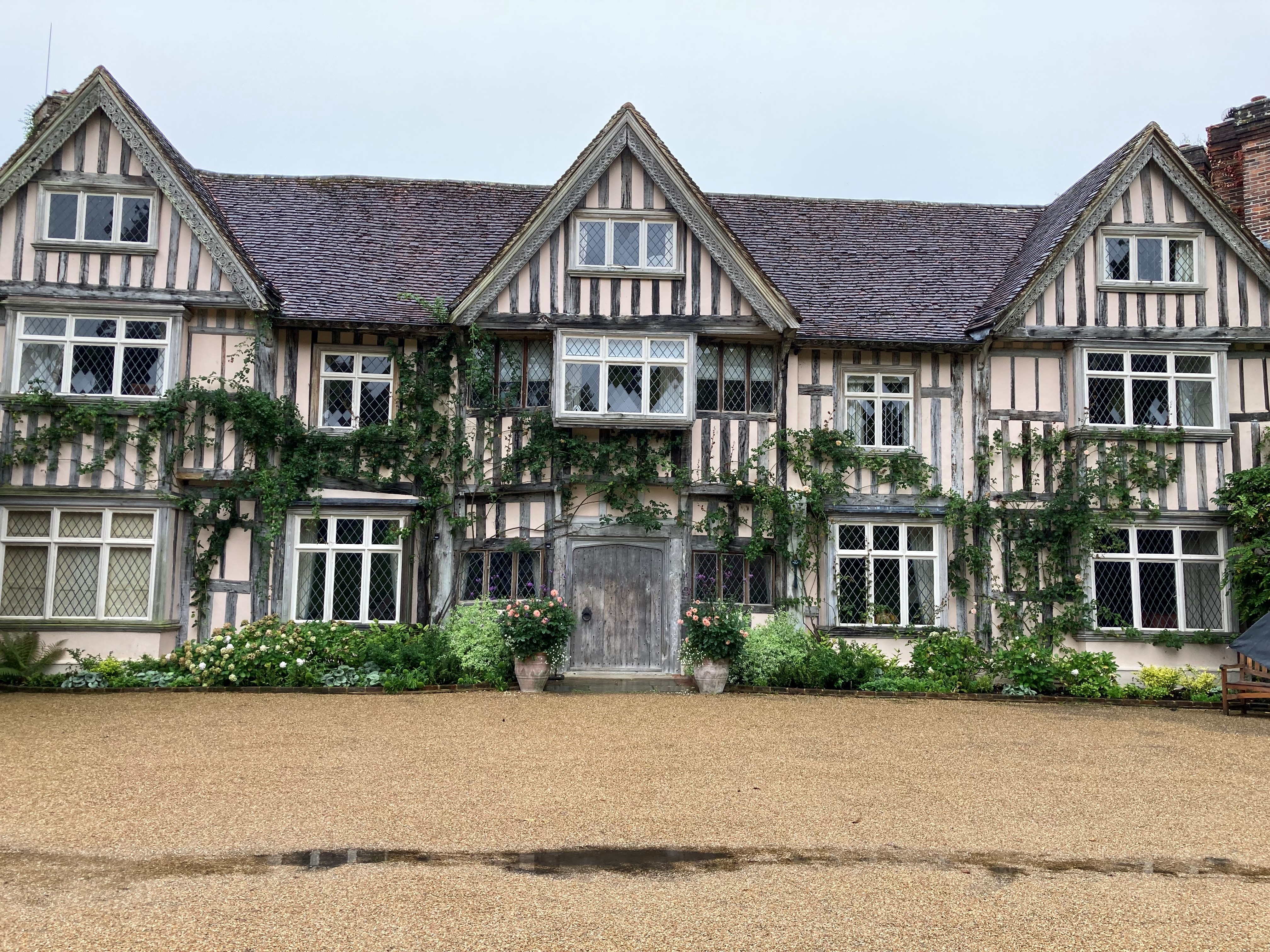
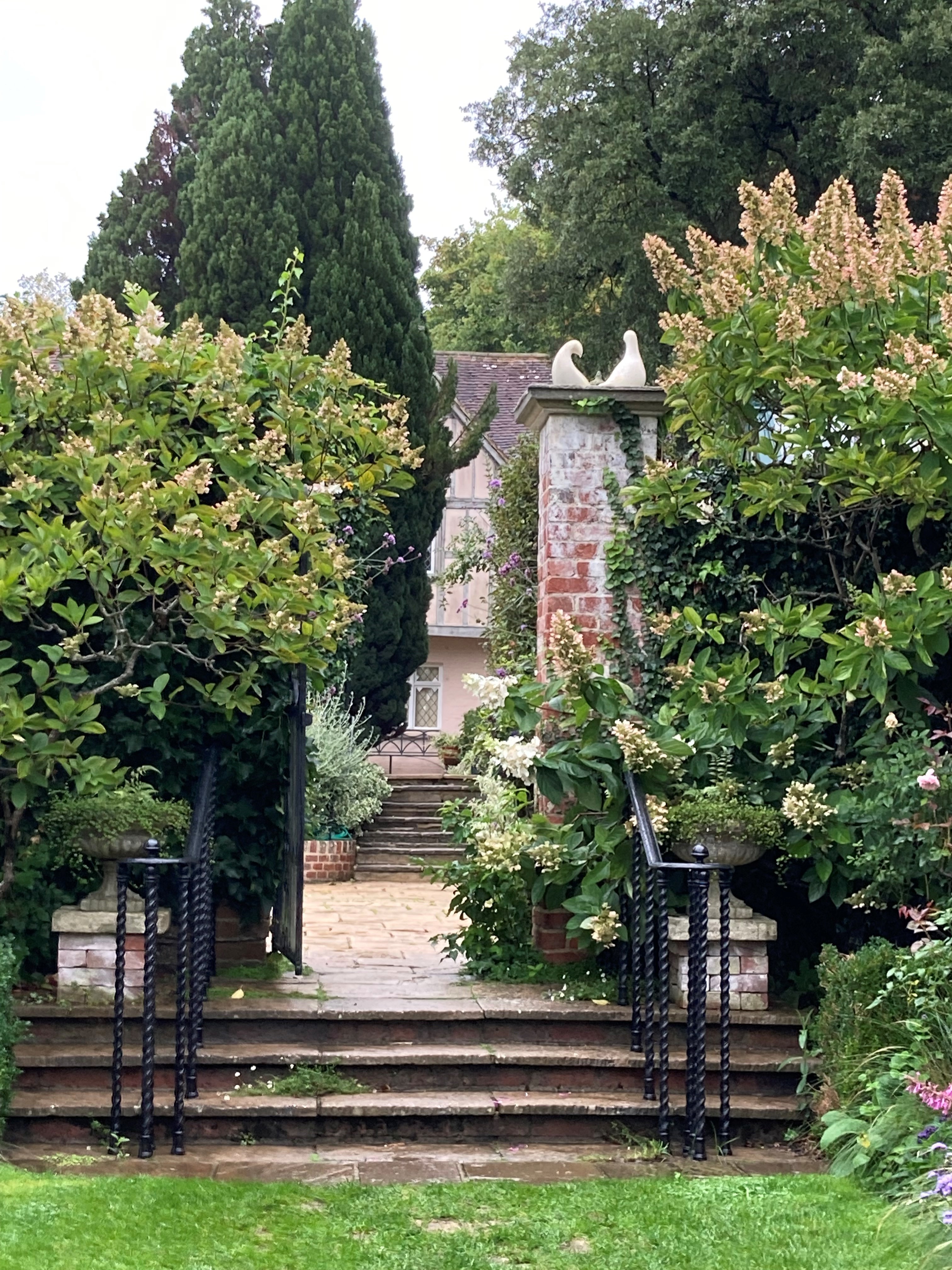
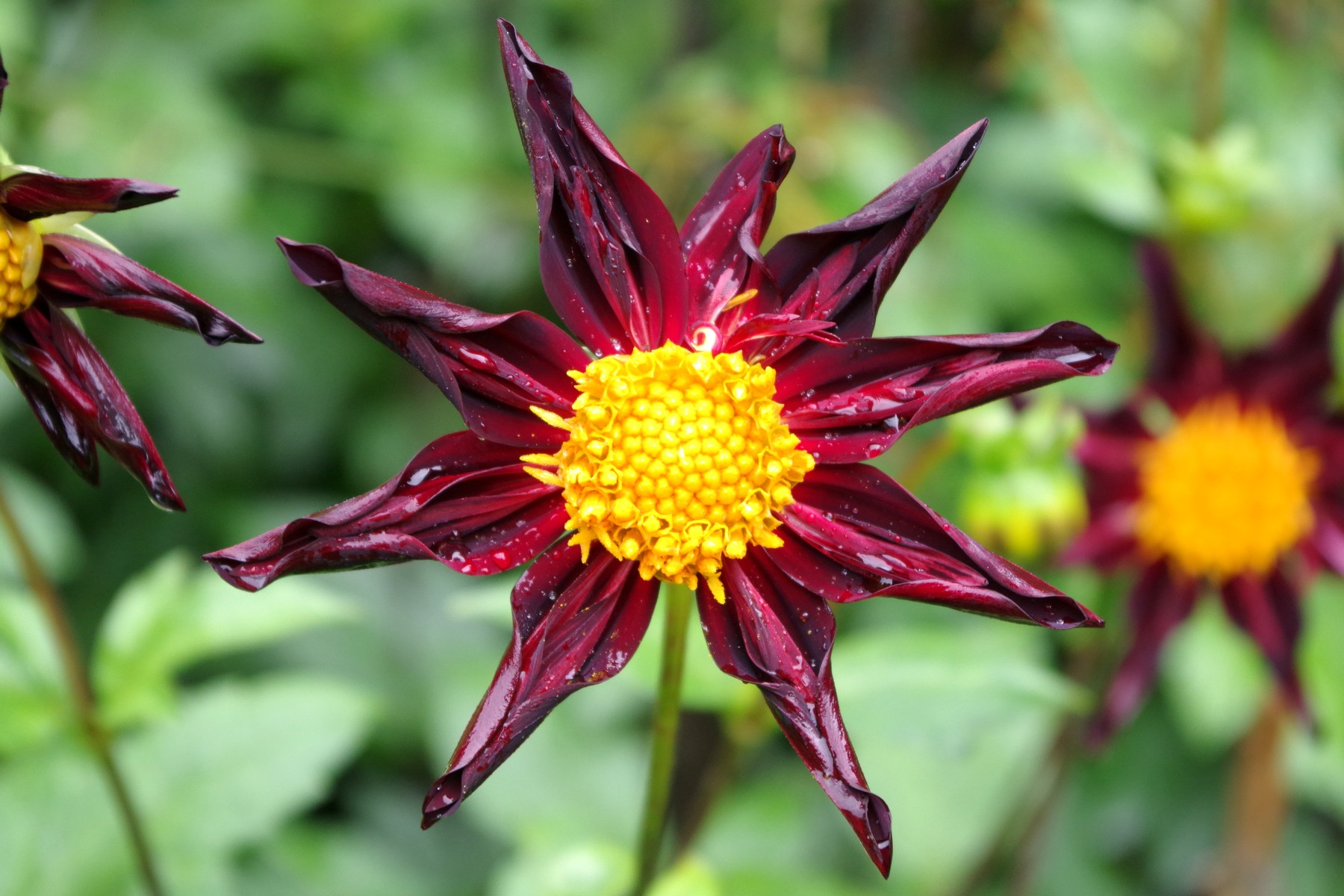
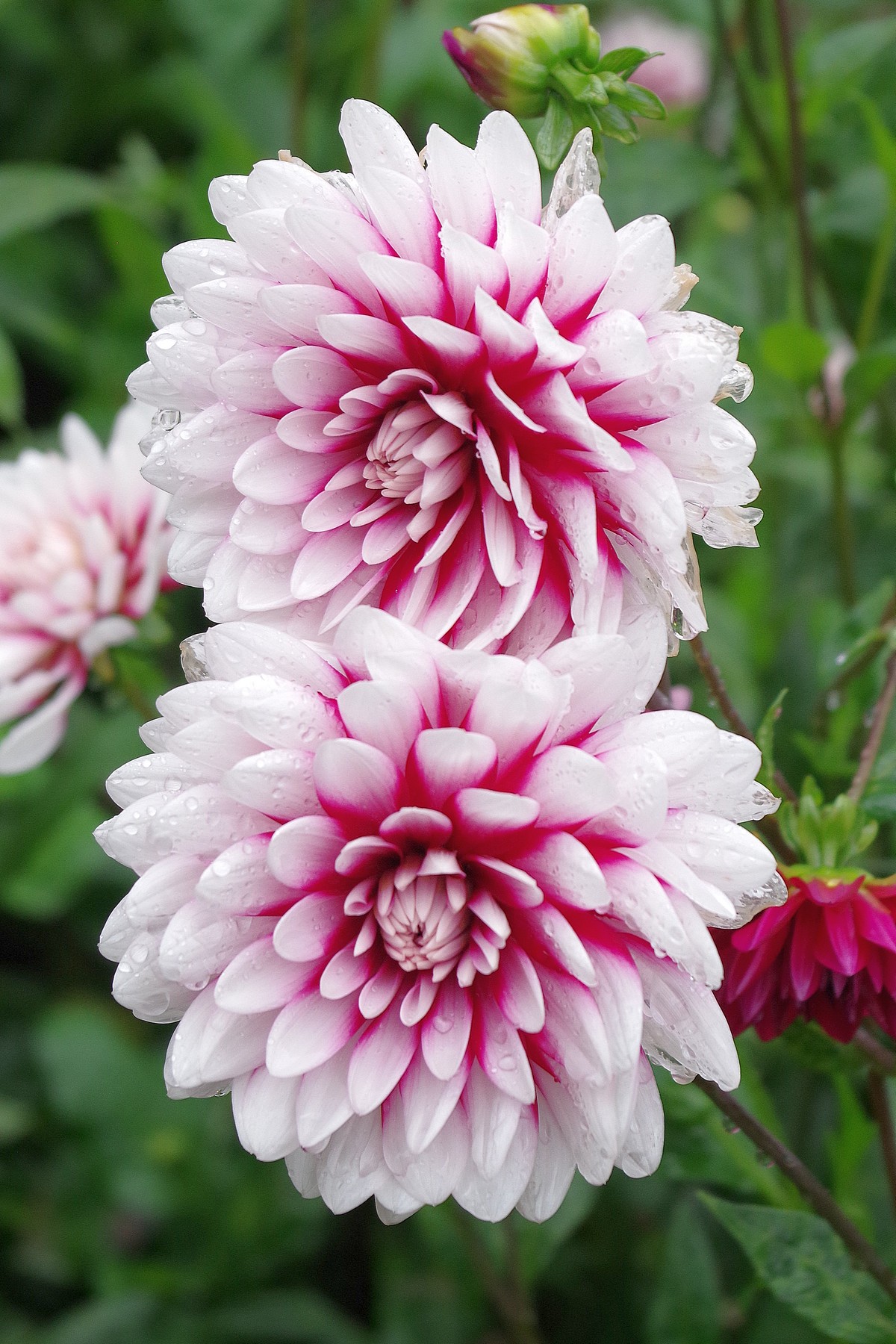
A lovely day was had by all, despite the rain, for our visit to Pashley Manor Gardens, on Wednesday 14 September. The first wow factor was the magnificent and absolutely huge 500-year-old spreading oak tree that is the same age as the frontage of the Manor House. The second wow factor are the gardens: exquisitely beautiful, divided into several colour-co-ordinated garden ‘rooms’ which lead to the fabulous terrace, with sweeping views of the long borders, lawns, lake (once a moat) and surrounding trees to the countryside beyond. After a refreshing coffee, many joined a half-hour gardener’s dahlia ‘talk and walk’ around sections of the garden’s long borders. I loved the gardens so much that I am aiming to visit again on a sunny day so that I can relax on the terrace and absorb the spirit of the place.
We were back in the Old Library for an interesting and entertaining talk given by Steve Edney on his work as head gardener at Salutation and subsequent development of his own private garden and nursery. He is also a RHS volunteer trial judge involved in the Nepeta AGM.
Salutation House and garden is located in Sandwich by the River Stour. Designed by Edward Lutyens in 1912 as a weekend retreat for the three London-based Farrer brothers. Noted for the outstanding design symmetry between house and garden. Sold in 1945 when the brothers died, the magnificent gardens became somewhat overgrown and neglected over time. In the 1970’s Portland Stone was smashed up and laid as crazy paving!
Steve was appointed head gardener in 2005 to oversee the restoration. The owners by then were Steph and Dom of Gogglebox fame. With little interest in the garden apart from being a party space, they allowed him a somewhat free hand.
An initial task was stripping back an avenue of 50’ Holm trees to almost sticks. Our own Old Pond Garden volunteers were very interested in his idea of topiary using Holm Oaks, given how many we have at Charlton House!
Steve showing plans for No Name NurseryHolm Oaks Topiary
2013 saw the garden devastated by salt water flooding and 1,500 plants, 9 mature trees and hedging were lost. 5 million litres of water became trapped in the lower third of the garden and had to be pumped out. Steve and his team overcame this and in 2019 they went on to win Gold at Chelsea for a winter border, which only cost £157! He followed with his Plant Hunter’s Jungle Camp taking best exhibit in the Floral Marquee at Hampton Court.












 Charlton and Blackheath Amateur Horticultural Society