1. Prune Wisteria this month and next by taking all side shoots back to 2 or 3 buds. Very old plants may need severe pruning to show off the flowers.
Very tangled Wisteria in need of pruning!
2. Start pruning roses in earnest although some are still unbelievably flowering. Remove any foliage with blackspot and don’t compost. Old roses respond well to hard pruning so don’t be afraid, removing all dead and dying wood and cutting stems back to above a bud.
3. I had to remove dead Clematis shoots from a Daphne Jacqueline Postill and in doing so pulled off some of the flowers so take care and do it soon if you can. But leave the main prune until next month.
One of the joys of walking around the neighbourhood is noticing what’s growing in front gardens and I like to stop and admire the imaginatively designed Xmas wreaths on doors at this time of year, planted window boxes and containers, and see what else is flowering in residents’ borders. And, when at bus stops, I have more time to absorb what’s around me.
So, at a bus stop a few days ago I noticed Clematis ‘Freckles’ cascading over the wall of CABAHS member Linda W’s garden.
Linda tells me that she bought the clematis six years ago at around this time of the year – with its grey, dank days – “when one needs cheering up and it has not disappointed.” Linda also says that although the vine was slow to establish when planted on the cooler side of the property, it has really taken off. It was planted with a honeysuckle and it flowers profusely in the south/south-west boundary wall. In the summer months it can soak up the sun and in the winter is sheltered by the brick boundary wall.
What a struggle it has been to protect the shoots of these two clematis from sustained attacks by the usual culprits this year! Not only did I use a garlic spray (one clove of garlic simmered in water) but I also liberally (and continually) sprinkled spent coffee grounds around the base of the plants. Although they were saved, I did lose other clematis: scented C ‘Betty Corning’, C ‘Rising Star’ and C ‘Wedding Day’ – all absolutely lovely and such a loss that I will need to repurchase them.
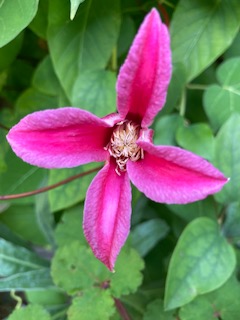
Clematis ‘Princess Diana’ This clematis is definitely one of my ‘top five’. The tulip-shaped flower is an unusual shade of bright pink, with beautifully striped markings both inside and outside of the petals (sepals). This variety (texensis) was introduced by a British breeder to honour the Princess of Wales in 1984 and has deservedly been given the RHS Award of Garden Merit.
As to be expected ‘Princess Diana’ came into flower late – in July, rather than June – and has been flowering continually, with eight flowers and a few buds on the vine at present.
In all the years I have been visiting Sissinghurst Castle, I have never seen the White Garden look so lush; it was a ‘sea of white fluffiness’ and its loveliness took one’s breath away.
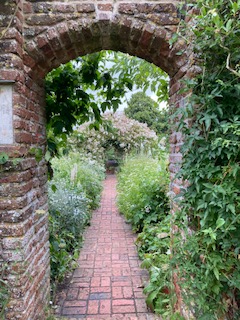
The White Garden is an enclosed garden, laid out in a formal pattern, with clipped borders of box framing brick herringbone pathways, punctuated by box cubes. These features provide structure and act as a framework and a contrast to the white flowers and grey foliage within their boundaries.
The focal point is the central gazebo, which is covered by the highly fragrant white rambler rose (Rosa mulliganii) – now finished flowering but later in the year produces rose hips. Beneath sits a maroon-coloured waist-high urn (1930s), planted with Thumbergia alata (a cream-coloured Black-eyed Susan).
What a strange spring this has been as everything has grown so tall ….but then some things especially vegetables have hardly grown at all and are struggling as there has been little warmth.
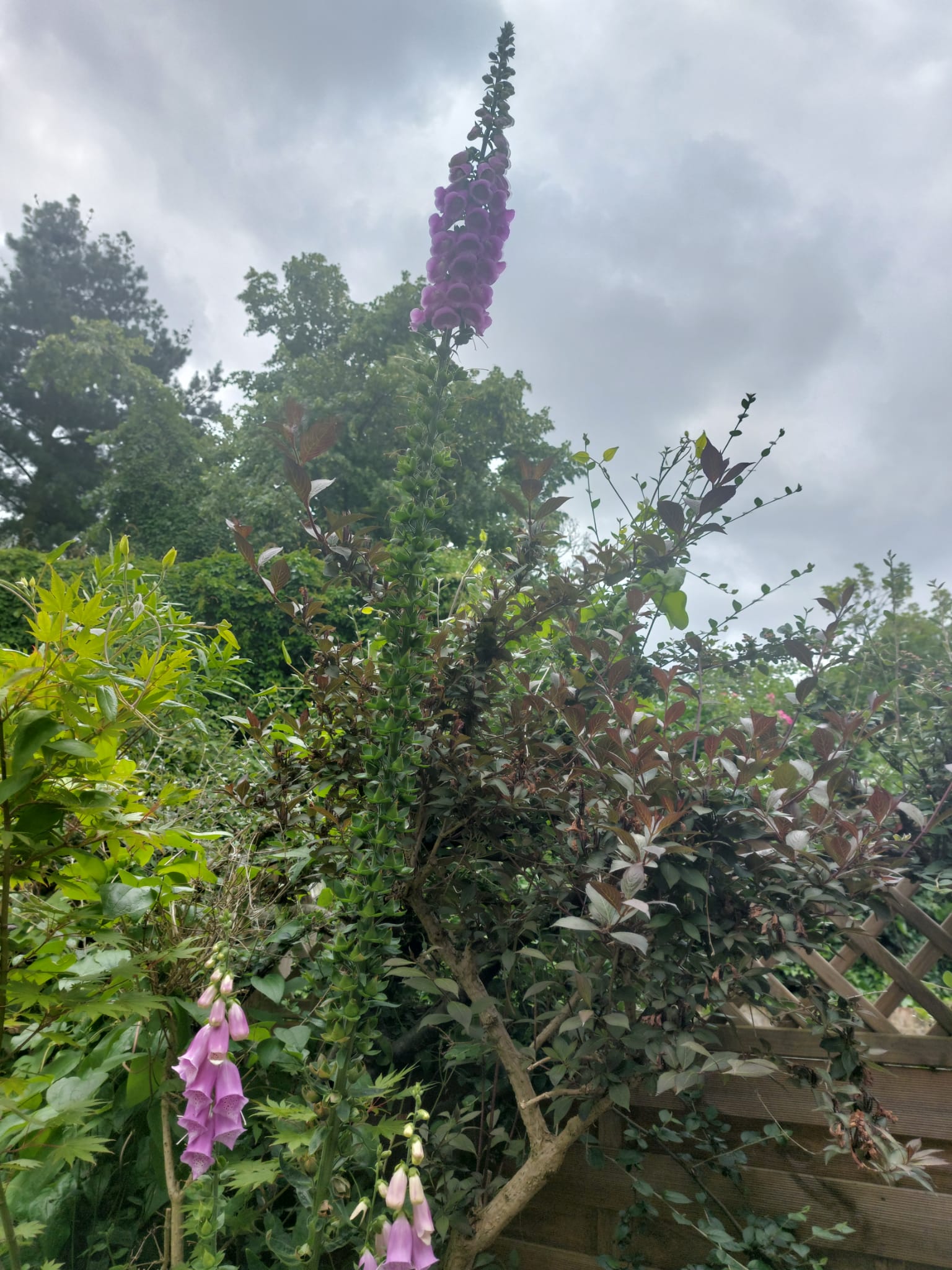
Giant Foxglove – 8 foot tallCephalaria a foot taller than usual
Anyway we soldier on….
1. Divide spring flowering bulbs as soon as foliage fades. My own stock has diminished and badly need splitting.
2. Prune ornamental cherries when flowering has finished making as few cuts as possible as they have difficulty healing.
3. Tie in shoots on sweetpeas which are finally growing and revelling in the cool conditions.
4. Cut early flowering hardy geraniums to the ground when they finish as they have a tendency to seed everywhere…unless you want them to of course.
1. Prune hardy fuchsias now both in pots and in the ground to promote new growth and to prevent the plants from becoming too woody.
2. Plant out pot grown sweet peas now making sure to pinch out the shoots to promote bushy plants. You can also sow directly in the ground now if you didn’t sow earlier but watch out for slugs munching new seedlings.
3. Someone said the other day that they hadn’t cut back their clematis but I don’t think its too late as the growth on them is phenomenal. It just means they will flower a bit later but then that extends the season.
Pat’s unpruned clematis already at the top of the arch!Pat’s cosmos seedlings – germinated in under a weekPat’s Cosmos flowers
I, too, have a comfy seat looking out on my garden where I spend many happy hours deciding what changes need to be made in my garden (there is always something).
I am currently enjoying watching my pots of bulbs grow and begin to flower. I posted a photo on Facebook of my Harmony irises and my friend in Norfolk (who I think was rather envious) suggested I had a microclimate in my garden. It is very sheltered and faces west so maybe I do.
I have just decided to empty my rather unsightly compost bin and replace it with a smaller, more discreet one. I therefore have a large pile of compost which I am in the process of shovelling around the garden. I am expecting a spectacular display later in the year!
My Clematis Armandii under the tree is budding nicely. I planted it some years ago and was disappointed last year that I had so few flowers on it. That was until I looked out from the upstairs window and discovered that my neighbours were enjoying a beautiful display! It had put all its energy into growing to a lighter spot in the garden next door!
I find this time of year quite difficult garden-wise, especially when the weather is mild, as it is at the moment. I am having to restrain myself from going wild with the secateurs and cutting everything back. I shall wait another month before giving my clematis, roses and salvia a good hair cut. I think it is also time to give the Hibiscus Syriacus Woodbridge a trim as it has grown rather tall and thin.
I hope other people will write about their views, as Kathy suggested.
1. Prune Group 3 clematis (late flowering viticella types) now by cutting all stems back just above a leaf node starting from the ground up. Don’t be timid as they respond well. Then feed around the plant base with an organic feed making sure to avoid emerging shoots and mulch with compost.
Clematis viticella Romantica (Group 3) in bloomClematis Comtesse de Bouchard (Group 3) in bloom
2. If you have some, mulch your beds with homemade compost or leafmould. If you don’t have enough just mulch around your favourite plants.
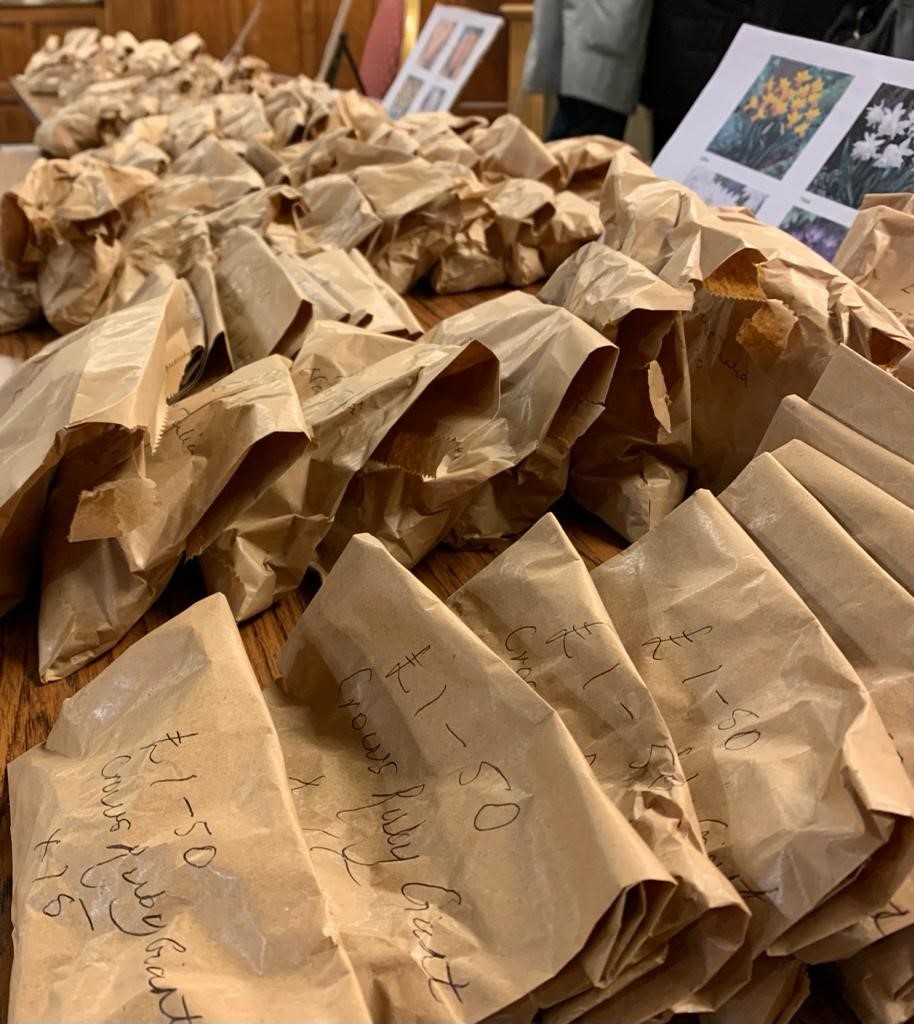
Our October members meeting was held on 17th October in the magnificent Old Library at Charlton House. A well attended meeting, we were treated to a great talk from Peter of Thorncroft Clematis, a wonderful Show Table, bulbs for sale and an amazing Autumn mandala from members gardens, which covered the entire grand piano!
It was clear that we were in for a treat of a talk. As well as a box of Thorncroft Clematis Catalogues, Peter Skeggs-Gooch laid out the nursery’s impressive collection of Flower Show medals: several Chelsea golds as well as a smattering of Silver-Gilts. Peter’s slide show took us from evergreen winter varieties such as the familiar ‘Freckles’ and the lovely, if large, armandii ‘Apple Blossom’; through Spring, with much-loved montanas now smaller and more manageable; into Summer with several scented varieties including the coconut-perfumed ‘Lambton Park’; and finally finishing with the viticellas of Autumn such as ‘Prince William’ and super easy ‘Alba Luxurians’. His nursery produces over three hundred varieties, so we were being given only a glimpse of what is on offer. For more information or to order head to their website.








 Charlton and Blackheath Amateur Horticultural Society