President of the Society, Sir Nicolas Bevan, draws the raffle from last month’s Zoom meeting and gives his Christmas message. Congratulations to Janet H on winning the £30 Garden gift voucher.
Tag: Christmas
OPG diary – December 2020
2 December
A wet and chilly session, but good to be back after Lockdown II.
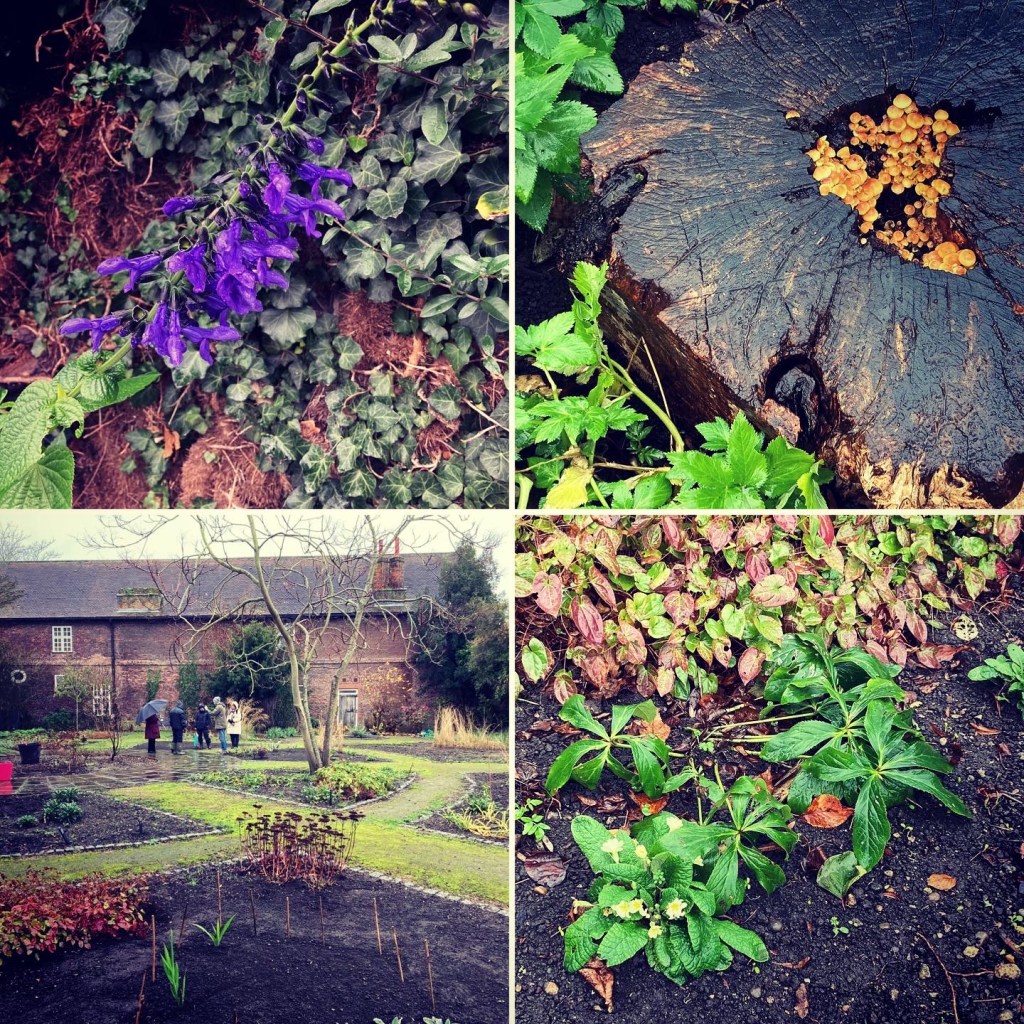
15 December
A great day for gardening! Lots of planting was done, path clearing was started, and as for the gate decoration – we’re getting really festive now. Mince pies (from Charlton Bakehouse) at half-time were much appreciated.
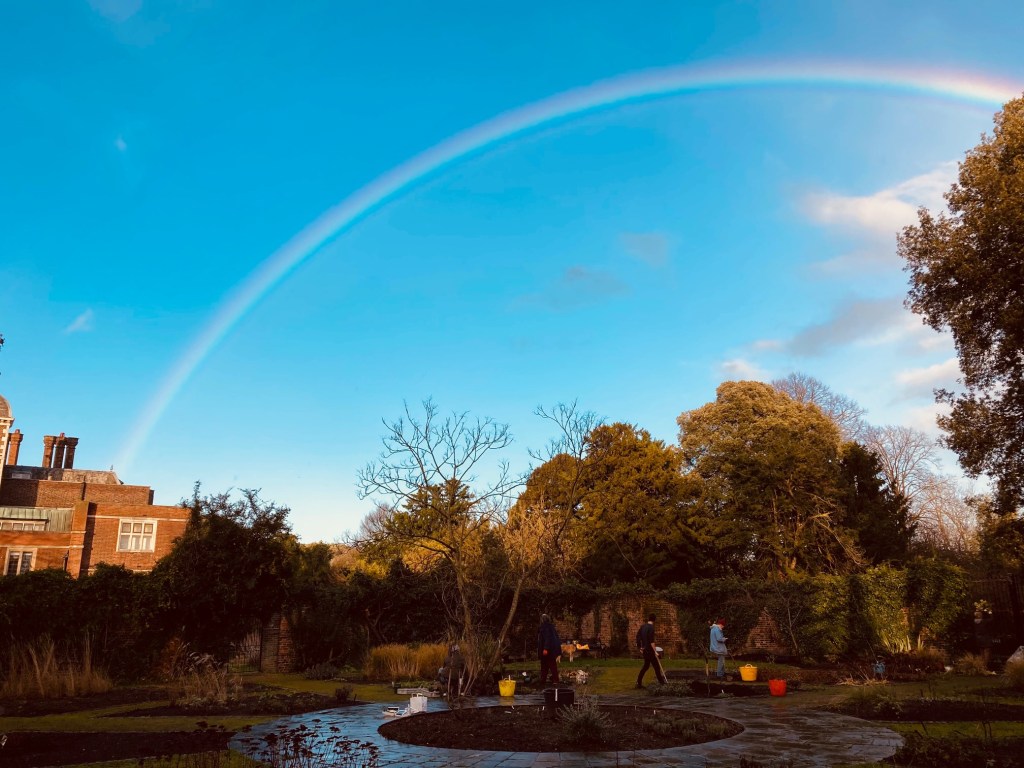


The CABAHS bench, to commemorate our Platinum (70th) Anniversary, in situ. A lovely shady spot to look forward to next summer. We think perhaps a Trachelospermum climber up the back wall..
Christmas message tree at St Luke’s

Isn’t this a great idea? St Luke’s Church in Charlton Village asked residents to send in their Christmas messages and they would be hung on the tree outside, so everyone can read them as they walk past. There are some lovely children’s drawings and heartfelt messages. CABAHS has added a message on members’ behalf too.
A robin for Christmas
John Sturgis has recently written an article in the Spectator, much after my own heart. He says he has two birds on the go, one in the garden, one at the allotment, both real beauties — and both robins.
With much of the nation still working from home, robins have become more familiar than ever. Most species of garden birds are horribly in decline, but the robin has stubbornly stuck around in great numbers.
 While those other great survivors, magpies and pigeons, are brash and ungainly, the robin is a delicate little gem: magpie song is shrill, pigeon dumbly repetitive, but robin chirrups are a delight. They’re bold, too. Other garden birds flap away when we appear, but not robins. In fact, they approach — as inquisitive as a kitten.
The robin has a territory that ‘can be as small as a half acre’ so where I live I must share my robin with several neighbours. But one always appears as soon as I venture out of the back door, for human activity is their cue. My robin particularly likes it when I use my daisy grubber on the lawn. The stabbing activity seems to prompt all the worms near the daisy to come to the surface, in case I stab them too, I suppose. But there she comes, Mrs Robin following my every footstep, darting around where I have just been, feasting on the worms leaving their cover.
I say ‘she’ but frankly I don’t know. No doubt your Chris Packham types would be able to gender a robin from half an acre away, but to the untrained amateur, male and female are very much interchangeable.
Sturgis points out that robins frequently come up in literature and songs – John Donne’s Robin Redbreast, or The Secret Garden, or Rockin Robin of the Jackson 5. And, of course, the robin is the Boy Wonder’s spirit bird in Batman. Imagine trying to pitch that set-up today. ‘I like this Bat guy – very dark and cool. What are we doing for the kid? A scorpion? Eagle?’ ‘No, we thought a robin.’ Yet it works, accentuating the character’s chirpy loyalty.
But their definitive place is on Christmas cards. They’ve somehow smuggled themselves into the greeting card nativity scene, apparent survivors, along with holly, ivy and mistletoe, of pre-Christian winter festivals, one of the few flashes of colour in the bleak midwinter.
So just go outside with a trowel or daisy grubber and she will soon appear. And despite the Christmas connotation, she’ll still be there in the bleaker days of January and February. Because robins are very much for enhancing life, not just for Christmas!
Kathy
 Charlton and Blackheath Amateur Horticultural Society