I visited the ‘Unearthed: The Power of Gardening‘ exhibition (on until Sunday 10 August 2025) at the British Library recently, the third gardening-related exhibition at a non-garden-related institution that I’ve seen in the past few years (I’m sure there have been others!). The first two were ‘Rooted Beings’ at the Wellcome Collection in 2022 and ‘Soil’ at Somerset House earlier this year.
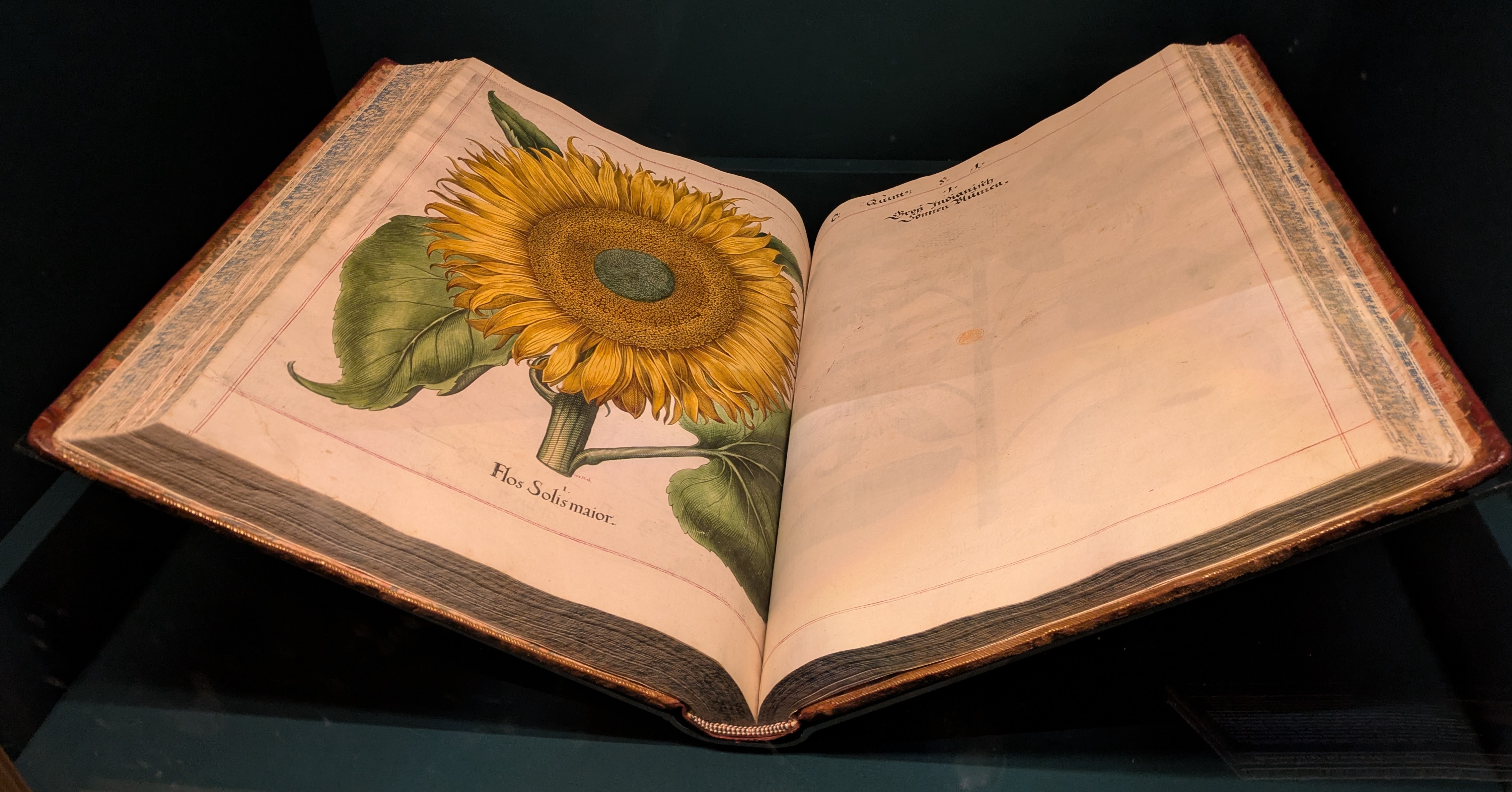
Beautiful gardening illustrations from the 11th and 17th centuries
This exhibition, as the title suggests, was more about the actual act of gardening than the other two, and as such had quite a lot in common with the permanent display at the Garden Museum. The British Library’s advantage was its access to phenomenal (and in some cases phenomenally old) examples of historical books, and its focus on gardening and gardeners, rather than the gardens.
Fiona Davidson is the head of Libraries and Exhibitions at the RHS as well as being an author. Her talk at our March meeting was based on her recent book ‘An Almost Impossible Thing – the radical lives of Britain’s pioneering women gardeners’(previously reviewed by Stella). She described the lives of female gardeners in the late nineteenth and early twentieth century, a reflection of the restricted lives led by women in general during this time. Yet despite this, some pioneers became gardeners and had successful careers in gardening.
An entertaining and informative evening was had at this year’s Gardeners Question Time. As usual, it enabled members to get advice on their gardening problems, and to air their gardening frustrations. Chaired by Sir Nicolas Bevan, the CABAHS President, the panel also comprised Tom Brown, the Greenwich Park’s Head Gardener, and Pat Kane, a long standing CABAHS member.
Most of the questions were sent in by members beforehand. They covered a broad range of gardening areas and problems: growing hollyhocks; aphid control; tree size; cistus, salvia and sisyrinchium pruning; how to grow dahlias; what killed my rose; problems with apple trees and rambling roses; how to encourage children to get involved in gardening; recommending a fertiliser for yew hedges; the cause of curly cucumbers; dealing with self seeding; and problems with bamboo.
I can’t remember how many years ago I picked up Margery Fish’s first book, the tale of how she and her husband Walter bought a house in Somerset just before World War Two and created a garden on its two acres of land. It’s an easy and enjoyable read, and I loved it. Her barely-veiled criticism of Walter’s martinet tendencies made me laugh, and her joy and enthusiasm for plants and gardening informed and excited me. On every re-reading (there have been many!) I learn more, and get new ideas, though as time goes on I think I like Walter less and less.
Each area of the garden gets a name: the Lido, the Ditch, the Herb Garden, etc – and each short chapter has a pithy title such as ‘Rock gardening’, ‘Gardening with a Knife’ and ‘We Made Mistakes’. Although the Fishes were of a class that would have been used to staff, the times meant that they did most of the work themselves, with just an occasional ‘garden boy’, so the descriptions are very hands-on. They did, however, still dress for dinner, and the image of Margery clambering up a rockery to water precious new plantings in the top of a wall whilst still in her satin finery is vivid in my mind.
Mrs Fish was in her forties when they bought East Lambrook Manor, and hadn’t really gardened before. She only really got into her stride after Walter died in her fifties (he was 18 years older), and wrote this, her first book, in her sixties, at which point she became known as a gardener and wrote several more books. All are lightly written and informative, but the combination of memoir, wry humour and discovery in ‘We Made a Garden’ makes it the most successful, in my opinion – a gardening classic.
As you can imagine, it has been a long-held ambition to visit East Lambrook Manor, now a Grade 1 listed garden, and I finally managed to get there in April 2024 …
Ali H
If you read a book that would be of interest to our members, please think about writing a review and sending it to garden@cabahs.com and it could become a post like this.
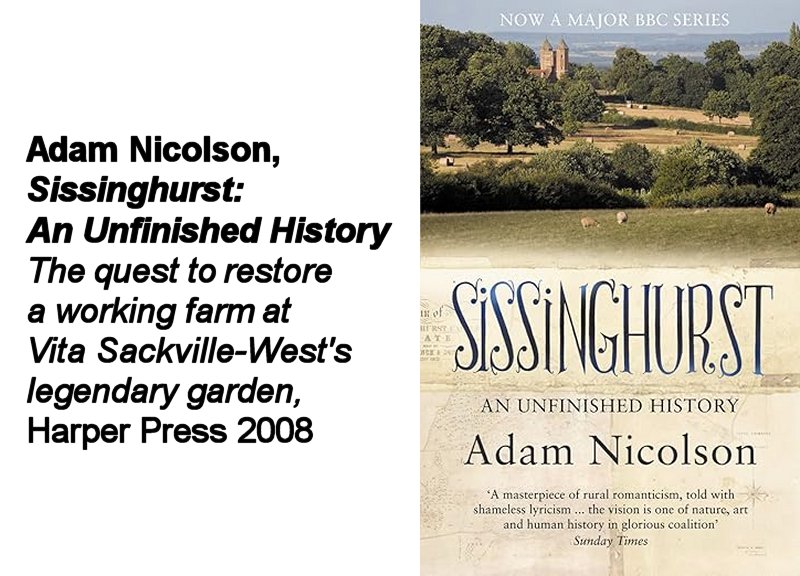
If you are a history buff, this book will engross you from start to finish. Adam Nicolson’s extensive research reveals that a Sissinghurst dwelling was recorded on the site in AD 843. The Kentish inhabitants’ lives of hard work, industry and hardship over the centuries are brought to life by descriptions of everyday life. The expansion of a smaller house into a Manor House in the sixteenth century by a local lad made good, to the sad demise of the dwelling and its appalling conditions during the housing of the French prisoners in the 18th century is vividly told.
Professional gardening has long been a man’s world. The title of Fiona Davison’s book comes from a letter written by the retiring Director of Kew Gardens, Joseph Dalton Hooker in 1906. His unambiguous advice to Miss Symonds who fancied a job tending plants was to forget it. Yet women did enter the world of horticulture in the early decades of the twentieth century and Davison follows six of them as they make inroads into this male bastion.
At this ho-ho jolly time of year I expect everyone is looking forward to getting some good Christmas gardening presents! (Yes? No? Bah Humbug?)
I asked the committee what ideas they have this year, and we came up with the selection below. I hope it gives you some inspiration, or at least is something you can use when asked the dreaded question “What would you like for Christmas this year?”
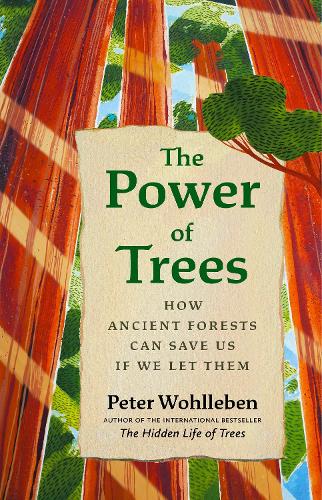
Books: The Power of Trees by Peter Wohlleben. This was reviewed recently in the RHS magazine and I have seen it recommended elsewhere too. Waterstones says it is “a manifesto aimed at preserving the future of our forests and debunking accepted wisdom about tree-planting schemes”.
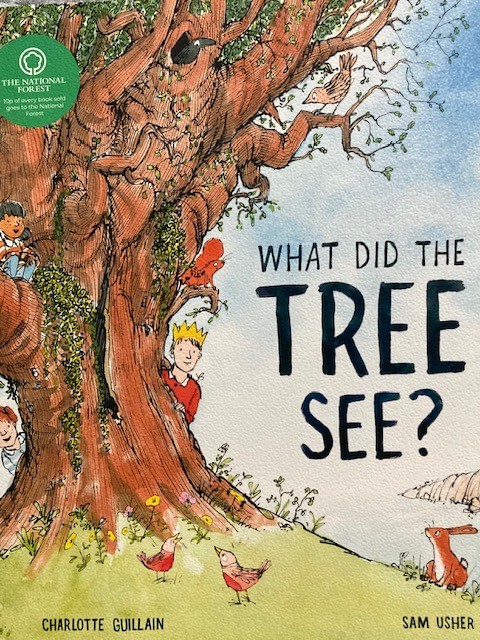
Books: What did the Tree See by Charlotte Guillain. I bought this for my grandson, it’s one of those childrens books that covers a huge age range. He is far too young to understand the whole thing at 3, but loves the pictures and storytelling. Much older children will like the historical side of it. And OAP’s like me love it too!
I have just come across The Meaning of Liff, a satirical dictionary by Douglas Adams and John Lloyd, published in 1983. In it is listed:
Trispen, n., A form of intelligent grass. It grows a single tough stalk and makes its home on lawns. When it sees the lawnmower coming, it lies down and pops up again after it has gone by.
The Meaning of Liff, by Douglas Adams and John Lloyd
Supporting plants in a timely manner has been one of members’ New Year’s resolutions on more than one occasion. I remember one reading: to support plants before they fall over!
But how to do it in a way that is both attractive and unobtrusive? In addition to which, you have to find the right materials. I have long been an admirer of the ‘birch halos’ used by Sarah Raven and at Great Dixter, for example, but had never attempted to create one.
This year I managed to find myself a pile of birch twigs and, inspired by the clear instructions in Arthur Parkinson’s book The Flower Yard, I had a go.
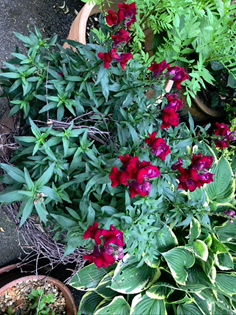
As you can see from the Antirrhinums, although not quite on the same level of skill, my efforts are doing the job and don’t look too bad!
I wonder what other attractive supports members have found for themselves?
The City of London might not be the first place that you would look to understand how nature conservancy developed in this country. The Wildlife Trusts, the umbrella organisation for local groups that care for their environment, makes it clear that they owe their existence to the Society for the Promotion of Nature Reserves, for which Charles Rothschild, a partner in the merchant bank of N M Rothschild & Sons, was the catalyst.
I thought about him during Joe Beale’s excellent talk on Zoom to the CABAHS meeting on 17 May. Members learned a lot about biodiversity in the area of Greenwich Park, Blackheath and Charlton. We also learned how important it is for people to work together. Joe didn’t just mean small groups of concerned individuals, although those are crucial. He meant engaging with local councils and other bodies to make sure everyone’s interests and concerns are understood.
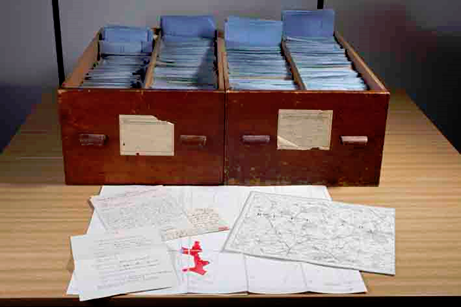
This is what Charles Rothschild did. He sent out questionnaires to local natural history societies, asking for nominations for sites that could be nature reserves: sites that were ‘worthy of preservation’. On the basis of these returns, the newly-created Society for the Protection of Nature Reserves published a list – Rothschild’s List – and sought government intervention to protect the sites. Here is the list, published in 1915.
Joe also brought home the importance of keeping records over time so that measurements of improvement and, sadly, deterioration have value. In the link above The Wildlife Trusts also presents an analysis of the condition of Rothschild’s Reserves, 100 years on.
This document features a pie chart of habitats, 2% of which are pavements. I wonder if our very own Terry might well be responsible for some of that, based on what he told us he was up to at the end of his road!
Charles Rothschild was an extraordinary man by any measure of means. His collection of fleas, now the national collection of fleas in the Natural History Museum, was lovingly catalogued by his daughter, Miriam, who was herself a powerful advocate for nature, advising the Prince of Wales on the creation of his garden at Highgrove.
One of his fans is sports- and nature-writer Simon Barnes, whose book, Prophet and Loss: Time and the Rothschild List is available on Kindle for only £2.37. If members were to buy the book (profits to The Wildlife Trusts) they could buy a cake from the WI at the CABAHS community day at Charlton House on 30 May and still have change from a fiver!








 Charlton and Blackheath Amateur Horticultural Society