What’s to be done?

At the end of August, my hostas are looking a bit ragged. They have had a tough year. Forced into early growth by a warm spring, a frost scorched the young leaves of many of the plants, particularly the green leaved varieties, which seem particularly susceptible to a late frost. Overcoming this early obstacle, the hostas forged on to produce lots of leaf and looked absolutely splendid in May.  Strong winds then battered the leaves and here the larger leaved varieties suffered most. With foliage that was still comparatively young and tender they had not built up enough resistance to withstand the winds that barrelled down the side of my house. At one point they were all listing to one side like sailors who had been on ship for too long. Sum and Substance with leaves the size of elephant’s ears really struggled. A month of very hot temperatures has now left them looking very sad indeed. In a south facing walled garden they have basically been inside an oven and baked. Of course, hostas should not be grown in these conditions and in most years they have managed relatively well, but this year has done for them.  Additionally, these stressed plants are also more susceptible to the depredations of slugs and snails. For the first time, they have been given a liquid seaweed feed. I’m hoping this will cheer them up a bit.

Vija

Ed: Here’s a clip of Vija’s garden at the recent Open Gardens event. Hostas definitely looking a bit cheered up!

Mottingham Open Gardens

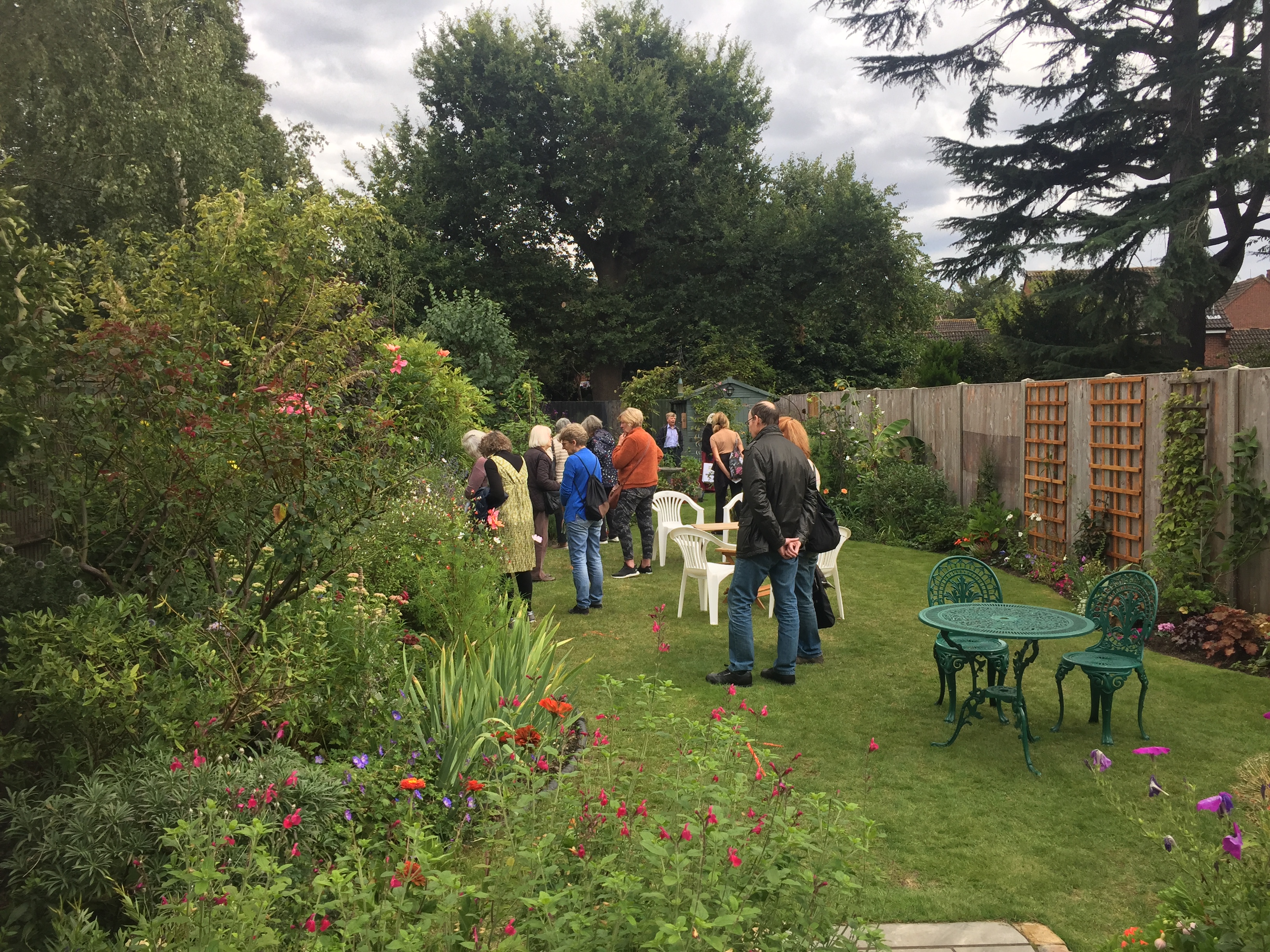
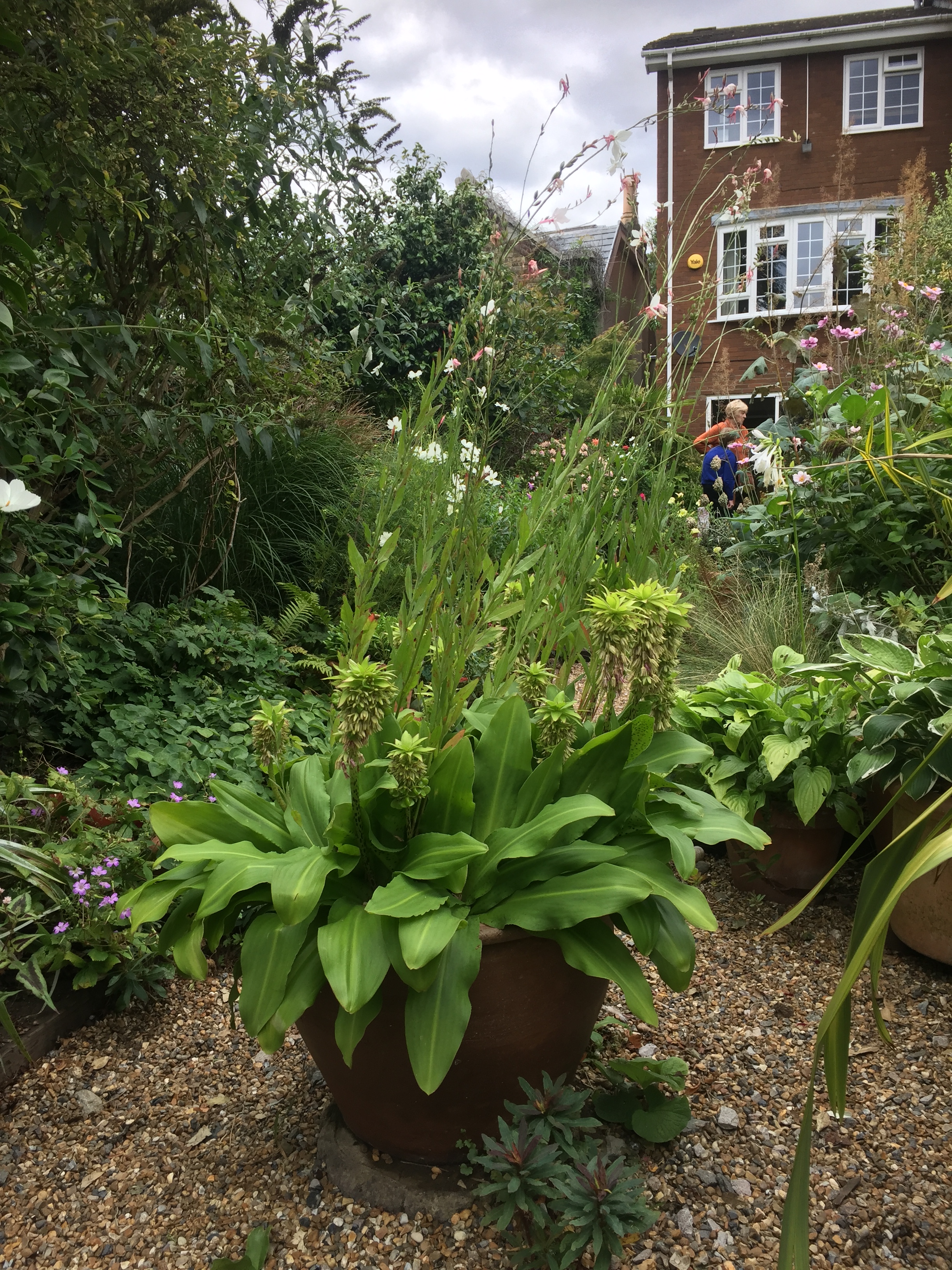
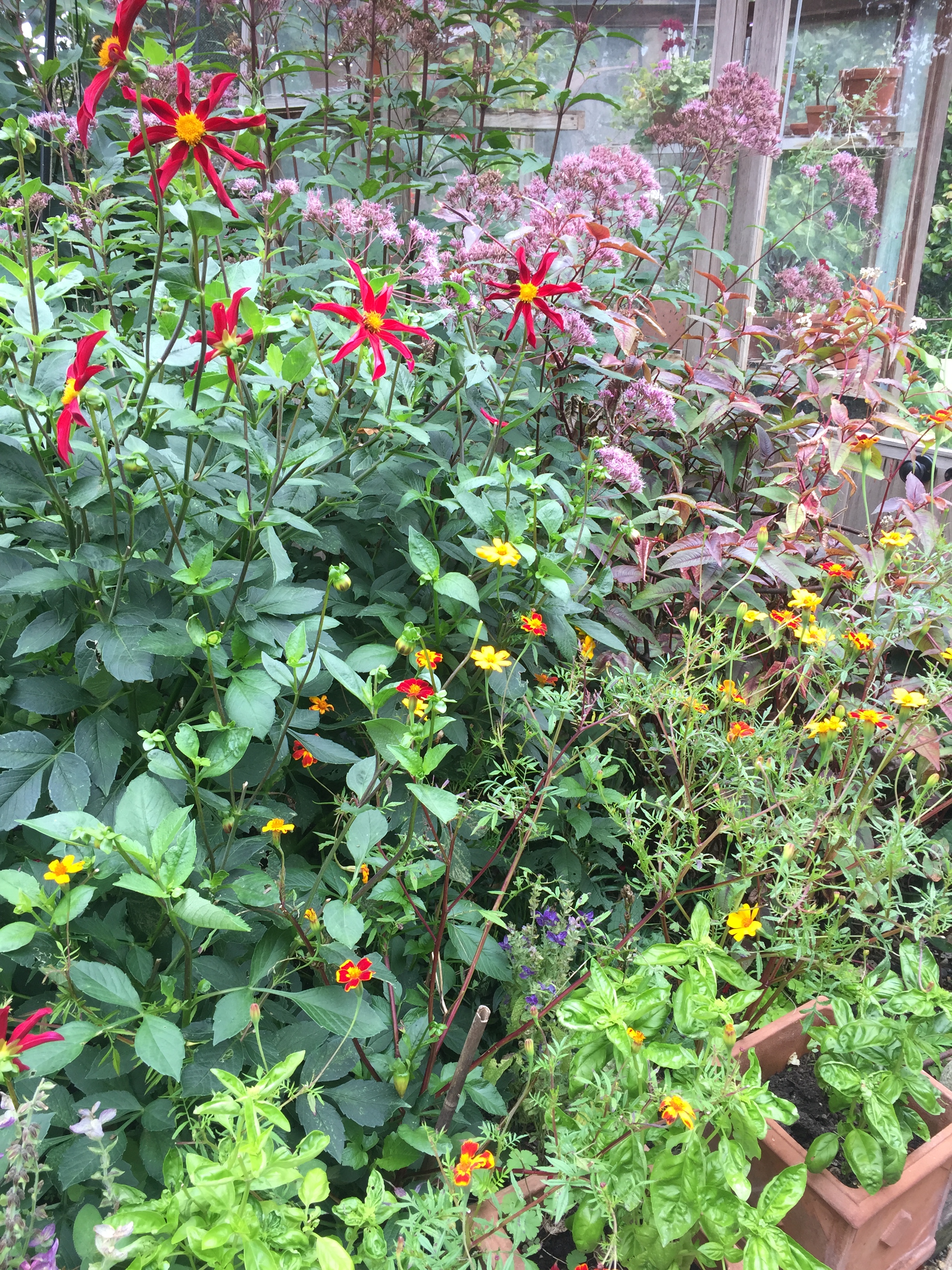
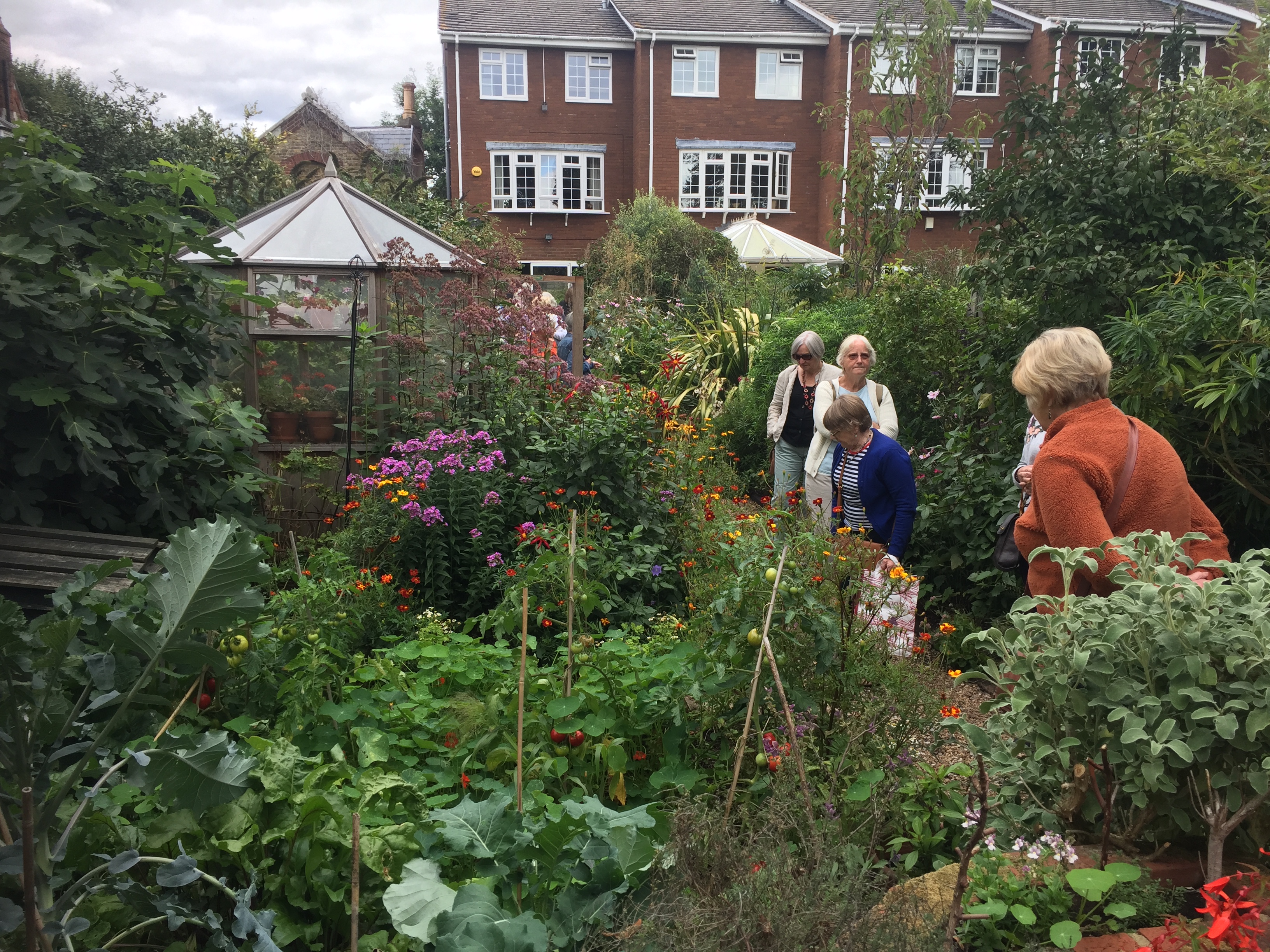
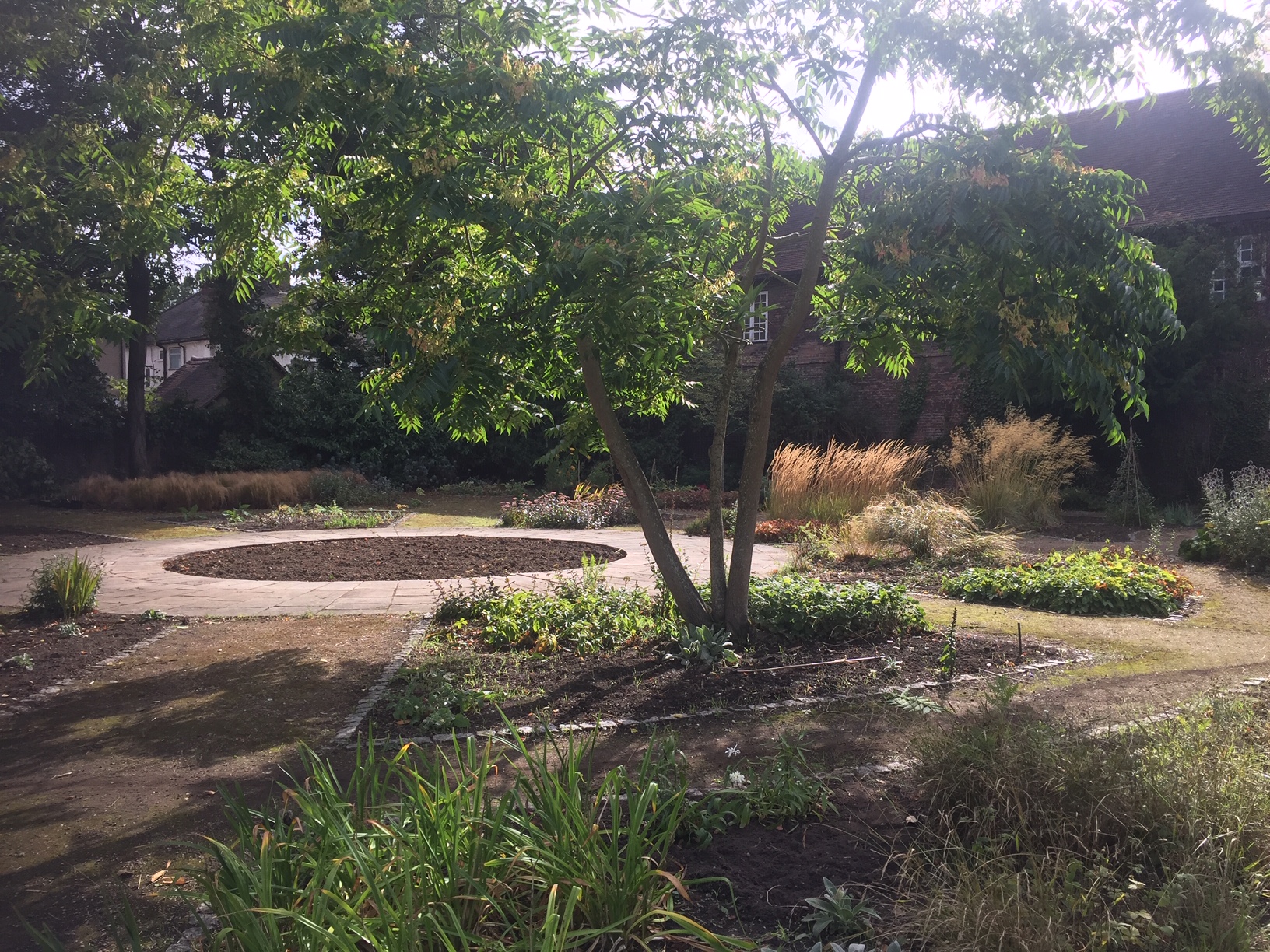
Thank you to all members who visited Fran, Viv and Vija’s open gardens over the August Bank Holiday weekend. They have raised £319 in total for Macmillan Cancer Support, such a very good cause. The gardens all looked fabulous and everyone had a great time.

246B0C5E-1C34-4A1E-8D91-BDEC7BD6242E

Fran’s garden

Viv’s garden

Vija’s garden

Thank you to everyone who visited!

Glut reactions

Whenever I am asked about my plans for dealing with a glut of produce from my allotment, my initial response is usually, “Chance would be a fine thing!”

I’m still on the lower slopes of allotmenteering, constantly marvelling at the (seemingly) effortless heights achieved by my neighbours.

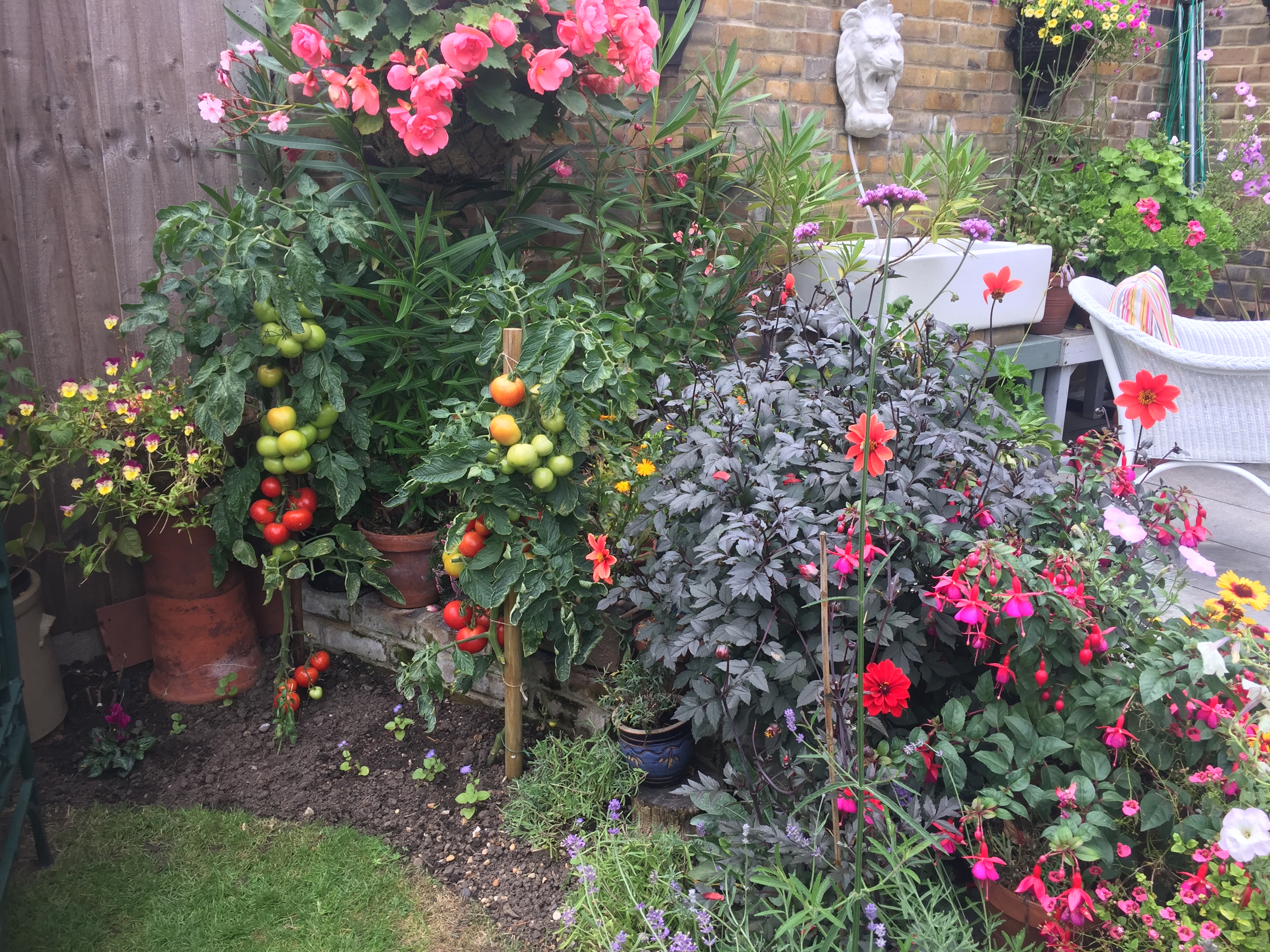
Storm Ellen did her best to scupper my chances of a substantial tomato haul, but thanks to a tendency I have to cram things close together in the ground – I can’t get over how much space I have! –  the plants and their stakes more or less held each other up. In spite of many hours agonising over the seed catalogues and subsequent cossetting of seedlings, I have to report that the finest and most prolific tomato crop on my patch this year comes from the gift of a neighbour.  In the early days of lockdown she realised that she wouldn’t be able to get any seedlings from garden centres in time so she simply dried the seeds from some piccolino tomatoes she had bought at the supermarket and planted them.

Amazing results!  She shared out dozens of seedings with nearby allotments, and now I am in the happy position of trying to decide what I should do to preserve this abundant harvest.

Last year, caught out with no plan for the cherry tomatoes on the eve of a holiday, I turned to Google for help.  A combination of the words, “tomato”, “glut”, “preserve” and “easy” produced a range of solutions (literally) involving vodka.

All I had to do was pierce the tomatoes, pop them into a sterilised glass jar, add the celery salt and chillies that I didn’t have (but that doesn’t seem to have been a problem), cover with vodka and store the jar in the fridge.  I was assured that the residual vodka would be the perfect base for a Bloody Mary, and that the tomatoes would form an impressive element of any tray of canapés.  Do they ever get that far?  Do they heck!  With admirable restraint, I have enjoyed the odd tomato or two straight from the jar over many months.

As holidays are more or less out of the question in 2020, I will have some more time to think about what to do with my expected glut of tomatoes and be on hand at the right time to deal with them.  I wondered what suggestions CABAHS members might have:  what is your favourite way to preserve tomatoes?

Perhaps we can start a separate section, sharing ideas for making the most of our produce.

Melanie

Butterflies and sunflowers

SC gatekeeper and Lysimachia

Beautiful picture of Gatekeeper butterflies enjoying Sharon’s garden. Lysimachia clethroides is grown here with Anthemis “Cally Cream” near a Hydrangea Limelight in a pot.

SC Vanilla Ice

These are Sunflowers, Helianthuis debilis “Vanilla Ice” growing daintily in Sharon’s garden, producing new flowers continually as she deadheads them.

Artistic licence

From time to time I suffer a degree of frustration when watching films which include shots of gardens or cultivation of some sort. I remember an adaptation of one of E. M. Forster’s novels which included a scene of a cottage with flowering wisteria climbing over the house and tulips and roses in the herbaceous borders. I’m not sure quite what kind of climactic freak would have forced all of these to be flowering at the same time.

In the Martian, Matt Damon cultivates potatoes in order to survive. But images of the potato plants showed thin spindly stems topped by a little  green growth. I don’t know of a potato that grows in such a thin layer of soil and which produces growth like this and crops well!  I’m not convinced that this is possible. OK perhaps I am being a little too literal here and should suspend disbelief for a while – after all it is only a film!

Martian-xlarge

When I visited Giverny some years ago in a wet May, I noticed that the wisteria on the bridge was blooming beautifully. When I took a closer look, I discovered that the blooms were silk!  I queried this with one of the gardeners and he told me that a studio was filming in the garden and this was what they had specified. Film studios spend a great deal of time, money and effort into creating interiors, costumes and the like which are authentic. A whole industry has been built up around ensuring the integrity of films. But when it comes to gardens there seems to be a lapse which takes place. Of interest or knowledge I am not sure. I wonder if there is an opening for a garden consultant somewhere?

Vija

CABAHS Plant Sale, 9 August 2020

Thank you to everyone who donated plants, or helped set up or bought plants, we raised an amazing £1,070 from the day! If you had to queue, we do apologise, but we are also pleased that it was so popular! We had sold out by 2pm. Half the funds will go towards the walled garden restoration, and half will be donated to the Greenwich & Bexley Community Hospice. Thank you again!

My lockdown projects, part 2

My own garden having reached saturation point and needing space to grow veg for this year, the solution has been that John, my neighbour has kindly given me the top end of his garden. We made many raised beds and a permanent compost bin and have made it into quite the feature with a raised platform which John has crazy paved and even created a half step to make it easier for me to access.

7

The whole thing has been made complete by the addition of a wooden pallet that he found, which I made into a planter, it now forms a balustrade side for the compost platform.

The next big venture was to create a green roof garden on top of the sheds. For the last year or so John has been trying to get the Council to sort out the shed roof which was leaking very badly. When it started to impact on my own shed I took over ringing the Council.  Finally, in March the Roofing Department felted the shed and we decided to go ahead with my plan.

Firstly, I laid a pond liner and sealed it in place (after it had time to shape and settle). Followed by two layers of weed suppressant, making a hole in the layers where the drain is. I made a pebble cage to put over the drain hole, which stops the compost mix blocking the down-pipe.

More gravel was placed around the edge of the roof which helps to contain the growing medium We filled a one tonne bag with a 75/25 aggregate/compost mix. The aggregate used included 100 litres each of Perlite and Vermiculite, pebbles and 10mm gravel.

All of the plants had to be carried/lifted up a ladder, to be placed on the roof. I divided the plants into three groups and started at the far end of the roof laying the compost mix in the first third, putting in the plants and then putting a layer of gravel on top.

This process was repeated in the middle, and then the third section of the roof by making sure the corners were done before climbing back on the ladder and finishing the compost and planting from there. I have had to add more of the mix and gravel at this end since as it was not as level as the rest.

It was a surprisingly quick process and I think it’s not bad for a 1st effort!

It was around this time I was told I was needed back at work, so, sadly my garden adventures will be slowing down considerably.  I did complete some tasks indoors as well, but the pull of the garden this time of year with the gorgeous weather we had, is much stronger.

Spring, Summer, Autumn – Garden. The Winter is for indoors!

Looking back over the last three months, it’s no wonder I would fall into bed most nights aching but extremely happy.

Juli