Two years ago my daughter bought me a houseplant which she had seen in a shop, but which she had not got a name for. It also didn’t look like anything I had seen before. Despite its rather delicate appearance, through the heat of summer 2020 it did extremely well in a south facing room, even much better than I had expected, but I was still no closer to identifying it.
Then, recently, while trawling through some photos of houseplants, I came across one of my plant! It is called Asparagus falcatus. Described thus: ‘Often known by the name, Sicklethorn, Asparagus falcatus is a variety of asparagus fern. It is a robust creeper, which is covered with thorns. The roots of this plant form swollen tubers that resemble sweet potatoes. This South African plant climbs rapidly by means of the sharp spines on its stems and is often used in that country as an impenetrable barrier.
Having finally identified the plant, the name now puzzled me. It looks nothing like asparagus and I wondered how it had acquired the designation.
And now, in March, I find a shoot has come up from the compost. It is brown and quite thin and whippy, with what look like small thorns the length of the stem, but which are not in fact spiky at all. What’s more, the tip looks very much like asparagus!
So there I have it: Asparagus falcatus is named for this tender stem which looks like an asparagus spear and which has ‘thorns’ along its length – ‘falcatus’ means sickle shaped or hooked.
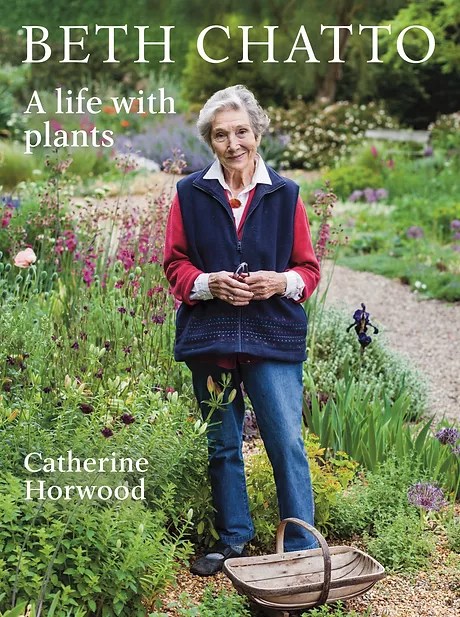
Many of us who are avid and long-time fans of Beth Chatto’s garden and her Unusual Plants Nursery will always remember that she won 10 consecutive Gold Medals at the Chelsea flower show. Her legacy is a garden she created which is unlike any other in the UK and abroad: it is unique.
Dr Catherine Horwood, Beth Chatto’s authorised biographer, introduced Beth Chatto to members and guests via last Monday evening’s Zoom meeting.
The talk was about Beth Chatto’s personal life and the influences that led to the garden’s creation. We learned that she happily gardened alongside her parents and had her own garden patch of cottage garden flowers. And we know that her hobby as a flower arranger as a young woman hugely influenced her interest in plant forms, textures and colours.
Dr Horwood described Beth Chatto as ‘tough’ and ‘steely’, and she must have been extremely determined from a young age, as she trained as a teacher during WW2, instead of taking the usual route of joining the Forces. An advantageous marriage to a fruit farmer, Andrew Chatto, with a life-long interest in plant ecology, set the stage for the purchase of land at Elmstead Market and the garden that followed.
But why did Beth Chatto design the garden the way she did? We know she was influenced by the terrain and various soil conditions, in addition to a natural spring at the lower level. How did her design of a ‘necklace of ponds’ separated by very narrow water channels come about? We know she was influenced by her friend and mentor, Cedric Morris in those early days and Beth Chatto acknowledges the huge debt to her husband at the start of her book, ‘The Dry Garden’, in which she states: “Without Andrew neither my garden nor a book would have been possible”.
Anna
Dr Catherine Horwood is an English journalist, author and social historian who has written extensively on horticulture and garden design and is the authorised biographer of Beth Chatto. A keen gardener for over thirty years, Catherine has created three gardens that have been open through the National Gardens Scheme and was for many years an organiser for the NGS. Her Facebook page gives you links to her other work on women gardeners, growing houseplants and you can check out her blog on growing vegetables. Her book on Beth Chatto won European Garden Book of the Year in 2020.
Catherine Horwood’s mention of Cedric Morris in her talk is a reminder of the close relationship between artists and their gardens. In 2016 The Royal Academy held a wonderful exhibition ‘Painting the Modern Garden, Monet to Matisse’, which devoted one room to Monet’s triptych of waterlilies. Many of us have had the pleasure of visiting his garden at Giverny, which is the subject of some of his most famous works of art.
Alfred Parsons (1847 – 1920) was an English artist who not only created his own garden, but designed for others. He provided the illustrations for many famous garden writers including Ellen Willmott (The Genus Rosa) and William Robinson (The Wild Garden). His friendship with Robinson led to him lending advice on the planting at Gravetye Manor.
Parsons had a wide mix of friends in both America and England, including John Singer Sargent and the novelist Henry James. Parsons’ paintings apparently mirrored the aspirations of Americans for an English garden and in 1899, when Henry James bought Lamb House in Rye, he invited Parsons to design the garden for him. It was here that he wrote some of his most acclaimed novels. Lamb House was much later bought by E.F. Benson and the view of the garden from the windows provided the inspiration for the Mapp and Lucia novels. In 2014, the BBC adapted these for a television series and used the garden at Lamb House for filming.
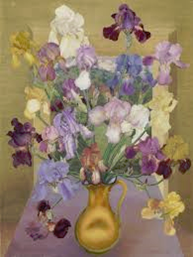
And so, to Cedric Morris. As well as painting portraits, still lifes and landscapes, Morris painted flowers extensively. In Higham Suffolk, he and his partner founded the East Anglia School of Art, but here Morris also indulged his passion for plants and, in particular, irises. He produced at least 90 named varieties and also exhibited at the Chelsea Flower Show. His gravestone reads ‘Cedric Morris Artist and Plantsman’.
I am often struck by how much a beautifully designed herbaceous border, the Long Border at Great Dixter for example, resembles a work of art.
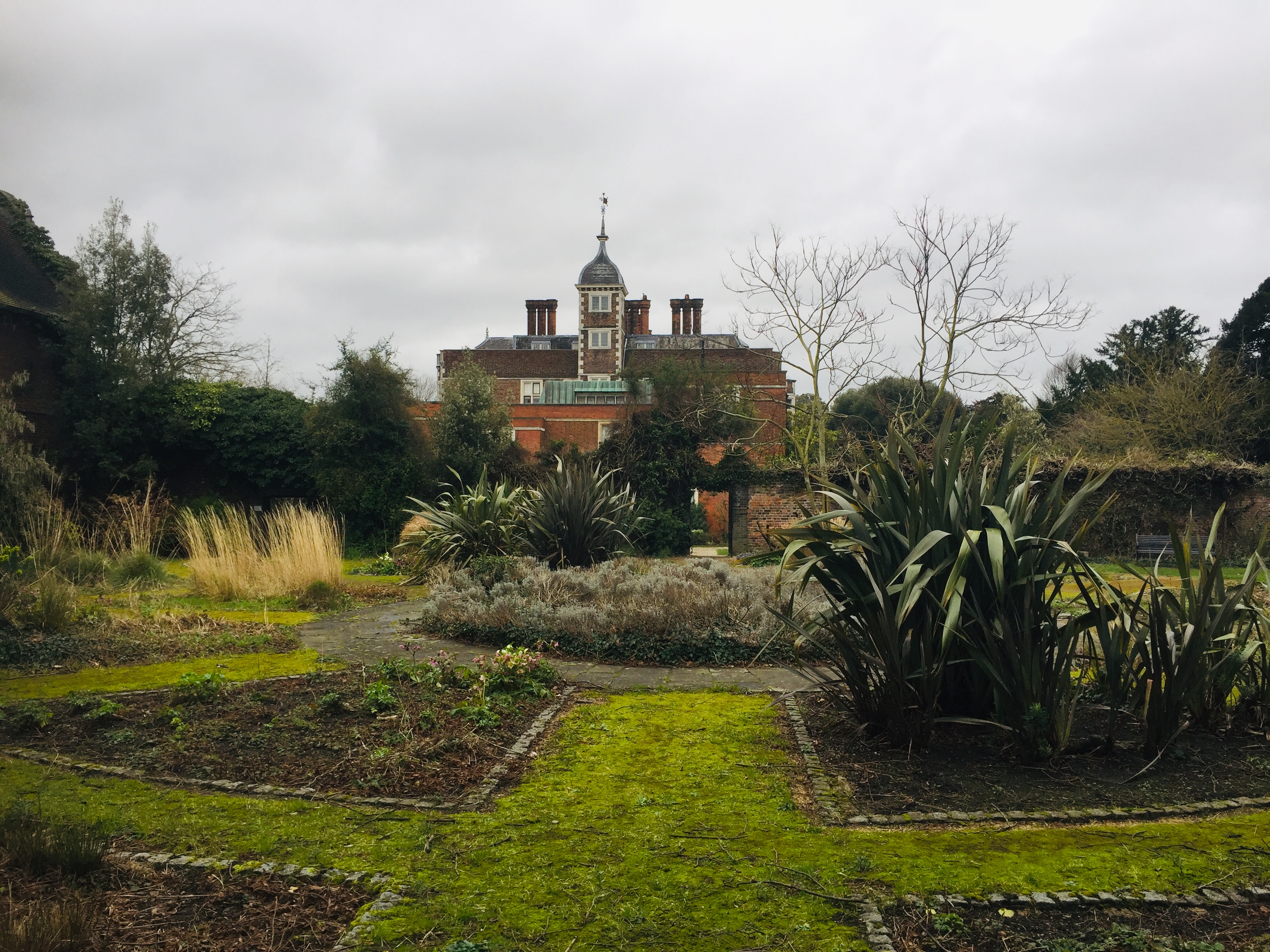
At the AGM a year ago, I nervously stood in front of the packed Long Gallery at Charlton House and gave a talk about the Old Pond Garden walled garden.
The Society has been meeting once a month at Charlton House for over 30 years, and yet a large proportion of our members (myself included until a couple of months prior to that) had no idea the walled gardens existed. Local Charlton members knew of course, but our membership is drawn from a wide area of South East London, so this was news for many of them.
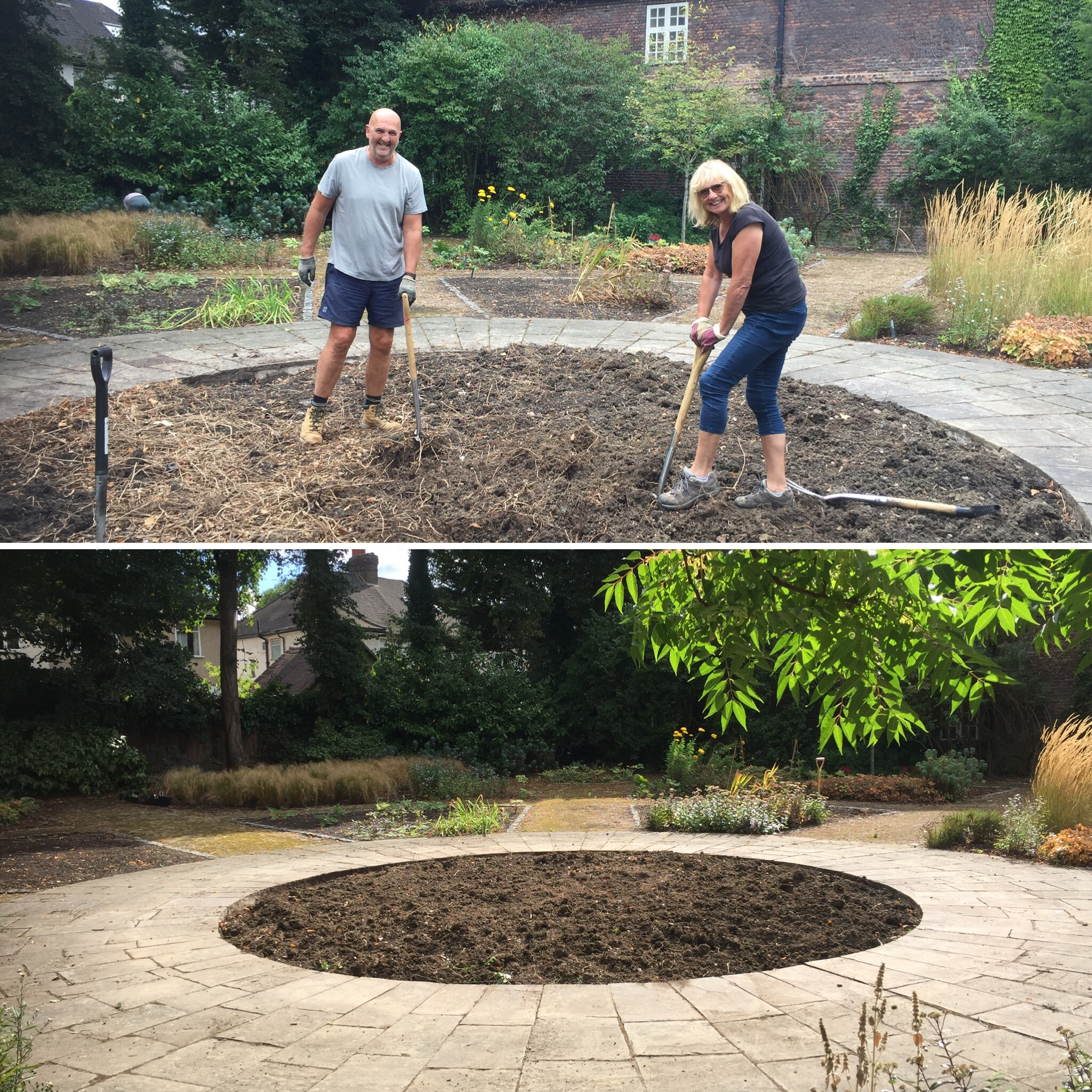
We proposed that a volunteer scheme should be set up to help renovate and maintain the gardens, since the RBG gardeners were too stretched to do more than trim and mow. We had the support of Royal Greenwich Heritage Trust, and with their help had applied for some funding from the Greenwich Neighbourhood Growth Fund.
But it was a bit of a leap of faith- CABAHS has only ventured into volunteering once in its history, back in the 1990’s, when members helped run the garden and greenhouse at Greenwich Hospital. So in February we launched the volunteer scheme in the garden, on the weekend of Storm Dennis, with our carefully prepared flyers flying about everywhere, and everyone taking a quick look at the garden and running for cover (and coffee and cakes) in the House. But apart from the weather it was a success as we had 34 interested people sign up on the spot.
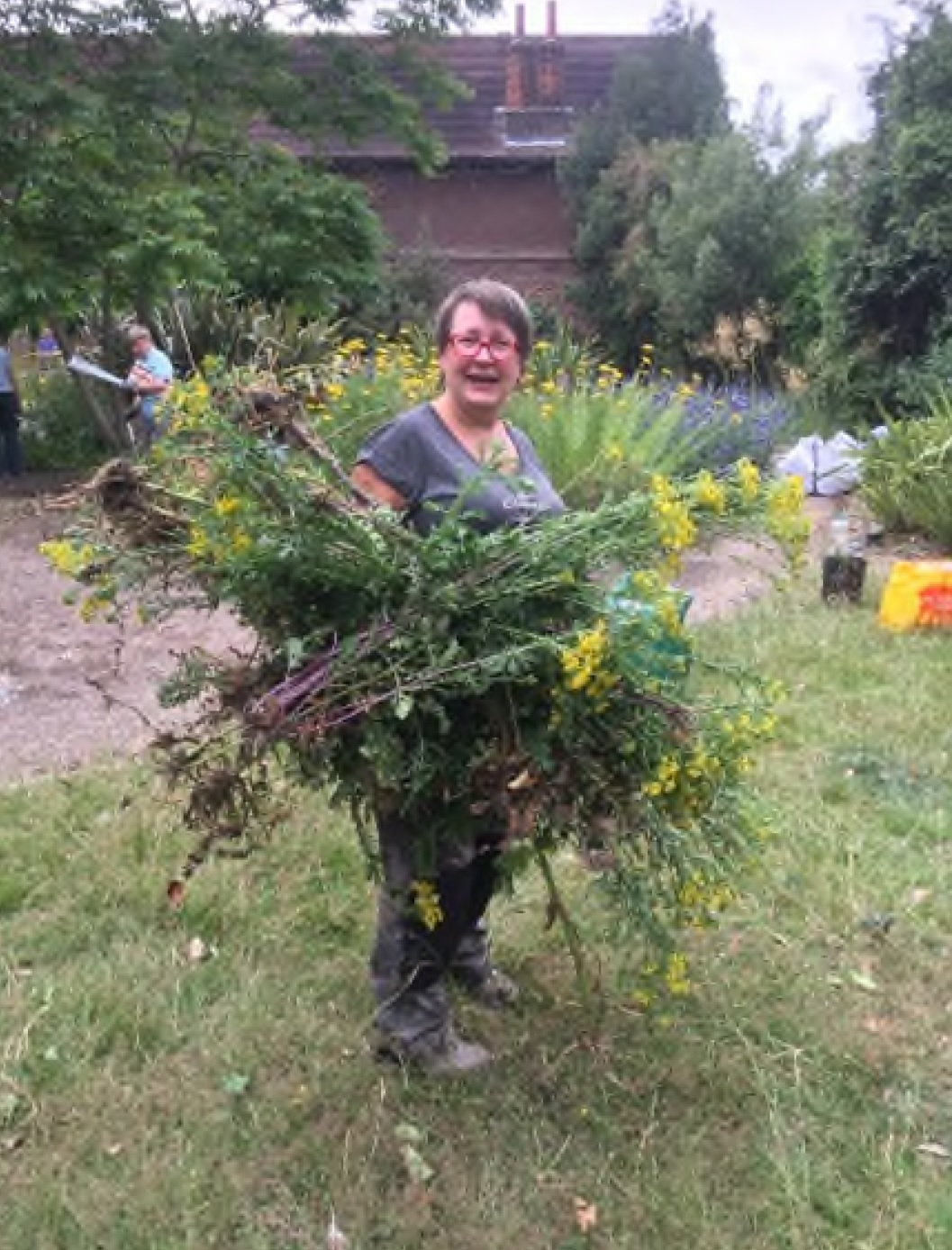
The volunteers started work very enthusiastically on a lovely sunny Sunday in late February, tackling the early weeds and brimming with ideas of what should stay, go or could be donated from their own gardens. So many discussions about what is a weed, whether the giant Phormiums should be kept, and whether forget-me-nots are invasive! We developed an Old Pond Garden committee, to administer and run the scheme (and deal with the interesting Health & Safety issues– eg don’t eat the plants). Volunteer sessions were very well attended, even as the nastier weather set in, and a tea and homemade cake routine developed alongside the weeding.
While enjoying our time in the garden, of course world events were catching up with us and we had to close the scheme on March 21st as the first Covid-19 Lockdown hit.
During that first Lockdown, the weather decided to become unseasonably hot, which was nice for all of us stuck at home, but totally fried the primroses and snowdrops we had planted in the garden. Behind the scenes, the Old Pond Garden committee carried on planning. Melanie and Kay filmed a 2 minute clip of the garden for the Greenwich & Bexley Hospice Open Gardens, which raised our profile tremendously and helped with funding for the Hospice.
June 30th and we were back on track! But by now we had even more volunteers, and they included local garden designer Jason Carty. The very professional and lovely planting plan that Jason came up with was quickly adopted and the Volunteers set to with renewed energy and enthusiasm.
After the March-June shortages of compost and seeds, it was great to be able to swap plants again, and the garden became a useful exchange point. We had to add antiseptic hand gel to our Health & Safety rules, but most gardeners wear gloves anyway and we learned all about the importance of hand cream after a grubby planting session! Homemade cakes were replaced with cellophane wrapped biscuits, and work carried on.
By August the garden beds were clear enough to be able to hold a Plant Sale with all plants grown and donated by members (THANK YOU!). There were also displays of the gardens in past times and our plans for the future. The public turned up in droves and we sold out by 2pm. Even the Mayor of Greenwich visited just in time to pick up the last of the plants, and we made over £1,000, for the garden fund and Hospice.
Other creative achievements: Some volunteers cut the remaining lavender in the garden, to dry, and other volunteers made bespoke CABAHS Charlton House Lavender Bags (applying for copyright!) for sale. The old cherry tree stump was dug up, after Herculean effort from David, and made into a wildlife area for the Stag Beetle larvae we disturbed. A leaf store was built, in readiness for Autumn leaf fall, to recycle the goodness back into the garden. A “Grand Designs Luxury Shelter” has been built, unbelievably from old building hoardings though you would never guess, and is now hidden in one corner of the garden. With coat hooks for volunteers’ coats, so practical!
In September we received £6,000 funding from Greenwich Neighbourhood Growth Fund, a huge boost for our planting plans. The committee negotiated a 50% trade discount with Provender Nurseries and went on a shopping spree.
In October we took delivery of a new bench seat, to commemorate CABAHS 70th Anniversary, kindly funded by members subscriptions. We also received interest and some practical help from students from the University of Greenwich Landscape Architecture department. By November the second Lockdown had hit, but this time the weather was being more normal and plants were becoming dormant anyway. We got back to work in December, and carried on planting in the mild weather. There was a wonderful surprise from the Worshipful Company of Gardeners, who awarded us £500 to buy some special plants for the garden (big thank you Melanie for applying!). In the week before Christmas, volunteers fashioned stylish wreath decorations forthe gates from leaves and berries from the garden itself and a socially distanced mince-pie-fest, courtesy Charlton Bakehouse, concluded the year.
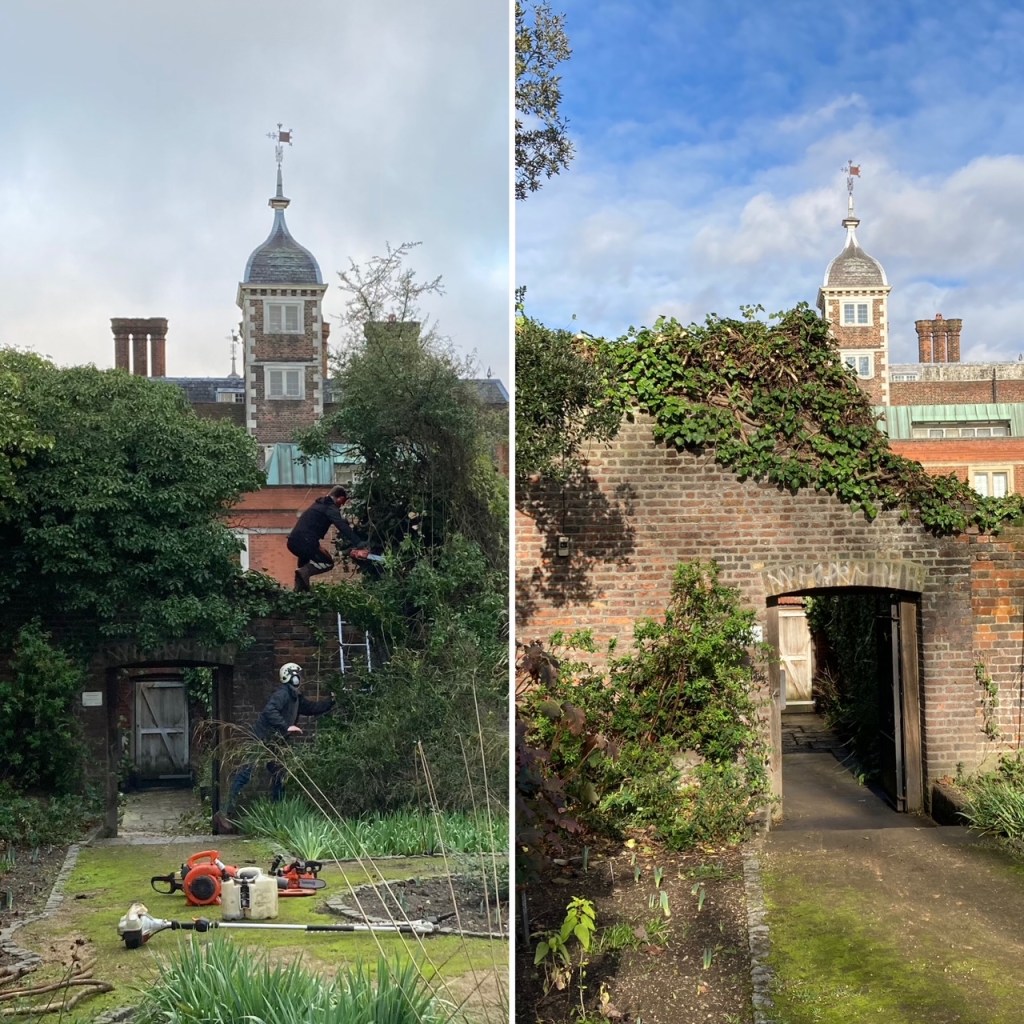
January came and brought the Third Lockdown, but the garden is coping fine with two local volunteers a week popping in to check it over. The tree surgeon Amber Treecare paid a longawaited visit in the first week in February to give the garden a haircut. So much better and lighter, with a lot of overgrown Pyracantha removed and the ivy trimmed to the top of the walls. You can see the House properly again!
As we await the vaccine roll out, lots of virtual planning has been going on, with a new application for funds to extend the Volunteer scheme into the Long Borders garden in 2021. We hope to include the fabulous ancient Mulberry Tree enclosure in our care too, keeping it weed and rubbish free. Such a lot to look forward to and be grateful for.
See you in the garden soon, more volunteers always welcome!
Kathy
Grateful thanks to all our Volunteers, and the Old Pond Garden committee: Vija, Terry, Kay, Angela, Mandy, Melanie, Juli and Jason. Also to Tracy, Edward and the staff at Charlton House.
I have spent some time over the past two days trying to protect the more tender plants I still have outside. The greenhouse is full and there is nowhere else for anything to go, short of bringing everything indoors! I therefore have varying layers of fleece and old sheets propped up with canes to keep them clear of the plants and all looking very ugly. With a weather forecast now predicting temperatures of -6 I have added blankets.
I look with envy to countries like Japan who so effectively seem to support their plants, making the supporting structure a thing of beauty in itself. The technique below is called yakitsuri and I first saw it in a Monty Don television series. This is designed to stop the weight of the snow from breaking the branches of the trees.
Similarly, the woven willow used to support border plants through the summer in our own gardens such as Great Dixter is not only functional, but looks nice.
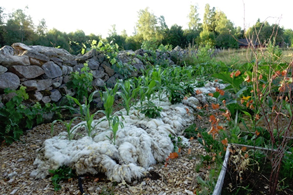
When Pat and I visited in a brief respite from lockdown in 2020, to protect dahlias from slugs at Great Dixter, they had used sheep’s wool spread out over the soil at the base of plants. Where this was dark brown it worked, but the white sheep’s wool was not in the least appealing and detracted from the overall beauty of the borders.
(Photo NOT from Great Dixter, just an example.)
There is an art to protecting your plants in winter (or summer) in a way that looks attractive, or at the very least not as offensive as my own efforts and is which not damaging to the environment. I have yet to master it.
I recently attended a lecture (on Zoom of course!) about Thomas Gainsborough and his connection to the English landscape. Many people will be familiar with his portraits, but the landscapes in the background are not always commented on so widely, unless it is the painting of Mr. and Mrs. Andrews, which seems to be the subject of a huge range of interpretations (not all repeatable in a horticultural blog perhaps).
Heart of Oak – Royal Navy Anthem
The 18th century was a period of great upheaval – the South Sea Bubble burst in 1720 triggering a financial panic; in 1721 the country had its first prime minister in Sir Robert Walpole; in 1739 Britain declared war on Spain; in 1745 Bonnie Prince Charlie landed in Scotland to claim the British throne; in 1756 the Seven Years war between Britain and France began; there was unrest both in America and at home and throughout this period, there was a Hanoverian king. It is all too easy to forget that two of the great names associated with landscape architecture, William Kent and Lancelot Brown, were working against this background, with Brown finding little favour with the ordinary person by uprooting and moving whole villages when they stood in the way of his designs.
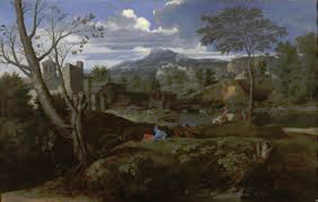
It is also no coincidence that Brown, Kent and their peers were creating landscapes which came to be seen as quintessentially English. Reacting against the formality of the classic gardens which were inspired by those on the continent and France in particular, they designed gardens that were intended to reflect the ‘sinuous curves’ of the English countryside. Ironically, Brown, who never travelled outside the shores of his home island, was inspired by the paintings of French artists such as Poussin.
Nicolas Poussin Landscape with Figures c1646
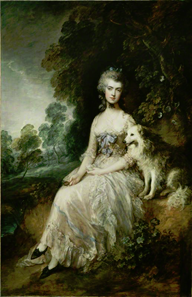
In the background of Gainsborough’s paintings, this same concern with the natural is evident. Even in his most famous portraits, for example the one of Georgiana, Duchess of Devonshire and the actress Perdita. Both show an English landscape populated by English trees, most commonly the oak.
Mrs Mary Robinson (Perdita) by Thomas GainsboroughDuchess of Devonshire by Thomas Gainsborough
Apparently, as Gainsborough was not a ‘plein air’ artist, in order to remind himself of the shape of the oak he would arrange stems of sprouting broccoli in front of his easel!
This tension between what is an English garden and what is from mainland Europe has influenced garden design throughout history.
With the RHS encouraging people to plant a tree in their Roots for Remembrance, a nationwide memorial initiative, it seems an appropriate time to think about the role of the oak in English landscape culture.
The Royal Greenwich Heritage Trust has just launched an online exhibition from the borough museum archive, including a place where residents can record their personal experience of living through the pandemic. Most of the featured ‘tales’ are from Charlton, but the idea is to collect stories from all over the Borough.
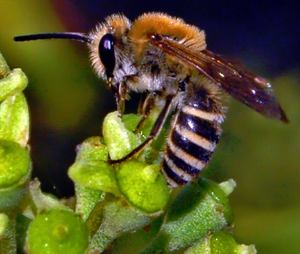
CABAHS Committee member Paula has been grateful for the distraction of wildlife-watching during the lockdown, and has been reading up about it. Paula’s garden style is “not manicured” but she does like to keep things under control – things such as ivy. She says that ivy can cover a multitude of sins and like it or not, it certainly helps out the local wildlife. Plus it is evergreen and makes a lovely backdrop about now, when everything else has lost its colour. She was intrigued to learn that there is an Ivy Bee, one to watch out for this year. The Wildlife Trust says that ivy bees are recent arrivals to the UK, being first recorded in 2001 and slowly spreading North. They look like honey bees and feed mainly on ivy nectar. There doesn’t seem to be anything bad known about them so at the moment they are welcome!
Paula has also been bird watching and says another “new” arrival to our gardens is the Collared Dove, a less bulky version of the native Wood Pigeon.
They are normally seen in pairs (a good Valentine omen maybe!) and come to bird feeding stations sometimes. They are not native but arrived from the Middle East in the 1950’s – a bit like the Green Parakeets that are now all over the South East, although not such a pest. They are mainly seed and berry eaters and if they raise a brood successfully they often return to the same nest site.
If you would like to find out more, try these links:















 Charlton and Blackheath Amateur Horticultural Society