What to look out for in the Old Pond Garden: August 2023

We hope you are enjoying a walk around the walled gardens at Charlton House! This month, look out for:

Coneflower (Echinacea purpurea ‘Magnus’)

Echinacea purpurea in the Old Pond Garden, Charlton House, August 2023

Coneflowers are part of the daisy family, originally from North America. Plains dwellers used the fresh roots and root juice to treat toothache and snake bites. Today many people take Echinacea supplements to prevent colds and boost their immune systems. ‘Magnus’ has large pink flowers and orange-brown central cones – bumblebee heaven!

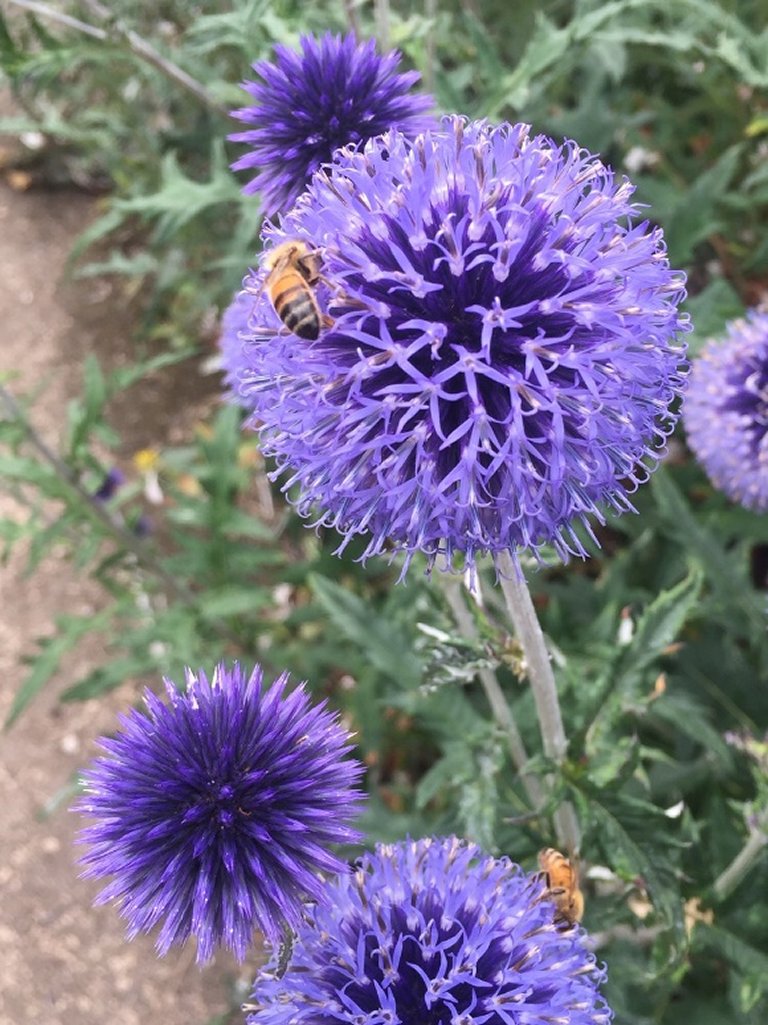
Globe Thistle (Echinops ritro)

Echinops ritro in the Old Pond Garden, Charlton House, August 2023

With spiky leaves and bristly metallic blue flowers, globe thistles make a great architectural choice for the back of a sunny border. The flowers are extremely attractive to bees, butterflies and other insects and it makes a good cut flower. This is a plant that we prefer to cut the seed heads off before they drop their seeds – they spread VERY easily!

Continue reading What to look out for in the Old Pond Garden: August 2023

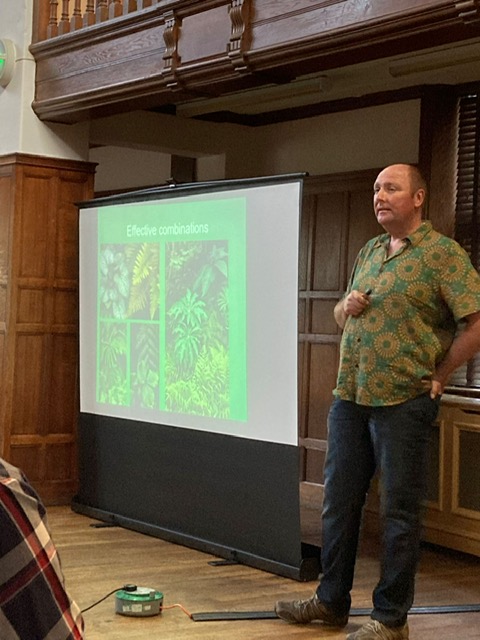
July 2023 Talk: The Jungle Garden

Our Speaker, Philip Oostenbrink, has been the head gardener at Walmer Castle since 2020 and taught horticulture in the Netherlands for 8 years prior to coming to England. He gave  a fascinating and visually illustrated talk on the increasingly fashionable Jungle Gardening. He described how to create at home a garden or patio full of lush, green foliage plants and how to combine different leaf shapes and textures. He said he has been passionate about plants since early childhood, describing himself as a “plantaholic”. He currently holds 4 National Plant Collections. His stall at the Hampton Court Flower Show this year won a gold medal. He said he was inspired by the tropical Tresco Abbey Gardens (see our previous talk on this) and Will Giles’ Exotic Garden in Norwich.

Continue reading July 2023 Talk: The Jungle Garden

Prior St Allotments Open Garden 2023

Like most of our members, I always enjoy visiting the Open Gardens Festival in support of Greenwich & Bexley Community Hospice, and I think the range gets better each year. So many special gardens on display, but I always make a point of visiting the Prior Street Allotments because they have a very different vibe, being working gardens. I’m sure in reality the plot holders do lots of scurrying around before the Open Day, but it looks just effortless and wonderfully “been there forever”.

The site is tucked away behind Prior Street in Greenwich and is made up of just 18 plots (with a huge waiting list, before you ask!). This land was part of the Nunhead to Greenwich Park railway, which closed in 1917. The allotments were started on an informal basis in the 80’s and are now protected by the Allotment Act. They open once a year to support the Hospice, and they serve the best cakes and Pimms in Greenwich!

Continue reading Prior St Allotments Open Garden 2023

A tale of two gardens

One very warm and sunny Sunday in June, CABAHS members were invited to come and visit our member Juli’s garden in Plumstead – which she generously opened specially for us, in aid of the Greenwich & Bexley Community Hospice. Juli’s garden is in the middle of a dense housing estate, but it is pretty easy to spot by the large banana tree sprouting over the top of her wall. Her garden beautifully demonstrates what can be done in a small space with some greenery, lots of care, and a sense of humour!

Juli in her garden
Juli in her garden

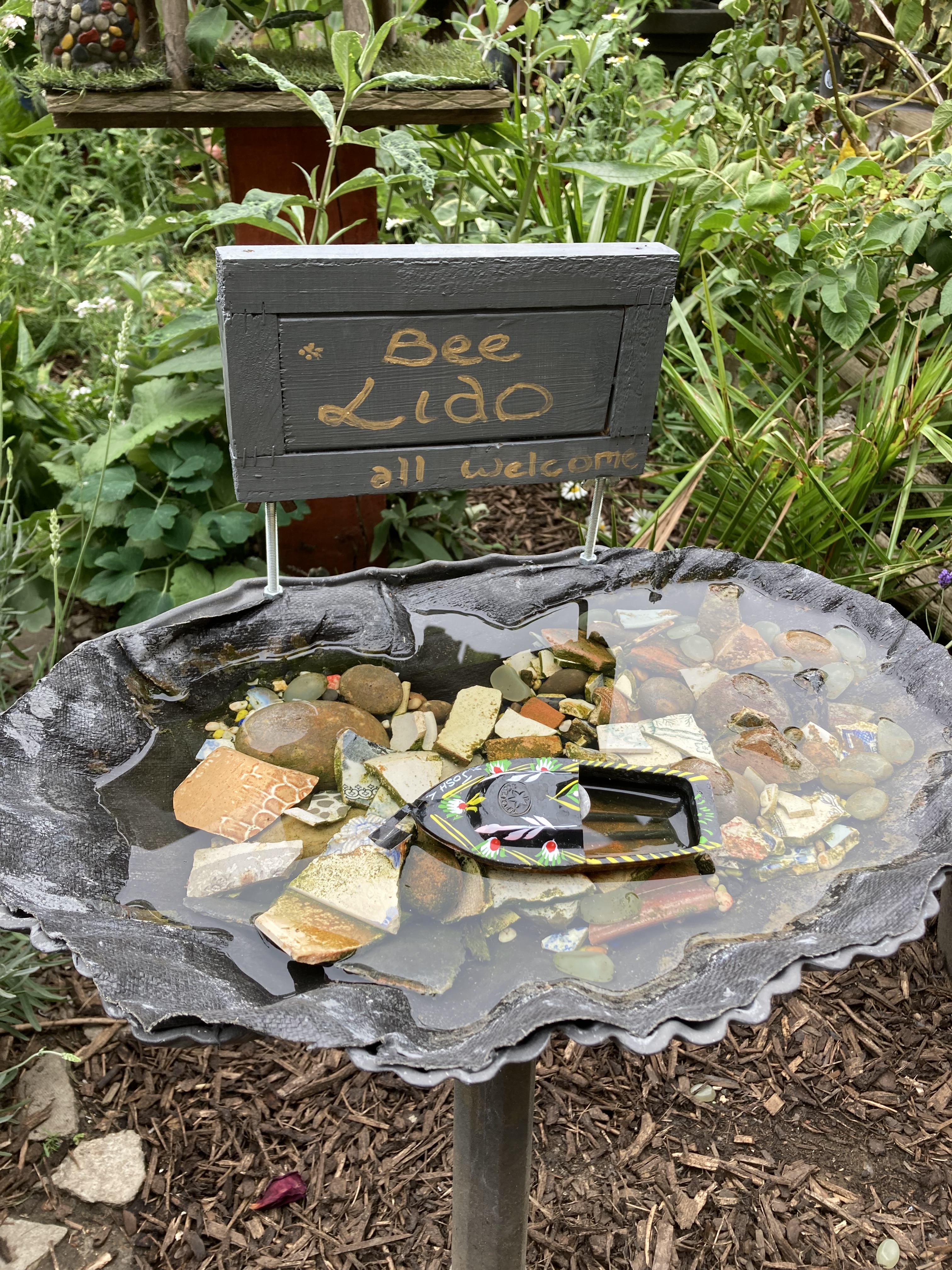
After the banana, the first things you notice are the Bee Lido and the fish pond, and I also liked the healthy looking lavender – which was a Charlton House reject that has been nursed back to full flower. Juli’s plant range includes her beloved roses, many perennials and even fruit trees. There are so many fun details, it takes much longer to properly appreciate than you would expect!

Thought for wildlife is everywhere in this garden, including Juli’s collection of friendly Bunnies – who were the stars at our Easter “Bunnies in the Beds” event.

Continue reading A tale of two gardens

“Our Greek host was kind enough to give me some seeds of this beautiful plant…”

How many of us have been on holiday, fallen in love with the flora of the region and maybe even recognised a plant as one that we know can be grown in UK, either indoors or out? The temptation is huge to bring back a few seeds, to buy some rhizomes at a market (yes, those Madeiran Agapanthus were hard to resist) or – if we’re visiting friends, to accept a cutting or two. But we now know that as well as being illegal, in doing so we risk introducing plant diseases and devastating an aspect of the horticultural world we love.

The RHS give some clear advice on bringing plants back to the UK from your holidays (ie: DON’T!), but also what to do if you decide that you are willing to take on the administrative load and expense to get hold of a particular plant.

Olive trees affected by Xylella in Gallipoli, Italy.
Image from Wikimedia Commons.
Olive trees affected by Xylella in Gallipoli, Italy.
(Image from Wikimedia Commons)

June 2023 Talk: Success with Seeds

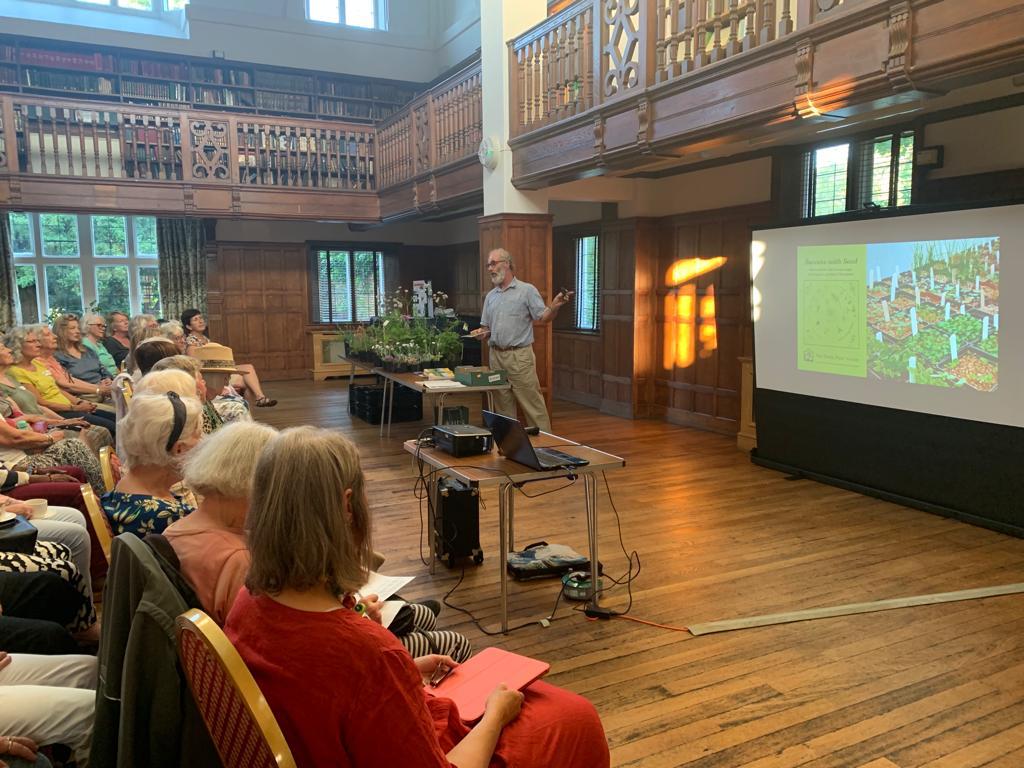
CABAHS welcomed back Tim Ingram who last gave a talk in the 1990s. Along with his wife, he is the owner of Copton Ash Gardens in Faversham. He has featured  in a wide range of publications and is co-author of Success with Seeds, a Hardy Plant Society Booklet published in 1997. He is a member of the Hardy Plant Society, Alpine Garden Society and the Plant Fairs Road Show. He is a very keen grower of  plants from fresh seeds, most of which he sources from his own garden. He gave a very informative visually illustrated talk on seeds with great enthusiasm which was catching.


He started the talk with a quote from George Bernard Shaw: “Think of the fierce energy concentrated in an acorn! You bury it in the ground, and it explodes into an oak! Bury a sheep, and nothing happens but decay.”

Tim described how he grew fresh seeds, and the conditions they need for successful growing, the how and when to grow different seeds. Seeds sold in Horticultural Garden Centres are grown to germinate easily at 20C. Fresh seeds may need different and specialist requirements. Seeds vary widely and some seeds are more difficult to grow. Seeds vary in size  and shape. The orchid is very small whilst the coconut is very large and size impacts on how they are sown and the conditions needed for growth. Some fresh seeds have to be sown  soon after they are picked, whilst others may be kept for a long time. Cowslips for example, need to be sown quite fresh in autumn and need a spot of outside winter cold to kickstart them. Early flowering plants such as bulbs and ericaceous need a cold bout to kickstart germination too.

Continue reading June 2023 Talk: Success with Seeds

Stella’s Scottish odyssey

The week didn’t start well. The train was delayed at King’s Cross and then got stuck behind a freight service so was an hour and a half late into Edinburgh. The visits, next day, to two lovely gardens near Peebles, about three quarters of an hour south west from the city more than made up. The Royal Botanic Gardens Edinburgh took responsibility for Dawyck in the 1970s. The gardens of this country estate are renown for their woodland areas and spectacular plantings of rhododendrons and azelas. All tastes in colours are catered for: from deep reds and oranges to more subtle whites and mauves. There are also areas covered in beautiful blue Meconopsis. A former owner, Sir John Naesmith was a patron of the plant-hunter, David Douglas (1799-1834) and there are splendid examples of his fir here as well as some impressive redwoods.

Dawyck Botanic Gardens

While we were in the area we decided to call in at Kailzie Gardens which are undergoing significant development. Their glasshouses were one of the first installed in the 1860s by the famous Scottish firm of Mackenzie and Moncur. We were fascinated to read about the restoration which involves much linseed oil to ensure the wood-framed structures last for another century and a half at least! The gardens themselves provide a peaceful but colourful sanctuary with herbaceous borders to inspire and walks with views of the lovely countryside beyond. We finished our outings with tea in a stylish courtyard café.

Continue reading Stella’s Scottish odyssey

Visit to Community Garden in Open Gardens Festival 2023

Given the hot weather for this year’s Festival and that this is our third, we focused on Gardens we haven’t seen before. So this afternoon we set off to Christchurch School Community Garden to see what was going on there. And we were pleased. It demonstrates what can be done with a pocket of land, off a busy main road, with some funding and lots of enthusiasm and knowledge – and effort. The description on the Festival brochure referred to raised beds for food crops, a community orchard, ornamental borders, a Forest School and a covered meeting hub. They also have a hugelkultur bed, a bee hive, a wildlife pond – and they were selling goji berry plants!

Continue reading Visit to Community Garden in Open Gardens Festival 2023

Never say ‘Never’

A few years ago I cleared out my greenhouse following the losses of the winter and dumped in my compost the remains of pelargoniums and other dead items. It’s always a little sad to lose much loved plants which have given you their best. I then had some fun ordering new plants to replace the old ones (and some others!). A couple of weeks later, I found several of my ‘dead’ pelargoniums lying in the compost and sprouting new shoots from the roots. Of course, I swiftly took them out and potted them up to achieve lovely healthy plants. I am now a little less impatient to discard anything that looks dead.

Continue reading Never say ‘Never’

What to look out for in the Old Pond Garden: June 2023

We hope you are enjoying a walk around the walled gardens at Charlton House! This month, look out for:

Catchfly (Silene armeria ‘Electra’)

Silene armeria 'Electra' in the Old Pond Garden, Charlton House, June 2023

Blue-grey leaves and hot pink flowers for weeks on end. An annual which self-seeds prolifically. It is called catchfly because there is a sticky area on the stems just below the flowers, which greenfly and small insects get stuck to. Feel it gently with your fingers!

Lamb’s ear (Stachys byzantina)

Lamb's ears (Stachys byzantina) in the Old Pond Garden, Charlton House, June 2023

Lamb’s-ear or woolly hedge nettle, is a species of flowering plant in the mint family, native to Armenia, Iran, and Turkey. Very drought tolerant. Loved by the wool carder bee, which combs or ‘cards’ the leaves to make a hairy nest to lay her eggs.

Continue reading What to look out for in the Old Pond Garden: June 2023