If you want to lift your spirits on a cold, grey, winter’s day, then this is the plant for you!
At the Tibetan Peace Garden, adjacent to the Imperial War Museum, on an amazingly warm and sunny February afternoon, I was greeted at the entrance by the beauty and fragrant flowers of an often underrated winter flowering shrub.
The creamy-white-pale yellow, tubular flowers with protruding stamens often appear on bare or semi-evergreen stems and in my garden they literally flower for months, from November-December through to March-April. I can view the masses of flowers from my kitchen windows which is a visual treat but really, it’s my neighbours who benefit from the spectacle and fragrance as the shrub is situated on the boundary wall.
At the Tibetan Peace Garden, the shrubs are situated in full sun and their 2×3 metre spread on either side of the entrance pillars acts as a welcome into the garden enclosure and also indicates they are absolutely loving their perfect, sun-soaked, location.
What to look out for in the Old Pond Garden: February 2024
We hope you enjoy a Winter walk around the walled gardens at Charlton House! This month, look out for:
Snowdrop (Galanthus nivalis)

The Latin name for snowdrop is Galanthus, meaning ‘milk flower’. They hang their heads to keep their pollen dry for the winter insects they are adapted to attract. When temperatures reach 10C the outer petals open up and this is the temperature at which winter pollinators like bumble bees can fly! Snowdrop sap contains natural antifreeze which allows them to recover quickly after a frosty night. People who collect snowdrops are called Galanthophiles and they pay huge prices for rare varieties.
Lenten rose (Helleborus orientalis)

The Lenten Rose is a perennial flowering plant and is part of the Buttercup family, so not a rose at all! Its common name comes from the fact it usually flowers between Ash Wednesday and Easter – the period known as Lent. Hellebores (Lenten roses) can be white, pink, purple and green and they cross with each other very easily so all sorts of colours can result. We are trying to keep to the pink ones in the Old Pond Garden and the white ones will go in the Glade.
Silk tassel bush (Garrya elliptica)

This is a vigorous bushy evergreen shrub with silvery-grey leathery leaves, originally from California USA. It is hardy but grows best in a sheltered spot so it loves the Walled Gardens. The male plant has wonderful catkins in Winter/Spring that look like tassels – look closely at the tassels, they have an amazing structure. The female plant is less commonly seen (we don’t have one here) but produces purple/brown fruits in summer.
Continue reading What to look out for in the Old Pond Garden: February 2024The View from my Window
Vija and Anna started these great posts about the view from their windows, and I thought I would add my bit. Really, in these cold, grey days of winter, it’s a bit odd that I should find the view from my window at all exciting. We have big patio windows which are unforgiving at this time of year and expose everything in the garden: the ragged border edges, uneven lawn, leaning obelisk (Storm Henk!) etc. But I can sit in my comfy chair looking out and now the leaves are all gone I can see all the way to the end fence..
…and I can Plan.

When I say I can see the end fence, this is because we took out a row of 20 ft high Leylandii trees last October. (Did we buy the house with them, I hear you ask? No, I actually planted them, one of those teeny gardening mistakes surely anyone can make..?) The idea behind getting rid of them is that it will let lots of light in, when next we have any. The stumps have been left, as I couldn’t face a stump grinder trolling through the house, so I need to Plan some sort of feature around them. (Maybe a birdbath on top of one..!)
A bonus is that for years and years I had been piling leaves and cuttings out of the way under the trees – so I am now left with some truly gorgeous compost! A little silver lining.
Continue reading The View from my WindowJanuary 2024 Talk: Flowers in Art


Ruth Cornett is a senior director of Heritage and Taxation at Christies and has previously given a talk to CABAHS about her garden at Eltham Palace Gatehouse. This talk focused on flowers in art. She said all gardeners in the way they visually create their gardens are artists, but not all artists are gardeners. Rather than describe the history of flower painting, she focused on how artists used flowers and plants to express themes – how through their paintings they send messages and use symbols and allegories. For example, paintings may comment on a name, be used for propaganda, as a tool for study, to make literary references, be used for educational purposes or to symbolise Christian stories. She illustrated these themes using famous artists from the Renaissance to the present day such as Rubens, Durer, Van Dyke, Murillo and in modern times Ravilious and Hockney.
For example, Ruth pointed out that Botticelli’s Primavera (1478-1502) is an allegory celebrating spring. The Laurel tree in the background of Georgione’s portrait of a new wife, Laura (1506) is a pun on her name and emphasis on her being a strong, loyal determined woman. The portrait of Edward V1 by Scrots (c.1540) is a good example of how paintings were used for propaganda purposes by the powerful. In this picture, the sun shines and looks down on Edward and the plants are growing towards him, whilst the Tudor rose in his hand shows that the Tudor Dynasty is moving forward. Ruth points to Durer’s The Great Piece of Turf (1503) a seemingly unordered collection of wild plants used to represent nature as an example of using paintings for study. Literary references can be seen in Millais’ Ophelia (1851), a character in Shakespeare’s Hamlet, where she is depicted in a naturalistic setting lying dead in a river covered in flowers – a painting which took him several months to create its content and structure. Before photography, paintings and prints were used for educational purposes and Ruth cites the Hortus Elthamensis Seu Plantarum Rariorum by Dillenius (1732) which obtained its plant specimens from the area around Eltham. A Christian story can be seen in Van Dyck’s (1613) table set with bread and wine which were used to represent symbols of Christ and wealth.
Continue reading January 2024 Talk: Flowers in ArtJanuary 2024 Show Table
Well done to CABAHS members who managed to find something to display on the Show Table in the depths of freezing January, it was lovely to see. Congratulations to Sian for winning this month’s Best on the Table prize with her camellias.
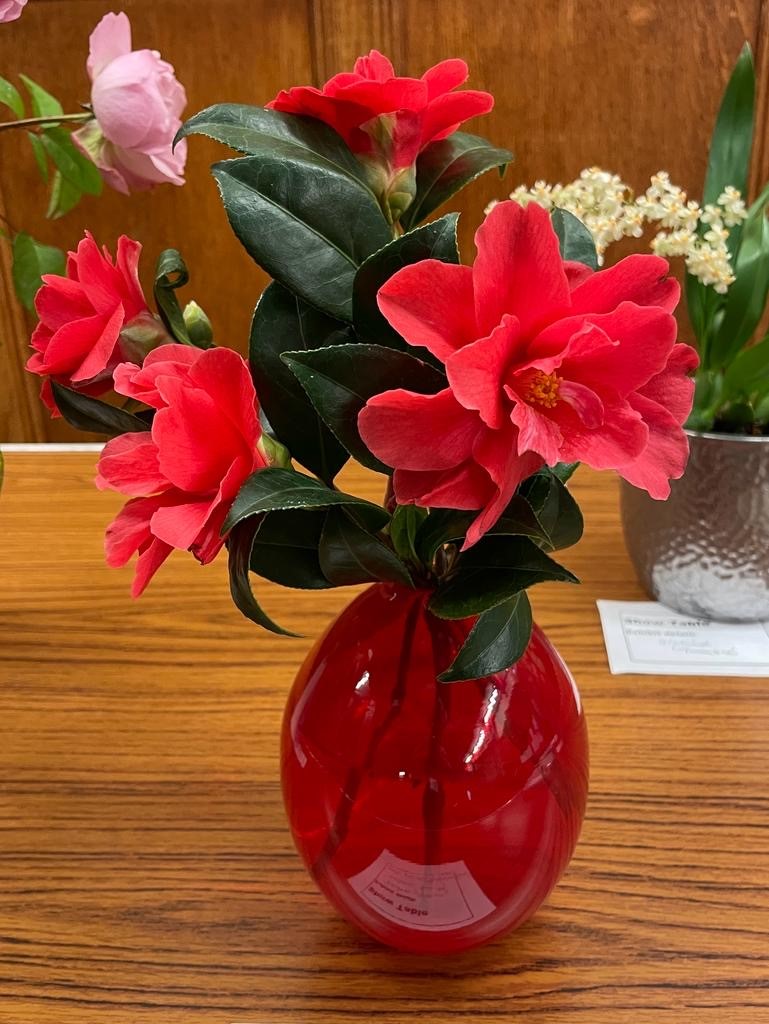


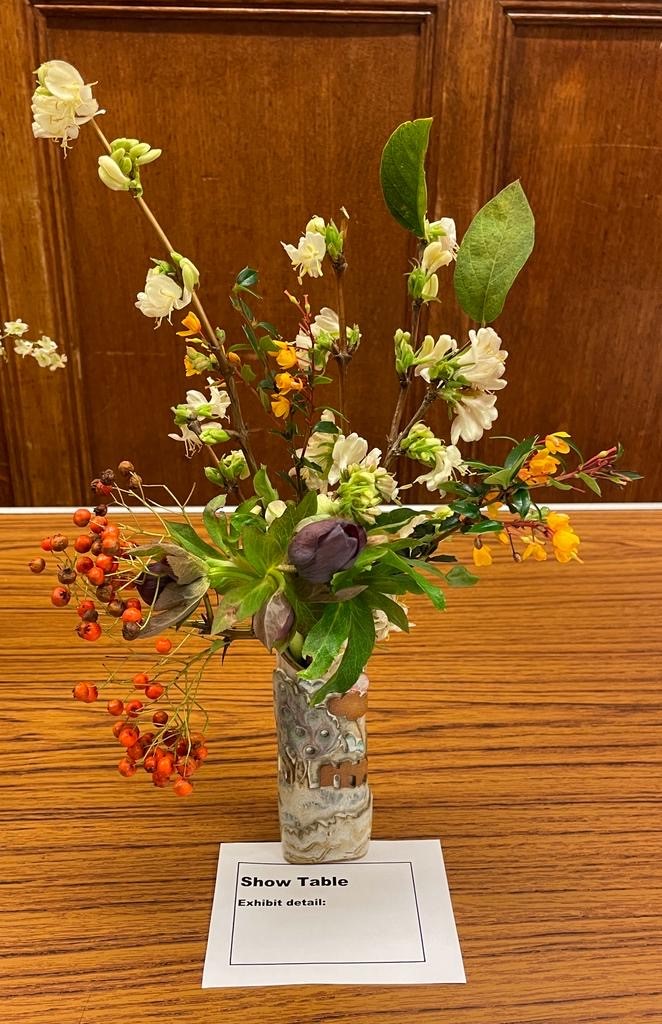
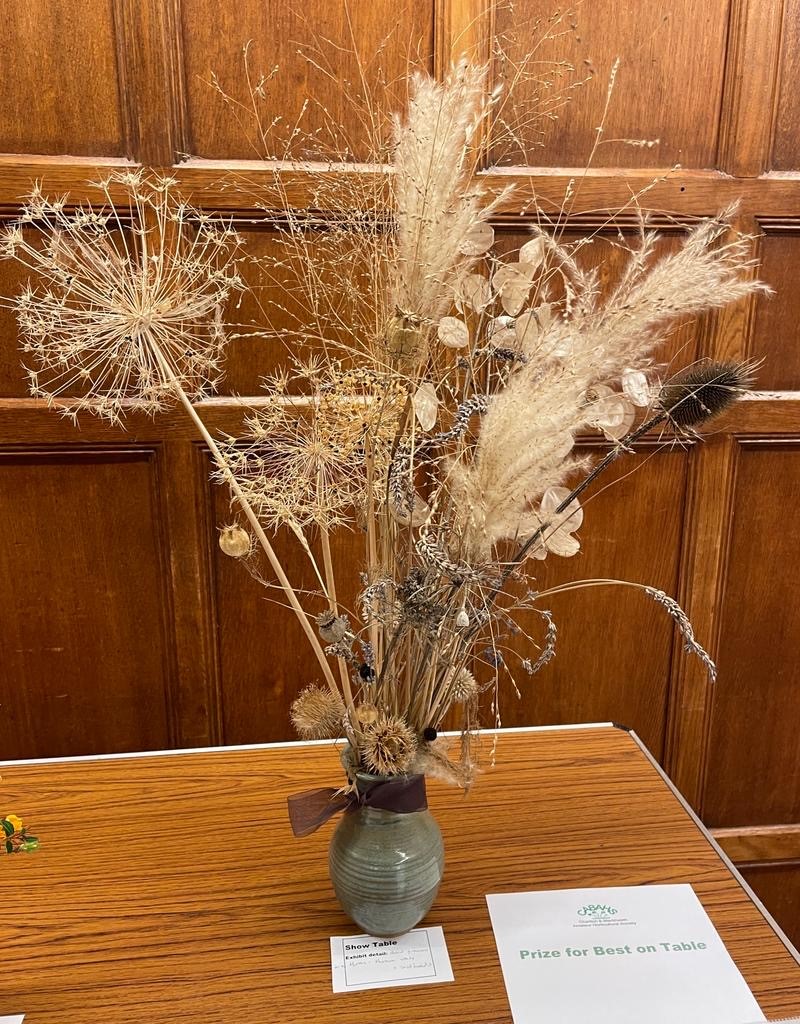

Kathy A
Pat’s 10 jobs for January…
To be honest it has been so wet and now so cold that the ground is frozen but if conditions return to normal maybe you can try some of the following…..we live in hope!
1. Today according to the RHS is National Houseplant Appreciation Day so try giving those houseplants some attention and if they’re not looking good, treat yourself to a new one checking you have the right conditions for it.
2. Remove old hellebore leaves right back to the base to show off their flowers and to stop any leaf spot or other diseases from spreading.
3. All my violas in my front window box have died and a good gardening friend reminded me it could be vine weevil larvae chewing the roots which I haven’t had for ages so turn out the window box and check for those grubs and replace with fresh compost.
4. Start pruning roses cutting back with a slanting cut to above a bud and use the resulting prunings for cuttings 6 to 12 inches long and insert into either a pot or the ground so that 2/3 of the cutting are below the soil. They take a good while to root but its worth the free plants if they root.
5. Winter prune wisteria by cutting back shoots to 3 or 4 buds from the main stem.
6. Cut back really tatty herbaceous plants but leave anything with hollow stems or stems and foliage that may harbour overwintering insects. I started cutting back a bay tree until I saw the ladybirds amongst the stems.
7. Seed potatoes can be chitted from now on by placing them so they don’t touch in boxes, egg cartons are ideal, and placing in a light frost free place. Don’t forget to label the variety.
8. Prune established soft fruit bushes such as gooseberries, red and white currants removing any dead wood and cutting back main shoots by a quarter. If grown as a bush aim for a goblet shape with an open centre to aid air circulation.
9. Look at your seed catalogues and order anything you especially want before they run out.
10. Make sure to have some scented flowering shrubs either in the garden or in pots for pollinators to include winter honeysuckle, sarcococca, daphne and viburnham and aim to plant some by your door so you can catch the scent.
Happy gardening all!
Pat K
Ed: The RHS has a shop at Bluewater, perfect for browsing for some houseplant updates, all UK grown. (Note they don’t take National Garden Vouchers though)



Plant of the Month: Iris unguicularis (January 2024)
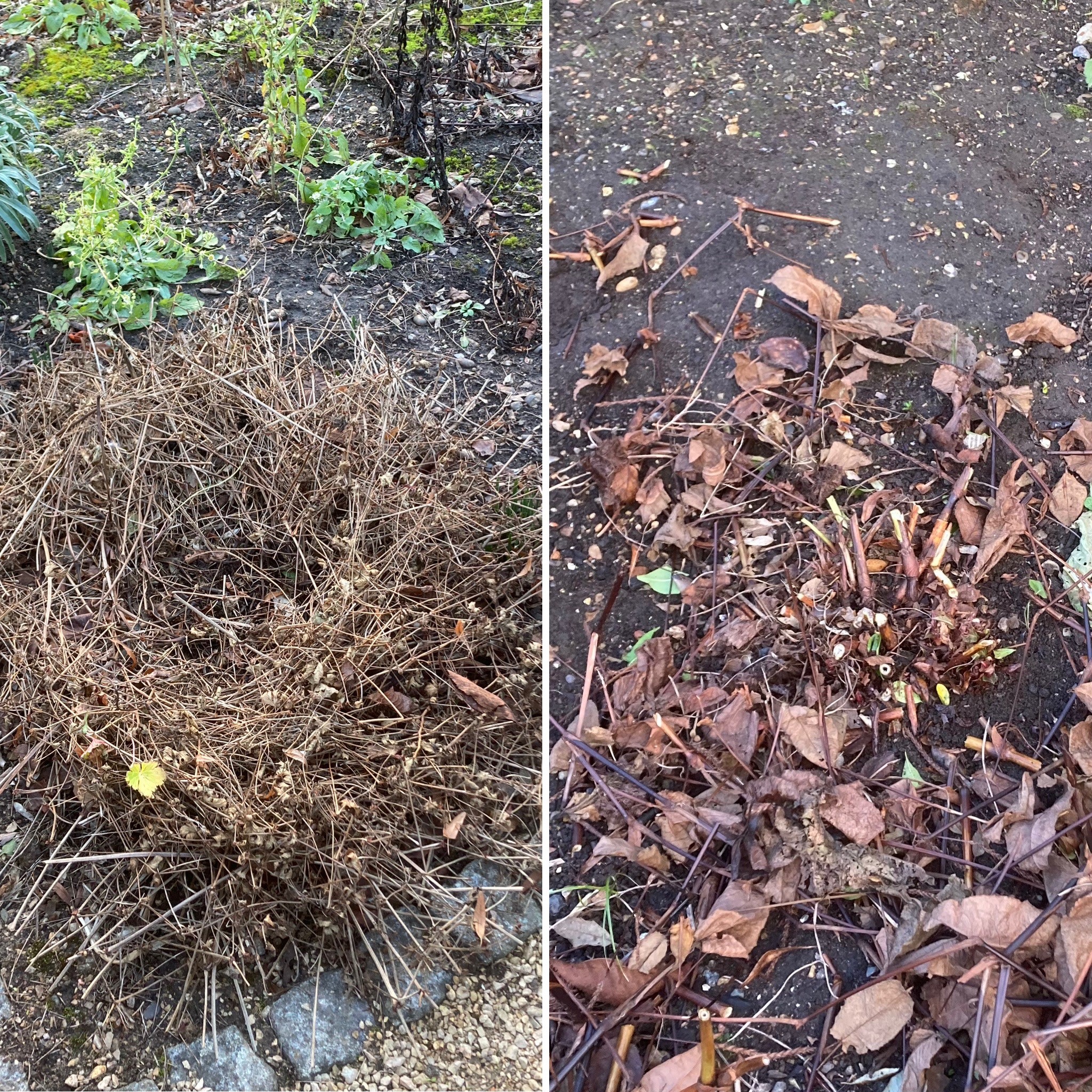
As much as I love this perennial and have planted many clumps over the years, I find it struggles in my clay soil. My now, one-and-only plant, obviously needs more sun and perhaps lighter soil, as it has flowered perhaps only once this winter and that was on 23rd November, when I took the photograph below. But Margaret T’s winter irises have been really putting on a display, with her two clumps producing 2-3 flowers at a time, on and off since December. And these will carry on flowering well into March. I’ve seen them flowering profusely when nestled against sunny, front elevations, in poor soil. But in Margaret T’s garden, the soil is rich from regular additions of compost and manure and you can see by her photograph that she has healthy, plump plants.
Continue reading Plant of the Month: Iris unguicularis (January 2024)Sparkle in the Park 2023 – Avery Hill Park, SE9



As a special, early, Christmas treat, on a very mild evening on 30th November 2023, a friend and I visited Greenwich Council’s Light Festival, the magical Sparkle in the Park, held this year at Avery Hill Park. This was Greenwich Council’s 4th Sparkle in the Park event, this time featuring many new displays, and it was nice to see the many artists being acknowledged for their spectacular creations. The excitement was palpable as the winter wonderland trail lead visitors through an illumination of lights and enchanting displays amongst the trees.
New Year Flower Count at Charlton House
Our first volunteer session of 2024 fell on a wet and windy day (a Severe Weather Warning day in fact), so we decided to abandon gardening tasks and go for a bracing walk around the estate to spot for plants in flower and work off a few mince pies.
Although a lot of our findings were to be expected (Primroses, Hellebores, Mahonia) others definitely felt wrong – Penstemon Garnet, you should NOT be out! It will be interesting to do the same exercise next year and compare. In the meantime, below are some cheering pictures of our walk:
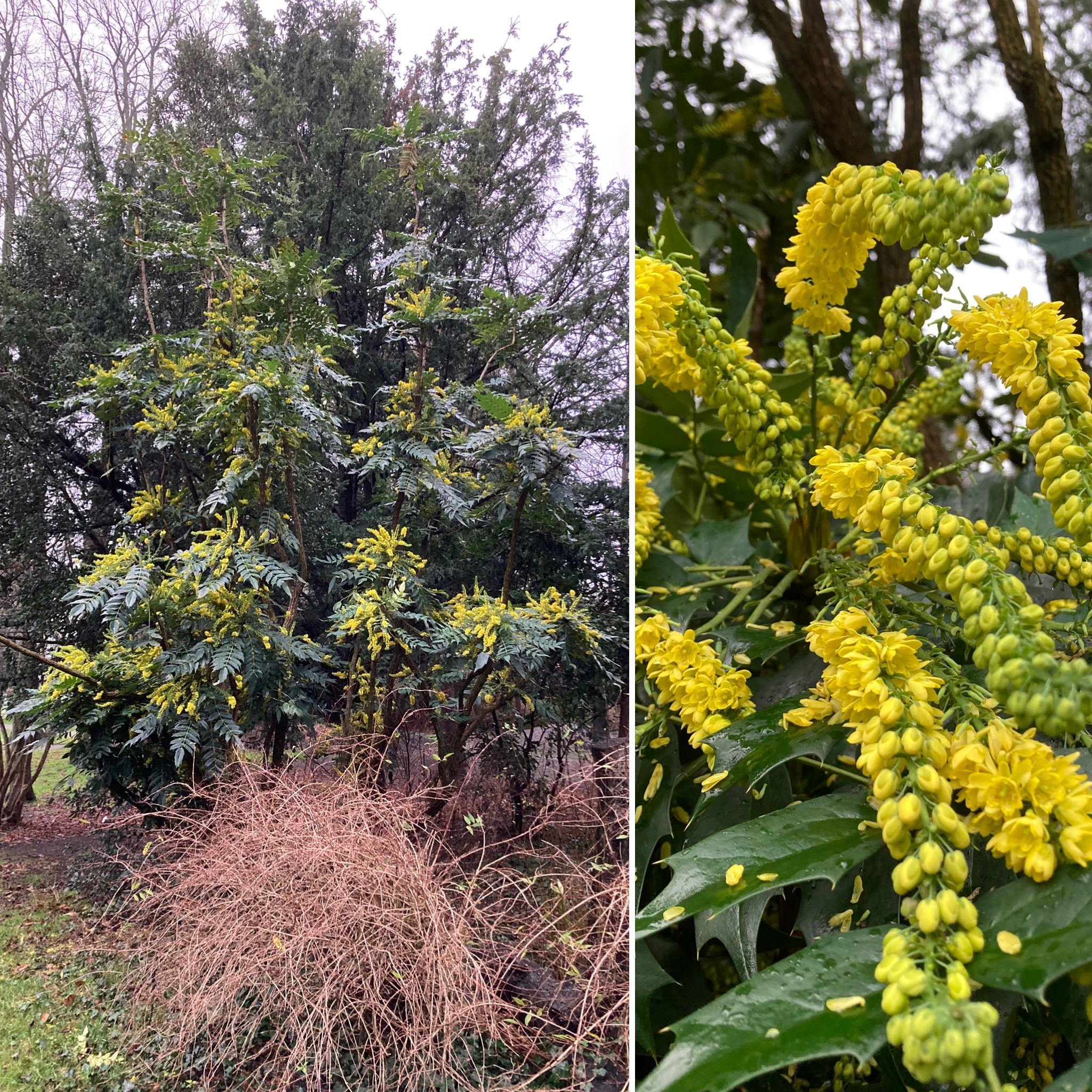

I think you could say that the Mahonia in the Glade was a “Star Plant” for this time of year.


Penstemon ‘Garnet’, top left, then Achillea ‘Cerise Queen’, Sarcococca confusa (you should smell this!) and Viburnum bodnantense ‘Dawn’.
Continue reading New Year Flower Count at Charlton HouseAnd another year goes by..
OPG Diary – April to December 2023
Unbelievably, the last “diary” post I made about the Volunteer scheme was back in March, when we had just started to dig up the palms in the Front Lawn and hyacinths were just coming in to flower. The year is not quite done, but the Volunteers have worked a total of 2,724 hours, I feel quite tired just thinking about it!

We have posted about our events, like Bunnies in the Beds, but not about the important work that goes on behind the scenes, under Jason’s direction. So in April, we pruned the Pomegranates and the overgrown parts of the Wilderness and front shrubberies were tackled. Paths were mown through the grassy areas and Jason got RBG’s agreement not to mow in certain parts of the estate – saving them time and making our life greener.


The final palm roots had been removed by May (they were HUGE!) and preparation and planting started in the front beds. The Peace Garden beds were re-shaped, they will be better for functions like weddings and coincidentally there is now more “bed” available to plant into! The Wilderness paths really came into their own as the grass around them became taller. When he wasn’t mowing the paths, Pete bravely tackled the area around the Substation, which was full of very thorny shrubs like Pyracantha and Berberis, really unpleasant to work with. The rose beds at the front were tidied and some major Long Border weeding started.
Continue reading And another year goes by.. Charlton and Blackheath Amateur Horticultural Society