
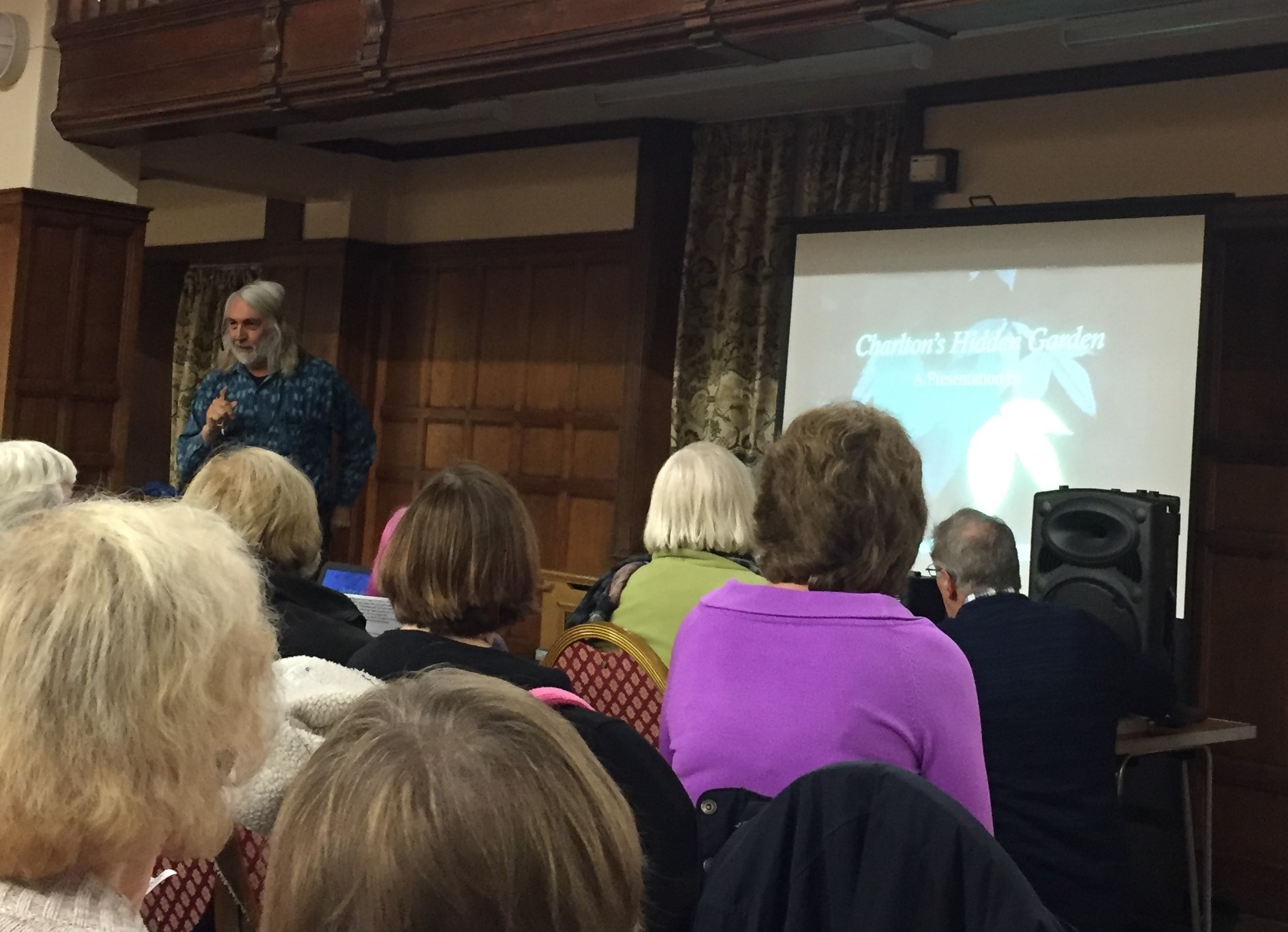
At our recent Zoom talk, Dr David Marsh, a garden historian, gave a detailed account of the history of elephants in gardens focusing primarily on menageries and then on large scale mechanical elephants. His interest in elephants was stimulated by a visit to a café at the grade I listed Chiswick House and gardens where he noticed a coaster had an elephant depicted on it.
The earliest mention of a menagerie in the UK is in 1199 in the grounds of Woodstock Manor situated on the site of the present day Blenheim Palace.
The monarchs over the centuries were very keen on menageries and elephants. Elephants were often given as gifts. Henry 111 was given an elephant in 1255 by the French King which cost £24.14s.3p to feed over a period of 9 months. A colossal sum at the time. So too were Henry VIII and Elizabeth I. James I was especially attracted to menageries. He was given one by the King of Spain.
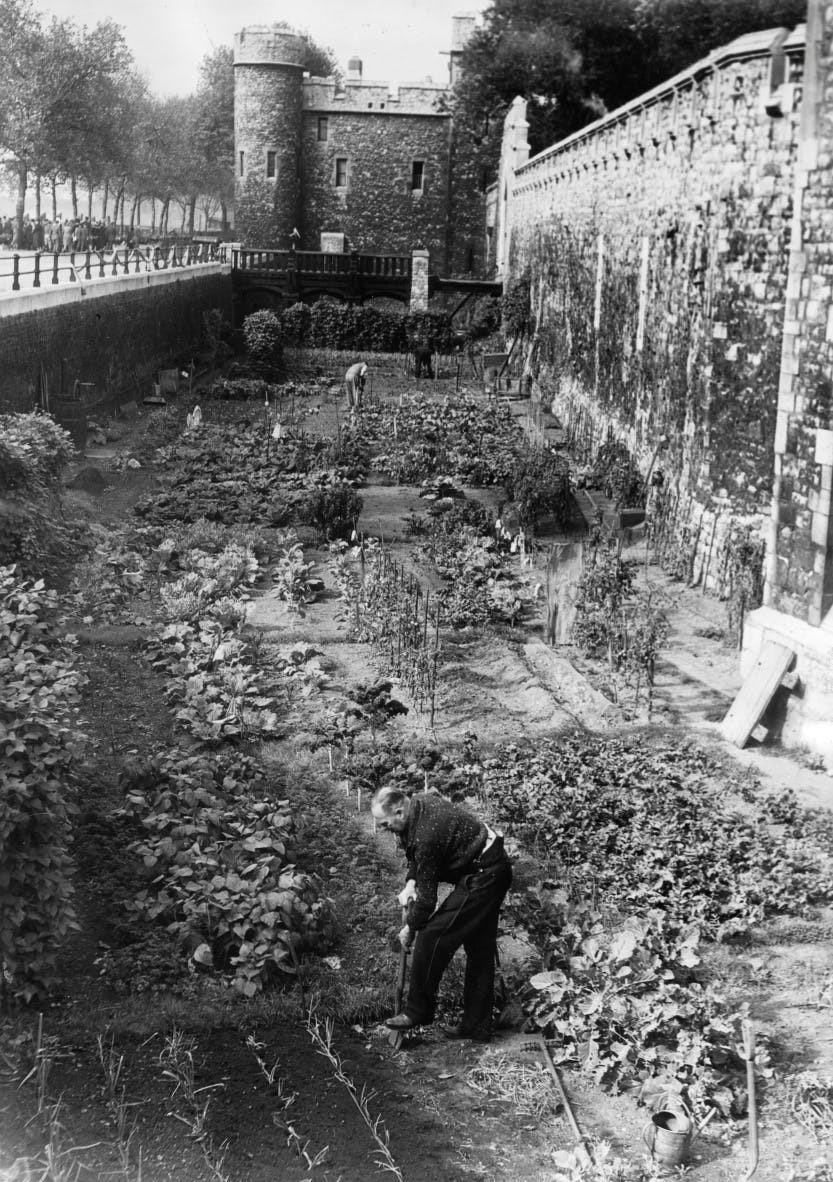
Henry VIII set up a menagerie in the Tower of London where an area was set aside for it. Over the centuries the menagerie became a tourist attraction. A viewing platform was erected in 1597. The animals were sometimes baited to entertain tourists. In the 18th century the entrance fee was 3p, or if you could not afford it a cat or dog to feed to the lions.
Elephants over the centuries were often fed and housed inappropriately. One was fed wine. Not surprisingly some did not live very long. Henry VIII’s elephant only lived 2 years.
By the mid eighteen century menageries became must have features found in many country estates. There were estimated to be as many as 40 at one point. Though rare that they had elephants. One well known elephant was Sadi who was given to the Duke of Devonshire at Chiswick House by the Marquis of Hastings of India fame as a present. He even introduced her to the Russian Czar. The animals in menageries became increasingly varied and exotic. A reflection of the expanding British empire overseas.
By the early 19th century menageries had also become commercial enterprises. The Exeter Exchange was set up in the Strand near Somerset House in 1815. One elephant there, Chunee was taught tricks. She was hired out to theatres, but eventually had to be killed as she became too dangerous.
The early nineteenth century was the heyday and also the swansong of menageries. The tide turned on Chunee’s death and a more humane and educational approach was introduced during the 19th century. George IV had a menagerie set up at Windsor using a more enlightened approach.
In 1826 the Linnean Society spear headed by its members, Sir Joseph Banks, Humphry Davy and the Stamford Raffles founded the present day London Zoo in Regents Park where the animals were provided with more spacious accommodation within beautiful gardens. In the 1830s William 1V closed the Tower menagerie and its animals were moved to Regents Park. It did not have an elephant so the new zoo quickly bought two.
The Exeter Menagerie was moved to a site in the Walworth Rd by its owner Edward Cross. He situated it in a large beautifully designed and laid out garden. It became a major tourist attraction.
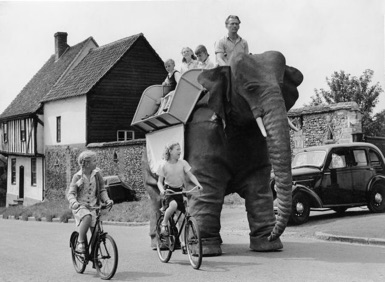
Dr Marsh then moved on to mechanical elephants They were first mentioned by Jules Verne in 1880 and started to be manufactured at the beginning of the twentieth century. Frank Smith and then in the 1940s and 50s, Frank Stuart , developed and manufactured and sold world wide large scale mechanical elephants. They became major tourist attractions. They were also used for advertising purposes, including by Chipperfields Circus. One in Australia called Nellie played a central part in the annual Adelaide Christmas Parade. One huge automaton in Nante took 20-30 passengers and shot water from its trunk. Some still exist. One is in the Bewley Motor Museum. One was even sold on Ebay in 2011 for £1,600. Another featured in Jeremy Clarkson’s Top Gear!
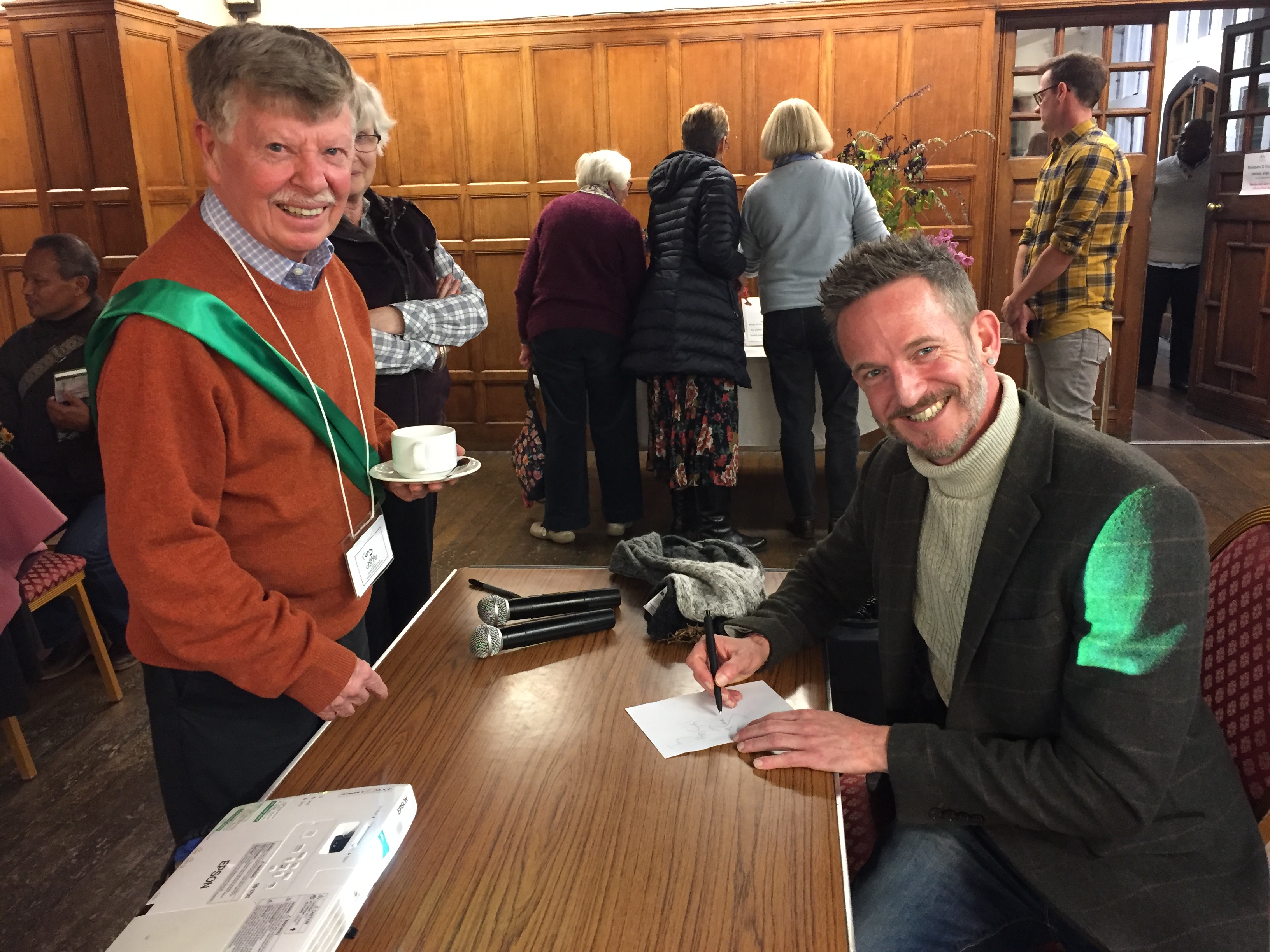
Dr David Marsh is a garden historian, lecturer and writer, as well as a trustee of the Gardens Trust, a charity dedicated to the conservation of our historic parks, gardens and designed landscapes. He is an expert on garden history and co-convener of the History of Gardens and Designed Landscapes seminars at Institute of Historical Research, London University. A brief introduction to his talks can be found at gardenhistorytalks.com and he also writes a weekly blog for the Gardens Trust.









 Charlton and Blackheath Amateur Horticultural Society