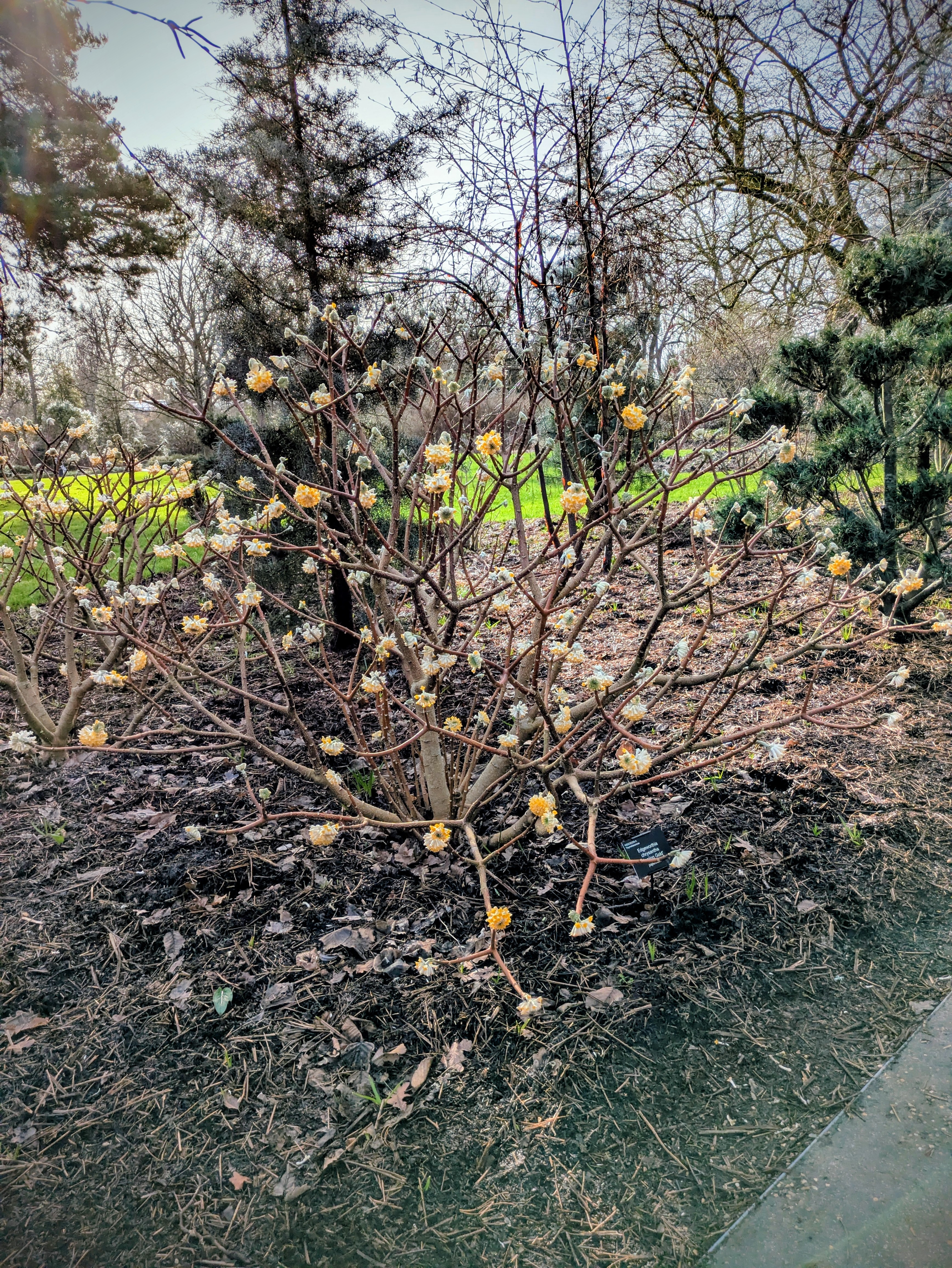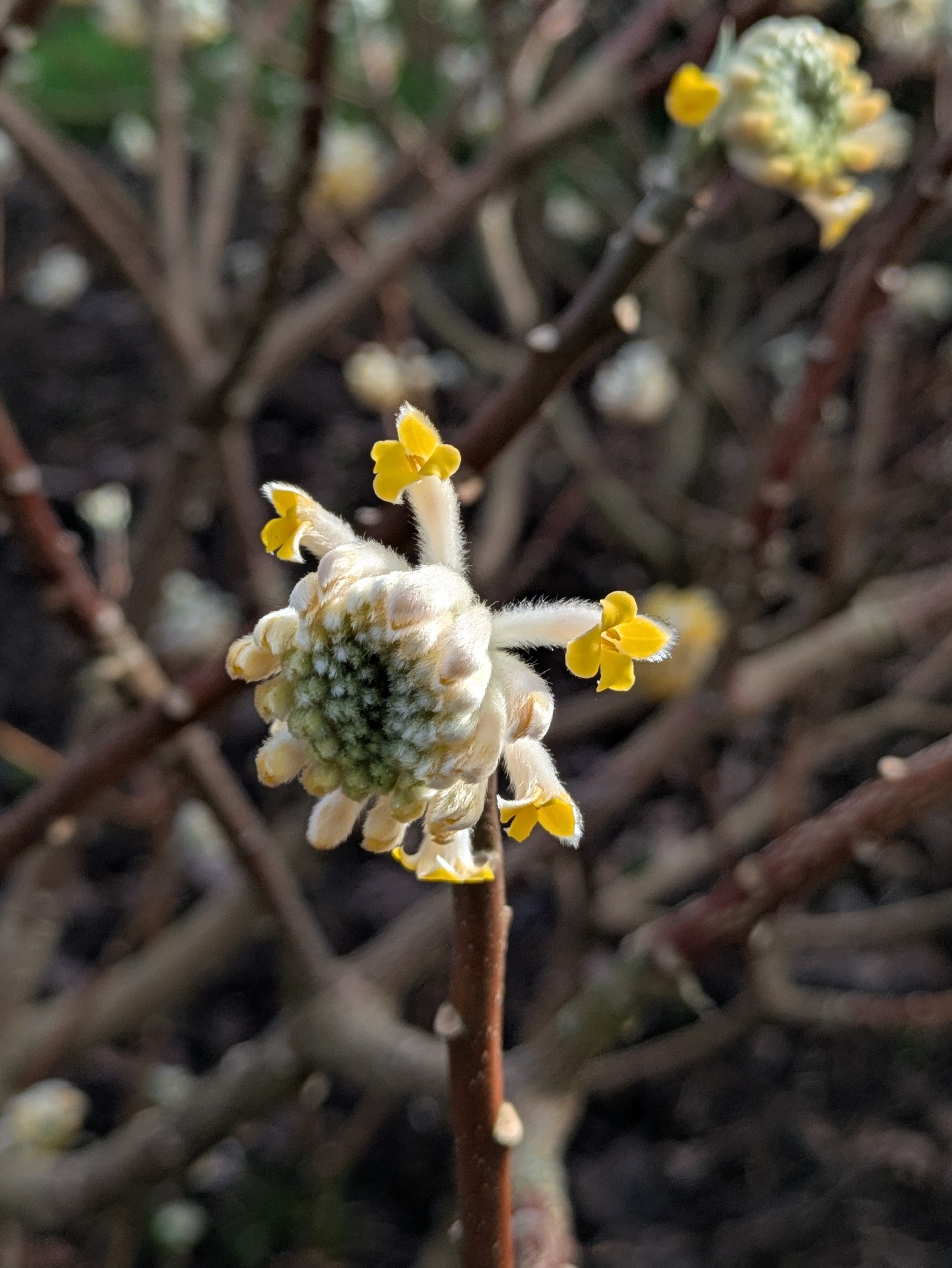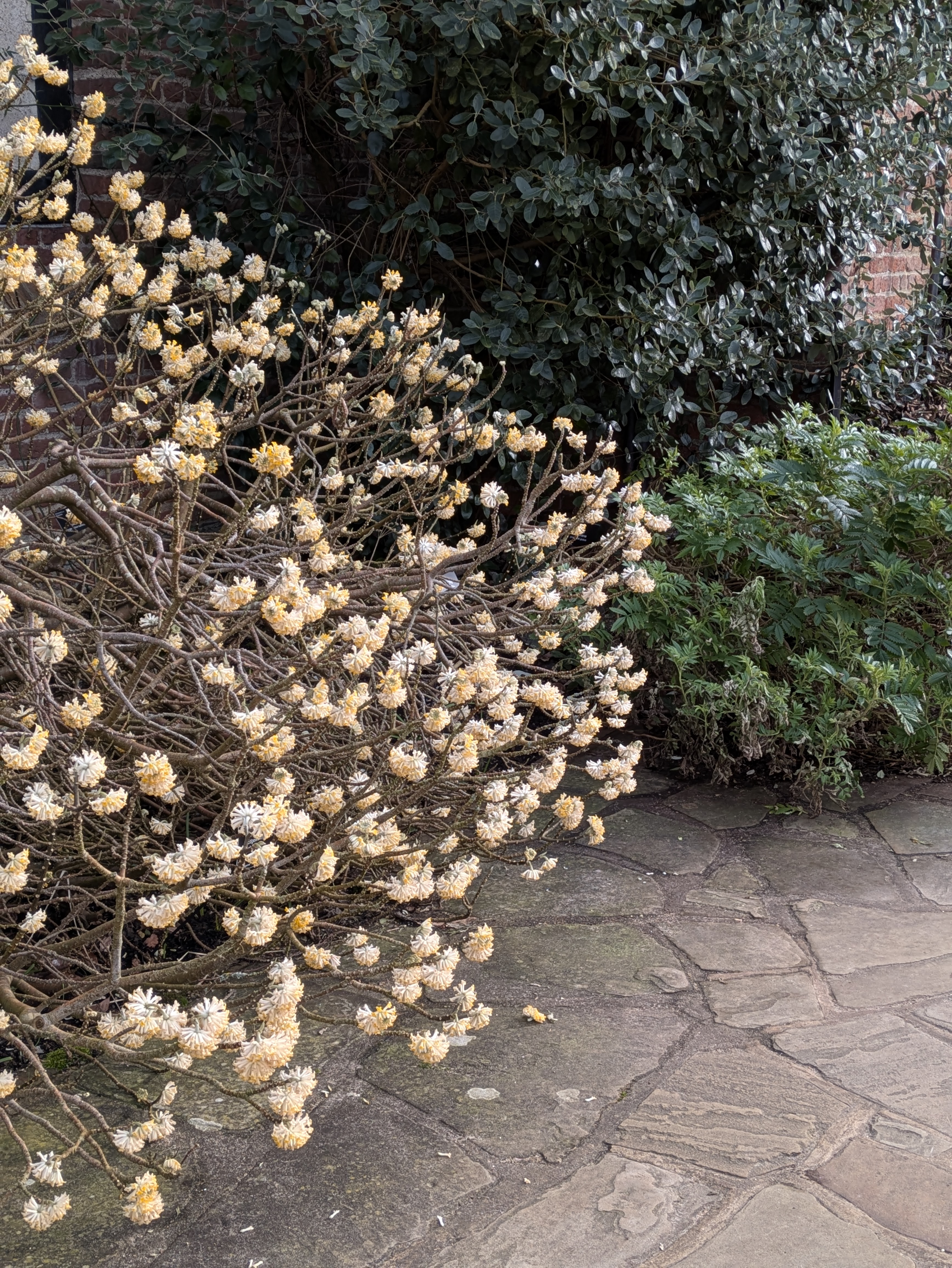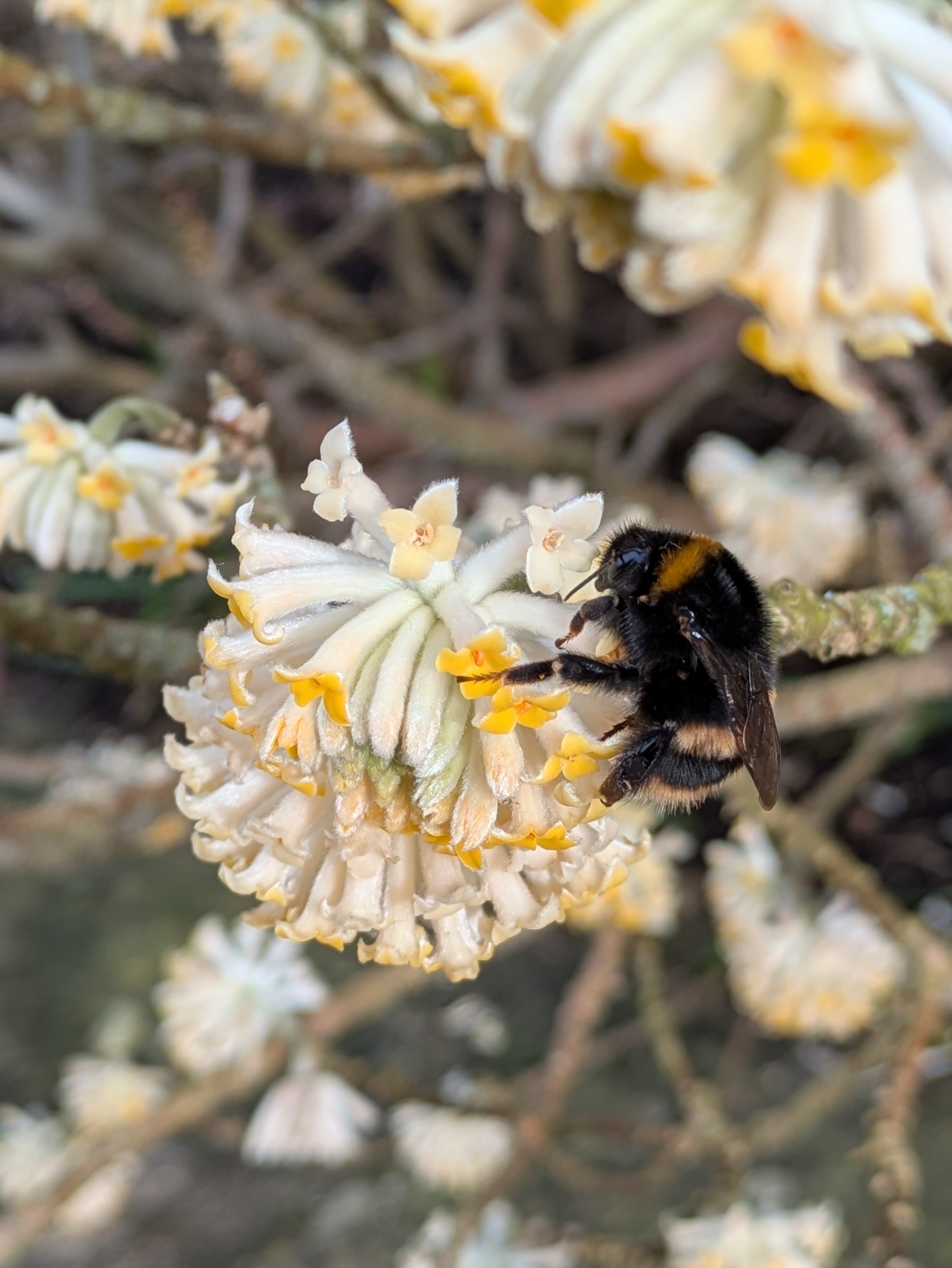
So far February 2026 has been very wet, with heavy and prolonged downpours, which has restricted everyone’s garden visits, including mine. So I’ve had help this month from Ali H (many thanks) in seeking out winter-flowering specimens that are looking at their finest at the moment and hopefully will be of interest to you.
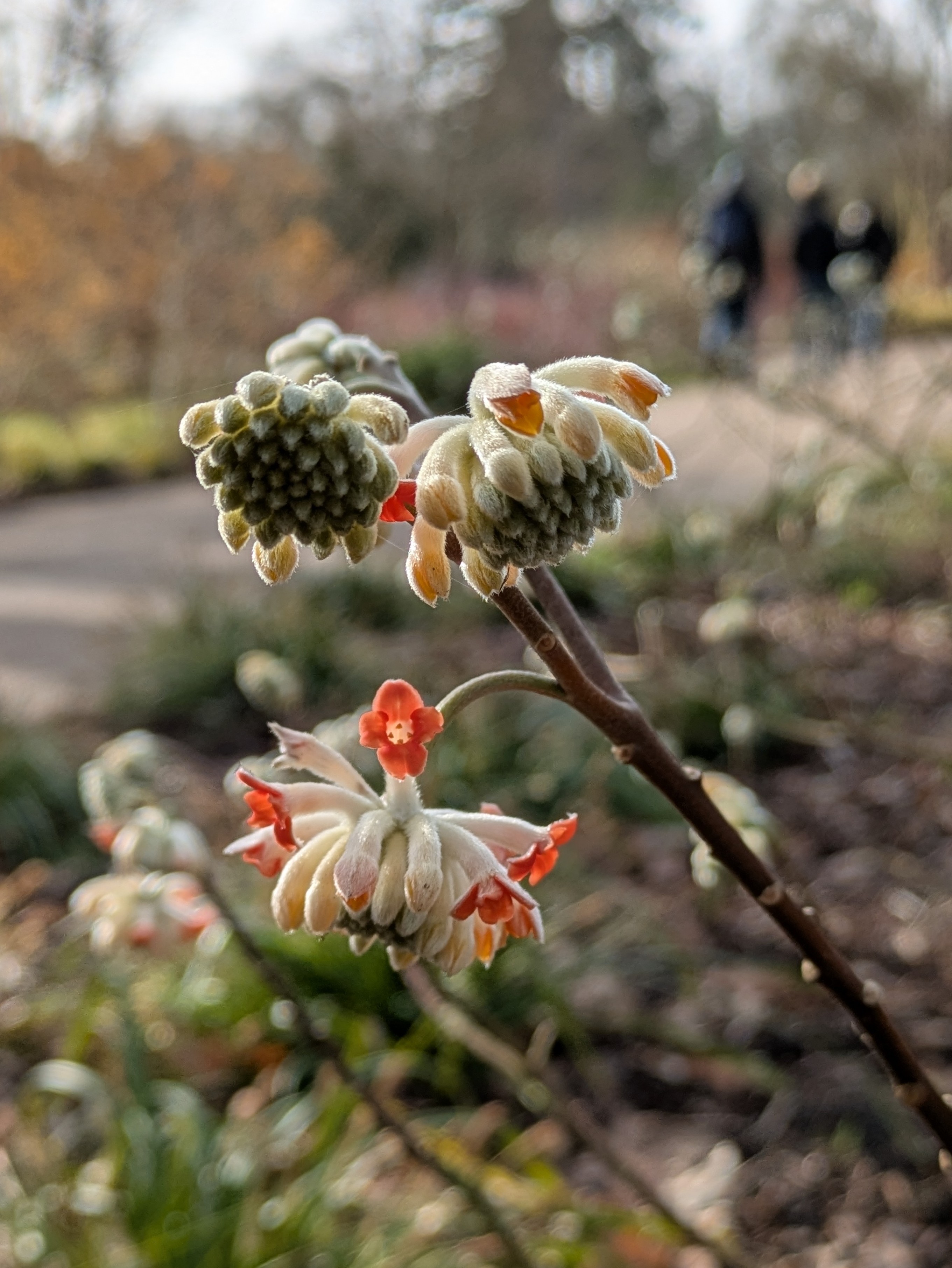
Originating from China and the Himalayan regions, Edgeworthia chrysantha is related to the Daphne family and I am not surprised as the flower clusters are extremely fragrant. They appear on the tips of bare stems in late winter, then in spring covered in foliage, consisting of attractive slender leaves, making a nice rounded shape to fit within planting schemes.
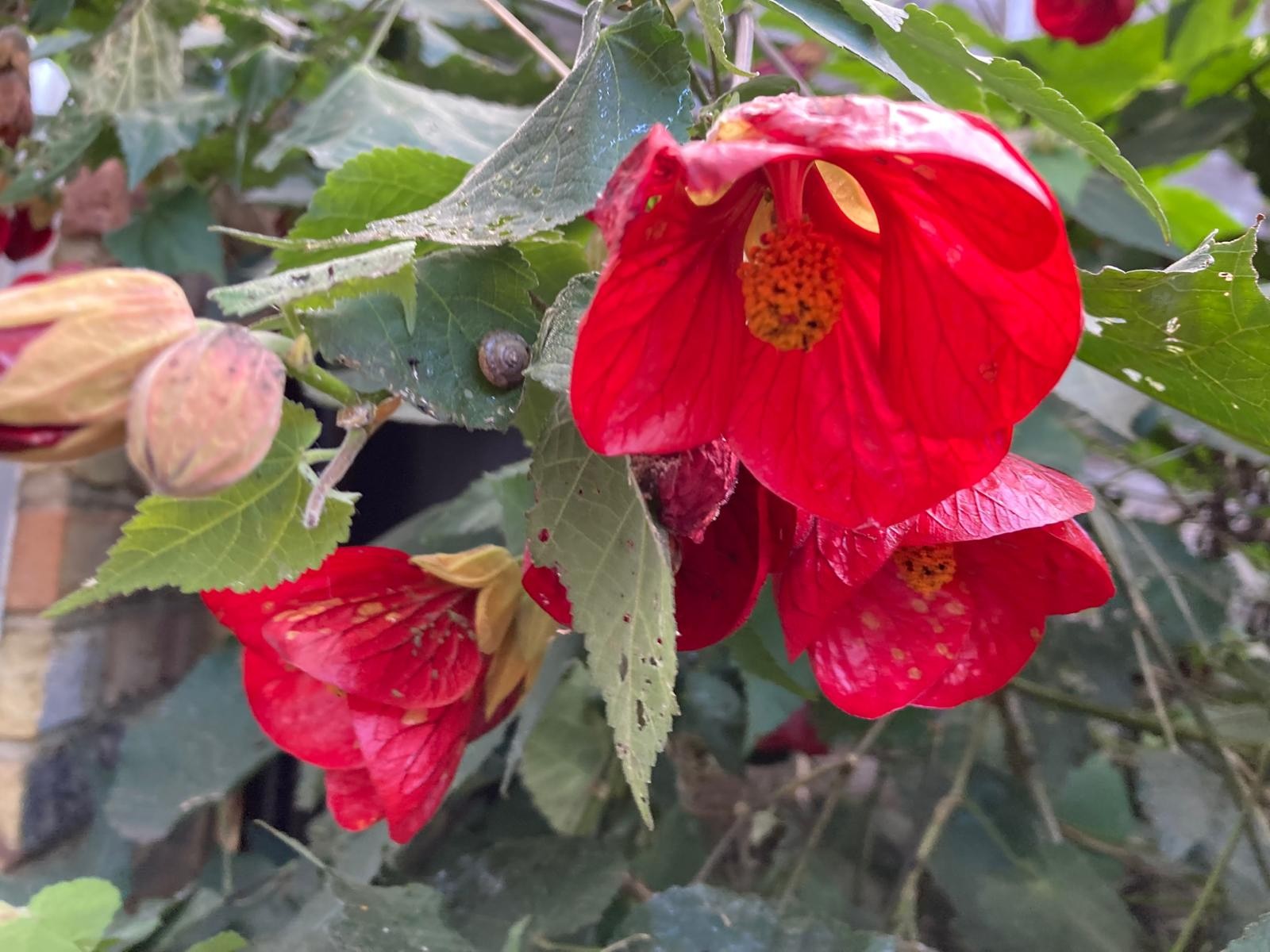
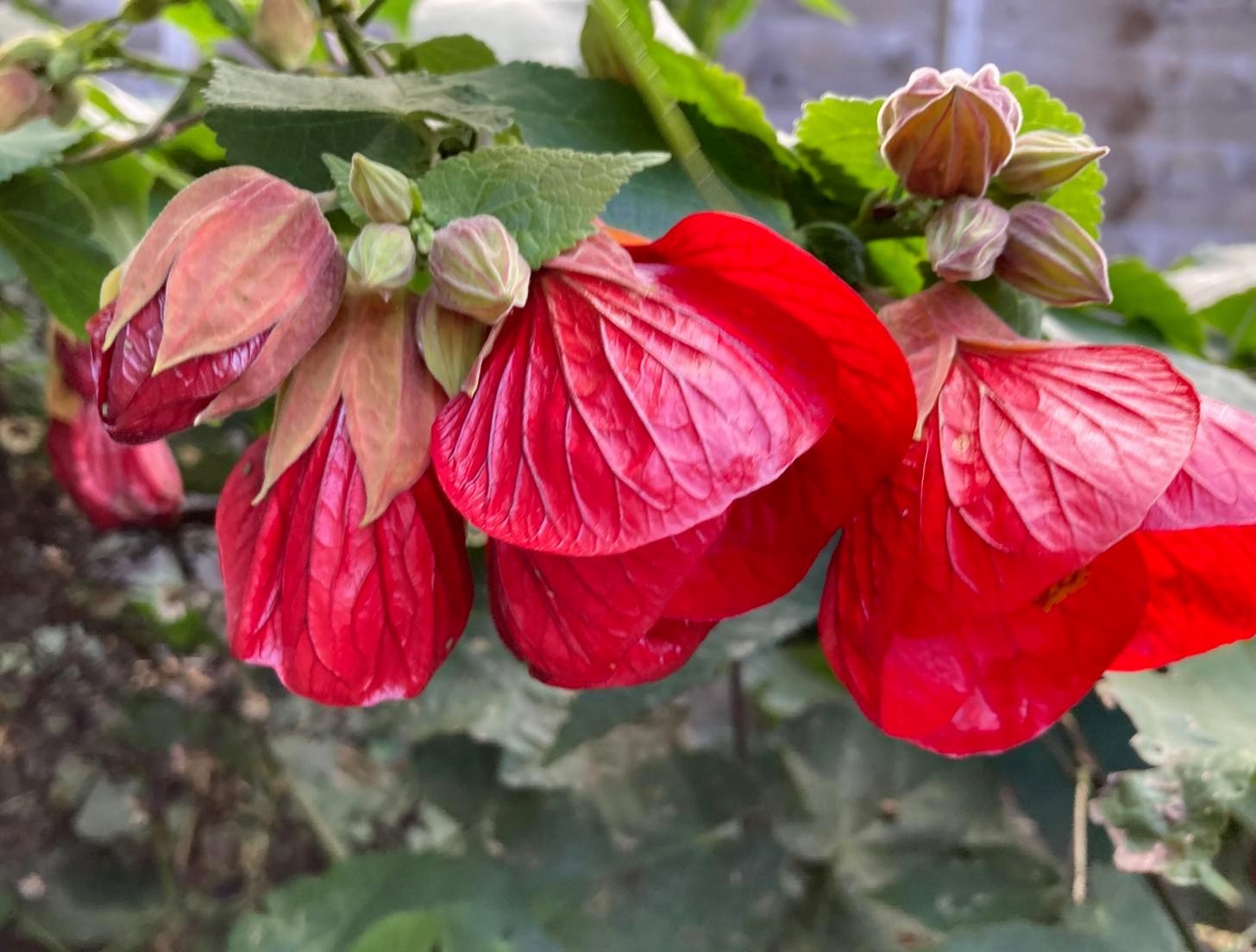
On Christmas Eve 2025, after enjoying a treat of delicious coffee and mince pies, we were shown Karen S’s very stunning red-veined Abutilon, growing extremely happily in the shade, on the north-facing side of the garden. Covered in glowing, pendulous, lantern-like flowers amongst its dark-green foliage , the shrub lit up the garden during those dark, December days.
This very healthy shrub with maple-like leaves, had been cut back hard some time ago and had grown very quickly. It was a cutting from Margaret T’s garden two or three years ago. Its growth was very impressive indeed. But before that, the cuttings originally came from North London some years ago, from a plant-lover’s garden. One Abutilon in this garden was seen growing happily as a tall shrub/small tree beneath a mature tree, thus receiving a fair amount of shade and protection, which I think is necessary, as Abutilon species originated from tropical and subtropical regions of South America.
Abutilons have a long-flowering period in London, in bloom from early-to-mid summer and again in early winter. Karen’s shrub is still flowering now in January, but the prolonged cold snap earlier this month has, naturally, affected it – not as upright as it was but still continuing to bloom, although the flower colour is no longer quite as vivid. Let’s hope it warms up and recovers quickly. I know how it feels!
What a mild 2025 December we are having! So mild, the weather is confusing some plants, such as lavender, Calendula and yellow-flowered Phlomis, out in flower at present.
One of the joys of winter is admiring all the window boxes, the wide variety of beautiful Christmas door-wreaths and observing what’s flowering in front gardens whilst out strolling.
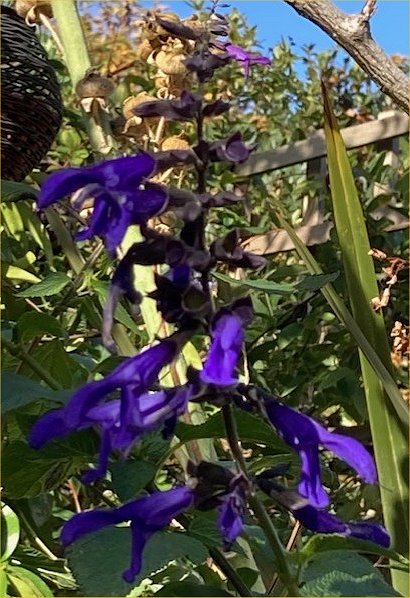
Last week I was in Greenwich Park, in what was the Old Rose Garden for several decades, and now transformed into a fantastic herbaceous garden, a riot of colour, shapes and forms, tall grasses swaying and intermingling flowering shrubs (find out more about this transformation). I had gone there to see one specific Salvia – and what a show they were putting on!
A few years ago, my garden would be looking quite green at this time of the year. But not this year; I am pleased to say that it’s actually very colourful, all due to my collection of salvias, which I’ve added to year-on-year. As you know, they are not 100% hardy as they originate from hotter climates, but, they do appear to survive in sheltered, London gardens if the winters are not too severe. And, as a precaution, we have learnt to take cuttings – just in case!
If your own space is looking ‘a bit green’ at the moment, think about adding annuals to liven up your garden in 2026. Here are a few I highly recommend:
Zinnia
This year I’ve grown Zinnia elegans SPRITE MIXED at my allotment and they are looking good – tall, healthy, robust, colourful and bee-friendly. I am very pleased with them, as the flowers themselves are a mixture of vibrant and subtle shades, and, as an added bonus, no signs of stem rot (fungi/bacteria more prevalent in warm, wetter summers that attack the stems).
I sowed the seed straight into the soil in two rows. Two or three weeks later, I thinned the seedlings and replanted those thinnings into a third row. So, they are tightly packed and they don’t seem to mind that and I don’t need to stake them. Flowering from July to October, this robust variety is perfect for displaying in gaps in borders or containers. And ideal for picking, although I don’t have the heart to do that yet!
After a brilliant summer, autumn is not too far away and this is when we start to notice more and more orange-flowered plants and berries becoming features in gardens and parks. Orange is a warm and comforting colour, and I’ve listed three that you might be interested in:
My garden is looking past its best now, as the heat-waves and lack of rain having taken their toll, but these three plants are looking stunning and all worthy of the status of Plant of Month for July 2025.
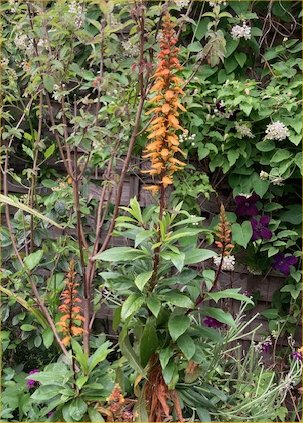
Being the month of June, I am pleased to say that there is plenty of colour in the garden, including Rosa ‘Bobby James’ out in flower, but, the star plant for me is definitely the Canary Island foxglove, Digitalis canariensis.
This is an eye-catching shrub (albeit short-lived) with burnt-orange-apricot foxglove flowers, (flowering since May), supported by strong, upright stems and dark green, serrated-edged foliage.
This variegated Japanese Pittosporum — P. tobira ‘Neige du Mont Ventoux’ — is a lovely addition to any garden, and particularly courtyard gardens, where space is at a premium, as it is the perfect specimen for growing in a container.
It was at a rare plant fair in Kent many years ago when I spotted this very appealing shrub. It was “twinkling” at me so, naturally, I found I just could not resist it and brought it home! Because of its branched structure, it was placed in a terracotta container and there it has remained, contented, to this day. I hadn’t realised at the time though, that this variety is very suitable for a container, as its height and width is generally no more than one metre at maturity.