Updates on progress and activity in the Old Pond Garden volunteer project. The scope of the project has widened to include other parts of the Charlton House estate, but it will forever be known as ‘the OPG’.
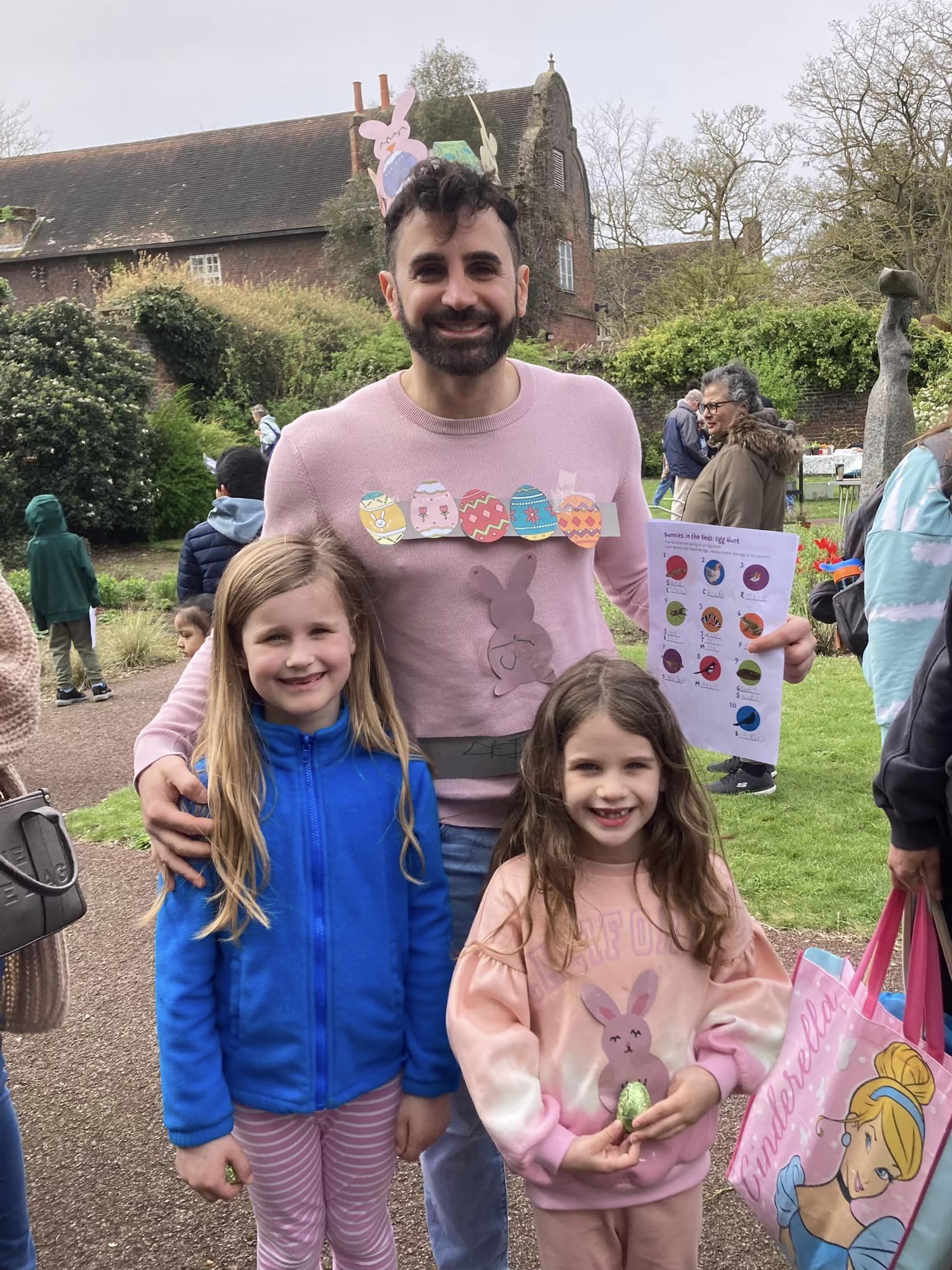
Our “Bunnies in the Beds” Easter Trail took place on Saturday (April 6th) for the fourth year running, it is becoming a fabulous fixture of the Garden Volunteers year. We start thinking up mad ideas in January during tea breaks, then gradually whittle them down to create an exciting but practical trail.
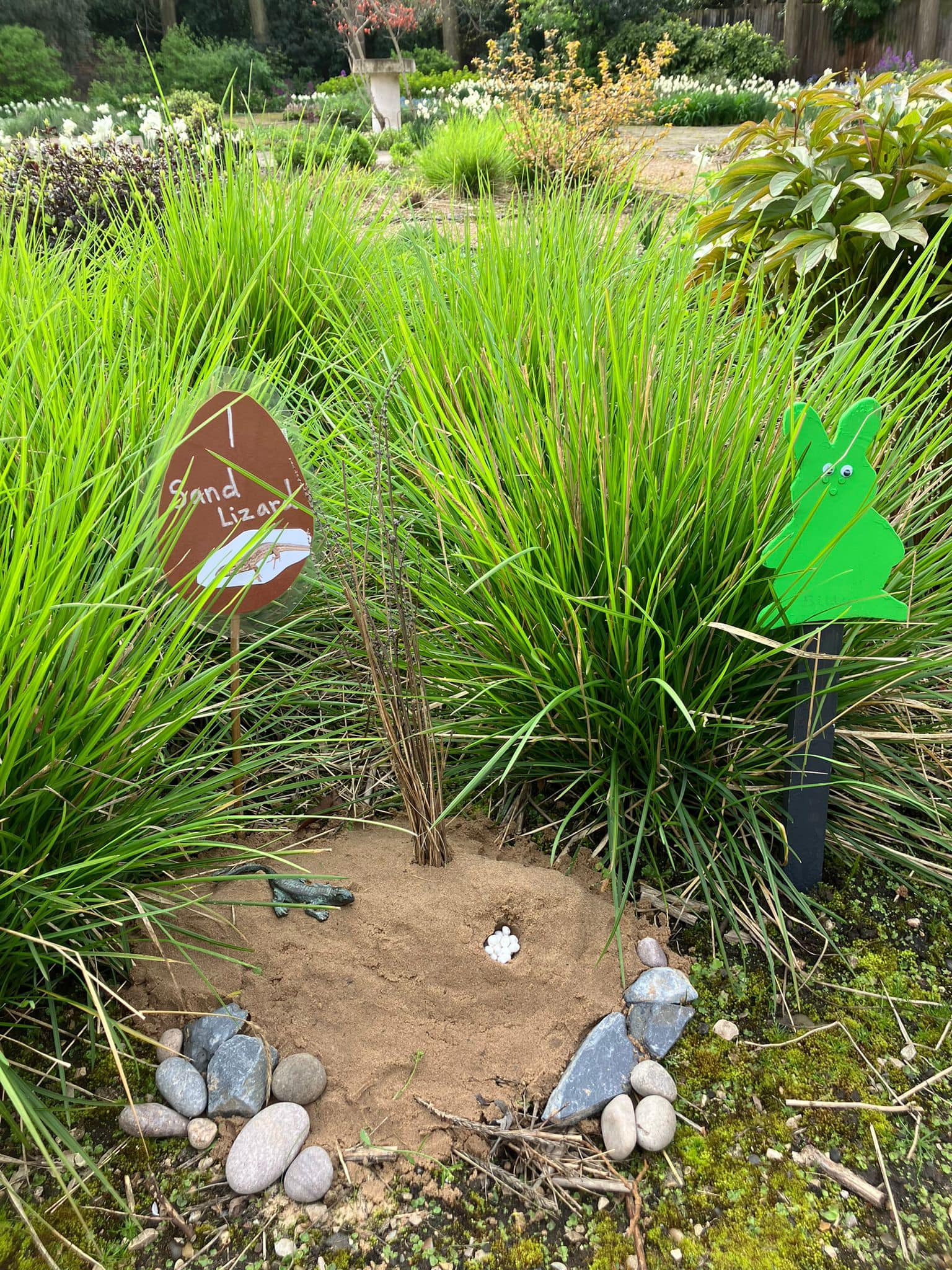
This year, the Bunnies went on an egg hunt with a difference! Having found all the eggs they then had to match them to their parent animal, in order to collect a prize. And by the end of the day, 175 children had achieved their goal. There were birds eggs to find of course, but also frogs, snakes, sand lizard, moths and even a dinosaurs egg!
Also on offer: Potting Up Table with free seeds, courtesy of RHS Britain in Bloom which is celebrating its 60th anniversary this year. We were not expecting this to be so popular and almost ran out of seeds! So many small gardeners-in-the-making came to this event, it was lovely. If you are growing your seeds on, you can keep track how others are doing on social media on @RHS GrassRoots and #RHSBloom60.
We hope you enjoy a spring walk around the walled gardens at Charlton House! Look out for:
Forsythia
Forsythia is in the olive family, renowned for its vibrant yellow flowers which appear in spring, long before the leaves unfurl. The one by the Charlton House stables is quite old and we are not sure of the exact variety. We pruned it back hard a year ago and it seems to have loved it!
Cherry laurel (Prunus laurocerasus)
A ‘background’ evergreen plant most of the year, but quite striking when the white candle flowers appear in Spring. Although we call it a laurel, it actually isn’t – it’s in the cherry family! We know that an early resident of Charlton House, Elizabeth Puckering, introduced cherry laurels to the gardens. She was friendly with the diarist John Evelyn, who lived in Deptford at the time, and exchanged cuttings with him in around 1654.
Daffodil (Narcissus ‘Thalia’)
A fragrant and vigorous trumpet daffodil which is now in it’s third year in the walled gardens, so has formed some nice big clumps. It starts off creamy yellow and fades to white, and is sometimes referred to as an orchid daffodil. For fans of BBC Gardener’s World on TV, you might recognise it from Monty Don’s writing garden!
Brunnera has lovely heart-shaped, silvery-veined leaves that look as if frost has touched them. The leaves light up shady areas of the garden. It has long lasting, bright blue flowers that look very much like forget-me-nots, and which provide lots of nectar and pollen for visiting bees.
Wood spurge (Euphorbia amygdaloides var. robbiae)
Wood spurge is in the Euphorbia family, so take care! If the stems are broken, they gush with a thick milky latex substance that can cause blisters on skin. They are handsome perennial plants, shade loving, with zingy lime-green flowers in late Spring and rosettes of glossy dark green leaves. Another name for this plant is ‘Mrs Robb’s Bonnet’ – we would like to see the hat that inspired that name!
Still going strong, winter into spring!
Lenten rose (Helleborus orientalis)
The Lenten Rose is a perennial flowering plant and is part of the Buttercup family, so not a rose at all! Its common name comes from the fact it usually flowers between Ash Wednesday and Easter – the period known as Lent. Hellebores (Lenten roses) can be white,
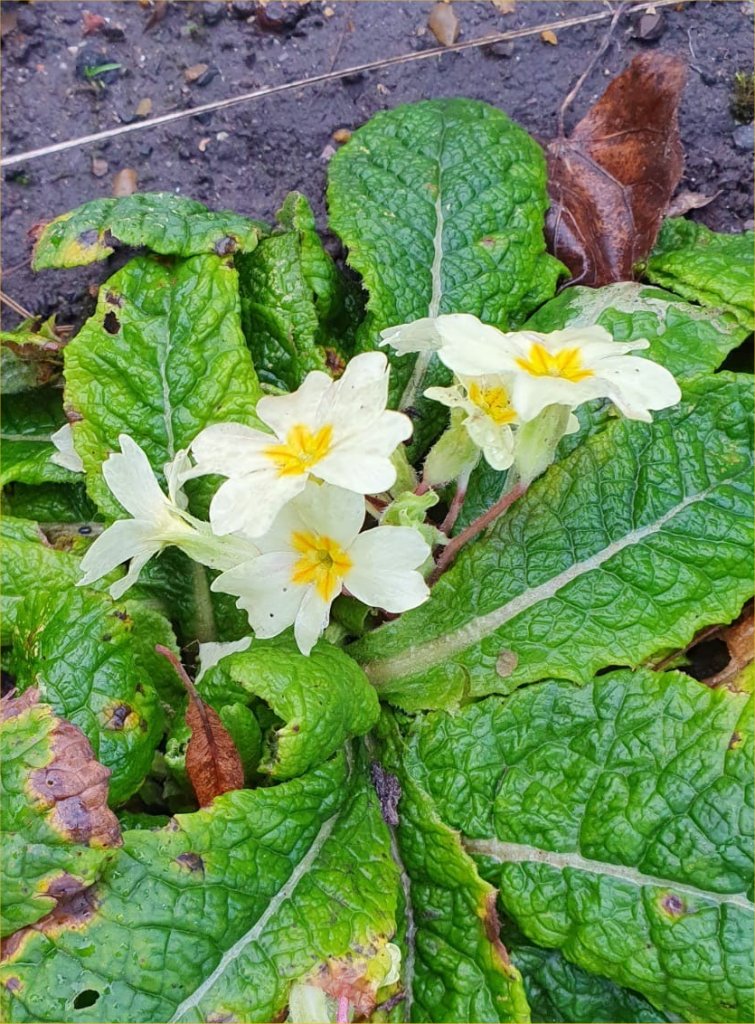
Primrose (Primula vulgaris)
We grow the English or ‘common’ primrose in the walled gardens, which is the natural pale yellow one that gives its name to the colour Primrose. It is often one of the earliest plants to flower in Spring (the Latin word ‘prima’ means first). Early butterflies like the Brimstone benefit from its nectar. Plants will hybridise (cross) very easily with the garden bedding Primulas that come in lots of different bright colours, so seedlings can come up a surprising colour!
We hope you enjoy a Winter walk around the walled gardens at Charlton House! This month, look out for:
Snowdrop (Galanthus nivalis)
The Latin name for snowdrop is Galanthus, meaning ‘milk flower’. They hang their heads to keep their pollen dry for the winter insects they are adapted to attract. When temperatures reach 10C the outer petals open up and this is the temperature at which winter pollinators like bumble bees can fly! Snowdrop sap contains natural antifreeze which allows them to recover quickly after a frosty night. People who collect snowdrops are called Galanthophiles and they pay huge prices for rare varieties.
Lenten rose (Helleborus orientalis)
The Lenten Rose is a perennial flowering plant and is part of the Buttercup family, so not a rose at all! Its common name comes from the fact it usually flowers between Ash Wednesday and Easter – the period known as Lent. Hellebores (Lenten roses) can be white, pink, purple and green and they cross with each other very easily so all sorts of colours can result. We are trying to keep to the pink ones in the Old Pond Garden and the white ones will go in the Glade.
Silk tassel bush (Garrya elliptica)
This is a vigorous bushy evergreen shrub with silvery-grey leathery leaves, originally from California USA. It is hardy but grows best in a sheltered spot so it loves the Walled Gardens. The male plant has wonderful catkins in Winter/Spring that look like tassels – look closely at the tassels, they have an amazing structure. The female plant is less commonly seen (we don’t have one here) but produces purple/brown fruits in summer.
Our first volunteer session of 2024 fell on a wet and windy day (a Severe Weather Warning day in fact), so we decided to abandon gardening tasks and go for a bracing walk around the estate to spot for plants in flower and work off a few mince pies.
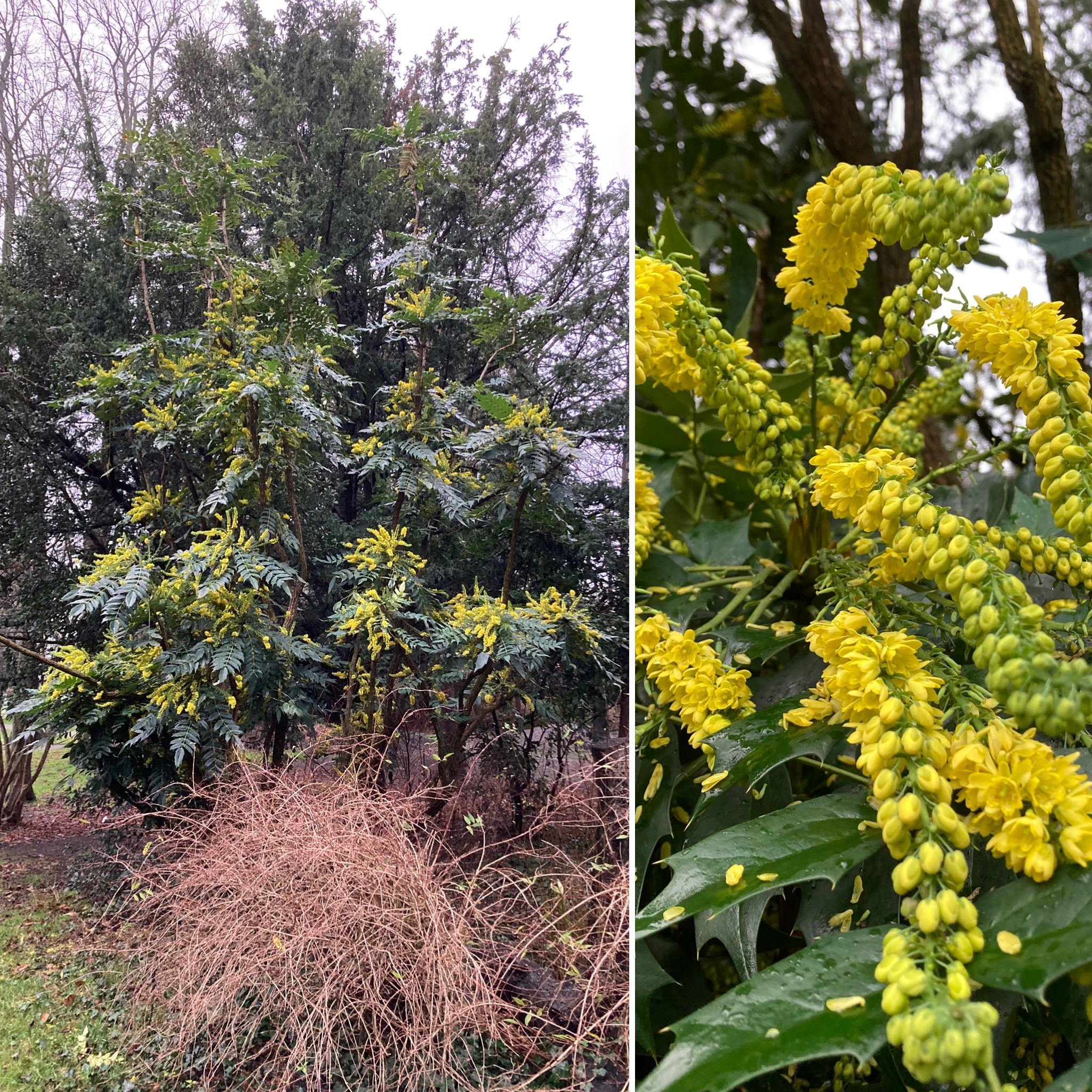
Although a lot of our findings were to be expected (Primroses, Hellebores, Mahonia) others definitely felt wrong – Penstemon Garnet, you should NOT be out! It will be interesting to do the same exercise next year and compare. In the meantime, below are some cheering pictures of our walk:
Mahonia japonica in the GladeHardy Volunteers on our New Year ramble (and Casper)
I think you could say that the Mahonia in the Glade was a “Star Plant” for this time of year.
Penstemon ‘Garnet’, top left, then Achillea ‘Cerise Queen’, Sarcococca confusa (you should smell this!) and Viburnum bodnantense ‘Dawn’.
Unbelievably, the last “diary” post I made about the Volunteer scheme was back in March, when we had just started to dig up the palms in the Front Lawn and hyacinths were just coming in to flower. The year is not quite done, but the Volunteers have worked a total of 2,724 hours, I feel quite tired just thinking about it!
We have posted about our events, like Bunnies in the Beds, but not about the important work that goes on behind the scenes, under Jason’s direction. So in April, we pruned the Pomegranates and the overgrown parts of the Wilderness and front shrubberies were tackled. Paths were mown through the grassy areas and Jason got RBG’s agreement not to mow in certain parts of the estate – saving them time and making our life greener.
Paths in the WildernessNo Mow May
The final palm roots had been removed by May (they were HUGE!) and preparation and planting started in the front beds. The Peace Garden beds were re-shaped, they will be better for functions like weddings and coincidentally there is now more “bed” available to plant into! The Wilderness paths really came into their own as the grass around them became taller. When he wasn’t mowing the paths, Pete bravely tackled the area around the Substation, which was full of very thorny shrubs like Pyracantha and Berberis, really unpleasant to work with. The rose beds at the front were tidied and some major Long Border weeding started.
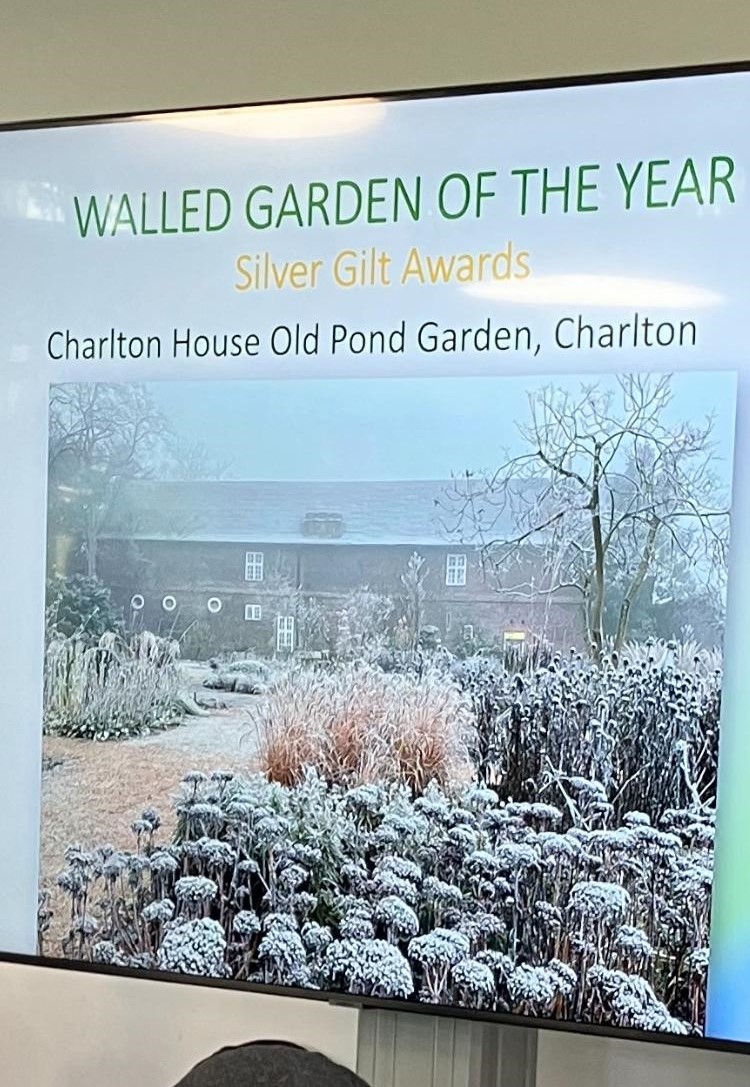
“The transformation by volunteers is incredible” began the report on the Old Pond Garden by the London in Bloom Judges. They awarded the garden 164 points out of 200, that’s 82% and a first in my world but Silver Gilt in this particular horticultural competition! Just 6 more points and it would have been Gold – so we are in touching distance of that magic category.
The judges assessment is split into 8 categories. Our top scores (in order) were for ‘community involvement’ (92%), ‘environmental sustainability’(88%), ‘maintenance-litter’ (well done Joe), and ‘range and quality of plants grown’. We scored lowest on ‘access for people’ and ‘maintenance – walls, paths etc’. The judges praised Jason’s “beautiful design” for the garden which has provided “radical planting changes” rather than a simple “tidy up”.
We hope you enjoy walking around the walled gardens at Charlton House! This month, look out for:
Night moth Salvia (Salvia nachtvlinder)
With velvety plum-purple flowers, this Salvia is attractive to moths and other pollinating insects and flowers over a long period – well into late Autumn. It has deliciously blackcurrant-scented leaves and is said to protect roses against black spot when it is planted under them.
Michaelmas daisy (Aster x frikartii ‘Monch’)
A bushy perennial with clusters of yellow-centred, lavender-blue daisies that flower right through the Autumn, it is very attractive to pollinators. One of the most reliable and popular Michaelmas daisies (so called because they flower at the time of the feast of Michaelmas on 29 September), it was bred by a Swiss nurseryman called Frikart and named ‘Monch’ after a Swiss mountain.
We hope you are enjoying a walk around the walled gardens at Charlton House! This month, look out for:
Coneflower (Echinacea purpurea ‘Magnus’)
Coneflowers are part of the daisy family, originally from North America. Plains dwellers used the fresh roots and root juice to treat toothache and snake bites. Today many people take Echinacea supplements to prevent colds and boost their immune systems. ‘Magnus’ has large pink flowers and orange-brown central cones – bumblebee heaven!
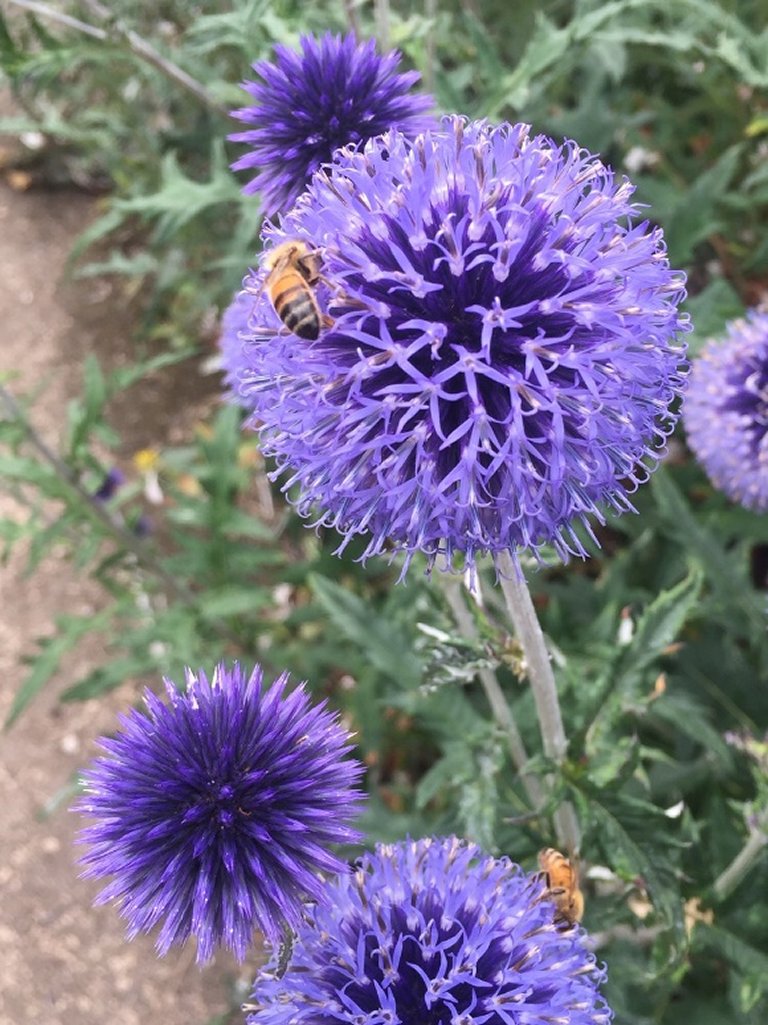
Globe Thistle (Echinops ritro)
With spiky leaves and bristly metallic blue flowers, globe thistles make a great architectural choice for the back of a sunny border. The flowers are extremely attractive to bees, butterflies and other insects and it makes a good cut flower. This is a plant that we prefer to cut the seed heads off before they drop their seeds – they spread VERY easily!
We hope you are enjoying a walk around the walled gardens at Charlton House! This month, look out for:
Catchfly (Silene armeria ‘Electra’)
Blue-grey leaves and hot pink flowers for weeks on end. An annual which self-seeds prolifically. It is called catchfly because there is a sticky area on the stems just below the flowers, which greenfly and small insects get stuck to. Feel it gently with your fingers!
Lamb’s ear (Stachys byzantina)
Lamb’s-ear or woolly hedge nettle, is a species of flowering plant in the mint family, native to Armenia, Iran, and Turkey. Very drought tolerant. Loved by the wool carder bee, which combs or ‘cards’ the leaves to make a hairy nest to lay her eggs.












 Charlton and Blackheath Amateur Horticultural Society