February 2024 Talk about Working in Greenwich Park

Tom Stanier, the Horticultural Team Lead at Greenwich Park, gave a talk about his life as a gardener at the Park and a behind-the-scenes look at working there in these challenging times. He described how he came into gardening, his training and work at the Park and some of the Park infrastructure, policies and projects. It was great to hear from someone with hands-on experience there.

Speaker February 2024 - Tom Stanier

He said he felt a connection with Charlton House as he had been married there in 2018. His interest in gardening really took off in 2017 when he  moved into a flat in Lewisham with his partner and began to grow plants on his balcony and indoors. He had a radical rethink of his life in 2018. Having a child particularly refocused his life on his choice of a future career. Having been in retail for ten years, he decided he wanted to work out of doors and do something flexible and tangible. He successfully applied for the 2 year Royal Parks Apprenticeship Scheme which is part practical and part college-based course and chose to work at Greenwich Park as he thought it was more interesting. He completed an RHS Certificate and has since taken over leadership of the Horticultural Team at the Park, working closely with the head gardener.

Continue reading February 2024 Talk about Working in Greenwich Park

Anna’s Visit to the Tibetan Peace Garden, Geraldine Mary Harmsworth Park, Lambeth

After the busyness of a visit during half-term to the Imperial War Museum, it was relaxing to visit the adjacent Tibetan Peace Garden on an amazingly warm and sunny, winter’s day in February. 

This is a lovely, partially enclosed garden which was opened by the Dalal Lama in 1999 and it was named ‘Samten Kyil’, meaning the Garden of Contemplation and this is exactly what the designers have achieved.  

The garden is made up of two parts: an outer garden of trees and lawn sweeping around and enclosing the inner circular garden, the whole bordered by a circular pathway in which to enjoy the views.  White-barked Himalayan Birches, making a striking contrast against the green and blue of the grass and the sky, are interspersed with Weeping Cherries and Prunus serrula (Tibetan Cherry) with polished, red-purple bark.  

Continue reading Anna’s Visit to the Tibetan Peace Garden, Geraldine Mary Harmsworth Park, Lambeth

The View from my Window

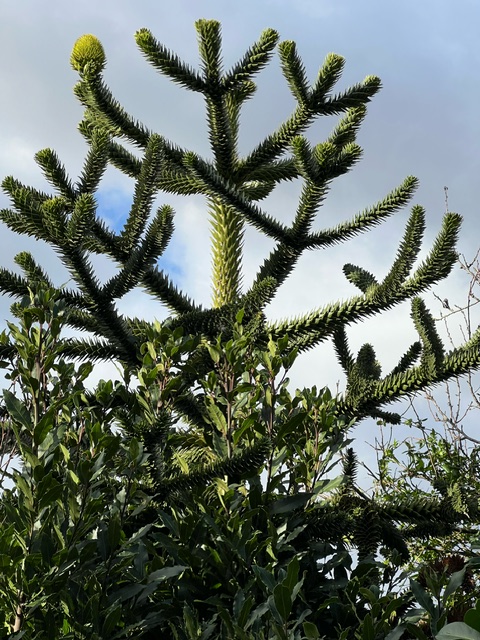
After over 30 years of living in our house and years of neglect, the monkey puzzle tree which was in the garden when we arrived, has decided to seed. Well, at least that’s what we think the cone shaped piece of greenery in the left hand side of the photo shows.

Monkey Puzzle Tree with seed on branch tip

Monkey puzzle trees are native to Chile and Argentina. It is thought that the tree gained its name in the mid 1880s when a tree was planted in Pencarrow, Cornwall. In seeing the tree for the first time, a guest touched the spine and commented that climbing the spiny, spiralling branches would be a puzzle even for a monkey. Ouch!

There is also an old English belief that the devil lives inside monkey puzzle trees and that walking by one will bring you bad luck and might even make you grow a monkey’s tail!  Rest assured I do not have a monkey’s tail or not at least the last time I looked.

Our tree may or may not be a descendant from the one planted in Cornwall but it has added to our own garden’s character and folklore.

Happy gardening

Sue B

Pat’s 10 Jobs for February…

1. Prune Group 3 clematis (late flowering viticella types) now by cutting all stems back just above a leaf node starting from the ground up. Don’t be timid as they respond well. Then feed around the plant base with an organic feed making sure to avoid emerging shoots and mulch with compost.

2. If you have some, mulch your beds with homemade compost or leafmould. If you don’t have enough just mulch around your favourite plants.

Continue reading Pat’s 10 Jobs for February…

Plant Of the Month: Lonicera fragrantissima (February 2024)

If you want to lift your spirits on a cold, grey, winter’s day, then this is the plant for you!

At the Tibetan Peace Garden, adjacent to the Imperial War Museum, on an amazingly warm and sunny February afternoon, I was greeted at the entrance by the beauty and fragrant flowers of an often underrated winter flowering shrub.

The creamy-white-pale yellow, tubular flowers with protruding stamens often appear on bare or semi-evergreen stems and in my garden they literally flower for months, from November-December through to March-April.  I can view the masses of flowers from my kitchen windows which is a visual treat but really, it’s my neighbours who benefit from the spectacle and fragrance as the shrub is situated on the boundary wall.

At the Tibetan Peace Garden, the shrubs are situated in full sun and their 2×3 metre spread on either side of the entrance pillars acts as a welcome into the garden enclosure and also indicates they are absolutely loving their perfect, sun-soaked, location. 

Continue reading Plant Of the Month: Lonicera fragrantissima (February 2024)

January 2024 Talk: Flowers in Art

Ruth Cornett is a senior director of Heritage and Taxation at Christies and has previously given a talk to CABAHS about her garden at Eltham Palace Gatehouse. This talk focused on flowers in art. She said all gardeners in the way they visually create their gardens are artists, but not all artists are gardeners. Rather than describe the history of flower painting, she focused on how artists used flowers and plants to express themes – how through their paintings they send messages and use symbols and allegories. For example, paintings may comment on a name, be used for propaganda, as a tool for study, to make literary references, be used for educational purposes or to symbolise Christian stories. She illustrated these themes using famous artists from the Renaissance to the present day such as Rubens, Durer, Van Dyke, Murillo and in modern times Ravilious and Hockney.

For example, Ruth pointed out that Botticelli’s Primavera (1478-1502) is an allegory celebrating spring. The Laurel tree in the background of Georgione’s portrait of a new wife, Laura (1506) is a pun on her name and emphasis on her being a strong, loyal determined woman. The portrait of Edward V1 by Scrots (c.1540) is a good example of how paintings were used for propaganda purposes by the powerful. In this picture, the sun shines and looks down on Edward and the plants are growing towards him, whilst the Tudor rose in his hand shows that the Tudor Dynasty is moving forward. Ruth points to Durer’s The Great Piece of Turf (1503) a seemingly unordered collection of wild plants used to represent nature as an example of using paintings for study. Literary references can be seen in Millais’ Ophelia (1851), a character in Shakespeare’s Hamlet, where she is depicted in a naturalistic setting lying dead in a river covered in flowers – a painting which took him several months to create its content and structure. Before photography, paintings and prints were used for educational purposes and Ruth cites the Hortus Elthamensis Seu Plantarum Rariorum by Dillenius (1732) which obtained its plant specimens from the area around Eltham. A Christian story can be seen in Van Dyck’s (1613) table set with bread and wine which were used to represent symbols of Christ and wealth.

Continue reading January 2024 Talk: Flowers in Art

Pat’s 10 jobs for January…

To be honest it has been so wet and now so cold that the ground is frozen but if conditions return to normal maybe you can try some of the following…..we live in hope!

1. Today according to the RHS is National Houseplant Appreciation Day so try giving those houseplants some attention and if they’re not looking good, treat yourself to a new one checking you have the right conditions for it.

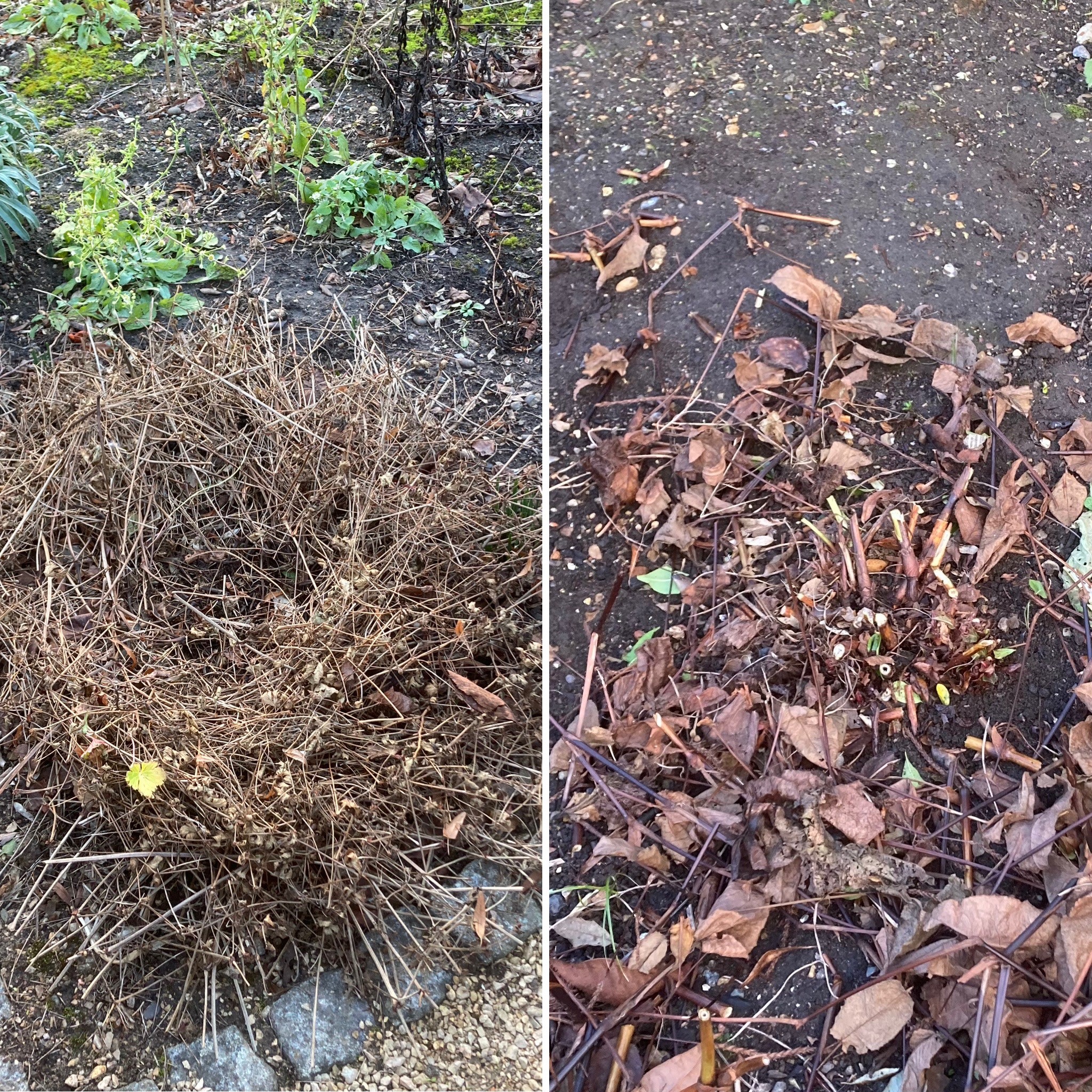
2. Remove old hellebore leaves right back to the base to show off their flowers and to stop any leaf spot or other diseases from spreading.

3. All my violas in my front window box have died and a good gardening friend reminded me it could be vine weevil larvae chewing the roots which I haven’t had for ages so turn out the window box and check for those grubs and replace with fresh compost.

4. Start pruning roses cutting back with a slanting cut to above a bud and use the resulting prunings for cuttings 6 to 12 inches long and insert into either a pot or the ground so that 2/3 of the cutting are below the soil. They take a good while to root but its worth the free plants if they root.

5. Winter prune wisteria by cutting back shoots to 3 or 4 buds from the main stem.

6. Cut back really tatty herbaceous plants but leave anything with hollow stems or stems and foliage that may harbour overwintering insects. I started cutting back a bay tree until I saw the ladybirds amongst the stems.

7. Seed potatoes can be chitted from now on by placing them so they don’t touch in boxes, egg cartons are ideal, and placing in a light frost free place. Don’t forget to label the variety.

8. Prune established soft fruit bushes such as gooseberries, red and white currants removing any dead wood and cutting back main shoots by a quarter. If grown as a bush aim for a goblet shape with an open centre to aid air circulation.

9. Look at your seed catalogues and order anything you especially want before they run out.

10. Make sure to have some scented flowering shrubs either in the garden or in pots for pollinators to include winter honeysuckle, sarcococca, daphne and viburnham and aim to plant some by your door so you can catch the scent.

Happy gardening all!

Pat K

Ed: The RHS has a shop at Bluewater, perfect for browsing for some houseplant updates, all UK grown. (Note they don’t take National Garden Vouchers though)

RHS Houseplant Shop at Bluewater

Plant of the Month: Iris unguicularis (January 2024)

As much as I love this perennial and have planted many clumps over the years, I find it struggles in my clay soil. My now, one-and-only plant,  obviously needs more sun and perhaps lighter soil, as it has flowered perhaps only once this winter and that was on 23rd November, when I took the photograph below. But Margaret T’s winter irises have been really putting on a display, with her two clumps producing 2-3 flowers at a time, on and off since December.  And these will carry on flowering well into March. I’ve seen them flowering profusely when nestled against sunny, front elevations, in poor soil. But in Margaret T’s garden, the soil is rich from regular additions of compost and manure and you can see by her photograph that she has healthy, plump plants. 

Continue reading Plant of the Month: Iris unguicularis (January 2024)

Sparkle in the Park 2023 – Avery Hill Park, SE9


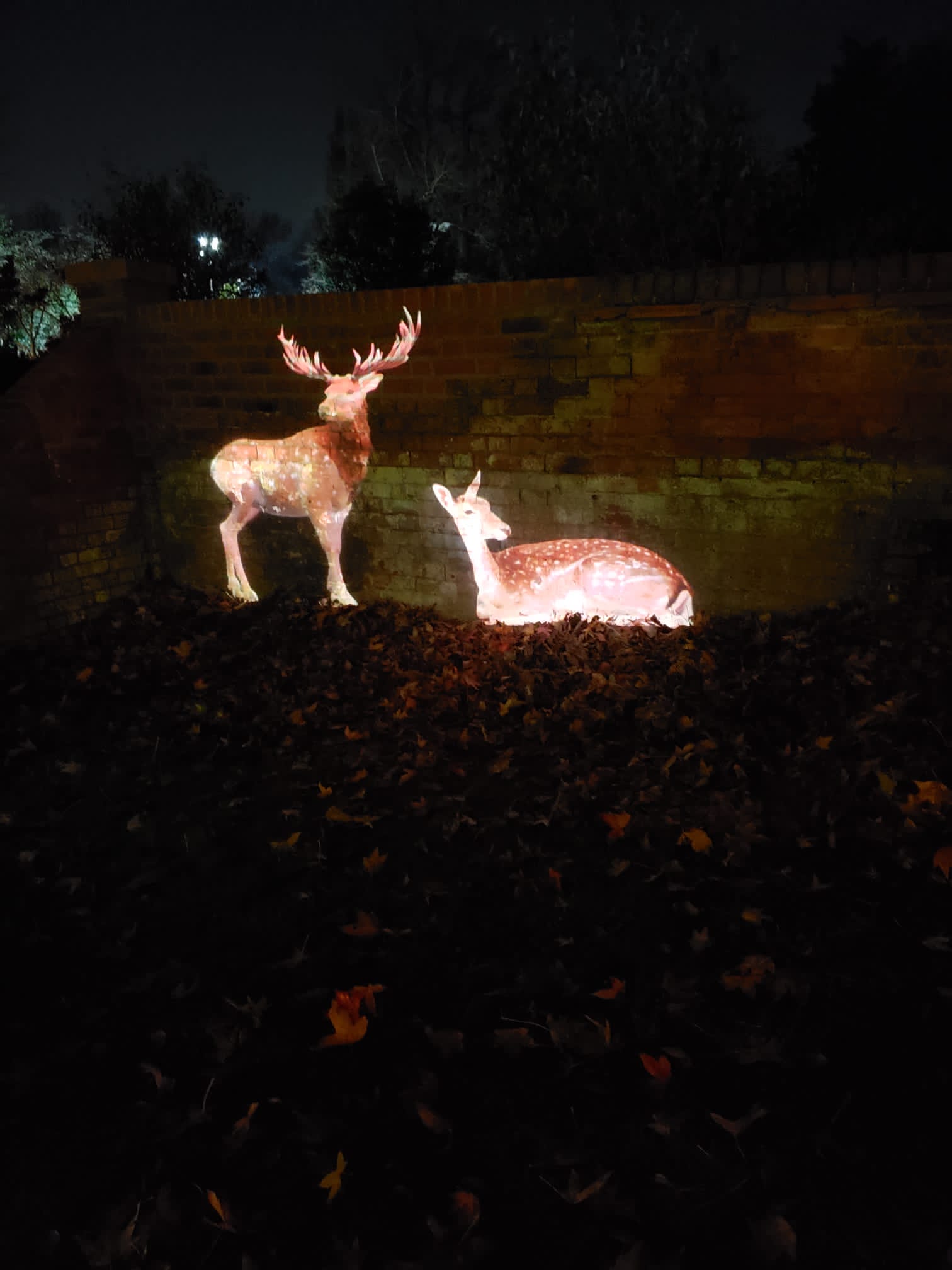
As a special, early, Christmas treat, on a very mild evening on 30th November 2023, a friend and I visited Greenwich Council’s Light Festival, the magical Sparkle in the Park, held this year at Avery Hill Park. This was Greenwich Council’s 4th Sparkle in the Park event, this time featuring many new displays, and it was nice to see the many artists being acknowledged for their spectacular creations.  The excitement was palpable as the winter wonderland trail lead visitors through an illumination of lights and enchanting displays amongst the trees. 

Continue reading Sparkle in the Park 2023 – Avery Hill Park, SE9

November 2023 Talk: Sex, Lies and Putrefaction

Timothy Walker is  a botanist with an extensive career in horticulture. He is a former Director of Oxford Botanical Gardens and still lectures at Somerville and Pembroke Colleges as well as being a Fellow of the Linnean Society and winner of four Chelsea gold medals. He came to our attention as the presenter of the BBC 4 television series Botany – a Blooming History. He gave an entertaining and informative talk which was very well received by the audience.

Like all living organisms, plants aim to ensure offspring for the next generation. Timothy described the sexual life of plants as the movement of pollen along the stem from the male anther of a flower to the female stigma to allow fertilisation. He put his discussion within the context of Darwinian theory of the Origin of the Species and Natural Selection and said pollination is less subservient than normally assumed.

He described a variety of stratagems for pollination and ways plants have developed to ensure it happens. Nature abhors inbreeding and, because of genetic problems associated with self pollination, tries to avoid it.

Continue reading November 2023 Talk: Sex, Lies and Putrefaction