OPG Diary Late March 2022

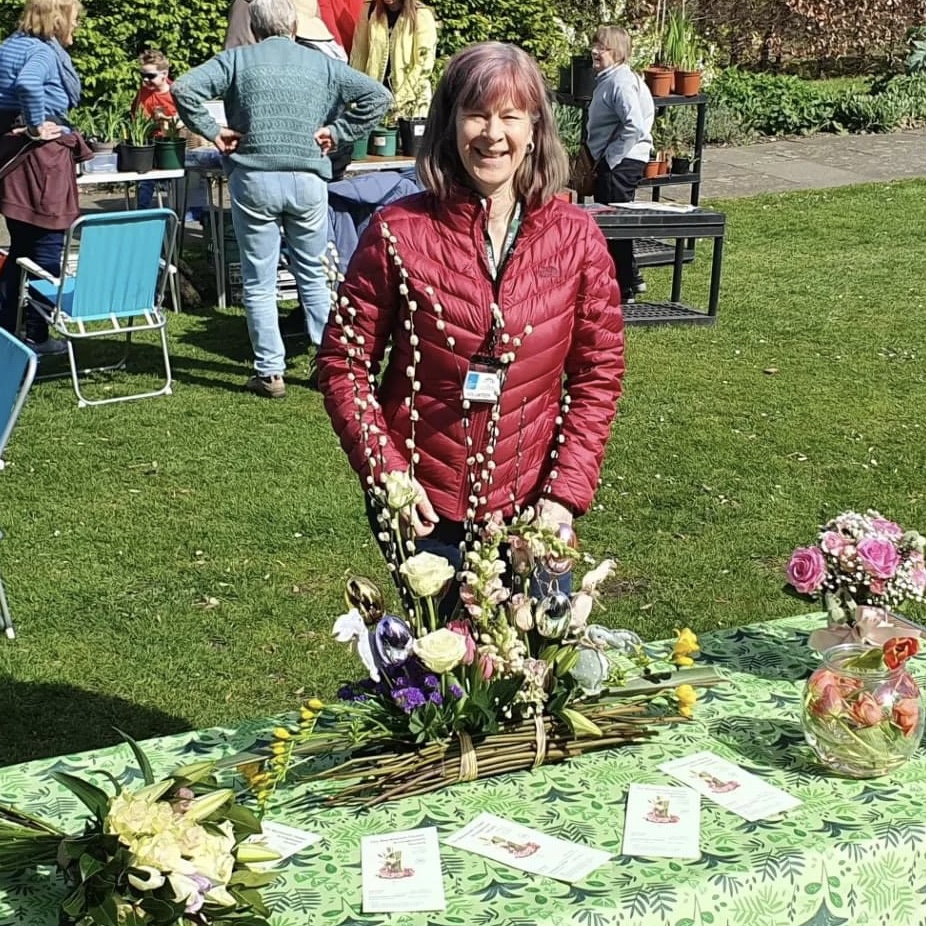
Charlton House gardens in Spring Sunshine
Old Pond Garden in Spring sunshine

The blocks of Epimedium look stunning at the moment, the flowers show up beautifully – it was worth cutting back the old leaves at the beginning of the month. New green leaves are just coming through, with lovely red markings.

Lots of the existing shrubs are coming into flower now, especially in the Peace Garden.

All Hail to the Volunteers! (Literally in this case, as our session was abandoned due to hail!)

A day trip to Gunnersbury Park

Inspired by Melanie’s wonderful talk to members about the various Rothschild gardens, Sharon & I accompanied her on a trip to see the restoration project at Gunnersbury Park. We had our volunteer project at Charlton House & Gardens firmly in mind throughout the day, and were pleased to find parallels – albeit on a much grander scale there! Gunnersbury was bought by Ealing & Acton council in 1925 (Charlton was bought by Greenwich Council in the 1920s) and used as a public park in much the same way that Charlton Park has been.  
In 2018 the “Large Mansion” was restored using Heritage Lottery and other funding and opened as a Museum housing the borough archive. Major parts of the park were included in the funding, the Orangery, lake and orchards for example. The Friends of Gunnersbury Park were instrumental in the restoration effort, and volunteers clearly play a large part in the day-to-day running.

Continue reading A day trip to Gunnersbury Park

OPG Diary March 2022

Winter is over, swing in to Spring! The garden is waking up slowly, with Euphorbia amygdaloides robbiae showing signs of becoming a Star Plant. It’s rosettes of zingy lime green are unfurling and it really shines out in the sun.

These simple, unsophisticated plants, which rarely receive the recognition they deserve for all their efforts in growing and flowering, year in, year out, without asking for any help from anyone or anything, are among many unsung heroes of the gardening world.

Also showing off, Cornus mas or Cornelian Cherry in the Peace Garden, and lungwort, borage, rosemary, to name just a few.

Snowdrop fever

As Anna writes in the latest Newsletter, January and February are the months for snowdrops.

Galanthus nivalis - common snowdrop
Galanthus nivalis – common snowdrop

Joe Sharman, the owner of Monksilver Nursery and who has come to be known as ‘Mr. Snowdrop’ has produced a variety called ‘Golden Tears’, described as ‘A narrow-flowered yellow pterugiform with a very large mark and bright yellow ovary. Very beautiful and distinct.’ The bulb apparently sold for £1,850.

A few years ago, I visited the Snowdrop Sensation weekend at Great Comp where a number of specialist snowdrop growers had stands. Some very beautiful varieties were selling for £100/£100 a bulb. I thought this a bit of a stretch and compromised, buying one for £10.00. I have watched this like a hawk each year, willing it to grow. There would be a great many tears and gnashing of teeth if I bought a more expensive bulb and lost it. I cannot imagine what one would do with a bulb worth £1,850.

Vija

February 2022: Melanie Aspey on the Rothschild Legacy in Horticulture

The talk was given by Melanie Aspey, a CABAHS member who has been the Rothschild archivist for 28 years. Providing photographs and documentation from the Rothschild archives, she said the Rothschilds are best known for banking, their art collections, philanthropy and wine, but many of them have also had  a keen  interest in horticulture reaching back to Mayer Amschel Rothschild (1744-1812), the founder of the dynasty, who lived in the Frankfurt Jewish Ghetto.

After the defeat of Napoleon, thanks to their support for the allies, the Rothschild family was able to lobby for the retention of the right for the Jewish Community to buy real estate outside the ghetto. Mayer Amschel’s son, Amschel, considered that building a house would be too ostentatious, but a garden would better serve their needs. Instead he established a garden which he subsequently opened to visitors and for charitable purposes. He spent vast sums on plants, some of which (and Melanie showed one of the plant sale receipts from the archives) he imported from England. Later taken over by the Nazis and bombed by the allies, the garden fell into disrepair but parts have recently been renovated.

Continue reading February 2022: Melanie Aspey on the Rothschild Legacy in Horticulture

January 2022: Anne Barnard on Dahlias

Anne Barnard from Rose Cottage Plants nursery in Essex has many years experience of and is a specialist in growing dahlias, as well as exhibiting widely including at RHS shows. Dahlias, which originate in Mexico and Central America, come in a wide variety of colours from pastel to rich reds and mahogany.

Anne described how planting dahlias in summer beds can transform them and suggested how to choose and use them to best effect. Anne said they provide an outlet for personal creativity, style and artistic expression. She used her own garden, field displays in Holland and Chenies Manor as illustrations.

Dahlias had gone out of fashion, but in recent years there had been a revival of interest in them.  Their rich colours were particularly attractive and ‘jewel’ gardens had become common.  Many new and more popular and often exotic looking varieties had been developed. Many originate in Holland and she visited several important and influential growers. She said after bulbs, tulips and alliums have flowered by June/July,  gardens begin to look tired and dahlias wide variety and rich colours give life to the garden and make a good display right up to the first frosts.

Anne went on to describe a wide variety of dahlias:

Continue reading January 2022: Anne Barnard on Dahlias