OPG diary – October 2021

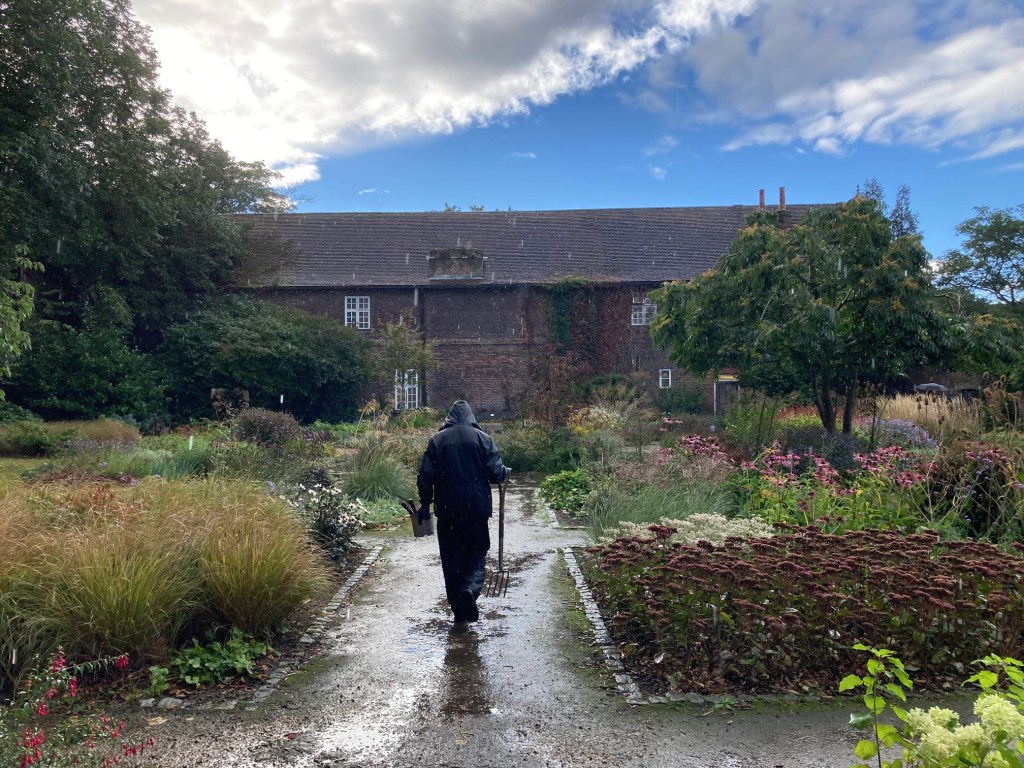
A rainy start to October! Autumnal tones everywhere now. The bees are still out in force though.

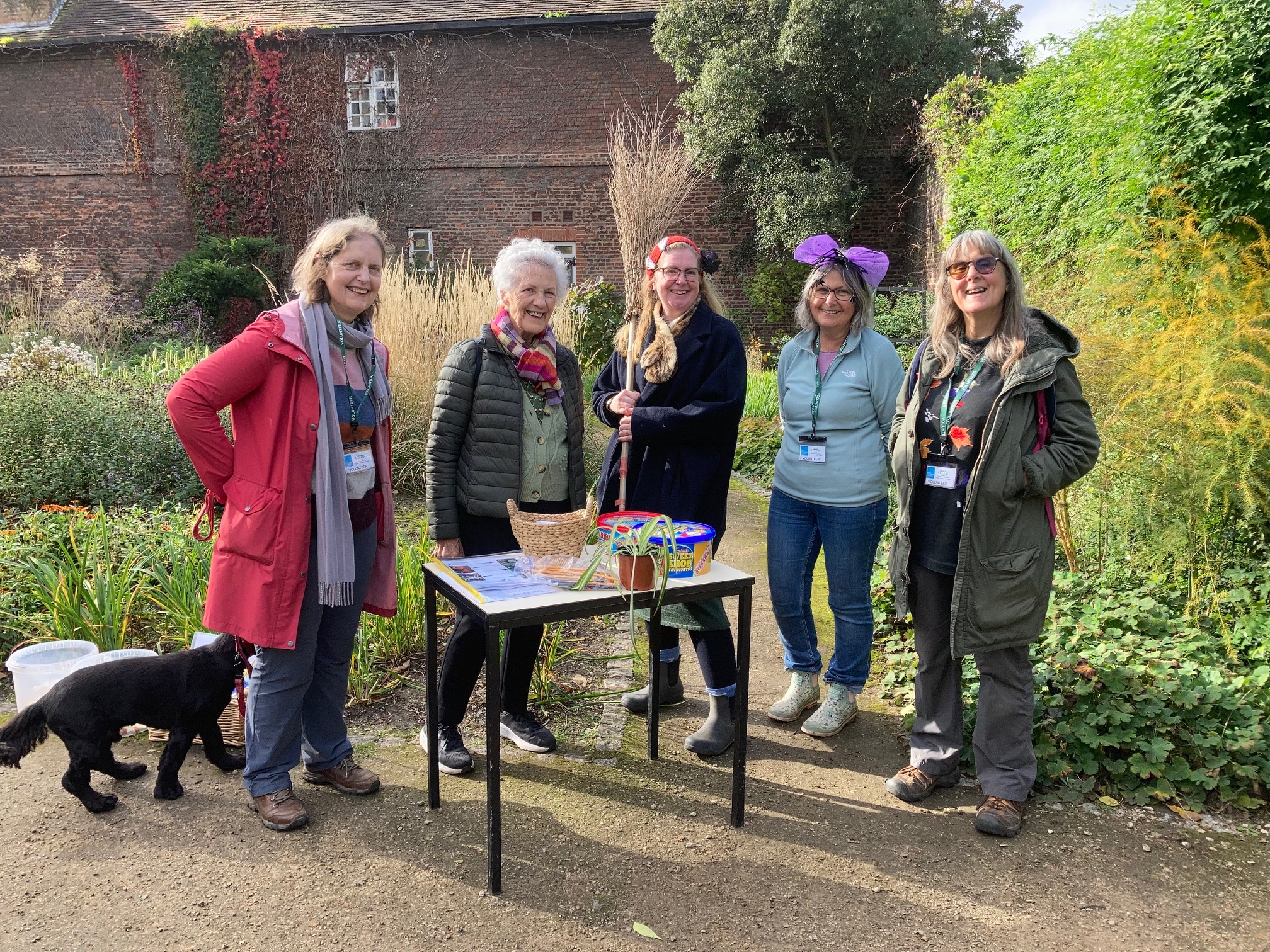
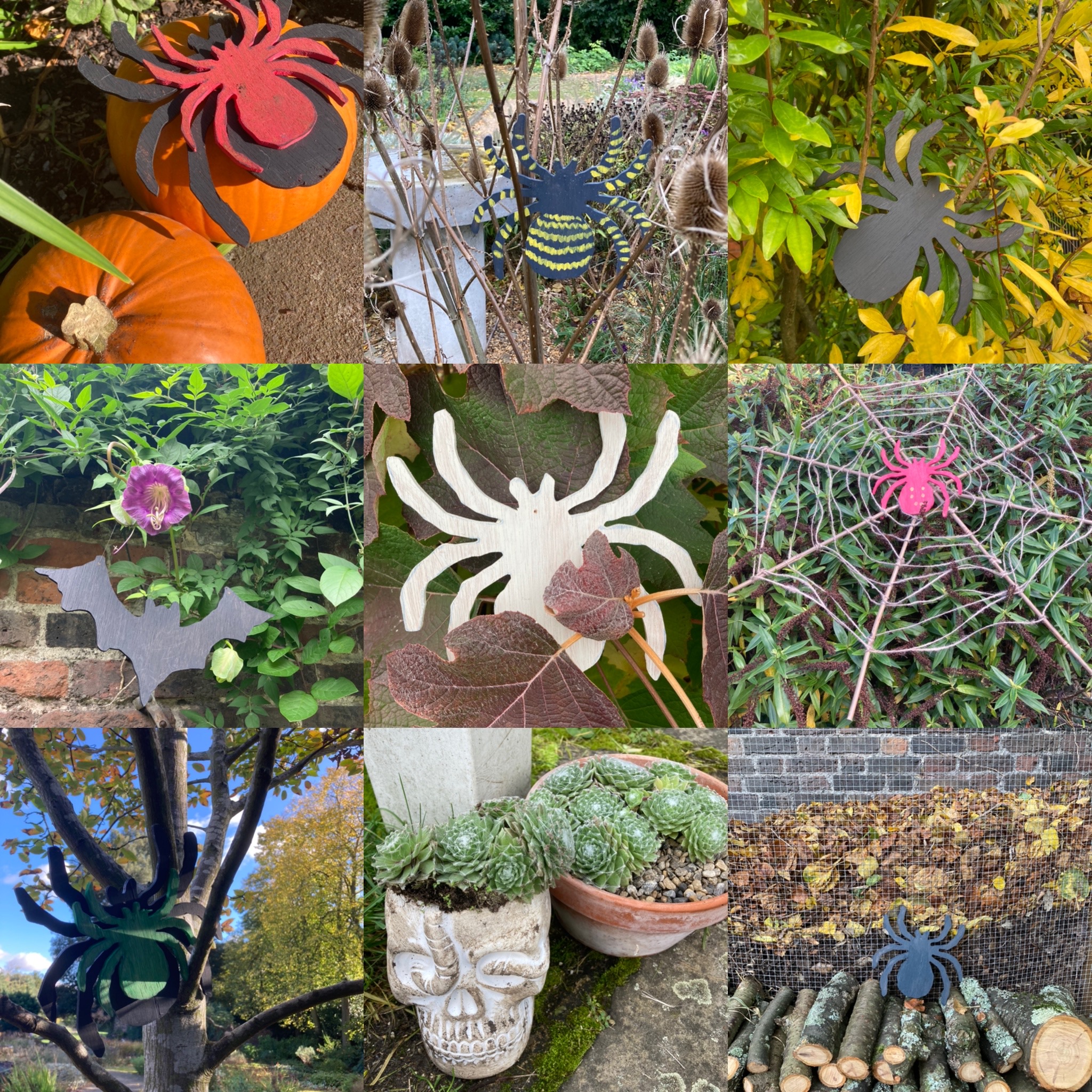
Our Halloween Spooky Spiders Trail went down well with Charlton House Explorers this half term. There were 10 spooks to find around the garden, and it kept them all busy after their Ghosts and Gargoyles session in the Long Gallery. We had 140 children through the gardens over the two days, phew.  Great fun, although we didn’t do much gardening this week!

October 2021: Dr Mark Spencer on ‘Murder Most Florid’

The guest speaker for October was Dr Mark Spencer who gave a fascinating glimpse into his experience of working as a forensic botanist. It became clear that forensic botanists are a rare find throughout the UK and the world.

He explained that from being brought up within a rural farming background in Warwickshire, he studied at the Royal Botanic Gardens, Kew. However he realised he did not want to pursue horticulture as a job and moved onto studying Botany culminating in a Doctorate looking at the evolution of fungi. While working at the Natural History Museum where he had become an expert on various aspects of botany, he was approached by a Police department asking whether he could help work out how long a body had been in a canal.

He has now worked alongside numerous police forces and an array of other experts such as soil scientists, experts in the study of pollen and forensic entomologists (study of insects) to assist in missing person searches, assessing how long human remains had been in-situ and linking suspects to crime scenes.

As a forensic botanist, Dr Mark Spencer looks for useful evidence using his knowledge of the rhythm, structure and behaviour of plants within their eco-systems. This can range from observation and interpretation of how vegetation is growing at a scene being investigated, to a microscopic identification of fragments of foliage found on clothing, to looking at the stomach contents and understanding the botany within a person’s digestive tract.

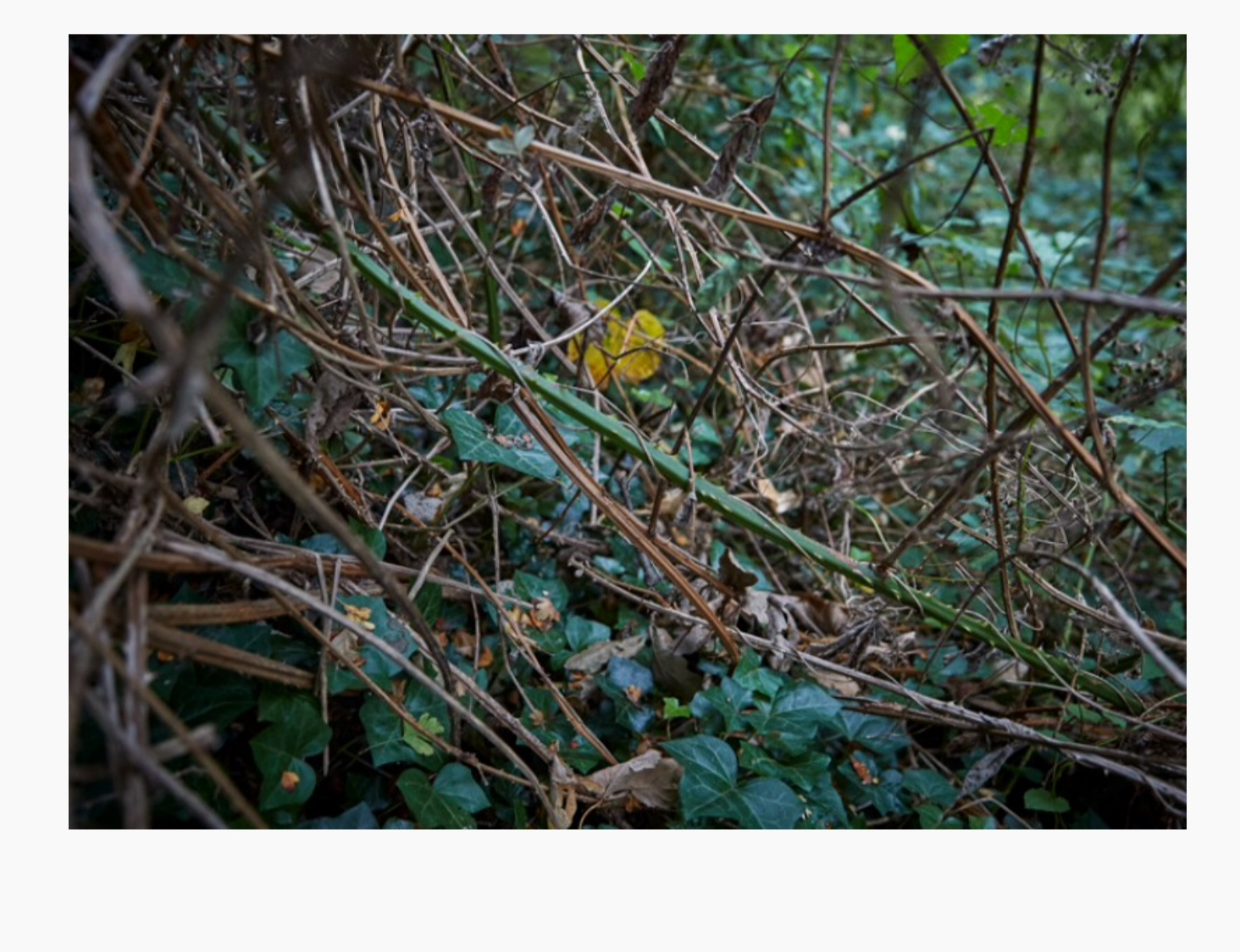
He explained how the roots of plants can help provide understanding of how long ago human activity occurred at the scene. Brambles (Rubus fruticosis) can be very useful tools for estimating how long bodies had been lying in woodlands or hedgerows through the knowledge of how they grow at different stages, when they send out side shoots and number of stems produced. I have a feeling that my walks through Oxleas Woods, which are full of brambles, will never be quite the same again!

Sharon


Dr Mark Spencer is an experienced and internationally respected botanist. His expertise covers many disciplines including forensic botany, the plants of North-west Europe, invasive species and the history of botanical science. He works globally as a writer, public speaker and television presenter and has appeared on BBC Radio 4’s The Infinite Monkey Cage. He is also Hon. Botany Curator of the Linnean Society of London. Dr Spencer’s website gives a detailed description of his range of expertise.

Charlton House Horn Fair 2021

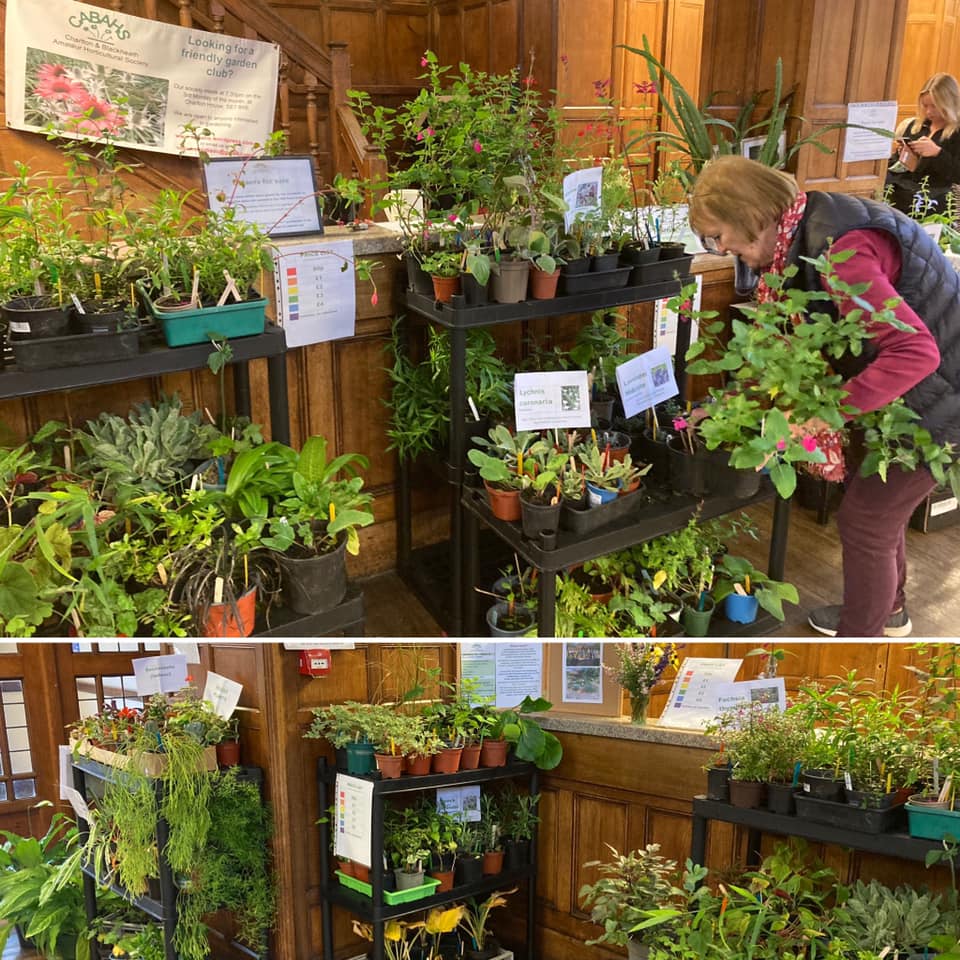
A super-successful day at our CABAHS plant stall at the Horn Fair on 17 October. This annual festival on St Luke’s Day has had a re-boot by the new team at Charlton House and was a very lively event. Our stall made £760, thank you to all who donated plants or helped on the day, these things cannot be done without you all! Lots of commercial and artisan stalls, talks and exhibitions.

A September visit

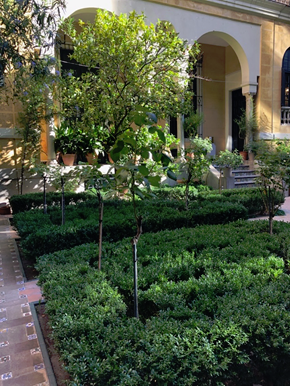
On a recent visit to Madrid, I called in to the house of Joaquim Sorolla (to my mind, one of the greatest of the Impressionist painters). Like Monet and others, he was one of those artists who loved his garden and, in later life, used it for inspiration and as subject matter. Located in the heart of Madrid, the garden has been created to manage the heat of the city. ‘The garden with its Moorish echoes is the quintessence of the Spanish garden’[1]. It is divided up into three linked but clearly distinguished parts. There is extensive use of aspidistras in huge pots to line balconies and provide focal points around the garden. Roses are grown in pots and situated throughout the garden – the ones I saw in flower were of a cream I associate with ‘Buff Beauty’. And, of course, plenty of pelargoniums in pots, most of which had finished flowering (my visit was in September). If in Madrid, do visit!

Autumn Flower, Fruit and Vegetable Display 2021

This was held on Monday 20 September in the Long Gallery of Charlton House. As one of many new members of the Society since meetings were forced to stop by COVID-19, it was my first indoor meeting!

It was a very impressive event with a total of 66 entries and I didn’t envy our guest judge, Joe Woodcock, his task. But Joe made it clear how impressed he was with all the entries, providing an encouraging commentary on the horticultural skills demonstrated, and explained why he selected the winning entry in each class.

The classes and winners were as follows:

1. Vase with single stem of any flowering plant – Viv P

2. Bowl of mixed flowers – Margaret T

3. Five Fuchsia blooms – Ruth Y

4. Ornamental pot plant – Pat K

5. A display of fruit and vegetables – Mandy & Brownie

6. A display of herbs – Ruth Y

7. Floral arrangement in a teacup – Anna L

8a. Potato Competition – Pam D

8b. Sunflower head competition – Annie H

Joe selected as Best in Show Margaret T’s wonderful display of varieties of dahlia in Class 2. Class 7 the Floral Arrangement was selected by popular vote (using buttons) and the Potato Competition was weighed by the trusty scales of Hugh P.

Joe was kind enough to answer a few gardening questions at the end of proceedings, and tea, coffee and biscuits were provided to round off the evening.

We counted 56 attendees. Everyone seemed to enjoy the event and be grateful to be able to meet up in person again. Long may that continue!

Lynda
August 2021: Amateur Gardeners Question Time “GQT”

Our amateur “GQT” was attended by over 50 members and OPG volunteers and was held outside, in the Peace Garden behind Charlton House.  Our president, Sir Nicolas Bevan, introduced the panel experts – guest panellist Joe Woodcock, plus Vija Vilcins and Pat Kane. It was an exceptional meeting.  As Sir Nicolas said, this was the first time members have met face-to-face since the beginning of the pandemic. To celebrate this it was also a social event with wine and nibbles provided – and appreciated!


Questions and Answers

Q1
Stella B: I would be grateful for some suggestions for a small or medium sized tree for my back garden. It’s a ’coming along’ garden begun a couple of years ago. There are now 3 apple trees (2 half standards and one espalier), so not another fruit tree. I really need it for some screening (it’s a terrace house) so maybe 12-15ft full grown? Not too wide a spread.

Q1 ANSWERS:

a) Joe: 

i) Although Stella was not keen on fruit trees the crab apple would be a good tree. e.g. Malus ‘Red Sentinel’ with its wonderful golden leaves.

ii) Japanese maples (Acers) e.g. Senkaki with  its yellow leaves in summer and its beautiful golden tints in autumn when its leaves become tinged with pink. Or Acer palmatum ‘Garnet’, a low growing acer.

iii) Rowans such us Sorbus acuparia and Sorbus ‘Joseph Rock’,  yellow flowers with superb autumn colour.

iv) The Handkerchief Tree (Davidia involucrata).  But maybe too large if the garden is small.

v) The Fox Glove Tree (Paulownia tomentosa).  Because it grows into a large tree, buy it young and coppice it. It will then grow into a low growing shrub with very large leaves.

b) Pat:

i) The Paper Bark maple ( Acer griseum) and the Snake Bark Maple(Acer capillipes).

ii) Amelanchier lamarkii.

iii) Prunus ‘Snow Showers’ which hangs down.

c) Viya:

i) Amelanchier.

ii) Cornus canadensis.

iii) Cercis canadensis ‘Forest Pansy’ with burgundy leaf.

Q2
Chris B: I was given a Geoff Hamilton rose at the end of May and it flowered beautifully, but there have been very few flowers since then. It is supposed to be a repeat flowerer. Is there anything I can do to encourage more roses?

Q2 ANSWERS:

a) Joe:
It’s a modern shrub rose. If bought in a pot it needs time to establish. The roots need tweaking out before planting and it needs time to acclimatise  to the soil and develop the  energy  for flowering and will very likely  flower better next year  when it has had time to acclimatise. In spring give it a mulch  and feed it with Tomorite.

b) Viya:
Referring to roses in pots she said she had  kept an Emma Hamilton rose in a pot and it needed a regular feed  because the soil gradually lost its nutrients.

Q3
Pat K: I’ve got scale insects on the trunk of my Viburnum bodnantense Dawn. It’s planted in a pot as no room in the garden. The best way to get rid of it without any chemicals, please?

Q3 ANSWERS:

a) Joe:
Using cotton buds with methylated spirit, and squish them! Systemic fertilisers have been mostly withdrawn nowadays. Ants may form nearby which harvest them, but they are harmless.

b) Viya:
She said she has used a fingernail scrub. A labour of love. But they didn’t come back.

Q4
Carolyn H: My clematis (several varieties) are covered in black fly this year. The flowers are also being eaten. Are these two problems related? Is it a particular problem this year? How can I prevent it happening in future. Three questions actually!

Q4 ANSWERS:

a) Joe:
He said that his clematis were the best they have ever been this year! But the black fly problem may be due to the weather conditions this year. Use a hosepipe to wash them off or squash them with your fingers. If you use chemicals use a fatty acid one not a systemic . They may have been eaten by slugs and snails. Well known ways of getting rid of these include using egg shells, beer traps and   wool. Also there is the book ‘50 ways to Kill a Slug’ by Sarah Ford.

b) Pat:
Go out at night with a torch and pick them off.

Q5
Kathy A: Do you have any suggestions or rules for how to space perennial plants out in a herbaceous border? I always start off ok but by about now everything looks squashed and lots of fighting for space going on. I was always told not to leave bare soil between plants as then you get weeds, but I don’t seem to be able to find that happy medium.

Q5 ANSWER:

a) Joe: I do the same. I suggest you cut back the thuggish plants in summer and make space for others. If it is a new border plant in odd numbers e.g. 3, 5, 7 etc. Fergus Garrett at Great Dixter has produced a video showing how to space out plants.

Q6
Melanie A:  I would appreciate some suggestions for plants to go in a shared space. This is the scenario: our houses are fortunate to share a fairly large open space for which the householders are jointly responsible. We keep maintenance costs to the minimum by doing much of the work ourselves. Some of the trees planted many years ago by some householders help shield us from the horrors beyond, but they cast a lot of shadows. It would be great to have some thoughts  on how to put some items of interest in this space, something that can’t be mistaken for lawn by enthusiastic mowers.

Q6 ANSWERS:

a) Joe:
In shaded areas plant Mahonia, Camellia, Elaeagnus and in damp shade ferns e.g Dryopteris wallichiana and Dryopteris filix-mas. Also plant in groups: Epimedium , Pachysandra terminalis, Pulmonaria  ‘Sisinghurst White’. Foxgloves (Digitalis) and Japanese anemones(e.g.Honore Joubert) to show up in the shade. Spring bulbs like Tulip Red Riding Hood and Tete-a-tete.

b) Viya:
Miscanthus which initially only needs minimal watering just to get it going. Also Nandina domestica and Hydrangea ‘Vanilla Phrase’.

Q7
Angela B: Have you any suggestions for getting rid of pond duck weed?

Q7 ANSWER:

a) Joe: You can never get rid of duck weed. But use waders and a metal rake to clear it. Do leave it on the side for a day so that any organisms in it that need to live  in the pond can return to it. Also, if new, place your pond near a bit of shade. Put in oxygenators and pond plants that will help maintain a balance such as irises and marsh marigolds(Caltha palustris). Try to maintain at least one third cover with lilies and marginals. Also a fountain would be useful.

Q8
Anne R:  I have a Sorbus (Rowan)  which I think is Sorbus ulleungenis ‘Olympic Flame’.  It’s about 8 years old and still quite small and every year some of its growth dies back. It’s in a north-by-northwest  garden, so it gets some sun, on heavy clay but well drained. Am I doing something wrong or is it the wrong tree for the space. I know I’m not the only person with a die-back problem I saw a Sorbus in Greenwich Park recently with the same problem.

Q8 ANSWER:

Joe: The rooting of Sorbus is vulnerable to extremes of environmental conditions. It doesn’t like heavy wet soil in winter and cracked soil in summer. Take a garden fork and lift and reduce compaction around the roots. Waggle the fork in the roots (“terra vent”). Mulch in winter. Monitor the tree and cut out dead wood.

Angela