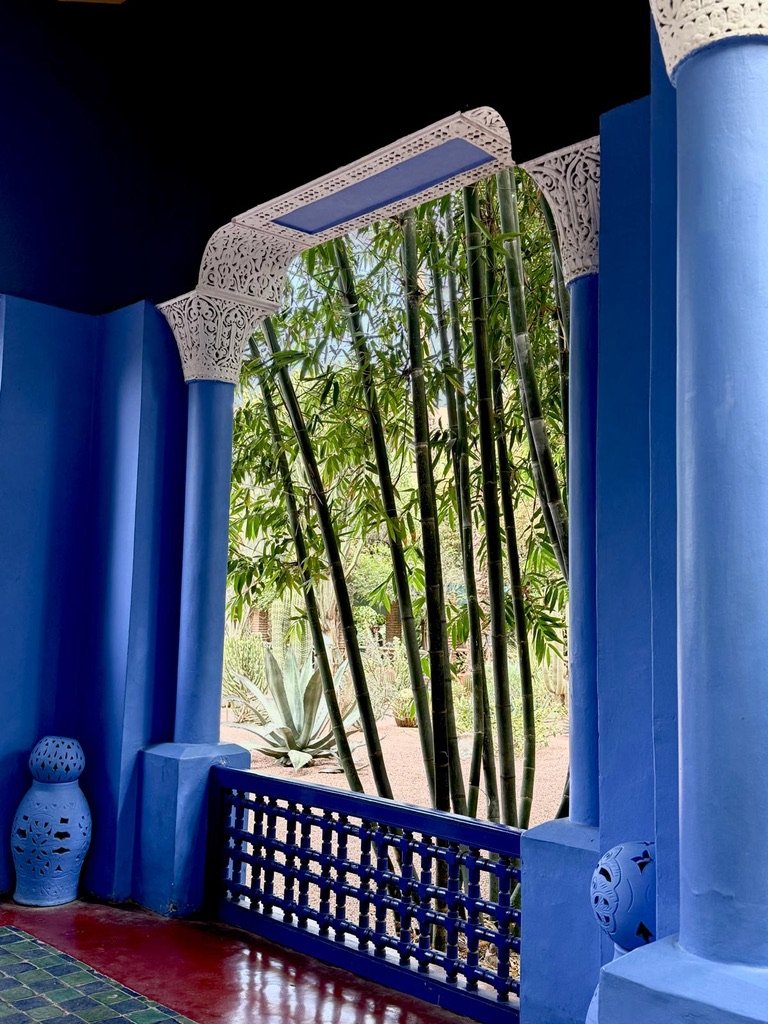
You really need to arrive before 11am to appreciate Le Jardin Majorelle, before it gets too crowded. It is absolutely stunning.
Initially created in the 1930s by Jacques Majorelle, after whom the garden is named, the garden fell into disrepair in the 1950s. In the 1980s Yves Saint-Laurent and Pierre Bergé set about restoring it. Today the garden and villa complex is open to the public, housing the Berber Museum with the Yves Saint-Laurent Museum close by (both well worth a visit) and has become a major tourist destination in Marrakech, attracting more than 700,00 visitors annually.
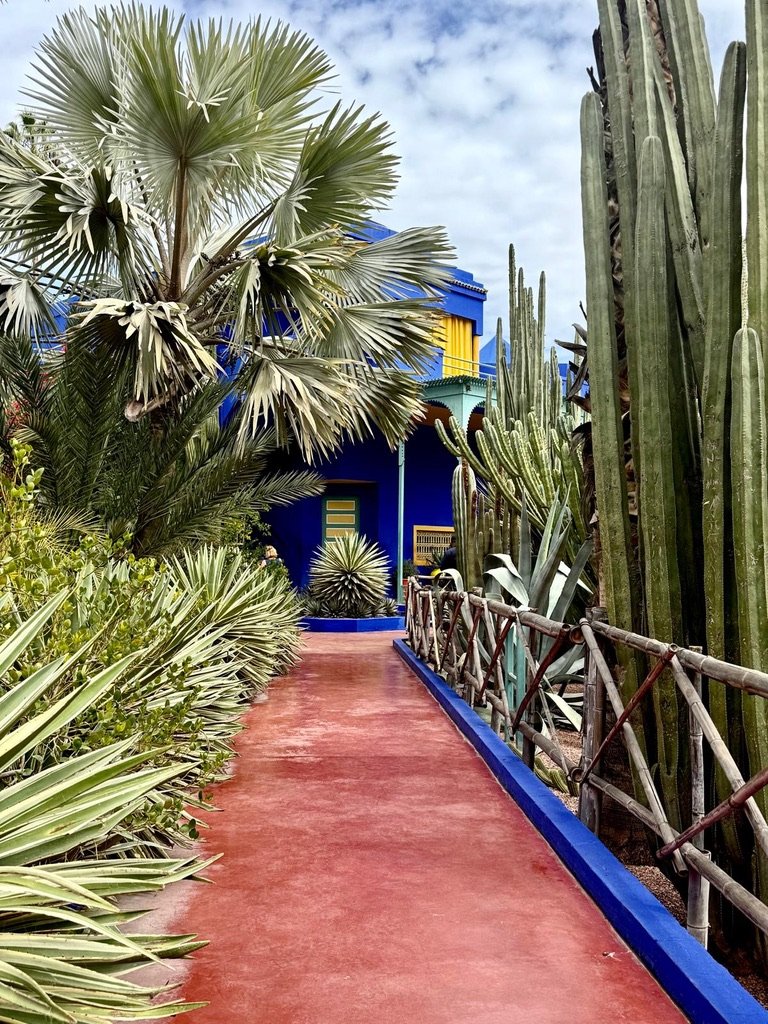
Plants from five main groups fill the garden: cacti, palms, bamboo, blooming potted plants and aquatic plants. What makes the garden unique is the incredible cobalt blue, yellow and red used in the hardscaping and it is probably the blue which has made the garden so famous.
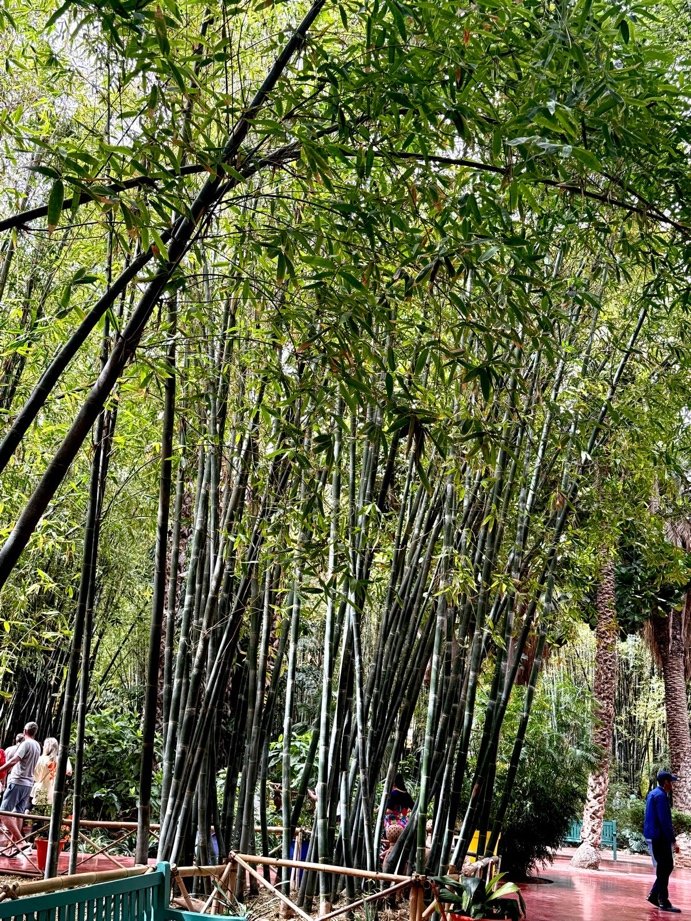
On entry you are greeted by a grove of immensely tall and imposing bamboo, with stems so smooth and broad they invite you to touch them!
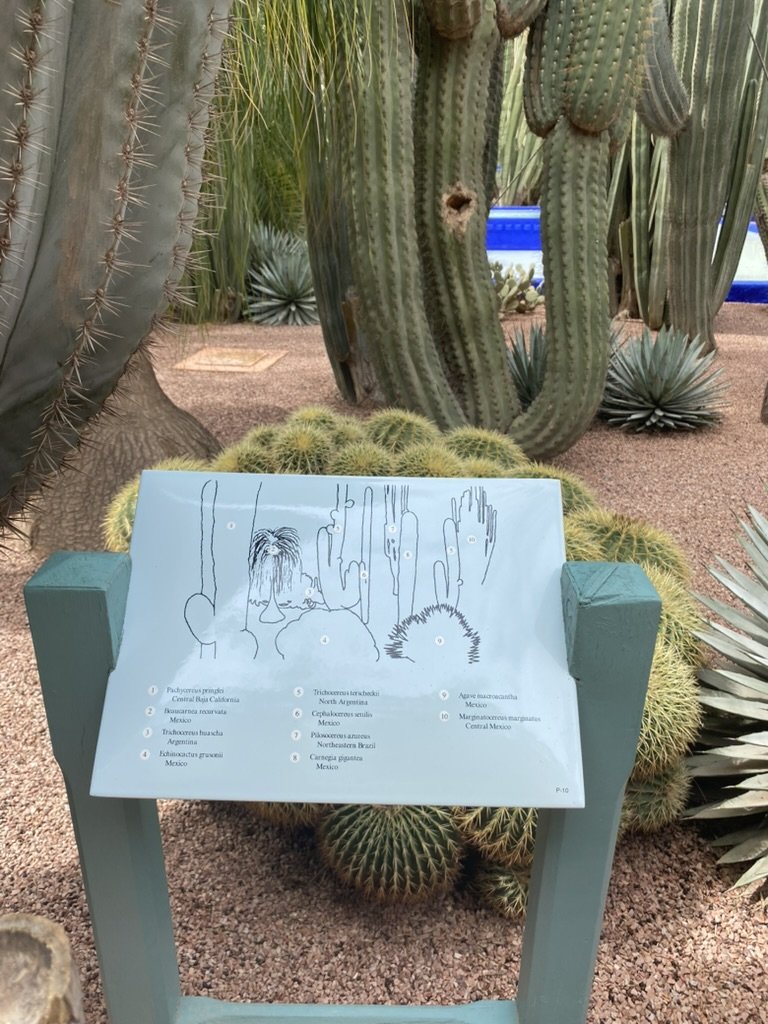
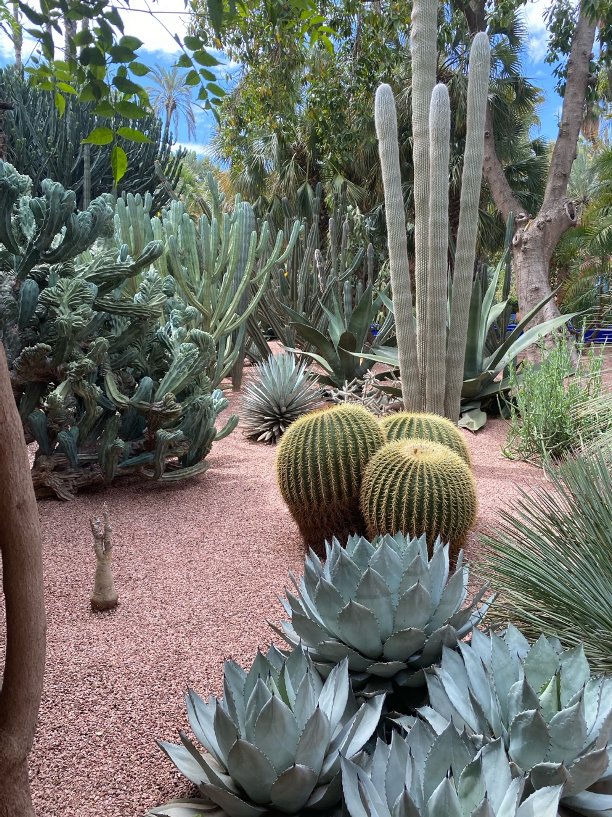
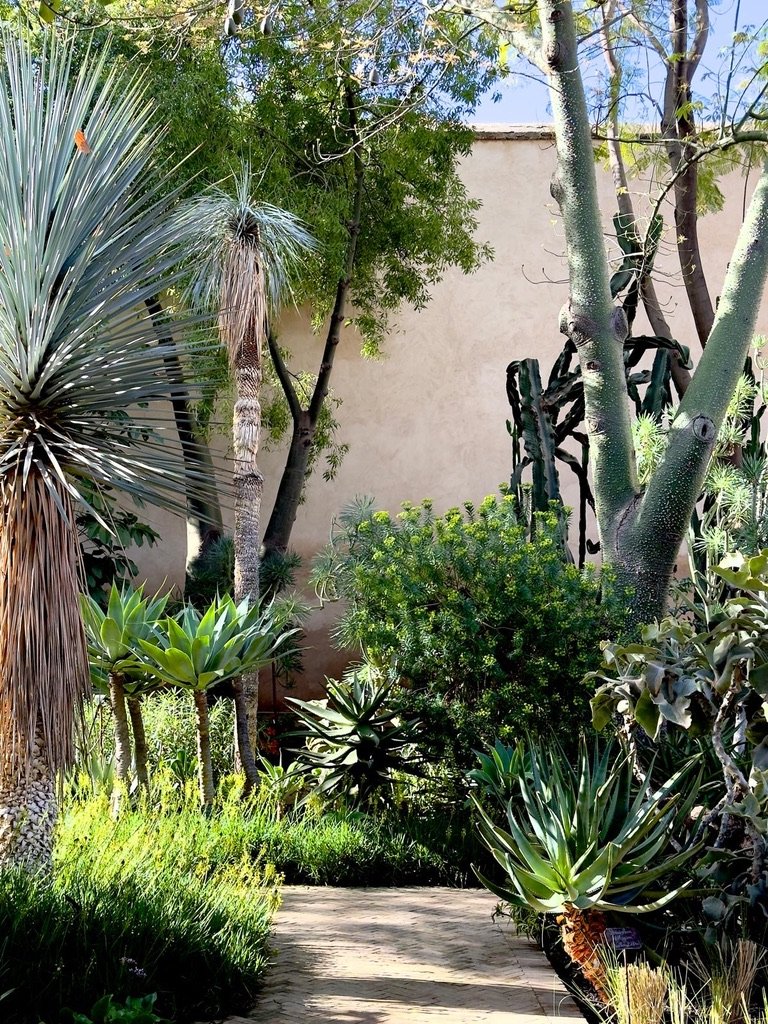
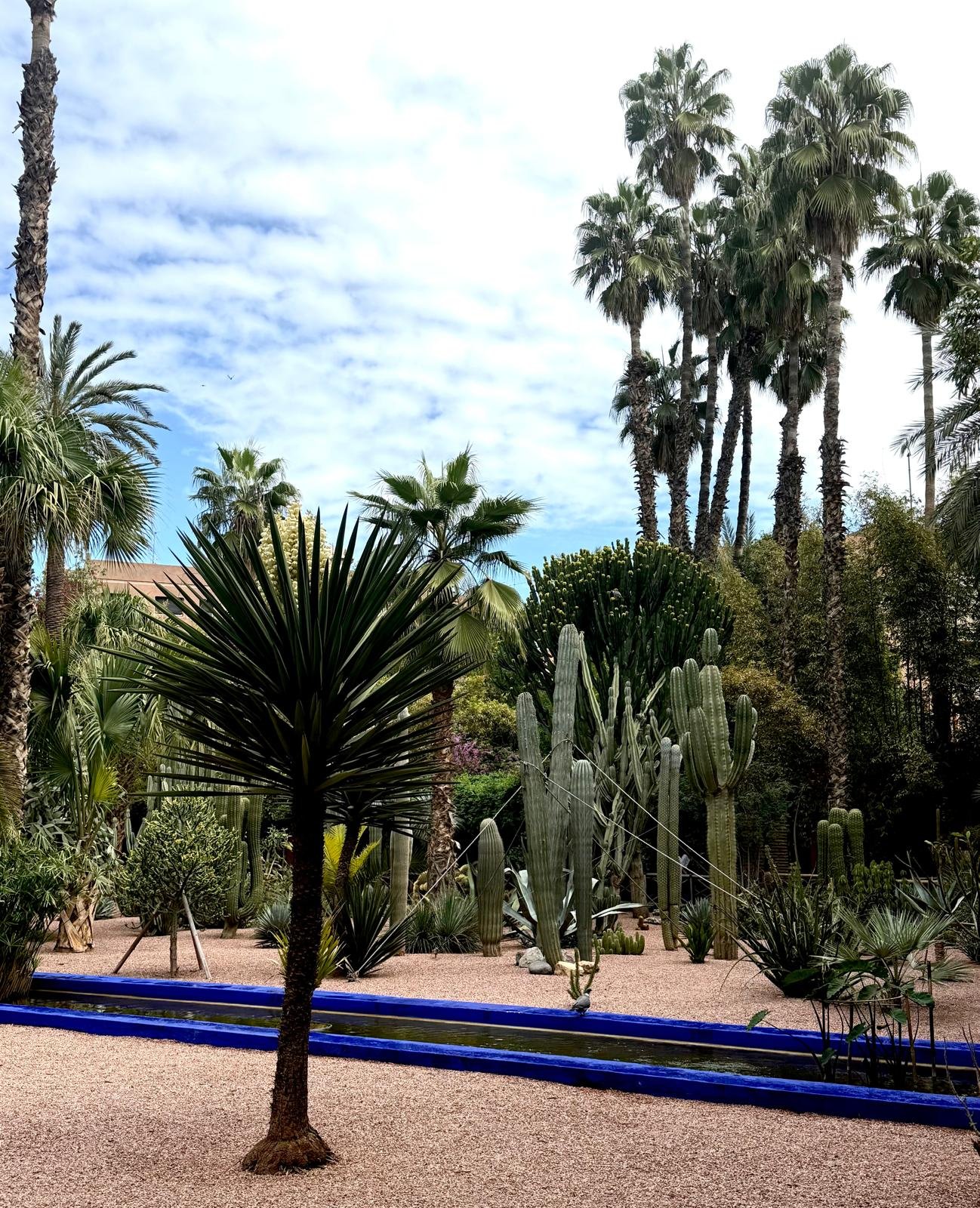
The Jardin Majorelle is completely exotic, filled with agave, yucca and cacti of many different varieties. The cacti are beautiful and fabulously shaped. All are sited in immaculately tended gravel beds, sometimes featuring small sculptures. Very usefully, many of the beds have a guide to the planting.
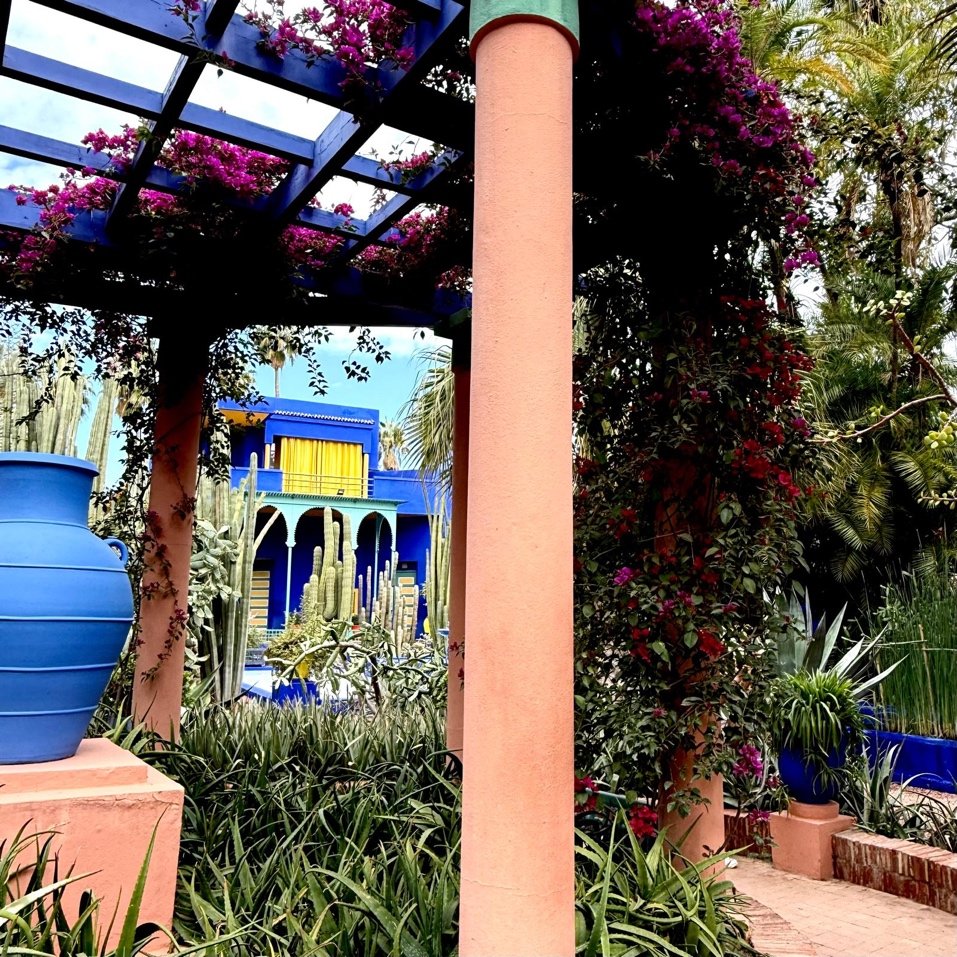
All the ‘views’ of the garden seem to be artistically composed so that there is a harmonious feel to the place.
Of course, water is an important feature of the garden – there are channels with edges painted blue, lily-filled ponds and fountains, which bring a sense of peace in a space which could otherwise appear overcrowded.
Kalanchoes, agaves and echeverias fill the low walls that line the paths.
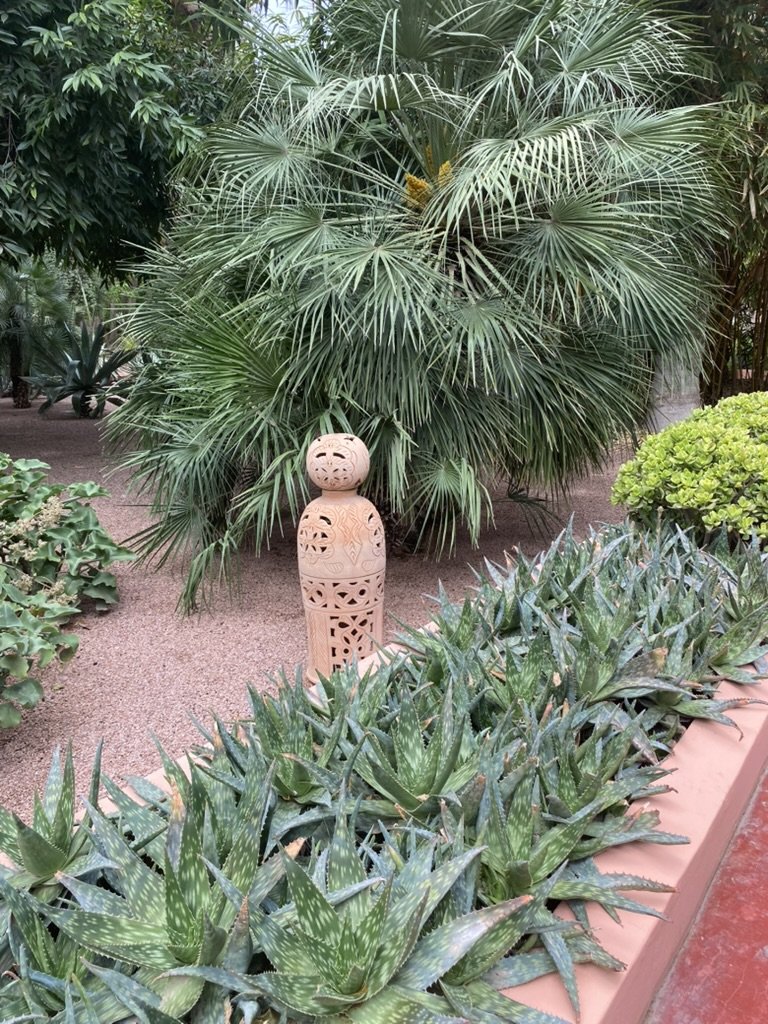
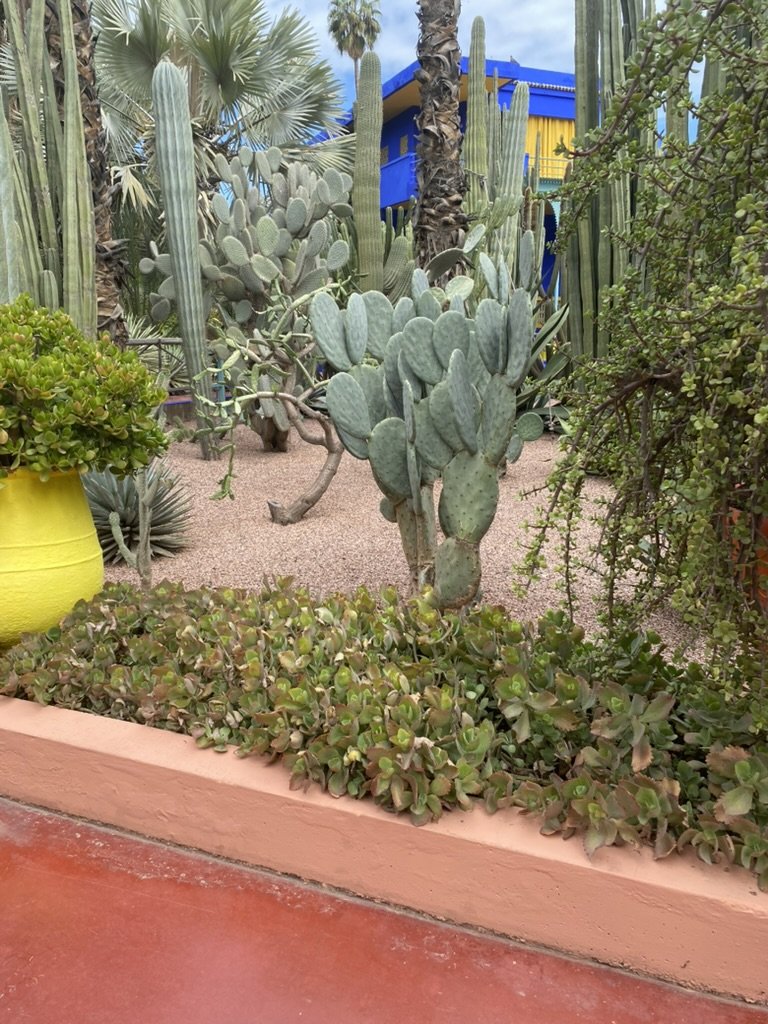
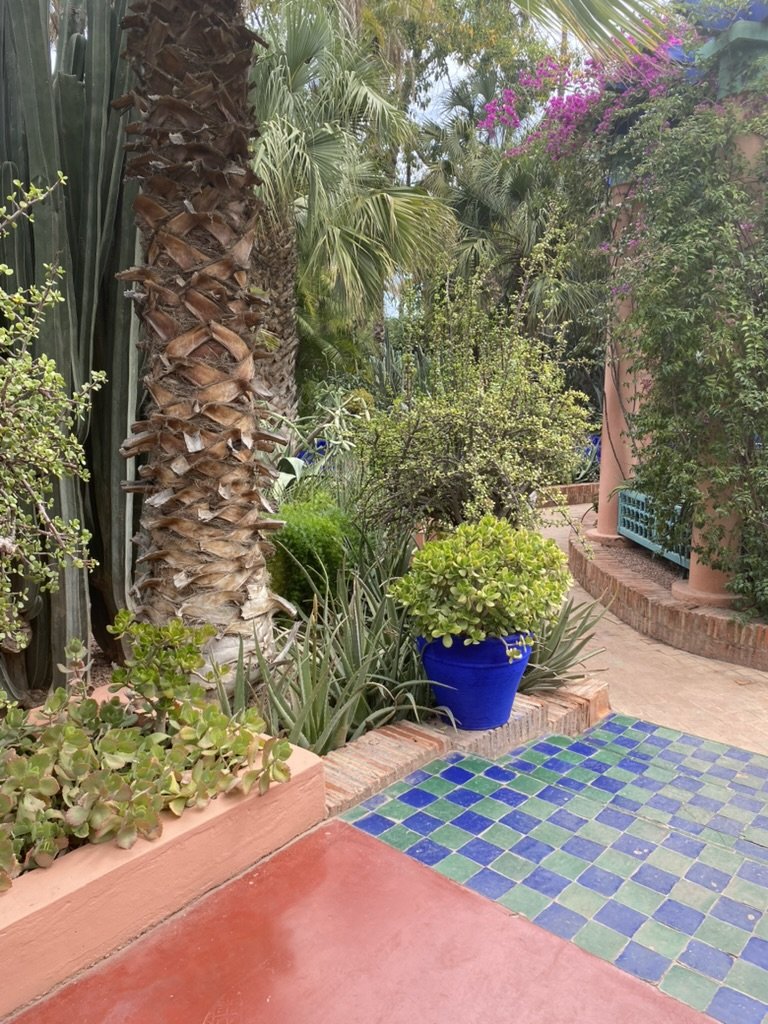
Dotted around the garden, often flanking pathways and creating focal points, are containers in blue and yellow.
More pops of colour are provided by clivia, some flowering echeverias and bougainvillea adorn the walls.
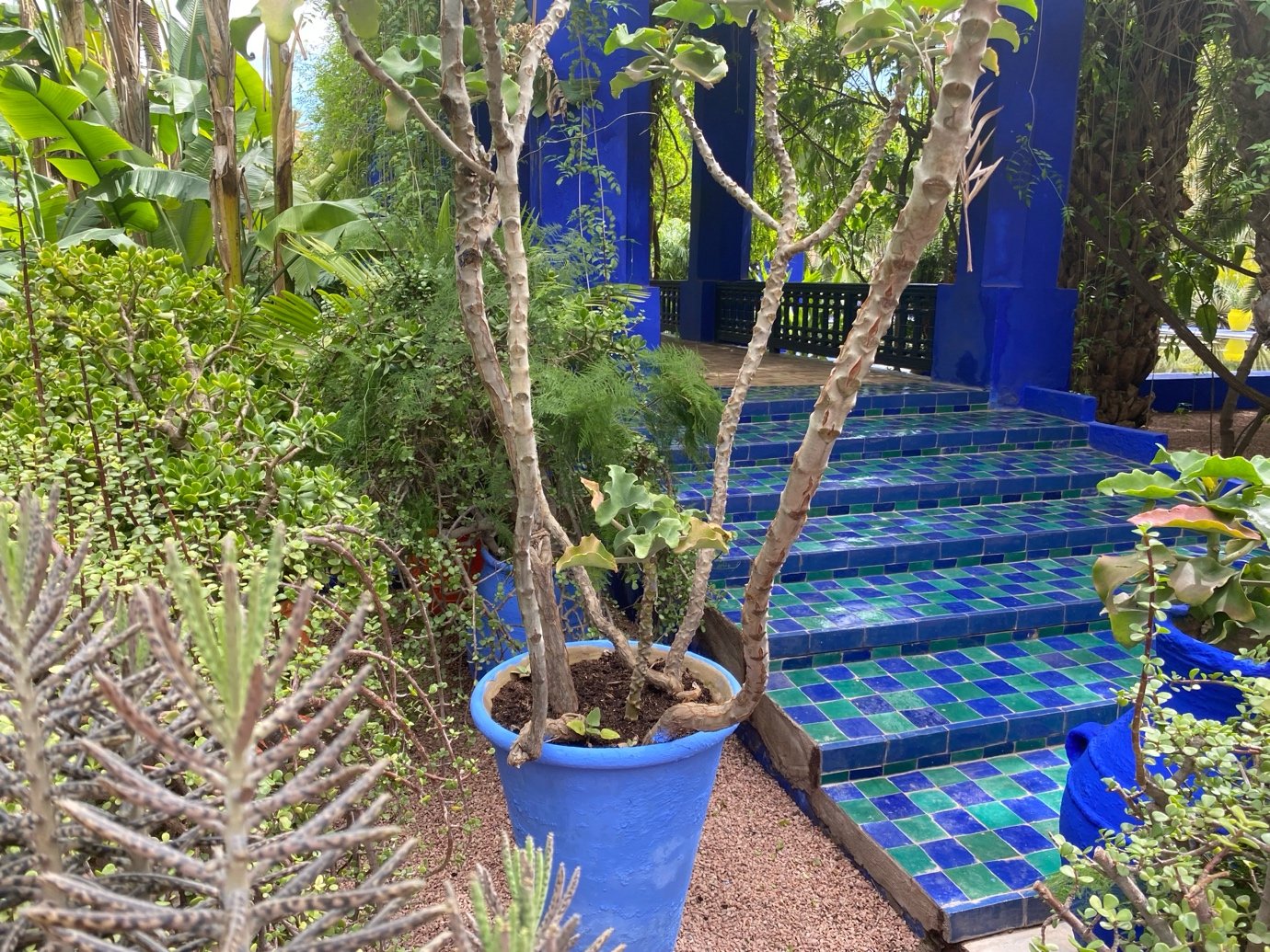
I was intrigued by this shapely succulent which featured in several pots as well as in the garden itself.
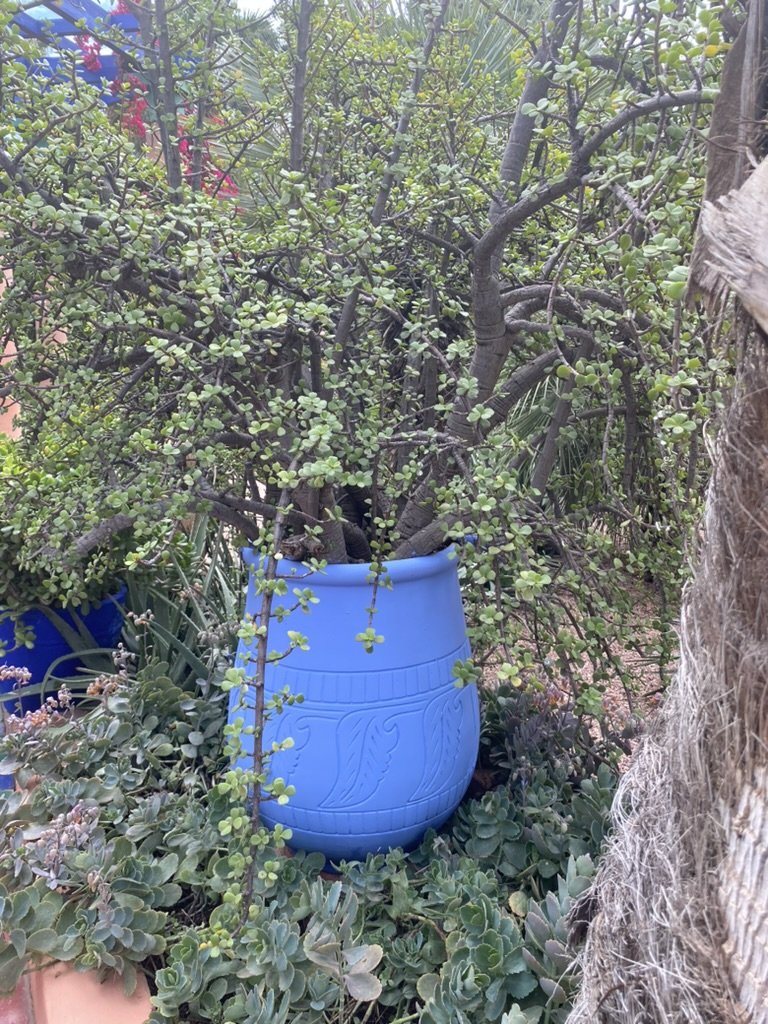
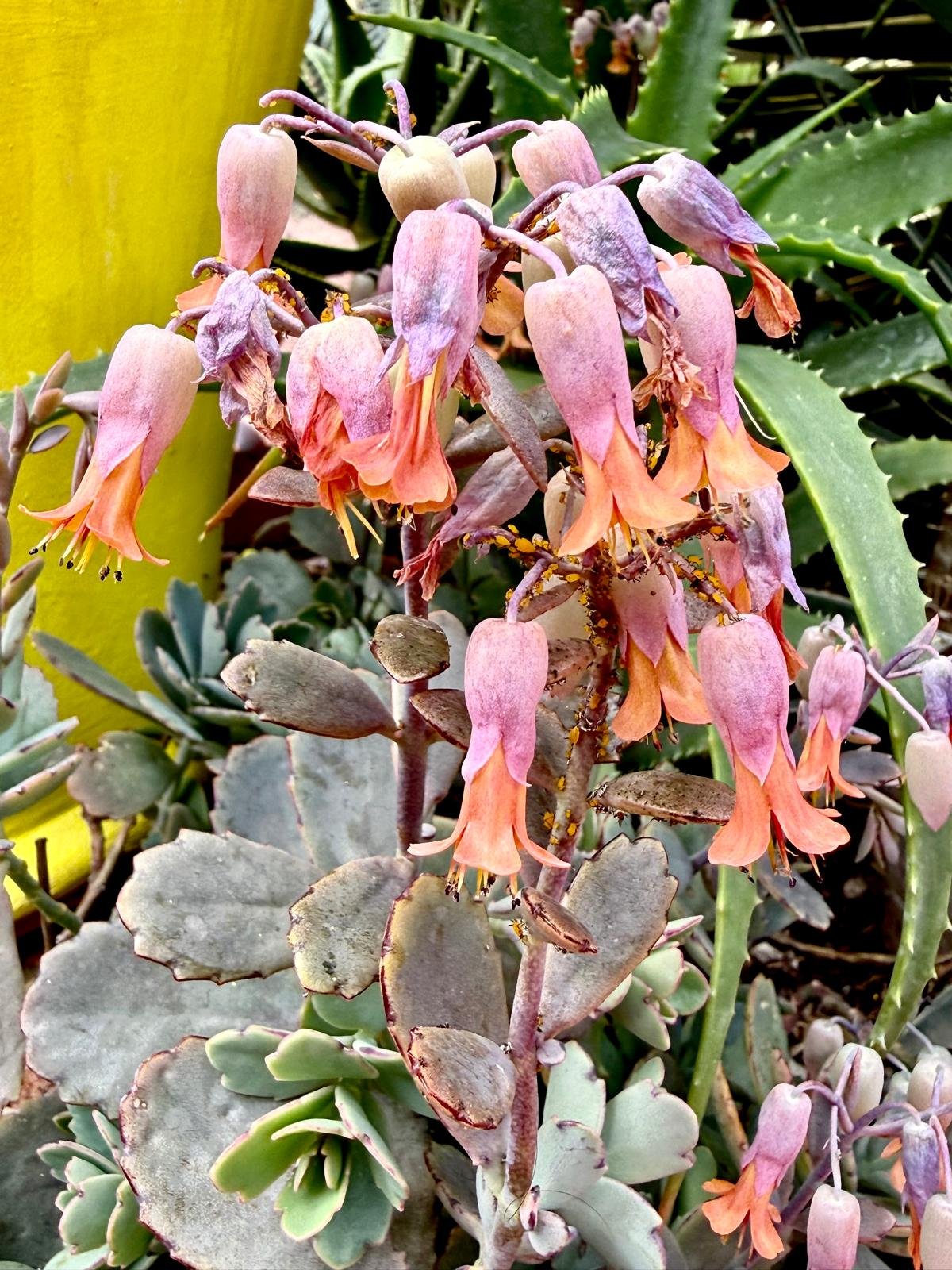
The terracotta colours that dominate Marrakech are echoed in the walls and paths, but contrasted superbly with the intense blue that the garden is famous for. Majorelle had noted this shade of blue on his travels and used it extensively in the garden and its buildings and the colour ‘bleu Majorelle’ is named after him. Prior to his death, Majorelle trademarked the colour name and today it is a significant feature in the space.
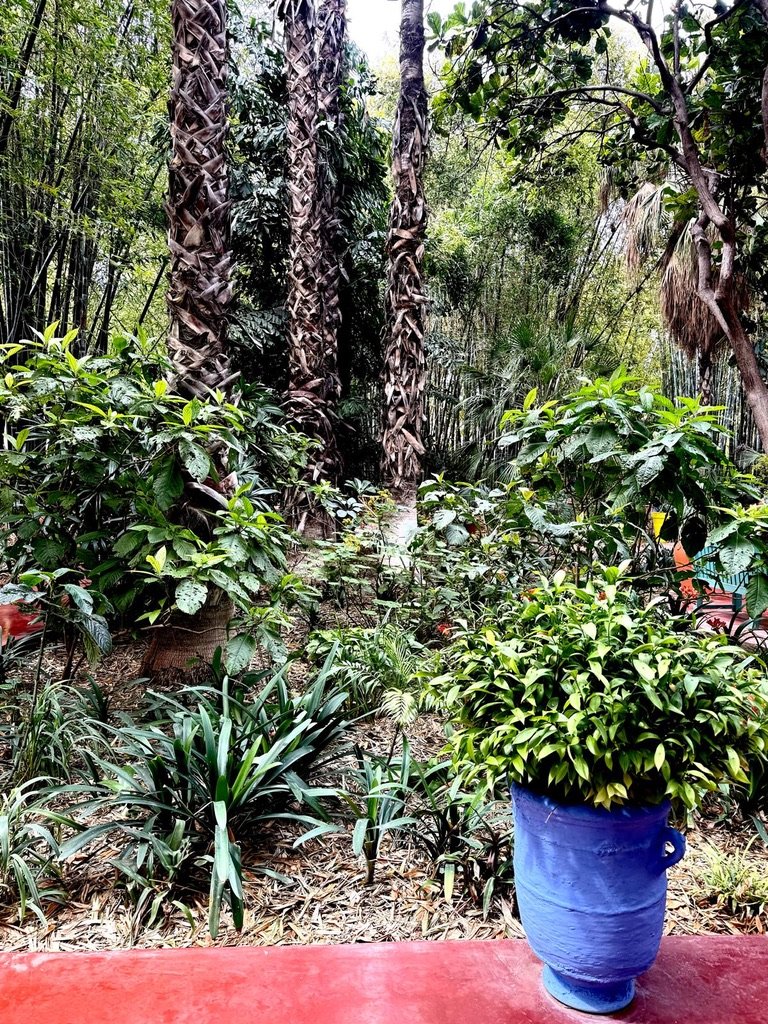
Despite being so heavily curated, the garden creates an enormous sense of peace, which is quite remarkable in the centre of a bustling city.
This is an incredibly tranquil garden, although it may be less so at the height of the tourist season. The design and planting lend themselves to relaxation and reflection. It is almost worth travelling to Morocco for this alone! Get your tickets before you go in order to avoid the queues and make time to grab some refreshment in the beautiful restaurant adjoining the garden.
Vija V, March 2026
Discover more from Charlton and Blackheath Amateur Horticultural Society
Subscribe to get the latest posts sent to your email.
 Charlton and Blackheath Amateur Horticultural Society