On Monday we welcomed Everett Leeds who gave us an amusing and highly informative talk about the prolific world of Clematis. He has been involved with Clematis for many years through growing, speaking and writing about them. He has been the Chairman of the British Clematis Society four times and is co-author of The Illustrated Encyclopaedia of Clematis . Everett’s enthusiasm for the genus was highlighted when he shared a photo of his former home with the front fence, hedges and trees completely swamped by a 120 foot long and 40 foot high ‘monstrous’ C. Montana. After cutting this completely away, he planted another!
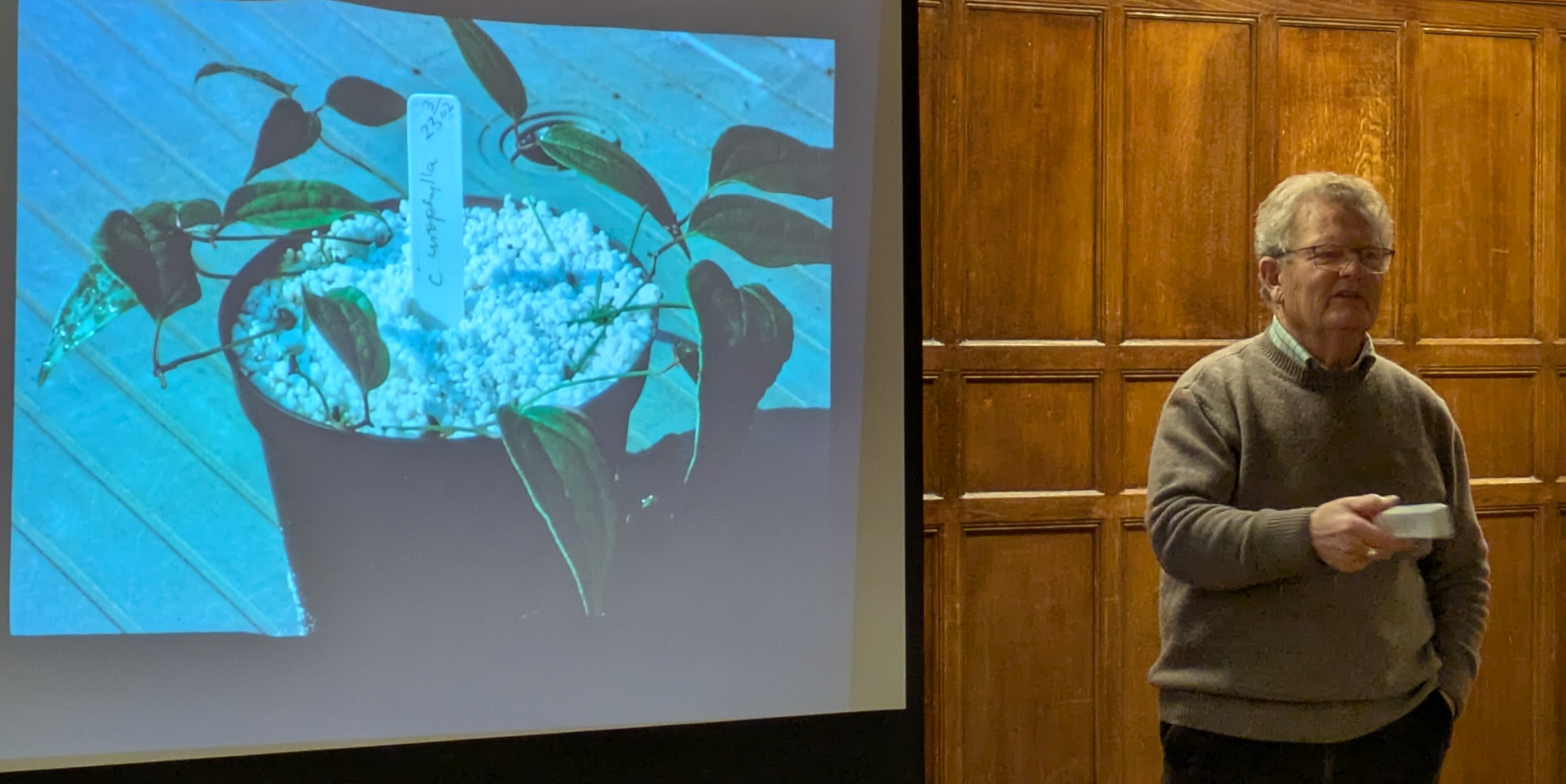
Everett has grown Clematis from seed, hardwood and softwood cuttings. He explained how he prefers to grow his cuttings in Perlite which he ensures is kept just damp and certainly not over watered. However peat-free compost mixed in with a large proportion of grit can also be used. His hardwood cuttings are kept outside in pots. Semi-ripe and softwood cuttings can be put in a propagating case or a plastic bag. The cuttings take about 5-8 weeks to root and are then put into the smallest pot that the roots can be accommodated in. The growing tips should be pinched out to encourage more branchlets.
Some of the diseases Clematis are prone to was touched on, particularly Clematis Wilt. This airborne pathogen leads to an instant collapse of the plant which was dramatically demonstrated by Everett at different times during the talk! He suggested that affected clematis should be pruned hard to 6 inches above the ground, fed and watered. If the same plant wilts a second time, it should be dug up and thrown in the bin. The good news is that a new plant can be grown in the same spot.
The only native Clematis growing in England at the beginning of Elizabeth I’s reign was ‘old man’s beard’ – Clematis vitalba. Everett explained how the introduction of different varieties came first from southern Europe in the Elizabethan era and later from around the world, particularly China, where 75% of the wild varieties are found. Coupled with the dedication of certain nurserymen such as Jackman in the late 1850s and Jim Fisk after the Second World War, who introduced, bred and hybridised a number of cultivars, there is now an ever developing range of Clematis.
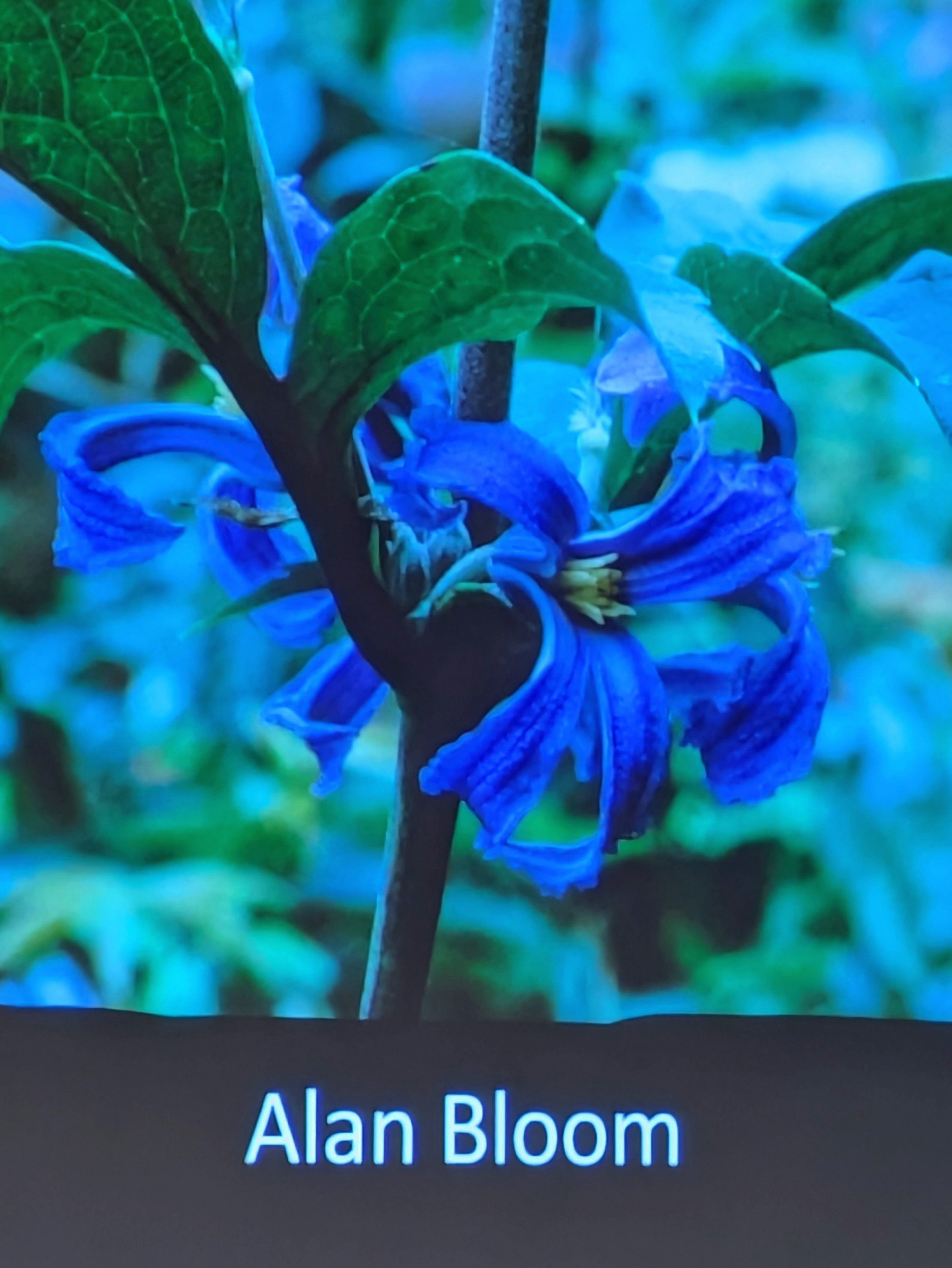
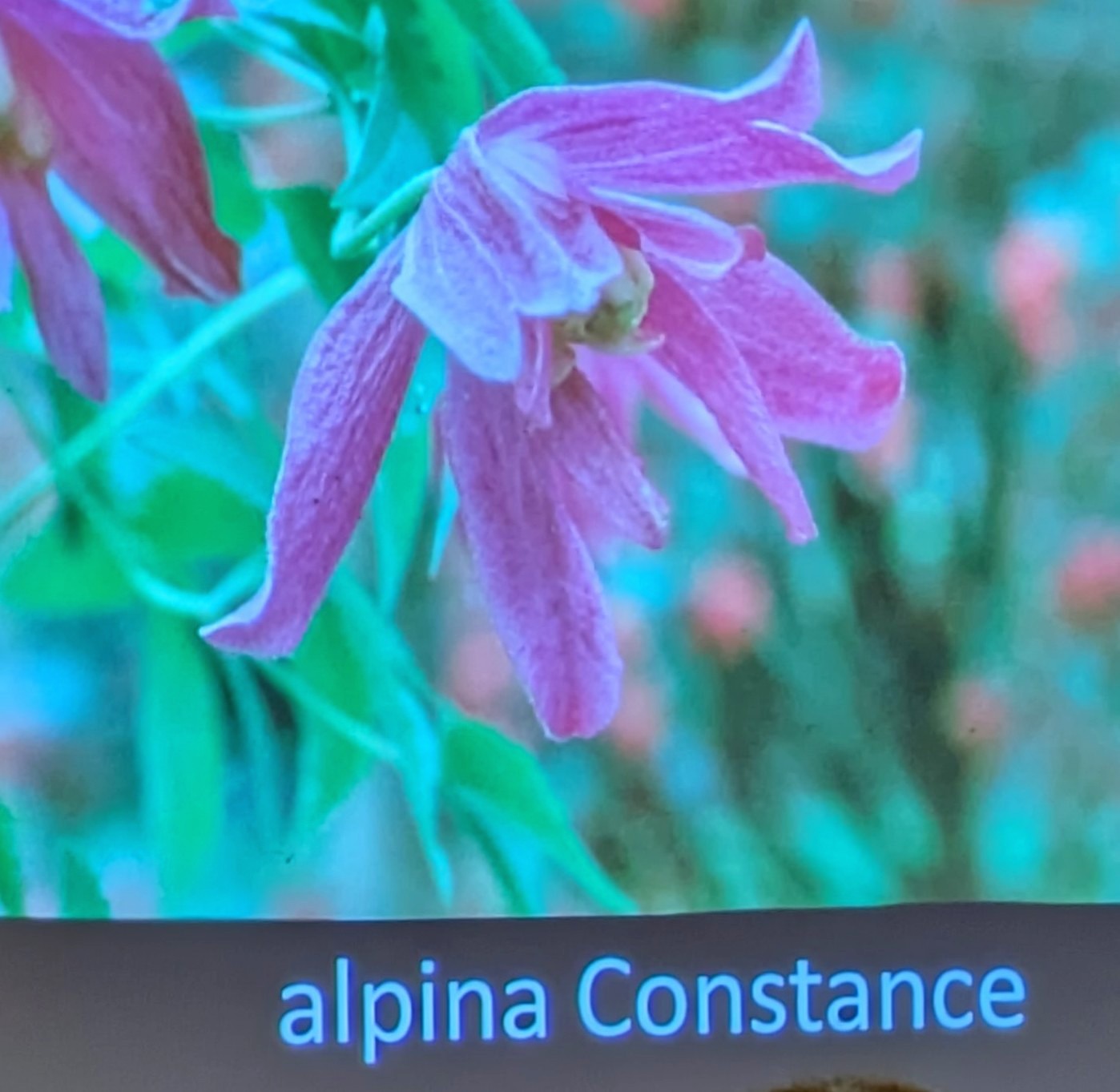
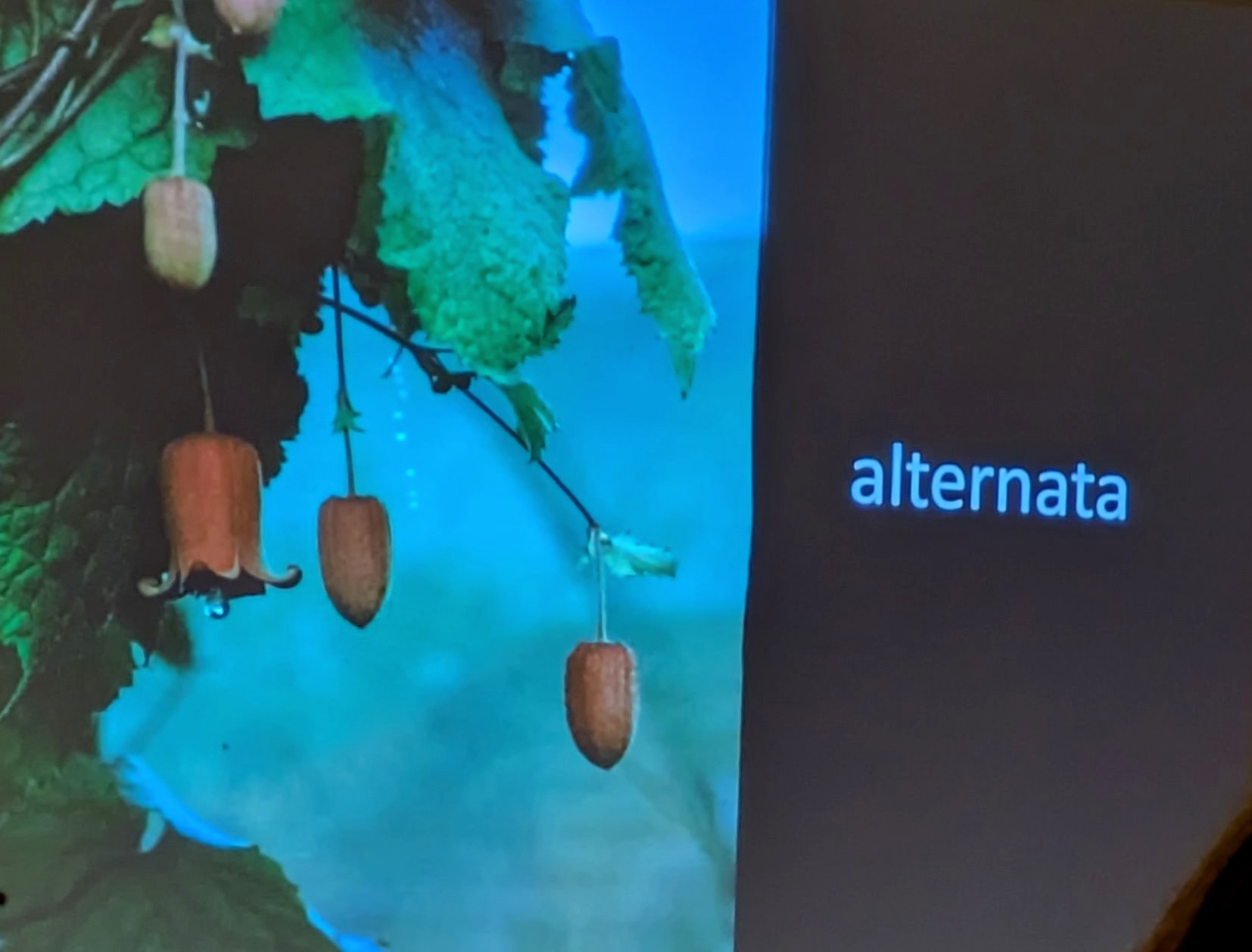
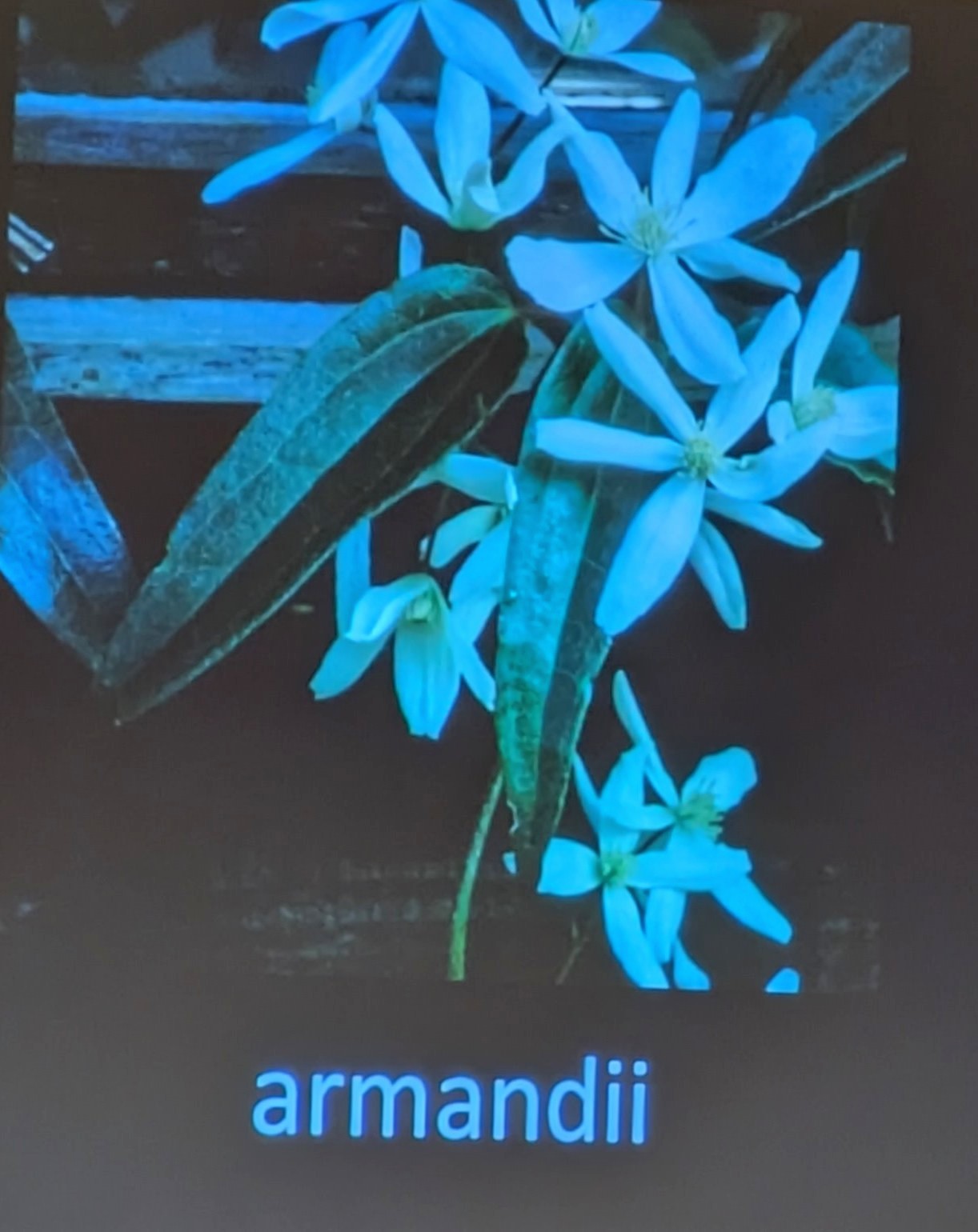
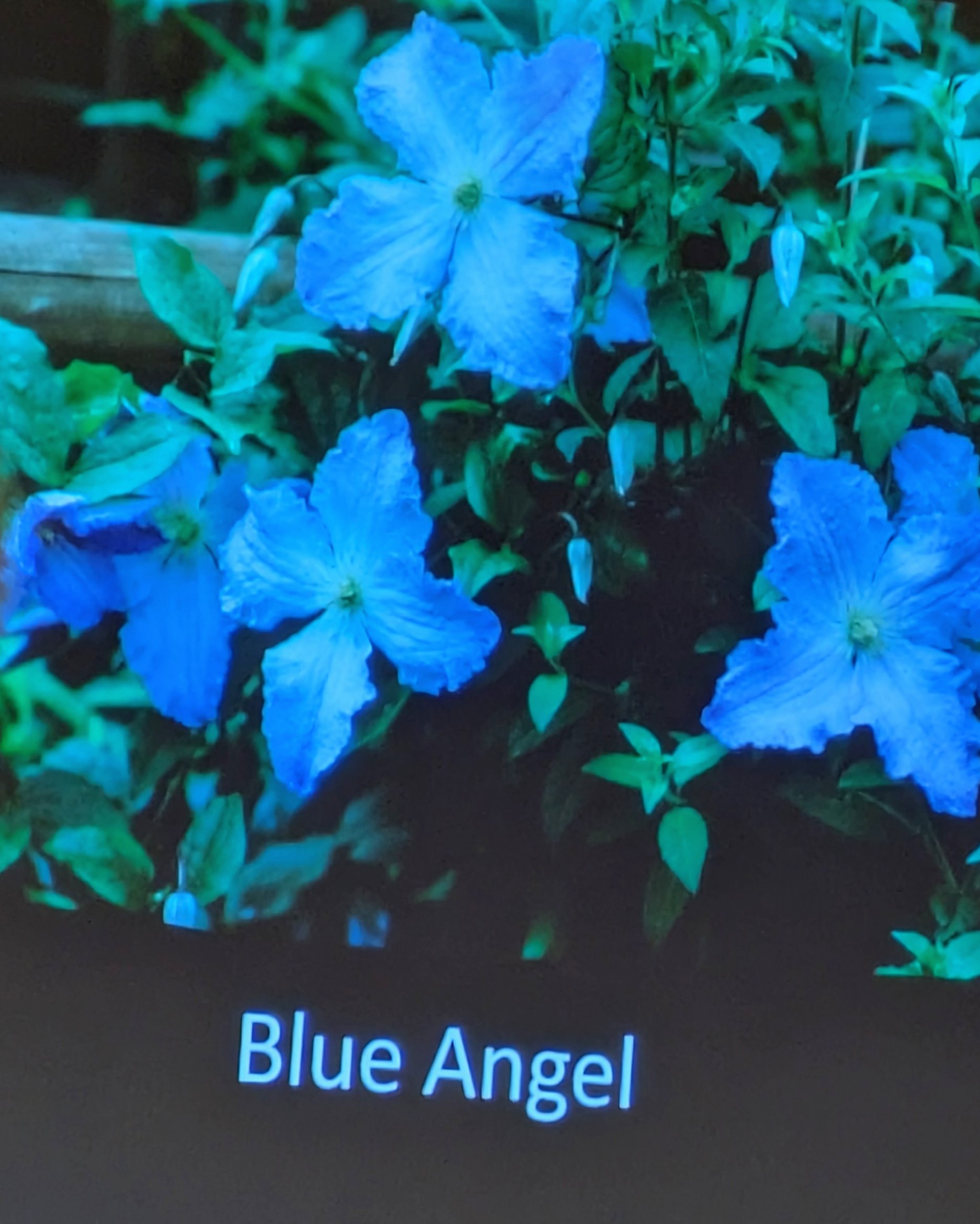
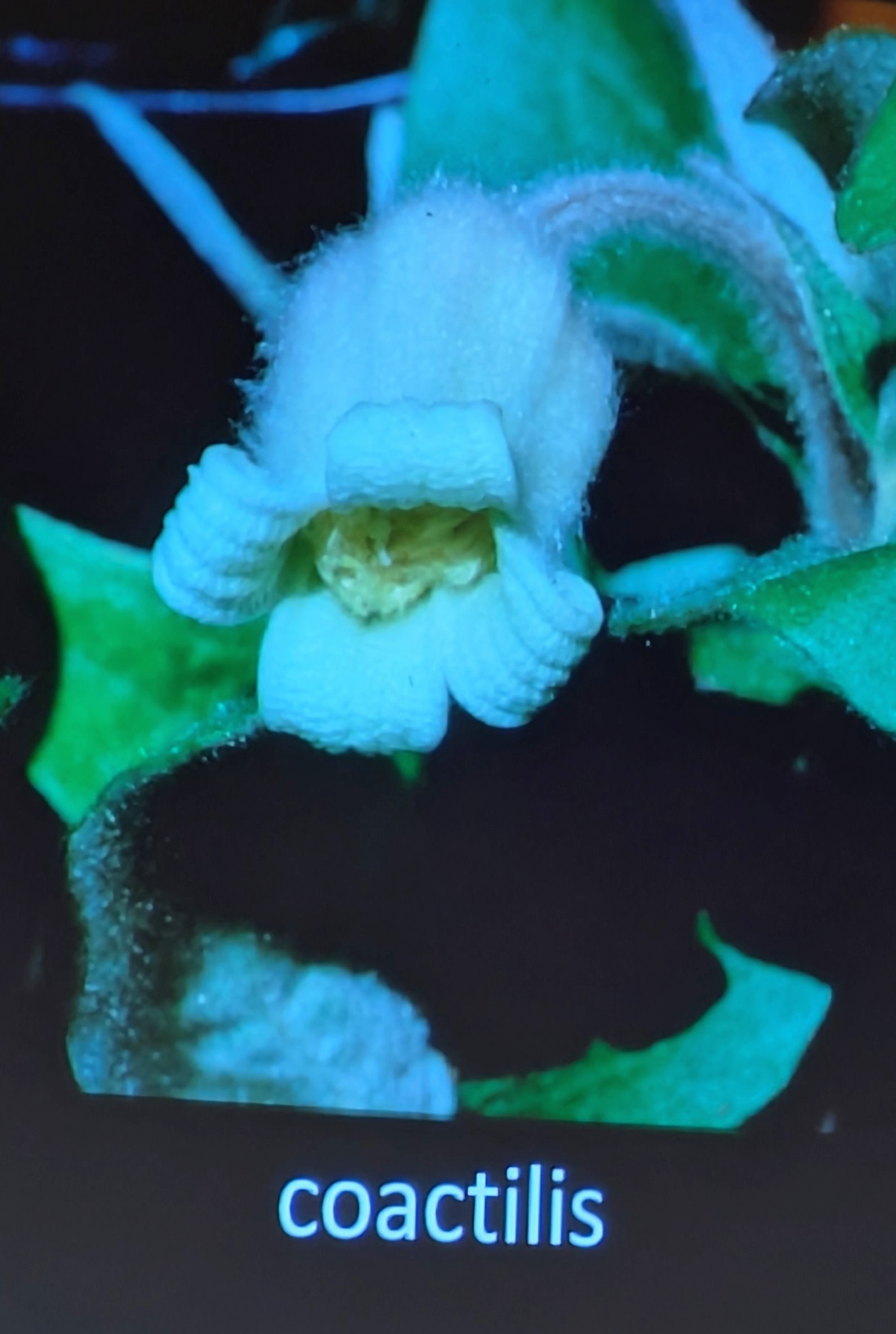
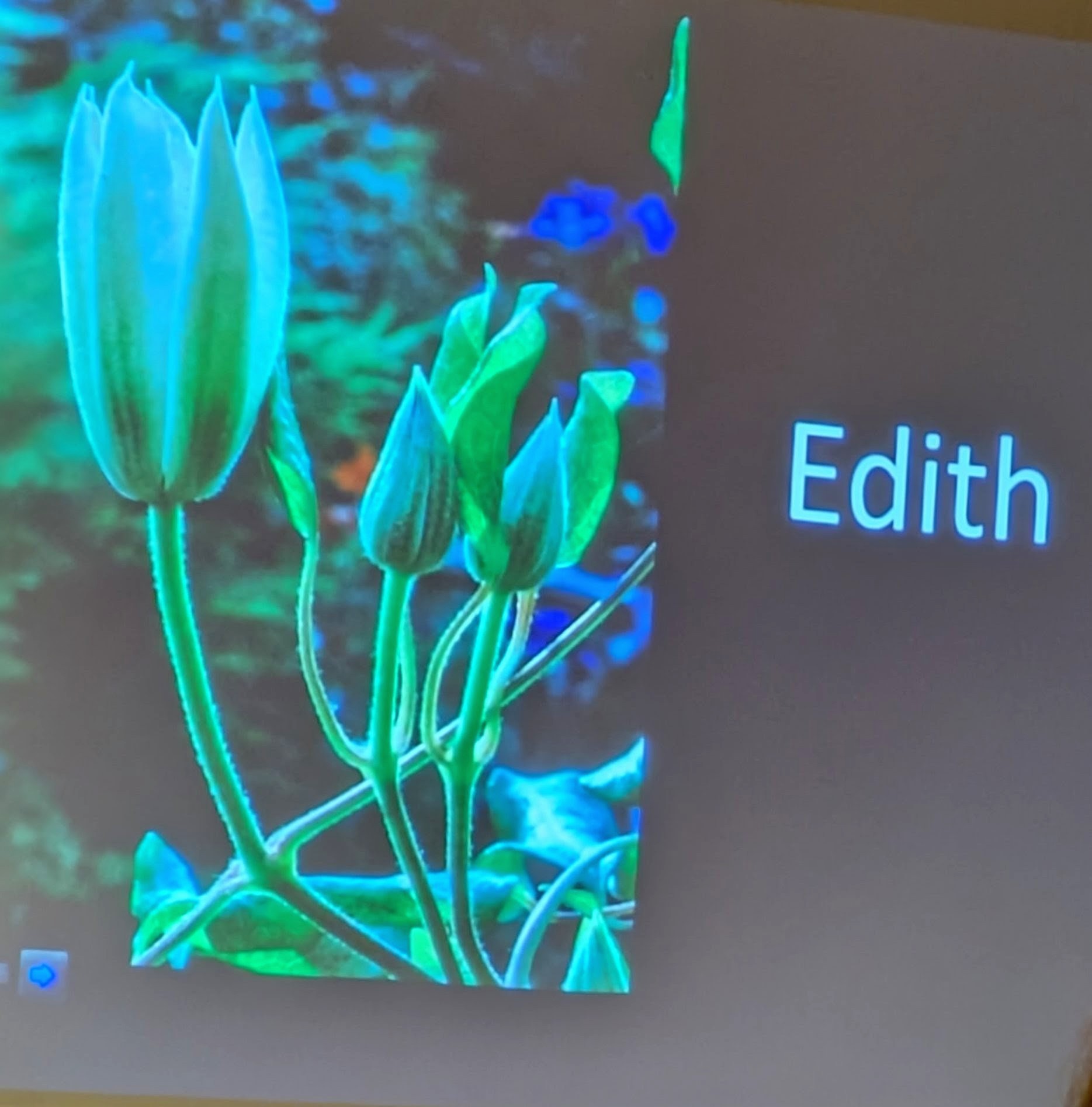
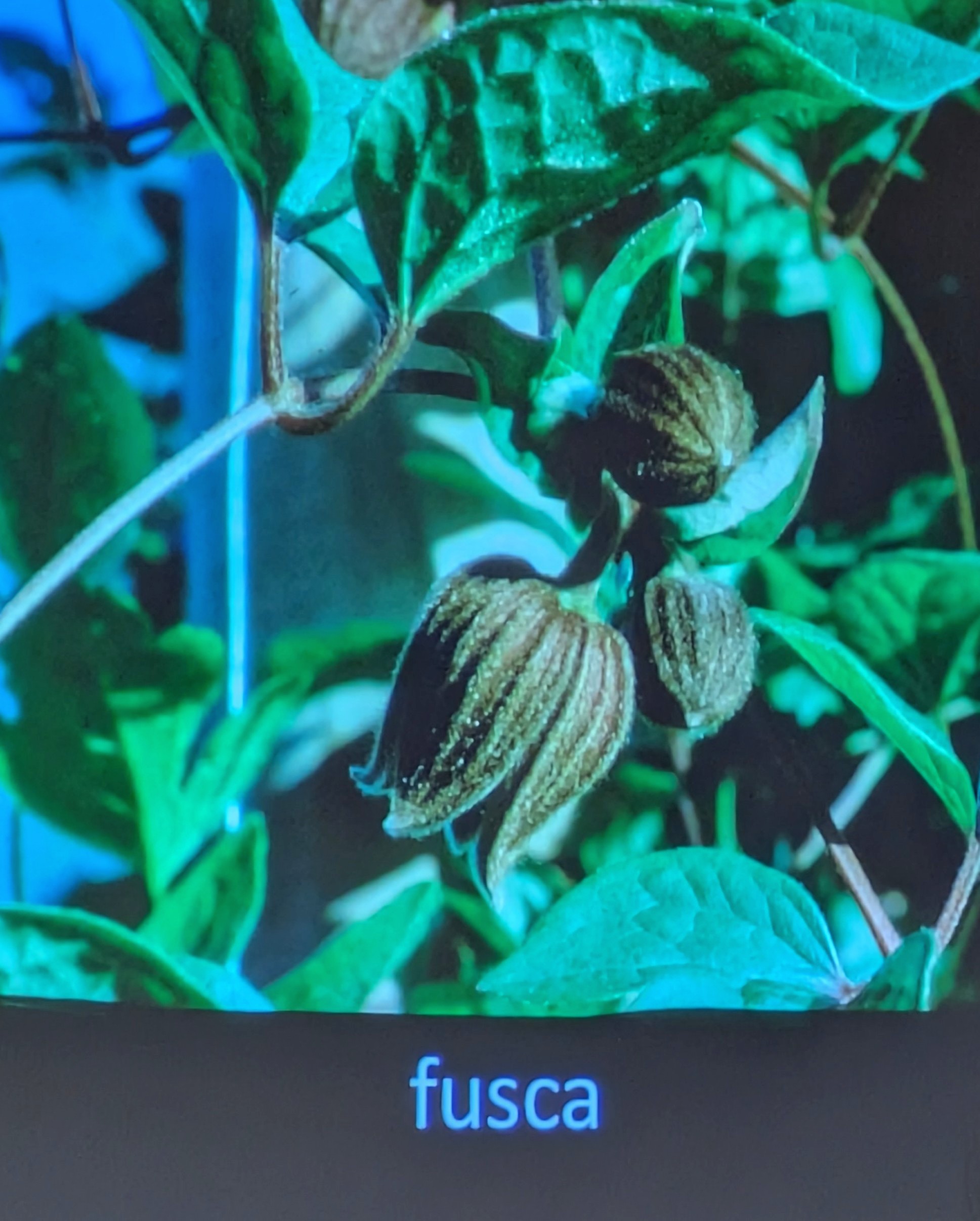
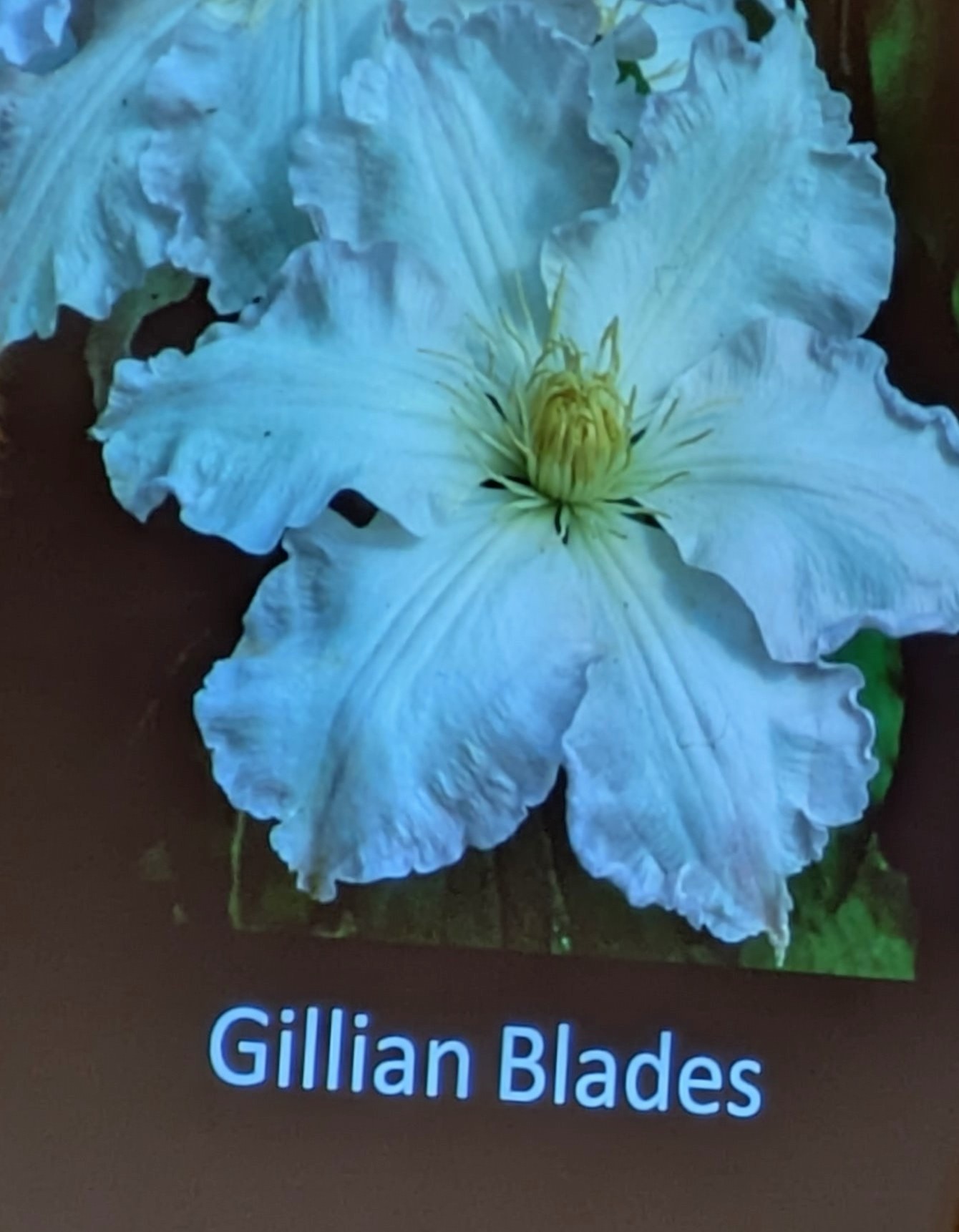
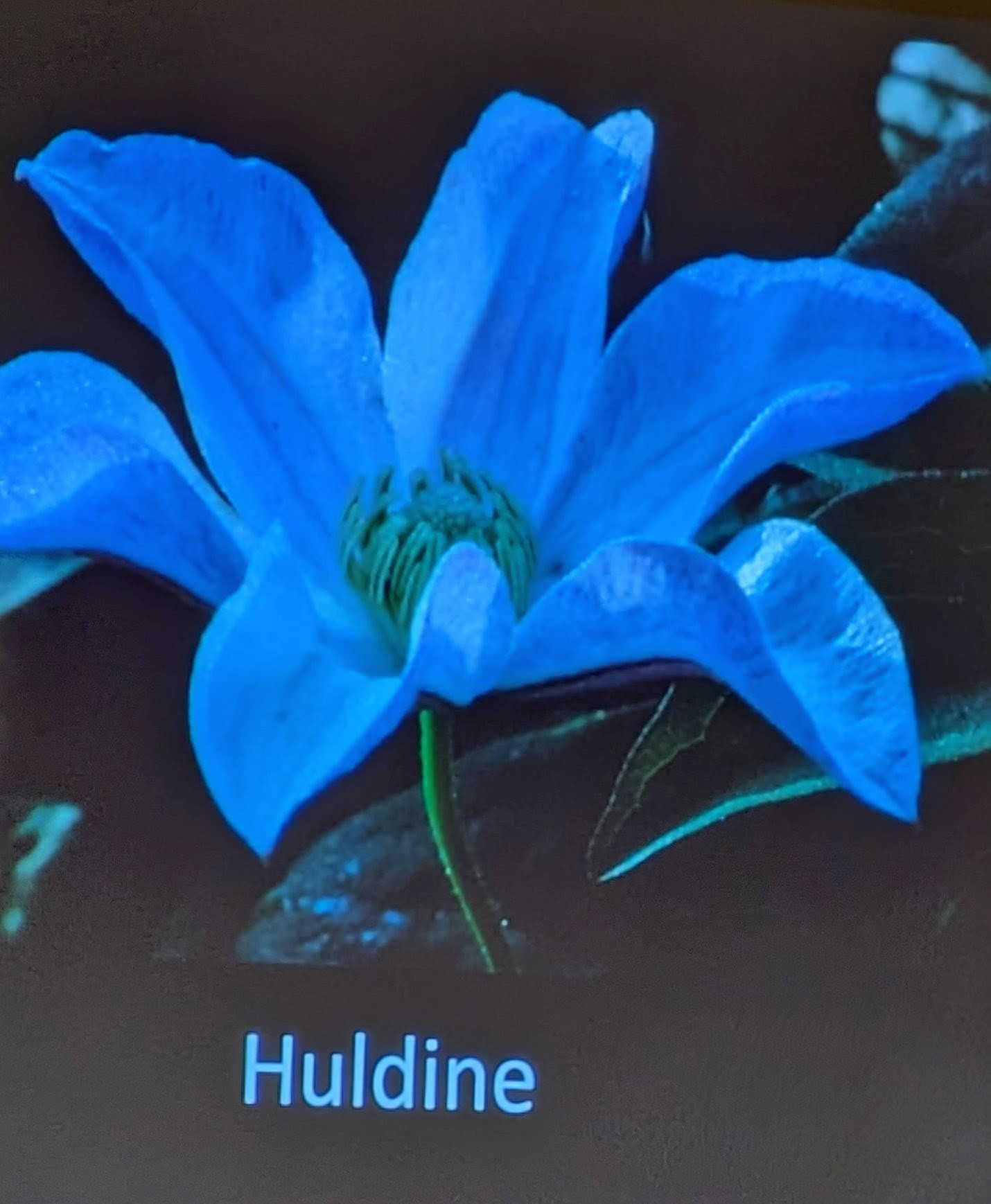
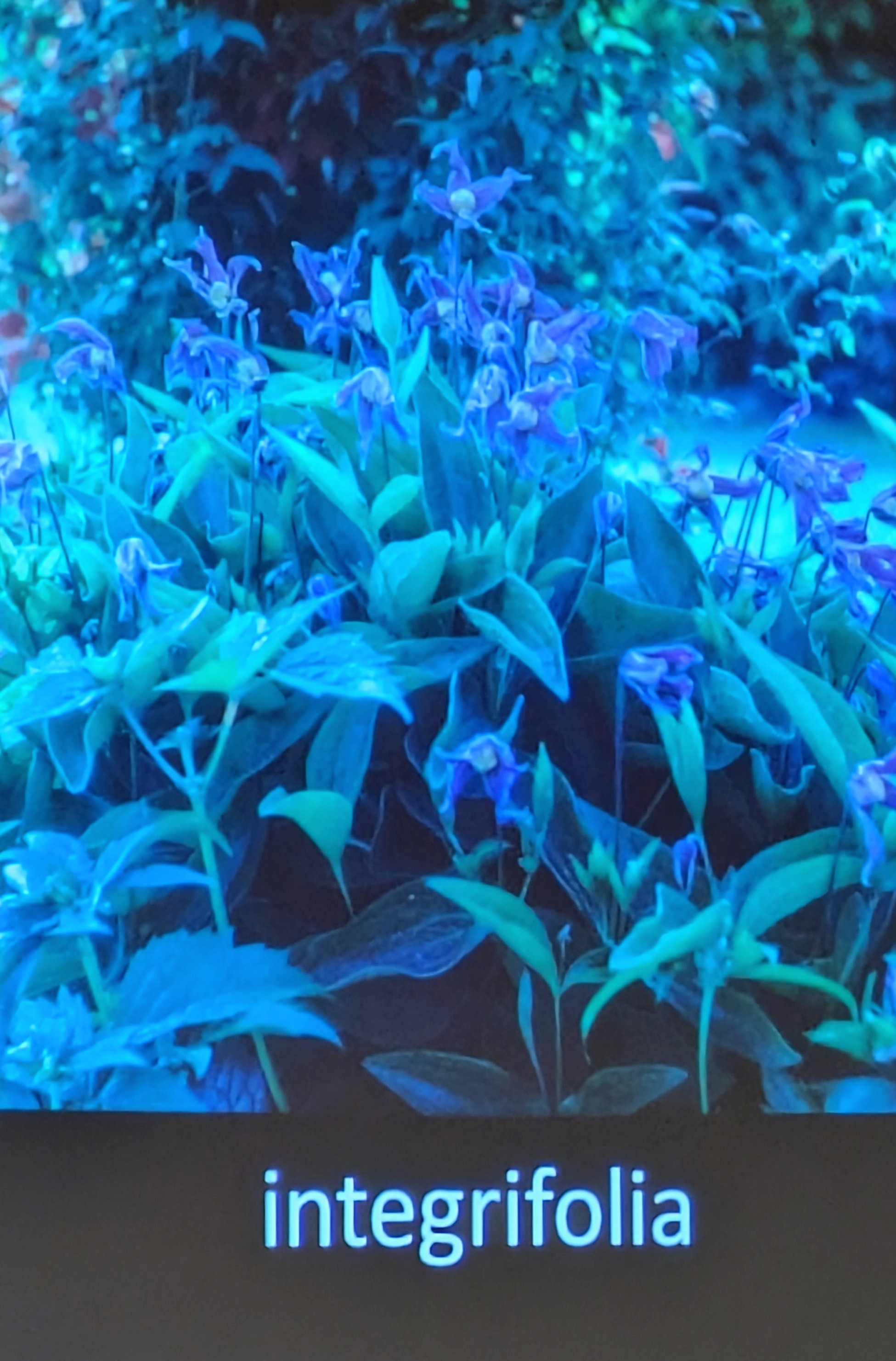
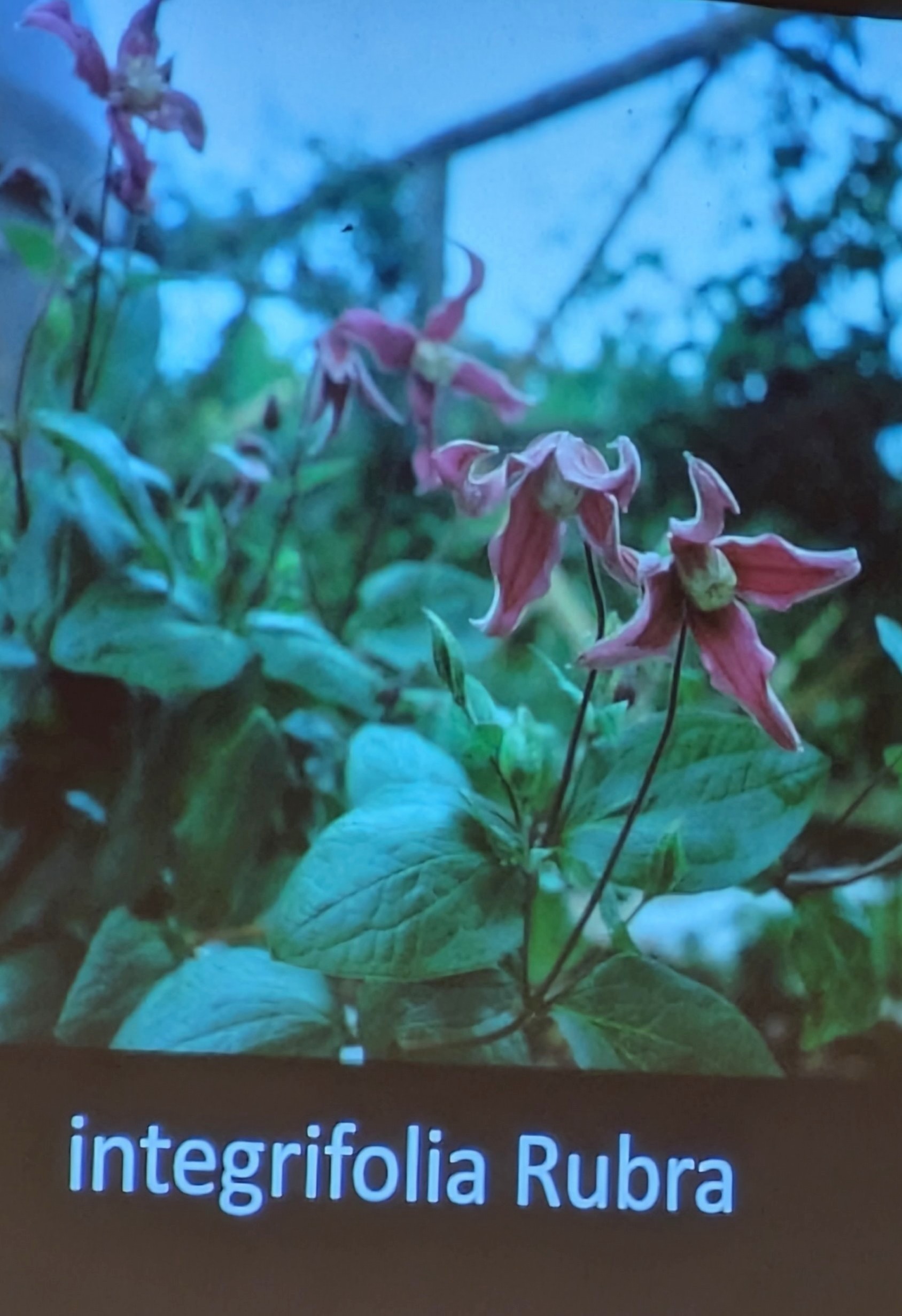
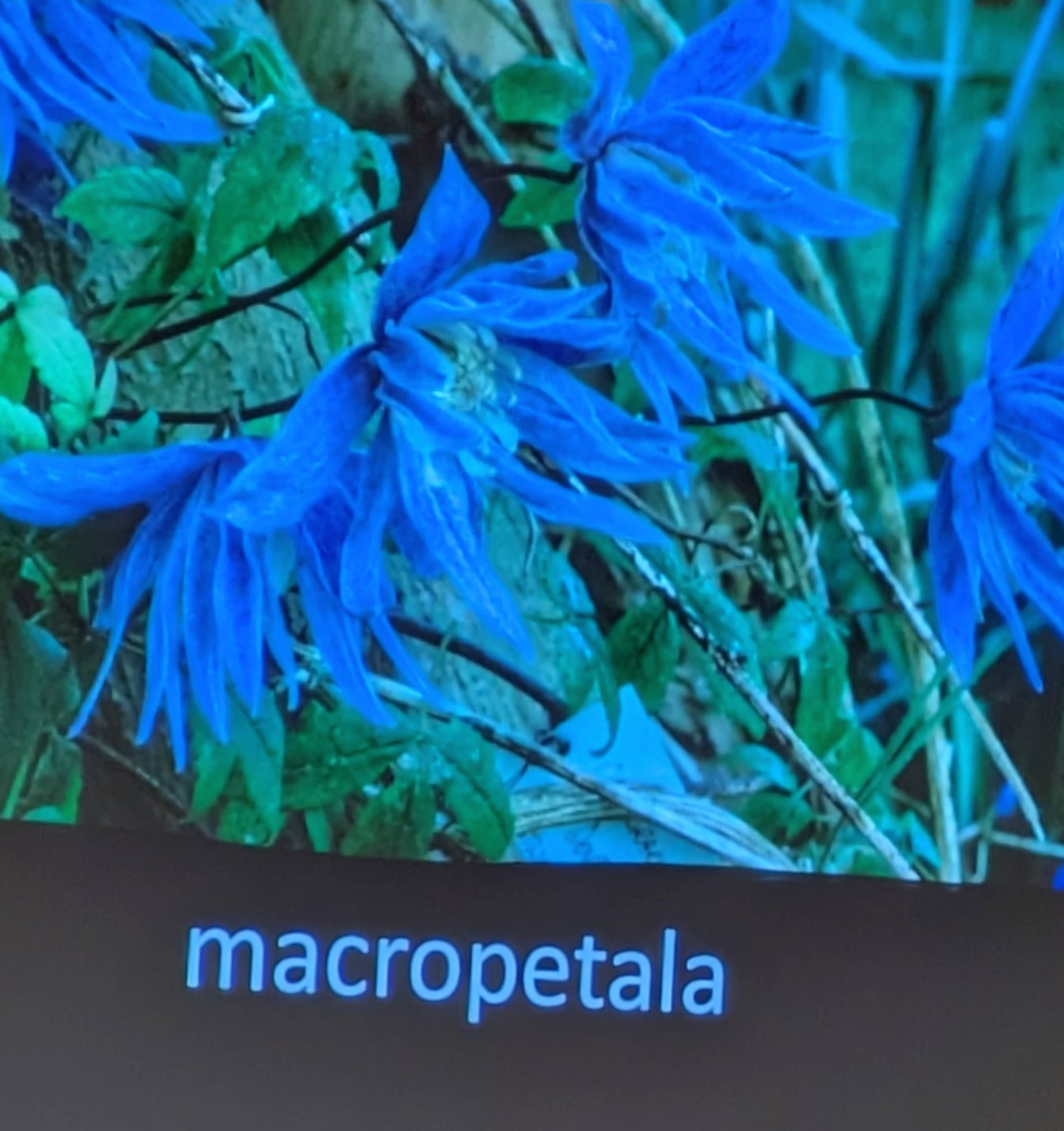
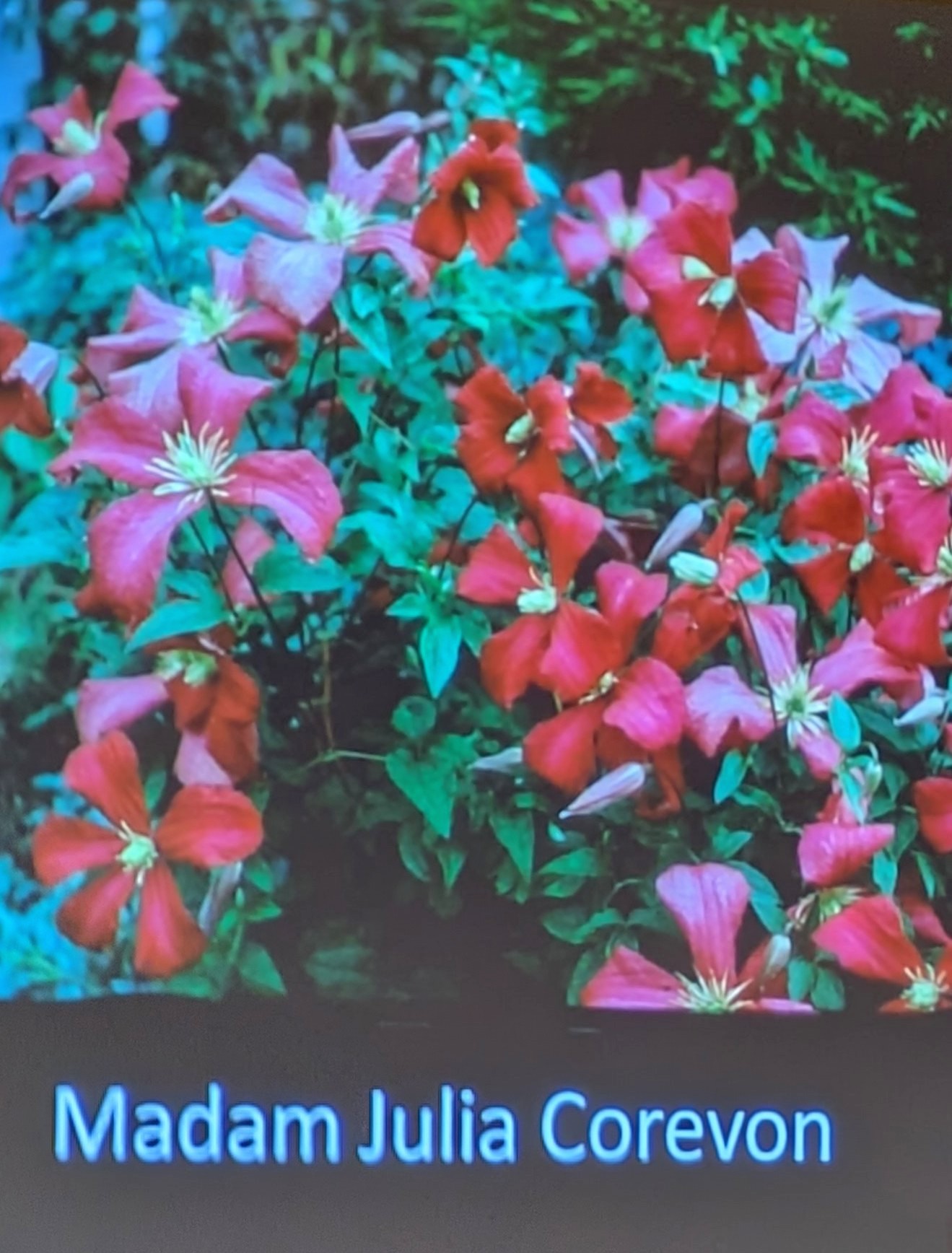
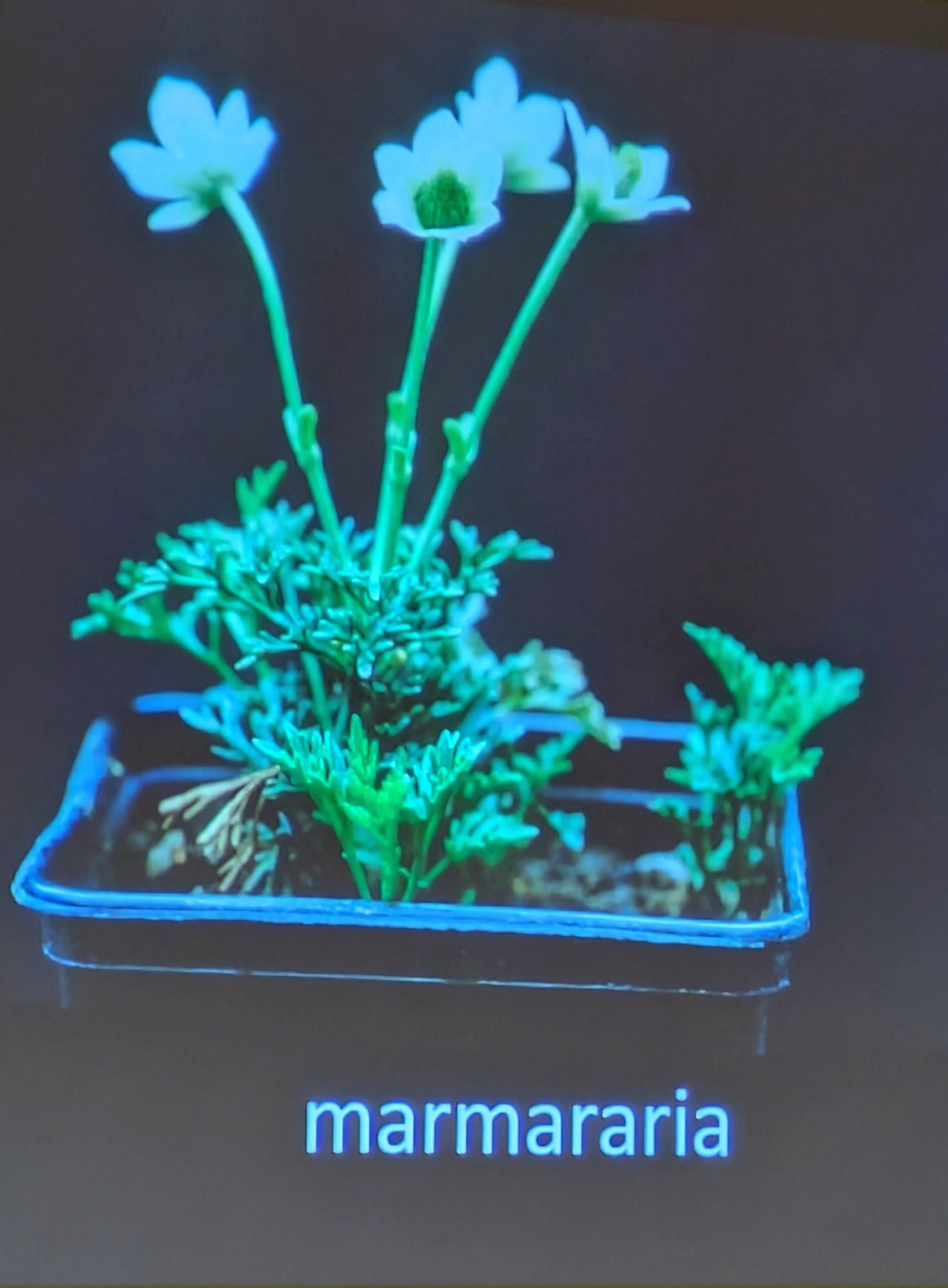
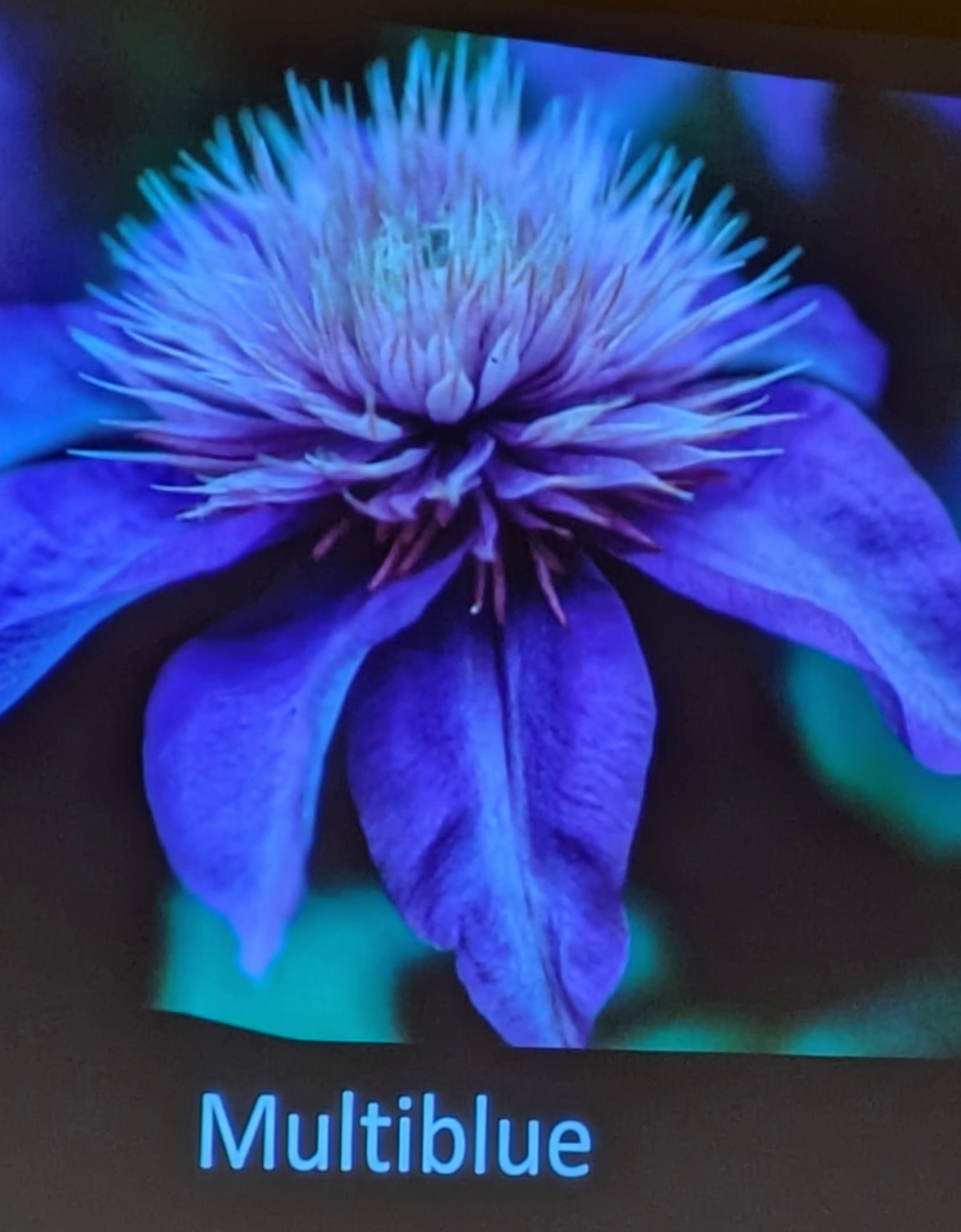
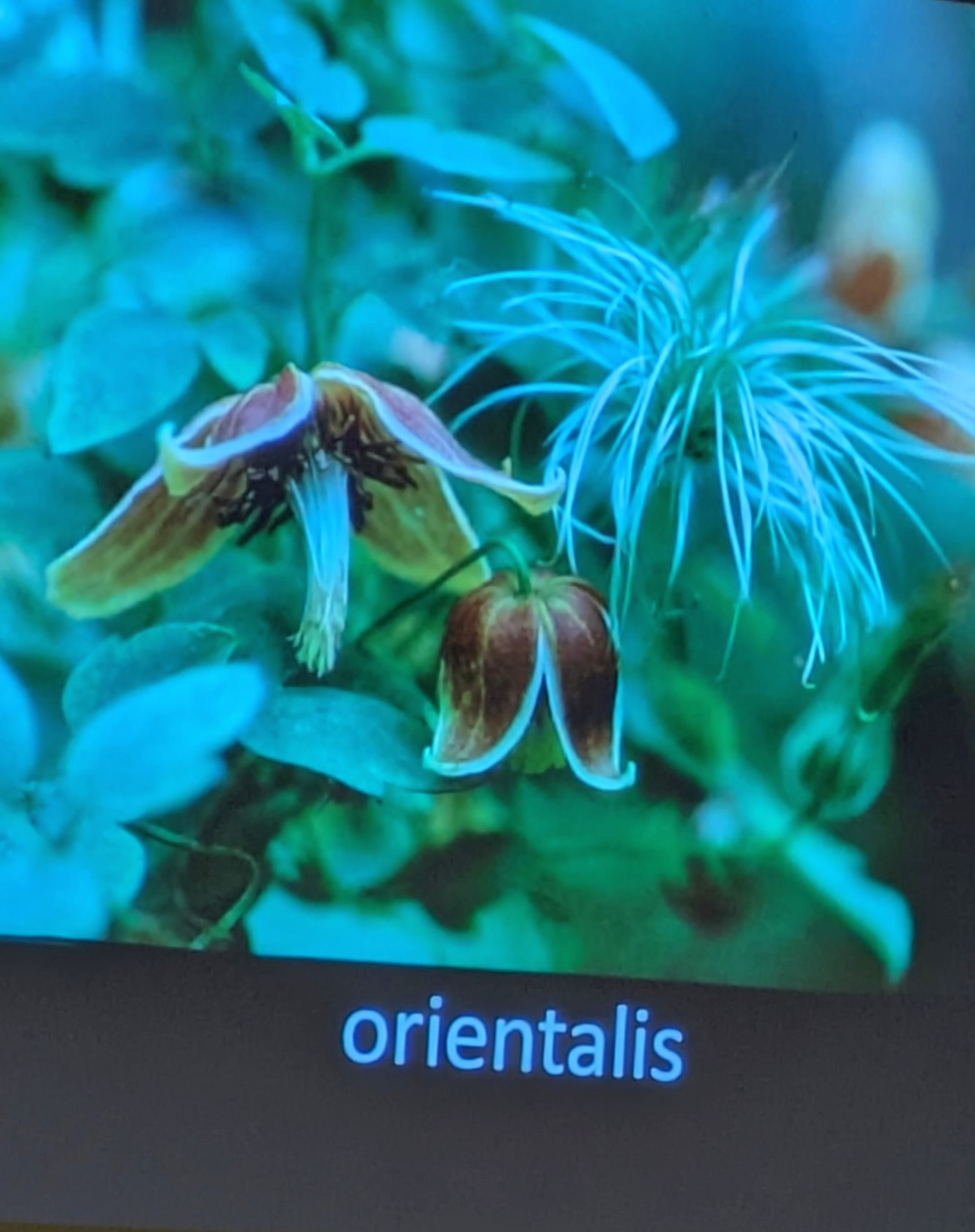
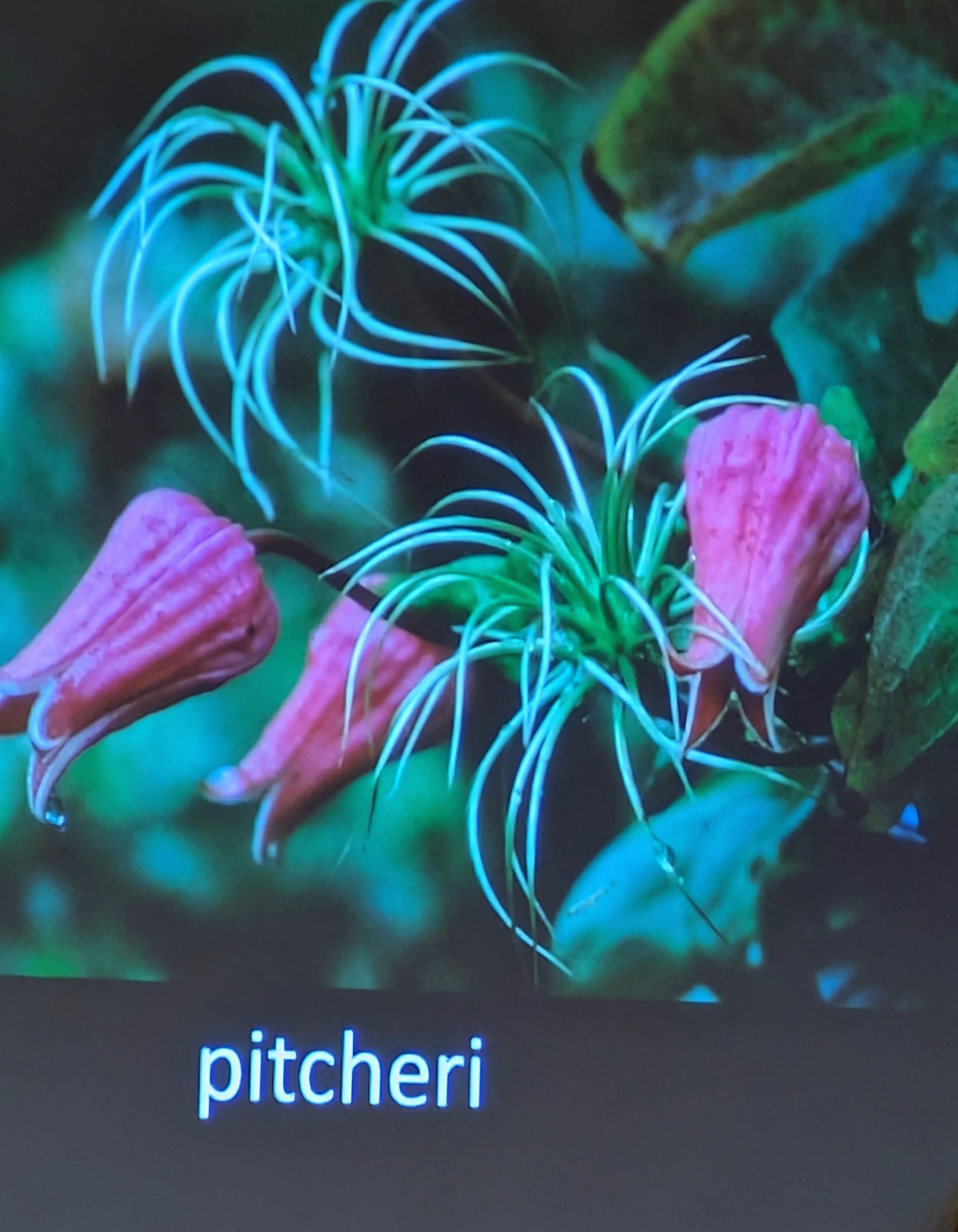
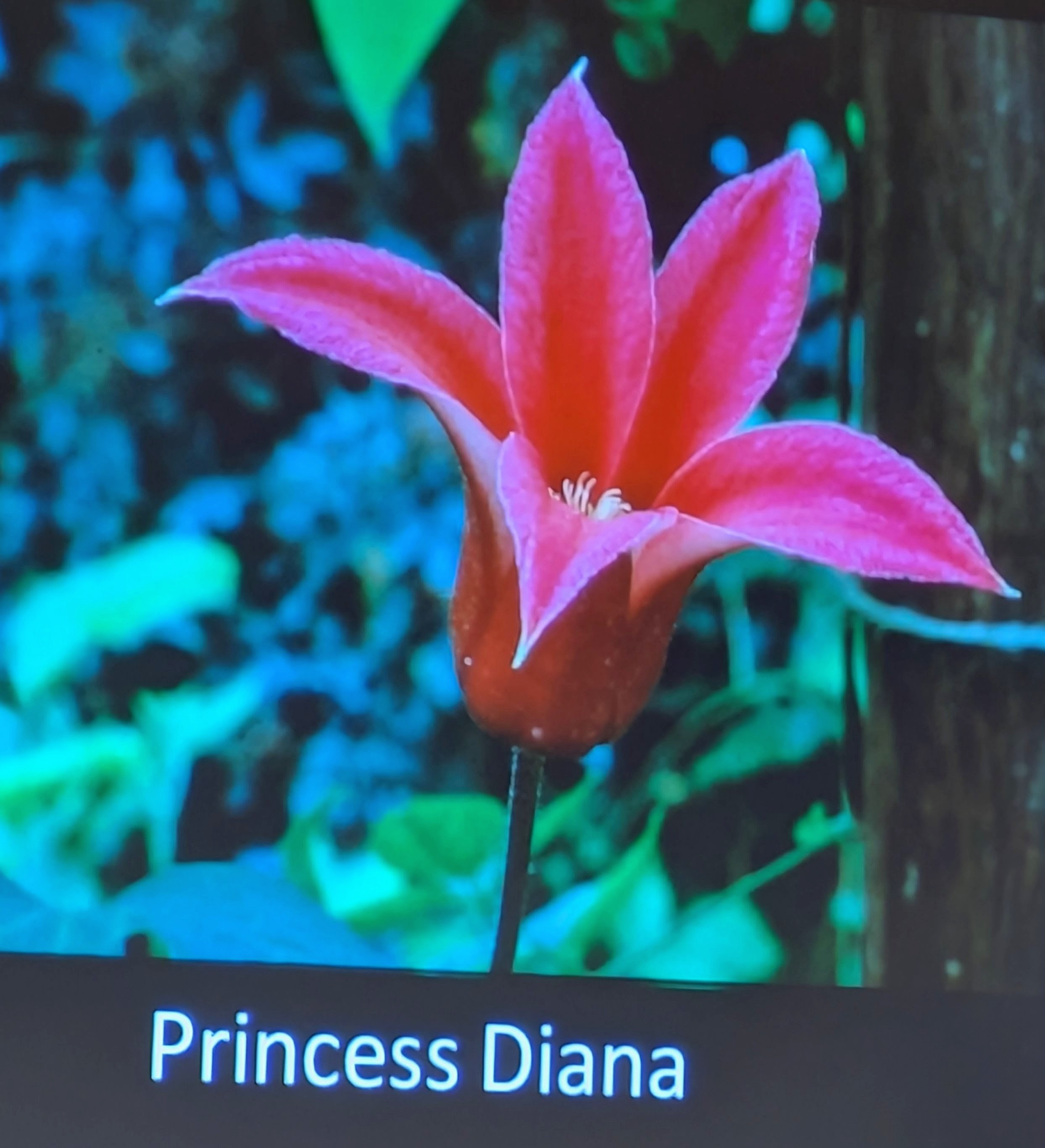
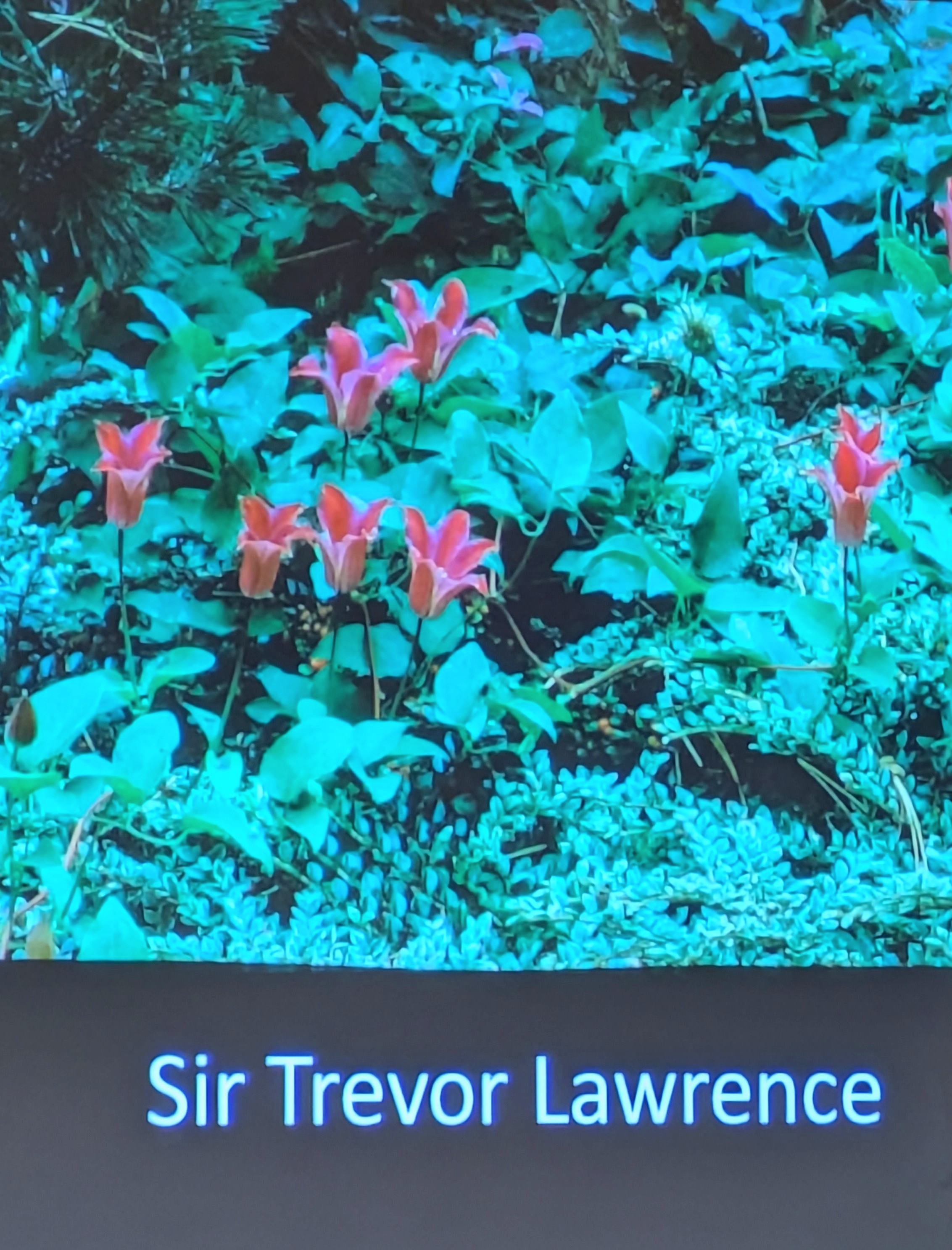
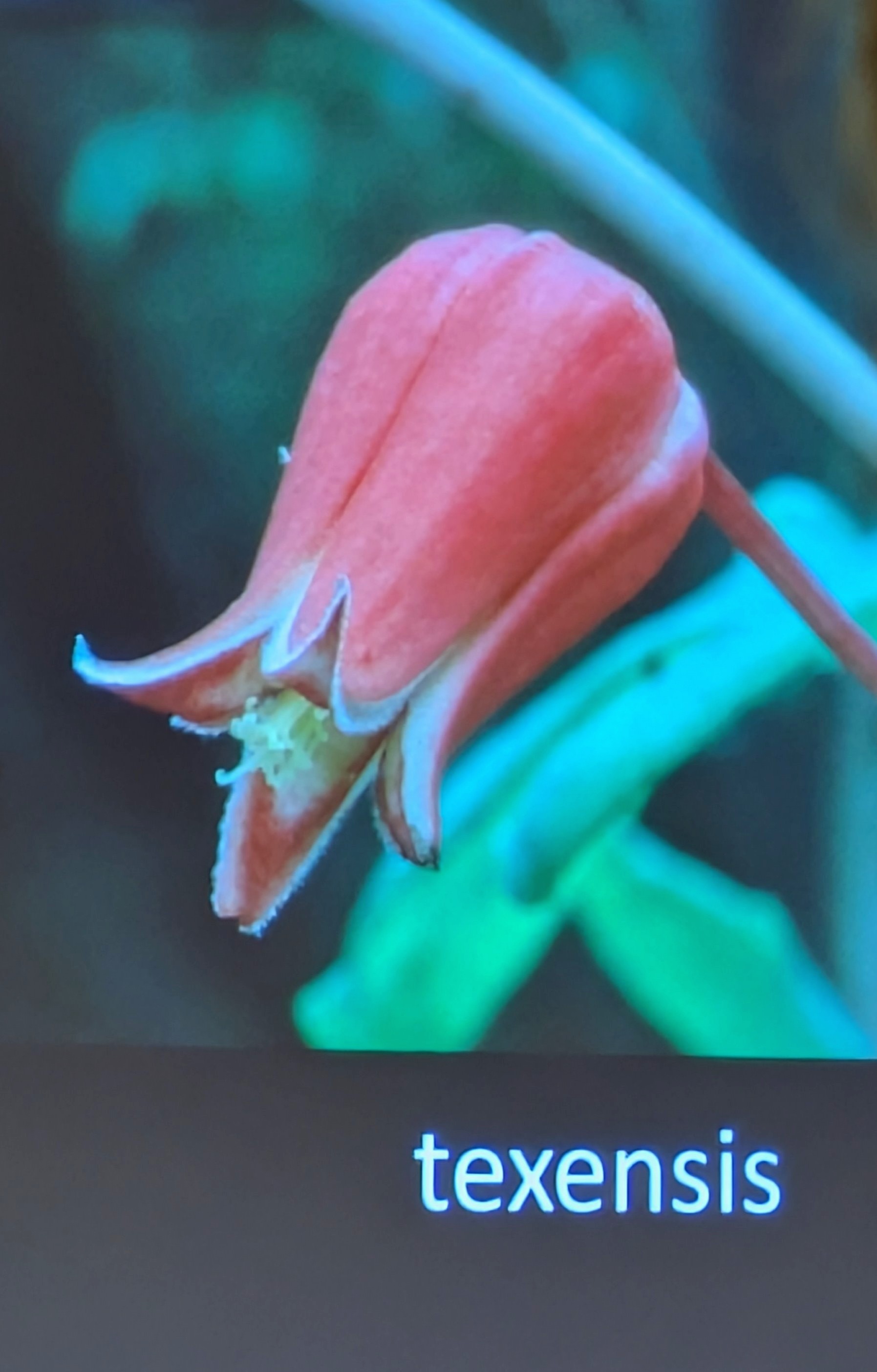
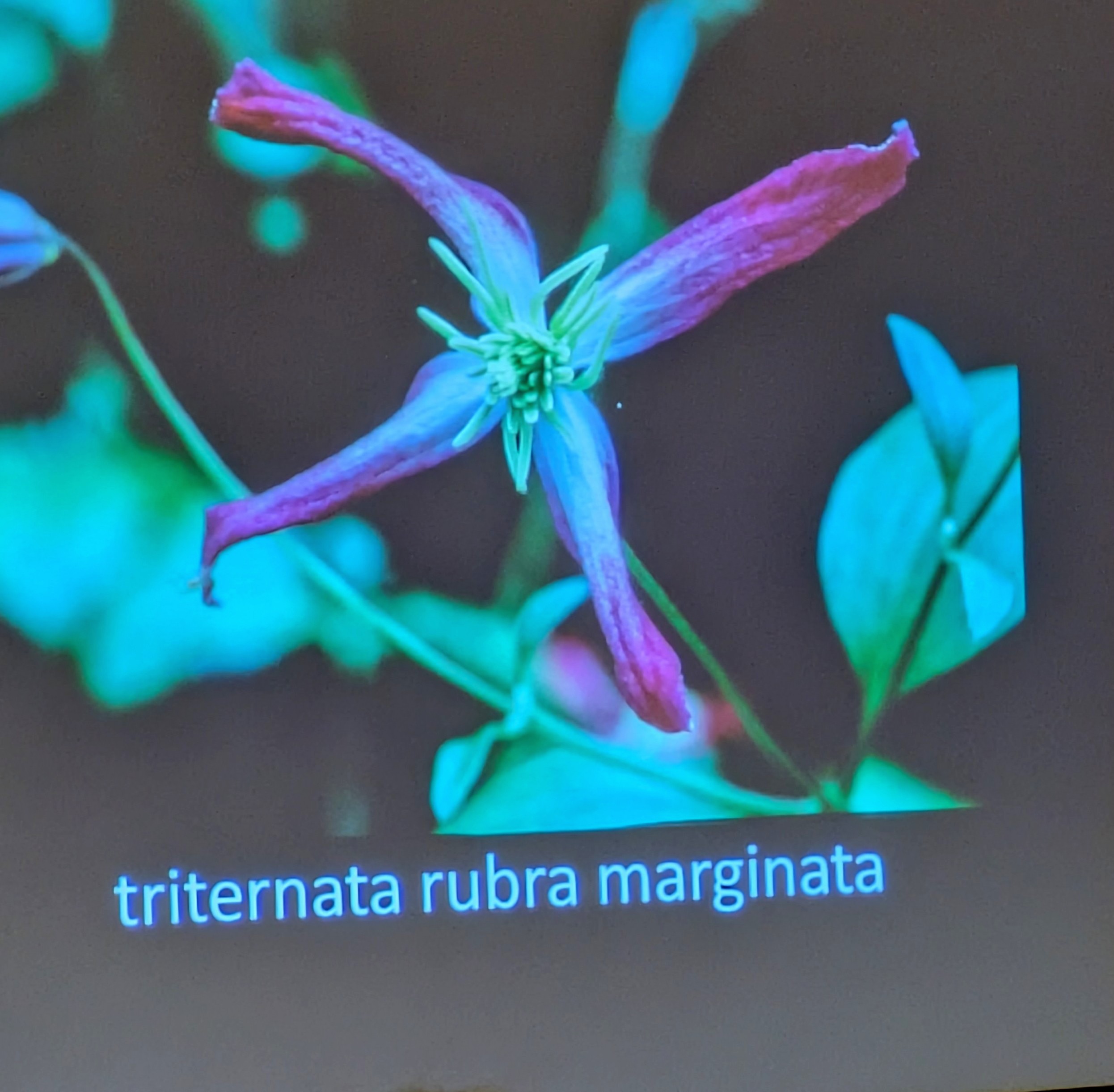
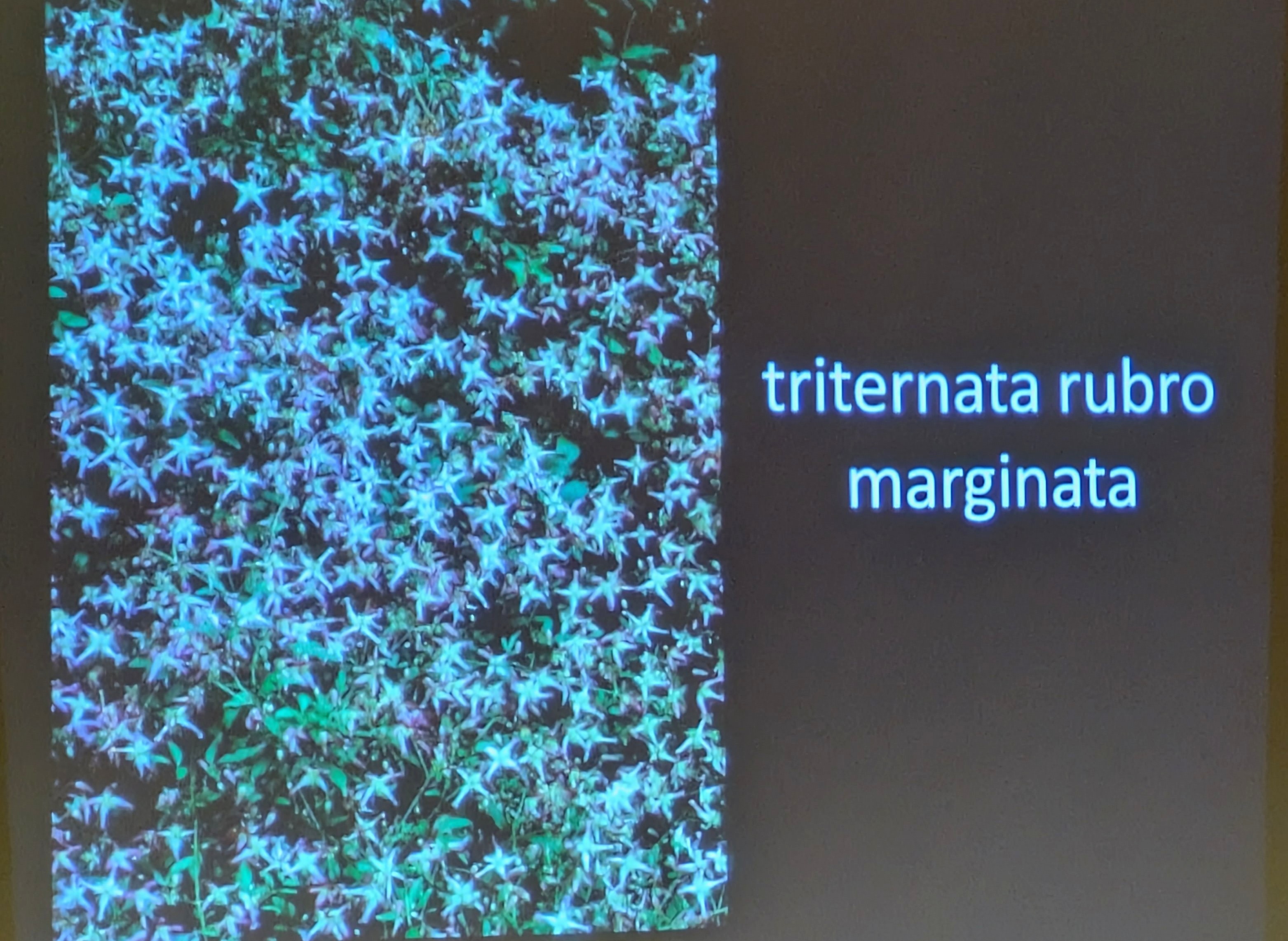
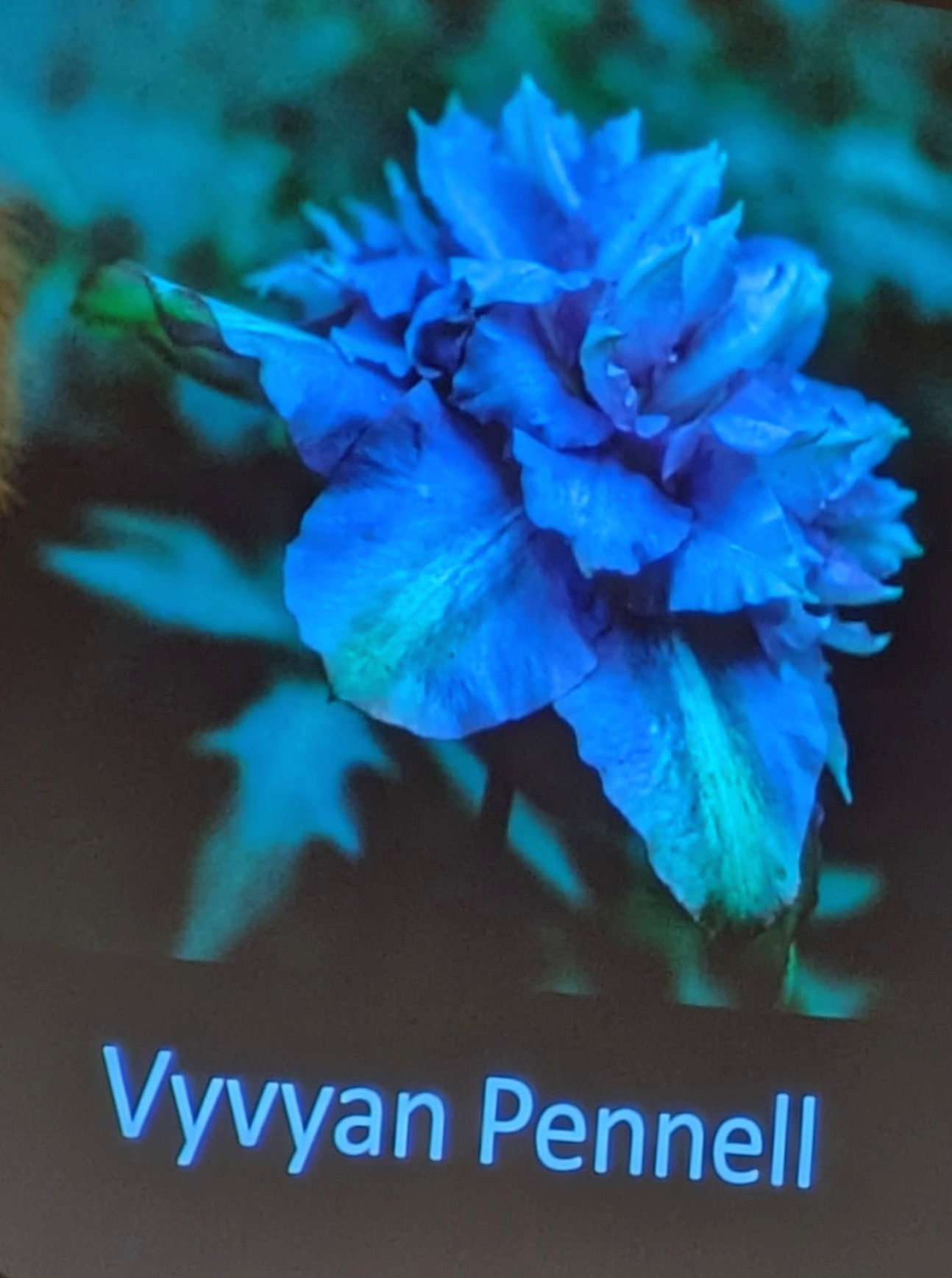
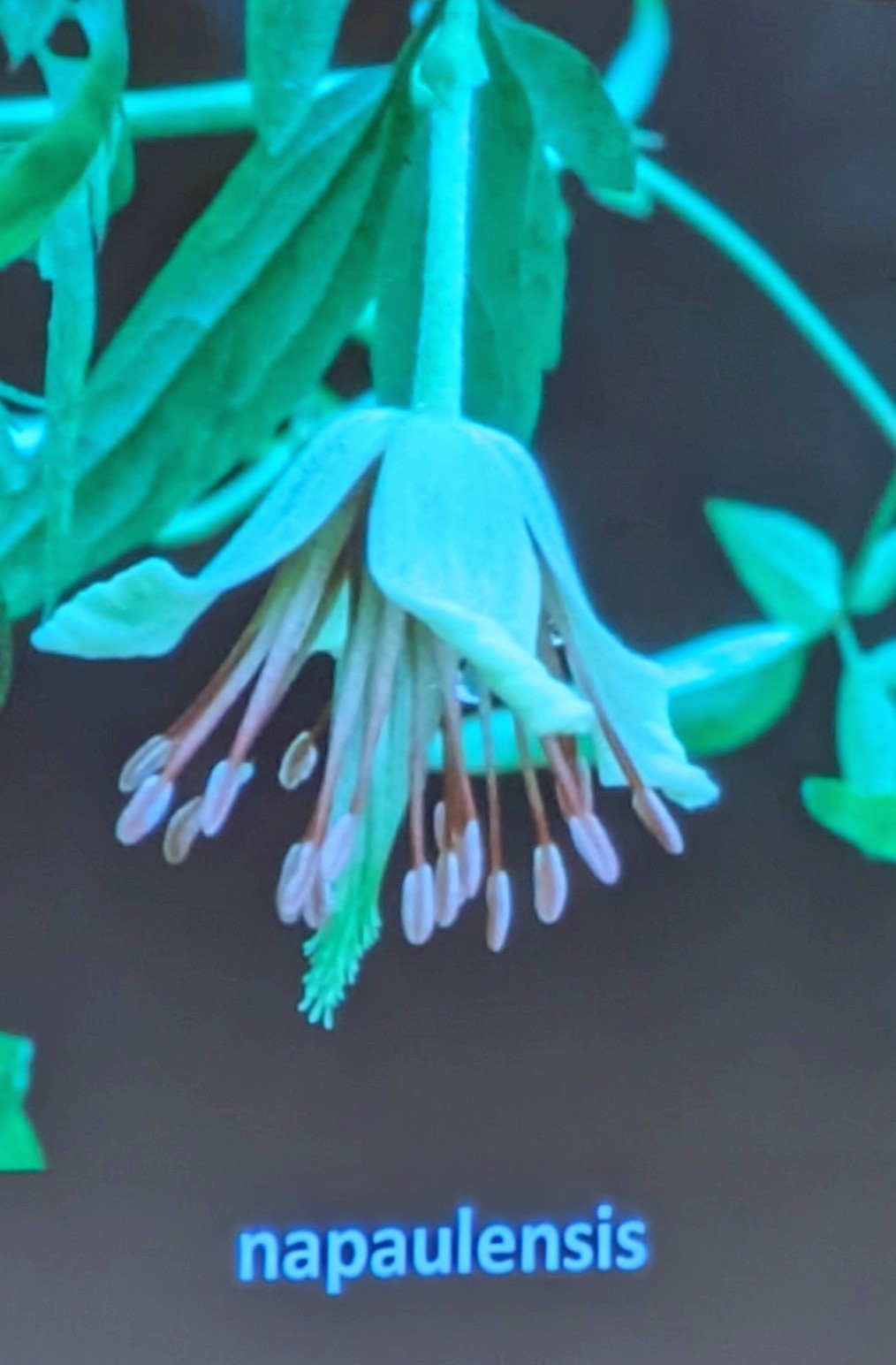
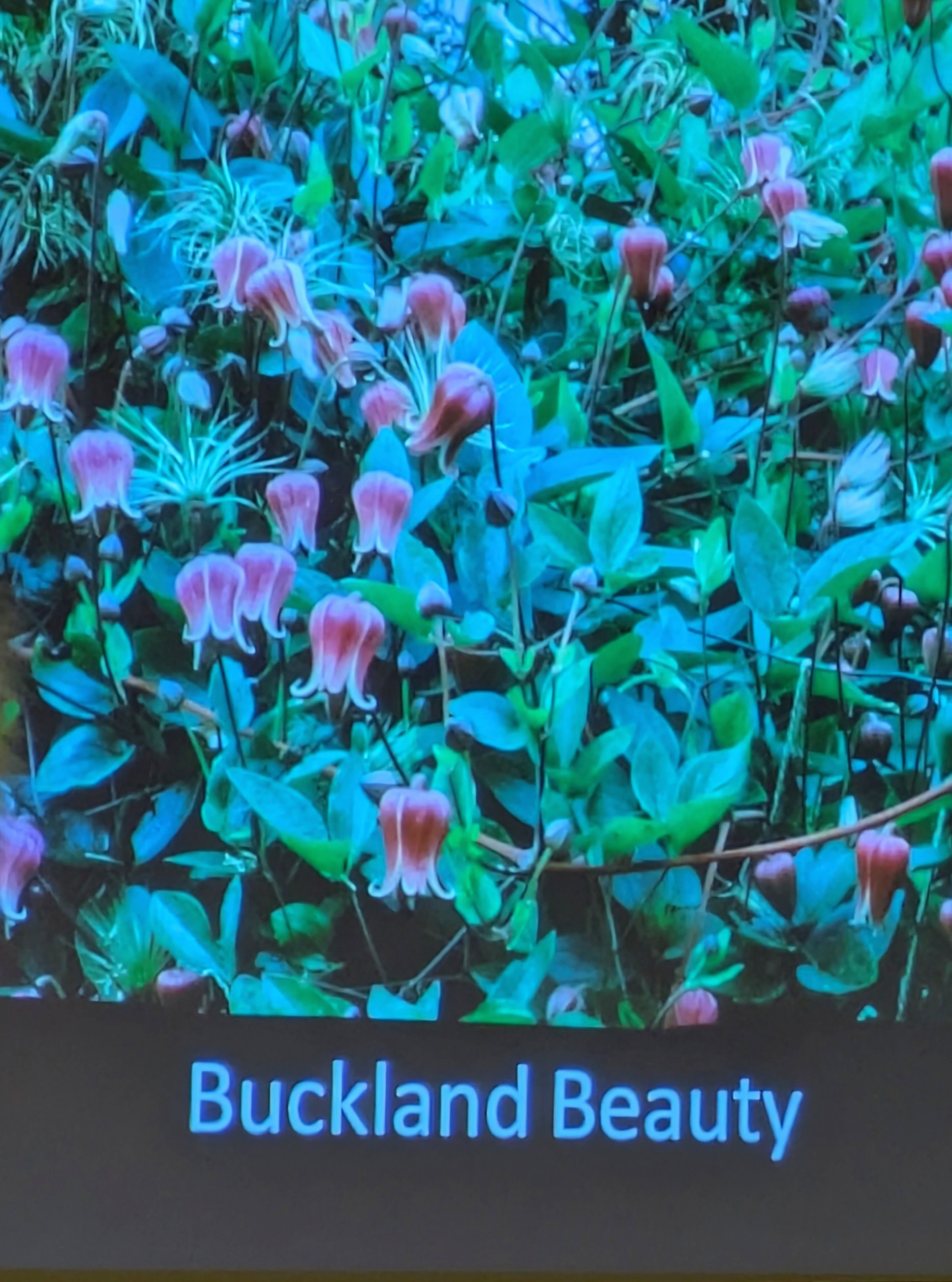
– photos of screen so of limited quality but names included for reference.
The array of Clematis available was shown through a display of beautiful photographs, just a few of which have been picked out below (with links to images and information from Clematis on the Web, run by the International Clematis Society and to which Everett is a contributor):
- C. napaulensis was introduced from Nepal. It flowers late in November and can be very vigorous. It is semi evergreen and the leaves turn brown after flowering. Everett suggested planting winter flowering clematis behind sheds or trees so that the ‘untidy’ looking plants cannot be seen in summer but can be rediscovered when walking around the garden during the flowering season.
- C. ‘Dorothy Tolver’ is early flowering from April. It has large flowers up to 20cm across. It should be pruned from the top down to the first live buds, cutting off the dead wood. Seeds can be collected when they have gone brown.
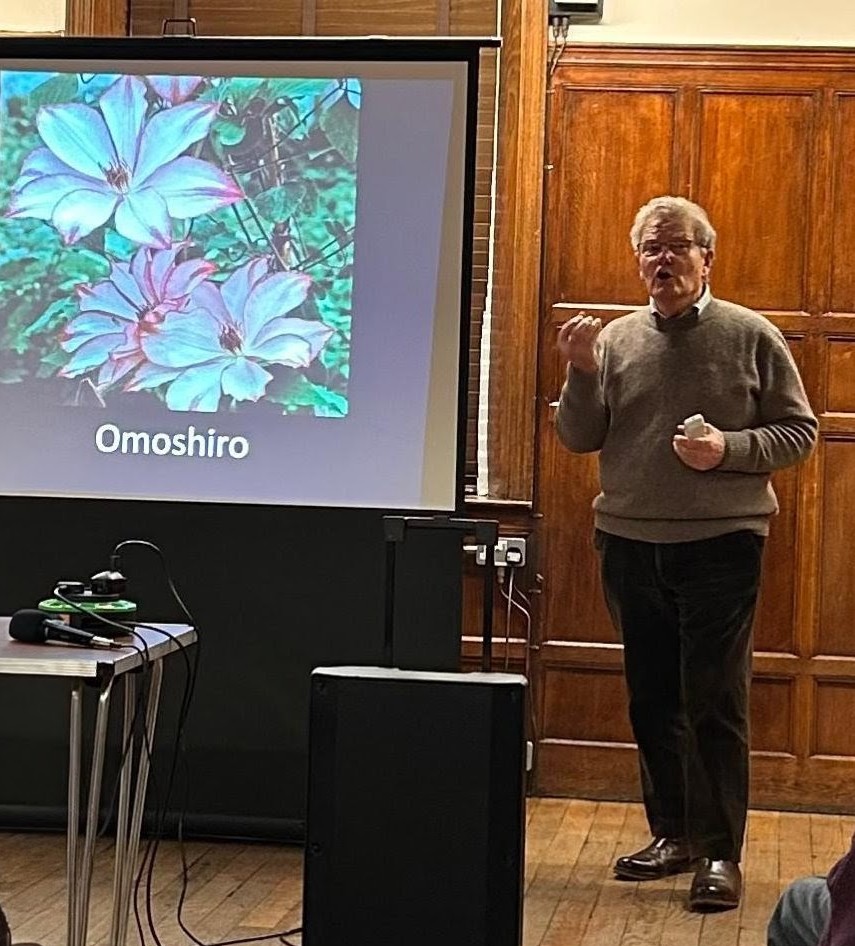
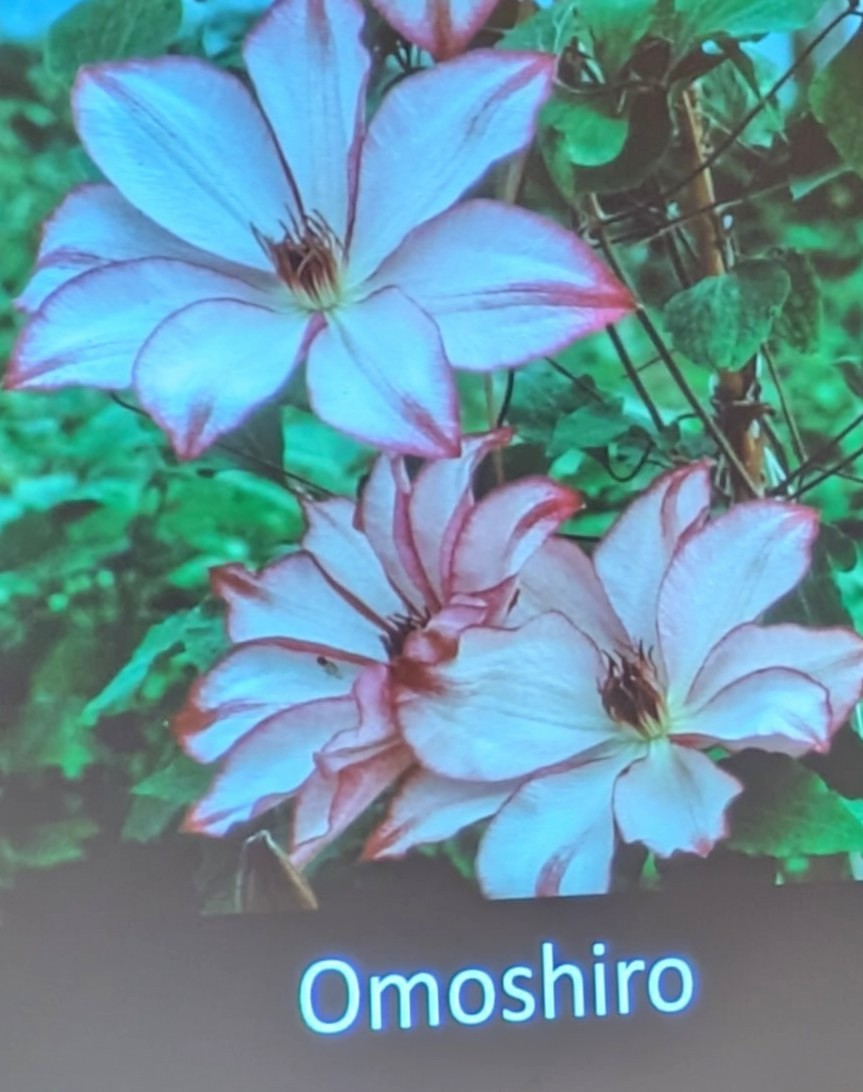
- C. ‘Omoshiro’ is another of these early large flowering varieties from Japan. It is a light pink with dark pink margins on the tepals and anthers of deeper purple.
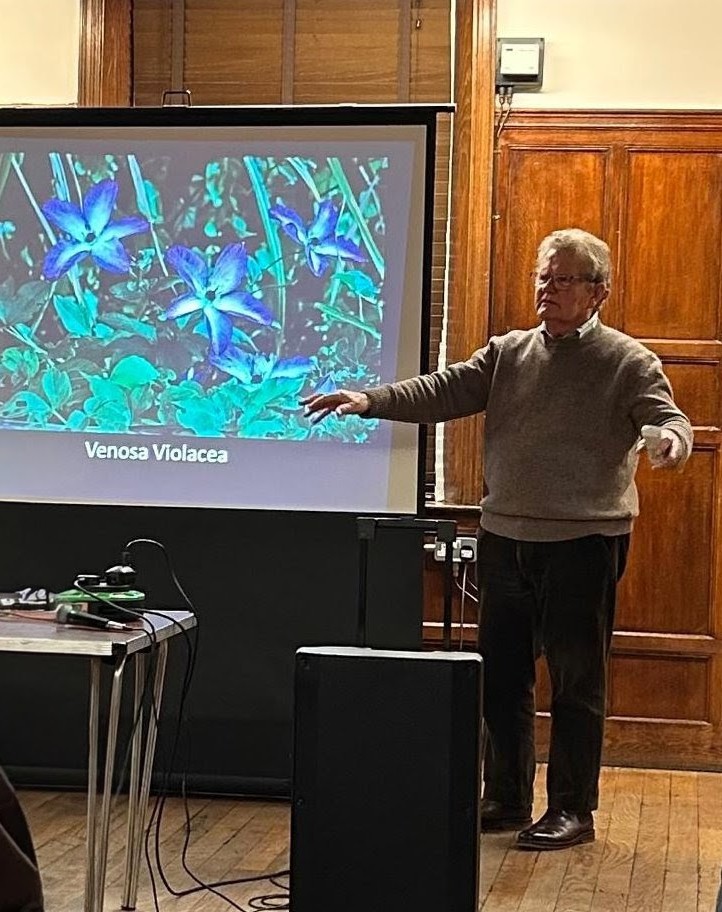
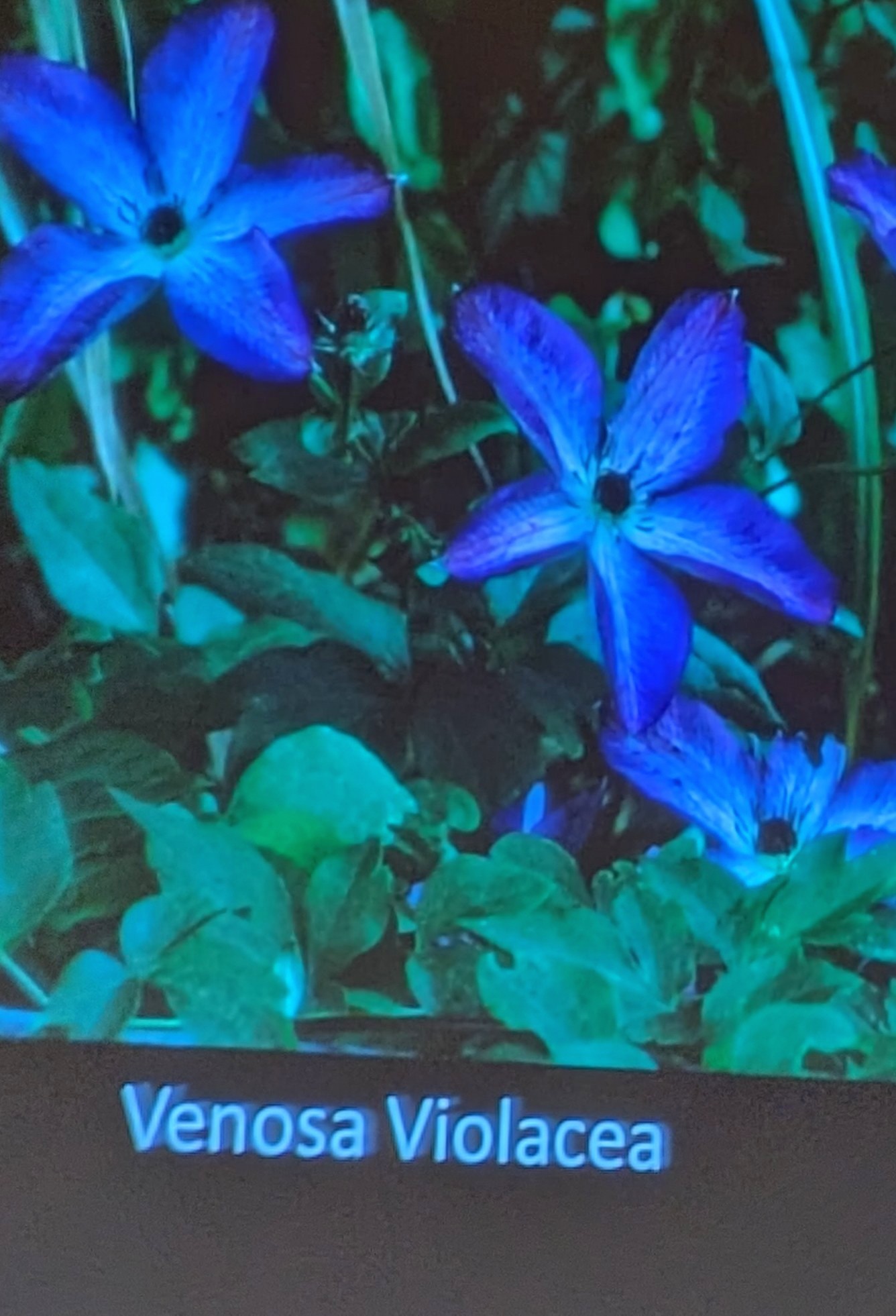
- C. ‘Venosa Violacea’ flowers from July. This can be grown through flower beds and given a hard cut back. It has white tepals with wide purple margins and is veined in purple.
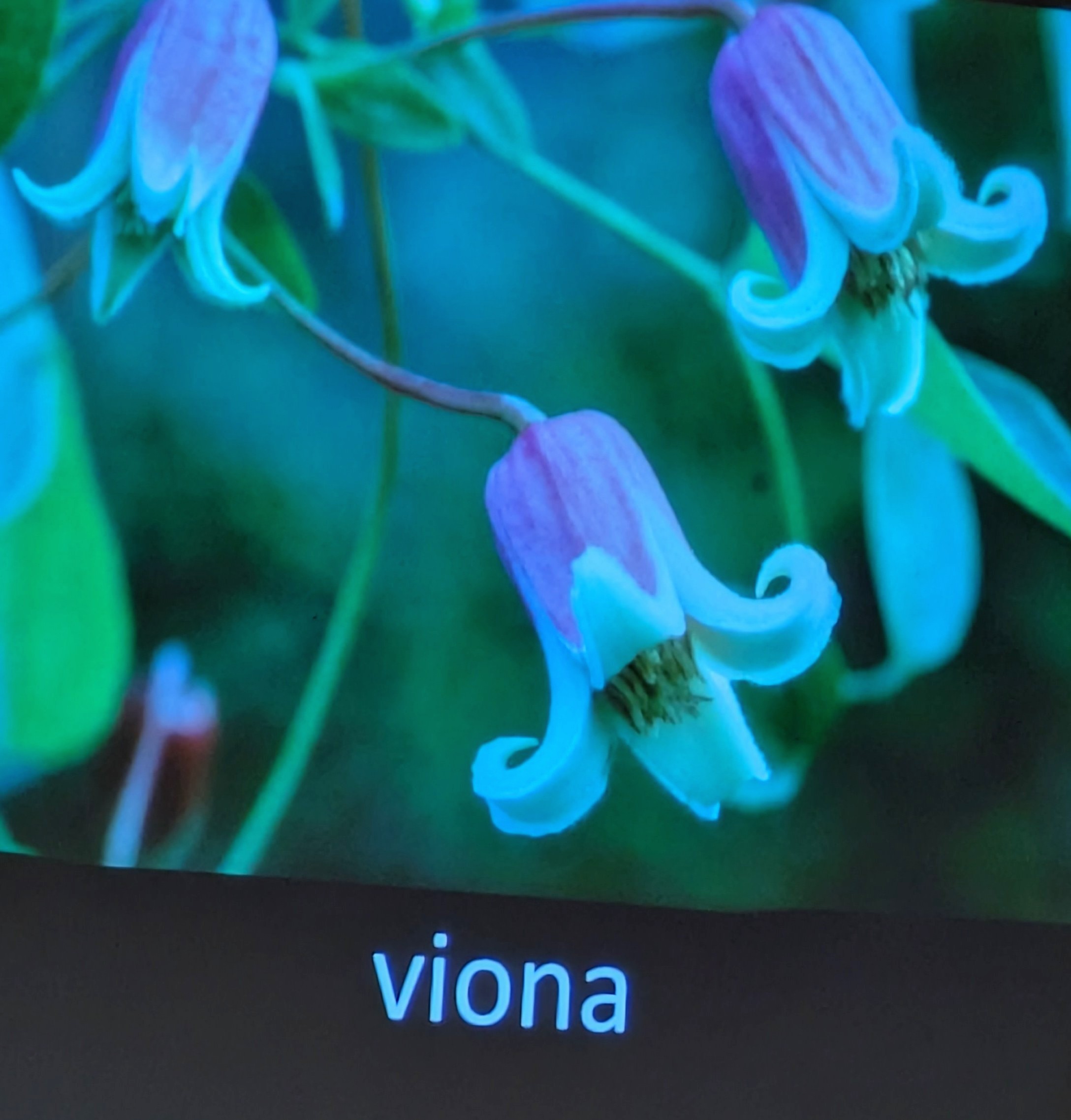
- C. viorna has a small bell shaped flower with recurved tips which grows wild in North America. It is lavender coloured with cream tips and pale green inside. This flowers from May and needs a hard prune.
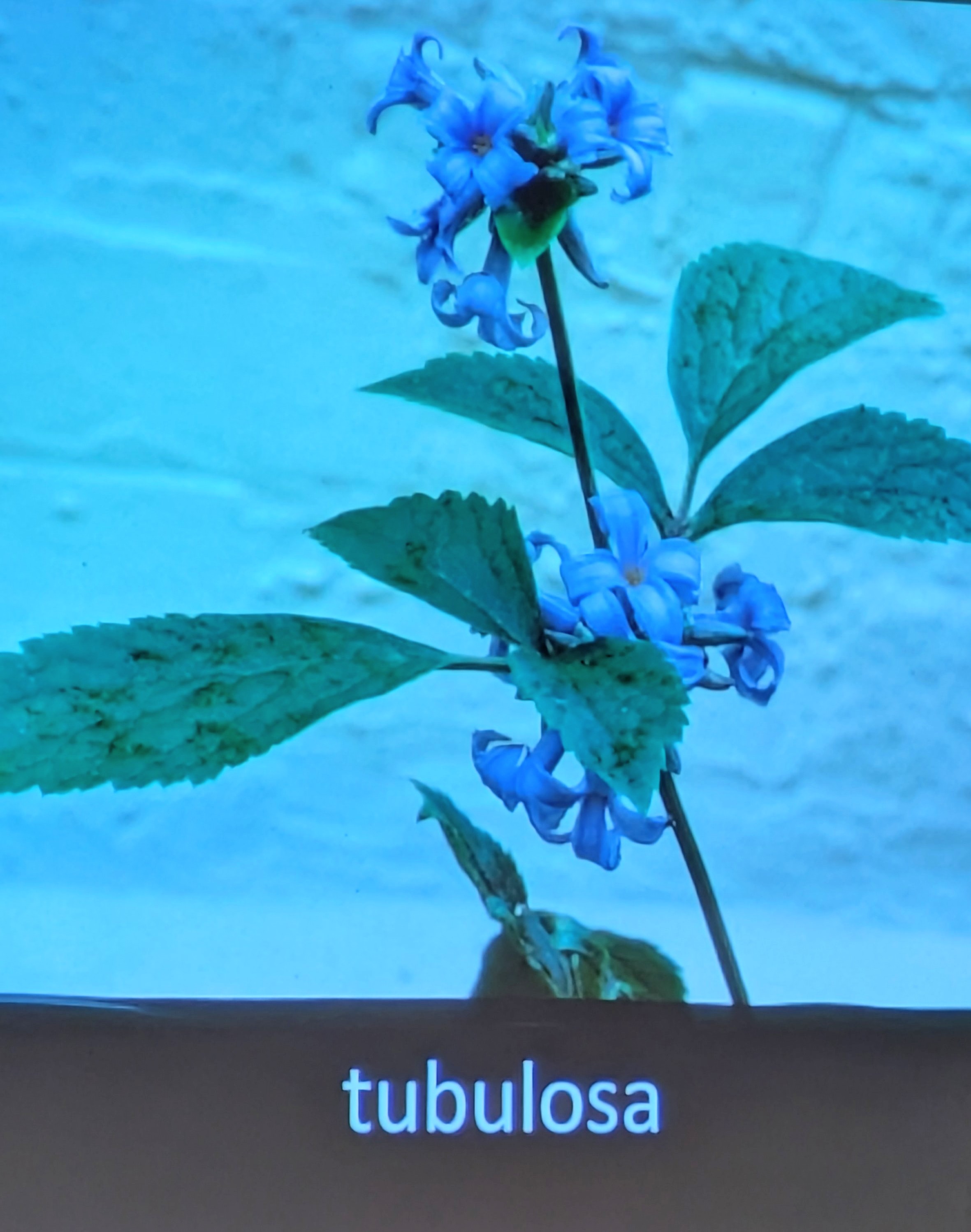
- C. tubulosa is one of the herbaceous clematis growing to about 1m tall. It has hyacinth shaped flowers and is sweetly scented.
- C. ‘Buckland Beauty’ was developed by Everett himself from seed. After three years of growing he split the original root system into four and subsequently grew on this variety which is now available from a few choice nurseries. It is part of the viorna group, has mauve bell-like flowers with pale yellow anthers on cream filaments. Everett kindly donated two plants for members of our Society to buy with the money going back to CABAHS. We look forward to these members sharing photos of these two clematis when they are showing off their beautiful delicate nodding heads.
Sharon
Discover more from Charlton and Blackheath Amateur Horticultural Society
Subscribe to get the latest posts sent to your email.
 Charlton and Blackheath Amateur Horticultural Society
One thought on “January 2026 talk: Clematis for every season”