
CABAHS members were delighted to welcome Clare Lanes, Project Manager of the ambitious Greenwich Park Revealed project, to talk to us about ‘The Greenwich Park Rose Garden: Renovation and Redesign 2023-2025‘.
Tackling this has been a thorny issue – no pun intended – amongst park users as the Rose Garden was a much-loved feature. Somewhat surprisingly the Rose Garden, as it was when Head Gardener Tom Brown began work on the replanting in 2021, was not one of the heritage areas that fell under the Greenwich Park Revealed project. The garden had first been laid out only in the 1960s with some updates taking place in the 1990s.
Clare’s explanation of the background to the renovation made it clear that drastic action had been needed. The large beech tree that had dominated the garden was 40% dead and was within a year or two of needing to be removed. Rose sickness abounded, the monoculture being a magnet for pests.
Inspired by Chartwell and Mottisfont and with advice from David Austin on rose selection the garden was on the road for a successful overhaul in the hands of Tom and his team. But first all the roses had to be removed – a cause of much controversy among park users – and the soil rested. In the subsequent replanting a huge amount of attention has been paid to soil health and water retention. Like the rest of the park the Rose Garden is pesticide free.
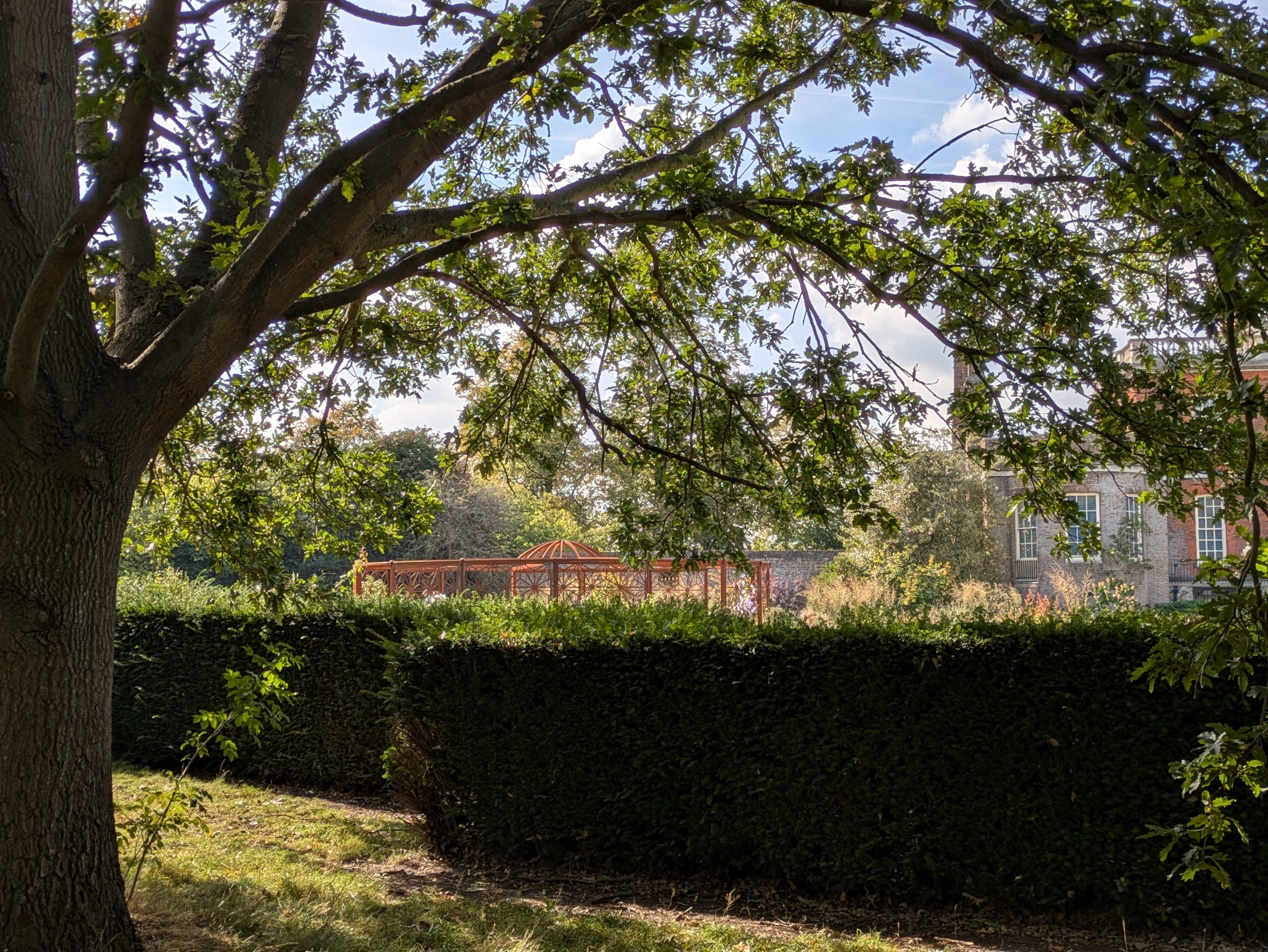
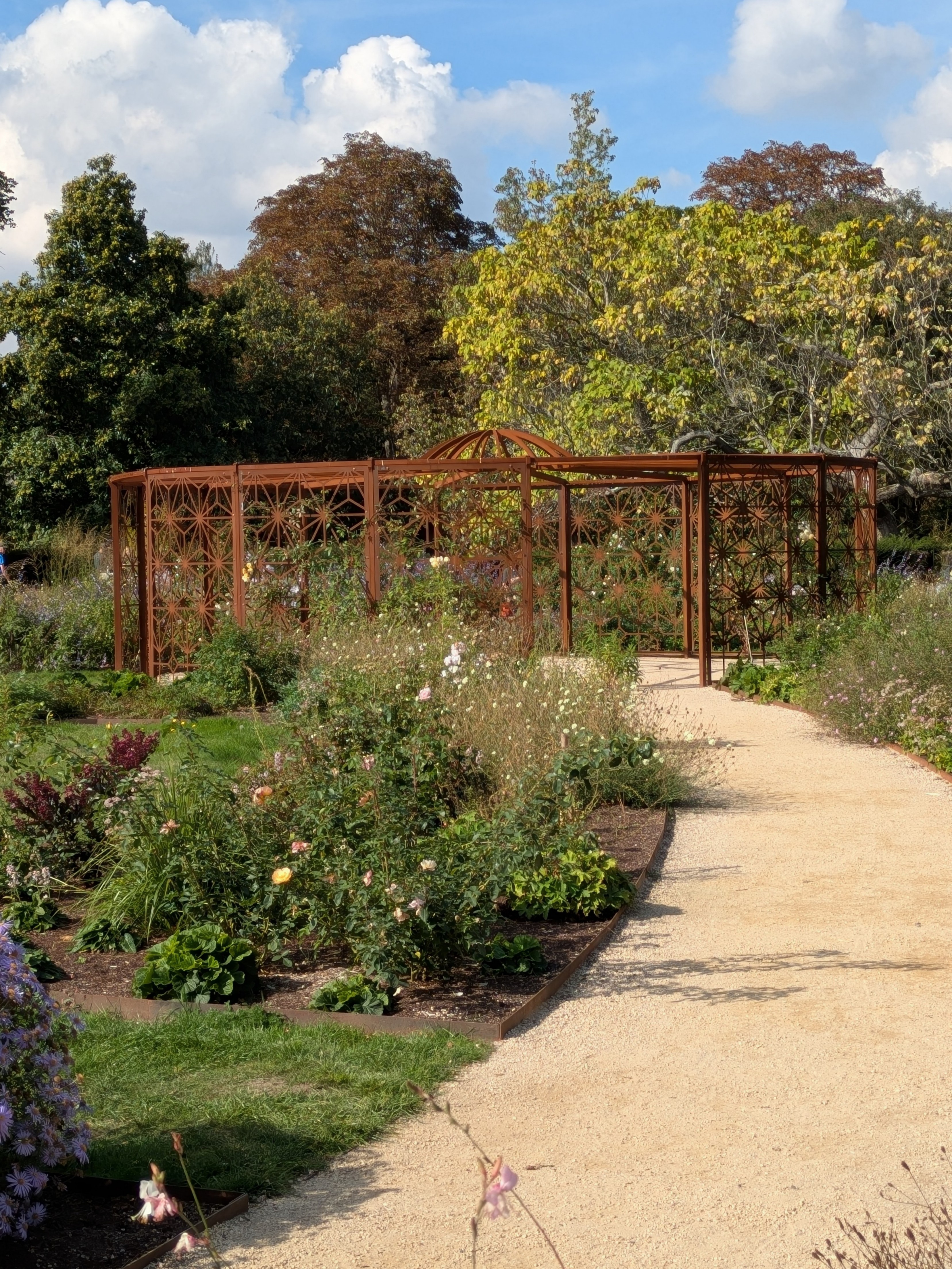
With the beech tree gone there was space for new features in the form of two pergolas. These were created by Heather Burrell who took her inspiration from the Ranger’s House. Visitors will note the inclusion of stars in the design as well as the pergolas’ dome, yet another nod to the location in Greenwich Park, home to the Royal Observatory.
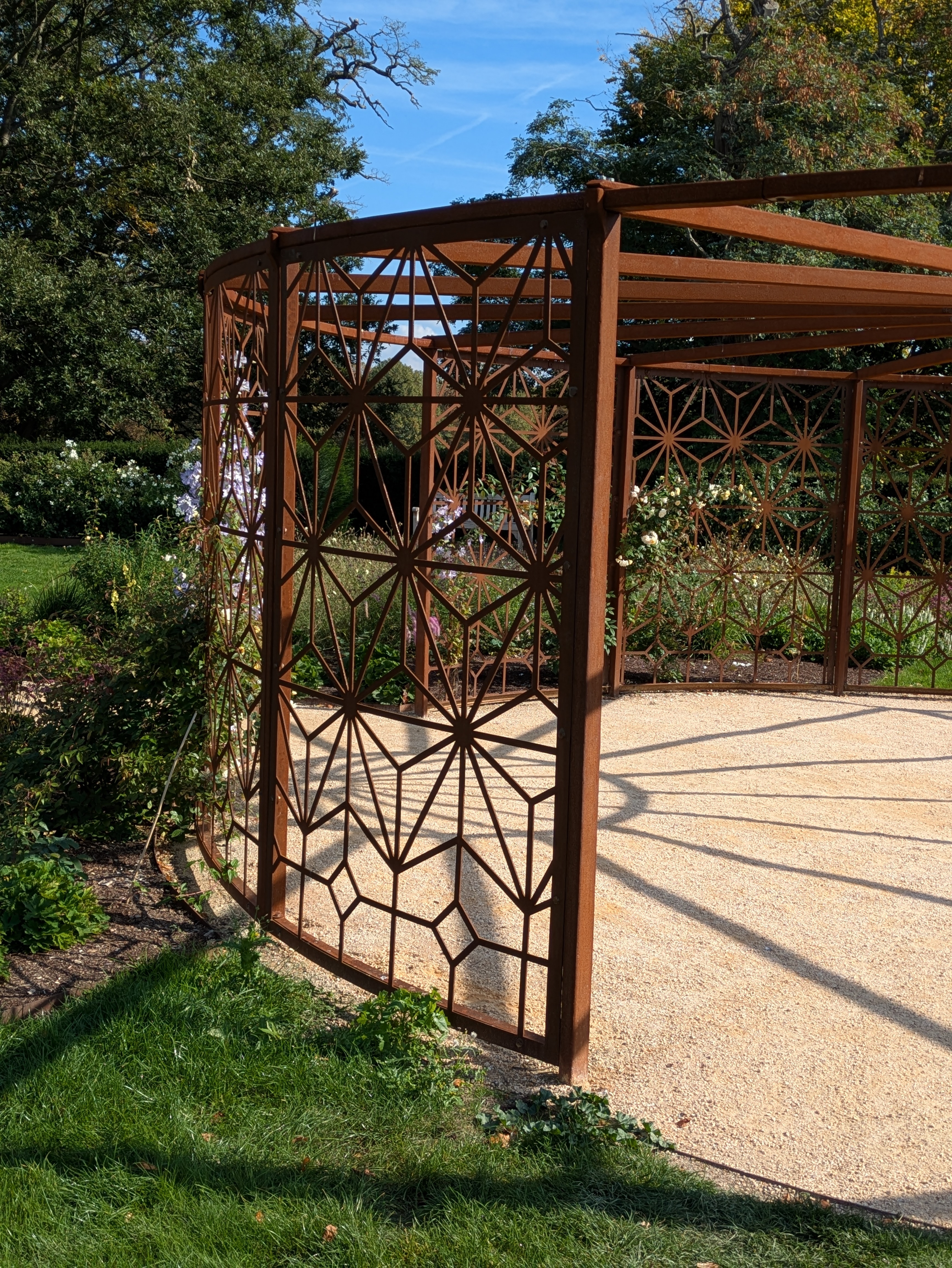
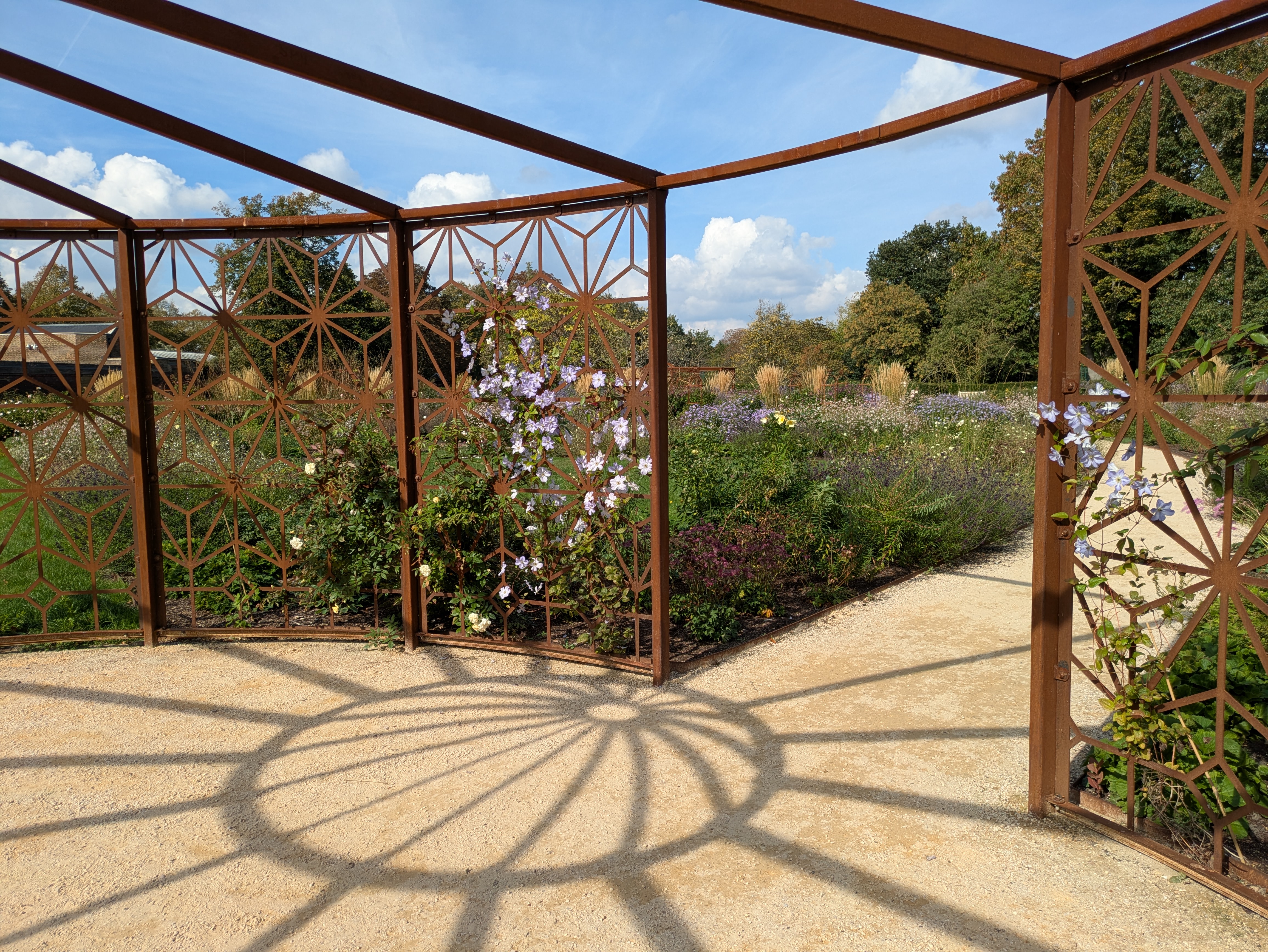
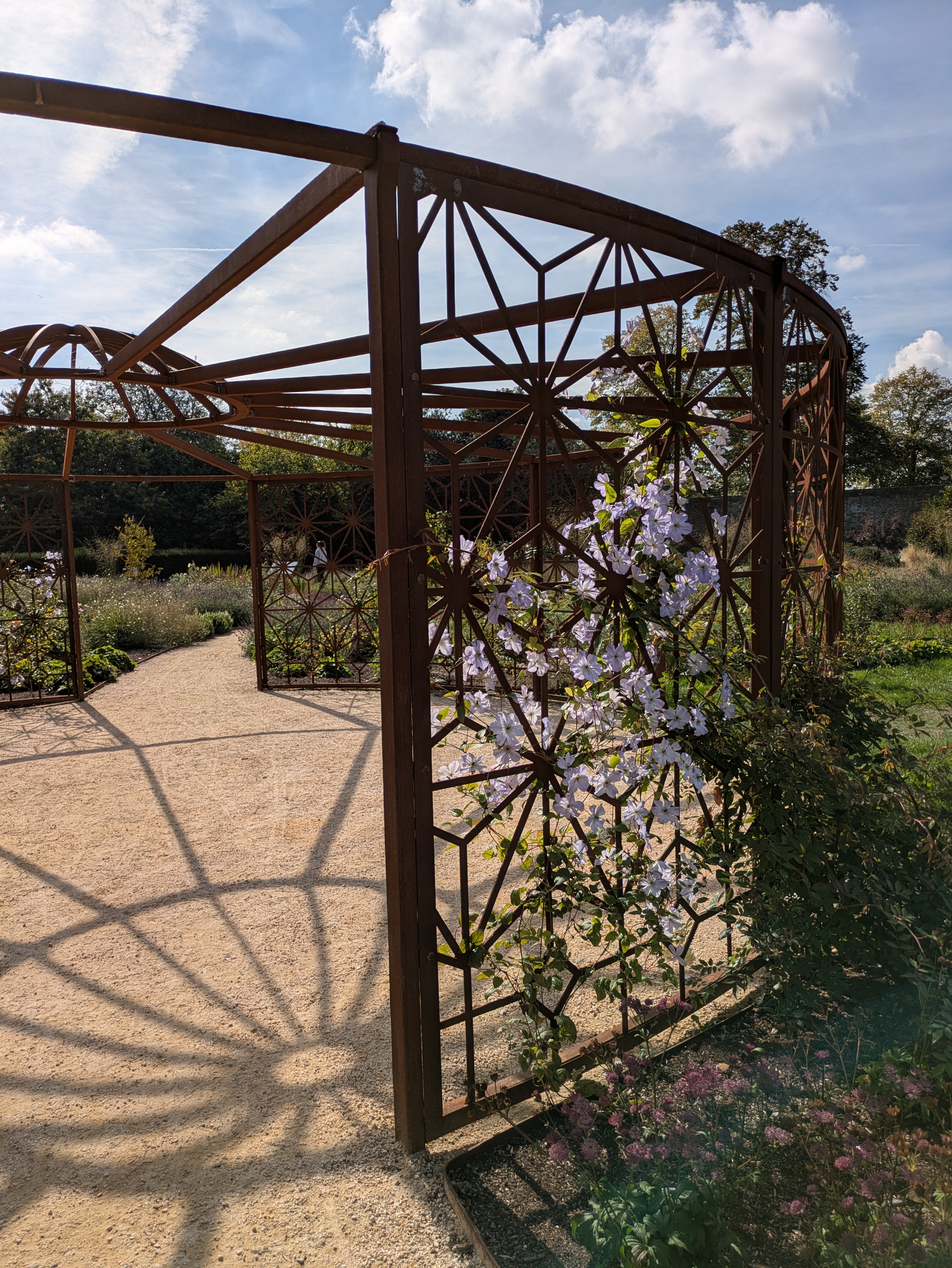
The designs, inspired by Ranger’s House windows and the stars and domes of the Royal Observatory, throw intricate shadows.
With funding from Greenwich Park Revealed, planting in front of the Ranger’s House has also undergone a thorough overhaul. To complement the new meadow-like feel of the Rose Garden shrubs were removed to make way for sinuous beds of wildflowers. The frontage is part of a butterfly transect*, which runs right around the park and which plays a key role in the biodiversity of the park.
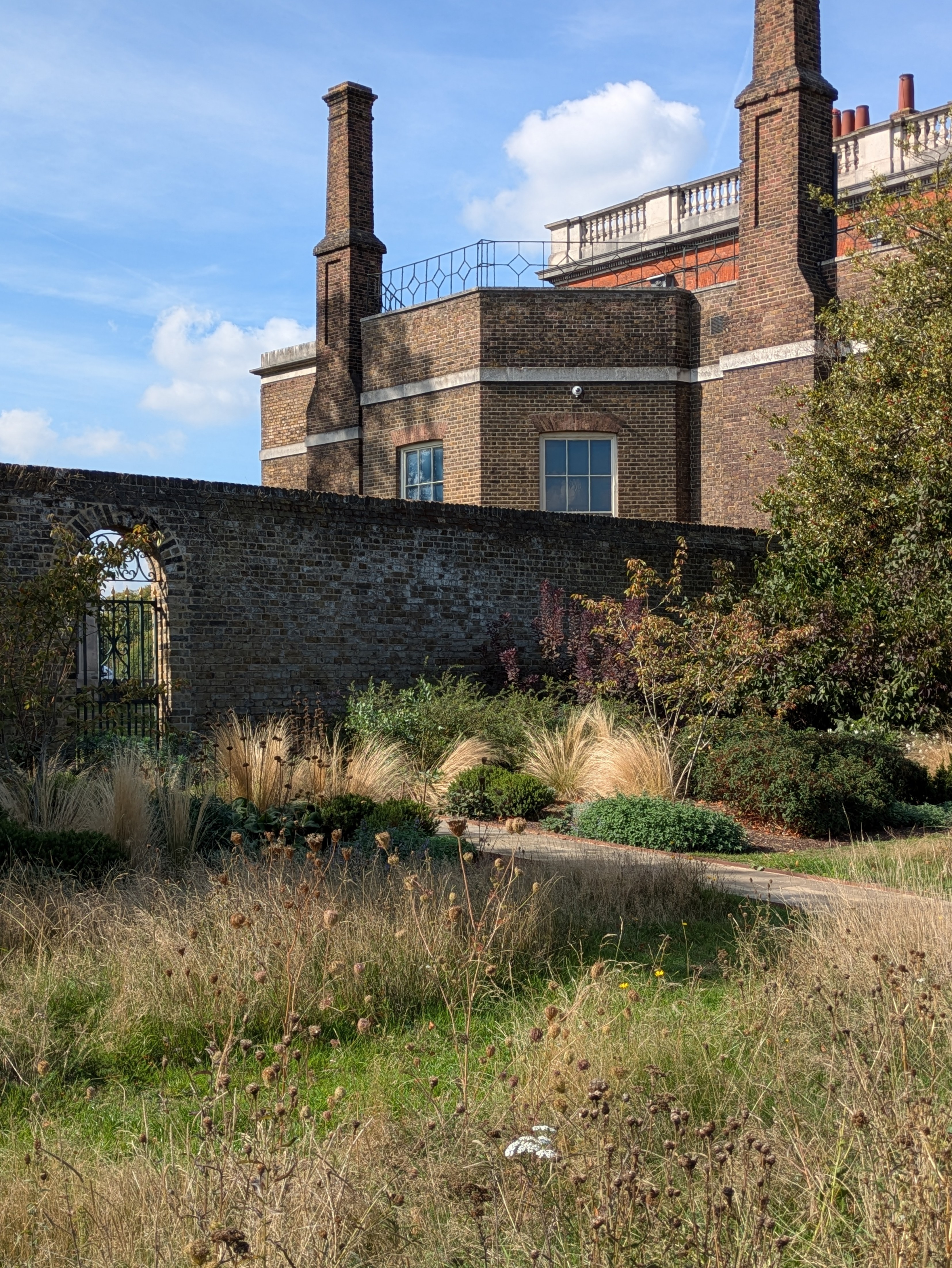
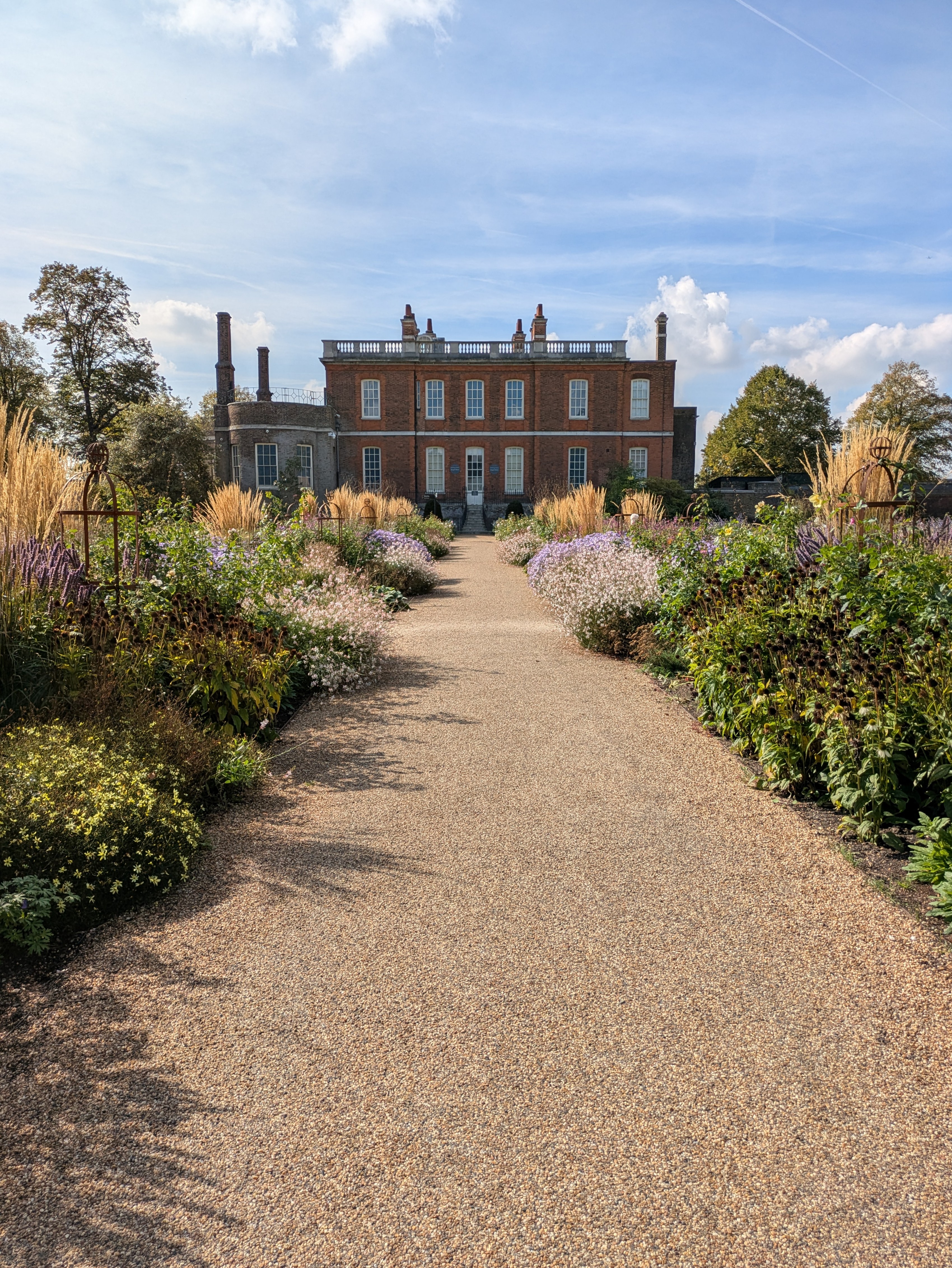
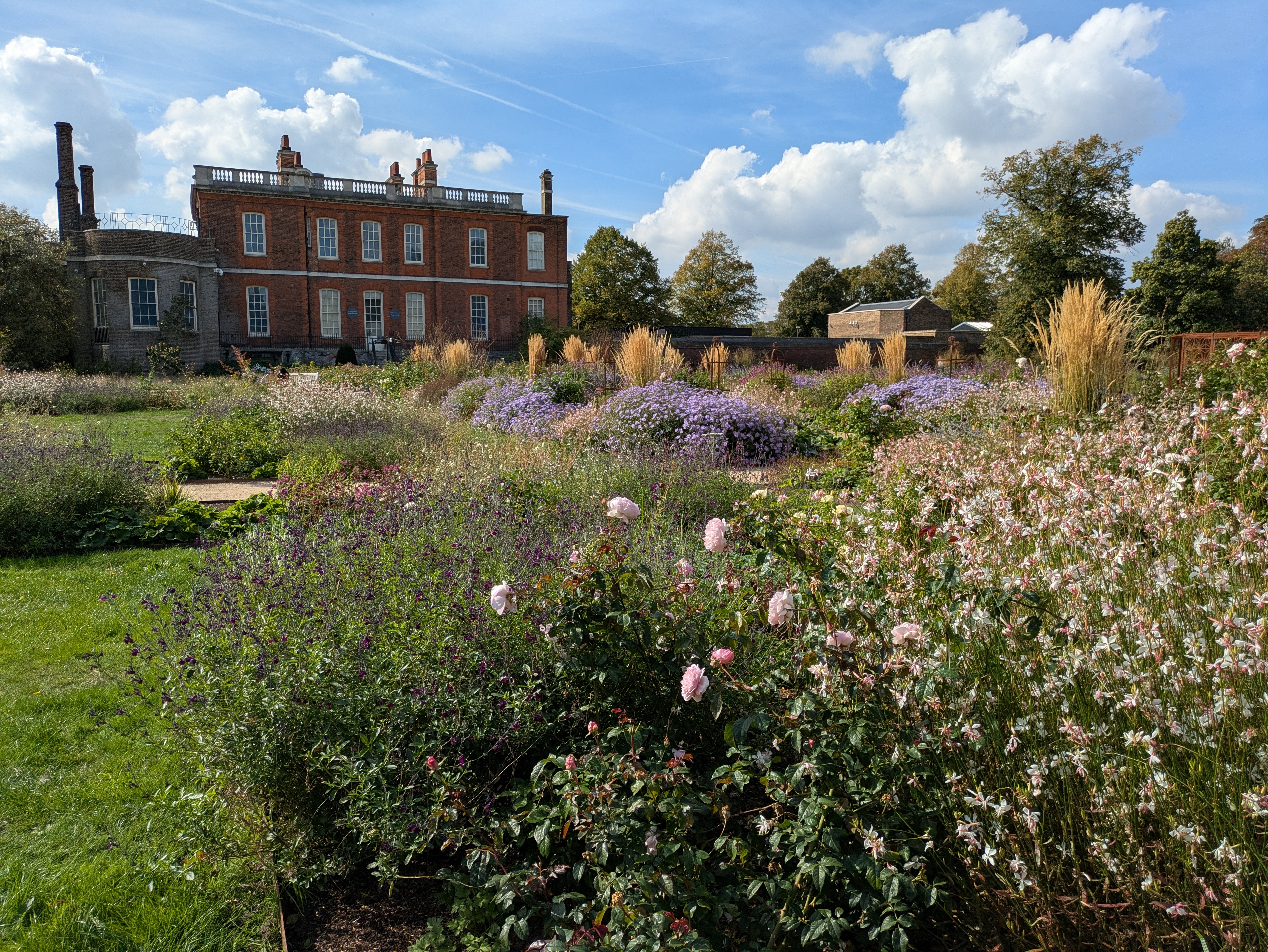
Over 1,000 roses have been planted in the garden, Rosa gallica being Clare’s favourite. The first in though were Rosa rugosa, a good variety for bugs, which were planted to form the curve of the plot.
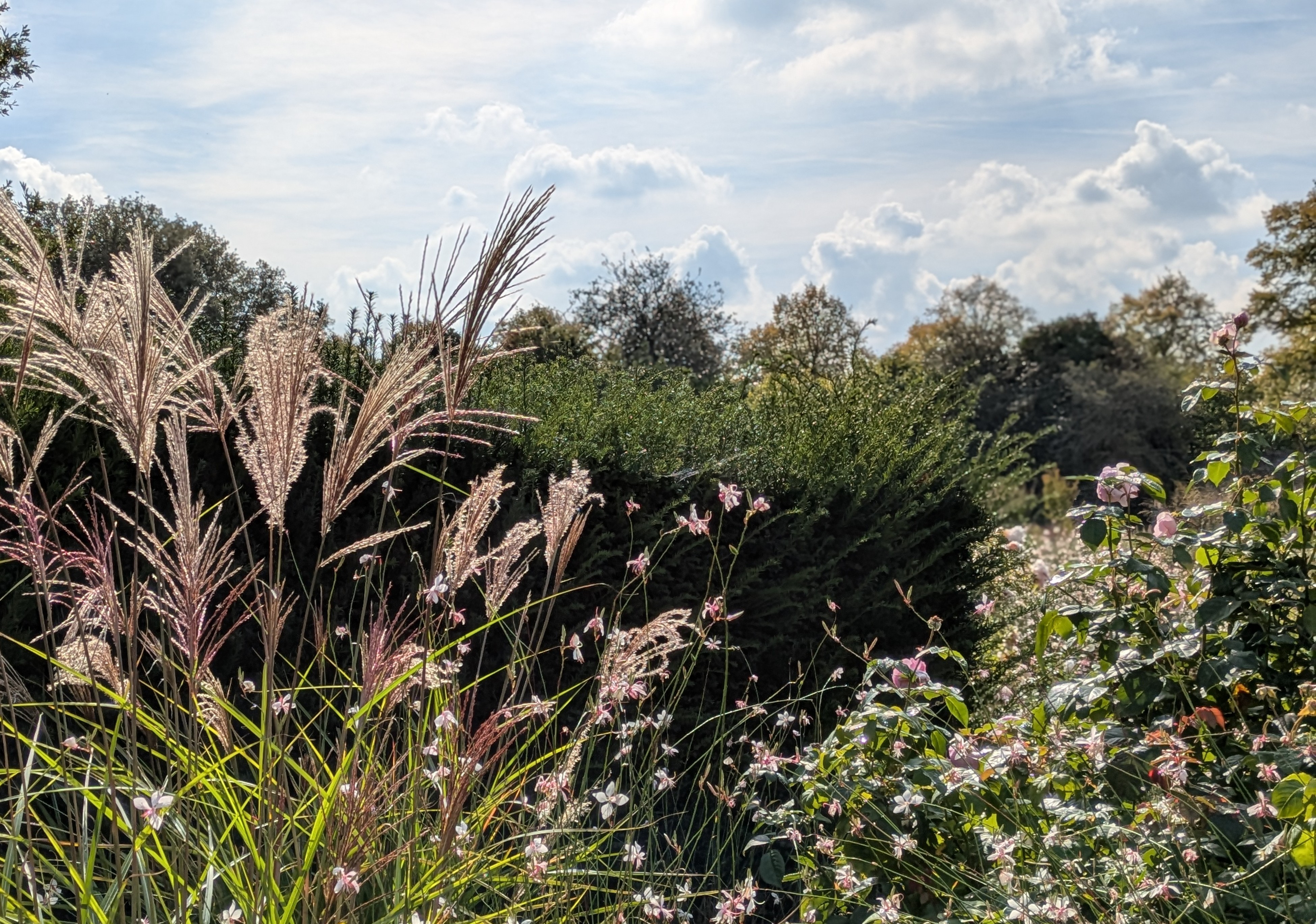
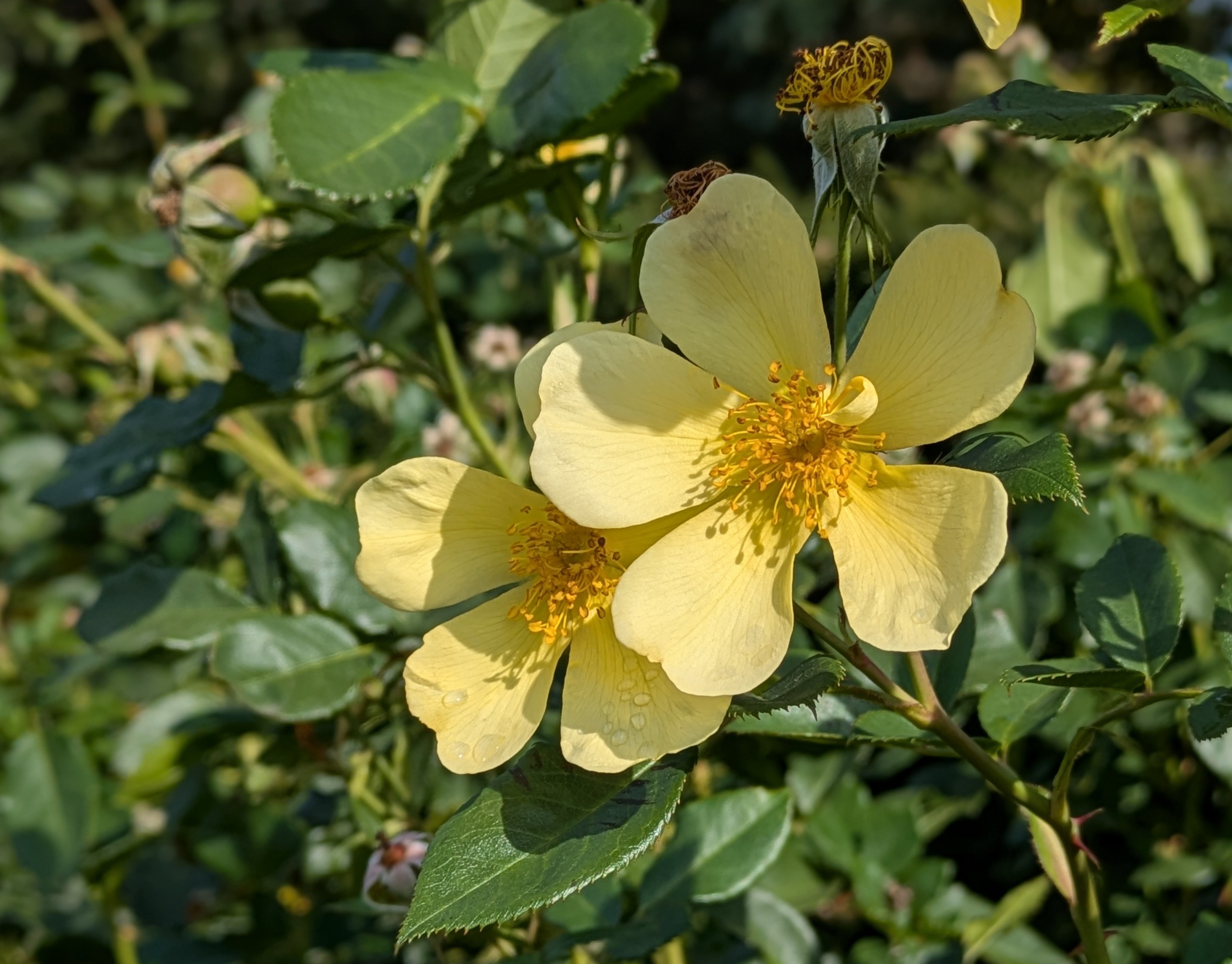
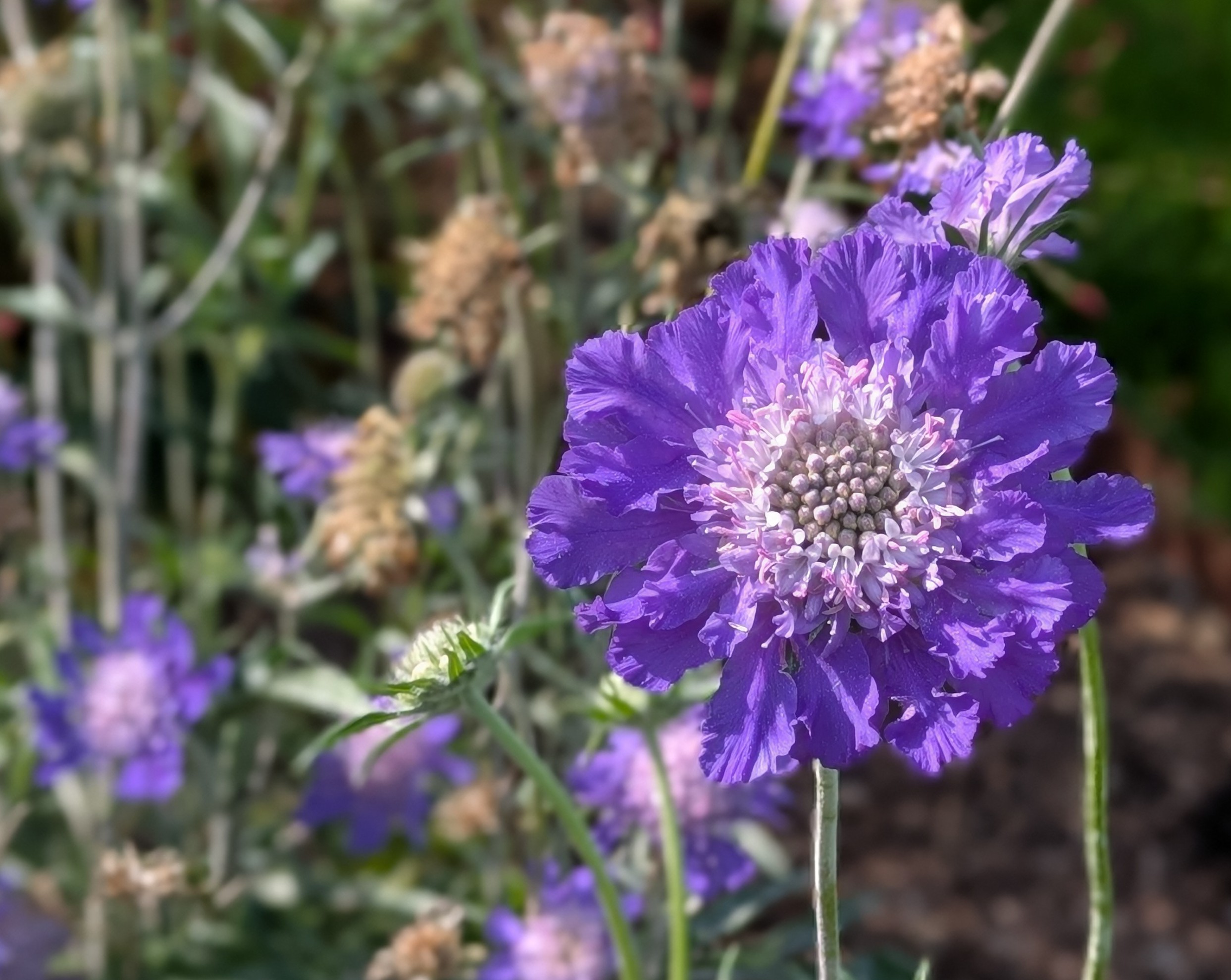
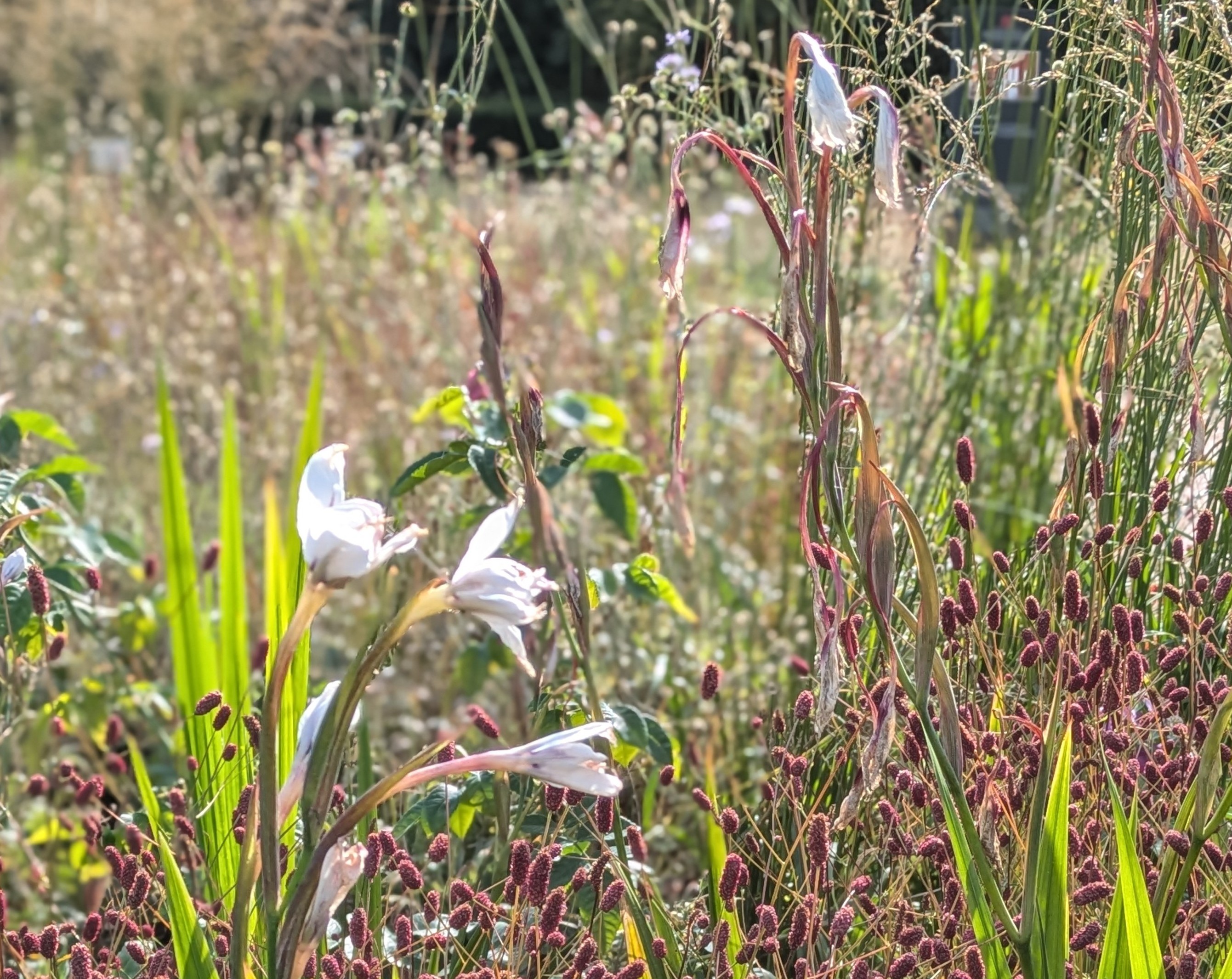
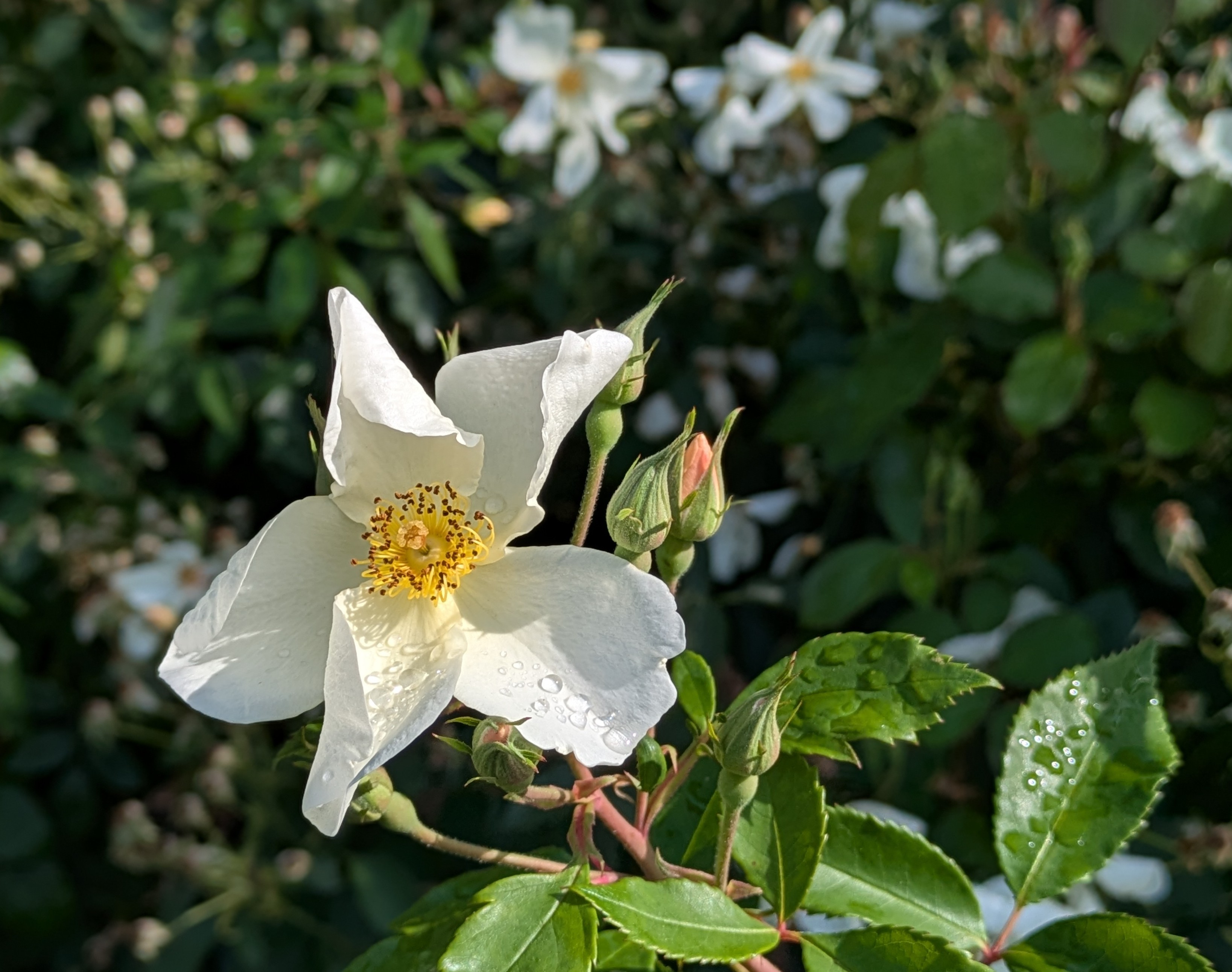
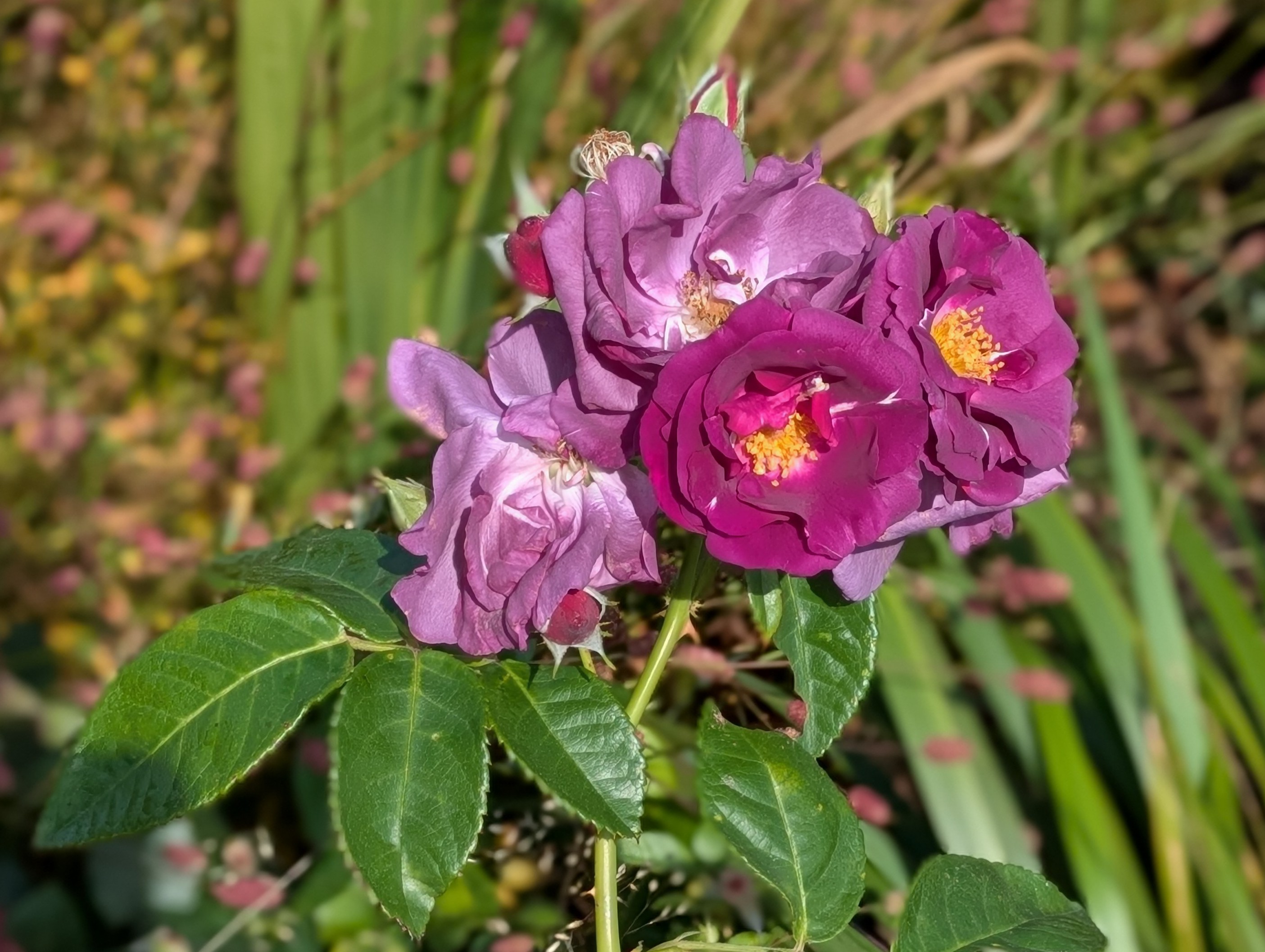
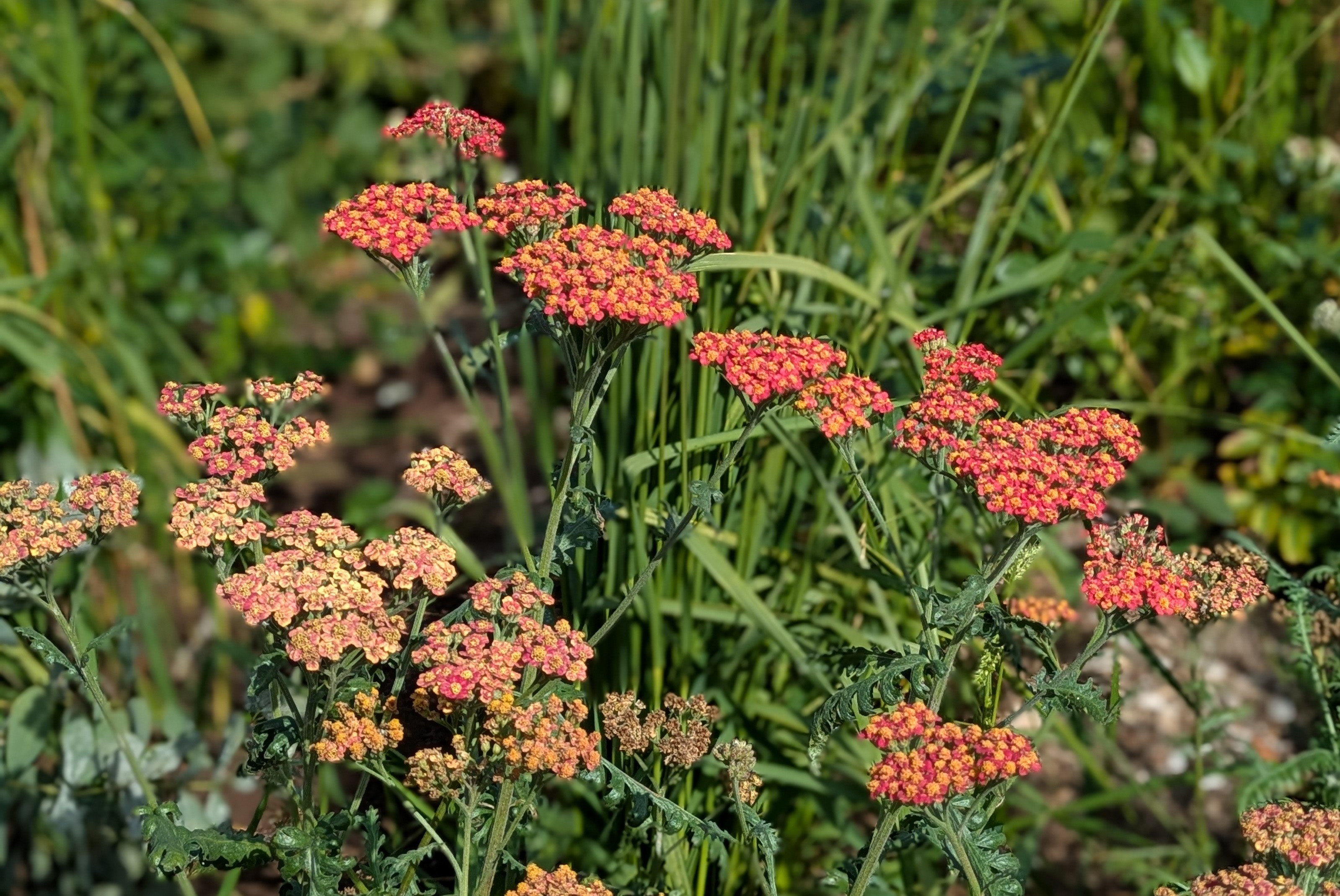
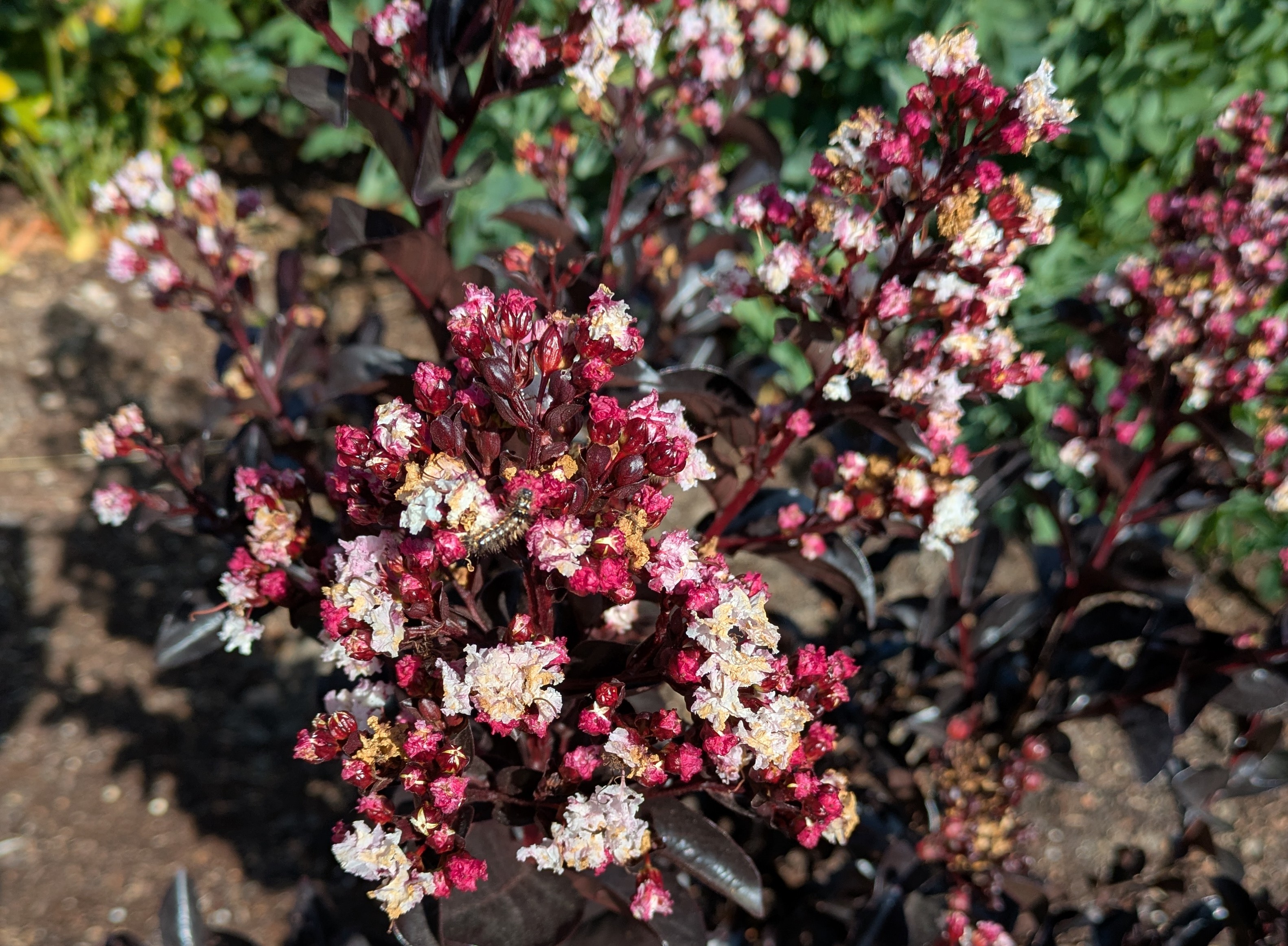
The new garden has attraction all year round including Salvias to survive warm summers and attention to flowers forming attractive seed heads later in the season. Maintaining the new garden is less labour-intensive as there is no bare soil requiring weeding.
The presentation ended with questions from the audience plus a comment from one member who loved the new Rose Garden and whose love for it had only grown after hearing Clare’s talk.
Melanie A.
* The Greenwich butterfly transect refers to a specific, fixed walking route in Greenwich Park, where volunteers walk weekly from April to September to count butterflies as part of the UK Butterfly Monitoring Scheme (UKBMS)
Discover more from Charlton and Blackheath Amateur Horticultural Society
Subscribe to get the latest posts sent to your email.
 Charlton and Blackheath Amateur Horticultural Society
2 thoughts on “September 2025 Talk: Clare Lanes on the Greenwich Park Rose Garden”