Fiona Davidson is the head of Libraries and Exhibitions at the RHS as well as being an author. Her talk at our March meeting was based on her recent book ‘An Almost Impossible Thing – the radical lives of Britain’s pioneering women gardeners’ (previously reviewed by Stella). She described the lives of female gardeners in the late nineteenth and early twentieth century, a reflection of the restricted lives led by women in general during this time. Yet despite this, some pioneers became gardeners and had successful careers in gardening.

Until the late 19th century women gardeners were either working class ‘weeding women’ paid a daily rate or wealthy with links to country estates. Even Gertrude Jekyll didn’t actually work as a gardener, she was a designer.
Fiona first became interested in women professional gardeners when she came across in the archives an application in the 1890s by a 17 year old woman, Olive Harrisson, for an RHS gardening training scholarship which was the prize for the highest marks in a newly-instigated RHS national horticultural examination. While there was no specification in the rules about who could claim the prize, Olive was turned down because she was a woman – indeed ‘it was never anticipated that a woman would try…’. It was felt at the time to be an inappropriate job – heavy manual work was considered unfeminine or even impossible for women. Fiona tracked the results of this scholarship scheme until 1948 and the outcome for this period was the same. Nevertheless a significant number of female gardeners found ways of getting round male domination and went on to have successful careers in gardening. They found a variety of niches.
By the beginning of the First World War gardening was becoming more open to women helped by the need for labour in agriculture to replace men away fighting in the war. Similarly in the second World War. After the wars when the men returned home, gardening returned very much to being a man’s world. It was not until 1974 that RHS Wisley took on female trainee gardeners.
Fiona described and brought alive some of the lives of these female pioneering gardeners. For example, Gertrude Cope from Peckham was for 20 years head gardener at Cadbury, Edith Bradley was a feminist educator who had a farm, Madeline Agar was a suffragist who wrote a book on garden design, JS Turner became head gardener at Dochfour, Ada Brown was a nursery owner and Olive Cockerell was a bohemian, artist and follower of John Ruskin and William Morris, who established a French-style garden in Sussex.
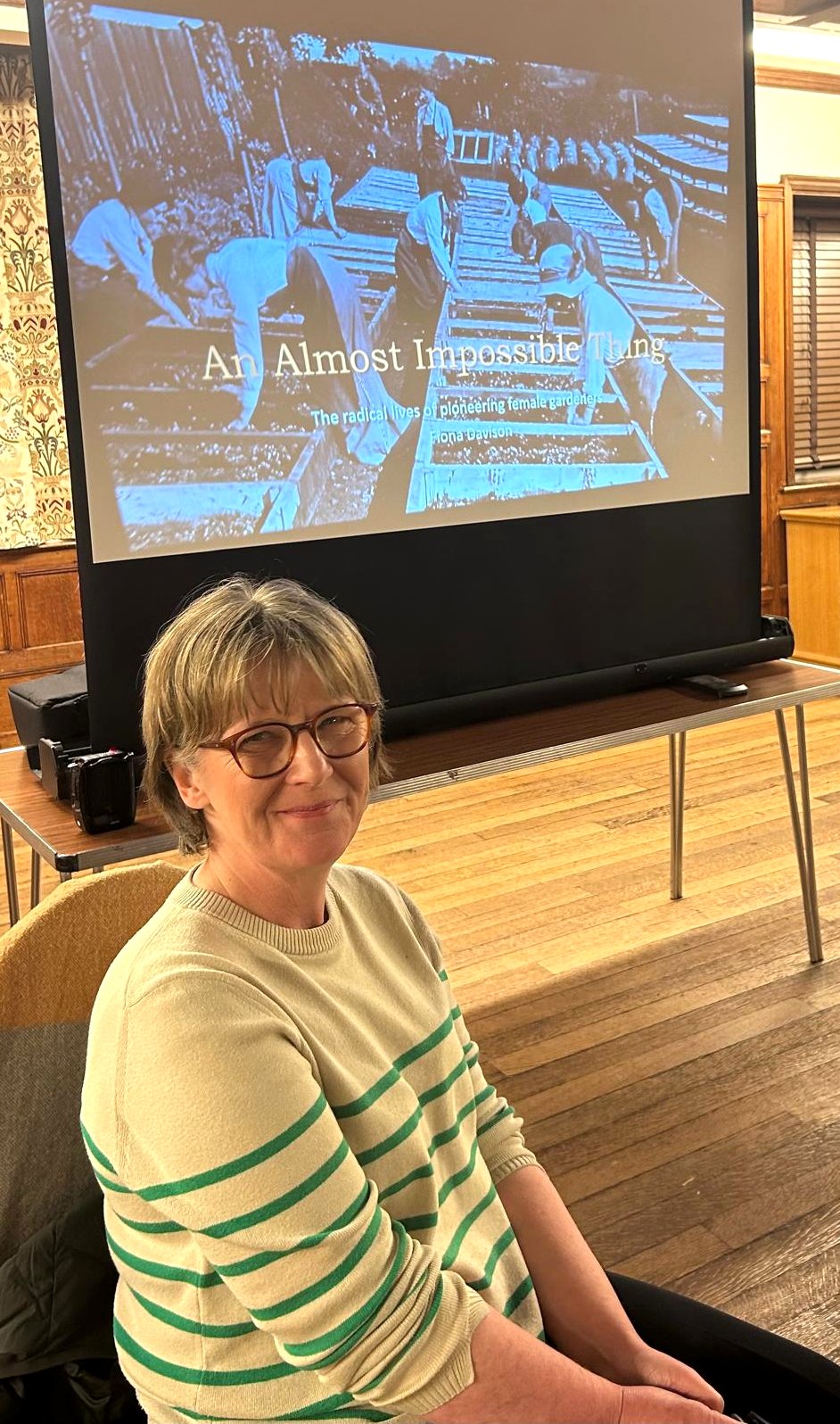
They were often radical and idealistic women. Some belonging to the suffragette movement, mostly to the non-militant suffragists. In fact the suffrage movement used gardening and plant sales to help fund itself. One gardener supplied them with violets, a colour of the suffrage movement, for sale.
Fiona’s talk was very informative and stimulating. She made me feel proud of these pioneering, enterprising and idealistic women. If her talk is anything to go by her book is well worth reading.
Angela
Discover more from Charlton and Blackheath Amateur Horticultural Society
Subscribe to get the latest posts sent to your email.
 Charlton and Blackheath Amateur Horticultural Society
One thought on “March 2025 Talk: Fiona Davison on Pioneering Women Gardeners”