During March, when the changeable weather still surprises us, it is wonderful to see the Camellias in flower, as they provide the much-needed WOW factor during the colder days – their profusion of flowers, colours, shapes and patterns add an immediate vibrancy and character to any garden or parkland.

In my neighbour Linda B’s garden, there are three Camellias but one stands out. The flowers are smaller and single, white (blush-pink as they age), scented and beautiful. The leaves are also different: matt-green and elongated and the overall appearance of the shrub is more elegant. It has grown, albeit slowly, and is now approximately 2’ in height. A plant app identifies it as possibly Camellia sasanqua.
There are still buds coming and it has been flowering since the late autumn. So, it’s a very choice and rather beautiful shrub to have in any garden, especially as it is fragrant and flowers over a long period of time. This Camellia grows on the north side of the boundary fence, so it does not receive any sun during the winter months.
In Greenwich Park’s flower garden, two Camellia japonica shrubs growing in the woodland area adjacent to the pathway stand out: one with vibrant pink flowers; and the other with white-splashed-red flowers, both providing long-lasting displays.

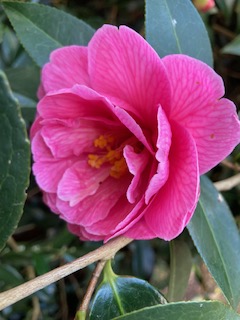
Unknown C. japonica and possibly C. williamsii ‘Donation’
In Greenwich Park at this time of the year, tree-sized Camellias can be viewed in amongst the shrubberies, all along the southern and western boundaries of the park.
A tree-sized Camellia japonica is a real feature in Ruth Y’s front garden and absolutely laden with stunning red flowers. Because of the adjacent foliage shading this Camellia, the very distinctive red flowers amongst the deep green, glossy, leaves creates a very decorative appearance.


Possibly C. ‘Bob’s Tinsie’ and and unknown red and white cultivar.
In the rear garden is a stand-alone white-red flowered Camellia japonica, which receives the morning sun and again, this shrub is covered in flowers and buds and looking extremely healthy.
Sometimes Camellias can be a little tricky to establish in our gardens but plenty of ericaceous compost is necessary at planting time. We can also add the used, paper tea-bags and spent coffee grinds to the soil to make the soil all the more suitable for these wonderful shrubs, which are very much to be admired at this time of the year.
Anna L
Discover more from Charlton and Blackheath Amateur Horticultural Society
Subscribe to get the latest posts sent to your email.
 Charlton and Blackheath Amateur Horticultural Society