We hope you enjoy a spring walk around the walled gardens at Charlton House! Look out for:
Daffodil (Narcissus ‘Elka’)
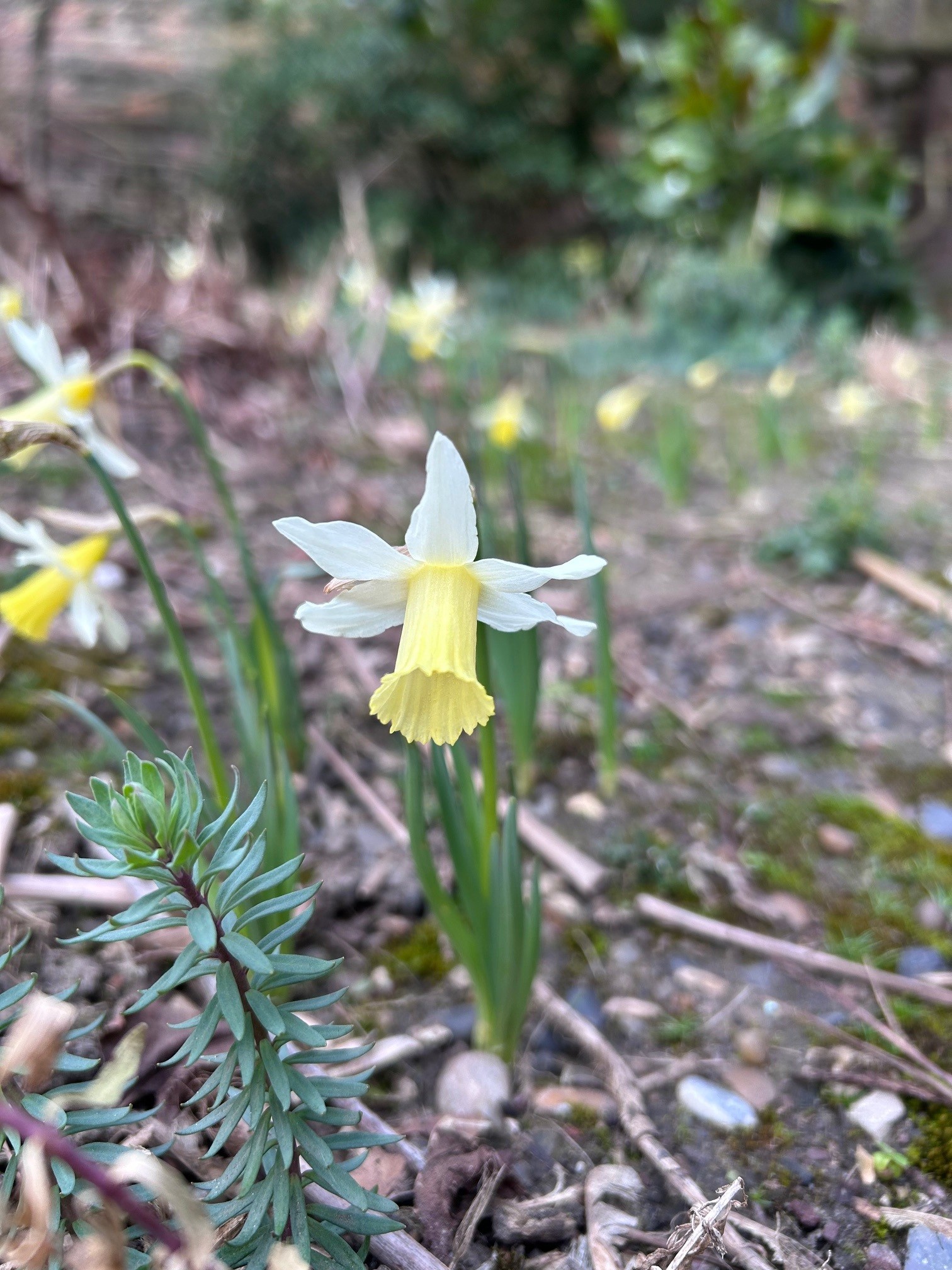
A fragrant, small and early-flowering daffodil, you can spot Narcissis ‘Elka’ in the Peace Garden. It has pale petals and a creamy yellow trumpet. The name ‘Elka’ is apparently from a combination of the names of two ‘lady daffodil growers’: Elizabeth and Kate.
Wood spurge (Euphorbia amygdaloides var. robbiae)

Wood spurge is in the Euphorbia family, so take care! If the stems are broken, they gush with a thick milky latex substance that can cause blisters on skin. They are handsome perennial plants, shade loving, with zingy lime-green flowers in late Spring and rosettes of glossy dark green leaves. Another name for this plant is ‘Mrs Robb’s Bonnet’ – we would like to see the hat that inspired that name!
Mediterranean spurge (Euphorbia characias subsp. wulfenii)

Another, much bigger Euphorbia, with grey-green leaves and the usual lime-green flowers, it’s quite an imposing plant which can reach over a metre in height.
All Euphorbia (and there are many, from very large shrubs to tiny little desert succulents) are also known as ‘spurge’. The irritant sap is a feature of all of them, so don’t touch!
Lenten rose (Helleborus orientalis)
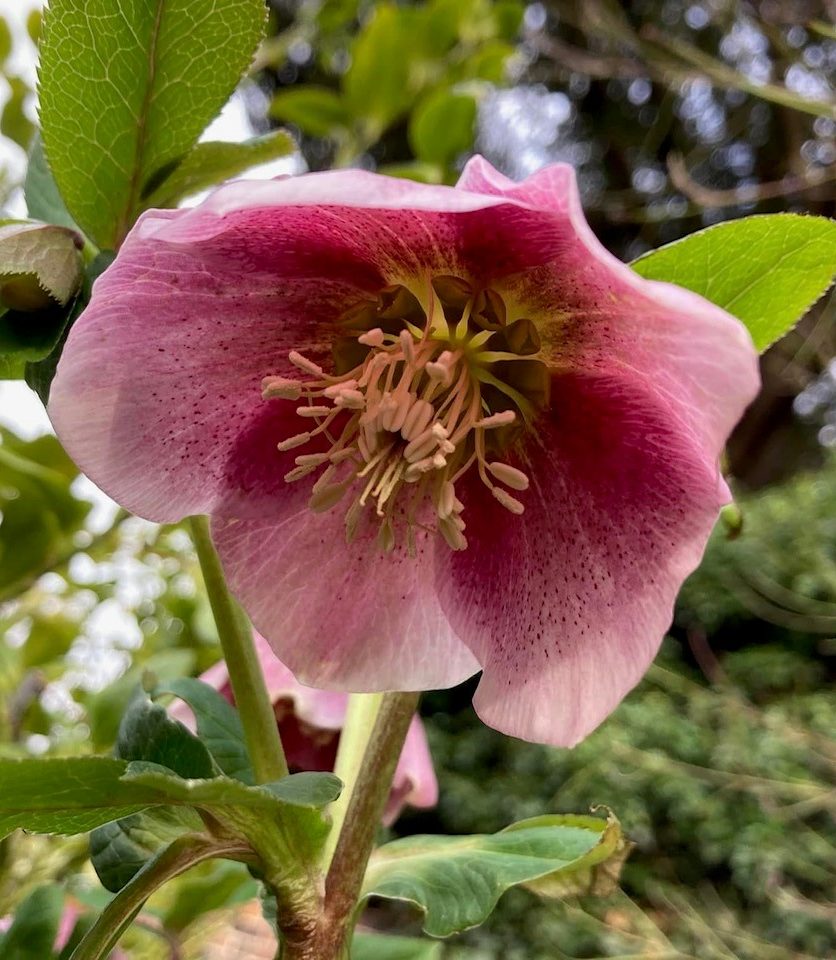
The Lenten Rose is a perennial flowering plant and is part of the buttercup family, so not a rose at all! Its common name comes from the fact it usually flowers between Ash Wednesday and Easter – the period known as Lent. Hellebores (Lenten roses) can be white, pink, purple and green and they cross with each other very easily so all sorts of colours can result.
Primrose (Primula vulgaris)
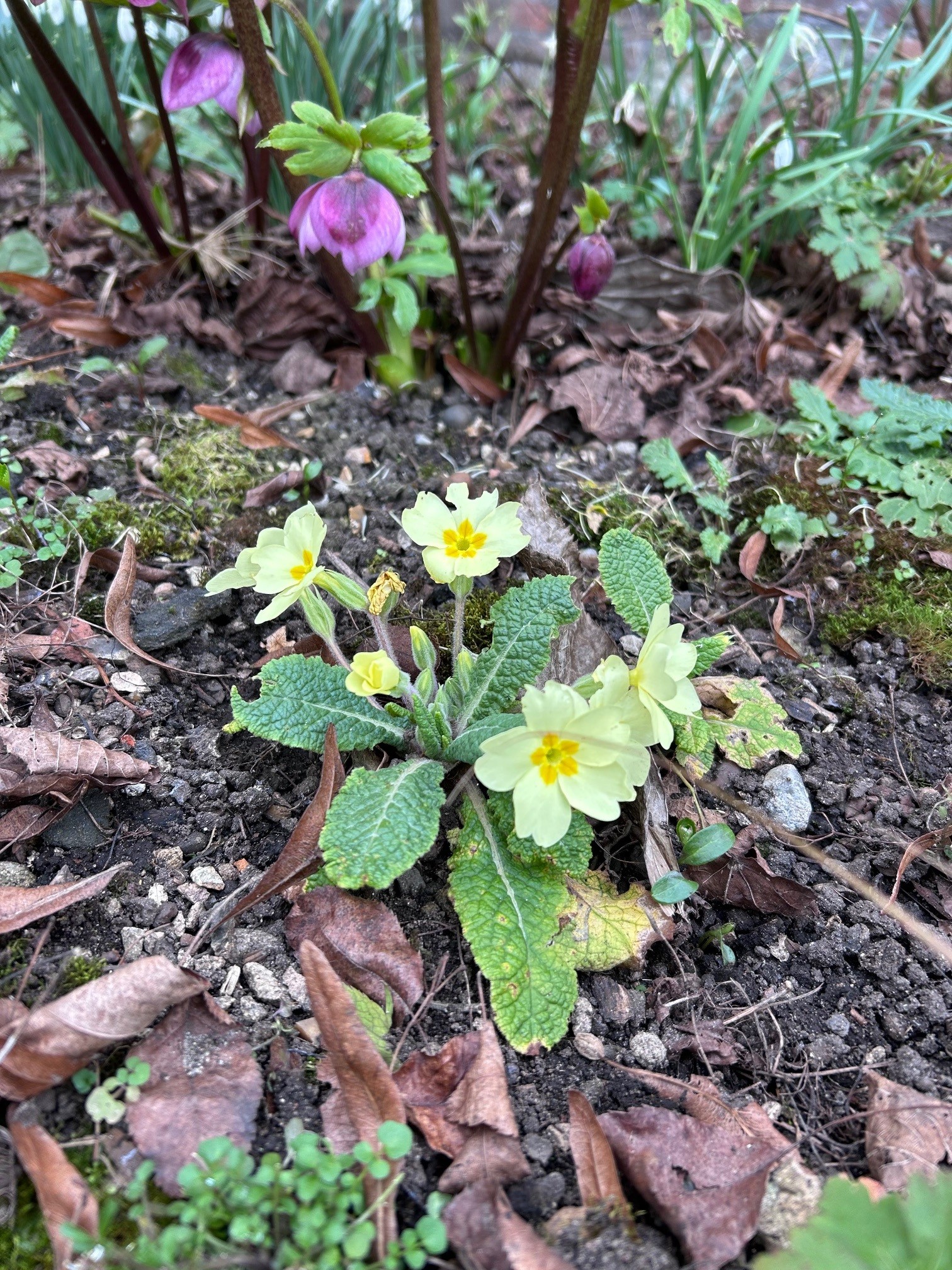
We grow the English or ‘common’ primrose in the walled gardens, which is the natural pale yellow one that gives its name to the colour Primrose. It is often one of the earliest plants to flower in Spring (the Latin word ‘prima’ means first). Early butterflies like the Brimstone benefit from its nectar. Plants will hybridise (cross) very easily with the garden bedding Primulas that come in lots of different bright colours, so seedlings can come up a surprising colour!
Cornelian cherry (Cornus mas)
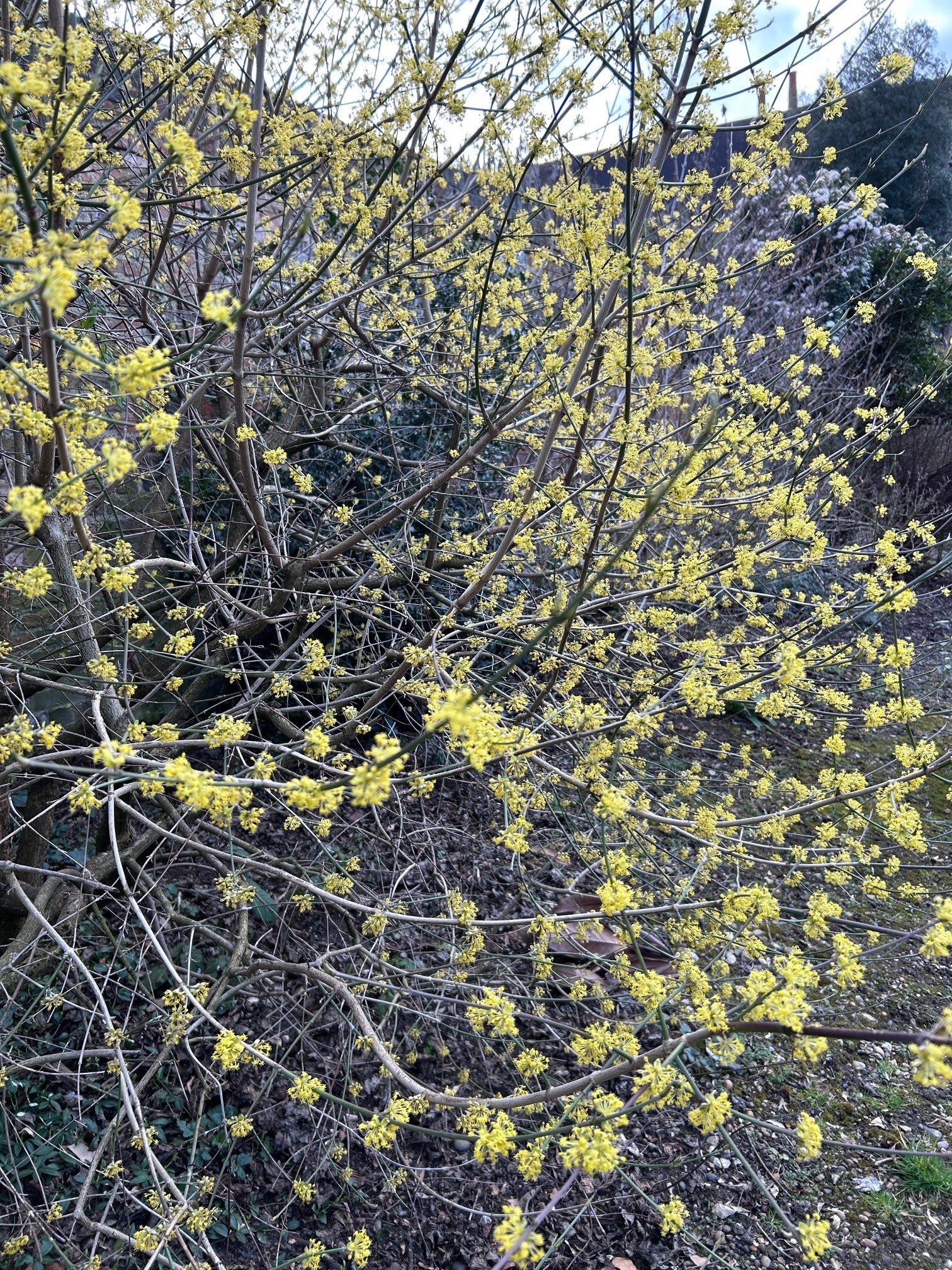
A smallish tree / large shrub which can sometimes fade into the background at other times of the year, Cornus mas is covered in tiny yellow flowers in February and March (sometimes earlier) which glow beautifully in the low light at this time of year. It produces small, cherry-like berries in the autumn.
Laurustinus (Viburnum tinus)

This is a large, dense, evergreen shrub with attractive dark green leaves, which look similar to bay laurel (Laurus nobilis) – which is how it gets its common name. It flowers profusely in winter and early spring with pink-tinged, slightly waxy white flowers which are scented. These then turn to berries which are a slightly metallic dark blue/black.

Discover more from Charlton and Blackheath Amateur Horticultural Society
Subscribe to get the latest posts sent to your email.
 Charlton and Blackheath Amateur Horticultural Society