Jason Sylvan, Head Gardener at Charlton House, has designed the Old Pond Garden to be as attractive to wildlife as possible. Because we talk about monitoring moths, he asked if we could check how many moths are visiting the garden. We should have tried this in the warmer months when there are more plants in full flower but we had missed that for this year so we gave it a shot on a warmer dry night in September to test out a strategy.
As we wrote in an earlier post, we have been monitoring moths for the Garden Moth Scheme since 2013 in Newcastle-upon-Tyne and since 2019 in Blackheath. The moth trap is a box with a light (our type gives off no heat), and below the light are two panels of see-through Perspex, one each side and shallowly angled down, with a slot/gap between them. The moths ‘funnel’ into the box, and it’s difficult (but not impossible) to get out. Inside are egg-trays, which provide resting places.


Why do moths fly towards the light? Until recently, the correct answer has been that nobody knows, but researchers in Sweden found the answer: for aeons, light at night was above and dark was below, so moths orientated themselves to fly with their backs to the light above. In artificial light – fires, candles, street lamps – they still try to fly with their backs to the light, circling round and round, and sometimes become disorientated.
The trap is placed before sunset, and collected at sunrise the next day. So an early start.
At the Old Pond Garden, we were aware of possible vandalism, so we placed the trap at the Stables end, away from the Long Border gate, with extension lead from the work area sockets. But we also wanted moths! So we placed the trap amongst the flowerbeds but on a path. All went well.
We decided to take the moth trap home to check the moths in our garage as usual. The moths rested quietly in the box in our car till we went over any number of speed bumps! On arrival, we uncovered the trap and found the moths were excited, so we left them to settle down again – and had some breakfast!.
Lynda then carefully encouraged each moth, one at a time, into their individual clear plastic pot: head first and the rest follows. Once gathered, the pots/moths are put for a time into the fridge. This calms them down, and it does them no harm at all. In fact, they can be kept this way for a day or two. To release, they are allowed to warm up first. They are always released to the area where they were trapped.
The outcome: 32 individual moths of 17 species: there are 2500 species of moth in the UK (and only 60 species of butterfly). Some have common English names that hint at identification, for example, we had eleven Large Yellow Underwings, which speaks for itself, and one Light Emerald, the colour. This seems to us to be a good result. There would be more at the height of summer, and there are even a few to be found in winter.
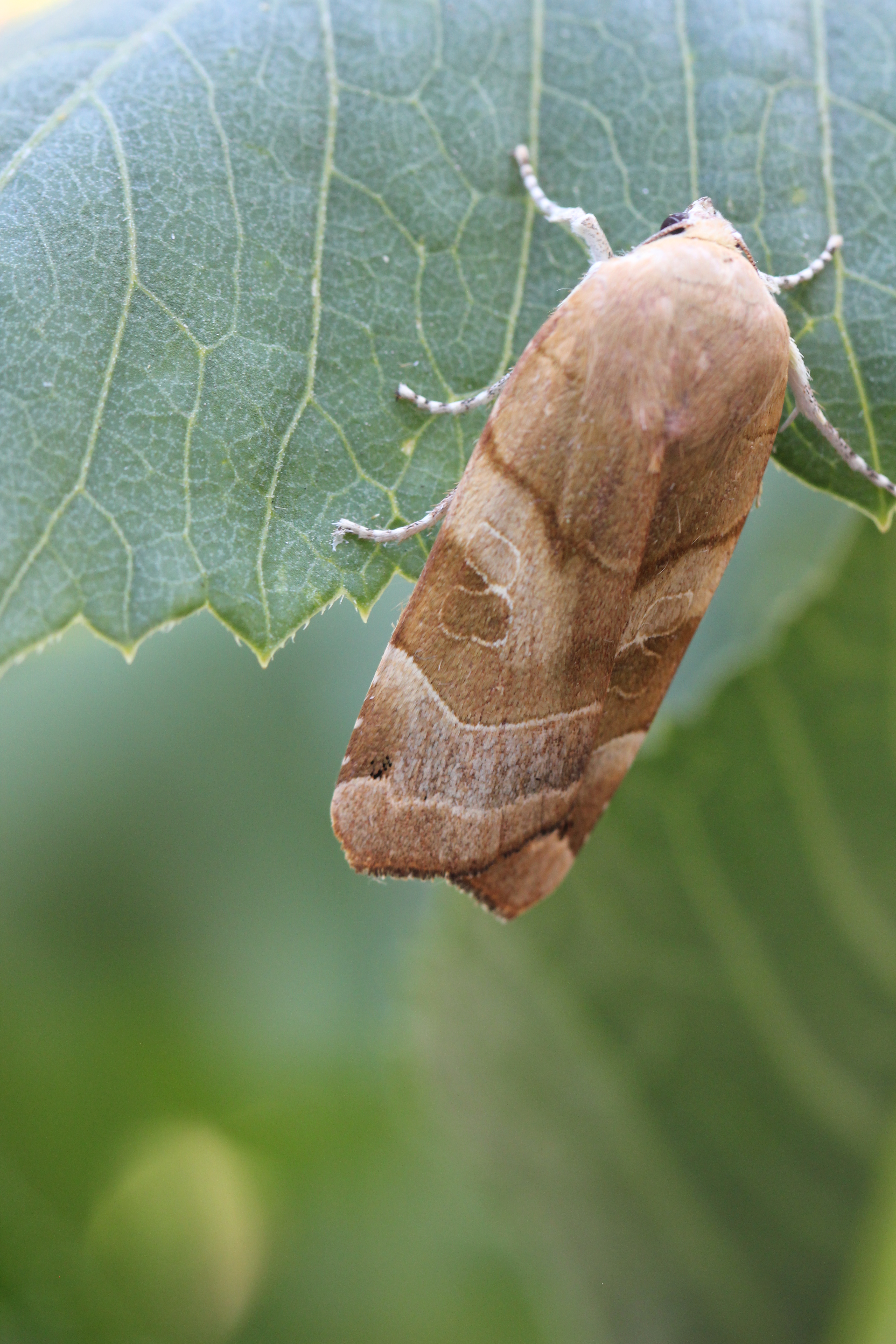
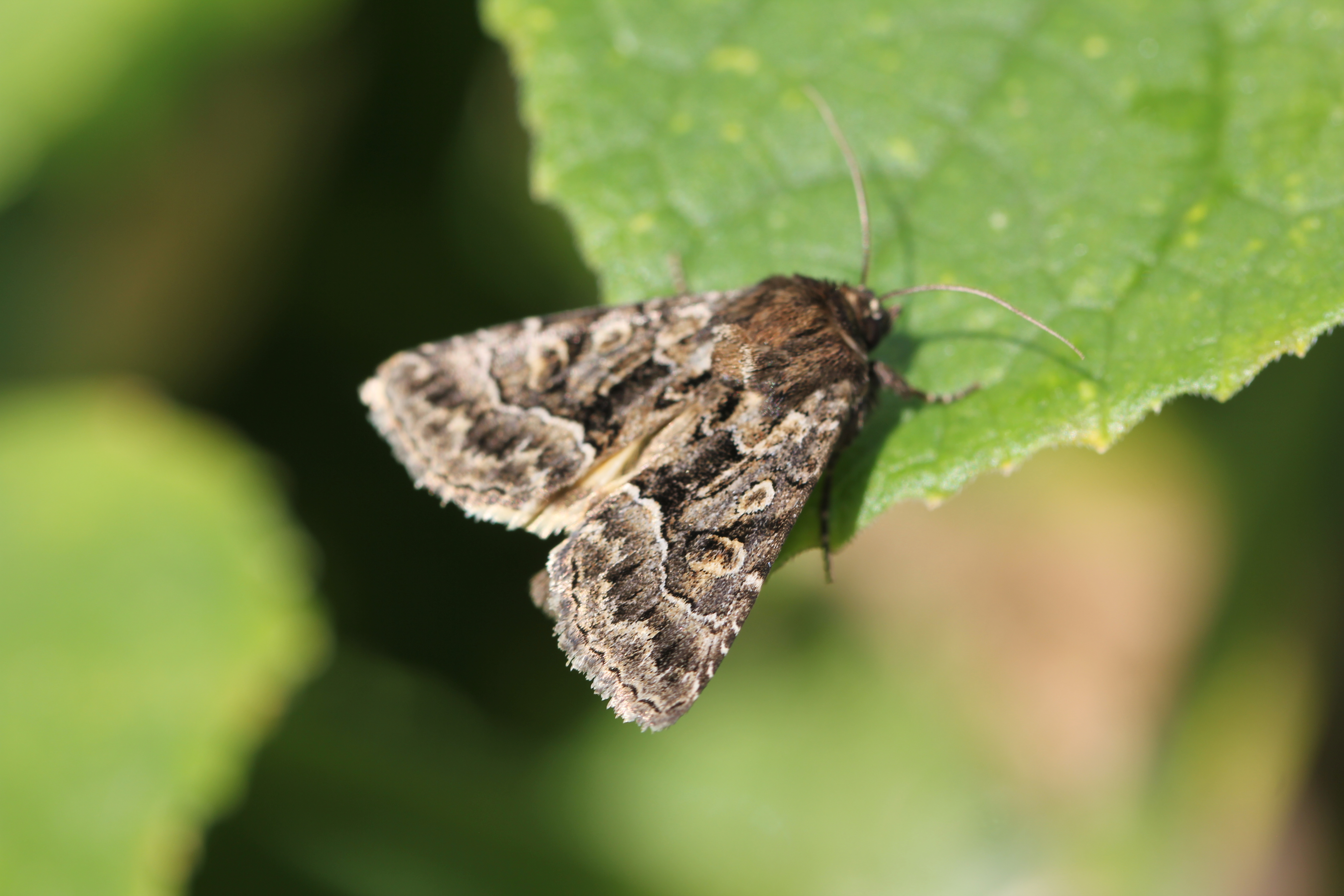
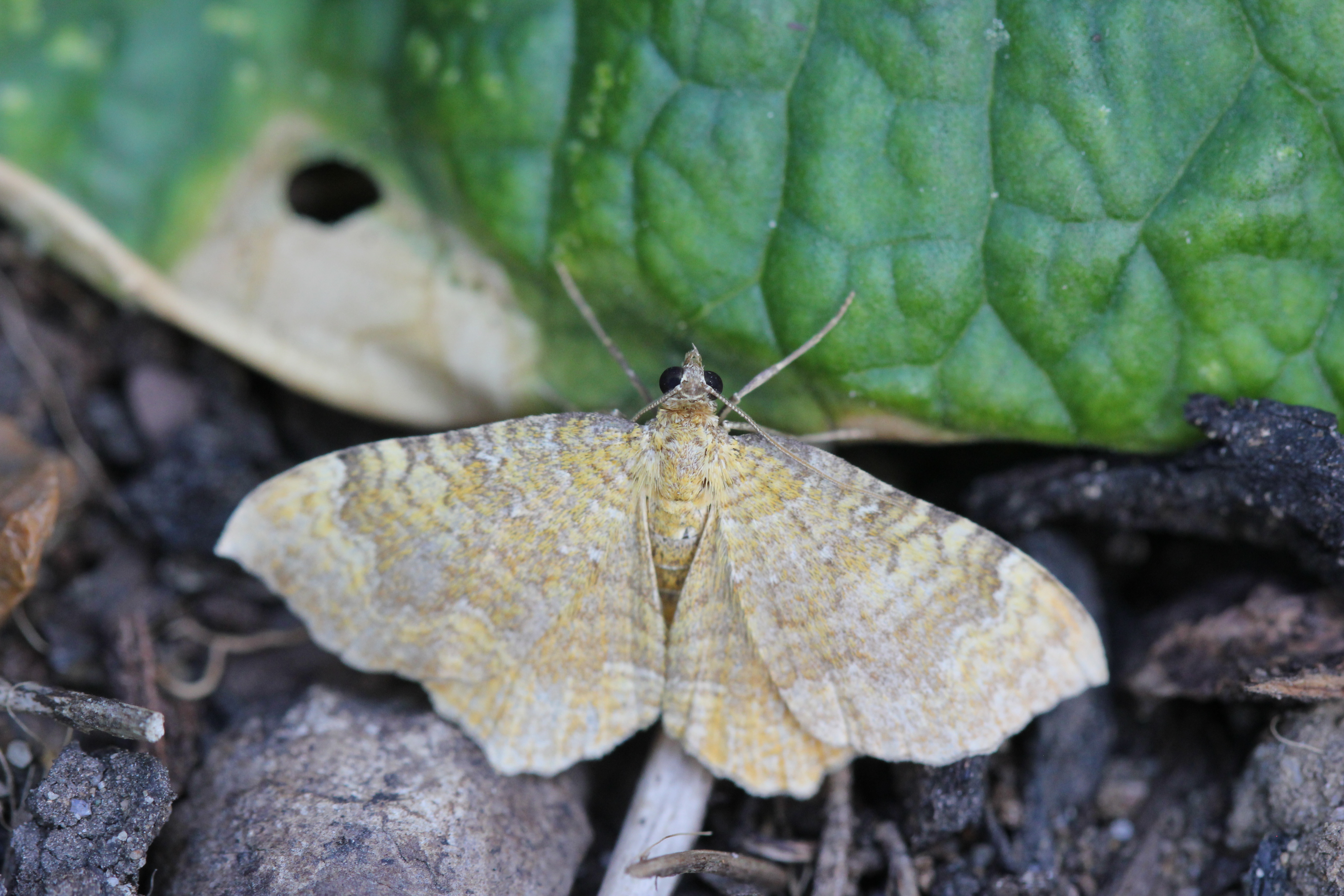
Our reference books give details such as the food-plant of the caterpillar of the species and the months in which the adult/moth is flying. Similar information is available on the UK Moths website. With climate change, some moth species are heading North, including migrating across the Channel: and some species migrate considerable distances.

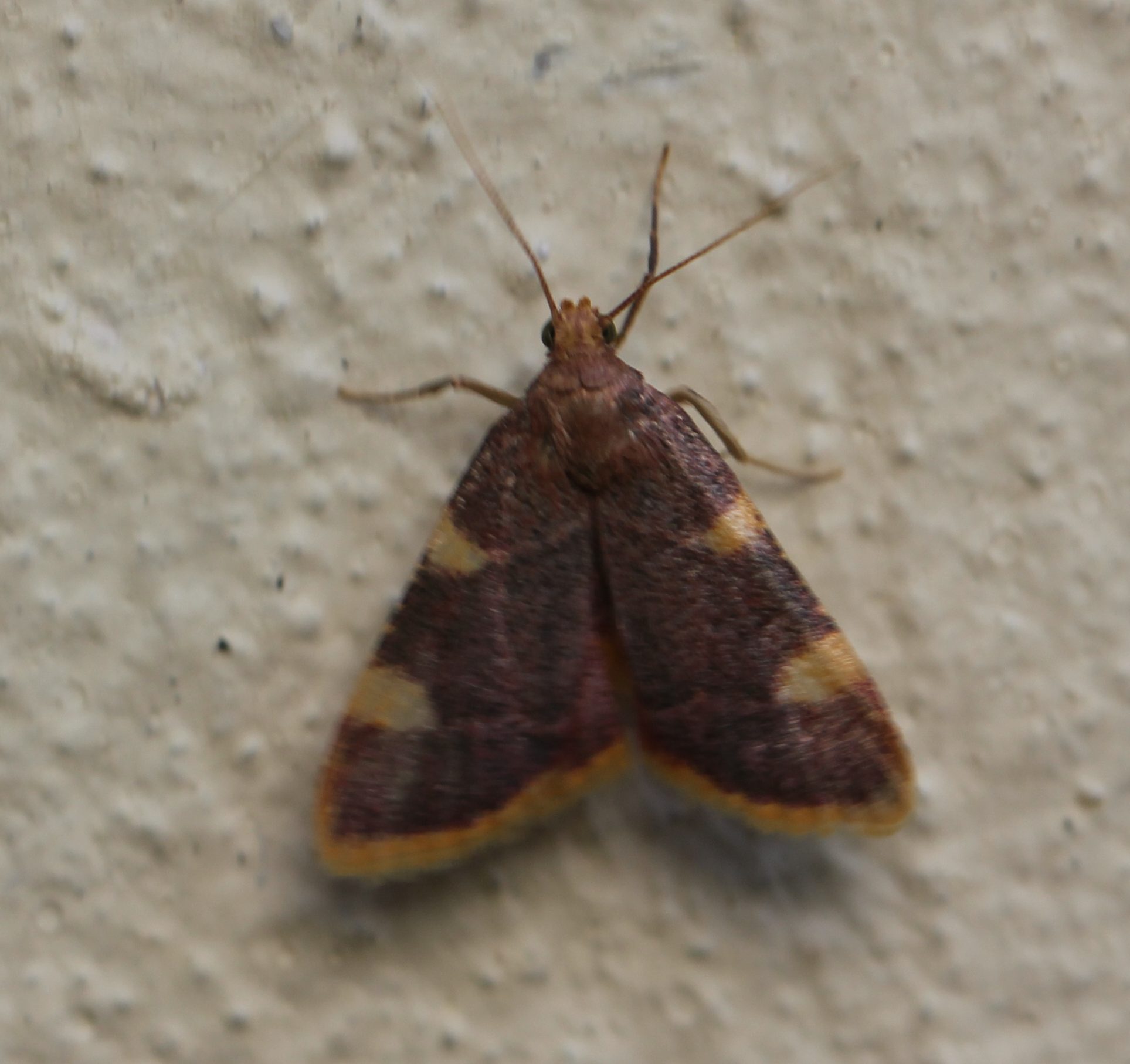
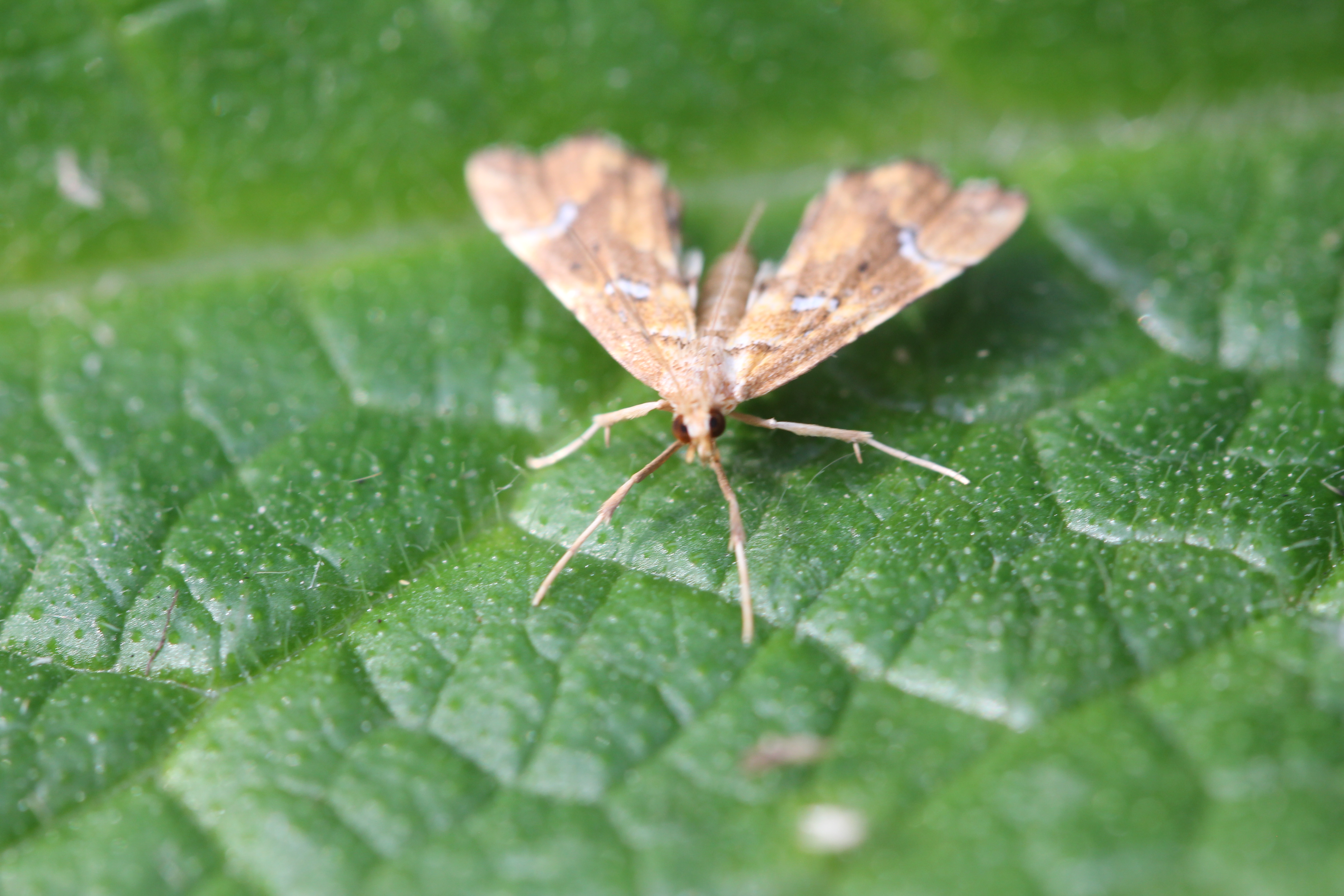
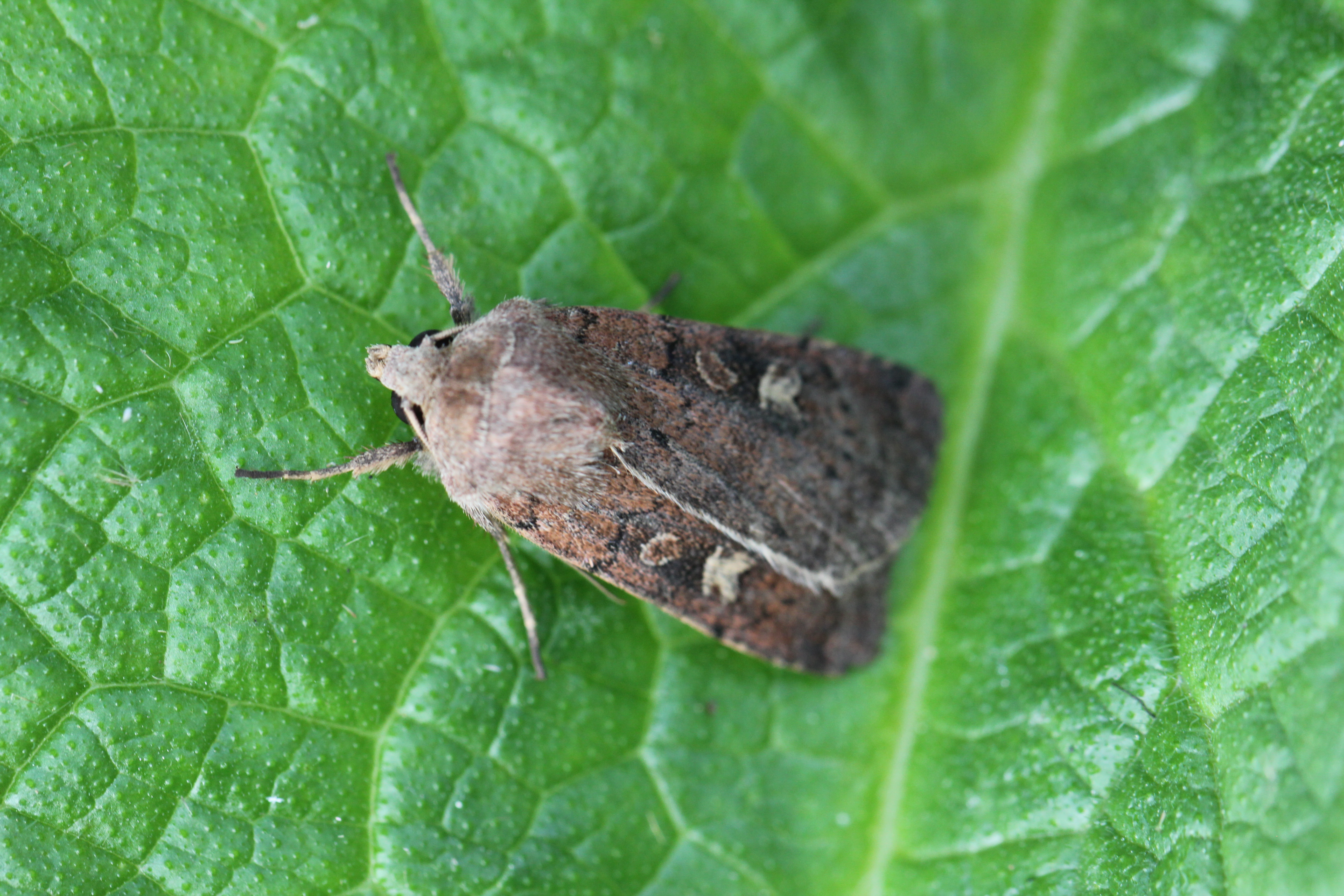

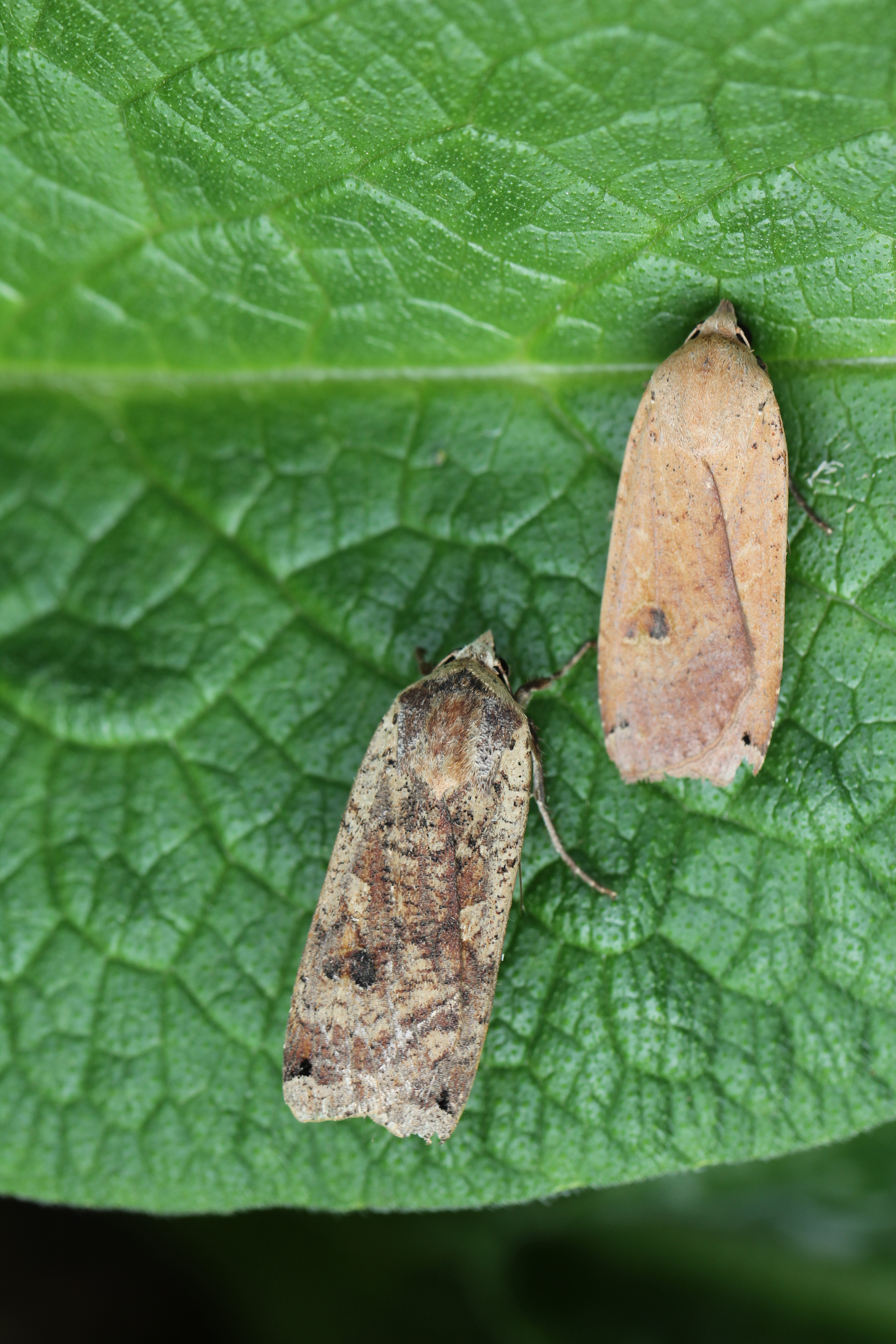
At the volunteer session on Thursday 19th September, we showed the Volunteers (and some families passing through the garden) the moths in pots, talked about what we had learned and released the moths into the shrubbery where they could rest till evening. There was lots of interest and an enthusiasm for repeating the exercise occasionally – perhaps not including the speed bumps in future though.
NB We didn’t photograph the moths we collected in the OPG, so the photographs are moths of the same species we have photographed on other occasions, some trapped in our garden the Friday after this event. We only recorded 24 moths of 14 species!
Joe & Lynda F
Discover more from Charlton and Blackheath Amateur Horticultural Society
Subscribe to get the latest posts sent to your email.
 Charlton and Blackheath Amateur Horticultural Society