One of the nicest aspects about walking around the streets in our neighbourhoods is being able to view the diverse range of flowering trees, shrubs, perennials and bulbs that enhance front gardens and, in early August, it’s the showiness of Agapanthus that makes one stop in one’s tracks in admiration.
And so, it was an added pleasure to be able to admire the magnificent evergreen Agapanthus praecox “Madeira Blue” and “Madeira White” in my neighbour’s rear garden. Linda tells me she purchased the bulbs in Madeira approximately ten years ago, where these perennials have become naturalised throughout the island.

The plants are extremely tall and vigorous and absolutely stunning, with additional flowering stems this year, having outgrown (and broken) previous terracotta pots. The bulbs have been in the existing plastic pots (sitting on feet) for the past three years, having been divided up – no easy task – and planted into several more containers. They have not been fed for a while and are not given protection in the winter (it’s a sheltered garden) with the flower heads left on until spring.
In another friend’s garden, the evergreen cultivar Agapanthus ‘Phantom’ is looking wonderful, with masses of flowering stems reaching a height up to 1.2m. This cultivar has a lovely, delicate colouring, with white centres and pale-blue edges to each floret: a vigorous perennial, tolerating a dry, windy location, and occasionally fed with well-rotted manure, which also protects the crowns during the winter months.
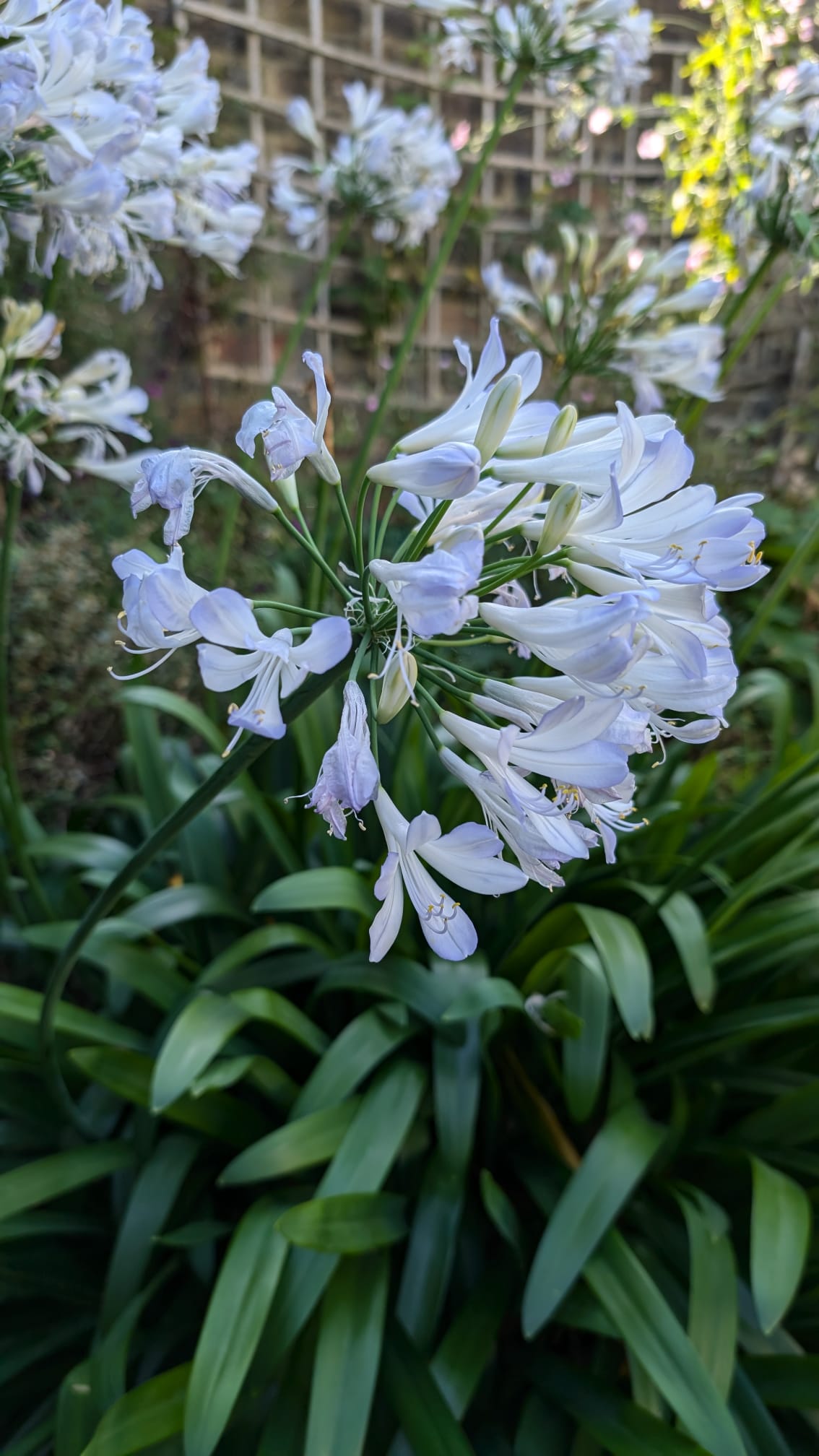
Agapanthus ‘Africanus’, a semi-evergreen which has been grown from seed, is also covered in masses of blue flowers and looking splendid.
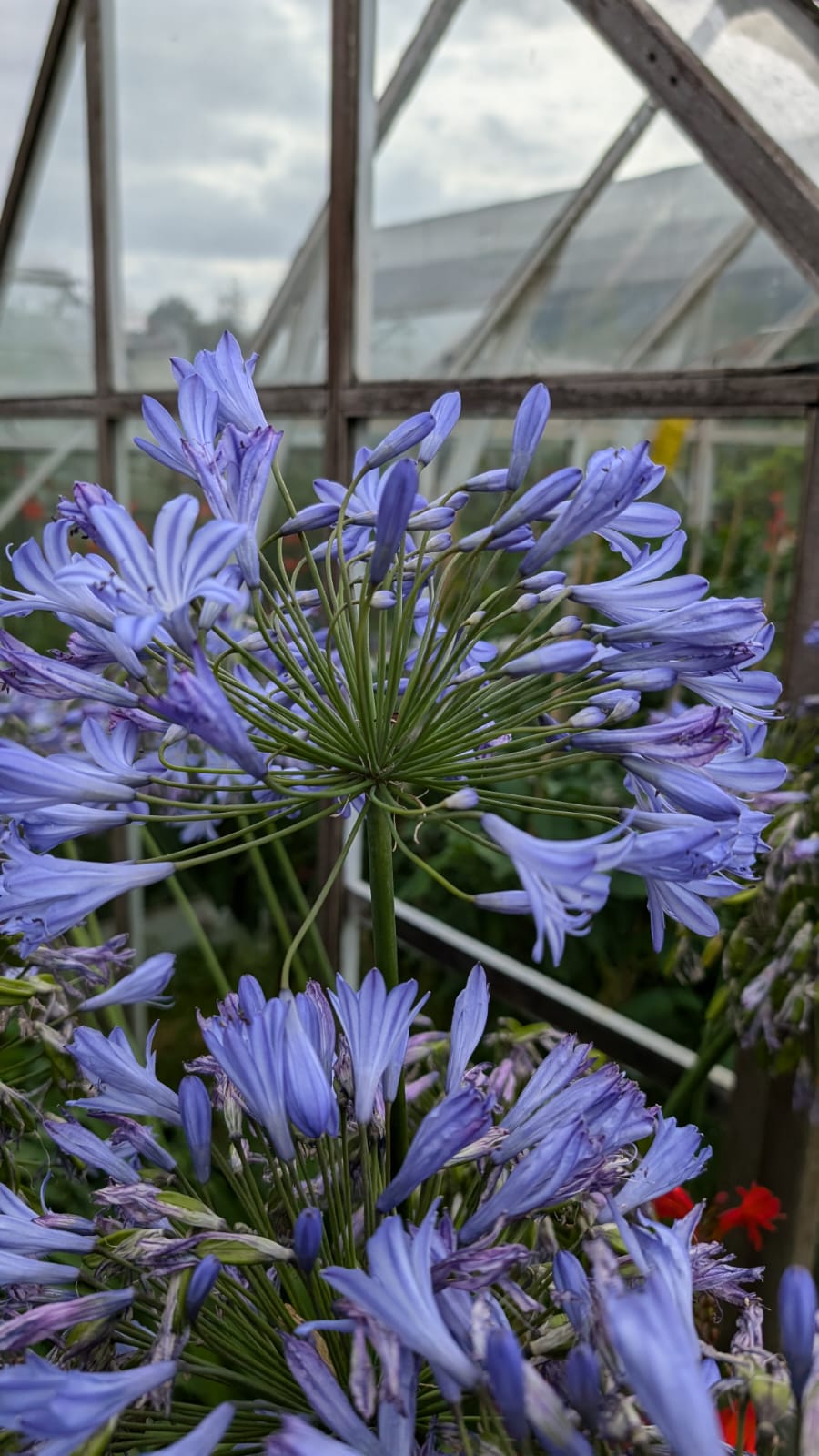
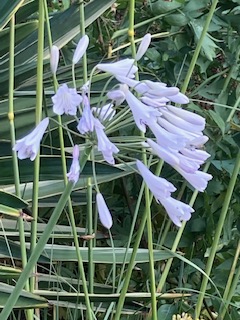
I spotted Agapanthus ‘Windsor Grey’ displayed in a show garden at Hampton Court many years ago. And it can also be seen in all its glory in the Dry Garden at RHS Hyde Hall Gardens, located on the south-facing slope, amongst the boulders. This is a deciduous cultivar, reaching a height of 0.5-1m and has beautiful pale mauve-grey florets. There are less flower heads this year on my clumps because the plants have become congested. That’s on my list of to-do-jobs for next spring!
Anna L
Discover more from Charlton and Blackheath Amateur Horticultural Society
Subscribe to get the latest posts sent to your email.
 Charlton and Blackheath Amateur Horticultural Society