Dave Goulson, Professor of Biological Sciences at the University of Sussex specialising in the ecology and conservation of insects, and author of several books*, gave a talk about the dramatic insect decline worldwide. He outlined some of actions required on a National and International scale to reverse this apocalypse and what we as gardeners can do.

When he was a boy, he started collecting caterpillars (in his lunchbox) and his interest in insects became a life long passion when one of them pupated into a Cinnabar Moth. He explained that insects evolved over 480 million years ago and there are now around one million known species worldwide. They were the first creatures to fly and sing and many have complex inventive ways to camouflage themselves or mimic others. Examples of some ‘weird and wonderful’ insects were shared with us such as the Shield Bug from Thailand whose back very much looks like the face of Elvis.
The horrifying statistics on insect decline were shown, particularly over the last 30 to 40 years. Studies show that the decline is around 75%. He has researched the Shrill Carder Bee which was common across Southern England pre-1960 but by the year 2000 the populations of this bee had greatly decreased and there were only about six populations left. Since 2000, the population which inhabited the Salisbury Levels has become extinct.
The causes of insect decline include loss of habitat, use of pesticides, foreign diseases, climate change, use of certain fertilisers and light pollution. In order to regain control over some of these issues, he suggested that we need to support regenerative and more sustainable farming, such as organic farming, prohibiting all pesticides, growing a wider crop diversity and ensuring the soil is cared for. He explained that intensive farming has degraded 40% of the world’s soil.
The concept of Rewilding was highlighted. It has been introduced in various forms particularly reintroducing larger mammals into specific areas. Yellowstone National Park was in a poor state as overrun by elk and deer. The wolves had all been shot but, following their reintroduction, trees regenerated along the river banks because the deer moved to the higher ground to avoid the wolves. This then led to greater biodiversity in the Park.
In Europe, there has been an overall loss of herbivores again impacting the biodiversity of habitats. One example of a rewilding project is the 3,500 acre Knepp Estate in West Sussex. Hardy pigs, long horn cattle, Exmoor ponies, deer and beavers have been reintroduced onto the estate. Nature has been allowed to take its course and storks now nest there, it has the biggest population of nightingales in the UK and purple emperor butterflies have proliferated. From a biodiversity point of view, the project has been extremely successful – see books by Isabella Tree, one of the founders of Knepp. The estate can be visited for free as there are a number of public footpaths across it.
On a more local and individual level, Dave Goulson advocated the complete end to the use of pesticides. He referred to Roundup that Councils often use to spray pavements, and Garden Centres that sell plants treated with chemicals, grown in plastic pots and peat compost. He mentioned the work of Pesticide Action Network UK.


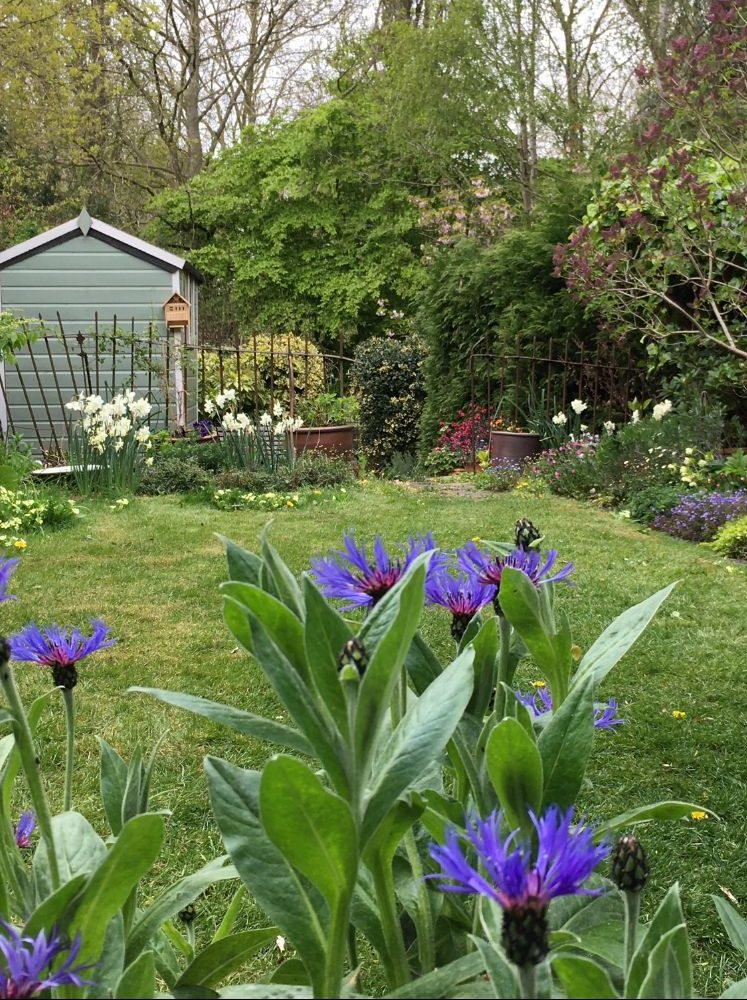

As there are around 22 million private gardens in the UK, the impact on biodiversity by gardeners can be immense. Native plants are better at attracting pollinators than non-native plants. Three plants were mentioned as particularly beneficial, namely, origanum vulgare (marjoram), echium vulgare (viper’s bugloss) and centaurea scabiosa (greater knapweed). He felt that we should reimagine weeds as wildflowers and not discriminate against them. ‘Weeds’ such as dandelions, ragwort and spear thistles are also frequently visited by insects.
Following a question from the audience about whether there were any initiatives for teaching young children about the issues raised, one of our members sent in information about an organisation called Operation Future Hope. They offer support to schools and aim to inspire young people to get involved with regeneration and rewilding of the natural world beginning with their own school grounds. It sounds a fantastic project.
Sharon C
Recent Books by Dave Goulson: The Garden Jungle or Gardening to Save the Planet (2019); Silent Earth, Averting the Insect Apocalypse (2021)
Discover more from Charlton and Blackheath Amateur Horticultural Society
Subscribe to get the latest posts sent to your email.
 Charlton and Blackheath Amateur Horticultural Society