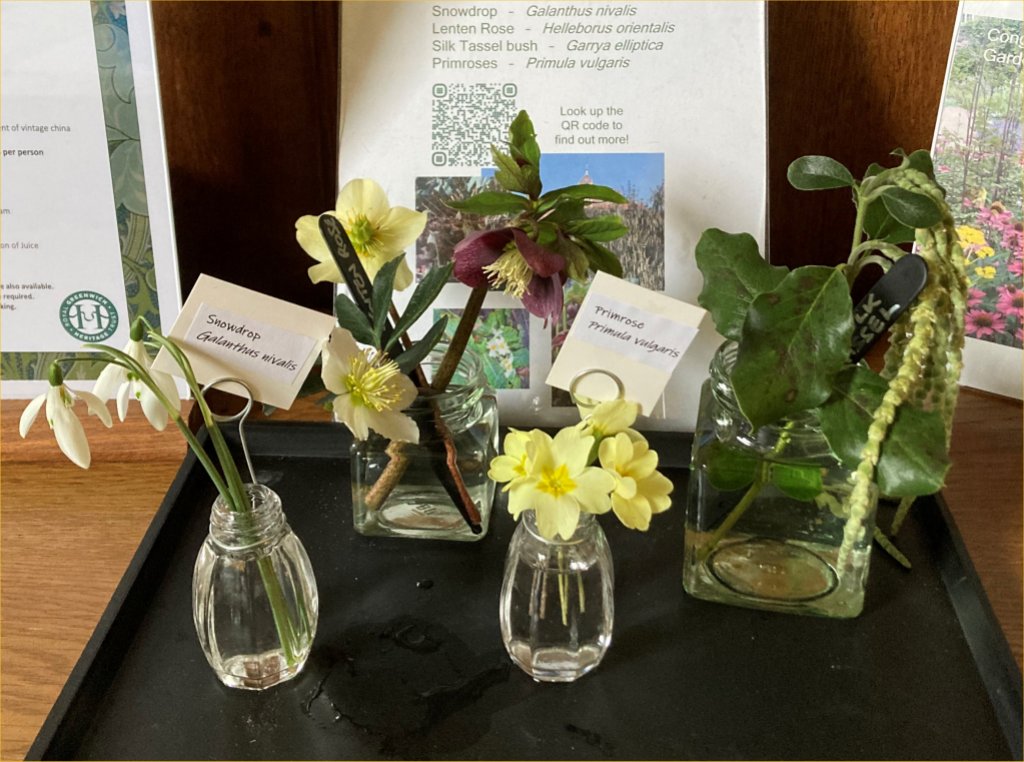
We hope you enjoy a Winter walk around the walled gardens at Charlton House! This month, look out for:
Snowdrop (Galanthus nivalis)

The Latin name for snowdrop is Galanthus, meaning ‘milk flower’. They hang their heads to keep their pollen dry for the winter insects they are adapted to attract. When temperatures reach 10C the outer petals open up and this is the temperature at which winter pollinators like bumble bees can fly! Snowdrop sap contains natural antifreeze which allows them to recover quickly after a frosty night. People who collect snowdrops are called Galanthophiles and they pay huge prices for rare varieties.
Lenten rose (Helleborus orientalis)

The Lenten Rose is a perennial flowering plant and is part of the Buttercup family, so not a rose at all! Its common name comes from the fact it usually flowers between Ash Wednesday and Easter – the period known as Lent. Hellebores (Lenten roses) can be white, pink, purple and green and they cross with each other very easily so all sorts of colours can result. We are trying to keep to the pink ones in the Old Pond Garden and the white ones will go in the Glade.
Silk tassel bush (Garrya elliptica)

This is a vigorous bushy evergreen shrub with silvery-grey leathery leaves, originally from California USA. It is hardy but grows best in a sheltered spot so it loves the Walled Gardens. The male plant has wonderful catkins in Winter/Spring that look like tassels – look closely at the tassels, they have an amazing structure. The female plant is less commonly seen (we don’t have one here) but produces purple/brown fruits in summer.
Primrose (Primula vulgaris)
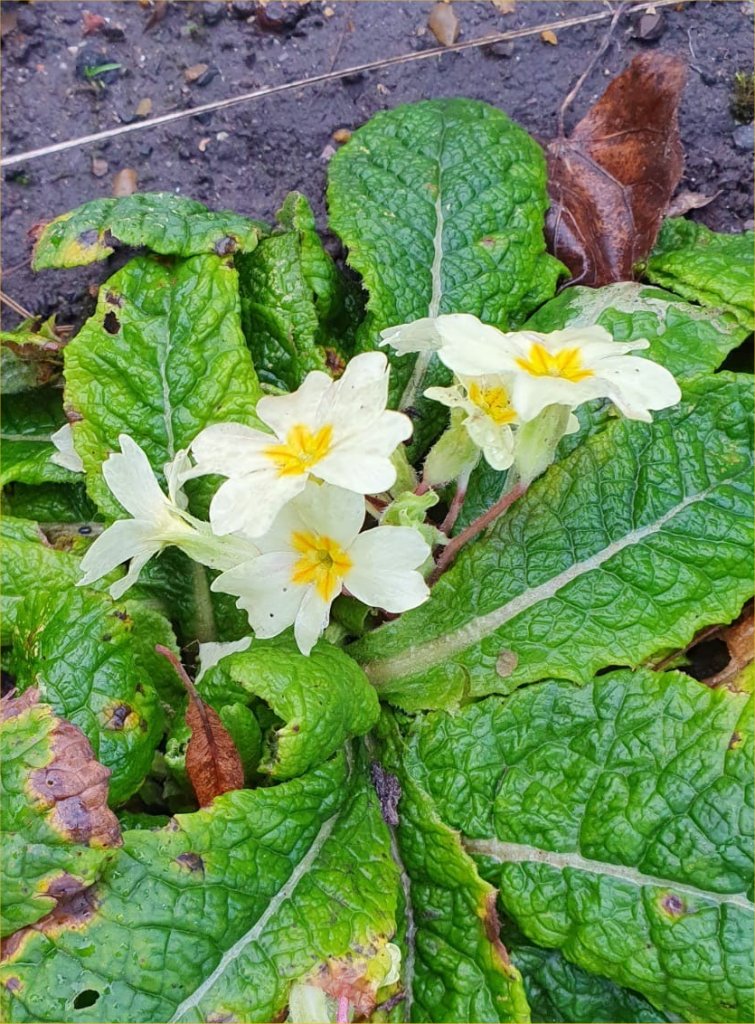
We grow the English or ‘common’ primrose in the walled gardens, which is the natural pale yellow one that gives its name to the colour Primrose. It is often one of the earliest plants to flower in Spring (the Latin word ‘prima’ means first). Early butterflies like the Brimstone benefit from its nectar. Plants will hybridise (cross) very easily with the garden bedding Primulas that come in lots of different bright colours, so seedlings can come up a surprising colour!
Arrowwood ‘Dawn’ (Viburnum bodnantense ‘Dawn’)
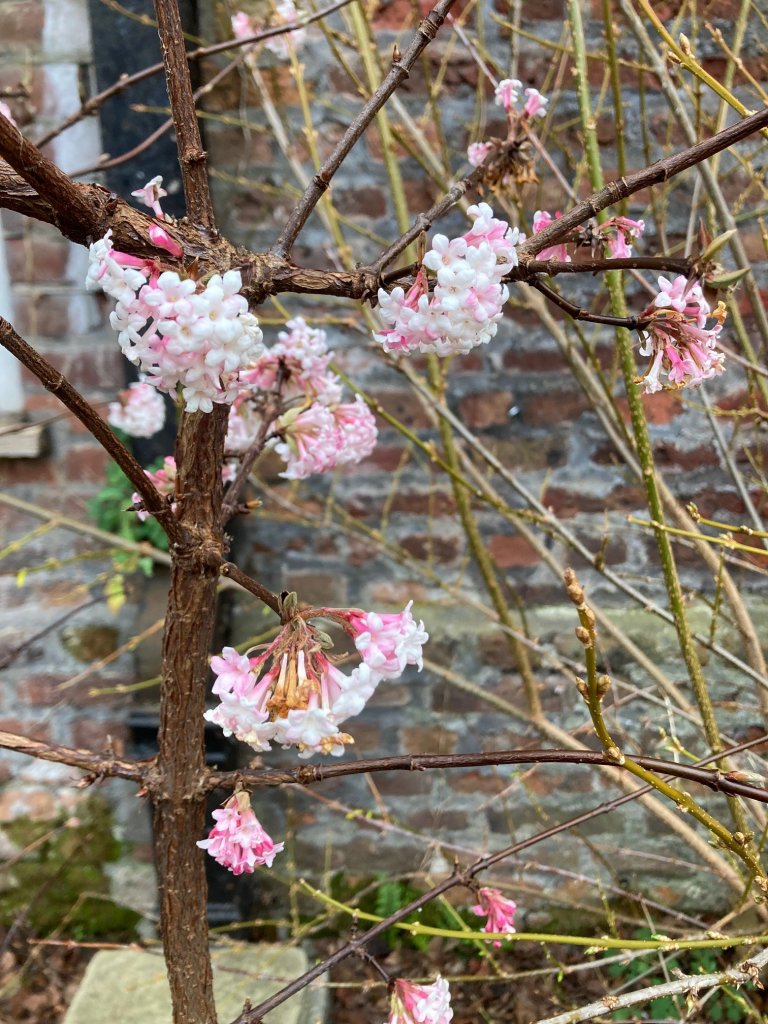
This is a beautifully scented variety of Viburnum that was bred in the 1930s by the Head Gardener at Bodnant Gardens (now the National Garden of Wales). Lovely pink flowers fade to white gradually before the leaves come out. It has great Autumn colour too. Our favourite is the one by the Stables, and there is also one in the Peace Garden just behind the Peace Pole.
Oregon grape (Mahonia aquifolium)
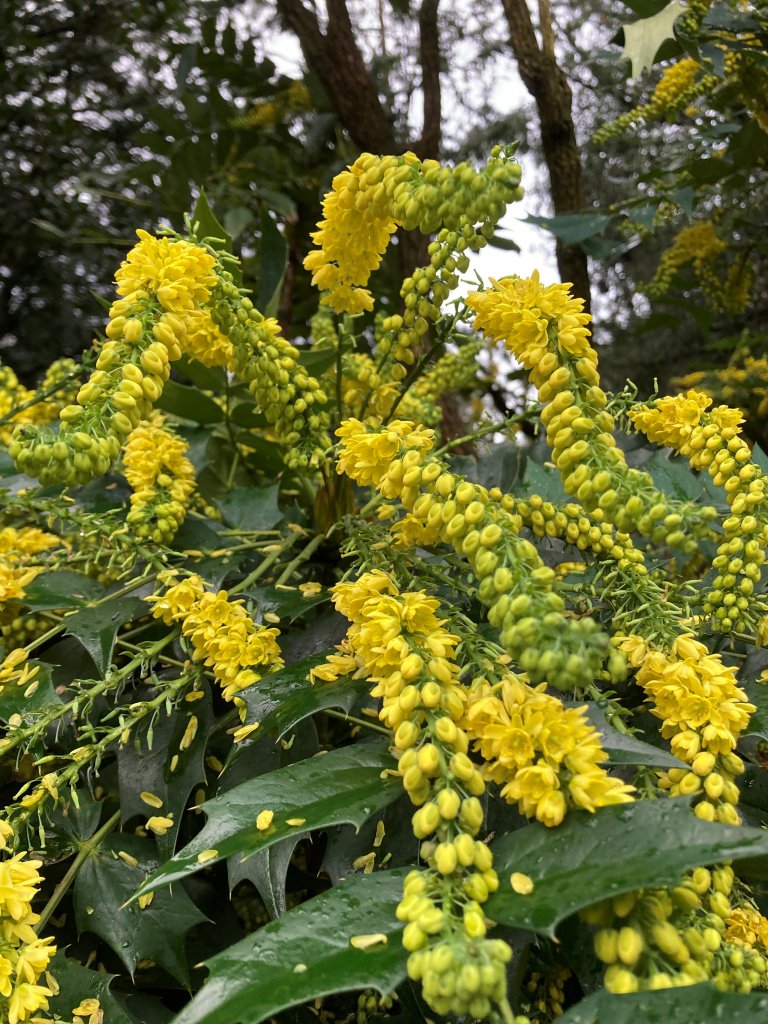
What a bee magnet! This is a type of barberry, native to North America. Our early pollinators (especially bumble bees) love it as the flowers come out so early and last for ages. The garden volunteers love to look at it and the scent is wonderful, but it is very prickly to prune! It is evergreen and grows in shade which makes it a useful screen.
Discover more from Charlton and Blackheath Amateur Horticultural Society
Subscribe to get the latest posts sent to your email.
 Charlton and Blackheath Amateur Horticultural Society