Timothy Walker is a botanist with an extensive career in horticulture. He is a former Director of Oxford Botanical Gardens and still lectures at Somerville and Pembroke Colleges as well as being a Fellow of the Linnean Society and winner of four Chelsea gold medals. He came to our attention as the presenter of the BBC 4 television series Botany – a Blooming History. He gave an entertaining and informative talk which was very well received by the audience.


Like all living organisms, plants aim to ensure offspring for the next generation. Timothy described the sexual life of plants as the movement of pollen along the stem from the male anther of a flower to the female stigma to allow fertilisation. He put his discussion within the context of Darwinian theory of the Origin of the Species and Natural Selection and said pollination is less subservient than normally assumed.
He described a variety of stratagems for pollination and ways plants have developed to ensure it happens. Nature abhors inbreeding and, because of genetic problems associated with self pollination, tries to avoid it.
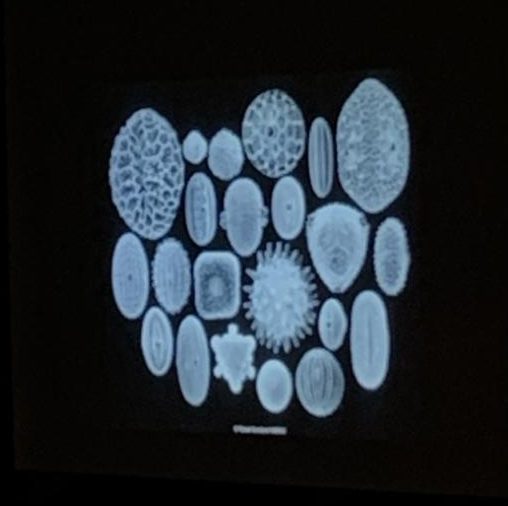
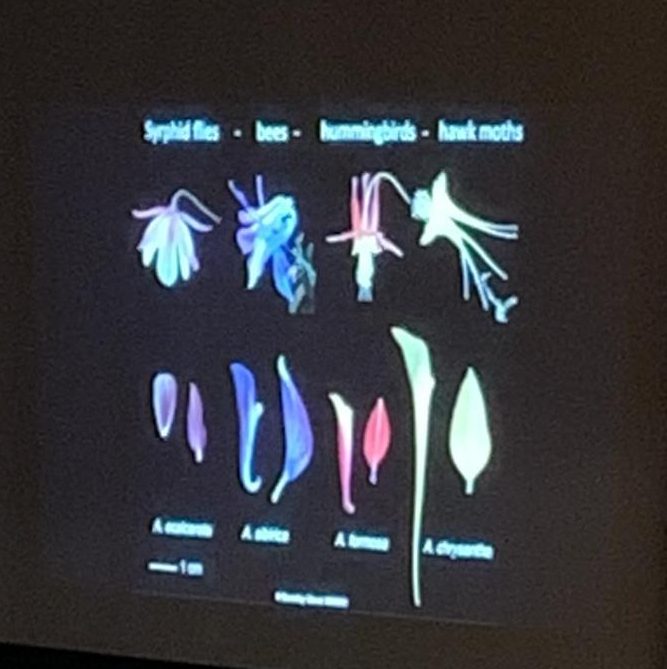
Timothy described a range of pollinators and gave examples of plants they are attracted to. People think that wasps and bees are the biggest pollinators but moths and butterflies are, followed by beetles, then weevils and only then by bees and wasps, with fewer pollinated by flies, birds and bats, and even ants. Water is used by some plants and others, particularly grasses, rely on wind. He said it has become possible to tell the type of pollinator attracted to a plant from its structure.
Focusing on the plants, Timothy discussed the mechanisms plants use to attract pollinators. Basically, plants seek to be pollinated by species which are abundant, reliably return every year and fit their flower. Having said that, insects can be devious too – for instance, bees can rob runner bean flowers of nectar without pollinating them!
Plants have developed a variety of mechanisms and techniques for attracting pollinators such as visuals, smell, a place for copulation, entrapment and even deceit. For instance, Pulmonaria flowers change colour from pink to blue when they are ready for pollination. And Dendrobium sinense orchids produce a pheromone like a bee to attract its pollinator which is a hornet that eats bees.
Sadly, for a variety of reasons such as climate change, habitat loss, pests and insecticides, some plants have recently lost their pollinators and become endangered. At Kew some are pollinated using a turkey baster!
Finally, Timothy recommended the book The Garden Jungle (2019) by Dave Goulson (who is giving a CABAHS talk on bumblebees in May). If Timothy Walker’s BBC 4 television series Botany – a Blooming History is shown again, I would certainly recommend viewing it. In the meantime, it can be found on YouTube in 3 episodes –
1. A Confusion of Names on how the work of Carl Linnaeus, Phillip Miller and John Ray unlocked the mysteries of the plant kingdom and created the science of botany;
2. Photosynthesis on how 17th-century botanists made the connection between the growth of a plant and the energy from the sun – the process of photosynthesis; and
3. Hidden World on how pioneer botanists unlocked the patterns found in different types of plants and opened the door to a new branch of science – plant genetics.
Angela B
Discover more from Charlton and Blackheath Amateur Horticultural Society
Subscribe to get the latest posts sent to your email.
 Charlton and Blackheath Amateur Horticultural Society