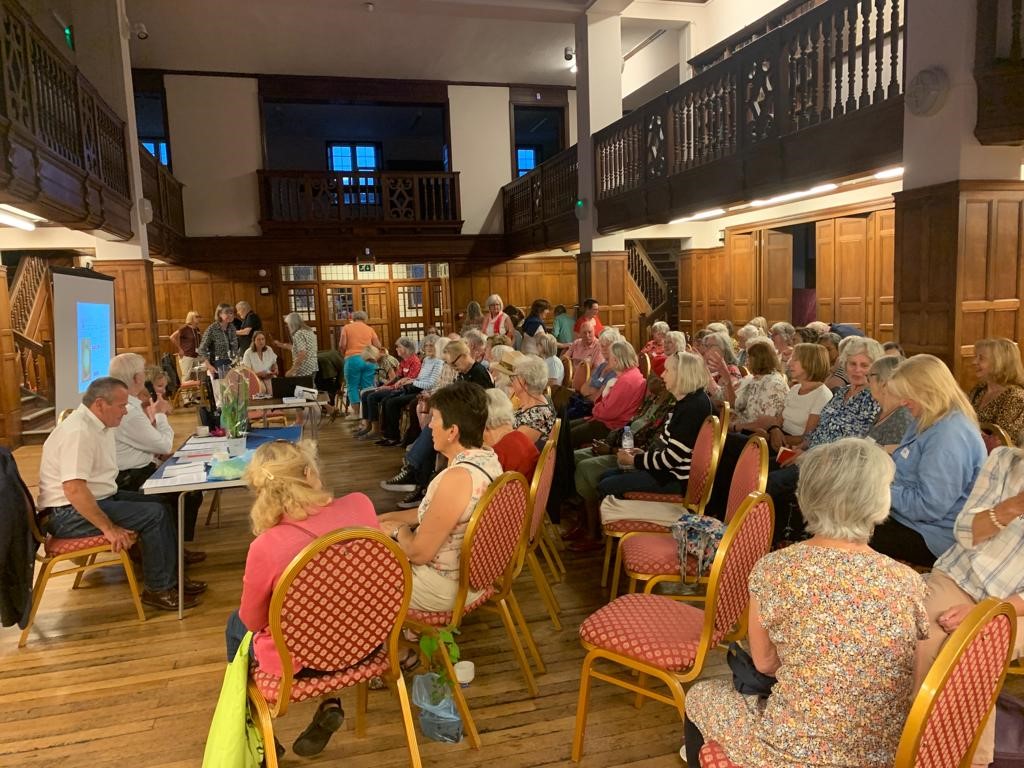
The panel this year consisted of the CABAHS President, Sir Nicolas Bevan in the chair along with the well known horticulturalist, retired Greenwich Park Manager and teacher, Joe Woodcock and our own knowledgeable CABAHS member, Pat Kane. It was a jolly affair much enjoyed by the members, held in the Old Library at Charlton House because of the possibility of rain.



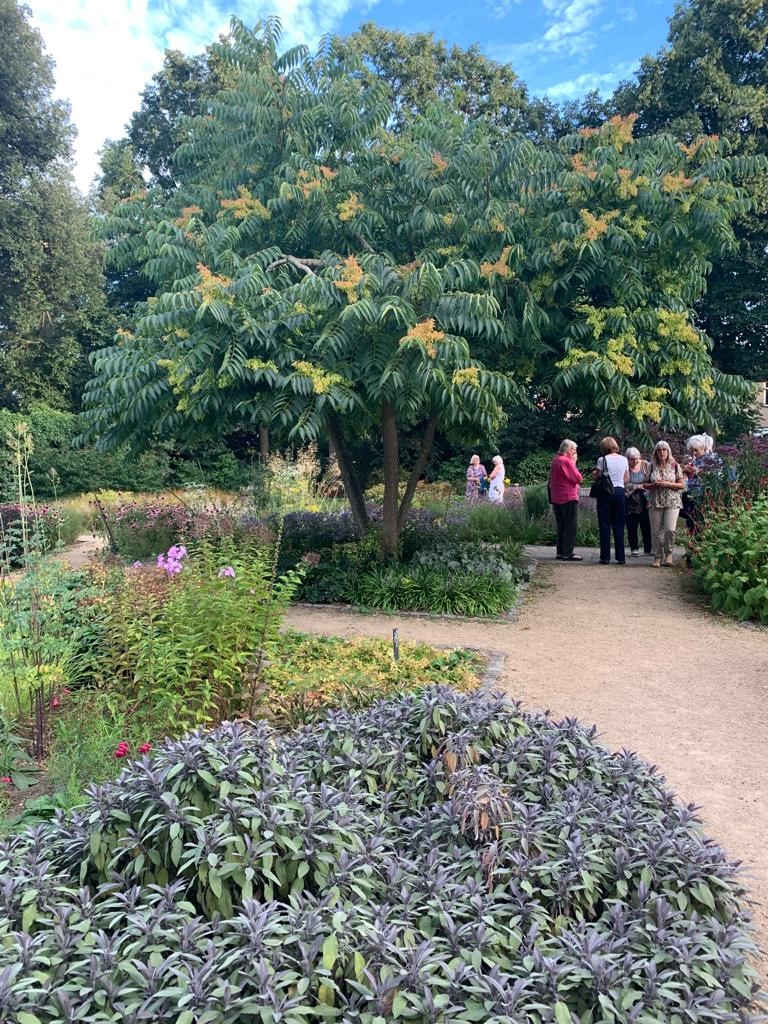
Before the meeting, some members visited the Old Pond Garden to check on and discuss progress.

GQT was interactive with the panel discussing questions sent in beforehand and also questions and comments from the audience. The questions including problems relating to poor or late flowering and viruses were wide ranging, reflecting the concerns gardeners locally are facing, particularly due to climate change and the drought last year and heavy rain this year.
Not all the prior questions such as problems with fig trees and pond liners were able to be covered, but questions dealt with included how to discourage magpies, the greatest avian predator and the bane of local gardeners. Nicolas and Joe agreed that placing old CDs on trees would frighten them and Joe also suggested that they have the same effect on parakeets, another local scourge.
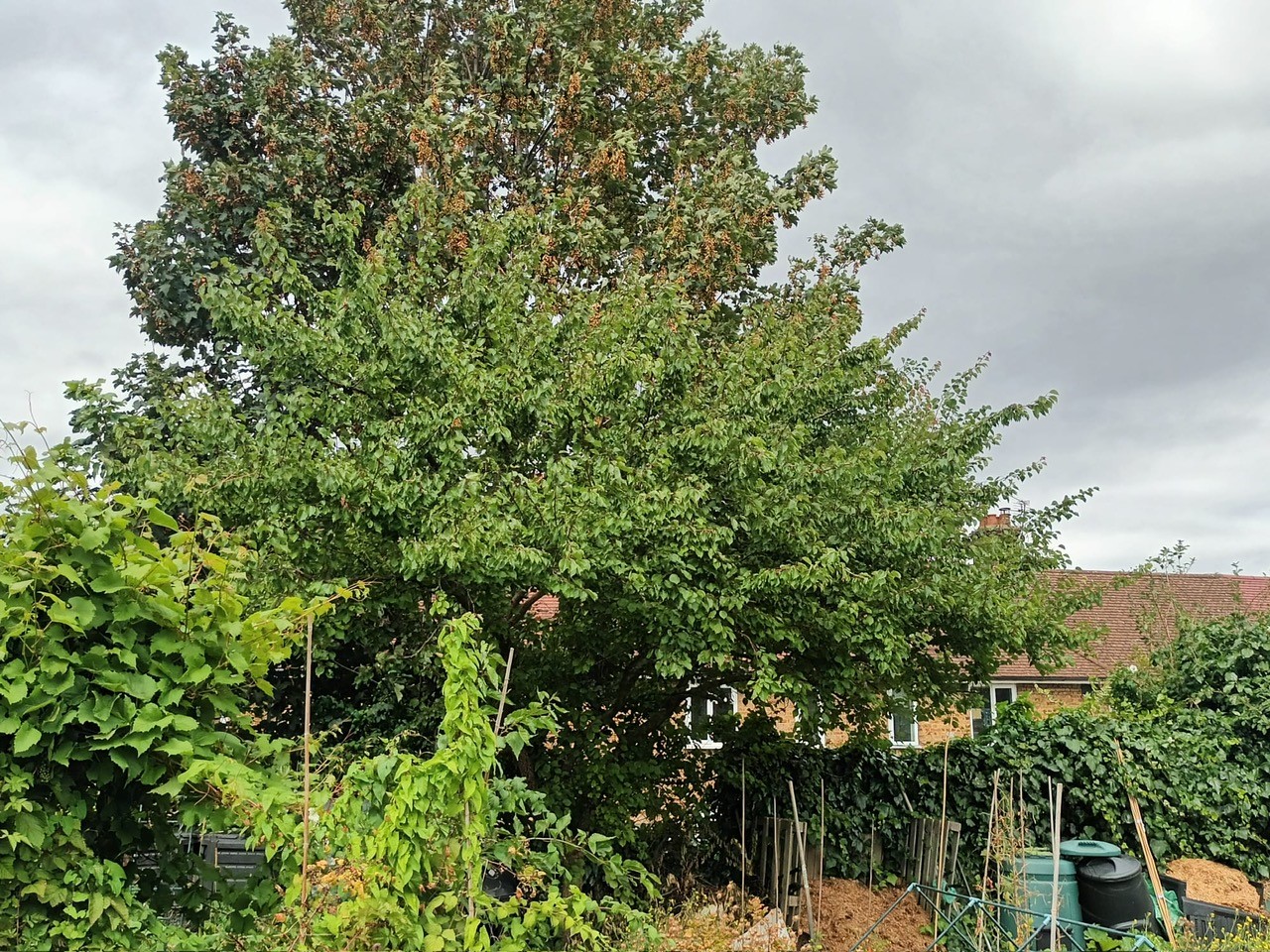
Another question asked was how late in the summer can we prune stone fruit trees e.g. plum and apricot. In particular any recommendations for renovating a large apricot to reduce height and spread. Joe suggested that it be cut back after harvesting the fruit. If you cut back in winter you may get silverleaf. Damaged and diseased leaves should be cut back, but the crown should not be cut back more than 20 percent otherwise it would invigorate growth.
The Charlton Society has managed to get the Council to agree to change the planting in the raised beds in Charlton Village to a perennial planting scheme and asked for recommendations of plants to grow there which can withstand dry, partial shade and wind, are traffic resistant, need low maintenance and are unstealable. Joe endorsed a high street planting scheme containing grasses, hardy Geraniums and Japanese Anemones. He particularly recommended the grass, stipa gigantea and verbena bonariensis, but, as the planters are narrow, to use only 2-3 cultivars and to put the taller ones in the centre and the lower ones on the sides so as not to impair the view of passing traffic. Other suggestions included Echinops ritro (Globe Thistle), Perovskia (Russian Sage), Lavender, Rosemary and Artemesia ludoviciana ‘Valerie Finnis’ or Artemesia ‘Powis Castle’. It was suggested that the planters be mulched to prevent weed growth.

One vegetable question was when should cabbage cabbice be grown for showing at the Autumn Show. Joe said in March, in seed trays or cells and put in a cold glass house.
Dahlias this year were seen by some as having problems. Another question was some of my dahlias stay open only a day and then the petals become distorted. It was agreed that this was a virus which could have been caused by anything e.g. aphids, compost or a water source. It was suggested washing the tubers, better still to throw them away or burn them.
The perennial problem of slugs came up. Suggestions included going out with a torch after dark and picking them off and killing them, very small quantities of Ferric Sulphate, gravel or sharp sand around a plant’s base, beer or leave a gap around plants. Nicolas said you can access the best 10 plants to withstand slugs on Google, e.g. penstemon, campanula, japanese anemones, anything with an aromatic leaf. But Joe said we need to accept slugs as part of gardening life and live with them.
Finally what are the best jobs to do in the garden if you have just 10 minutes to spare was one question. Deadheading was suggested. Another was a cup of tea.. What better way to enjoy your garden and ten minutes of gardening than with a cup of tea as well.
Angela B
Discover more from Charlton and Blackheath Amateur Horticultural Society
Subscribe to get the latest posts sent to your email.
 Charlton and Blackheath Amateur Horticultural Society