We hope you are enjoying a walk around the walled gardens at Charlton House! This month, look out for:
Coneflower (Echinacea purpurea ‘Magnus’)

Coneflowers are part of the daisy family, originally from North America. Plains dwellers used the fresh roots and root juice to treat toothache and snake bites. Today many people take Echinacea supplements to prevent colds and boost their immune systems. ‘Magnus’ has large pink flowers and orange-brown central cones – bumblebee heaven!
Globe Thistle (Echinops ritro)
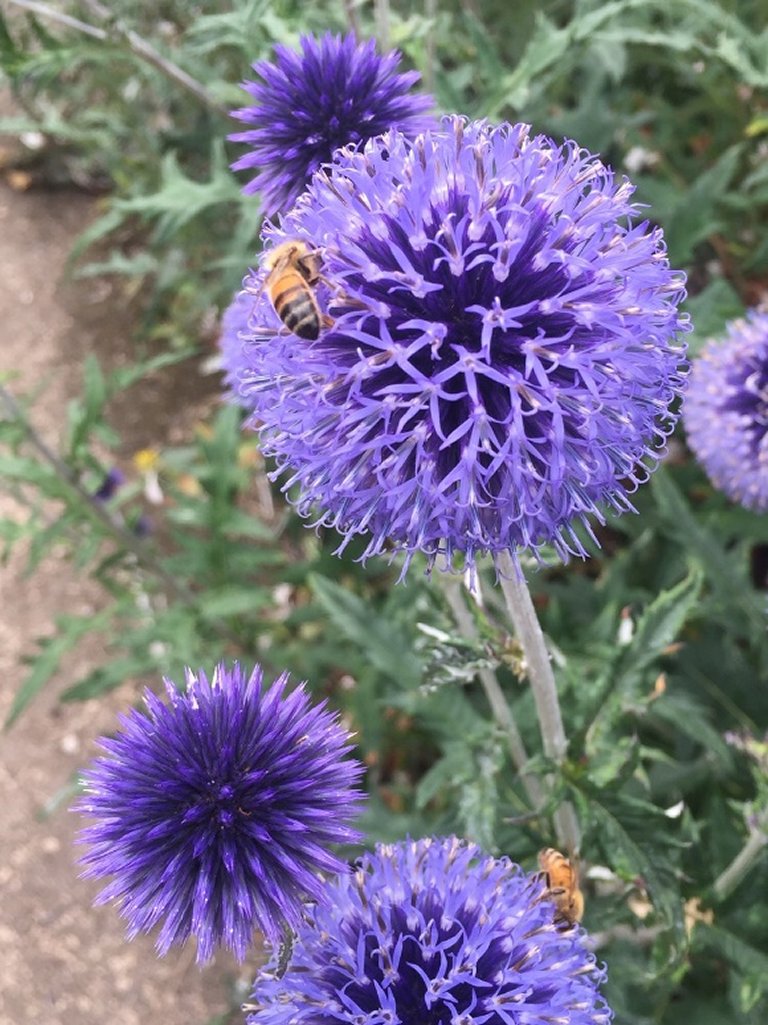
With spiky leaves and bristly metallic blue flowers, globe thistles make a great architectural choice for the back of a sunny border. The flowers are extremely attractive to bees, butterflies and other insects and it makes a good cut flower. This is a plant that we prefer to cut the seed heads off before they drop their seeds – they spread VERY easily!
Russian Sage (Perovskia atriplicifolia)

With its tall spikes of violet-blue flowers, Russian sage is a head-turner! It’s not really a sage for cooking (smell but don’t eat the leaves) and it’s not from Russia either (it was named after a Russian botanist). It is long flowering and beloved of bees and butterflies, and makes a real impact planted around the statue in the Peace Garden, where we like it so much we have made the bed bigger and packed more plants in!
In winter we leave it standing, and it makes an amazing display in the snow.
Persicaria (Bistorta amplexicaulis ‘Firetail’)
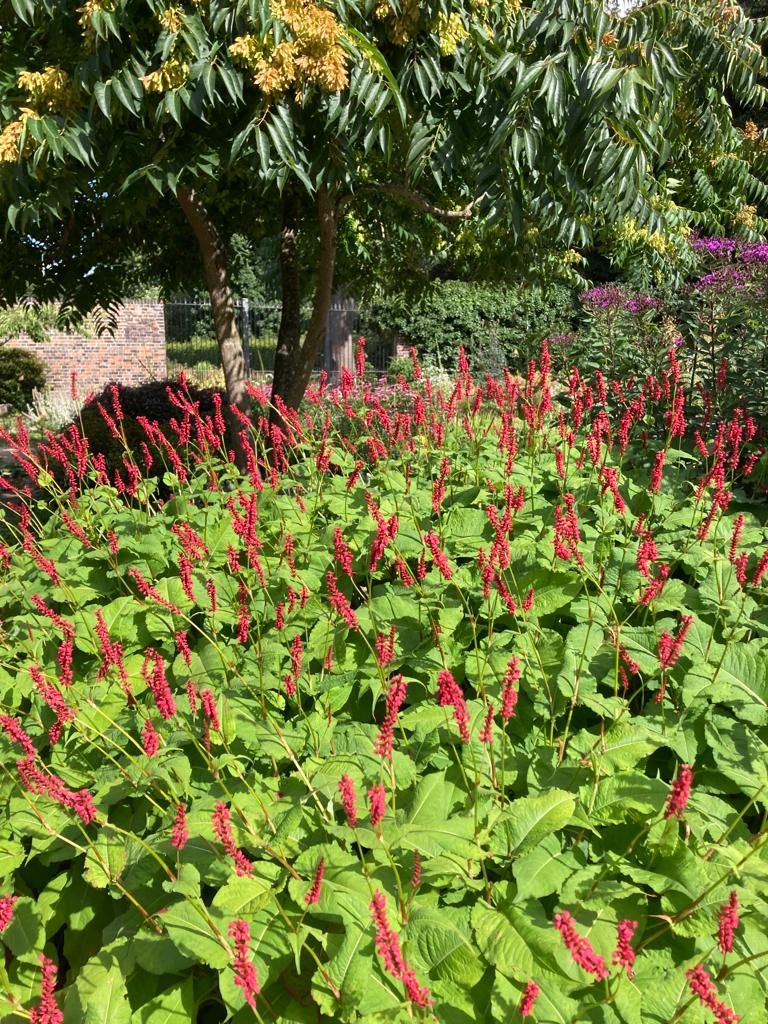
Looking particularly fine this year (it didn’t enjoy the drought last year), all the clumps of bistort in the garden have been grown from a single plant that was donated by a volunteer in 2021.
Bees and other insects love it!
Pomegranate (Punica granatum ‘Legrelleae’)

Many people are surprised to know that it’s possible to grow a pomegranate outside in the UK, but here in London, in the shelter of the walled garden, are two beautiful pomegranate trees. Unfortunately ‘Legrelleae’ is a variety that doesn’t bear fruit, but the trees and especially their flowers frame the gate beautifully.
Still going strong, all summer long:
Anise hyssop (Agastache foeniculum ‘Alabaster’)

A cool white-flowering hyssop, that produces its slender bottlebrush-like spikes for several months from midsummer. The flowers smell of liquorice – have a sniff! The flowers are loved by pollinating insects and the later seedheads are a feast for birds.
Geranium ‘Rozanne’

A hardy geranium whose open, blue flowers are loved by bees, hoverflies and other beneficial insects. It was voted ‘Plant of the Centenary’ at RHS Chelsea Flower Show in 2013 and is very, very popular with gardeners as well as pollinators!

Discover more from Charlton and Blackheath Amateur Horticultural Society
Subscribe to get the latest posts sent to your email.
 Charlton and Blackheath Amateur Horticultural Society