Members’ gardens, June 2020

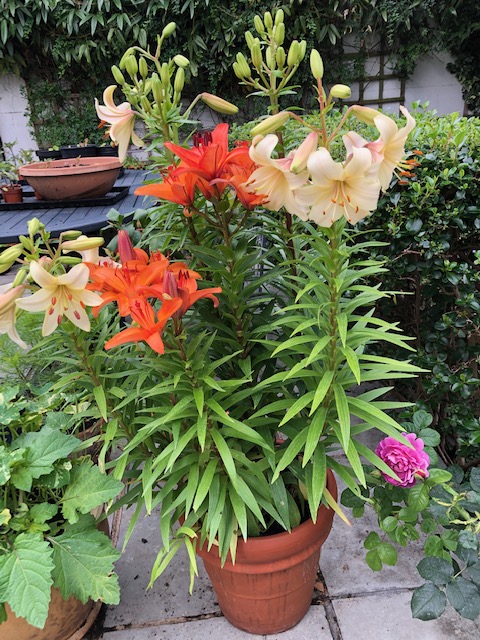
Emma has sent in pics of her lilies doing very well this year and loving the hot weather. Well done for keeping the dreaded lily beetle at bay!
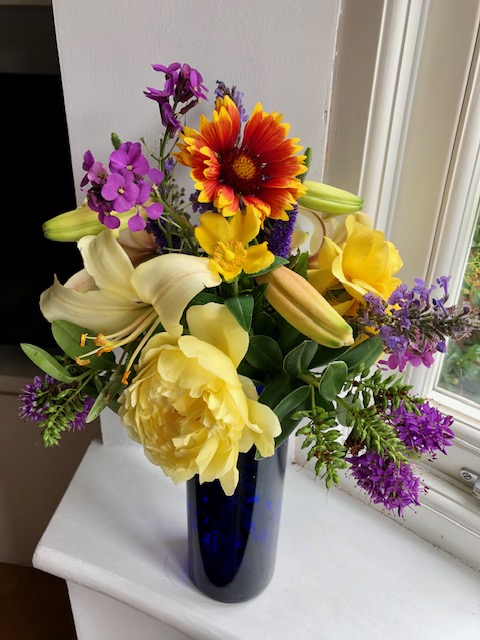
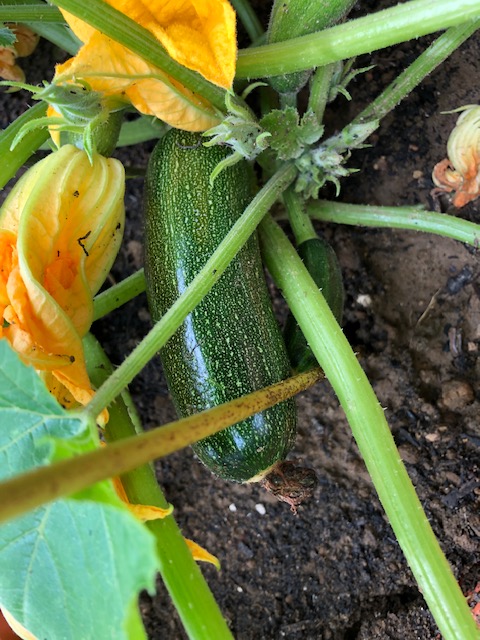
She is also very proud of her first lockdown courgette (and looks like lots more to come) and this vase of colourful home-grown flowers. Beautiful – it would be a good entry for the Summer Show coming up soon!
This rather beautiful caterpillar will turn into a Toadflax Brocade moth. Kathy says: it gave me a turn as I thought it was a box caterpillar at first ( ie Kill on Sight!), but it seems to be reasonably well-behaved and is munching on self-sown common purple toadflax so I have left them in peace.

Linaria catapillar

Val bought this clematis half-price from RHS Hyde Hall some year ago. Think she got a bargain!
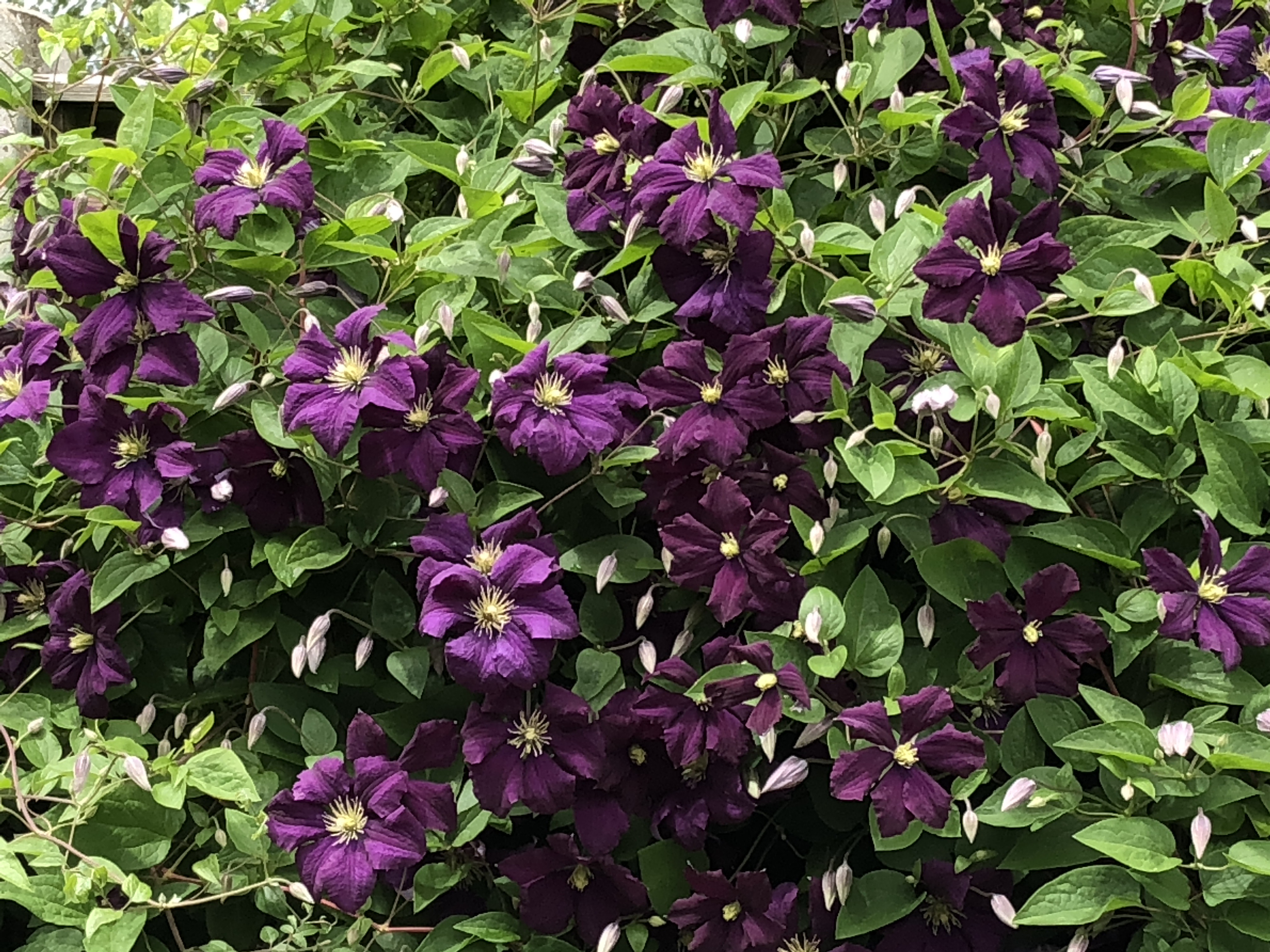
VW Clematis RHS

Not everything is coming up roses in every Members Garden.  Kathy is an organic gardener and doesn’t use any pellets.. but is thinking that may change soon. Watch your Agapanthus everyone, the little beasties hide in there!
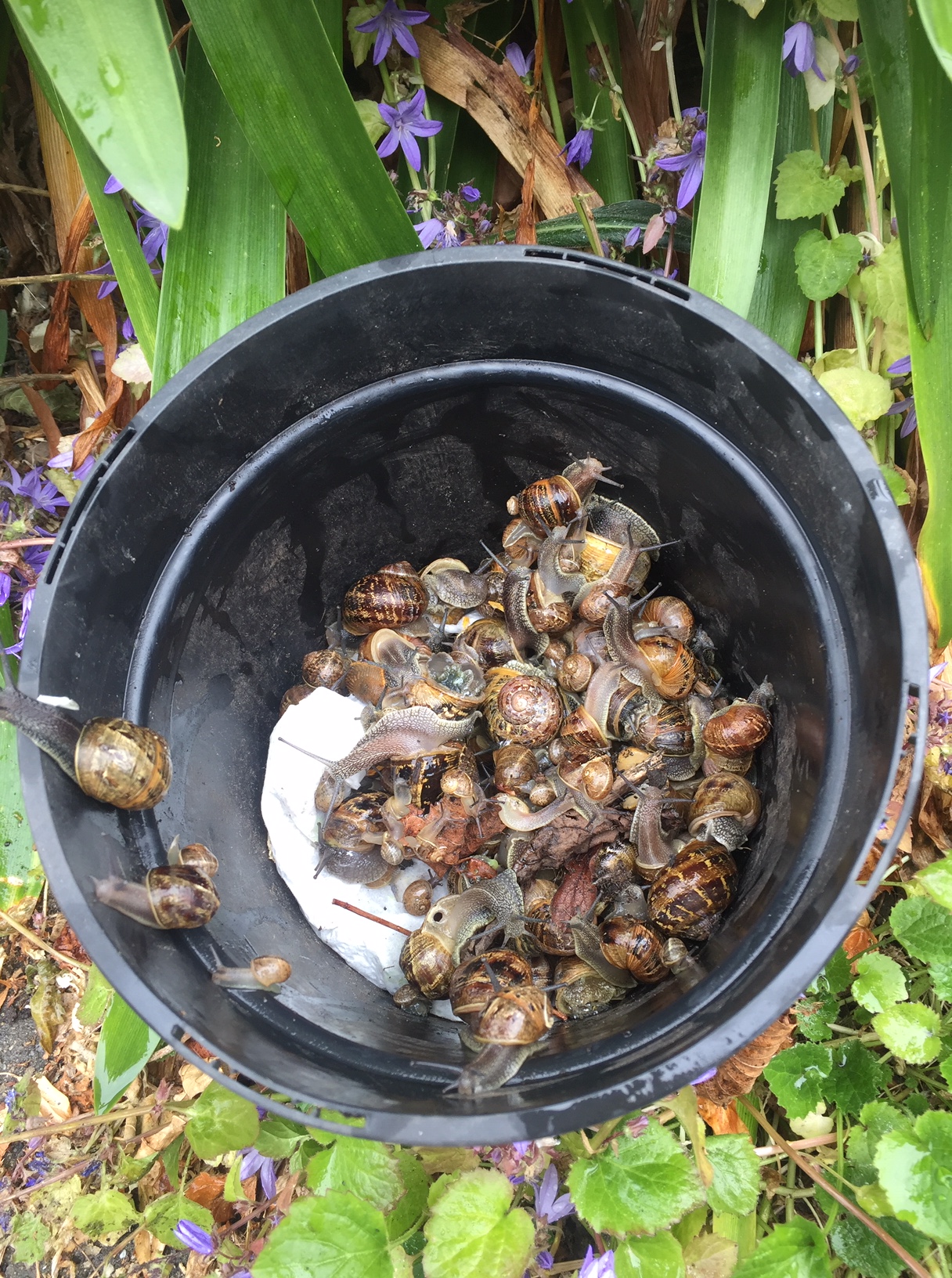
KA Snails

Val and Harry have sent in four pictures of their special plants in June: The first shows off their Pelargonium collection – “Angel” “Decorative” and “Unique”.
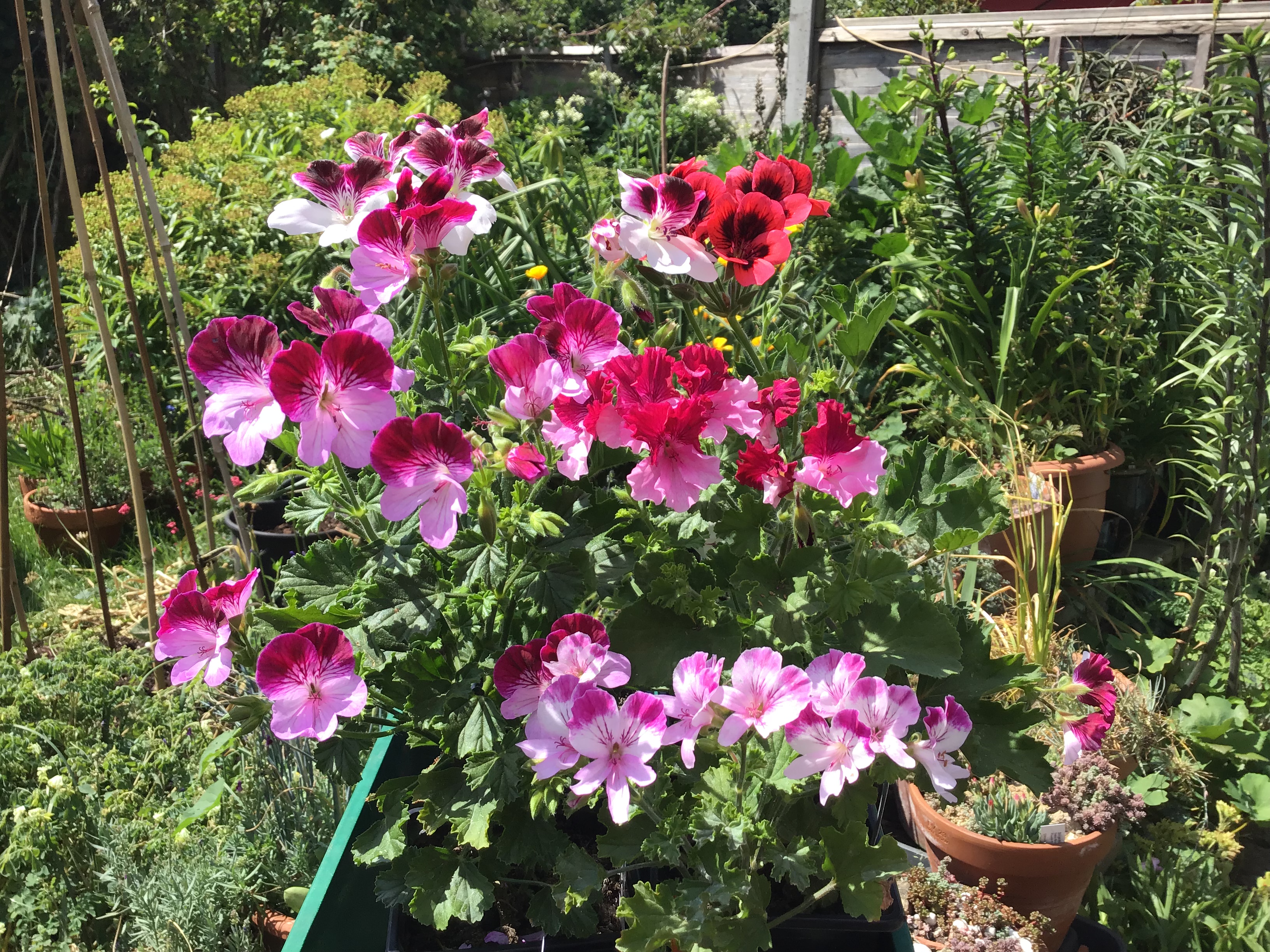
image1a

Here is Paeony lactiflora:

image2

Here is a “Lampranthus”, which Val says has for the last five years grown in a basket on the wall. The flowers open white and turn to pink. The plant is watered only when it rains; otherwise, it is ignored!

image3

The fourth is Petunia ekserta, a South American plant easily raised from seed. It is winter-hardy in a sheltered dry spot in the garden:
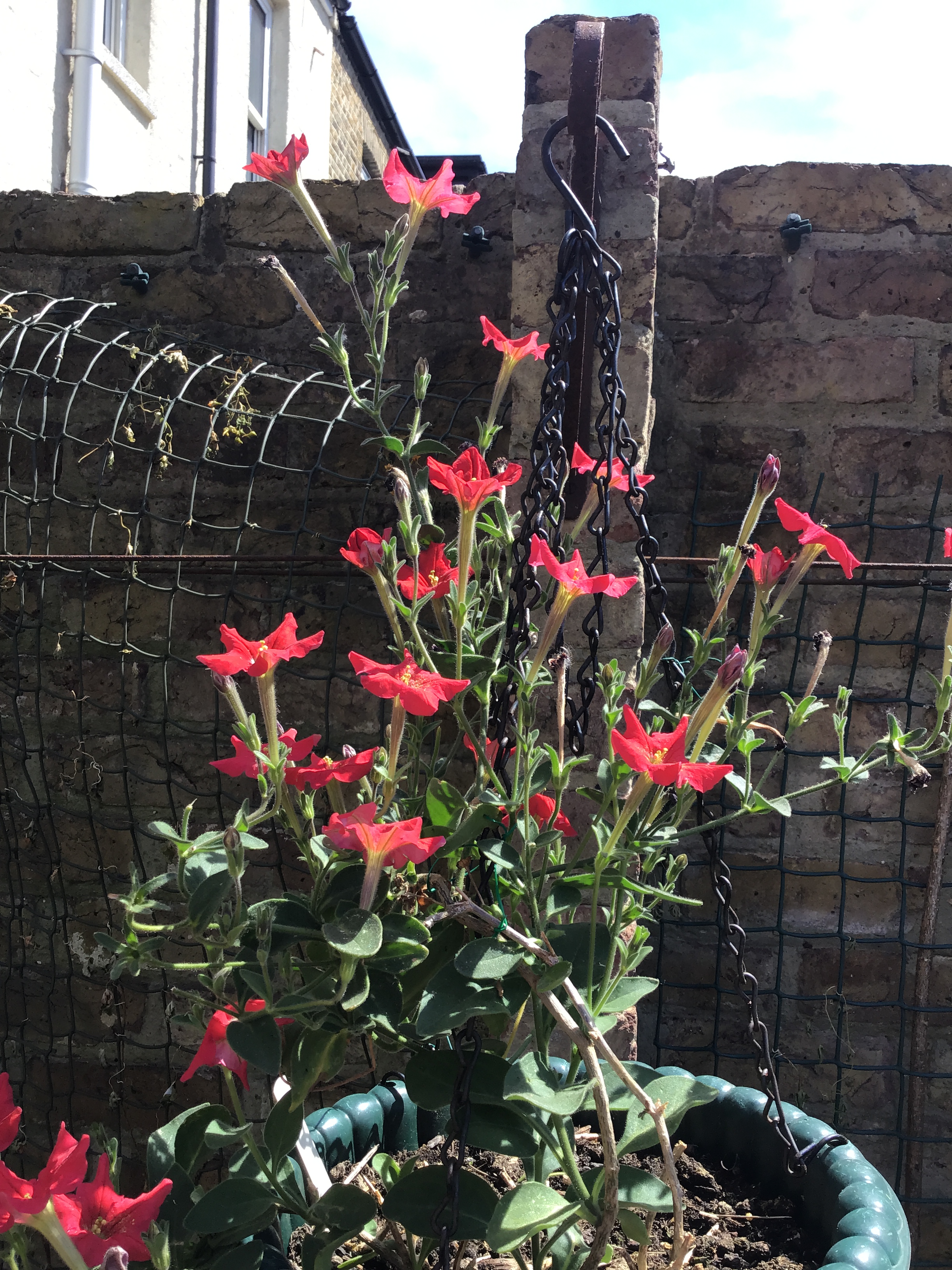
image1

In praise of Salvia ‘Black and Blue’

Angela absolutely loves Salvia guarantica Black and Blue. She says “I  have had the main plant for over 2 years. In places it is nearly 7ft tall. It has flowered non stop through out the winter. I took a few cuttings in April. Grew them in water initially (the Terry method!) before potting them up and amazingly one cutting is now in flower!!. If anybody would like one happy to donate. What an amazing plant. It really loves life.”

Anna and Kathy both grow this wonderful plant and recommend it if you have space. It can be tender and might need shelter in a harsh winter, but as Angela has found, cuttings take well as an insurance.
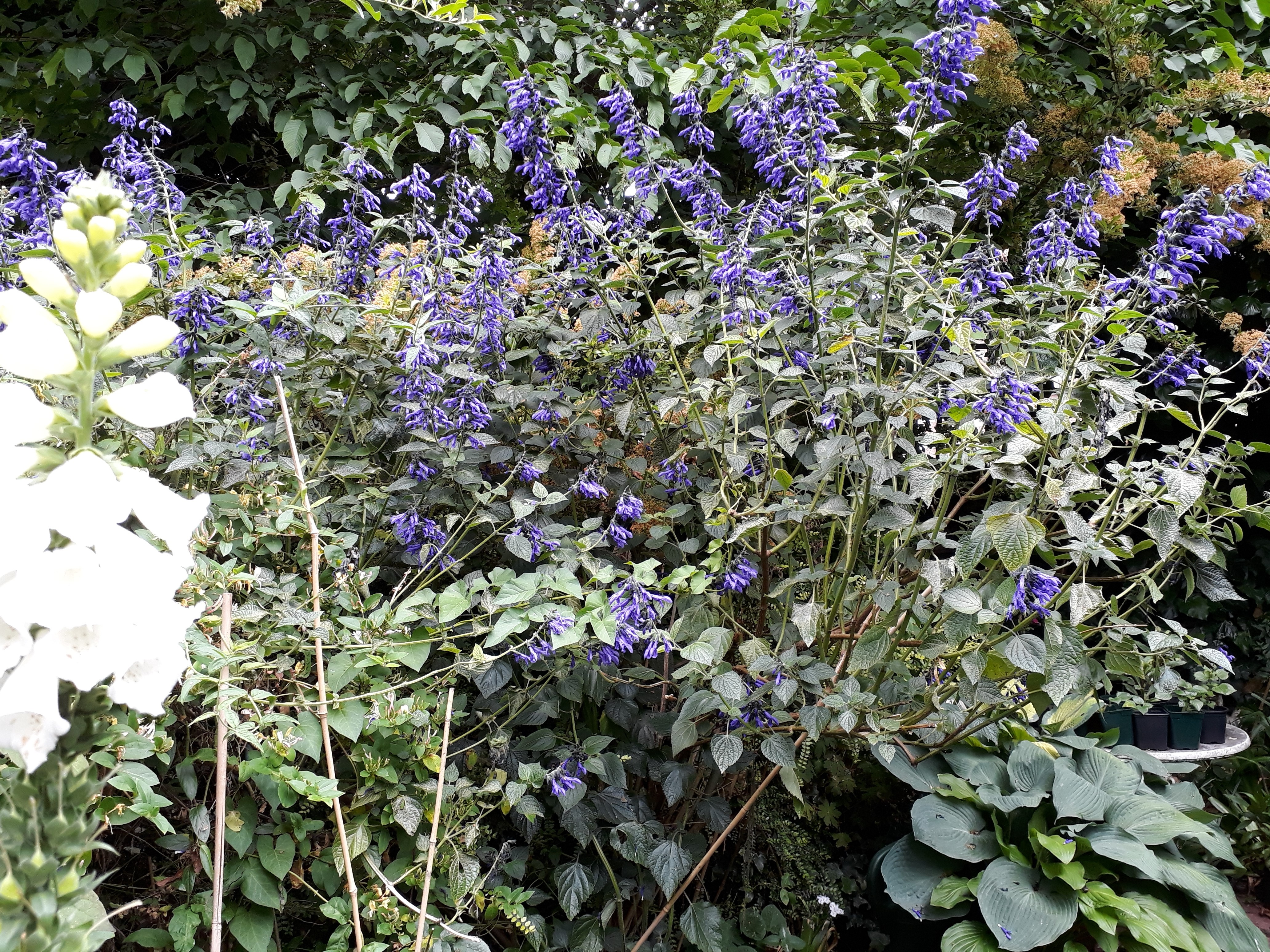
AB Salvia Black and Blue 2

“Opportunities for change” in the garden

A recent article by Nigel Slater vividly describes the various incarnations his garden has gone through in the past twenty years. The first iteration was designed by Monty Don over lunch and on the back of an envelope. The second, many years later, by Dan Pearson. Not all of us are so lucky to have such well-connected friends! But each change was inspired by the need to deal with a problem, whether it was a large family of boisterous foxes or the depredations of the box moth. What Slater points to is that gardens change (obviously) and that sometimes we can be forced into making changes which are an improvement on what we had already. In the business world ‘threats’ are re-purposed into ‘opportunities for change’. I don’t think this is always easy and I have been heartbroken to lose what I regard as old friends, but spaces and areas can be opened up in the garden which give opportunities to be more creative and to introduce something which you might not have tried before.

Many years ago, on one of my visits to gardens in France, I visited Le Jardin D’Agapanthe. I have never seen a garden quite like this anywhere else in the world. It was created by a landscape architect, Alexandre Thomas and includes no lawns, borders or views – the kinds of things you would normally associate with a garden, just winding paths of sand through lavish planting. It is at once romantic and exotic. There is an interesting inclusion of small stands or tables to raise plants above ground level and add interest. For anyone who loves pots, this place is inspirational.

When I have lost something in my garden I trawl back through photographs of places I have visited and loved to find new ideas and ways of using plants and spaces. Le Jardin D’Agapanthe is one that I often return to.

Have you lost a favourite plant recently? What “opportunity” did it open up? Let us know, write to cabahshortisoc@gmail.com

Vija

Rare and specialist plant fairs – news, and list of nurseries

All the recent rare and specialist plant fairs have had to be cancelled due to COVID-19, but it’s worth keeping an eye on the industry websites for latest news.

The Rare Plant Fair website also has articles – a past CABAHS speaker, Colin Moat of Pineview Nurseries has just written an article on ferns, and there is a very good one on Salvias this month too.

Keep an eye on the Plant Fairs site as well. All the contributing small nurseries are listed and a lot of them offer mail order.

More on self-seeders

As Vija’s previous blog (‘Shout out for self-seeders‘) mentions, this is the time of year when self-seeders pop up in the borders. If they are valued border plants but you just have too many, before you whip them out please think about potting some up for a future CABAHS plant sale. Although it looks like we can’t have full meetings for a while yet, we are aiming at holding a plant stall at Charlton House, probably at the end of July or early August. Just remember it’s important to identify and label any potted-up specimens very clearly, especially if it’s one that tends to be a “bit vigorous”! If you aren’t sure, do send a picture in, we have lots of expertise among our membership!

Seedlings
Clockwise from top left, Welsh poppy, Honesty, Foxgloves, Spring Pea

Other top self-seeders are Verbena bonariensis and Astrantia:

Viv

Shout out for self-seeders

I have recently watched two online Lectures from Fergus Garrett. These are replacing the events which had been planned at Great Dixter. More are planned. The second lecture was on the subject of self seeders in the garden. Of course, Great Dixter uses these extensively and it was interesting to see how self seeding is managed by the team there and how much they value the contribution the self seeders make to the herbaceous borders.

I have never planted Valerian, but it pops up in random spots and this year makes a lovely splash of colour combined with Salvia ‘Jezebel’, and a Californian poppy. Forget-me-nots I have to be careful with as they are smotherers. But primroses are a joy (apart from when they get into the lawn). Tanicetum (tansy) and the grass Milium effusum (wood millet) make a lovely splash of colour in late spring and Erigeron karavinskianus (Mexican fleabane) makes itself at home in many inhospitable corners. Although I allow a large number of Pulmonaria (Lungwort) to provide an early food source for bees, these can be a problem if I am not ruthless, so they have to be thinned out when they finish flowering.

Part of my garden includes a gravel path and a number of plants have self seeded there very generously over the years. Many of these I take out and pot on to be used in my own garden, or give away or bring to the sales table. On occasion, this has even included Phlomis and Clematis. Spotting the gems before I tread on them takes care!

In my garden, as in all gardens, there are some plants which seem not to like where they have been planted and have made their way to anothePlume poppyr spot where they feel far more comfortable. I am thinking in particular of the Plume Poppy, Macleaya microcarpa. It has completely ceased to exist in its original spot and is now doing very well a good 5 metres further along the border. In fact, it actually looks better there. Once again, I am reminded of the maxim that plants will grow well if you provide them with the conditions  which they need to succeed. Alternatively, it seems they find these for themselves.
For more Fergus Garrett lectures, see: https://www.greatdixter.co.uk/whats-on/events/online-lectures-2020/ 

Vija

What’s in a name?

Vija’s blog on the garden jobs she finds relaxing made me think about what I enjoy most. I don’t find the action of pricking seedlings out particularly relaxing, but I do love the satisfied feeling once I’ve done it! That’s usually because the poor little babies have been in their first beds far too long and have taken to looking at me accusingly whenever I walk past.

I really enjoy planting seeds in pots, usually done on a grey day, as it creates such bright ideas for the future and dreams of wafting around a Sarah-Raven-like garden paradise. I like to dream.

I also enjoy labelling, which might seem a mundane though necessary and useful practice. But the creative variety of labelling ideas is fabulous, have a look at Pinterest sites for examples of gardeners never ending ingenuity. IMG_5562

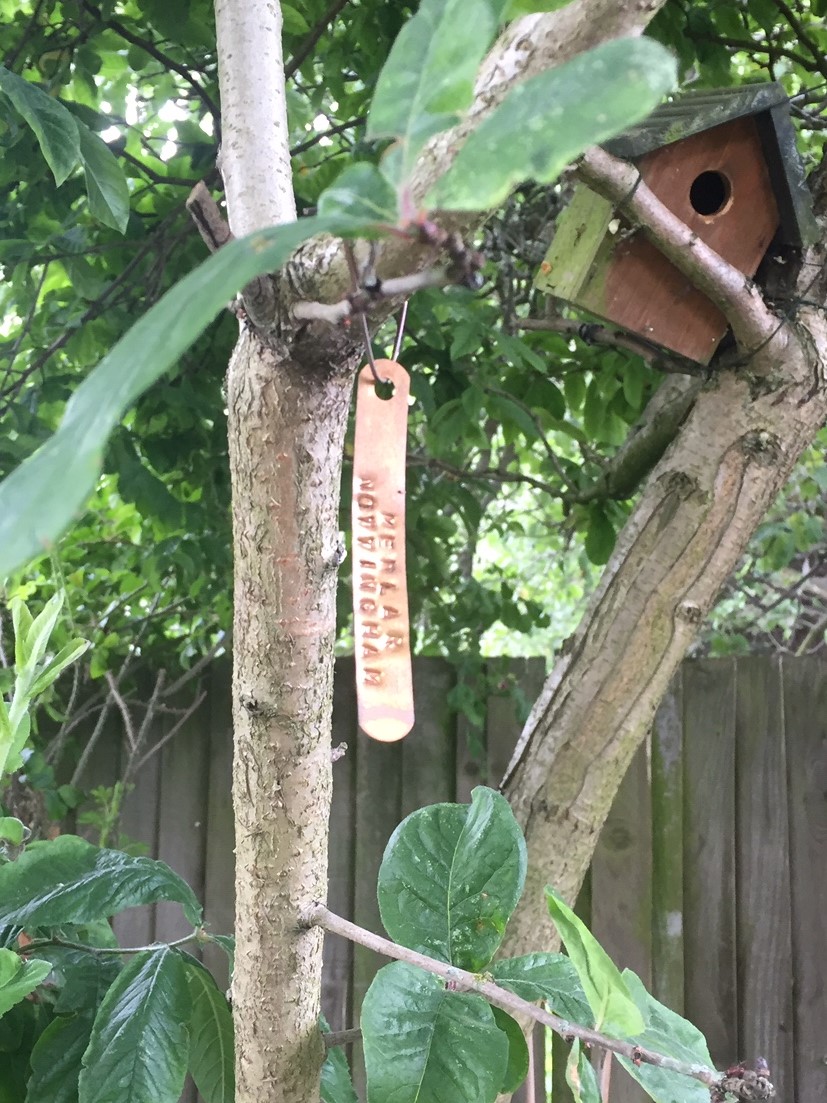
I have labelled the trees in my garden with strong copper embossed labels, because they need the most permanent ones. I like to fantasise that after I’ve gone, whoever buys our house will find the labels and marvel at the previous owners wonderful tree choices. At the least, it may give them pause before chopping down whatever monster it has grown into!

I don’t buy new plastic labels any more, so some of them are a bit tatty but fine for annuals. I use wooden lolly sticks for seed trays but they don’t last long once planted out as my terrier can’t distinguish between a wooden label and a twig so they tend to wander onto the lawn. This year, as my husband likes woodwork, he has made me lots of sturdy batons which I have painted a trendy Charcoal Grey and written on in White – very “National Trust” and reasonably terrier-proof.

As regards what I write on the label – for the trees I have used both the common and Latin name, for posterity’s sake. But everything else tends to be in my own unique language – often the name my father taught me (so quite possibly wrong or changed according to its DNA by now) but I know what I mean! Alternatively, I label according to a memory or who gave it to me: for instance “Pat’s Tangerine Sage” or “Tina’s Geranium”. My favourite is a large and very beautiful Weigelia, called “Christian’s Bush”, which conjures a lovely memory of my son, then aged 5, charging into our friend Christian’s beautifully symmetrical shrub and snapping a great piece off.  I was embarrassed but  Christian gallantly presented it to me for a cutting and I grew it on successfully!

IMG_5569

Our future house buyer is going to be Googling in vain for all these unusual variety names!

If you have any unusual ideas for labels, let us know! Email cabahshortisoc@gmail.com

Kathy A